Do Gun Law Restrictions Work?

Those opposed to gun safety provisions (a.k.a. gun control legislation) argue that laws  will not prevent criminals from obtaining firearms illegally.  A recent commentary in NY Times provides some data that shows that states with more gun safety provisions have lower levels of gun-related deaths (especially suicides).

NY Times: A Gun Killed My Son. So Why Do I Want to Own One?

Related blog posts:

Backwash Ileitis Plus One

Briefly Noted:

RM Najarian et al. JPGN 2019; 68: 835-40.  This retrospective study found microscopic/’backwash’ ileitis in 16% (17/105) of patients with new-onset ulcerative colitis. This occurred predominantly in patients with pancolitis (82%). The authors note that the term “backwash ileitis” was derived from an unproven hypothesis that the inflammation was related to retrograde contact with inflammatory substances, though some now consider ileal involvement as a secondary involvement “akin to the upper tract inflammation that can be seen in a subset of patients with UC.” The authors recommend that isolated histologic inflammation of the ileum should “not be construed as being diagnostic of either ‘indeterminant colitis’ or CD [Crohn’s disease].”

K van Hoeve et al. JPGN 2019; 68: 847-53. This retrospective study of 35 children found that higher infliximab levels during induction was associated with higher rates of clinical and biologic remission at 52 weeks. Groups at risk for lower troughs included patients with a lower weight and/or lower hemoglobin level.

Rafaela Flores Calderon by Antonio Maria Esquivel, Museo del Prado (Image in Public Domain)

Detergent Pod Ingestions -Is an Endoscopy Needed?

A recent study (A Singh et al. JPGN 2019; 68: 824-8) provides a descriptive retrospective review of a single center experience with detergent pods (a.k.a. laundry pods or dishwater pods). There is very little published in this area and no clear consensus on management.

For me, the most interesting finding in the study is the discrepancy between the ENT service which only did a direct laryngoscopy-bronchoscopy (DLB) in 6 of 23 (26%) ingestions compared with 21 of 23 (91%) EGD rate among patients who presented to the GI service.

Key findings:

  • Of those undergoing an EGD, 76% were normal; abnormal findings (edema, erythema or ulceration) were present in 24% (though figure 4 suggests erythema in 28%). Ulceration was noted in 14%.
  • In the DLB cohort (n=6), 33% were normal and 67% were abnormal.

Unfortunately, this report has a lot of limitations:

  • It did not provide any information regarding long-term effects (if any were present)
  • It did not provide much guidance in determining whether an EGD is worthwhile. The authors did note that patients with oral injuries were more likely to have an abnormal EGD. 80% of patients with positive oropharyngeal findings had an abnormal EGD compared with 20% with a normal oropharyngeal exam.
  • In the discussion, the authors reference a study which reported esophageal injury in only 0.1% of cases (Davis et al.  2016 May;137(5). pii: e20154529. doi: 10.1542/peds.2015-4529. Pediatric Exposures to Laundry and Dishwasher Detergents in the United States: 2013-2014). There were two deaths in this study.

My take: This would have been a good report to have an associated commentary/expert opinion.  Even if an EGD is abnormal, this does not mean that the EGD was needed.  The bigger question is how often an EGD would improve management.  Given the lack of specific treatments, it is likely that an EGD should be reserved for severe cases –which could include the following:

  • intentional ingestions
  • significant oropharyngeal burns
  • food refusal
  • drooling/difficulty managing secretions
  • stridor

Related blog post: New caustic danger from detergent pods

Disclaimer: These blog posts are for educational purposes only. Specific dosing of medications/diets (along with potential adverse effects) should be confirmed by prescribing physician/nutritionist.  This content is not a substitute for medical advice, diagnosis or treatment provided by a qualified healthcare provider. Always seek the advice of your physician or other qualified health provider with any questions you may have regarding a condition.

Detergent Pods -Still an Issue -This Tweet is from June 5, 2019


It Can’t Hurt Right? Complimentary and Alternative Medicine and Gluten-Related Disorders

A recent study (G Boyer et al. Am J Gastroenterol 2019; 114: 786-91) examined the promotion of testing and treatment of gluten-related disorders among complementary and alternative medicine (CAM) practitioners. Thanks to Ben Gold for this reference.

Background: CAM expenditures in 2016 by Americans was $30.2 billion in 2016. “Studies have found that it is not uncommon for CAM clinics to make wide-reaching claims as to their abilities to diagnose a plethora of conditions.”  In the present study, the authors reviewed the advertising content of 500 CAM clinic websites with regard to gluten-related disorders..

Key points:

  • The authors further identified 232 claims from 114 clinic websites; 138 (59.5%) were judged as unproven or false.
  • “Some clinics advertised treatments that pose potential harm;” this includes the sale of digestive enzymes promoted to digest gluten and which purport to allow the person with celiac or nonceliac gluten sensitivity (NCGS) to ingest gluten safely.  “This is a baseless claim that could lead to serious harm.”
  • “Other clinics falsely claimed that everyone should be on a gluten-free diet regardless of a diagnosis of celiac disease or NCGS.”

My take: Given the popularity of CAM along with the frequency of misleading claims, this suggests the need for increased regulation.  These websites are likely to increase confusion about the diagnosis and management of gluten-related disorders (which can  be confusing without any help!)

Related blog posts:

Comparing Gastric Bypass Outcomes in Adolescents and Adults

Studies have shown that adults with obesity who were obese as adolescents have worse medical outcomes than persons who became obese in adulthood (Nat Rev Endocrinol 2018; 14: 183-8; NEJM 2011; 365; 1876-85). Thus, the question is whether earlier intervention would improve outcomes.

A recent study (TH Inge et al. NEJM 2019; 380: 2136-45, editorial TD Adams, pgs 2175-7) compares the 5-year outcomes of adolescents (n=161) and adults (n=396) who underwent Roux-en-Y gastric bypass (RYGB). The two prospectively enrolled cohorts were participants in two related but independent studies.

Key findings:

  • There was similar weight loss in both groups at the 5-year mark: -26% in adolescents and -29% in adults
  • Adolescents had greater remission in both type 2 diabetes (86% vs 53%) and in hypertension (68% and 41%).
  • Three adolescents (1.9%) and seven adults (1.8%) died in the 5-years after surgery.  Two of the adolescents deaths were consistent with overdose.
  • Reoperations were significantly higher in adolescents than adults (19 vs 10 reoperations per 500 person years). The authors comment that the reason for this finding is unclear, possibly related to recall bias or closer monitoring of the adolescents.
  • Nutrient deficiencies were common in adolescents at followup. After 2 years, 48% of adolescents had low ferritin compared with 29% of adults (98% of participants had normal ferritin prior to RYGB. The authors note that  this is likely related to adherence to vitamin/mineral supplementation (which is needed lifelong).

Limitations: observational study design

The associated commentary::

  • “Almost 6% of adolescents in the U.S. are severely obese and  bariatric surgery is now the only successful long-term management…Negative health outcomes of bariatric surgery reported in adolescents mirror those reported in adults — including, for example, potential for self-harm (including suicide) and increased risk of alcohol or drug abuse.”
  • “Adolescent patients may not have fully developed the capacity for decision making, especially about a procedure that will have lifetime consequences.”

My take: This study and commentary point out some clear health benefits for adolescents who undergo RYGB. Given the lifelong need for monitoring and adherence with medical treatment as well as some of the negative health outcomes, it is also clear how challenging it is to proceed with RYGB in teenage years.

Related blog posts:

Square in Toledo, Spain


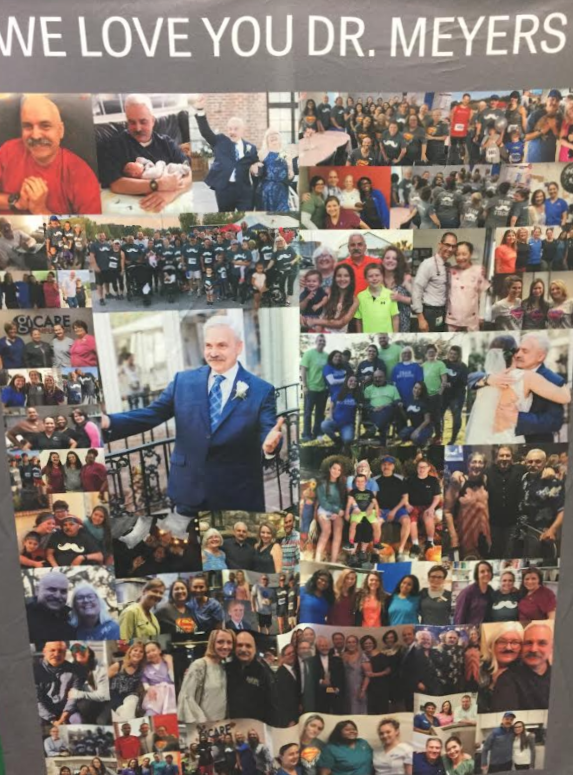
William Meyers

Yesterday I attended the Inaugural William Meyers Lecture and intended for this post to be a summary of that.  Sadly, he passed away last night.

Billy, a partner in our GI group, had been fighting brain cancer for the past year. This lecture was established to honor him. Jose Garza gave a lecture which highlighted the important work of the neurogastroenterology service, established in large measure by Billy.

Also, Billy served on numerous hospital committees.  Much of his efforts were ‘behind the scenes’ and usually the type of work that many of us seek to avoid.  In addition to working on these hospital committees, Billy remained a busy clinician.  In the past year, I’ve had the opportunity to interact with many of his patients and families.  Uniformly I have heard how compassionate and patient he was, even with the most complex situations.  In the 22 years that I had the opportunity to work with Billy, I cannot seem to recall him ever being flustered.  He was a truly wonderful person, physician, and mentor..   I will miss his kindness and friendship.


Briefly noted: Can We Afford (Multi) Million Dollar New Therapies?

New Gene Therapy: NPR: Zolgensma From Novartis -Most Expensive Medication Ever Approved

An excerpt:

The federal Food and Drug Administration has approved a gene therapy for a rare childhood disorder that is now the most expensive drug on the market. It costs $2.125 million per patient….

Zolgensma’s price tag, he says, is just the most extreme example of how drug prices are draining resources from society. The first gene therapy for an inherited disease was approved in 2017 for a genetic form of blindness. It is also very expensive — $425,000 for each eye.


What’s Going On in Patients with Reflux Who Fail Proton Pump Inhibitors

A recent prospective study (J Abdallah et al. Clin Gastroenterol Hepatol 2019; 17: 1073-80) examined adults patients with documented reflux at baseline.  Patients who reported heartburn and/or regurgitation at least twice a week for 3 months (n=16) despite proton pump inhibitor (PPI) therapy were considered PPI failures. Those (n=13) who responded to standard dose PPI for at least 4 weeks were in the “PPI success” group.

Standard PPI dosing in this study:

  • Omeprazole 20 mg per day
  • Esomeprazole 40 mg per day
  • Pantoprazole 40 mg per day

Methods: Both groups (PPI Failure group, PPI Success group) underwent EGD and pH-MII studies. Abnormal acid exposure was considered if pH <4 was present for >4.2%.

Key findings:

  • 12 patients (75%) in the PPI failure group had either functional heartburn or reflux hypersensitivity
  • 4 patients in both groups had abnormal pH test result.
  • There was no statistically significant differences in the number of reflux events, acid exposure or nonacid reflux parameters between patients who failed or those who were successfully treated with PPIs.
  • In the PPI failure group: 25% had persistent GERD, 12.% had overlap with reflux hypersensitivity, and 62.5% had overlap with functional heartburn

My take: The difference between PPI failure and PPI success largely is due to the overlapping presence of functional esophageal disorders.

Related blog posts:

Royal Palace, Madrid

NAFLD Outcomes After Bariatric Surgery

A recent systematic review and meta-analysis (Y Lee, et al. Clin Gastroenterol Hepatol 2019; 17: 1040-60) included 32 cohort studies with 3093 liver biopsy specimens from patients with nonalcoholic fatty liver disease (NAFLD).

Key findings:

  • Bariatric surgery resulted in a biopsy-confirmed resolution of steatosis in 66%, inflammation in 50%, ballooning degeneration in 76%, and fibrosis in 40%.
  • Bariatric surgery resulted in worsening features of NAFLD in 12%.
  • The authors note that Roux-en-Y Gastric Bypass (RYGB) “showed greater reduction of liver side effects and higher: resolution of NAFLD.”
  • Jejejnoileal bypass (JIB) and biliopancreatic diversion (BPD) “both have been associated with higher liver function morbidity.”
  • The overall GRADE quality of evidence was considered very low.

My take: Though better studies are needed, the majority of patients’ livers appear to benefit from bariatric surgery.

Related blog posts: