Achalasia -Updated Epidemiology

In this new era of high resolution manometry, there is an increasing incidence of achalasia.

Briefly noted:

JA Duffield et al. Clin Gastroenterol Hepatol 2017; 15: 360-5. In this study from South Australia, using a large database (2004-2013), the annual incidence of achalasia was between 2.3 and 2.8 per 100,000 persons. Mean age at diagnosis was 62 years.

S Samo et al. Clin Gastroenterol Hepatol 2017; 15: 366-73. In a similar study from Chicago, the authors estimated that the yearly city-wide incidence averaged 1.07 per 100,000; however the average in the neighborhood closest to the hospital (and possibly with better case capture) was 2.92 per 100,000.

My take: These studies identified incidence rates that are about double the rates that were reported prior to the availability of high resolution manometry.

Related blog posts:

Breastfeeding and IQ -the Latest Data

A recent study (JY Bernard et al J Pediatr 2017; 183: 43-50) takes a look at the relationship between breastfeeding, specific polyunsaturated fatty acid (PUFA) levels and intelligence quotient at age 5-6 years.

The authors used the French EDEN cohort with 1080 children.

Key findings:

  • Breastfed children had higher IQs by 4.5 points on Wechsler Scales –though this dropped to 1.3 (not significant) when adjusted for confounders
  • DHA was positively associated with higher IQ.  Children exposed to colostrum high in linoleic acid (LA)/ow in docosahexaenoic acid (DHA) had lower IQs than those exposed to colostrum high in DHA/low LA

The authors speculate that one reason that supplemental DHA has not been shown to be effective could be related to a high intake of LA.

Related article: CT Collins et al. NEJM 2017; 376: 1245-55.  In this study, the authors showed that enteral supplemental of DHA (60 mg/kg) did not result in a lower risk of physiological bronchopulmonary dysplasia in a randomized trial of 1273 born before 29 weeks gestation.

Related blog posts:

With a new ballpark in town, there are a lot of firsts: first HR, first hit, etc. And now this


A Better Budesonide for Eosinophilic Esophagitis (Part 2)

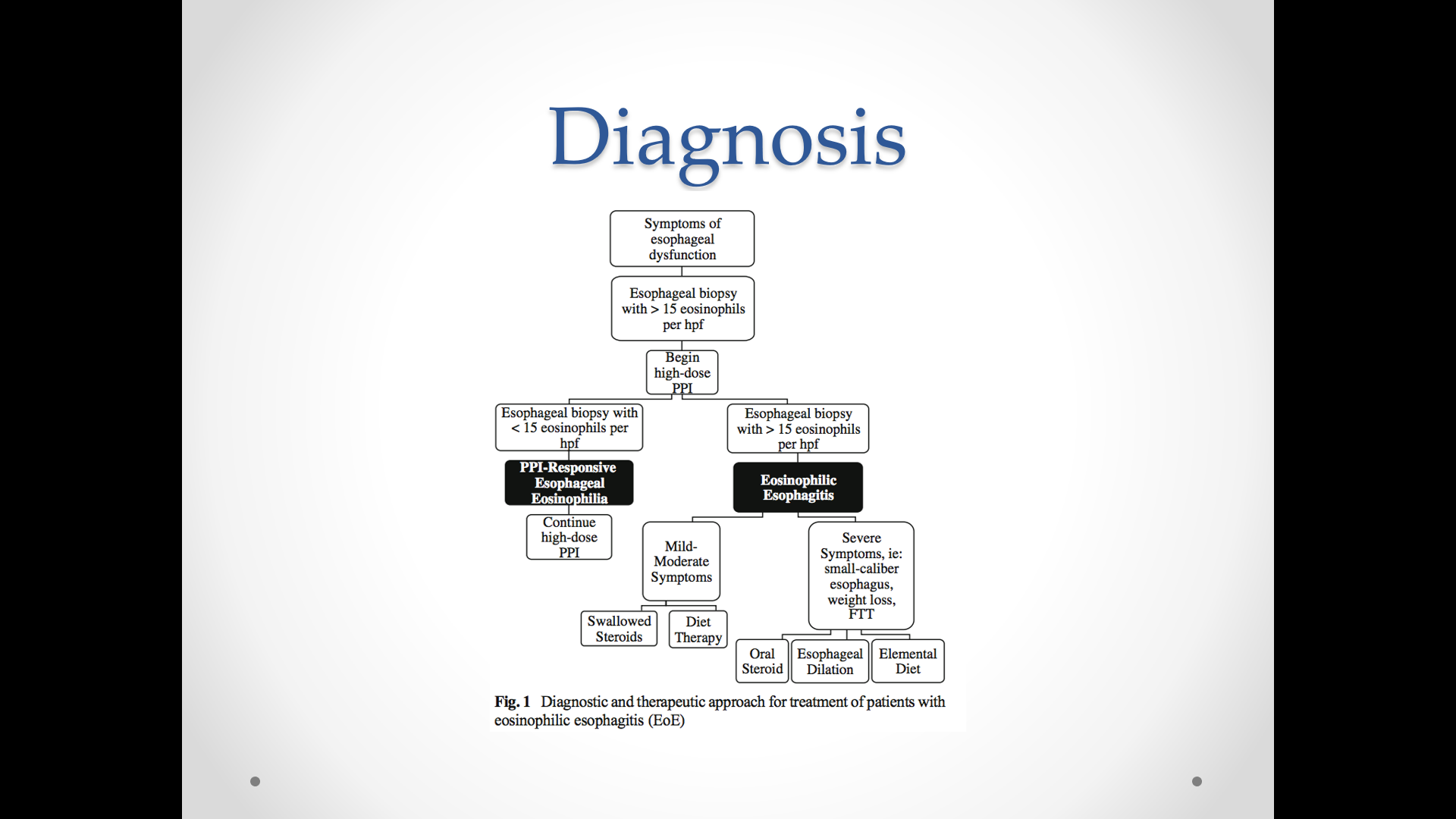
A recent study (ES Dellon et al Gastroenterol 2017; 152: 776-86) provides more data indicating that a premixed solution of budesonide improves eosinophilic esophagitis (EoE). This study complements a recent report highlighted in a blog post earlier this year:

A Better Budesonide for Eosinophilic Esophagitis

In the present study by Dellon et al, the authors performed a multicenter, randomized, double-blind, placebo-controlled, parallel-group trial of 93 EoE patients (ages 11-40).  All patients had dysphagia and active EoE. The active treatment group received 2 mg twice daily.

Key findings:

  • Dysphagia symptom questionnnaire (DSQ) scores improved more in the active treatment group compared to placebo.  At baseline, the DSQ scores were 29.3 and 29.0 respectively.  After 12 weeks, the the scores were 15.0 and 21.5 respectively.
  • Similarly, the active treatment group peak eosinophil counts improved more.  At baseline, the treatment group had a count (per hpf) of 156 and this dropped to 39; in contrast, the placebo group started at 130 and dropped to 113.
  • The overall histologic response (≤6 eos/hpf) was 39% for the treatment group and 3% for the placebo group.
  • No significant adverse effects could be attributed to budesonide.  There was 1 case of esohageal candidiasis.  “There were no notable differences between the groups in cortisol levels.”

My take: Budesonide suspension is useful for EoE but not effective in all patients. A reliable composition from a manufacturer, if not too expensive, would be a big improvement for many kids with EoE. Higher doses of budesonide may be warranted in some cases of EoE.

Related blog posts:

Statue outside the Louvre

Better to Do a Coin Toss than an ENT Examination to Determine Reflux

A recent study (R Rosen et al. J Pediatr 2017; 183: 127-31) adds additional data to the literature which has shown that ENT doctors are NOT able to tell if there is reflux by examining the airway.

Prior post on this topic: Accuracy of ENT diagnosis of Reflux Changes

This prospective, cross-sectional cohort study of 77 children correlated ENT examinations with “reflux finding score” (RFS) by three blinded otolaryngologists with objective measures of reflux: pH-metry and impedance.  All children had chronic cough and underwent bronchoscopy and esophagogastroduodenoscopy.

Key findings:

  • “There was no correlation between pH-MII variables and mean RFS”
  • The concordance correlation for RFS between ENT doctors was low (intraclass correlation coefficient =0.32)
  • Using pH-metry as a gold standard, the positive predictive value for the RFS was 29% whereas with MII as the gold standard, the positive predictive value for the RFS was 40%.

My take: ENT doctors are unable to tell if a patient has reflux.  The finding of a red or swollen airway has poor predictive value in determining the presence of reflux –a coin toss is more reliable.  Based on this study and others, starting a PPI because of an abnormal airway exam does not make sense.

Related blog posts:

Monet, Musee de l’Orangerie

How Much Do We Really Know About Fecal Microbiota Transplantation?

A recent study (SJ Ott et al. Gastroenterol 2017; 152: 799-811) followed 5 patients who were treated with a sterile fecal filtrate (via nasojejunal tube) for recurrent Clostridium difficile infection (CDI) for a minimum of 6 months.  This open-label study noted that this fecal filtrate transfer eliminated the symptoms of CDI in all 5 patients.

A summary of this important study is available in the AGA blog:

Here’s an excerpt: What is the Active Ingredient in FMT for CDI?

Stool was collected from 5 donors selected by the patients and fully characterized according to FMT standards. The stool was then sterile filtered to remove small particles and bacteria, and the filtrate was transferred to patients in a single administration via nasojejunal tube.

Fecal samples were collected from patients before and at 1 week and 6 weeks after FFT. Microbiome, virome, and proteome profiles of donors and patients were compared….

They identified about 300 different proteins in each of the filtrates they analyzed—most proteins were of human origin, but the filtrates also contained 20–60 bacterial and fungal proteins. The major human proteins in the filtrate proteome were human enzymes such as intestinal-type alkaline phosphatase, chymotrypsin-like elastases, and α amylases. Bacterial proteins included metabolic enzymes and redox proteins without obvious microbiome-modifying properties, such as glyceraldehyde-3-phosphate dehydrogenase, phosphoenolpyruvate carboxykinase, glutaredoxin-1, or thioredoxin-1…

Ott et al propose that the active component of FMT therapy might not be living bacteria, but bacterial components, antimicrobial compounds of bacterial origin (bacteriocins), or bacteriophages that contribute to a healthy intestinal microenvironment. These could be common to all successful FMT therapies and even rather unspecific regarding the bacterial strain(s) used for therapies. They propose that bacteriophages affect community dynamics of gut microbiota to resolve dysbiosis.

My take: This is a provocative study that challenges us to rethink how FMT works. Ultimately, treating CDI needs to be more precise.

Related blog posts:


NY Times: Do DHA Supplements Make Babies Smarter?

Do DHA Supplements Make Babies Smarter?

Excerpt:

A systematic review of studies published this month by the Cochrane Collaboration concluded there was no clear evidence that formula supplementation with DHA, or docosahexaenoic acid, a nutrient found mainly in fish and fish oil, improves infant brain development. At the same time, it found no harm from adding the nutrient. The findings are consistent with a review of the effects of omega-3 supplements in pregnancy and infancy published by the Agency for Healthcare Research and Quality last fall that found little evidence of benefit.

Still, many experts believe there is value in including DHA in formula. “Even if you can’t easily prove it, because it’s hard to prove developmental outcomes, it makes sense to use it,” said Dr. Steven Abrams, a professor of pediatrics at Dell Medical School at the University of Texas at Austin. “It’s probably a good idea to keep it in there, and it’s certainly safe.”..

The review combined data from 15 randomized controlled trials into a meta-analysis including nearly 1,900 children, many tracked from infancy into mid-childhood. Some studies found small improvements in vision or cognition, but many did not, and when the results were pooled, there was no clear pattern of benefit from DHA added to formula…

 “If you don’t have a deficient population, then it probably doesn’t matter” if people take a supplement, said Dr. Susan Carlson, professor of nutrition at the University of Kansas Medical Center.

But in the United States, many women don’t seem to be getting enough DHA. Women of childbearing age consume an average of 60 milligrams of DHA per day, but many experts recommend at least 200 milligrams per day during pregnancy and breast-feeding.

Quick Take: New Rotavirus Vaccine Stable without Refridgeration.

A recent study (S Isanaka et al. NEJM 2017; 376: 1121-30) shows that a new low-cost oral rotavirus vaccine is effective and importantly, it does not require refridgeration.

Here is a link to a 1:35 min quick take video summary: Efficacy of a Low-Cost, Heat-Stable Oral Rotavirus Vaccine in Niger


Have you seen Medical Child Abuse?

“Medical Child Abuse” is the favored term for what has been called Munchausen Syndrome by Proxy (and “Factitious disorder imposed on another”).  A recent case series with 36 cases (AZ Ali-Panzarella, TJ Bryant, H Marcovitch, JD Lewis. Curr Gastroenterol Rep 2017; 19: 14) provides some of the most extensive information about this troubling condition.  Kudos to my colleague Jeff Lewis and his coauthors for this publication.

The authors conducted a retrospective review of all cases of medical child abuse that were confirmed by video.  During a 20-year period, covert video monitoring was used in suspected cases. This study is important because most of the literature on this topic are single case reports.  Furthermore, there is virtually no published follow-up outcome data available.

Key demographics:

  • All abusers were the mothers
  • Age at diagnosis: 2 months to 17 years, median 2 years. 61% were under 5 years.
  • 91% were Caucasian
  • 72% were Medicaid recipients
  • Only 5 patients were diagnosed on first admission. 13 of 36 (36%) were diagnosed before 1 year of age.

Clinical features:

  • 38% had 5 or more admissions prior to diagnosis (possibly more at other institutions)
  • Median time between first hospitalization and diagnosis was 15 months
  • Primary symptoms in those less than a year: reflux, feeding difficulty, apnea, and seizure-like movements.  These were often induced by partial suffocation, forced feeding and induced vomiting.
  • Older children were reported often as having a past history of leukemia, muscular dystrophy, food allergy, recurrent infections, and mitochondrial disorders.
  • Due to their presentations, the cohort underwent 24 procedures and 9 surgeries (3 Nissen fundoplications, 1 pacemaker, 5 gastrostomy tubes, 3 ENT surgeries)
  • Two-thirds had pediatric gastroenterology involved prior to diagnosis.

Multidisciplinary Process:

  • Setting up covert surveillance and undertaking monitoring requires a team of individuals.  This is well-described in this article -see Table 1.
  • Before monitoring is allowed, a core group has a meeting to determine if monitoring is warranted in each case.
  • During monitoring, “it is critical to have staff observing in real time to allow an opportunity for bedside staff to be notified immediately and intervene in life-threatening events.”

19 references are given with this report.  Two references that are highlighted:

  • Pediatrics 2015; 136 (5): e1361-5.  Describes how induced illness can look like a rare disease
  • Pediatrics 2013; 132 (3): 590-7.  Guides pediatrician in diagnostic evaluation of medical child abuse

My take: Making a diagnosis of medical child abuse is crucial for these children.  This report makes an important contribution to this end.  Institutions that do not have covert surveillance should consider collaboration with institutions that have set up this capability.

Related blog postA Cautionary Tale–Is it Medical Child Abuse?

Monet, Musee L’Orangerie

Abdominal Pain -Placebo Effect and Celiac Effect

Briefly noted:

  • DR Hoekman et al. J Pediatr 2017; 182: 155-63.
  • M Saps et al. J Pediatr 2017; 182: 150-54.

In the first study, Hoekman et al identified 21 studies to determine the placebo response in pediatric abdominal pain-related functional GI disorders.  The authors found a pooled response to placebo of 41% (improvement) and resolution with placebo occurred in 17%.

The second study examined 289 children (55% U.S., 45% Italy) comparing the frequency of functional GI disorders in children with celiac disease on a gluten free diet compared with controls.  Overall, chronic abdominal pain was present in 30.9% of subjects with celiac disease compared with 22.7% of sibling controls and 21.6% of unrelated controls. This did not reach statistical significance.

Related post: Is functional pain more common with celiac disease?

Sawnee Mountain

Proof That Diet Changes Can Improve a Fatty Liver

A recent prospective study (M Markova, O Pivovarova, et al. Gastroenterol 2017; 152: 571-85) showed that among individuals with nonalcoholic fatty liver disease (NAFLD) and type 2 diabetes that a diet high in protein (animal or plant) reduced liver fat over a 6 week period.

Among 37 participants, body fat and intrahepatic fat were detected with MRI and spectroscopy, respectively. Protein was increased to 30% of the diet. Fat was reduced to 30% and carbohydrates to 40% of diet composition. .

Key findings:

  • With a high animal protein diet, liver fat was reduced by 36%.  In the high plant protein diet group, liver fat was reduced by 48%.
  • Theses changes were unrelated to change in body weight.  However, these changes were correlated with down-regulation of lipolysis and lipogenic indices.

Some of the findings may be limited to older patients as this cohort was older than 60 years of age.  In the pediatric population, the dietary factor that has been linked most closely to NAFLD has been fructose, mainly in sugar-sweetened beverages (R Patusco et al. Top Clin Nutr 2017; 32: 27-46 -thanks to Ben Gold for this reference).

My take: This study shows improvement in liver fat with increased protein/reduced dietary fat.  While this study indicates that dietary modification is important in treating NAFLD, the optimal dietary intervention (eg. higher protein, lower sugar, lower fat) remains uncertain.

Related posts: