
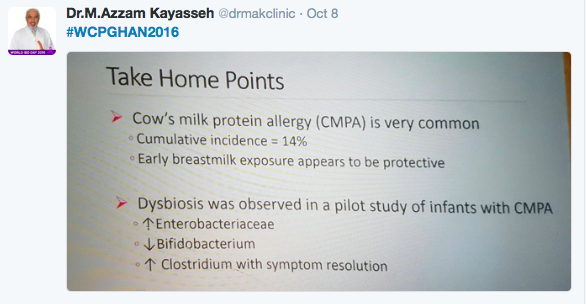





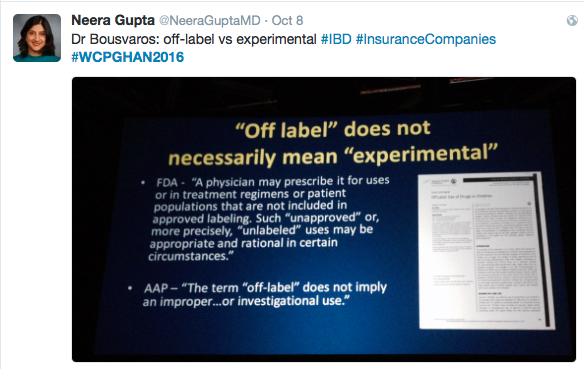


Here are some more provocative tweets from World Congress of Pediatric Gastroenterology Hepatology and Nutrition:
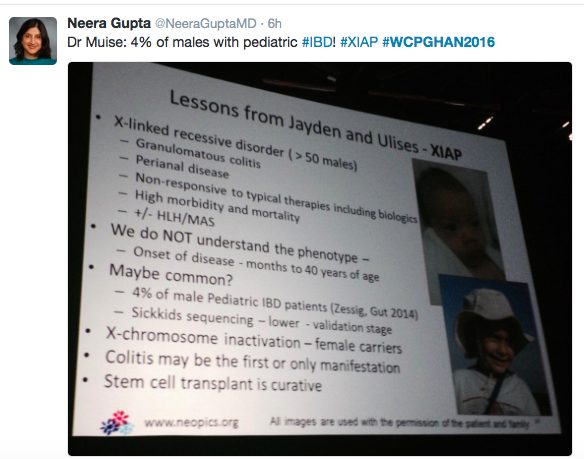
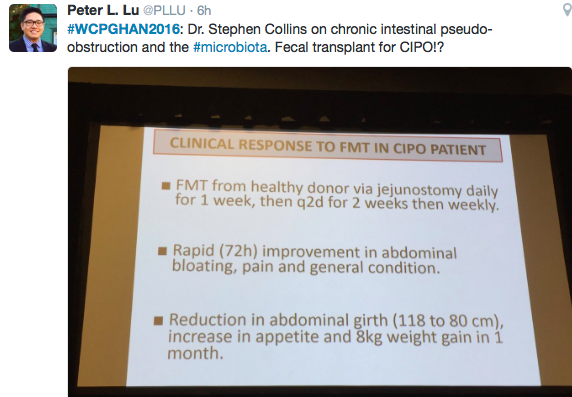



For those who are not attending this year’s national/international GI meeting, I’ve compiled some of the best tweets. These tweets are from 10/6/16.




A recent commentary (G Cholankeril et al. Gastroenterol 2016; 151: 382-86) provides a succinct summary regarding the trends in liver transplantation multiple listing and its implications on notions of utility and justice.
Key points:
Regional distribution:
My take: Under the current system, liver transplant candidates capable of travelling/multiple listing, are rewarded with earlier liver transplantation & higher likelihood of receiving a liver transplant. Thus, until inequities in organ distribution are better addressed, patient’s may need to consider telling their transplant team: ‘Need Liver, Will Travel’
Related blog posts:

Public Art, New Orleans

Full text: My Vision for Universal, Quality, Affordable Health Care –NEJM
From NEJM: The editors invited the Democratic and Republican presidential nominees, Hillary Clinton and Donald Trump, to answer the following question for Journal readers: What specific changes in policy do you support to improve access to care, improve quality of care, and control health care costs for our nation? Secretary Clinton responded. Mr. Trump did not respond.
The main topics in Hillary Clinton’s commentary include expanding insurance coverage through the affordable care act (i.e. Obamacare), improve affordability in health care with proposals that affect both insurance companies and pharmaceutical companies, improve access to primary care/community care, and to continue to promote innovation/research.

A recent study (MR Nicholson et al. J Pediatr 2016; 176; 50-6) examined the use of multiplex molecular testing to determine the etiology of acute gastroenteritis in children. It is interesting that little has been published about this increasingly common practice of sending a 12 to 15 panel PCR assay when faced with acute GI symptoms, mainly diarrhea.
This study was a prospective population-based study of children <6 years with acute gastroenteritis (2008-2011).
Findings:
Implications of this study and this technology:
My take: These panels are helpful in identifying infectious etiologies of AGE and may help prevent unnecessary endoscopic procedures. Due to their limitations, careful selection of which patients to test and cautious interpretation of the results are needed.
Related blog posts:

Sunset from Bar Harbor, ME
A recent editorial (EW Campion et al. NEJM 2016; 375: 993-4) made a few worthwhile points and shows how NEJM has been successful and innovative over 20 years of using the web and social media.
“We do need to be wary of challenges and dangers that the new media have created. On the Internet, speed and simplicity often displace depth and quality, especially on complex subjects. Our privacy is increasingly vulnerable. Misinformation, misrepresentation, and piracy are common. There are health scams and even sham medical conferences and fake medical journals.”
My take: Careful use of internet resources has been incredibly helpful. But, beware of the inherent hazards that have accompanied these advances.
Related blog posts:

Balancing Rock, Bar Harbor
Briefly noted: RM Navari et al. NEJM 2016; 375: 134-42. Olanzapine (marketed as Zyprexa), compared with placebo, in combination with dexamethasone, aprepitant (or fosaprepitant) and a 5-hydroxytryptomaine type 3 antagonist (eg palonosetron, ondansetron, or granisetron) helped reduced nausea/vomiting. Among a total of 380 patients, 74% in the olanzapine group had no nausea/vomiting compared with 45% in the placebo group in the first 24 hours. In the 1st 120 hours, the rates of no nausea/vomiting were 37% vs. 22%. A “complete response,” defined as no emesis episodes and no rescue medications, occurred in 64% vs 41% in the 1st 120 hours. The most concerning side effect reported was severe sedation which was reported in 5%.

Arthur Ravenel Jr Bridge

 gutsandgrowth