Early Acid Blocker Use Linked to Lung Disease in CF

C Liu et al. J Pediatr Gastroenterol Nutr. 2024;79:1124–1133. Open Access! Impact of acid blocker therapy on growth, gut microbiome, and lung disease in young children with cystic fibrosis

Background: Historically, acid suppression has been given as adjuvant therapy to optimize PERT and thereby improve growth and nutritional needs in CF

Methods: This was a prospective cohort of 145 infants followed in 6 CF centers. This was a retrospective study examining the effects of acid blocker therapy and outcomes at 3 years of life in children with cystic fibrosis.

Key findings:

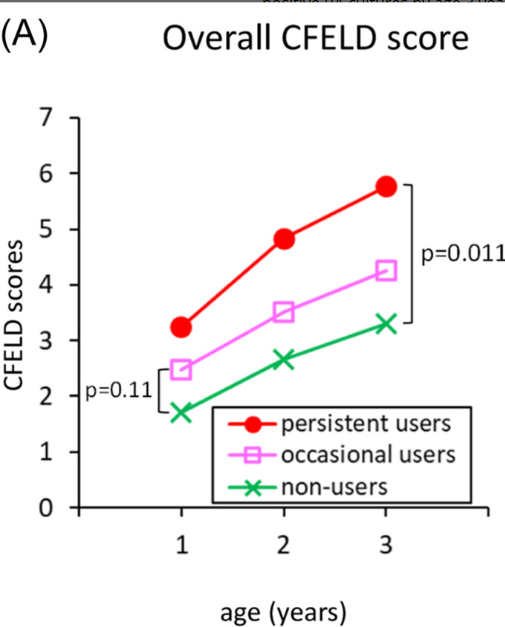
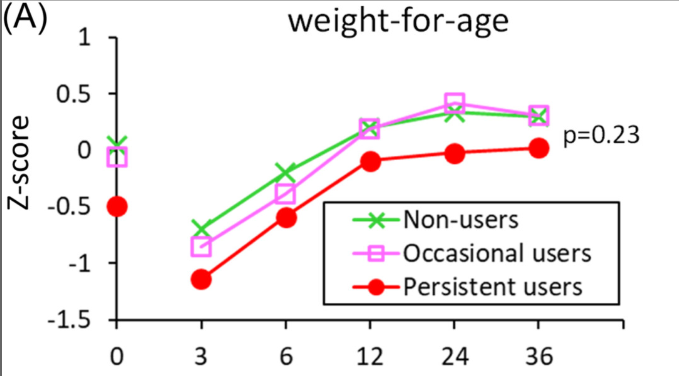
  • Acid blocker therapy (ABT) use before age 3 years was frequent, with 81 (56%) of patients on H2 receptor antagonist (H2RA) or proton pump inhibitor (PPI), and higher among pancreatic insufficient (60%) versus pancreatic sufficient (26%) children.
  • Growth improvements were not significantly greater.
  • Early-onset lung disease was more severe, in persistent ABT users compared to nonusers of ABT.
  • ABT was associated with reduced gut microbiome diversity
CFELD =CF Early-Onset Lung Disease

Discussion:

  • “Results from our FIRST cohort of infants and toddlers with CF showed that prolonged ABT was not associated with significant improvements in growth but instead significant negative alterations to the GM and progression of early-onset lung disease. Evidence from our study is in line with the growing body of literature advocating for more judicious PPI therapy as it has been associated with adverse outcomes such as pulmonary infections, fractures, and anemia.2224
  • One limitation, which was NOT discussed in the article, was selection bias. Since there was not randomization of PPI use, it could be that PPI prescription was more common in children with more severe disease.

My take (borrowed in part from authors): Despite the potential for selection bias, it is clear that “acid blockers are not benign.” Given the potential for worse outcomes, PPI prescription should be restricted to those with a clear indication.

Related blog posts:

Stopping Insurance Coverage in the Middle of Your Procedure

Recently, an example of the arbitrary and poorly-conceived nature of many insurance policies played out publicly in the past few weeks.

USAToday 12/5/24: Anthem BCBS drops controversial new plan to cap anesthesia coverage after backlash

Excerpts:

“After receiving intense backlash, a health insurance provider has rolled back its plan to implement a new policy that would have limited its coverage for anesthesia used during procedures…According to a description of the policy on Anthem’s website, billing guidelines would change in some states beginning in February 2025 to cap the amount of anesthesia care the company would cover based on time limits pre-set by the insurer…This would mean that if a patient’s procedure ran long, the insurer would not pay for the care.”

“The proposition concerned not only members of the public, who began making tongue-in-cheek comments online about being woken up mid-surgery to swipe a credit card, but professional organizations, doctors and lawmakers alike.

[The goal was]  “implementing practices to “safeguard” its insured against “potential anesthesia provider overbilling”…“This is just the latest in a long line of appalling behavior by commercial health insurers looking to drive their profits up at the expense of patients and physicians providing essential care,” said ASA president Donald E. Arnold”

My take: The surprising part about this story is that the policy was reversed before implementation. Insurance companies are adept at implementing cost-saving policies that do not consider the health consequences.

Related blog posts:

Conversations on Palliative Care for Children

K Wu. NEJM 2024; 391; 2288-2289. Well Known to Us.

This commentary focuses on the personal experience of being an hospital-based physician tasked with taking care of chronically-ill complex and neurologically-compromised children through recurrent and prolonged admissions.

An excerpt:

Teetering on the precipice of death at every admission, they are a testament to how far medicine has come in keeping people alive — and how far it still has to go in treating their underlying conditions. Having realistic conversations about long-term outcomes and palliative care for these patients remains difficult, with pediatricians afraid of disrupting fragile relationships with parents who have endured so much.1

With increasing numbers of such children being admitted to PICUs and limited expansion of capacity,2-4 questions have been raised about the value and necessity of the care provided to them — not in terms of their condition in isolation, but in terms of who else is being deprived of care. Patients with complex, chronic, life-limiting, multiorgan conditions are often described as “well known to us,” but they’re also called “bed blockers” — a label reflecting one answer to the uncomfortable ethical question of which patients are most deserving of limited resources.5

Often all I could do was bear witness to their sickness and wellness, their deterioration and recovery, again and again. But in their short lives filled with suffering and struggle and a constant parade of caregivers, I was their pediatrician, and I had become well known to them.

Related blog post: Navigating Difficult Conversations in Children’s GI Healthcare

Efficacy of Mirikizumab in Ulcerative Colitis: LUCENT-3 Study Results

BESands, et al.  Inflammatory Bowel Diseases, 2024. 30: 2024 2245–2258. Open Access! Two-Year Efficacy and Safety of Mirikizumab Following 104 Weeks of Continuous Treatment for Ulcerative Colitis: Results From the LUCENT-3 Open-Label Extension Study

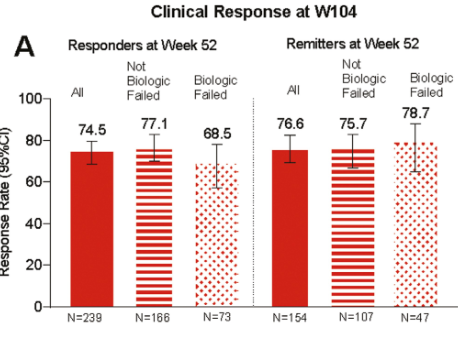
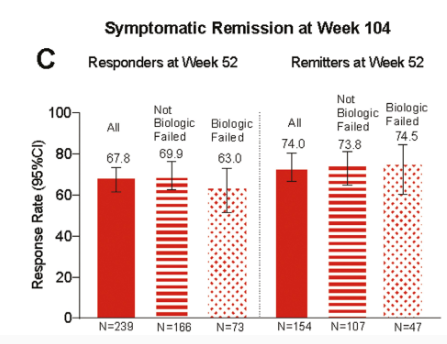
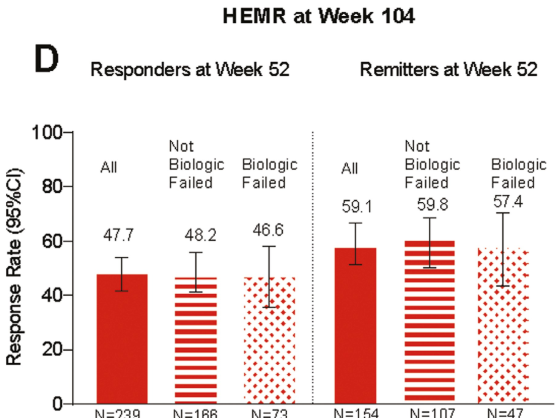
In this LUCENT-3 study, the authors examined response at 2 years among patients who had response to treatment at 1 year; patients received 200 mg mirikizumab every 4 weeks. The authors stratified patients by induction response and by previous biologic exposure.

Key findings (from Figure 4):

HEMR= histologic-endoscopic mucosal remission
  • No new safety signals were identified, and the discontinuation rate due to adverse events was 2.8%

My take: It is good to see extended data for mirkizumab. Head-to-head trials, though, are needed to better determine which therapies are most effective.

Related blog posts:

“Diagnostic Stewardship” –Reducing Unnecessary Clostridioides difficile Treatment by Changing Testing Approach

D Ilges, et al.  Infection Control & Hospital Epidemiology. Published online 2024:1-6. doi:10.1017/ice.2024.180. Open Access! Positive impact of a diagnostic stewardship intervention on syndromic panel ordering practices and inappropriate C. difficile treatment.

In this retrospective study, the authors examined the impact of removing C diff (Clostridioides difficile) testing from a  gastrointestinal pathogen panel (GIPP) and only testing with preferred method which consisted of glutamate dehydrogenase and toxin antigen immunoassay, followed by toxin gene testing for discrepant result.

Key findings:

  • At baseline (prior to implementing a change), the most common positive target was C. diff (517 of 1,018, 51%), which resulted in treatment for C. difficile infection in 94.9% (337 of 355) of cases.
  • Following GIPP C. diff target removal, GIPP orders decreased from 3.23 to 2.7 per 1,000 patient visits (P < .001). Standalone C. diff testing increased from 0.92 to 3.06 per 1,000 patient visits (P < .001).
  • Outpatient C. diff prescriptions declined over the study, with a mean of 2.36 per 1,000 outpatient visits in the baseline period and 1.81 per 1,000 outpatient visits in the postintervention period (P = <.001). For the inpatient setting, days of therapy (DOT) per 1,000 decreased from 13.77 in the baseline period to 10.58 in the postintervention period, though the reduction did not meet statistical significance (P = .051).

My take: This study shows the benefit of removing C. diff from GIPPs to drive more appropriate testing and targeted treatment. GIPPs, while convenient, often identify C. diff colonization. This approach is cost-effective and reduces harms of unnecessary antibiotic treatment.

Related blog posts:

Favorite Books

Here’s a list of some of my favorite books (not in any specific order):

  • The Nightingale
  • Cutting for Stone
  • Strangers on a LifeBoat
  • Beneath a Ruthless Sun
  • Fire Weather
  • City of Thieves
  • Lonesome Dove
  • The Help
  • Mystic River
  • Where the Crawdads Sing
  • An Officer and a Spy
  • The Little Liar
  • Demon Copperhead
  • The Housemaid
  • Covenant of Water
  • Cloud Cuckoo Land
  • Shantaram
  • The Mountain Sings
  • The Great Alone
  • Project Hail Mary
  • The Great Alone
  • Sun Rays at midnight 
  • Pillars of the Earth
  • The Killing Kind
  • The Kind Worth Killing
  • Gone Girl
  • The Girl with the Dragon Tattoo
  • The Prince of Tides
  • Under the Banner of Heaven
  • The Heaven and Earth Grocery Store
  • Star of Peace
  • House of G-d
  • The Wager
Sandy Springs, GA

Cultivating Compassion in Pediatric Care

Yesterday’s post discussed communication strategies for GI patients with severe underlying diseases. A related article (S McCarthy. NEJM 2024, 391: 2072-2073. The Care That Saved Me) provides additional insight into the importance families place on the care that they receive.

The author is a pediatric psychologist at a large academic medical center. One of her daughters died at 5 years of age from cancer and she reflects on her experiences and what she learned; though, she states it is a “knowledge I wish I didn’t have.”

An excerpt:

As a clinician, I have identified four practices that I now prioritize in my work, emerging from Molly’s illness and death and my bereavement.

First, strive to illuminate the patient’s personhood… I do make sure to include information that helps me and other clinicians see each patient as an individual,1 illuminating their unique personhood...

Second, make an effort to understand life outside the hospital…“What do you want your health care team to know about you?” and “What makes you happy?” …

Third, cultivate practical compassion…First, I ask parents when they last ate, drank something other than coffee, or slept. If a parent has not eaten or slept, I pause my interview…

Fourth, learn how to sit with darkness, while allowing for light… don’t try to fix a pain I know is unbearable, but I let parents know that they are not alone, that their love for their child is seen and their grief is witnessed...

The biggest thing I have learned is this: our work matters. Those small acts of kindness and moments of connection, seeing the children for who they are, make a difference. Patients and families do not forget them. And during the absolute hardest times, these acts sustain them...the best medical care in the world, the most advanced science, could not save Molly, but the compassionate care that our family received saved me.

Related blog posts:

Sandy Springs, GA

Navigating Difficult Conversations in Children’s GI Healthcare

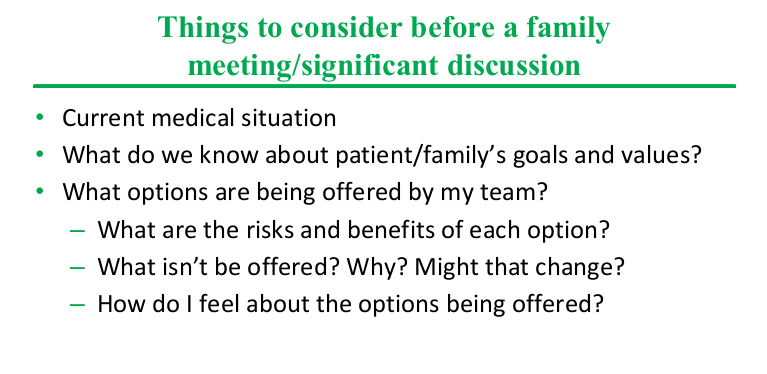
Recently, Dr. Laurie Jacobs from CHOA’s palliative care team gave our group a provocative update on communication strategies in children with severe illness.  My notes below may contain errors in transcription and in omission. Along with my notes, I have included many of her slides.

  • Having a pre-meeting with other members of health care team is a key part in setting up an effective meeting with parents
  • Delivering news: 1) Provide a straightforward Headline: ‘We are here to discuss xyz’ 2)Be clear. ‘To be clear is to be kind’ 3) Then STOP TALKING.  This let’s the family process
  • Sometimes even delivering bad news can be met with relief by families who have been waiting for a diagnosis
  • Respond to emotion with NURSE mnemonic: Name, Understand, Respect, Support, Explore
  • What if the ‘family doesn’t get it?’ Do they understand (can they repeat back)?  Most often the family has a different perspective; they may think we are wrong
  • Be careful to avoid offering decisions where there are not actual decisions to be made
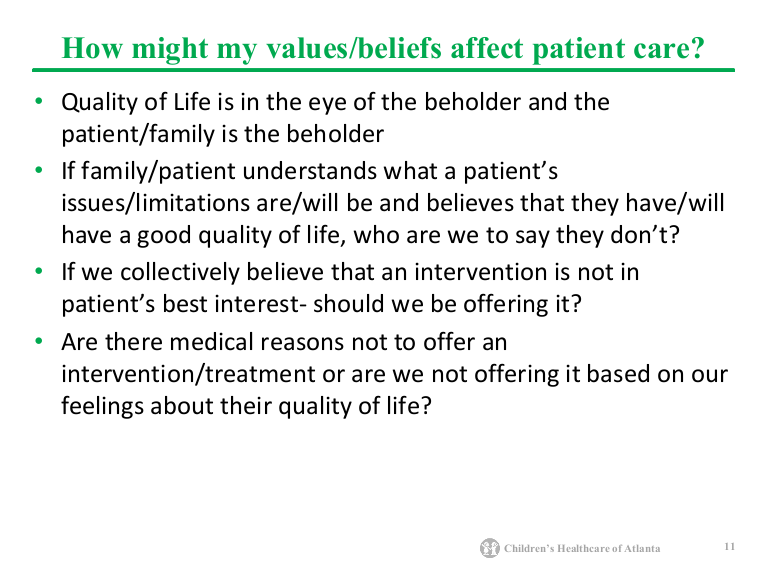
  • Our own values/beliefs are often introduced even though quality of life is in the eye of the beholder
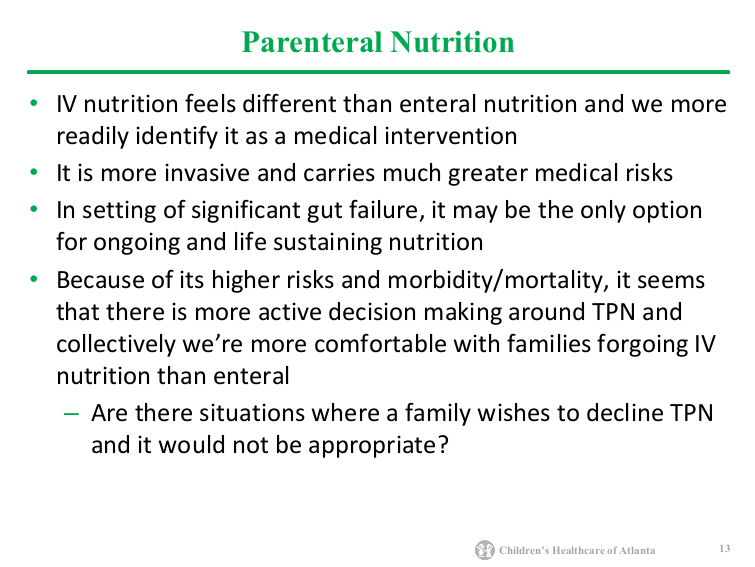
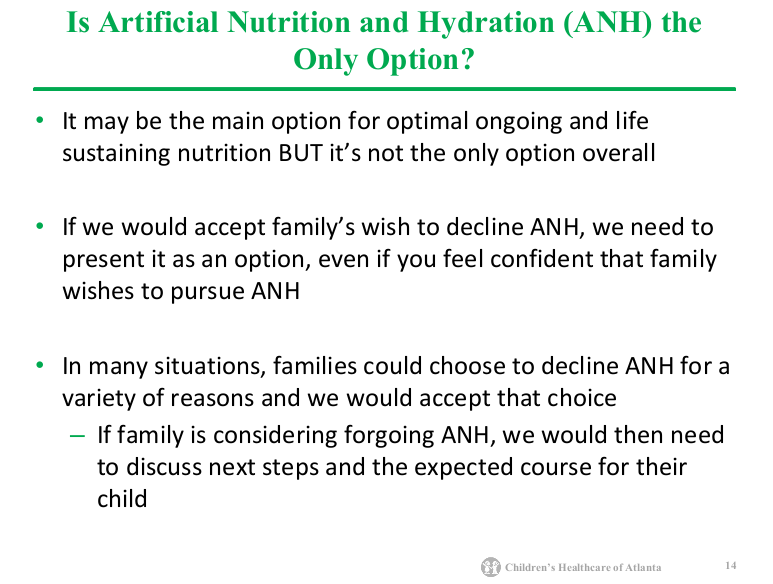
  • Tube feeds can be considered forms of ‘artificial nutrition.’  There are situations in which families need to know that it is not always required
  • Parenteral nutrition is more invasive and associated with more active parental decision-making
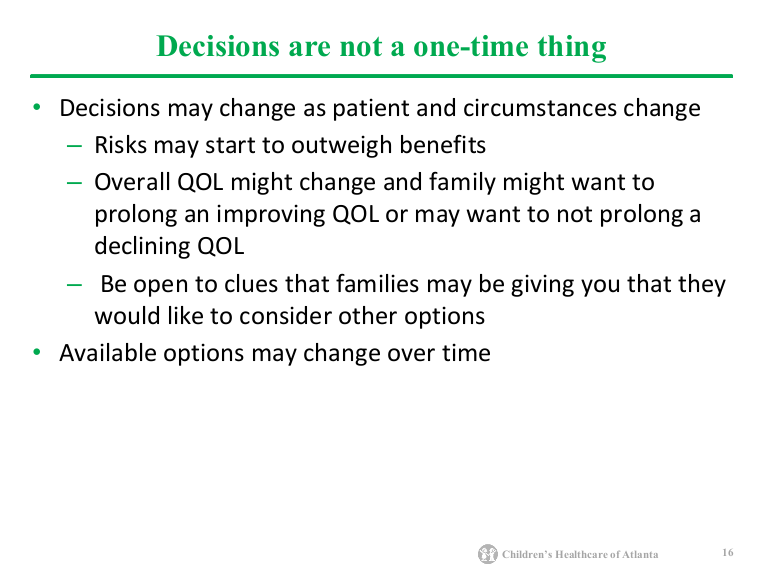
  • Decisions may change based on change in patient circumstances
  • There is not a single right answer with difficult decisions.  There are trade-offs between longevity and QOL
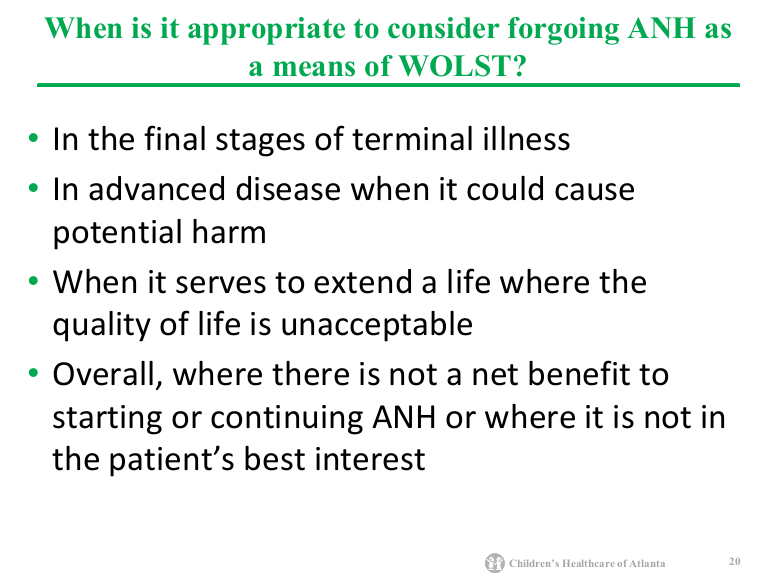
  • Anything that we would allow parents not to start, can be stopped at any time from an ethical standpoint
WOLST =withdrawal of life-sustaining therapies

Related blog posts:

Ten Americas: Examining Health Disparities and Life Expectancy

L Dwyer-Lindgren et al. The Lancet; 2024. Online first. Open Access! Ten Americas: a systematic analysis of life expectancy disparities in the USA

Background: Nearly two decades ago, the Eight Americas study offered a novel lens for examining health inequities in the USA by partitioning the US population into eight groups based on geography, race, urbanicity, income per capita, and homicide rate. That study found gaps of 12·8 years for females and 15·4 years for males in life expectancy in 2001 across these eight groups. In this study, we aimed to update and expand the original Eight Americas study, examining trends in life expectancy from 2000 to 2021 for ten Americas (analogues to the original eight, plus two additional groups comprising the US Latino population), by year, sex, and age group.

Methods: The authors tabulated deaths from the National Vital Statistics System and population estimates from the US Census Bureau and the National Center for Health Statistics from Jan 1, 2000, to Dec 31, 2021.

Key findings: .

  •  At the beginning of the 21st century, there was already a 12.6-year gap in life expectancy among Americas, but this gap grew even larger during the 2000s and 2010s and accelerated to 20.4 years after the first 2 years of the COVID-19 pandemic.
  • One’s life expectancy varies dramatically depending on where one lives, the economic conditions in that location, and one’s racial and ethnic identity.
  • There are limitations with the data that were used. For example, there is known to be substantial misreporting of race and ethnicity on death certificates

My take (borrowed from the authors): “The extent and magnitude of health disparities in the USA are truly alarming. In a country with the wealth and resources of the USA, it is intolerable that so many are living in conditions and with health outcomes akin to those of an entirely different country.”

Related blog posts:

Unrelated link: N Kristof NY Times, Gift Ideas That Push Back the Darkness

Gift ideas included the following charities

  • Fistula Foundation which arranges obstetric fistula repair. This restores a woman’s life after this life-altering complication –a corrective surgery that costs just $619 per person
  • Muso Health helps reduce childhood mortality. In Mali, this organization reduced childhood mortality by 95%. The cost of bringing one more person into the Muso health care network is only $22 per year.
  • Reach Out and Read. This U.S-based charity allows doctors to “prescribe” reading to the child. This promotes reading as well as childhood well-child visits.
  • Crisis Text Line is for those who want to volunteer, rather than donate. This organization trains (15-20 hrs) volunteers to help individuals needing mental health support. “More than 90 percent of the volunteers report that their own mental health improves as a result of their participation.”

Improvements in Toddler Diet Quality: 1999-2018 Study

M Zimmer et al. Pediatrics 2024; 154: e2024067783.

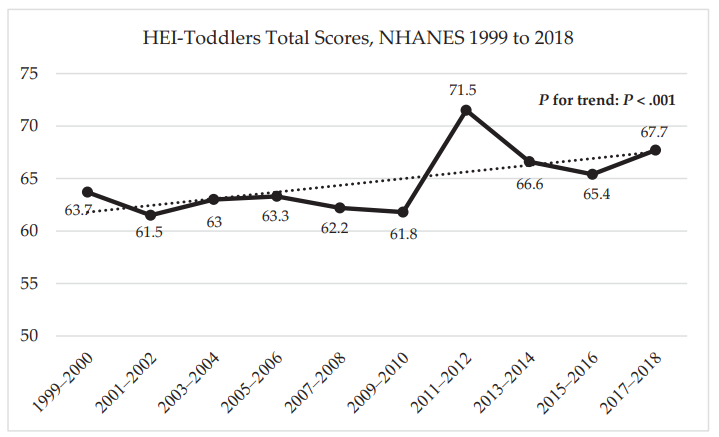
Methods: This serial cross-sectional analysis of National Health and Nutrition Examination Survey (NHANES) data was performed with 2541 toddlers from 10 NHANES cycles from 1999 to 2018.

Key findings:

  • Toddler diet quality improved significantly from 1999 to 2018 (P < .001), from 63.7
    points on average in 1999-2000 to 67.7 points in 2017-2018
  • A significant positive linear trend in total diet quality was observed for all socioeconomic status groups (P < .05)
  • Several dietary component scores improved, as follows: Whole Fruits (P < .001), Whole
    Grains (P 5 .016), Fatty Acids (P 5 .002), Refined Grains (P 5 .009), and Added Sugars
    (P < .001)
HEI-Toddlers -Healthy Eating Index has total score ranging from 0-100 points with higher score indicating healthier diets.

In the discussion, the authors note that other age groups besides toddlers have seen modest improvements in diet. Even small improvements can be consequential on a population-basis. In adults, a 4-point increase in HEI scores has been associated with a reduced risk of cardiovascular disease. The strongest improvement between 1999 and
2018 in toddler diet quality was in scores for added sugars…attributed to declines in
added sugars from sweetened beverages. “A heightened awareness of added sugars in sweetened drink products among caregivers themselves may have led to a cultural shift
around feeding toddlers less sweetened drinks.”

While in toddlers there was no significant difference in dietary scores based on socioeconomic status, “, the diet quality gap for adults has widened over time by SES,14,15
race and Hispanic origin, and Supplemental Nutrition Assistance Program participation status.”

“Although toddlers do not receive school meals, their diets can be similarly impacted by other large-scale programs like the Special Supplemental Nutrition Program for Women, Infants, and Children (WIC) and the Child and Adult Care Food Program. Changes to the WIC food package have been consistently linked to improved child diet quality, and may have contributed to the gains in toddler diet quality observed in this study.”

Study limitations are related to self-reported dietary intake.

My take: It feels like improving diet quality is like swimming against a strong tide. Yet, this study shows improvements can happen. Ongoing efforts are needed to encourage healthier diets.

Related blog posts: