Phase 2 Trial of Tulisokibart for Ulcerative Colitis

Yesterday’s pumpkin -please no snide remarks about how I can now retire and become a sculptor:


BE Sands et al. N Engl J Med 2024;391:1119-1129. Phase 2 Trial of Anti-TL1A Monoclonal Antibody Tulisokibart for Ulcerative Colitis

Background: “Several studies have implicated human tumor necrosis factor–like cytokine 1A (TL1A) in the pathogenesis of inflammatory bowel disease…Tulisokibart (formerly PRA023) is a humanized IgG1 kappa monoclonal antibody that binds to the membrane-bound and soluble forms of TL1A with high affinity and specificity. Tulisokibart prevents the interaction of TL1A and DR3, thereby suppressing type 1 and type 17 helper T-cell responses, increasing regulatory T-cell activity, and decreasing profibrotic pathways.”

Methods: (ARTEMIS-UC trial) The authors “randomly assigned patients with glucocorticoid dependence or failure of conventional or advanced therapies for ulcerative colitis to receive intravenous tulisokibart (1000 mg on day 1 and 500 mg at weeks 2, 6, and 10) or placebo. Cohort 1 included patients regardless of status with respect to the test for likelihood of response. Cohort 2 included only patients with a positive test for likelihood of response.”

“The inclusion of an integrated assessment of a panel of genetic markers as a diagnostic assay was based on the notion that patients with a propensity to overexpress TL1A might be more likely to have a response to tulisokibart than an unselected population.”

Key findings:

  • In the first cohort, a significantly higher percentage of patients who received tulisokibart had clinical remission than those who received placebo (26% vs. 1%), endoscopic healing (31% vs. 4%), endoscopic improvement (37% vs 6%) and clinical response (66% vs 22%)
  • “Among patients with a positive test for likelihood of response (cohorts 1 and 2 combined), clinical remission occurred in a higher percentage of patients who received tulisokibart than in those who received placebo (32% vs. 11%).”
  • Improvement in CRP and Calprotectin were noted as early as 2 weeks and 6 weeks respectively
  • The incidence of adverse events was similar in the tulisokibart and placebo groups

My take: Tulisokibart was effective in a group of patients with moderately to severely active ulcerative colitis who were refractory to advanced therapies.

Related blog posts:

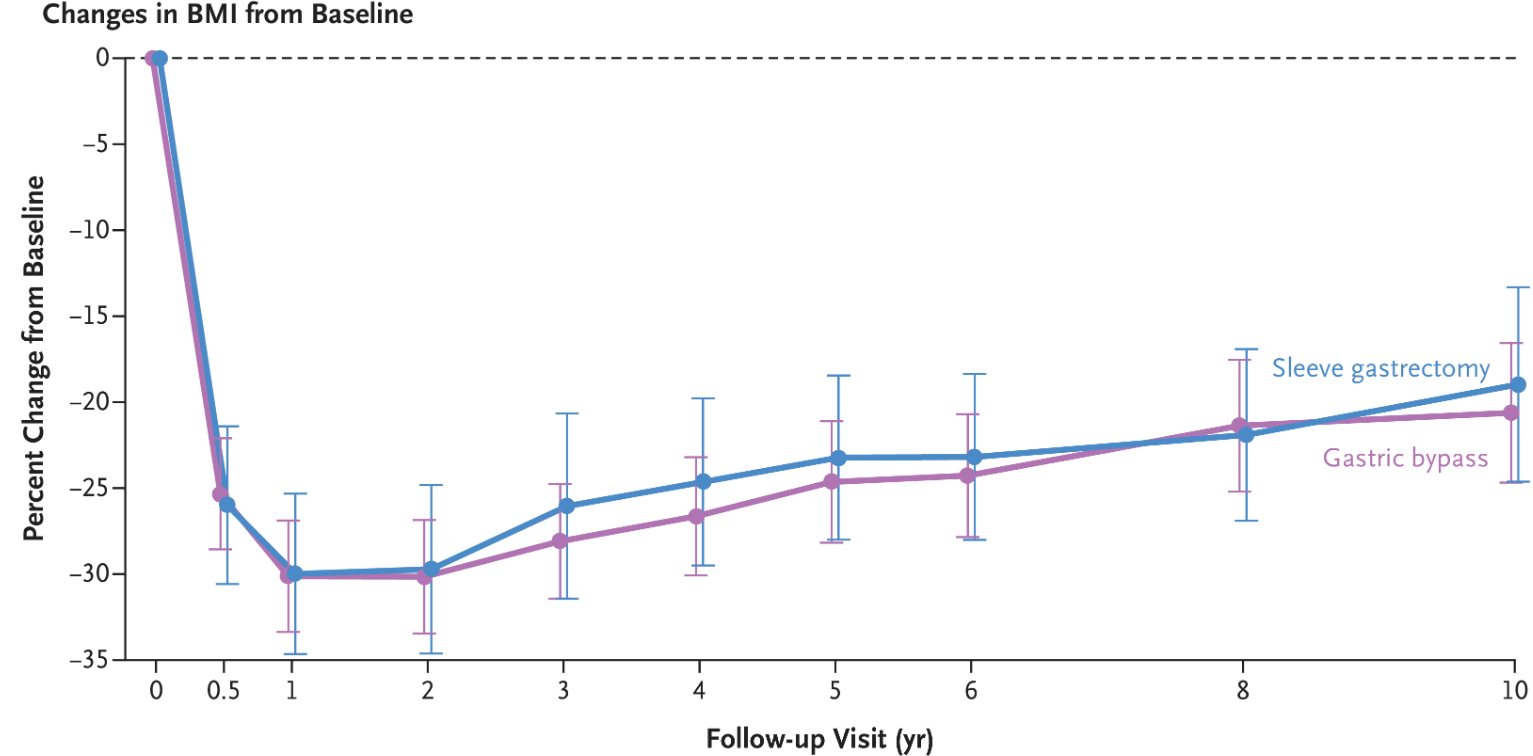
Bariatric Surgery Declines as GLP-1 Medications Rise

USA Today (10/25/24): Bariatric surgeries drop sharply as people turn to Wegovy, Saxenda for weight loss

An excerpt:

The researchers found a 25.6% drop in people undergoing bariatric surgery in the final six months of 2023 compared with the number of surgeries people had during the same period the year before. During the latter half of 2023, the number of patients who took a glucagon-like peptide 1, or GLP-1 medication for weight loss, surged by more than 130%, according to a study published Friday in JAMA Network Open…Another popular weight loss drug, Eli Lilly’s Zepbound, was not included because the Food and Drug Administration did not approve it until November 2023…[And there are] anecdotal reports of hospitals that shut down bariatric surgery programs as the number of patients seeking operations slumped…

In 2022, nearly 280,000 metabolic and bariatric procedures were performed in the United States, according to the American Society for Metabolic and Bariatric Surgery. That represented about 1% of all U.S. residents eligible for weight loss operations…The CDC estimates that about 40% of U.S. residents have obesity and 1 in 10 have severe obesity.

Reference: Lin, K., et al. (2024). Metabolic Bariatric Surgery in the Era of GLP-1 Receptor Agonists for Obesity Management. JAMA Network Opendoi.org/10.1001/jamanetworkopen.2024.41380.

Methods: This cross-sectional study, we used 2022 to 2023 deidentified claims from 17 million unique deidentified adult patients with medical and pharmaceutical coverage through commercial and Medicare Advantage insurance in the OptumLabs Data Warehouse. We included only patients without diabetes and with obesity.

**Only 6% of patients with obesity in the study population received either GLP-1 drugs or surgery, suggesting that many more patients could be receiving treatment.

My take: The GLP-1 drugs have established a medical therapy with a good probability of effectiveness. This was lacking from prior medical treatments. It certainly is logical that their availability could reduce the use of bariatric surgery. The AAP may need to revise their bariatric surgery recommendations from 2020.

Related blog posts:

Bariatric surgery:

GLP-1 Drugs:

Woodley Park-Zoo Metro Station, Washington D.C.

Potential Bias with Interpreting Rumination Outcomes

MR Jia et al. J Pediatr Gastroenterol Nutr. 2024;79:850–854. Delay in diagnosis is associated with decreased treatment effectiveness in children with rumination syndrome

In this retrospective single-center study with 247 patients, the authors evaluated whether the time from symptom onset to diagnosis over time and whether it was associated with symptom resolution.

Key findings:

  • The median age at symptom onset was 11 years and median age at diagnosis was13 years
  • Among the 164 children with outcome data, 47 (29%) met criteria for symptom resolution after treatment
  • A longer time to diagnosis was associated with a lower likelihood of symptom resolution after treatment (p = 0.01)

In the discussion, the authors note that “we suspect that one contributing factor to worse outcomes associated with diagnostic delays is the excessive testing leading to over‐medicalization of DGBIs…Our findings are the first to show that diagnostic delay contributes to poorer outcomes in children with RS, which highlights the importance of a timely diagnosis.” In fairness to the authors, other parts of the manuscript state that the delay in diagnosis is associated with worse outcomes but does not attribute causality.

Limitations:

  • The patient cohort is derived from a specialized referral center (Nationwide Children’s)
  • Recall bias

My take:

  1. While I concur that a timely diagnosis of rumination syndrome is useful, it is unproven that a delayed diagnosis contributes to a worse outcome. The outcome differences could more easily be explained by a selection bias. Patients who never recovered from rumination symptoms previously may be less likely to respond to treatment regardless of when treatment is instituted. Perhaps attributing poor outcomes to delayed diagnosis, rather than a selection bias, is due to a confirmation bias.
  2. Another important finding is that the more than 70% of patients did NOT have resolution of their symptoms. Realizing that many patients have some symptoms after treatment helps gastroenterologists set reasonable goals.

Related blog posts:

LIBERTY Trials for Subcutaneous Infliximab

SB Hanauer, BE Sands, et al. Gastroenterology 2024;167: 919-923. Open Access PDF! Subcutaneous Infliximab (CT-P13 SC) as Maintenance Therapy for Inflammatory Bowel Disease: Two Randomized Phase 3 Trials (LIBERTY)

Methods: Two randomized, placebo-controlled, double-blind studies were conducted in patients with moderately to severely active CD or UC and inadequate response or intolerance to corticosteroids and immunomodulators. All patients received open-label CT-P13 IV 5 mg/kg at weeks 0, 2, and 6. At week 10, clinical responders were randomized (2:1) to CT-P13 SC 120 mg or placebo every 2 weeks until week 54 (maintenance phase) using prefilled syringes. 

Key findings:

  • At week 54 in the CD study, statistically significant higher proportions of CT-P13 SC–treated patients vs placebo-treated patients achieved clinical remission (62.3% vs 32.1%; P < .0001) and endoscopic response (51.1% vs 17.9%; P < .0001)
  • In the UC study, clinical remission rates at week 54 were statistically significantly higher with CT-P13 SC vs placebo (43.2% vs 20.8%; P < .0001).
  • CT-P13 SC was well tolerated, with no new safety signals identified.
  • The mean serum infliximab trough concentrations at weeks 14 and 54 were 13.2 and 14.8 mcg/mL with CD study and 14.6 and 16.3 with UC study, respectively.
Proportions of patients achieving co-primary and key secondary end points
at week 54 in the CD study (all randomized population)
Proportions of patients achieving primary and key secondary efficacy end
points at week 54 in the UC study (all randomized population)

Discussion:

  • “The present findings are generally comparable with or numerically better than those observed in previous clinical trials that evaluated IV infliximab in patients with CD or UC…At week 50 in the SONIC trial, 35% of patients receiving infliximab achieved corticosteroid-free clinical remission,30 compared with 40% of patients in the CT-P13 SC group in the current study.”
  • “In terms of UC, the ACT 1 study4 found that patients receiving infliximab 5 mg/kg and 10 mg/kg were more likely to achieve clinical remission based on total Mayo score after 54 weeks (34.7% and 34.4%, respectively) compared with participants receiving placebo (16.5%), and in the current study, 43.2% and 20.8% of patients, all of whom had responded to induction therapy, achieved clinical remission at week 54 in the CT-P13 SC and placebo groups, respectively.”
  • This study had a high rate of antidrug antibody detection (63.8%–65.1%)…” likely due to the use of highly sensitive, next-generation ADA assays, which have improved sensitivity compared with those used in historical studies… This suggests that route of administration of CT-P13 does not affect rates of ADA formation, and that the observed incidence of ADA is not unexpected.”
  • “The decision to initiate CT-P13 SC maintenance therapy at week 10, 4 weeks after finishing CT-P13 IV induction therapy, was based on results of PK or pharmacodynamic model simulation.”

My take: These studies suggest that SC infliximab is likely to have similar efficacy as IV infliximab

Related blog posts:

When and How to Pursue Ileal Diversion in Crohn’s Disease

A Simard et al. J Pediatr Gastroenterol Nutr. 2024;79:800–806. Role of ileal diversion in pediatric inflammatory bowel disease

Indications:

  • Severe, medically refractory colitis
  • Complex and medically refractory perianal disease
  • In combination with bowel resection for irreversible bowel damage (e.g., fistulae, abscesses, or strictures)

Diversion “provides the opportunity to reduce steroid use, improve growth and observe the natural history of the disease in a more controlled manner. It may also enhance quality of life”

My take: This is a handy article when considering ileal diversion in a patient with medically-refractory inflammatory bowel disease.

Related blog posts:

Near-Death Experience from a Button Battery

MR Smetak, LJ Wilcox. N Engl J Med 2024;391:1139. Button-Battery Ingestion

An excerpt:

A previously healthy 11-month-old girl presented to the emergency department with a 2-week history of progressively worsening dysphagia and cough..A chest radiograph showed a foreign body with a “halo” or “double-ring” sign. Approximately 10 hours after endoscopic removal, “torrential hematemesis and hemorrhagic shock developed. During emergency surgical exploration, no source of bleeding was initially identified, but intraoperative angiography revealed a fistula between the esophagus, which was dilated, and the left common carotid artery (Panel B, arrow). The artery was ligated, and hemostasis was achieved.” The patient was discharged 32 days after admission without neurologic or functional deficits.

My take: Even in children in the hospital, massive bleeding due to a coronary artery to esophagus fistula carries an extremely high mortality rate.

Related blog posts:

Disclaimer: This blog, gutsandgrowth, assumes no responsibility for any use or operation of any method, product, instruction, concept or idea contained in the material herein or for any injury or damage to persons or property (whether products liability, negligence or otherwise) resulting from such use or operation. These blog posts are for educational purposes only. Specific dosing of medications (along with potential adverse effects) should be confirmed by prescribing physician.  Because of rapid advances in the medical sciences, the gutsandgrowth blog cautions that independent verification should be made of diagnosis and drug dosages. The reader is solely responsible for the conduct of any suggested test or procedure.  This content is not a substitute for medical advice, diagnosis or treatment provided by a qualified healthcare provider. Always seek the advice of your physician or other qualified health provider with any questions you may have regarding a condition.

Is Vonoprazan Better Than Intravenous PPIs for High-Risk Peptic Ulcers?

T Geeratragool et al. Gastroenterol 2024; 167: 778-787. Open Access PDF! Comparison of Vonoprazan Versus Intravenous Proton Pump Inhibitor for Prevention of High-Risk Peptic Ulcers Rebleeding After Successful Endoscopic Hemostasis: A Multicenter Randomized Noninferiority Trial

All patients received IV PPI treatment prior to endoscopy. Key finding from this multicenter randomized open-label adult trial:

  • The 30-day rebleeding rates in vonoprazan and PPI groups were 7.1% (7 of 98) and 10.4% (10 of 96), respectively
  • There were similar outcomes with regard to safety and secondary outcomes

My take: This study shows that oral vonoprazan is not inferior to IV PPI treatment for high-risk peptic bleeding ulcers. Perhaps, a study with more participants would show superiority of vonoprazan given the absolute lower rebleeding rates in this study.

Related blog posts:

Common Mistakes When Managing Acute Pancreatitis

G Trikudanathan et al. Gastroenterol 2024; 167: 673-688. Open Access (PDF)! Diagnosis and Management of Acute Pancreatitis

While this review focuses on acute pancreatitis in adults, there are areas of overlap with pediatric patients who have acute pancreatitis. Many of the points in this article were reviewed in the lecture by Dr. Freeman (summarized earlier this week).

A couple of details regarding these recommendations:

Nutrition: “Current guidelines recommend initiating early (as soon as tolerated)
oral feeding with solid (low-fat) diet in patients with predicted mild AP and this approach reduces length of hospitalization. Patients with severe AP or NP may be intolerant to oral diet…studies noted that the pancreas is largely insensitive to meal stimulation during AP. Early enteral nutrition (EN) was shown to have a beneficial trophic effect in preserving gut mucosal integrity and reducing gut bacterial translocation. EN was compared with TPN in AP in several RCTs and the results were statistically aggregated in several meta-analyses to
establish the superiority of EN in mortality, multiorgan failure, and rate of infection.”

TPN: “Given the cost burden, risk of catheter-related sepsis, electrolyte and metabolic derangement, and gut barrier failure, currently use of TPN is reserved for patients for whom EN is not possible or is not able to meet the minimum calorie requirements. It should be noted that although all guidelines advise avoiding TPN, it continues to be used.”

Antibiotics: “Current guidelines do not recommend prophylactic antibiotics in predicted severe AP or sterile necrosis because this practice is associated with the development of multidrug-resistant bacteria and fungal superinfection. It can be difficult in severe
pancreatitis to know if clinical deterioration is due to ongoing pancreatitis with SIRS, or due to a new infection. Procalcitonin is useful in distinguishing SIRS from bacterial sepsis. The PROCAP randomized trial used procalcitonin testing at 0, 4, and 7 days and weekly thereafter with a threshold of 1.0 ng/mL to guide initiation, continuation, and discontinuation of antibiotics. The procalcitonin based algorithm decreased the probability of being prescribed an antibiotic and the number of days on antibiotics without increasing infection or harm in patients with AP.”

Progression to Chronic Pancreatitis: “A systematic review and meta-analysis of progression showed that 10% of patients with first episode of AP and 36% of patients with recurrent AP develop CP, with risk being highest among smokers, alcoholic patients, and men.”

Risk of Diabetes: “A prior systematic review and meta-analysis of patients with an index attack of AP found that newly diagnosed diabetes occurred in 15% of individuals within 12 months, and risk increased 2-fold for diabetes after 5 years. The development of
diabetes was not significantly associated with the severity of pancreatitis, etiology of disease, patient age, or gender.”

Related blog posts:


Adding Linaclotide To Help With Bowel Prep

H Xu et al. Journal of Gastroenterology and Hepatology; 2024: https://doi.org/10.1111/jgh.16734. Application of linaclotide in bowel preparation for colonoscopy in patients with constipation: A prospective randomized controlled study

Methods: In this prospective, single-center, randomized controlled trial, 322 participants (18-75 yrs) were divided into two groups: a 3-L PEG + 870-μg linaclotide group (administered as a single dose for 3 days) and a 4-L PEG group. All enrolled patients had constipation as defined by the Rome IV criteria (fewer than three bowel movements per week with associated symptoms such as straining and hard or lumpy stools).

Linaclotide dosing: One 290-μg linaclotide capsule 30 min before the first meal for 3 days leading up to the colonoscopy, but not on the day of the procedure itself

Key findings:

  • The 3-L PEG + linaclotide group showed significantly higher rates of adequate and excellent bowel preparation than the 4-L PEG group (89.4% vs 73.6% and 37.5% vs 25.3%, respectively; P < 0.05).
  • Boston Bowel Preparation Scale (BBPS) score  in the linaclotide group was significantly higher than that in the 4-L PEG group.
  • Adverse effects like nausea and vomiting were less common in the linaclotide group compared to the 4-L PEG group. Nausea was noted in 10% of linaclotide group compared to 24.5% in the 4-L PEG group. vomiting occurred in 5% and 19.5% respectively. Overall, adverse effects were 24.4% compared to 41.5% respectively.
  • The cecal intubation rate was 87.5% in the linaclotide group and 81.8% in the 4-L PEG group, which indicated a higher trend in the linaclotide group. Both groups had a lower cecal intubation rate than the 90% benchmark rate and could be related to the underlying constipation.

My take: In patients with constipation, linaclotide with 3L PEG resulted in a better cleanout than a standard 4L PEG prep. Combination laxatives as part of the prep should be considered in those with underlying constipation.

This study would be hard to replicate in children as very few children with constipation need a colonoscopy. It is possible that the addition of linaclotide would improve cleanouts even in children without constipation. Other studies showing linaclotide can help with cleanouts in the general population include the following:

  • Zhang M, et al. Eur. J. Gastroenterol. Hepatol. 2021; 33: e625–33.
  • Tao T, et al. Chin. J. Dig. 2022; 42

Related blog posts:

How to Upgrade Pancreas Care –Jay Freeman MD (Part 2)

We had a great pancreas update lecture from Dr. Jay Freeman. In my view, a great lecture involves a well-delivered informative lecture that likely leads to an improvement in clinical practice. My notes below may contain errors in transcription and in omission. Along with my notes, I have included many of his slides.

  • Currently there are NO recommendations for medications that can prevent progression of chronic pancreatitis
  • Use of neuromodulators (eg. TCAs, Gabapentin) are often given to reduce pain
  • Cognitive behavioral therapy has been used in chronic pancreatitis with significant improvement
  • Pain management is working towards objective pain markers
  • Changes in pancreatic function are associated with risk of pancreatitis
  • CF drugs have changed pancreatic function in the CF population and may be helpful in other populations
  • Pancreatic enzymes (PERT) may decrease the risk of pancreatitis. Based on the PAUSE study, a double-blind study is needed to determine if PERT can reduce pancreatitis with ARP or CP
  • From Nationwide Children’s Summary: “The researchers found that nearly 17% of children with pancreatic-sufficient ARP and CP were treated with pancreatic enzymes. Children started on pancreatic enzyme therapy experienced fewer AP episodes annually, and approximately 40% of children on pancreatic enzyme therapy had no additional AP episodes [during a mean 2.1 years of follow-up] over approximately two years of follow-up. Children with a SPINK1 mutation and those with ARP (compared with CP) were less likely to have an AP episode after initiating pancreatic enzyme therapy… a randomized, placebo-controlled clinical trial is necessary to evaluate the true impact of pancreatic enzymes for these patients.” Freeman AJ, et al. American Journal of Gastroenterology. 2024 Apr 18. DOI: 10.14309/ajg.0000000000002772. Epub ahead of print.Open Access! Pancreatic Enzyme Use Reduces Pancreatitis Frequency in Children With Acute Recurrent or Chronic Pancreatitis: A Report From INSPPIRE. “After initiation of PERT, the mean AP annual incidence rate decreased from 3.14 down to 0.71 ( P < 0.001).”
  • The TACTIC study showed that an oral serine protease inhibitor reduced daily pain; however, the 4-week change was similar to placebo. This study shows why placebo-controlled studies are needed
  • There are other treatment approaches that are being studied in adults including antifibrotics, simvastatin, and paracalcitol

Related blog posts:

Disclaimer: This blog, gutsandgrowth, assumes no responsibility for any use or operation of any method, product, instruction, concept or idea contained in the material herein or for any injury or damage to persons or property (whether products liability, negligence or otherwise) resulting from such use or operation. These blog posts are for educational purposes only. Specific dosing of medications (along with potential adverse effects) should be confirmed by prescribing physician.  Because of rapid advances in the medical sciences, the gutsandgrowth blog cautions that independent verification should be made of diagnosis and drug dosages. The reader is solely responsible for the conduct of any suggested test or procedure.  This content is not a substitute for medical advice, diagnosis or treatment provided by a qualified healthcare provider. Always seek the advice of your physician or other qualified health provider with any questions you may have regarding a condition.