Methods: The study was designed as a multicenter, open-label, randomized controlled trial. Patients with angiodysplasia bleeding were required to have had at least 4 red blood cell (RBC) units or parental iron infusions, or both, in the year preceding randomization. Patients were allocated (1:1) to 40-mg octreotide long-acting release intramuscular every 28 days or standard of care, including endoscopic therapy.
Key findings:
Baseline: Patients (n=62, with mean age 72 years) required a mean number of 20.3 transfusion units and 2.4 endoscopic procedures in the year before enrollment.
During Study: The total number of transfusions was lower with octreotide (11.0) compared with standard of care (21.2). Octreotide reduced the annual volume of endoscopic procedures by 0.9.
Adverse events: Octreotide-related AEs were common (65%);however, these AEs were mild and self-limiting nature. They “rarely elicit treatment discontinuation.”
mean number of transfusion units patients in the octreotide group and standard of care group
My take: Fortunately (for me), angiodysplasia is quite rare in the pediatric age group. In adults, octreotide helps reduce transfusions and need for endoscopy.
This “retrospective cohort study was conducted using data acquired from SPARC IBD, a component of the Crohn’s & Colitis Foundation’s IBD Plexus research platform. SPARC IBD is a prospective cohort study conducted at 18 US centers and includes more than 4000 patients.” The median patient age was 37 years.
Key findings:
Following an initial negative result in 687 patients, 269 patients received a second test (after an initial negative test), of which 5 were positive (1.9%), which was not significantly different from the prevalence with the first test
Oral steroids were associated with an increased proportion of indeterminate results, although not achieving statistical significance
The authors did not identify any potential risk factors for latent tuberculosis among the covariates investigated
Overall, the authors found “found that there is continued utility for the use of IGRA tests with patients receiving medication for IBD despite the declining incidence of tuberculosis in the United States. In addition to testing before administration of treatment, this study suggests serial testing may still be necessary because of a substantial rate of positive conversions among patients in the cohort.”
After reading this study, I did an informal survey from the physicians/APP in my group. As a group, we take care of approximately 1000 children with inflammatory bowel disease. Over the last 20 years, only one of my partners recollects having a true positive test result after an initial negative result. This particular patient who was asymptomatic received a 9 month course of isoniazid.
My take: There is a low yield of follow-up testing for tuberculosis, especially in pediatric patients with no exposure history or travel history. For our practice, this would be a good summer research project for a premed student, a resident or even a fellow. I would expect the yearly and cumulative costs of screening for latent tuberculosis in our practice to be quite high. A quick web search suggests that a single blood test costs ~$150 which would be $105,000 for 700 tests. However, the costs are much greater due to additional investigations related to indeterminate results.
Corporations are supposed to pay a nominal tax rate of 21%. But in recent years, the biggest pharmaceutical companies had an average effective tax rate of less than 12%, according to an analysis by the Senate Finance Committee….
An NPR examination of financial records for the top five drug companies in the U.S. showed that in 2023, all but Eli LIlly reported losing money in the US.

However, drug companies make most of their sales in the U.S., thanks in large part to its unique health care system and the higher prices Americans pay for drugs. The top five American pharmaceutical companies all had more drug sales in the U.S. than they did in all the other countries in the world put together…
“How do they do it? You license your intellectual property to an offshore subsidiary,” Setser tells NPR. “You produce the high value-added active ingredients in a factory in Ireland or Singapore, and you pretend like the profit is accrued to these offshore subsidiaries, even though the sales are back to the United States…”
The drug industry isn’t the only one that moves its income around to pay lower taxes, but the U.S. market’s role in driving the drug industry’s overall revenue makes the tax strategy stand out, says Ameet Sarpatwari, assistant director of the Program on Regulation, Therapeutics and Law at Harvard Medical School.
“These findings are striking because they show that the companies want to benefit from the high prices and the high sales in the U.S. market, but are doing everything possible to not contribute to the taxes that make that system and market function”
My take: Despite earning top dollar and receiving all sorts of research support, the pharmaceutical industry (like other industries) are taking advantage of US tax laws and not paying their fair share. Yet, I doubt there will be legislation passed in the near future to address this. “The pharmaceutical and health product industry spent $381 million lobbying Congress in 2023 – more than any other industry that year”.
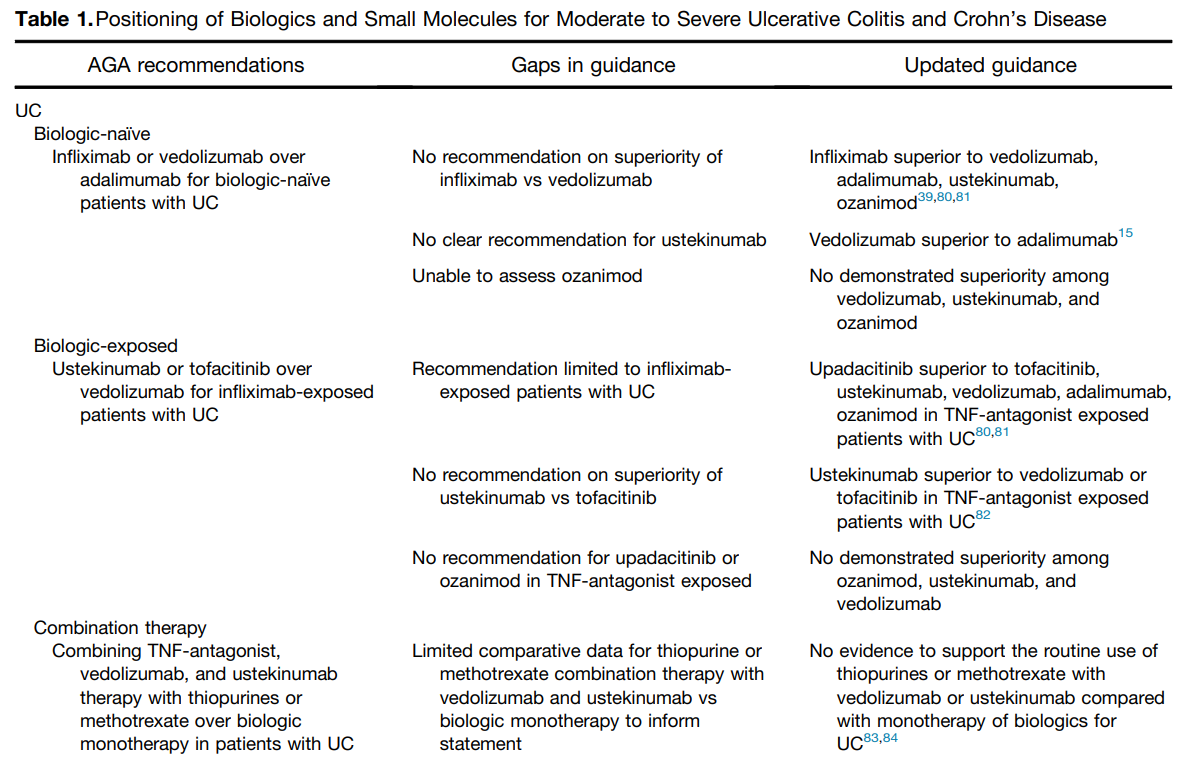
Methods: Studies included in the current analysis were parallel-group, randomised controlled trials (RCTs) that evaluated treatment with IFX SC, following induction therapy with IFX IV, or treatment with VDZ (either with VDZ IV or with VDZ SC [following IV induction therapy]). The authors identified three eligible CD trials and four eligible UC trials that assigned over 1200 participants per disease cohort to either IFX SC or VDZ.
Key findings:
Crohn’s disease: Intravenous induction therapy with IFX demonstrated better efficacy compared with VDZ; during the maintenance phase, IFX SC showed numerically better efficacy than VDZ. A lower proportion of IFX SC-treated patients discontinued therapy due to lack of efficacy over 1 year.
Comparison of IFX SC versus VDZ for key efficacy outcomes in patients with Crohn’s disease
Ulcerative colitis: Efficacy profiles were similar with IFX SC and VDZ during the induction and maintenance phases, and a lower proportion of IFX SC-treated patients discontinued therapy due to lack of efficacy over 1 year.
Comparison of IFX SC1versus VDZ for key efficacy outcomes in patients with ulcerative colitis
Safety: In both cohorts, safety profiles for IFX SC and VDZ were generally comparable during 1 year.
Discussion Points:
The authors discuss some limitations of their study. “The GEMINI I, GEMINI II, and VISIBLE 1 trials were rated as being at high risk of bias for the category ‘other’ bias, because only patients who achieved a clinical response during induction went on to participate in the maintenance phase, which could potentially lead to a higher estimate of efficacy during the maintenance phase than if patients who did not achieve a clinical response were also included.”
The vedolizumab studies notably included a high proportion of patients who failed to respond to anti-TNFs. “All VDZ studies permitted enrolment of patients with prior TNFi failure, accounting for 47.5% of VDZ-treated patients overall.” Thus, in a true head-to-head study with patients unexposed to biologics, VDZ may achieve better results.
My take: This study indicates that SC infliximab (like IV infliximab) appears to be more effective than vedolizumab for patients with Crohn’s disease and similarly effective for ulcerative colitis, keeping in mind the aforementioned discussion points. While not evident in this study, vedolizumab has a superior safety profile.
Disclaimer: This blog, gutsandgrowth, assumes no responsibility for any use or operation of any method, product, instruction, concept or idea contained in the material herein or for any injury or damage to persons or property (whether products liability, negligence or otherwise) resulting from such use or operation. These blog posts are for educational purposes only. Specific dosing of medications (along with potential adverse effects) should be confirmed by prescribing physician. Because of rapid advances in the medical sciences, the gutsandgrowth blog cautions that independent verification should be made of diagnosis and drug dosages. The reader is solely responsible for the conduct of any suggested test or procedure. This content is not a substitute for medical advice, diagnosis or treatment provided by a qualified healthcare provider. Always seek the advice of your physician or other qualified health provider with any questions you may have regarding a condition.
Personal pet peeve: I receive so many unwanted promotional materials from pediatric hospitals and pediatric gastroenterology divisions from across the country. This is such a waste of paper and effort. Presumably, this is an endeavor to raise the profile of these institutions and programs.
If anyone reading this blog has any role in this, please stop sending this crap and only send this material to alumni or those that request (opt-in) it.
“Alex Benigno, 45, has spent the past 10 months riding his ElliptiGO stand up bike around town, picking up nails, screws and other little annoying things that cost drivers tons of money.” Now he has picked up more than 280 pounds of metal off the street.
“Clark Howard gets a hug from his son Grant Howard before the start of the Atlanta Habitat for Humanity dedication of the 98, 99, and 100th Howard’s sponsored homes in Atlanta on Saturday, April 13, 2024.”
My take: Recently, one of my patients who had been neglected was being taken care of by elderly couple. In addition to this infant, this couple had helped about 80 children over several decades. Everyday I see people who are making this world a better place -not all of them are in the news. It really is an inspiration.
This study included 9 RCTs involving a total of 445 participants. Key findings:
Though some of the study findings seemed to favor prebiotics, all evidence was of very low certainty.
“There may be no difference in occurrence of clinical relapse when adjuvant treatment with prebiotics is compared with adjuvant treatment with placebo for maintenance of remission in UC.”
“Adjuvant treatment with prebiotics may result in more total adverse events when compared to adjuvant treatment with placebo for maintenance of remission. The evidence was of low certainty.”
My take: Currently, there is no solid evidence to recommend prebiotics in patients with ulcerative colitis.
“The Federal Trade Commission on Tuesday said employers could no longer, in most cases, stop their employees from going to work for rival companies.
The sweeping action could help create jobs, raise wages and increase competition among businesses, the agency said. But the action is all but certain to be challenged in court by businesses that say they need to protect trade secrets and confidential information…Noncompetes cover about 30 million U.S. workers..”
[It is estimated that] “the decision would lead to the creation of 8,500 start-ups in a year and up to $488 billion in increased wages for workers over the next decade.”
“The rule would become law 120 days after it is published in the Federal Register, which will probably happen in a few days. But legal challenges could delay or block the change…It orders employers to notify nonexecutive employees bound by an existing noncompete that it will no longer be enforceable.”
There is a carve out: STAT (4/23, Bannow, Subscription Publication) reports: “Crucially for the health care industry, the noncompete ban does not apply to nonprofit companies, as the FTC determined it only has jurisdiction over for-profit companies.” This “means the ban likely won’t apply to most of the country’s hospitals, the majority of which are nonprofit, and some of the country’s biggest health insurers.”
My take: Noncompete agreements at the time of a job offer occur when prospective employees are vulnerable and have limited negotiating power. Established business with market dominance will need to use other ways besides coercion to keep talented employees when noncompete clauses go away.
This lengthy article details “a little-known data analytics firm called MultiPlan. It works with UnitedHealthcare, Cigna, Aetna and other big insurers to decide how much so-called out-of-network medical providers should be paid. It promises to help contain medical costs using fair and independent analysis.”
“But a New York Times investigation, based on interviews and confidential documents, shows that MultiPlan and the insurance companies have a large and mostly hidden financial incentive to cut those reimbursements as much as possible, even if it means saddling patients with large bills. The formula for MultiPlan and the insurance companies is simple: The smaller the reimbursement, the larger their fee.”
The backdrop on MultiPlan was a scandal 15 years ago. The NY Attorney General concluded that the insurance companies had “a payment system riddled with conflicts of interest had been shortchanging patients, and at its core was a data company called Ingenix. Insurers used the company, a UnitedHealth subsidiary, to unfairly lower their payments and shift costs to patients, the probe found…UnitedHealthcare, Cigna, Aetna and other major insurers agreed to replace Ingenix with a nonprofit that would provide independent pricing data…The companies were required to use the nonprofit database for only five years.” Subsequently, the insurance companies turned to Multiplan. In a 2015 email, a Cigna risk officer:: “We cannot develop these charges internally (think of when Ingenix was sued for creating out-of-network reimbursements). We need someone (external to Cigna) to develop acceptable” rates, she wrote.
Some of the examples of out-of-network charges in the article included:
Gail Larson had surgery on a non-healing chest wound. “UnitedHealthcare, advising that Dr. Rabinowitz would be paid $5,449.27 — a small fraction of what he had billed the insurance company. That left Ms. Lawson with a bill of more than $100,000.”
“Kelsey Toney, who provides behavioral therapy for children with autism, who was receiving a payment of half the medicaid rate for providing care.”
“Cari Campbell, who received fertility treatment in Minnesota, was charged thousands of dollars.”
“Justin Dynlacht, who has Crohn’s disease, paid extra for a plan that covered such visits. After seeing two in-network doctors about persistent abdominal pain, he went to an outside specialist who discovered a hernia containing abdominal tissue. Aetna sent the specialist’s claims to MultiPlan, and Mr. Dynlacht was left with thousands of dollars in bills.”
My take: Insurance companies in coordination with Multiplan rip off their policy holders by not providing reasonable coverage for their out-of-network medical care. Ultimately, patients will be increasingly affected as many physicians/hospitals walk away from insurers who are offering low reimbursement rates to in-network providers too. Insurance companies are incentivized to not care.
This was a retrospective analysis on a prospectively enrolled cohort of children at a single center who were treated as part of routine clinical care. I-SEE was calculated at the diagnostic and follow-up endoscopies over a mean of 6.6 years.
Key findings:
Of 67 children who met study criteria of at least 3 endoscopies over at least 2 years of follow-up time, 43%, 36%, and 21% had mild, moderate, and severe I-SEE scores at baseline, respectively.
By the last instance, the overall I-SEE score dropped to 3.9 (P < .001). Body mass index <5% and poor feeding were more common in the children with severe I-SEE scores at baseline, and both improved by the last instance.
The discussion notes that I-SEE metric was developed to determine EoE severity and for tracking purposes to gauge effectiveness of therapy. They note that most patients improved but a score of 0, indicating deep remission, was difficult to achieve at the population level. They also anticipate further modifications to I-SEE “such as age or an assessment of symptoms that reflects inflammatory or fibrotic disease.”
My take: I-SEE provides a way to objectively assess and follow EoE severity at all ages.