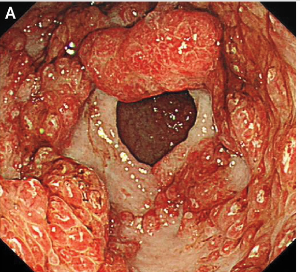
One of my partners, Jordan Weitzner, retrieved this foreign body with an upper endoscopy from an 8 yo patient recently.


Related blog posts:
HS Ahmed et al. Hepatology 2023; 77: 2063-2072. The association between hepatic steatosis and incident cardiovascular disease, cancer, and all-cause mortality in a US multicohort study
The authors included 10,040 participants from the Framingham Heart Study, the Coronary Artery Risk Development in Young Adults Study, and the Multi-ethnic Study of Atherosclerosis to assess the longitudinal association between liver fat (defined on CT) and incident cardiovascular disease (CVD).
Key finding:
Hepatic steatosis was associated with all-cause mortality after 12.7 years of mean follow-up when adjusting for baseline CVD risk factors, including body mass index (HR: 1.21, 1.04–1.40); however, the association between hepatic steatosis and incident CVD was not statistically significant after we accounted for body mass index in models considering baseline covariates or time-varying covariates. We observed no association between hepatic steatosis and CVD-related mortality or incident cancer.
My take: While CVD is the leading cause of mortality in patients with fatty liver disease, this study suggests that hepatic steatosis is a marker for this increased risk rather than an independent cause.
DU Lee et al. Liver Transplantation 2023; 29: 626-643. The trends in cost associated with liver transplantation in the US: Analysis of weighted hospital data
This lengthy article is loaded with data on trends and costs of liver transplantation in the U.S.
Key findings:
Editorial: A Kaplan et al. Liver Transplantation 2023; 29: 568-569. Open Access!
Liver transplant at all costs Key points:
My take: It is likely that the costs of liver transplantation are going to continue to rise unless we develop a shortage of suitable liver donors or a shortage of transplant personnel. Severe fatty liver disease and alcoholic liver disease continue to increase in frequency while hospital costs continue to soar. Reducing costs will rely on reversing the tide of these diseases.
Related blog posts:

SR Gupta et al. JPGN 2023; 76: 776-781. Outcomes for Standardized Home and Hospital-Based Infusions of Infliximab for Children With Inflammatory Bowel Disease
In this retrospective study with 102 children, key findings:
The authors note that HI were arranged with a single home health company with pediatric PALS-trained nurses. In addition, there was “direct communication between the home health nurse and IBD nurse after each infusion.”
Prior studies of HI have shown increased AOs in patients receiving HI including stopping therapy, ER visits, and hospitalizations (Clin Gastroenterol Hepatol 2020; 18: 257-258, Am J Gastroenterol 2020; 115: 1698-1706, JAMA New Open 2021; 4: e2110268).
My take: If set up properly, home infusions could be a reasonable alternative to hospital-based or office-based infusions.

In this article, from May 31, 2023: Sick Workers Tied to 40% of Food Poisoning Outbreaks, C.D.C. Says
“Each year, 48 million people become sick from a food-borne illness, according to C.D.C. estimates. Of those, 128,000 are hospitalized and 3,000 die.”
DF Baaleman et al. JPGN 2023; 76: 731-736. Open Access! Accuracy of Anorectal Manometry to Detect the Rectoanal Inhibitory Reflex in Children: Awake Versus Under General Anesthesia
In this retrospective review from a tertiary referral center with 34 children.
Background: “The RAIR is an involuntary anal reflex mediated by a complex intramural neuronal plexus that results in a decrease of the internal anal sphincter (IAS) pressure following distension of the rectum. Such distension can be caused by gas, feces, or an inflated balloon during ARM testing (3). In patients with Hirschsprung disease, the RAIR is absent due to an abnormal development of the enteric nervous system resulting in the absence of ganglion cells (4). Additionally, the RAIR is occasionally found to be absent in children with normal presence of ganglion cells who are then diagnosed with internal anal sphincter achalasia (IASA) (5,6). The clinical significance of this diagnosis is still unclear (5).”
Key findings:
Discussion:
The authors note that in patients with absent RAIR while awake but present while under GA, could result in “incorrect identification of an absent RAIR [and] may result in the unnecessary performance of rectal biopsies and the incorrect diagnosis of IASA…. Still, the ARM while awake more likely represents what they experience when they try to defecate during the day. Therefore, one could argue that these children may experience obstructive symptoms in daily life similar to a child diagnosed with IASA… In our sample, 9 children would have been misdiagnosed with IASA if they would not have undergone a repeat ARM (5).”
My take: It is interesting that about a quarter of children had RAIR identified only while under GA. Given the uncertainty regarding the clinical significance of a IASA diagnosis, in many centers the next step would be arranging a rectal biopsy rather than repeating a study under GA.
Related blog posts:

CB Ebbeling, DS Ludwig. J Pediatr 2023; 255: 22-29. Open Access! Treatment for Childhood Obesity: Using a Biological Model to Inform Dietary Targets
This article describes the role of glycemic index and a carbohydrate-insulin model (CIM) in promoting obesity rather than the more conventional view of energy dense foods causing obesity.

“Dietary targets for which there is general consensus are:
Additional dietary targets of particular relevance to the CIM which differ to some extent from conventional recommendations include:
” When counseling, we recommend home-prepared protein (eg, poultry, fish) over preprepared items with breading (eg, chicken nuggets, fish sticks). We do not specifically recommend reduced-fat (1% or nonfat) dairy. Emerging observational data indicate that consuming whole vs reduced-fat milk is associated with lower adiposity in children,66…Regarding milk with added sugar and flavoring (eg, chocolate milk), prospective data indicate a direct association between consumption and adverse changes in body composition”
Three main goals with this diet approach:
My take: I have favored the Mediterranean diet as a general goal for patients concerned with healthy eating. This article challenges the conventional approach of targeting energy dense foods in favor of avoiding high glycemic carbohydrates.
This article is a good resource–more information available at these links:

After 43 years, Stan Cohen is retiring. He deserves enormous credit for the successes of our group and I wanted to highlight some of his many accomplishments and innovations.
Clinical care:
Publications/Research:
Service:
Recognition:
Stan has many interests outside medicine. He has always had an interest in artwork, good eating, corny jokes, and his family. I am so grateful to Stan for helping to develop our GI group, for his service to children/families, his advice, his friendship and even most of his jokes.

Methods: This was a phase 3, multicenter, double-blind, randomized, placebo-controlled (EPITOPE) trial involving children 1 to 3 years of age with peanut allergy confirmed by a double-blind, placebo-controlled food challenge. Patients (n=362) were randomized a 2:1 ratio to receive epicutaneous immunotherapy delivered by means of a peanut patch (250 mcg) (intervention group) or to receive placebo administered daily for 12 months. The primary end point was a treatment response as measured by the eliciting dose of peanut protein at 12 months.
Key findings:
Points from the editorial:
My take: Immunotherapy, oral or cutaneous, can result in some tolerance to peanuts in the majority of children. However, primary prevention of peanut allergy by timely introduction of peanuts in the diet could prevent the need for this intervention. Usually, introduction is at 4-6 months of age (though with specific precautions recommended in those with severe eczema and egg allergy).
Related blog posts:


N Bevers et al. J Pediatr 2023; 256: 113-119. Open Access! Ferric Carboxymaltose Versus Ferrous Fumarate in Anemic Children with Inflammatory Bowel Disease: The POPEYE Randomized Controlled Clinical Trial
Methods: Children aged 8-18 (n=64) with IBD and anemia (defined as hemoglobin [Hb] z-score < −2) were randomly assigned to a single IV dose of ferric carboxymaltose (15 mg/kg up to 750 mg) or 12 weeks of oral ferrous fumarate (9 mg/kg/day up to 600 mg in BID divided dosing). This study excluded patients with severe disease activity (eg. PUCAI >65, or PCDAI >30).
Key findings:
This “POPEYE” study prompted me to review how much iron is in spinach. Apparently, it is a little more than in red meat. However, red meat iron is “heme” and is better absorbed than “non-heme” iron found in spinach.
My take: In this study, more rapid improvement in 6MWD was noted in first month of treatment but there were no other significant advantages of IV iron in this group which predominantly had quiescent disease or mildly active disease; hemoglobin improvement was comparable in both groups.
Related blog posts:


R Rosen et al. J Pediatr 2023; 256: 5-10. Airway Impedance: A Novel Diagnostic Tool to Predict Extraesophageal Airway Inflammation
Airway appearance is not a reliable marker for aerodigestive disorders. This study (n=73 completed full study) sought to use airway impedance to provide an objective measure of airway mucosal integrity.
Methods: The direct laryngoscopy was performed and videotaped for blinded scoring by 3 otolaryngologists and a specially-designed impedance catheter was placed onto the posterior larynx to obtain measurements; the impedance sensors were placed immediately below vocal cords. Following this, an endoscopy was performed and impedance measurements and biopsies were taken.
Key findings:
Discussion:
My take: Frequently, aerodigestive patients undergo extensive evaluations. This is a simple technique that could easily be added; it may be an objective marker of airway disorders “and may help reduce acid suppression use previously driven by these visual exams.”
Related blog posts:

Thirty years ago:

This past year:

From Darius Rucker –Alright:
When I lay down at night I thank the Lord above
For giving me everything I ever could dream of
‘Cause I’ve got a roof over my head
The woman I love laying in my bed
And it’s alright, alright, alright, alright
I got shoes under my feet
Forever in her eyes staring back at me
And it’s alright, alright, alright, yeah
I got all I need, yeah
I got all I need
And it’s alright by me, oh, yeah