Is Breastfeeding Linked to IBD Risk in Offspring?

M Agrawal et al. Clin Gastroenterol Hepatol 2024; 22: 2459-2467. Open Access! Breastfeeding Duration Is Not Associated With Offspring Inflammatory Bowel Disease Risk in Three Population-Based Birth Cohorts

The authors utilized  prospectively collected data from 3 population-based birth cohorts (Danish National Birth Cohort, Norwegian Mother, Father, and Child Cohort, and All Babies in Southeast Sweden). This collectively included nearly 170,000 offspring.

Key findings:

  • During median follow-up of 16.3–22.3 years, between 1996 and 2021, 543 offspring were diagnosed with IBD
  • In each country, there was no association between exclusive breastfeeding duration and offspring IBD risk

Discussion:

“In contrast to majority of case-control studies, both cohort studies reported null association between breastfeeding, treated as a binary exposure (any versus no breastfeeding) or by duration, and offspring IBD risk. Similarly, 2 nested case-control studies, leveraging prospectively collected data on early life exposures as part of the population-based Jerusalem Perinatal Study and 2 United Kingdom birth cohorts (the 1946 National Survey of Health & Development and the 1958 National Child Development Study) reported null associations between breastfeeding and IBD risk.22,23 Data from these studies, which are more rigorous in methodology compared with case-control studies, are consistent with findings from our analyses.”

My take: While this study has some limitations inherent in observational data, this study with prospectively-collected data indicates that breastfeeding did not modulate the risk of developing IBD.

Related blog posts:

La Fortuna, Costa Rica

Breastfeeding Associated with Infant Survival

JL Ware et al. Am J Prev Med 2023; 65: 763-774. Associations Between Breastfeeding and Post-perinatal Infant Deaths in the U.S

This study examined a prospective cohort linking data on breastfeeding on birth certificates (starting in 2016) to infant death rates. This included 9,711,567 live births and 20,632 post-perinatal infant deaths.

Key findings:

  • The overall adjusted OR for breastfeeding initiation with post-perinatal infant mortality was 0.67.
  • Table 1 provides a ton of information about demographics and associated outcomes: Better education was associated with lower post-perinatal (7-365 days) death rate per 1,000 births. College graduate rate was 0.91 compared to 3.43 for lower than high school. Age 30-34 was 1.53 compared to 3.87 for <20 years. Non-hispanic Asian, Non-Hispanic White, and Hispanic were 1.11, 1.79 and 1.58 and much better than Non-Hispanic Black which was 4.07. Smoking during pregnancy rate was 5.68 compared to 1.83 for non-smoking during pregnancy
  • Preterm infant had a much higher post-perinatal mortality rate: 7.97 vs 1.36 for term babies

One limitation that may contribute to an underestimate of the advantages of breastfeeding -this study determines only initiation of breastfeeding. Breastfeeding duration of >3 months has been associated with decreased infant mortality. In other words, in infants with longer breastfeeding, the advantages are likely to be more pronounced. Breastfeeding has been associated with lower rates of necrotizing enterocolitis and sudden unexpected infant deaths.

My take: Breastfeeding appears to confer health benefits to infants and mothers. Some of the improvements in infant mortality likely are due to the association of breastfeeding with other characteristics that reduce infant mortality including education, non- smoking during pregnancy, older mothers and race. The authors note that race is a “social construct, but the systemic or structural disadvantages associated with race contribute to health disparities…A Black infant is 2.4 times more likely to die before his or her first birthday in the U.S. than a White infant.”

Related blog posts:

Mural from Funk Zone in Santa Barbara
Santa Barbara Botanical Gardens

Expert Advice on Gluten Introduction and Risk of Celiac Disease

H Szajewska et al. JPGN 2024; https://doi.org/10.1002/jpn3.12280. Open Access! Early diet and the risk of coeliac disease. An update 2024 position paper by the ESPGHAN special interest group on coeliac disease

Key points:

  • Breastfeeding, whether any amount, exclusive, or of any duration, does not reduce the risk of developing CD
  • Introducing gluten into an infant’s diet at any time between completed 4 months (≥17 weeks) and 12 months of age does not affect the cumulative incidence of CD

Related blog posts:

Guilt of Breastfeeding Failure

In previous posts, this blog (see below) has examined the potential bias of studies reporting better outcomes in breastfed infants along with issues of maternal guilt. A recent commentary explores the issue of feeling guilty when breastfeeding does not go well.

AJ Kennedy. NEJM 2023; 388:1447-1449. Breast or Bottle — The Illusion of Choice

Some excerpts:

Only about 25% of women in the United States exclusively breast-feed for the recommended period.2  After my struggles, these statistics seem realistic to me, but before I went through it myself, I had no concept of how hard it could be…

Around the time my son turned 6 months old…my primary care doctor… gave me the courage to start taking medication and to stop breast-feeding that very week. Though the guilt about stopping has never fully gone away, the joy and happiness in my life quickly returned…

Even after I’ve told them that I might not choose to breast-feed this time around [with 2nd child], multiple doctors have “reminded” me that breast milk has been shown to carry Covid-19 antibodies — yet another reason to feel ashamed if I choose not to breast-feed…I am hopeful that this time around I can embrace formula feeding more quickly if that is the path that works best for me and my baby,…

I encourage the AAP and other national health organizations to consider how their statements on exclusive breast-feeding are perceived by the public. If 75% of us are not meeting this goal [6 months of exclusive breastfeeding], a more patient-centered approach and recommendation is needed.

My take: Breastfeeding does not work for everyone. Parents often feel guilty about perceived short-comings and we need to find a balance in encouraging breastfeeding but acknowledging that formula feeding is a good alternative.

Related blog posts:

Organ Pipe Cactus, Tucson Botanical Gardens

Briefly Noted: Breastfeeding and Microbiome Diversity

A recent study (JH Savage et al J Pediatr 2018; 203: 47-54) examined the impact of breastfeeding compared with formula on microbiome diversity in 323 infants; this included 95 exclusively breastfed, 169 exclusively formula fed at time of stool collection.

Breastfed infants were more likely to have been born vaginally (74% vs 62%) and less likely to be African-American (11% vs. 36% for hispanic infants, and 52% for caucasian).

Key finding:

  • Breastfeeding was independently associated with infant intestinal microbiome diversity at age 3-6 months
  • Maternal diet during pregnancy and solid food introduction were less associated with infant gut microbiome changes than breastfeeding status

My take: We still don’t understand the long-term implications of these differences in microbiome alterations between breastfeeding and formula.  That being said, the development/evolution of breastmilk has taken place over thousands of years and it is likely that formula, while an important substitute, will never replicate all of the useful components.

Related blog posts:

Chattanooga Riverwalk Sculpture

IBD Shorts -November 2018

G Horneff et al. J Pediatr 2018; 201: 166-75.  This industry-funded analysis of 577 pediatric patients who received adalimumab (1440 patient-years) identified no new safety signals.  The most common serious infection was pneumonia (0.6 events per 100 patient-years).  The most common adverse events were respiratory tract infections/nasopharyngitis. Serious infections were more common in the subset of patients with Crohn’s disease (CD), (n=189), occurring in 13%.

PS Dulai et al. Gastroenterol 2018; 155: 687-95.  This study, using data from GEMINI 2 phase 3 trial with 814 patients, developed a clinical prediction tool for determining the likelihood of a clinical response to vedolizumab.  Common predictors for response:

  • No prior bowel surgery
  • No prior anti-TNF exposure
  • No prior fistulizing disease
  • Higher baseline albumin
  • Lower baseline CRP

R Matro et al. Gastroenterol 2018; 155: 696-704.  The authors performed a prospective study of women with IBD and their infants (n=72).  They “detected low concentrations of infliximab, adalimumab, certolizumab, natalizumab, and ustekinumab in breast milk samples.  We found breastfed intants of mothers on biologics, immunomodulators, or combination therapies to have similar risks of infection …compared to non-breastfed infants or infants unexposed to these drugs.”


With Regard to Avoiding Excessive Weight Gain, Breastfeeding is Best

A recent study (AR Goetz et al J Pediatr 2018; 201: 27-33) examines the impact of breastfeeding on the growth of infants with high birth weight (HBW).

Background: “Exclusive breastfeeding is protective against high weight and is recommended by” the AAP for the first 6 months.  In this study, the authors hypothesized that “HBW infants would receive a lower percentage of breast milk and consume more formula than NBW infants.”

Key findings:

  • HBW infants with high weights at 7-12 months of age demonstrated a rapid decline in the percentage of breast milk feedings compared with HBW infants with normal weights at 7-12 months of age.
  • Normal birth weight infants with high weights at 7-12 months of age received a lower percentage of breast milk and more formula intake that those with normal weights at 7-12 months of age.

Because HBW is associated with later risk of obesity/overweight, identifying strategies early in life is important.  Furthermore, as a recent study in NEJM has shown (M Geserick et al. NEJM 2018; 379: 1303-12), a lot of weight gain issues happen in the first years of life:

  • Almost 90% of children who were obese at 3 years of age were overweight or obese in adolescence
  • Among obese adolescents, the most rapid weight gain had occurred between 2 and 6 years of age

My take: This study further shows a strong association between consumption of breast milk and normal weights at 7-12 months of age, both in HBW and NBW.

Related blog posts:

Near Lake Louise, Banff

Laying to Rest a Breast-Feeding Myth

A recent study (VJ Flaherman et al. J Pediatr 2018; 196: 84-90) examines whether early limited formula feeding undermines breastfeeding.

Background: The authors note that women have been discouraged from using formulas for newborns during the birth hospitalization due to concerns that this will diminish the frequency/success of breastfeeding.

Besides the concern that supplemental formula could increase the risk of breastfeeding cessation, some have expressed concern that supplemental formula could undermine benefits of breastmilk on the intestinal microbiome.  In addition, some have worried that if mothers perceived formula-feeding to be easier, that this could lower satisfaction with breastfeeding.

Yet, on the other side of the ledger, there are “about 80,000 newborns who require readmission after discharge” with the majority related to dehydration and hyperbilirubinemia.  Both of these conditions could be ameliorated by formula supplementation.  Thus, to address whether supplemental formula may be of benefit, the authors devised an “early limited formula” (ELF) trial.  The authors only enrolled infants >2500 gm and who had a weight loss >75th percentile on The Newborn Weight Tool (www.newbornweight.org). The authors excluded those with >10% of their birth weight due to routine practice of supplementation.

Methods: 163 mother-infant pairs were randomly assigned to either ELF along with breastfeeding or breastfeeding exclusively.  ELF involved giving infants 10 mL of a hydrolysate formula with a feeding syringe after each breastfeeding until the onset of copious breast milk

Key findings:

  • Mothers using ELF averaged 5.4 times/day for a median of 2 days.
  • Breastfeeding rates at one month of age: 86.5% of ELF group and 89.7% of controls; 54.6% of ELF and 65.8% of controls were breastfeeding exclusively at 1 month of age.
  • Readmission occurred in 4 (4.8%) of control infants and none of the infants in the ELF cohort (P=.06)
  • Using a subset of 15 (8 with ELF), the authors did not identify significant changes in microbiome of ELF group compared with the exclusively fed group when examined at 1 week and 1 month (as well as baseline)

Limitations of this study include the relatively small number of participants.  Furthermore, some populations that are at increased risk for breastfeeding cessation, namely mothers <25 years and African-American mothers were underrepresented.

My take: This study indicates that ELF is safe and does not appear to significantly increase breastfeeding cessation.

Related blog posts:

Infant Feeding, Opportunity, and Asthma

A recent study (A Kloop et al. J Pediatr 2017; 190: 192-9) examined the relationship between mode of infant feeding and the development of asthma.  The authors used prospective data from 3296 Canadian children in the Canadian Healthy Infant Longitudinal Development (“CHILD” study) cohort.

Key finding:

  • “Compared with infants who received direct breast milk only [at 3 months of age], those who received some expressed milk had a 43% increased odds [of asthma at 3 years of life] …and those who received only formula had a 79% increased odds.”

The authors speculate that the direct breastfeeding may offer some advantages over expressed breast milk:

  • There may be alteration in breast milk components with storage
  • A nursing infant may trigger an increased immune response and be directly exposed to some beneficial commensal bacteria

Since this is an observational study and patients were not randomized there may be other unrecognized confounding variables.

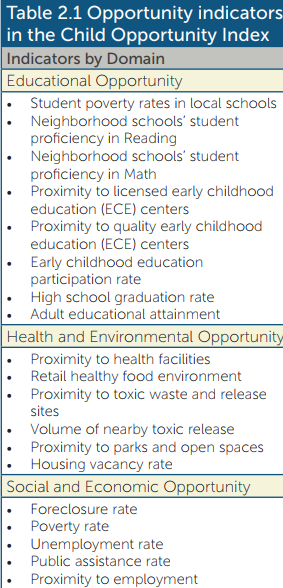
Another study in the same issue (AF Beck et al. J Pediatr 2017; 190: 200-6) assessed whether the Child Opportunity Index (COI) was associated with asthma outcomes in a retrospective cohort of 5462 children in Hamilton County, Ohio.  The COI (see below for the measures in this index) has previously been linked to life expectancy, low birth weight, and prematurity.  Interestingly, one can go to diversitydatakids.org to see how this affects your location (here is the link for a heat map of this index in the Atlanta area: Atlanta COI)

Key finding:

  • Median hospitalization rates varied based on COI –those with very high opportunity had a rate of 1.8 per 1000.  The other quintiles of COI were the following: high opportunity 2.1, moderate opportunity 4.6, low opportunity 7.6, and very low 9.1

My take: The first study indicates that direct breastfeeding is associated with lower rates of asthma.  The second study shows that issues related to education, environment, and social/poverty have an enormous impact on need for asthma-related hospitalization.