Does Screening for Hepatocellular Carcinoma Improve Outcomes in Patients with Cirrhosis?

Despite widespread recommendations to screen patients with cirrhosis for hepatocellular carcinoma (HCC), a recent study (AM Moon et al. Gastroenterol 2018; 16: 1777-85) found “No Association Between Screening for Hepatocellular Carcinoma and Reduced Cancer-Related Mortality in Patients with Cirrhosis.” The title of the study did not make sense to me based on previous publications that have noted increased risk of HCC in patients with cirrhosis and the presumption that screening would allow effective interventions to prevent death due to HCC.  So I looked at the study a little closer:

Background/Methods: The authors utilized a matched case-control study within the U.S. Veterans Affairs health care system to determine whether ultrasonography (US) or alpha-fetoprotein (AFP) screening was associated with decreased cancer-related mortality.

They identified 238 patients with cirrhosis who died of HCC between 2013-2015 –all of whom had a diagnosis of cirrhosis at least 4 years before the diagnosis of HCC.  Then, they matched them with a control patient with cirrhosis who did not have HCC and had been identified at least 4 years prior to matched case’s HCC.

Key findings:

  • There was no significant difference between the cases and the controls in the proportions who underwent screening:
  • For U/S screening: 52.9% cases and 54.2% for controls.
  • For AFP (serum) screening, 74.8% vs 73.5% respectively.
  • For either U/S or AFP screening, 81.1% vs 79.4%.
  • For both U/S and AFP screening, 46.6% vs 48.3% respectively.
  • Table 4 provides odds ratios and adjusted odds ratios for the cases compared to controls.  The Adjusted Odds ratios for U/S 0-4 years before index case was 0.95, for AFP 1.08, and for either U/S or AFP 1.11.

The authors found that HCC screening with U/S and/or AFP was not associated with decreased risk of HCC-related mortality.

In their study, the authors note that most studies on HCC screening have been observational which have numerous limitations including lead-time biases (which can overestimate the benefits of screening) and patient selection.  Two randomized controlled trials reached conflicting conclusions; these trials were conducted in China where HCC is mainly associated with hepatitis B infection.

The authors point out that liver societies like AASLD and EASL have recommended U/S every 6 months with or without AFP measurements for HCC surveillance in patients with cirrhosis.  However, non-liver societies have NOT “endorsed HCC screening because of the lack of high-quality data.”  Neither the US Preventive Services Task Force nor the American Cancer Society make recommendations for HCC screening.  And, “the National Cancer Institute found no evidence that screening decreases mortality from HCC but did find evidence that screening could result in harm.”

Strengths of this study:

  • All VA patients have access to medical care; this limits bias due to access to HCC screening
  • The matched-case control design with random controls across a system that delivers care to 8 million veterans across the country indicates that the findings are likely  “typical of community-based settings” and likely to yield “estimates of the impact of screening …[that] approximates the results that would be expected from a randomized controlled trial”

Why Have Previous Studies Indicated that HCC Screening is Worthwhile?

  • According to the authors, even though HCC detected by screening is on average detected at an earlier stage than those detected due to symptoms, “this does not prove that screening leads to earlier detection. Another explanation is that screening is more likely to identify slow-growing tumors, which have a lower stage, and more likely to miss the fast-growing tumors, which are identified at a higher stage by symptoms.”
  • “It is possible that the HCCs most likely to lead to death are the HCCs least likely to be identified by current screening modalities at an early stage.”
  • In addition,  “whether early treatment for HCC in patients with cirrhosis leads to a decrease in case fatality is questionable.”  Patients who receive surgical resection or locoregional treatments remain at risk for recurrent HCC, new HCC and progressive liver dysfunction.  While liver transplantation can cure HCC and cirrhosis, only a “small minority of patients with HCC undergo liver transplantation.”  In 2012, only 1,733 patients received liver transplantation for HCC out of a reported 24,696 incident cases.

My take: This study offers a lot of insight regarding HCC screening and questions its usefulness, though I doubt this study will change how most hepatologists practice.

Related blog posts:

Near Banff


When Should a Spleen Guard Be Recommended?

A survey (O Waisbourd-Zinman, et al. JPGN 2018; 66: 447-49) of 44 pediatric hepatologists (with 935 years of clinical practice) examined the issue of splenic rupture and spleen guards.  ~90% of those surveyed reported following at least 30 patients with portal hypertension and splenomegaly.

  • In total, the hepatologists could recall 13 cases of splenic rupture among patients with portal hypertension/splenomegaly due to cirrhosis –almost all of these occurred after a fall or in a motor vehicle accident.  Only one of these falls happened during a sports-related event (soccer).
  • 11 cases were serious. 9 of these cases resulted in shock with subsequent splenectomy, embolization, and/or death. Death reported in 2 cases.
  • In this survey,  61% of hepatologists recommended “absolute restriction from activity with high risk of blunt abdominal trauma;” whereas 23% indicated that activities with risk of blunt trauma were acceptable if wearing a spleen guard.
  • To prevent splenic rupture in patients with portal hypertension/splenomegaly, among the participating hepatologists, the majority identified the following ‘high risk’ sports: football (95%), hockey (82%), and wrestling (66%).  A smaller percentage advocated a spleen guard for skiing (42%), soccer (41%), basketball (30%) and other sports.

While I did not participate in this survey, the one patient with chronic liver disease that I followed who had a splenic rupture had fallen down a flight of steps; fortunately, he recovered with supportive care.

My take: This survey shows that there is wide variability in the use of spleen guards.  In almost all cases of splenic rupture, this was precipitated by severe trauma.  Though, patients with portal hypertension may avoid high contact sports and thus the risks are for these sports is unclear.

Related blog post:

Foggy Morning in Sandy Springs

Nonalcoholic Steatohepatitis Review

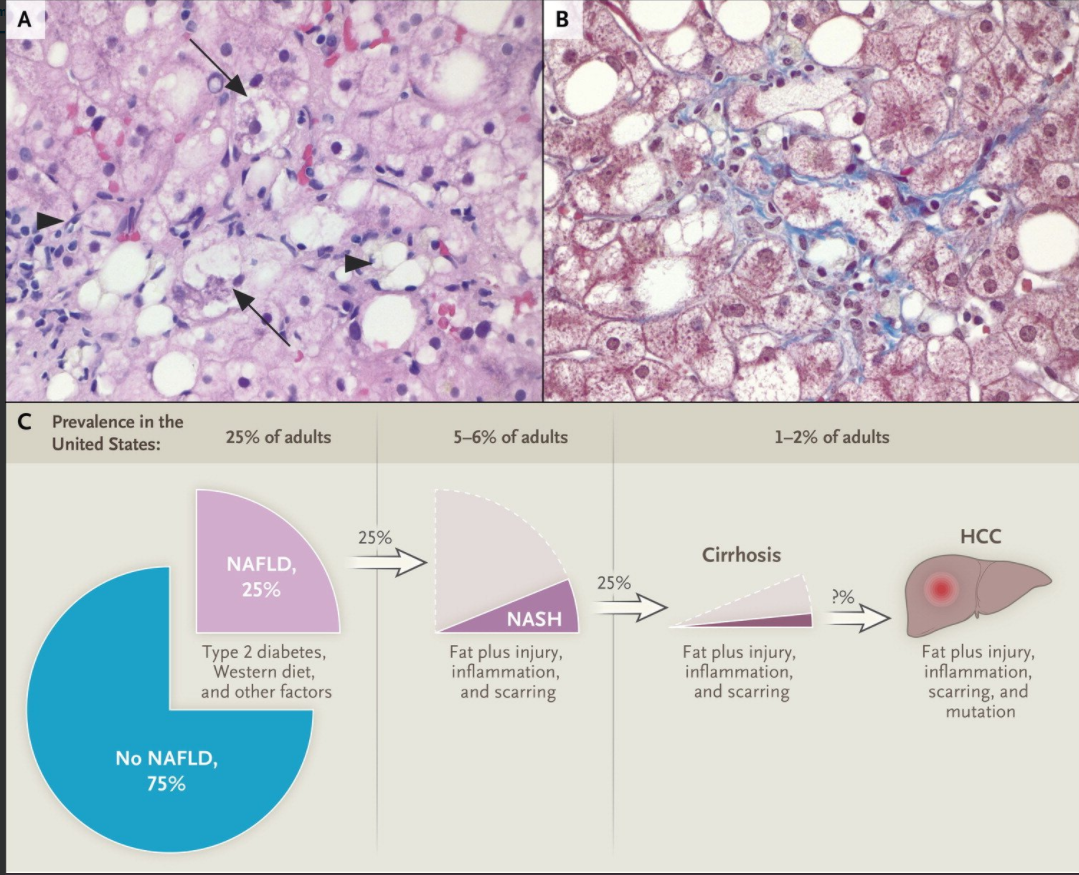
A concise and useful review of nonalcoholic steatohepatitis (NASH): AM Diehl, C Day. NEJM 2017; 377: 2063-72

A couple points:

  • About 25% of adults have fatty livers in the absence of excessive alcohol consumption
  • NASH is strongly associated with obesity/overweight which occur in  >80% of patients
  • NASH comorbidities in adults: 72% with dyslipidemia, 44% with type 2 diabetes mellitus
  • In a typical patient with NASH, liver fibrosis progresses “at a rate of approximately one stage per decade, suggesting that F2 fibrosis will progress to cirrhosis within 20 years.” However, there is considerable variability.
  • It is expected that NASH will be the leading reason for liver transplantation by 2020.
  • Cirrhosis related to NASH increases the risk of hepatocellular carcinoma with this occuring in 1-2% per year of patients with cirrhosis.
  • NASH is estimated to cost >$100 billion currently in annual direct medical costs
  • Staging of NASH and differentiation from isoloated steatosis identifies those at high risk for sequelae.
  • In Table 2, the authors list more than 10 pharmacologic agents in phase 2/3 studies

Current lifestyle treatment recommendations (for adults):

  • Lose 7% of body weight if overweight or obese
  • Limit consumption of fructose-enriched beverages
  • Limit consumption of alcohol (no more than 1 drink/day for women and 2 drinks/day for men)
  • Drink two or more cups of caffeinated coffee daily

Related blog entries:


Panels A & B show typical histologic findings: ballooned hepatocytes (arrows), inflammatory infiltrates (arrowheads), and fibrosis Panel C shows the relative distribution of NASH, cirrhosis, and hepatocellular carcinoma in U.S. Adults.

Statin Use for Patients with Cirrhosis

There have been a number of studies suggesting a beneficial effect of statins for individuals chronic liver disease due to HBV infection, HCV infection, and nonalcoholic steatohepatitis. The potential reasons include lower portal hypertension due to increased nitric oxide availability, anti-inflammatory effects through reduction in some cytokines, and antifibrotic effects. In addition, statins may inhibit tumor initiation/hepatocellular carcinoma (HCC).

The background on these prior studies is detailed in a new population-based study (F-M Chang et al Hepatology 2017; 66: 896-907, editorial 697-9) of statins in patients with cirrhosis. In this nested case-control study from Taiwan, the authors examined patients (n=1350) with cirrhosis from 2000 to 2013.  The index cases of cirrhosis were identified among a representative, well-validated general population database of 1,000,000 people.

Key findings:

  • “Statin use decreased the risk of decompensation, mortality, and HCC in a dose-dependent manner.”
  • Risk of decompensation among chronic HBV statin users, HR 0.39
  • Risk of decompensation among chronic HCV statin users, HR 0.51
  • Risk of decompensation among alcohol-related cirrhosis patients taking statins, HR 0.69

My take: In adults with cirrhosis, particularly HBV-related and HCV-related, taking a statin was associated with a 50-60% lower likelihood of decompensation. A prospective study could confirm these findings.

Prague -Charles Bridge

Learned Fear of Gastrointestinal Sensations Plus Two

Briefly noted: The authors of a recent study (E Ceunen et al. Clin Gastroenterol Hepatol 2016; 14: 1552-58) set out to study whether it is likely that healthy adults could learn to fear “innocuous visceral sensations.”  Fifty-two healthy subjects received  2 types of esophageal balloon distentions –one that was perceptible and non-painful and one that was painful.  Not surprisingly, when the researchers paired these two interventions in the experimental group, the experimental group learned to fear the innocuous stimulation as well as the painful distention.  This study provides theoretical support for one mechanism that could trigger ongoing functional gastrointestinal symptoms and a potential rationale for therapies, like cognitive behavioral therapy, which attempt to extinguish these symptoms.

In a retrospective study (AM Moon et al. Clin Gastroenterol 2016; 14: 1629-37) with 6451 patients with cirrhosis (mean age 60.6 yrs), the authors note that use of antibiotics during upper gastrointestinal bleeding (which is currently recommended) is associated with reduced mortality by ~30% at 30 days.  Despite its benefit, this intervention is often overlooked.  In the current study, only 48.6% of admissions received timely antibiotics; however, during the course of the study, the rate of antibiotic use improved from 30.6% in 2005 to 58.1% in 2013.

A recent retrospective study (N Goossens et al. Clin Gastroenterol 2016; 14: 1619-28) with 492 subjects showed that histologic NASH (in 12% of cohort) was associated with increased risk of death in patients who underwent bariatric surgery compared to patients without NASH.  Overall, bariatric surgery reduced the risk of death during the study period with HR of 0.54; the median follow-up was 10.2 years, with surgery taking place 1997-2004.  However, in patients with NASH the HR 0.90 which indicated that there was not a significant reduction in the risk of death.

Bar Harbor, ME (low tide)

Bar Harbor, ME (low tide)

Bring Out the Big Guns: Treating Infections with Cirrhosis

A recent study (M Merli et al. Hepatology 2016; 1632-39) indicates that health-care associated infections (HCA) in the setting of cirrhosis respond more favorably to broad-spectrum antibiotics.  In this prospective study of 96 randomized patients, in-hospital mortality was improved in the broad-spectrum group (6%) compared to the standard group (25%).  There was a similar multidrug-resistnace rate (50% broad spectrum compared with 60% in standard group).

Table 1 lists the antibiotic selection.  In the broad spectrum treatment, this almost always included imipenem/cilastin (I/C); with spontaneous bacterial peritonitis (SBP), I/C was combined with vancomycin, and with pneumonia it was combined with both vancomycin and azithromycin.  In contrast, the standard group’s main medication was augmentin (with added azithromycin for pneumonia) or cefotaxime for SBP.

My take: Does this study show that infections in the setting of cirrhosis are becoming more difficult to treat? Probably. How much these findings can be extended to the pediatric population remains uncertain.

Somewhat related topic: Primary prophylaxis of Variceal Bleeding in Children –Summary of the Baveno VI Pediatric Satellite Symposium.  BL Shneider et al. Hepatology 2016; 63: 1368-80. Key point: “there are few pediatric data…therefore, no recommendations for primary prophylaxis with endoscopic variceal ligation, sclerotherapy, or nonspecific beta-blockade in children was proposed.”

Silver Comet Trail

Silver Comet Trail

Hepatitis C Cure: Too Late for Many

Before the recent vast improvements in hepatitis C virus (HCV) treatment, there had been a number of studies predicting a huge increase in HCV-related mortality due to hepatocellular carcinoma (HCC) and cirrhosis.

Despite the optimism that have come with the new treatments, the most recent data (LA Beste, et al. Gastroenterol 2015; 149: 1471-82) continue to predict a huge and increasing burden of chronic liver disease due to HCV.

The authors used a national retrospective cohort of Veteran Affairs (VA) patients with cirrhosis (n=129,998) or HCC (n=21,326) from 2001-13.  They identified an increasing proportion of cirrhosis and HCC during that timeframe.

Key findings:

  • From 2001 to 2013, cirrhosis prevalence nearly doubled (664 –>1058 per 100,000 enrollees) driven by HCV and nonalcoholic fatty liver disease; deaths due to cirrhosis also increased from 83 to 126 per 100,000 patient years
  • From 2001 to 2013, HCC incidence increased 2.5-fold from 17 to 45 per 100,000 patient-years and HCC mortality tripled from 13 to 37 per 100,000 patient-years.  HCC incidence was driven overwhelmingly by HCV.
  • Based on current trends, cirrhosis prevalence will peak in 2021 according to the authors, though they acknowledge that patients from the VA may not be representative of the population at large and that the study has inherent weaknesses due to computerized data collection in this retrospective study.

My take: Despite dramatic improvements in HCV treatment, sadly, it is still going to get a lot worse with regard to disease burden & mortality from HCV before it will improve.

Briefly noted: F Negro. Gastroenterol 2015; 149: 1345-60.  “Extrahepatic morbidity and mortality of chronic hepatitis C”  This review article discusses diabetes, cardiovascular manifestations of HCV, fatigue, cognitive impairment, mixed cryoglobulinemia, and non-hodgkin lymphoma.

Related blog posts:

Chattanooga Aquarium

Chattanooga Aquarium

Phase 3 Trial of Sebelipase Alfa for Lysosomal Acid Lipase Deficiency

A recent report (BK Burton et al. NEJM 2015; 373: 1010-20, editorial 1071-1) provides preliminary evidence of efficacy of Sebeliplase Alfa for lysosomal acid lipase deficiency.

In this multicenter, randomized, double-blind, placebo-controlled study of 66 patients, enzyme replacement therapy with Sebelipase alfa was examined (1 mg intravenously every other week).  After 20 weeks, all patients were treated by open-label. Of the 32 patients who had had liver biopsies, 10 (31%) were noted to have cirrhosis.

Findings:

  • Alanine aminotransferase normalized in 11 (36%) of treated patients compared with 2 (7%) of controls
  • Improvement in lipid levels and reduction in hepatic fat content were evident in treated patients (P<0.001 for all comparisons, except P-0.04 for triglycerides

The editorial provides a schematic explaining how sebelipase alfa targets the hepatocyte (Figure 1).  The authors note that “longer-term follow-up in a larger number of patients will be required for confirmation.”

Related blog post:

Hepatitis C : New and Newer Treatments

A recent study (KR Reddy et al. Hepatology 2015; 62: 79-86) shows that the combination of ledipasvir/sofosbuvir is a safe, effective therapy for patients with genotype 1 Hepatitis C (HCV) and compensated cirrhosis.

The authors performed a post-hoc analysis of seven clinical trials in 513 treatment-naive and previously treated patients; 69% were previously treated. Key findings:

  • Overall, 493 (96%) achieved an SVR12; 98% of treatment-naive patients achieved an SVR12.
  • However, many patients in this analysis had received ribavirin.  In those treated without ribavirin (ledipasvir/sofosbuvir alone), the SVR12 was 90%.
  • Most common adverse effects included headache (23%), fatigue (16-19%), and asthenia (14-16%).

Bottomline: While ledipasvir/sofosbuvir was effective in this population, the 90% SVR12 is not as good as 96%.  This leads to the question of whether ribavirin is needed as well.

Related & briefly noted: SA Alqahtani et al. Hepatology 2015; 62: 25-30.  Ledipasvir/sofosbuvir treatment (8-24 weeks) resulted in SVR of 97% (with or without ribavirin) among the 1952 patients treated in the ION-1, ION-2, and ION-3 studies.

Related blog posts:

From FDA (July 24th): FDA approves new treatment for chronic hepatitis C genotype 3 infections

“The U.S. Food and Drug Administration today approved Daklinza (daclatasvir) for use with sofosbuvir to treat hepatitis C virus (HCV) genotype 3 infections. Daklinza is the first drug that has demonstrated safety and efficacy to treat genotype 3 HCV infections without the need for co-administration of interferon or ribavirin, two FDA-approved drugs also used to treat HCV infection….

The safety and efficacy of Daklinza in combination with sofosbuvir were evaluated in a clinical trial of 152 treatment-naive and treatment-experienced participants with chronic HCV genotype 3 infection. Participants received Daklinza 60 mg plus sofosbuvir 400 mg once daily for 12 weeks and were monitored for 24 weeks post treatment. The studies were designed to measure whether a participant’s hepatitis C virus was no longer detected in the blood 12 weeks after finishing treatment (sustained virologic response), suggesting a participant’s infection had been cured.

Results showed that 98 percent of the treatment-naive participants with no cirrhosis of the liver and 58 percent of the treatment-naive participants with cirrhosis achieved sustained virologic response. Of the participants who were treatment-experienced, 92 percent with no cirrhosis of the liver and 69 percent with cirrhosis achieved sustained virologic response. Daklinza labeling carries a Limitations of Use statement to inform prescribers that sustained virologic response rates are reduced in HCV genotype 3 infected patients with cirrhosis.”

From FDA (July 24th): FDA approves Technivie for treatment of chronic hepatitis C genotype 4

“The U.S. Food and Drug Administration today approved Technivie (ombitasvir, paritaprevir and ritonavir) for use in combination with ribavirin for the treatment of hepatitis C virus (HCV) genotype 4 infections in patients without scarring and poor liver function (cirrhosis).

Technivie in combination with ribavirin is the first drug that has demonstrated safety and efficacy to treat genotype 4 HCV infections without the need for co-administration of interferon, an FDA-approved drug also used to treat HCV infection…

The safety and efficacy of Technivie with ribavirin were evaluated in a clinical trial of 135 participants with chronic HCV genotype 4 infections without cirrhosis. Ninety-one participants received Technivie with ribavirin once daily for 12 weeks. Forty-four participants received Technivie once daily without ribavirin for 12 weeks. The studies were designed to measure whether a participant’s hepatitis C virus was no longer detected in the blood 12 weeks after finishing treatment (sustained virologic response), suggesting a participant’s infection had been cured.

Results showed that 100 percent of the participants who received Technivie with ribavirin achieved a sustained virologic response. Of those who received Technivie without ribavirin, 91 percent achieved sustained virologic response.”

Garden of the Gods, Colorado Springs

Garden of the Gods, Colorado Springs