Essential Learning Objectives in Pediatric Gastroenterology (and All Subspecialties) for Pediatricians and in Pediatric Residency Training

T Aye et al. J Pediatr 2025; 277, 114380. (Open Access!) Subspecialty Perspectives on the Education Needs for Pediatrics Residency Training

Background: The Council of Pediatric Subspecialties (CoPS) created a list of 3 to 5 learning objectives that each subspecialty believes are the most important practical skills for the general pediatrician and recommends be included in general pediatrics, medicine-pediatrics, and other combined residency program curricula… The Subspecialty Perspectives on (pediatrics) Training (SPoT) action team within CoPS asked each subspecialty representative, most of whom were fellowship program directors at the time, in collaboration with their subspecialty colleagues, to provide a list of 3 to 5 practical learning objectives that should be expected of graduating pediatric residents and practicing general pediatricians in the evaluation and management of conditions related to their subspecialty.

Recommendations for Pediatric Gastroenterology:

My take: This article identifies four of the most important areas in pediatric gastroenterology. If I were to add a fifth, given the wide variety of problems in our field, it would be to know how to quickly reach out to a pediatric gastroenterologist when you need advice.

This article is worth a quick look to see if you have the essential knowledge in all pediatric subspecialty fields (Table 1). One of the most important that relates to pediatric gastroenterology is in the allergy section: “Identify the importance of avoiding indiscriminate testing for food allergy without an appropriate clinical history concerning for IgE mediated food allergy.”

Gastrointestinal Issues in Rett Syndrome: Key Findings

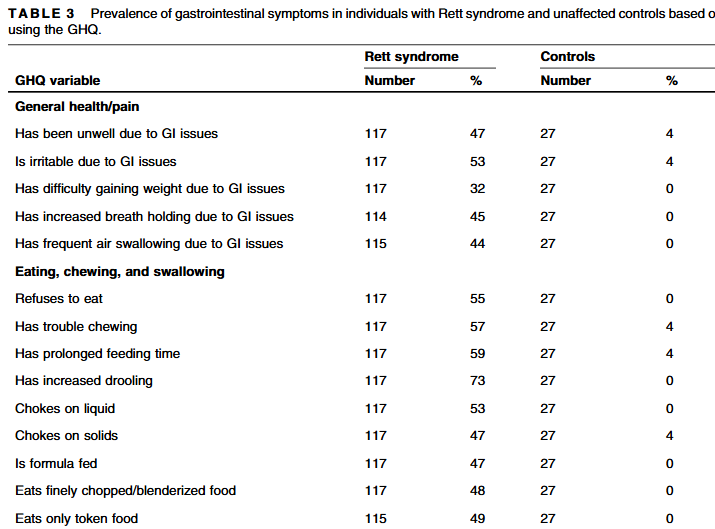
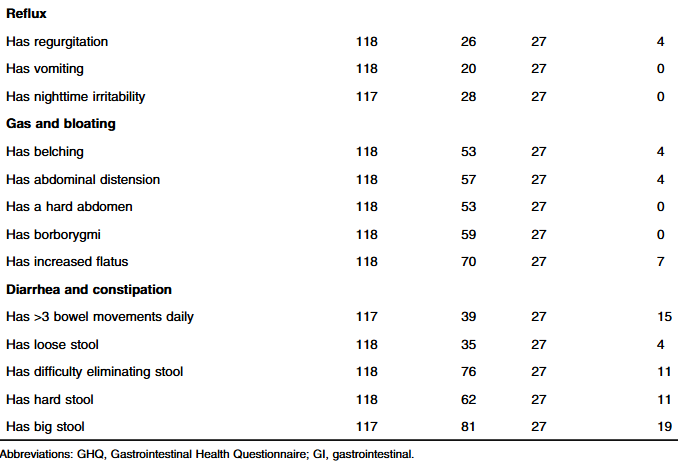
FD Ihekweazu, KJ Motil. J Pediatr Gastroenterol Nutr. 2025;80:46–56. Gastrointestinal manifestations of Rett syndrome: An updated analysis using the Gastrointestinal Health Questionnaire

Methods: Parents of 118 females with Rett syndrome (RTT) and 27 unaffected females completed the GHQ.

Key findings:

  • GI symptoms were common in females with RTT, including constipation (81%), gas and bloating (70%), issues with eating, chewing and swallowing (73%), and irritability because of stomach or intestinal problems (53%).
  • Females with RTT commonly used proton pump inhibitors (52%) and laxatives (64%). 
All with p values of <0.001 with the exception of has >3 BM/day which had p value of 0.004

My take: “GI problems are common in RTT and pose a significant medical burden to caregivers.” As such, it is a good idea to screen for treatable disorders including swallow dysfunction, constipation, and reflux.

Related blog posts:

Position Paper: Pediatric Refractory Constipation Management

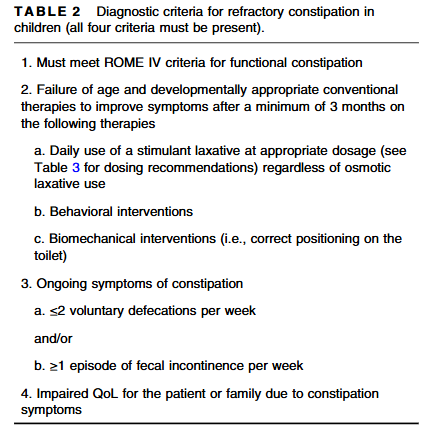
AL Kilgore et al. JPGN 2024; https://doi.org/10.1002/jpn3.12390. Open Access! Evaluation and management of pediatric refractory constipation: Recommendations from the NASPGHAN neurogastroenterology and motility committee

Selected Recommendations:

Evaluations:

  • Screen for thyroid disease and celiac disease (though acknowledges that the data regarding an association between celiac disease and constipation are inconsistent)
  • The use of an AXR in RC should be reserved for those patients unable to provide a reliable medical history and/or unable to allow for a physical exam (including a DRE), or to evaluate for mechanical obstruction or colonic distention when considering surgical interventions
  • A contrast enema (CE) can be used to screen for HD or to assess colorectal anatomy
  • There is no evidence to recommend the routine use of defecography in children
  • Abdominal ultrasound has a good agreement with digital rectal exam (DRE) to evaluate for fecal impaction but should not be performed in place of DRE
  • ARM should be used to screen for the presence of a RAIR. If anal spasms and prolonged sphincter relaxation are detected during ARM, an assessment for spinal abnormalities can be considered
  • An LS MRI should be performed in pediatric patients with RC associated with physical or neurological signs of spinal anomalies, signs of neurogenic bladder on urodynamics, or when the anorectal manometry (ARM) is abnormal suggesting spinal cord abnormalities
  • Colonic transit time (CTT) via radiopaque markers should be completed for patients with RC with equivocal medical history and to screen for the need to perform colonic manometry (CM)
  • Colonic manometry (CM) should be performed only after medical therapy has been exhausted and surgical therapy is being considered. CM should be used to guide the timing and type of surgery to address RC. CM should be used to guide when to perform an ostomy takedown
  • Rectal biopsies should not be used routinely in patients with RC and are indicated exclusively in patients with a suspected diagnosis of HD

Pharmaceuticals:

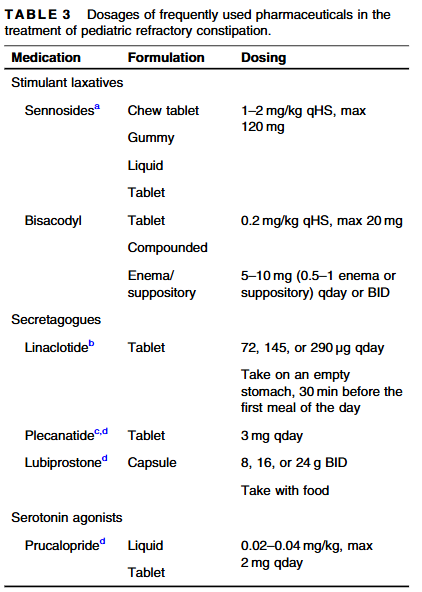
  • High-dose sennoside (or Bisacodyl) is a mainstay of management of RC and should be optimized for the individual patient before considering further management options
  • A secretagogue (or prucalopride) should be considered as an adjunct to a high-dose stimulant laxative when treating RC with poor response to optimized high-dose stimulant laxatives or when high-dose stimulant laxatives are not tolerated
  • There is no clear role of anal botox in the treatment of patients with RC without a diagnosis of IAS achalasia
  • Early intervention with daily stimulant laxatives in the treatment of FC is encouraged to try to prevent the disease progression from functional constipation (FC) to RC
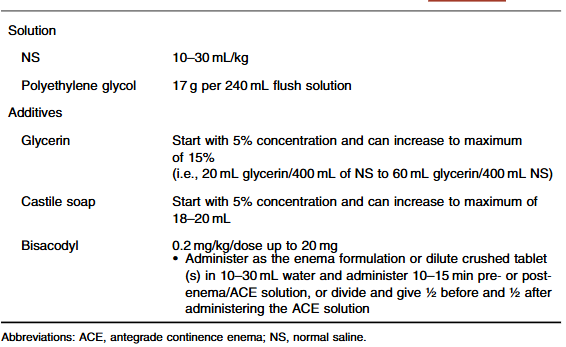
  • Antegrade and Retrograde Treatments:
Routine dosages of frequently used antegrade and retrograde solutions and additives
  • The last part of the recommendations include antegrade continence enemas, surgical approaches, and complicated algorithms (see Figure 1 and Figure 2)

My take: These recommendations address a widespread problem for pediatric gastroenterologists and are useful for those with and without an interest in motility disorders.

Related blog posts:

Disclaimer: This blog, gutsandgrowth, assumes no responsibility for any use or operation of any method, product, instruction, concept or idea contained in the material herein or for any injury or damage to persons or property (whether products liability, negligence or otherwise) resulting from such use or operation. These blog posts are for educational purposes only. Specific dosing of medications (along with potential adverse effects) should be confirmed by prescribing physician.  Because of rapid advances in the medical sciences, the gutsandgrowth blog cautions that independent verification should be made of diagnosis and drug dosages. The reader is solely responsible for the conduct of any suggested test or procedure.  This content is not a substitute for medical advice, diagnosis or treatment provided by a qualified healthcare provider. Always seek the advice of your physician or other qualified health provider with any questions you may have regarding a condition.

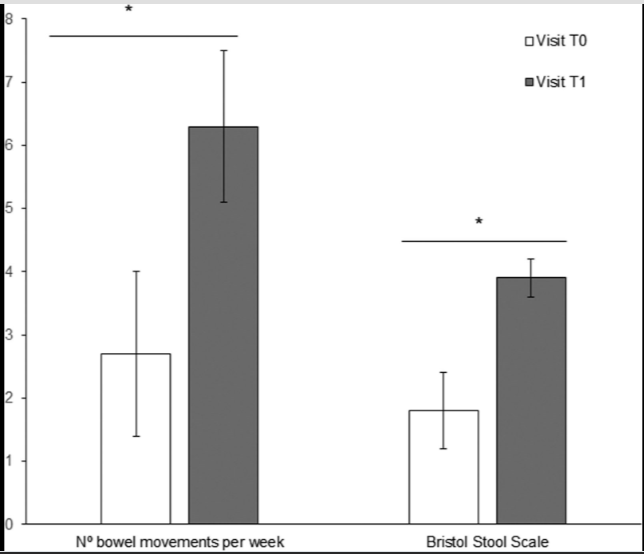
Fecal Microbiota Transplantation for Severe Constipation in Children

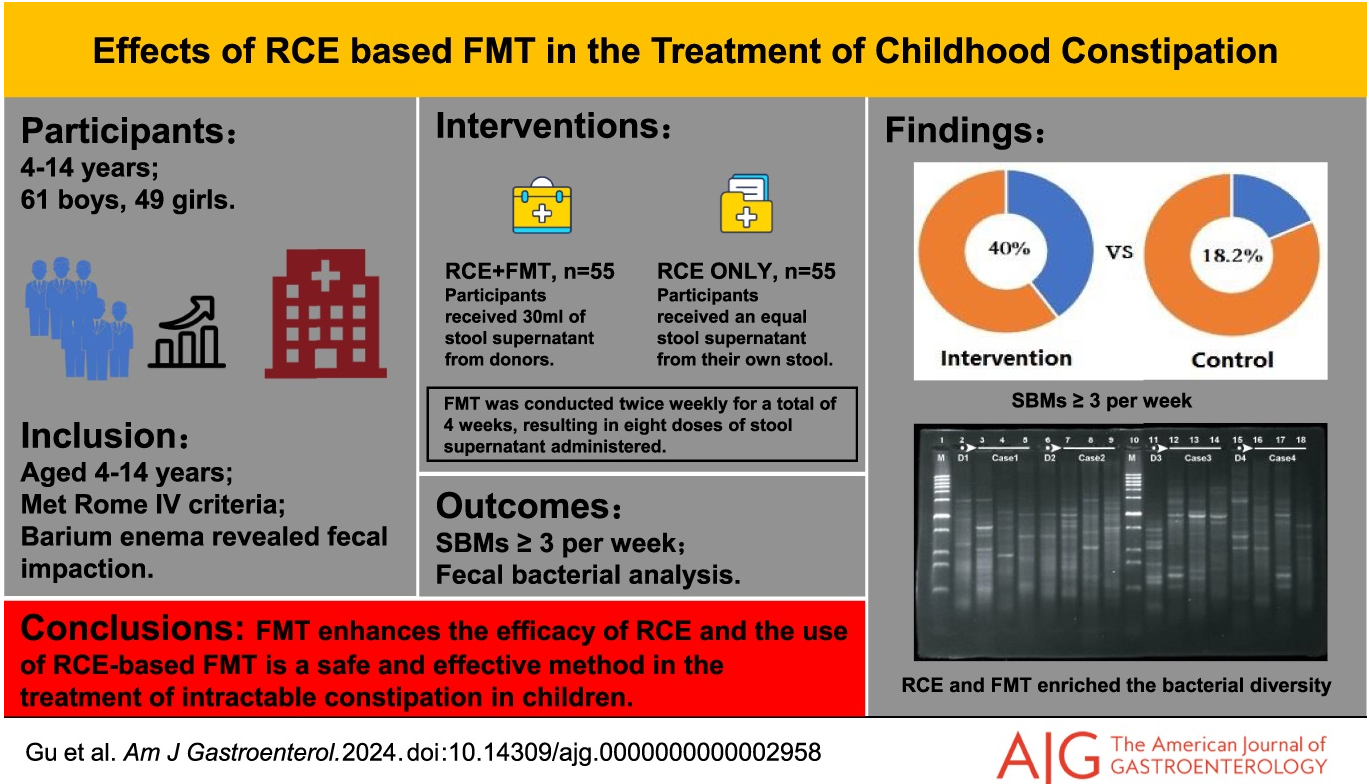
Methods: The efficacy of retrograde colonic enema (RCE) with fecal microbiota transplantation (FMT) was studied in a randomized, double-blind, controlled trial with 110 children. The initial cohort recruited was 576 patients; however, 466 were excluded for not meeting inclusion criteria. All participants received a daily RCE, followed by a 4-week FMT treatment (twice a week) and a 12-week follow-up period. 

Key findings:

  • At the end of the follow-up period, 22 patients (40.0%) in the FMT with RCE group and 10 patients (18.2%) in the placebo with RCE group had ≥ 3 spontaneous bowel movements per week

There was a low response to RCE alone which the authors attributed in part to the severity of constipation in the cohort. It is unclear the degree of compliance with the treatment protocol which was done in the home setting. There was a prior open-label study with NJ FMT which improved constipation in half of participants.

My take: Modulating the microbiome can have beneficial effects on stool frequency. This can be through diet and possibly FMT in severe cases of constipation. The availability of capsules could make this type of therapy easier but perhaps less palatable. Even if FMT proves to be a useful treatment, the optimal treatment regimen is not clear.

Related blog posts:

Impact of Ultra-Processed Foods on Bowel Health

C-H Lo et al. Clin Gastroenterol Hepatol 2024; 22: 2309-2318. Open Access! Association of Ultra-processed Food and Unprocessed or Minimally Processed Food Consumption With Bowel Habits Among U.S. Adults

Methods: The authors used a cross-sectional study using data from the National Health and Nutrition Examination Survey (2005-2010) and they used two 24-hour dietary recalls and, based on the Nova classification, calculated intakes of ultra-processed foods (UPFs) and minimally-processed foods (MPFs). N=12,716 adults.

Key Findings:

  • Median UPF and MPF intakes were 26.5% and 66.2% of total grams per day, respectively
  • Greater UPF consumption (in % gram/d) was associated with higher odds of constipation
    (adjusted OR [aORQ4 vs Q1], 2.20]

Discussion point: The authors did not find an association with diarrhea. “UPF consumption has been associated with increased risks of GI disorders that can cause chronic diarrhea including IBD and irritable bowel syndrome (IBS). This was thought to be related to alteration of the gut barrier integrity and activation of the immune response in the setting of microbial dysbiosis. The overall effect induces a pro-inflammatory micro-environment in the intestine and alterations in bowel function. However, the amount of UPFs needed to be
consumed by individuals such that the risk of diarrhea would be higher is unknown and likely varies between individuals.”

My take: Limiting UPFs and promoting fresh foods/minimally-processed foods is better for our health.

Related blog posts:

La Fortuna, Costa Rica

Is There a Residual Impact of a Tethered Cord on Colonic Motility

JM van der Zande et al. JPGN 2024; 79:976–982. Open Access! Anorectal physiology and colonic motility in children with a history of tethered cord syndrome

This retrospective review of 24 children with tethered cord syndrome (TCS) (50% female) who had ARM testing (median age at ARM 6.0 years). 19 children had prior TCS repair.

Key findings:

  •  No significant differences in ARM parameters were found between children who had detethering surgery before ARM and children with functional constipation (FC). The children with TCS did have lower resting pressures though this was attributed to most having their ARM while under GA for concurrent procedures. The resting pressures were still normal.
  • Among the 14 children who also had a colonic manometry (CM) performed (13/14 after detethering surgery), there were no significant differences in colonic motility were found between children with a history of TCS and children with FC.

My take: The vast majority of children with a history of TCS (following detethering) should be treated akin to children with functional constipation.

Impression, Sunrise by Claude Monet at National Gallery of Art (Washington, D.C.)

Related blog posts:

Linaclotide -Here’s the Pediatric Data

Last year, the FDA approved linaclotide, a guanylate cyclase C agonist, for the treatment of pediatric constipation (related post: Linaclotide -Now FDA-Approved for Children).

Here’s the phase III study data: C DiLorenzo et al. The Lancet Gastroenterol Hepatol 2024; 9: 238-250. Efficacy and safety of linaclotide in treating functional constipation in paediatric patients: a randomised, double-blind, placebo-controlled, multicentre, phase 3 trial

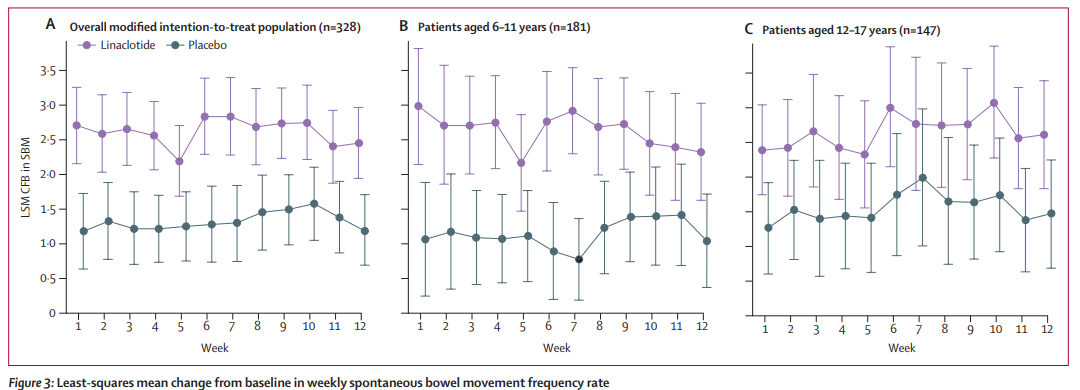
Children 6-17 yrs of age (n=328) received either oral linaclotide 72 μg or placebo once daily for 12 weeks. Key findings:

  • The mean frequency rate for spontaneous bowel movements (SBMs) was 1·28 SBMs per week (SD 0·87) for placebo and 1·16 SBMs per week (0·83) for linaclotide, increasing to 2·29 SBMs per week (1·99) for placebo and 3·41 SBMs per week (2·76) for linaclotide during intervention. 
  • Linaclotide also significantly improved stool consistency over placebo
  • Straining with stooling also improved. Change from baseline improvement (Least squares mean change) −1·19 in linaclotide group compared to −0·75 in placebo group (p<0·0001). Straining scale based on responses to the following question: When you pooped, how hard did you push? (0=not hard at all; 1=I pushed a tiny bit hard; 2=I pushed a little hard; 3=I pushed hard; 4=I pushed very hard)
  • Abdominal bloating improved as well compared to placebo, Change from baseline improvement (Least squares mean change): −0·51 vs −0·35 (p=0·027)
  • The authors note that “the subgroup analysis by age for CFB in SBM frequency rate suggests that the response of the older cohort (aged 12−17 years) was not as strong as the response of the younger cohort (aged 6–11 years).” This could indicate that a higher dose may be beneficial in this age group. “Further studies evaluating increased dosing regimens for older children will be important.”
  • The most frequent treatment-related TEAE was diarrhoea (linaclotide: six [4%] patients; placebo: two [1%] patients).
72 mcg per day dosing

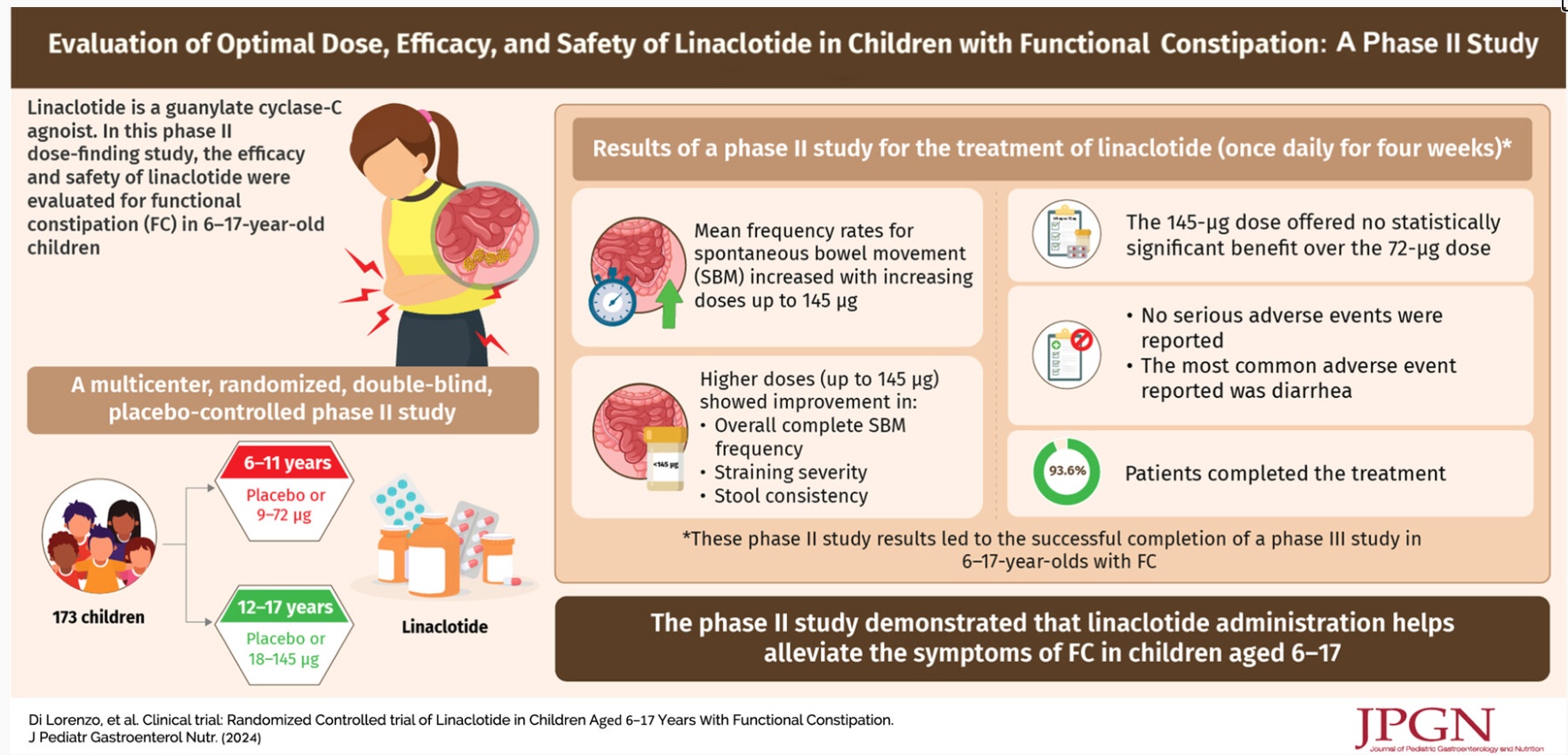
Here’s the phase II study data: C DiLorenzo et al. JPGN 2024; https://doi.org/10.1002/jpn3.12184. Randomized controlled trial of linaclotide in children aged 6−17 years with functional constipation

This was a multicenter, randomized, double-blind, placebo-controlled phase 2 study, with 173 children with functional constipation (based on Rome III criteria) were randomized to once-daily linaclotide or placebo.

Key findings:

  • A numerical improvement in mean spontaneous bowel movement (SBM) frequency was observed with increasing linaclotide doses (1.90 in 6- to 11-year-olds [36 or 72 μg] and 2.86 in 12- to 17-year-olds [72 μg]).
  • The most reported treatment-emergent AE was diarrhea, with most cases being mild; none were severe. The most reported treatment-emergent AE was diarrhea, with most cases being mild; none were severe.

My take: It is good news to have the an FDA-approved treatment for pediatric functional constipation. It is worth remembering that the estimated cost for a monthly supply is $560 via GoodRx (with coupon, queried on 5/22/24). 

Long Term Use of Polyethylene Glycol (PEG 3350)

A Bautista-Casasnovas et al. JPGN Reports 4(4):p e353, November 2023. Open access! Multicentre Study Into the Use of Polyethylene Glycol With Electrolytes Over at Least 6 Months to Treat Constipation in Paediatric Populations

Background: PEG 3350 with electrolytes (PEG+E) is the most widely used osmotic laxative in Europe, and it is normally prescribed for short or limited periods in children, such that there is little information regarding its long-term use (≥6 months).

Methods: This was a retrospective, observational, descriptive, longitudinal, and multicentre study was carried out on 74 children diagnosed with functional constipation.

Patient characteristics:  The mean (±SD) duration of the symptoms of constipation before starting PEG+E treatment was >1 year (15.6 ± 8.4 months). Fecal disimpaction was necessary in 49 children (66.2%) .

Key findings:

  • The mean PEG+E dose used was 1.0 (±0.8) g/kg.
  • The mean duration of PEG+E use was 18.6 (±13.4) months (range 8–73 months), and 59.45% (n = 44) of the patients took the treatment for more than 1 year.
  • 81% (n = 60) of the patients achieved 4 or more weekly bowel movements after having taken PEG+E for at least 3 weeks.
  •  All clinical symptoms (abdominal pain, gassiness/bloating) were reduced considerably, with the resolution of the anal fissures, bleeding, and soiling in all patients.

Polyethylene glycol (the active ingredient in Miralax) is considered a first-line treatment for pediatric constipation and for fecal impaction. “However, caregivers may be hesitant to administer medication over long periods due to a fear of a rebound effect or addiction (23). Indeed, early withdrawal of laxatives is the commonest cause of recurrence (4,5), highlighting the need for longer follow-up studies (8).”

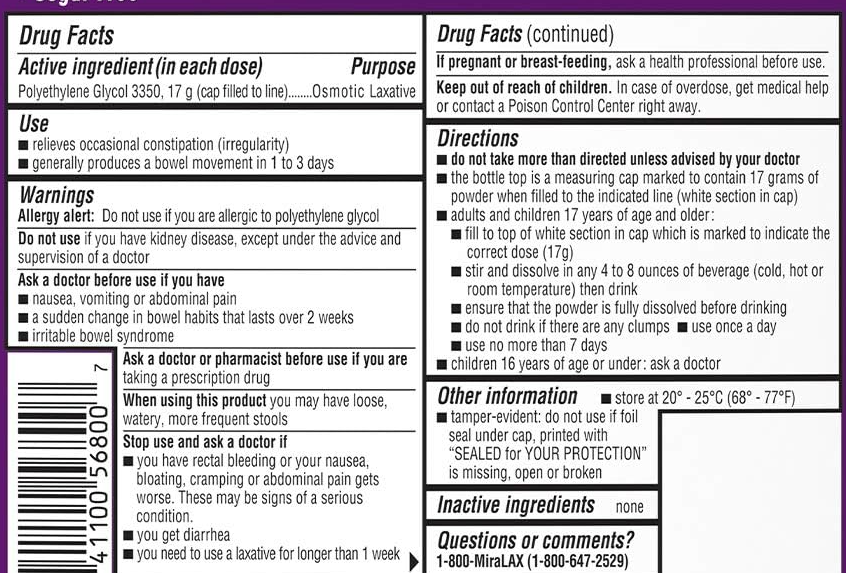
My take: It is helpful to have long term studies of PEG 3350 showing its effectiveness and safety, especially as the medication labels state to not use these medications for more than 7 days.

Related blog posts:

Clarification: However, Ben Enav pointed out that the label also states the following in bold: “do not take more than directed unless advised by your doctor.” The actual label is shown below.

Population-Based Study: Prevalence of Bowel and Bladder Dysfunction in Early Childhood (Good Bowel Control is Happening Later)

SJ Verkuijl et al. JPGN 2023; 77: 47-54. Open Access! The Prevalence of Bowel and Bladder Function During Early Childhood: A Population-Based Study

Methods: This cross-sectional questionnaire study (n=791 Dutch children) up to age 7 yrs of age.

Key findings:

  • The mean age at which parents/caregivers considered their child fully toilet-trained was 5.1 ± 1.5 years. “Compared to studies performed 15 years ago, we found toilet training to be completed at an older age (23,26–28).”
  • Prevalence of fecal incontinence among toilet-trained children was 12%.
  • Prevalence of constipation was 14%, with excessive stool retention (75.9%) and painful/hard stools (78.7%) as the 2 most common symptoms.
  • The prevalence of urinary incontinence among all toilet-trained children was 40%. The majority of these urinary incontinent children suffered from daytime incontinence (56%). Enuresis occurred in 22% and the other 22% suffered from combined daytime incontinence and enuresis.
  • There were significant associations between fecal incontinence and constipation [odds ratio (OR) = 3.88], fecal incontinence and urinary incontinence (OR = 5.26), and constipation and urinary incontinence (OR = 2.06)
  • Half of the children with constipation and almost all the children with fecal incontinence remained untreated.
Stool Frequency by age (Figure 1 B)

In the discussion, the authors note “treatment of constipation and/or fecal incontinence often leads to the resolution of urinary incontinence (34).”

In my experience, many families sent by urologists have been told that the constipation is causing urinary incontinence. For many children, the explanation is more complicated; association of constipation does not indicate causation. A lot of children have limited sensation of response to both bowel and bladder, rather than the rectum pushing on the bladder. Most children that I see with constipation/encopresis do not have urinary incontinence. However, behavior approaches to toileting can be helpful for both.

My take: This is a useful study providing an updated view on when to expect good toileting and highlighting the frequency of bowel/bladder dysfunction (which is often untreated).

Related blog posts:

Linaclotide -Now FDA-Approved for Children

FDA 6/12/23: FDA approves first treatment for pediatric functional constipation

“FDA has approved Linzess (linaclotide) capsules to treat functional constipation in pediatric patients 6 to 17 years of age. Linzess is the first treatment for pediatric functional constipation. The recommended dosage in pediatric patients 6 to 17 years is 72 mcg orally once daily.”

“The efficacy of Linzess for the treatment of functional constipation in pediatric patients 6 to 17 years of age was established in a 12-week double-blind, placebo-controlled, randomized, multicenter clinical trial (Trial 7; NCT04026113) and supported by efficacy data from adequate and well-controlled trials in adults with chronic idiopathic constipation (constipation that persists and isn’t connected to an underlying illness).”

Safety:

  • Most common adverse effect was diarrhea
  • Avoid in patients with known or suspected mechanical gastrointestinal obstruction (bowel blockage)
  • “Linzess contains a boxed warning that the medication should not be taken by patients less than 2 years of age”
  • See full prescribing information for additional information on risks associated with Linzess.

My take: While this is good news to have the first FDA-approved treatment for pediatric functional constipation, it is worth remembering that the estimated cost for a monthly supply is between $514-$536 (in Atlanta pharmacies per GoodRx.com).

Related blog posts: