GI Educational Cartoons For Children

Diana Lerner and the Medical College of Wisconsin have developed additional GI educational videos.  Previously, they had developed cartoon videos explaining endoscopy (prev post: Terrific Educational Videos on Endoscopy).  Now there are several more.  All of these are in English and some in Spanish.

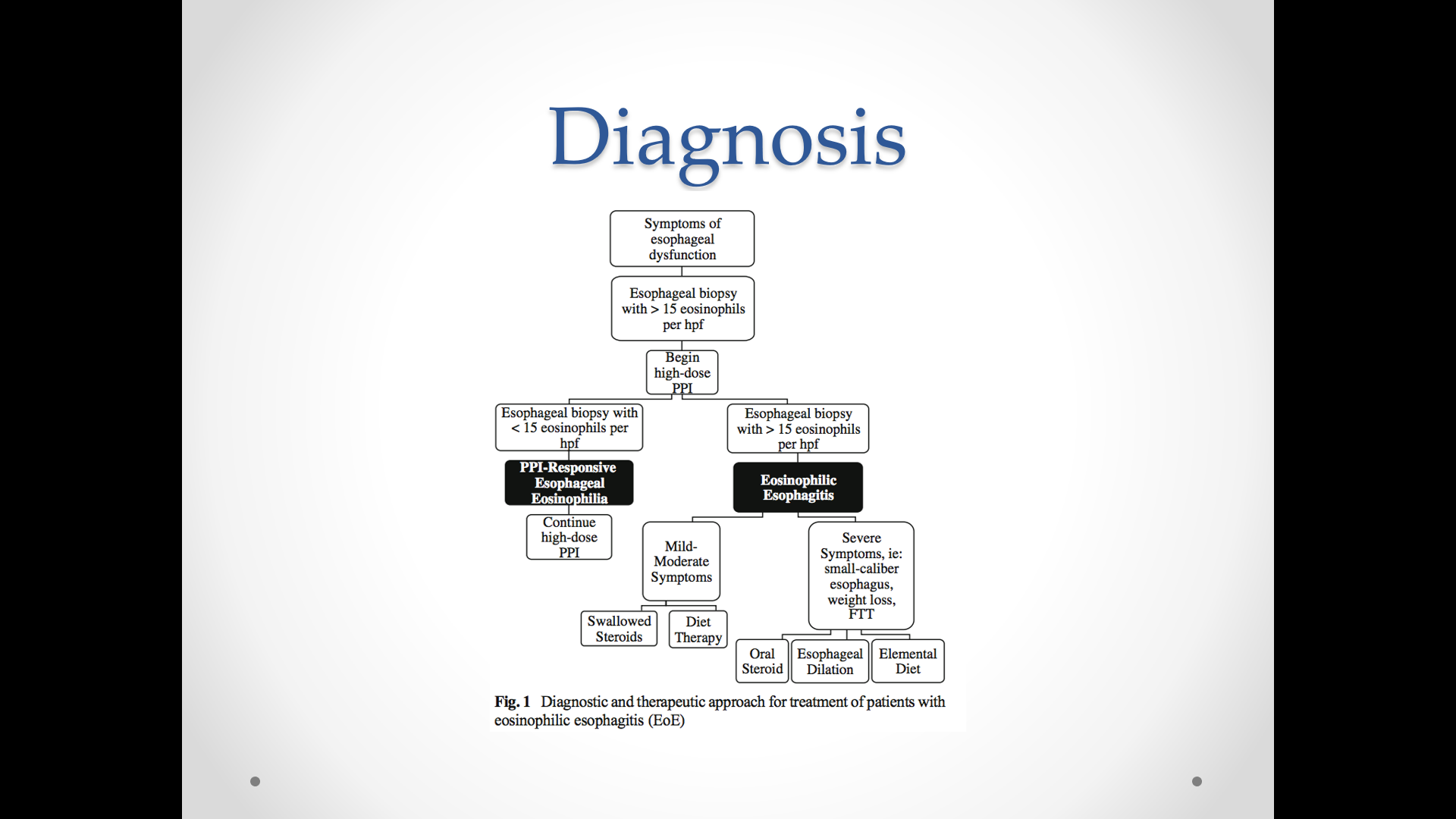
Topics include inflammatory bowel disease, gastroesophageal reflux, eosinophilic esophagitis, and celiac disease.

Here’s the link:  Pediatric Gastroenterology Cartoons For Kids

Related blog post:

screen-shot-2016-10-23-at-10-39-50-am


Safety of Fluticasone for Eosinophilic Esophagitis (Abstract)

Doerthe A Andreae et al. The American Journal of Gastroenterology 111, 1187-1197 (August 2016) | doi:10.1038/ajg.2016.238

METHODS:

In an open-label, prospective, single-center study, we offered pediatric patients with active EoE fluticasone 2 puffs to swallow twice a day (strengths in μg/puff: 2–4 years: 44, 5–11 years: 110, ≥12 years: 220). Clinical, endoscopic, and histological assessments were performed at baseline and shortly after therapy. If histological remission was seen, fluticasone was continued with clinical follow-ups every 4 months and endoscopic and histological follow-ups yearly. Clinical scores were derived from eight symptoms (abdominal pain, nausea, vomiting, regurgitation, chest pain, dysphagia, food impaction, and early satiety). Endoscopic scores were derived from six features (rings, exudates, furrows, edema, stricture, and shearing). Scores were expressed as ratio (features present/total). In addition to peak eosinophils/high power field (HPF) (primary outcome), histological features (eosinophilic microabscesses, degranulation, superficial layering, basal zone hyperplasia, dilated intercellular spaces, and lamina propria fibrosis) were assessed. Median clinical and endoscopic scores and individual histologic features were compared over 4 time intervals: <4 months, 4–12 months, 13–24 months, and >24 months. Growth and adverse effects were monitored.

RESULTS:

We enrolled 54 patients, 80% male, median age 6.5 years (range 2–17 years), 85% atopic (57% asthma, 68% allergic rhinitis, and 31% atopic dermatitis), and 74% with food allergy. Mean follow-up was 20.4 months, the longest being 68 months (5.7 years). Esophageal eosinophil counts significantly decreased (median peak eosinophils/HPF at baseline 72, <4 months: 0.5, 4–12 months: 1.75, 13–24 months: 10, and >24 months: 12, all P<0.01). All histological features significantly decreased from baseline to all follow-up time points (all P<0.01). Lamina propria fibrosis significantly decreased (% patients with fibrosis at baseline 92, <4 months: 41, 4–12 months: 50, 13–24 months: 45, and >24 months: 39, all P<0.01). Endoscopic features improved (score at baseline 0.37, <4 months: 0.17, 4–12 months: 0.17, 13–24 months: 0, and >24 months: 0.1, all P<0.01, except at >24 months: P<0.05). Symptoms improved (score at baseline 0.22, <4 months: 0, 4–12 months: 0.11, 13–24 months: 0.11, and >24 months: 0.11, all P<0.05 except at >24 months: P=0.05). In a mixed linear regression model that accounts for correlation of repeated observations in the patient in a per-patient analysis, we found that treatment with swallowed fluticasone led to a statistically significant and sustained decrease in peak esophageal eosinophil counts. Asymptomatic esophageal candidiasis was seen in three children but resolved with anti-fungal therapy. Height and weight z-scores followed expected growth curves.

CONCLUSIONS:

We demonstrate that swallowed fluticasone is effective as a long-term maintenance therapy for children with EoE, without growth impediment or serious side effects.

My take: This post, from an abstract, shows a single-center’s experience with fluticasone. This study provides some reassurance regarding safety & efficacy when used as a maintenance medication. However, as noted in links below, higher doses of fluticasone have been associated with adrenal insufficiency.

Related blog posts:

Pediatric Nutritionist/Scott Pentiuk: Update on two topics: Blenderized diets and Eosinophilic Esophagitis

From the Pediatric Nutritionist blog –two lectures from Dr. Scott Pentiuk:

Two Lectures: Blenderized diets and Eosinophilic esophagitis

These lectures feature a lot of useful references and practical advice.

Related blog posts:

Shem Creek, SC

Shem Creek, SC


Eosinophilic Esophagitis: the Limits of “Clinical Remission”

Among patients with eosinophilic esophagitis (EoE), two issues are particularly vexing for families:

  • The recommendation to use endoscopy to assess response to treatment.
  • Using proton pump inhibitor (PPI) therapy as first line treatment when other therapies have higher response rates

To some extent, these issues are intertwined because PPI therapy works in less than half of patients and to determine this conclusively, an endoscopy is needed.  Clearly, a reliable noninvasive biomarker would be quite helpful.

In the meantime, another study (CE Kuehni et al. Gastroenterol 2016; 150: 581-90, editorial 547-48) has shown that “clinical remission” has modest accuracy in detecting endoscopic and histologic remission in EoE.

This prospective observational study, performed between 2011-14, recruited 269 consecutive adults in Switzerland and U.S.. 67% male median age 39 years.

Key finding:

Of 111 who were in clinical remission (41.3%), only 79 (72%) and 75 (68%) were in endoscopic and histologic (<20 eos/mm2 which corresponds to <5 eos/median hpf) remission respectively.

My take (borrowed): “Physicians cannot rely on lack of symptoms to make assumptions about lack of biologic disease activity in adult EoE patients.”

Related blog posts:

Gibbs Gardens

Gibbs Gardens

Adrenal Insufficiency due to Fluticasone in Eosinophilic Esophagitis

A recent study (MC Golekoh et al. J Pediatr 2016; 170: 240-5) shows that adrenal insufficiency developed in 10% of patients on chronic (>6 months) swallowed corticosteroid therapy for Eosinophilic Esophagitis (EoE).

Background: 58 patients with 67% receiving fluticasone and 33% receiving budesonide.  Median age: 13.7, median fluticasone dose 1320 mcg/day, median treatment duration: 4 yrs.  For budesonide, median dose was 1000 mcg/day and median age 10.7 yrs.

Key findings with low-dose ACTH stimulation:

  • Abnormal peak cortisol (≤ 20 mcg/dL) present in 15% and adrenal insufficiency (< 18 mcg/dL)  (n=6) noted in 10%
  • Only patients receiving >440 mcg/day of fluticasone had adrenal insufficiency
  • No patients taking budesonide had an abnormal cortisol level

Commentary:

  • Higher doses of fluticasone, particularly early in treatment, has been shown to have an improved inflammatory response.  However, as with asthma therapy, higher doses increase the risk of adrenal insufficiency.
  • Adrenal insufficiency can be asymptomatic but pose a risk for life-threatening adrenal crisis.
  • Strengths of study: Fairly large cohort, endoscopic/pathologic reports available, and ACTH stimulation testing which has better sensitivity than random cortisol.
  • Limitations: Lower number of patients receiving budesonide, particularly at a higher dose.  No indication of adherence.

My take: If higher doses of fluticasone are needed for prolonged period, consider screening (endocrinology consultation) for adrenal insufficiency.

Related blog posts:

Farjado, Puerto Rico

Farjado, Puerto Rico

Proton Pump Inhibitors Webinar

For those who missed the live NASPGHAN webinar, it is also available on demand: Link: Proton Pump Inhibitors Webinar. CME credit is available too.

Overall, this is a terrific review and intended for a high level audience. Here are a couple of key points from the talk:

  • Dr. Jennifer Lightdale introduced the webinar.  She noted that there has been a tremendous rise in the use of proton pump inhibitors (PPIs) in children over the past 15 years, including in infants.
  • Preponderance of evidence does not support use of PPIs for reducing GER symptoms or crying in infants.
  • PPIs are extremely effective at acid suppression.
  • Excellent discussion by Dr. Rachel Rosen on Nonerosive Reflux Disease (NERD) and distinguishing this entity from erosive reflux disease, hypersensitive esophagus, and functional heartburn.
  • On a microscopic level, NERD is similar to erosive reflux with microscopic inflammation and dilated intracellular spaces.
  • With regard to testing, it is recommended that for impedance studies, that acid suppression be stopped prior due to improved sensitivity/accuracy.
  • For those at odds with their pulmonologists and ENT colleagues, Dr. Ben Gold reviewed the literature on asthma, cough, and laryngeal-pharyngeal pathology related to reflux. The sensitivity of laryngoscopic findings to identify reflux is poor.  “There is insufficient evidence to recommend for OR against the use of acid suppression therapy.”
  • Dr. Jose Garza reviewed the indications for PPI use which include eosinophilic esophagitis/PPI-REE, erosive esophagitis, NSAID prophylaxis, Upper GI bleeding, and H pylori therapy.
  • Dr. Carlo DiLorenzo provided an in-depth discussion of the potential risks of PPI therapy and explained some of the context as well as absolute risks.  He noted that besides the risk of infection, particularly C difficile, other risks demonstrated in adults have not yet been confirmed in children.
  • “Prolonged acid suppression should be used only when indicated.”  Thus, management should include strategies for treatment discontinuation in the majority of those receiving PPI therapy.

Related blog posts:

Isla Verde, San Juan

Isla Verde, San Juan


Good Press for PPIs

A lot of medical publications focus on infrequent complications of medications.  This is problematic for many who have trouble understanding absolute risks and relative risks.  If a medication increases the relative risk of a rare problem, the absolute risk to the individual remains quite low.

For proton pump inhibitors, there has been a fair amount of focus on potential complications.  In my view, some of this is due to the fact that there are many taking these medications who may not be receiving much benefit.   Many of the adverse effects for most patients would result in a low absolute risk. In fact, stopping PPIs in those who have indications for their usage could result in significantly greater harm.

For those who’ve been thinking that proton pump inhibitors (PPIs) have been getting a ‘bum rap,’ here are a few publications have highlighted their success in problems other than ulcers and gastroesophageal reflux disease.

  • AJ Lucendo et al. Clin Gastroenterol Hepatol 2016; 14: 13-22.
  • RMM van Aerts et al.  Clin Gastroenterol Hepatol 2016; 14: 147-52.

The first study, a systemic review and meta-analysis of PPIs in inducing remission for eosinophilic esophagitis (EoE).  In all 33 studies (11 prospective) of adults and children were included with 619 patients. Key findings:

  • Clinical response was noted in 60.8%
  • Histologic remission (<15 Eos/hpf in this study) in 50.5%
  • In prospective studies, once-daily therapy had similar effectiveness to twice daily (55.9% vs. 49.7%)
  • pH monitoring did not predict response to PPI therapy

My take: While the conclusion from this study (by the authors) is that PPIs should be considered a first-line therapy for EoE, they also indicate that the findings need to interpreted cautiously due to poor-quality evidence, heterogeneity of the studies, and publication bias.  Despite these limitations, most experts agree that PPI therapy should be undertaken prior to use of other treatments like diets or topical steroids for EoE.

The second study showed that patients with hereditary hemochromatosis needed less phlebotomy if they were taking PPIs.  The study was a retrospective study which divided patients into 3 groups, including a paired group of 12 patients who had ferritin levels and number of phlebotomies compared for 3 years prior and 3 years after the start of PPI therapy.  In this group, phlebotomies were needed 3.16 times per year prior to PPI and only 0.5 per year subsequently (to keep ferritin less than 100 mcg/L).  The authors note that studies have shown that PPIs reduced postprandial iron absorption.  PPIs effect on iron metabolism “acts at cellular level in the endosomes and in the stomach, and it seems to have no influence on the hepcidin regulation.”  For PPI fans, the editorial (pgs 153-55) comments that “an attractive aspect of this strategy is the safety of PPIs, which has been shown even with long-term use.’ [Aliment Phamacol Ther 2015; 41: 1162-74]

My take: While this study is not recommending that patients with hereditary hemochromatosis start PPI therapy, those who are taking PPI therapy may need less frequent phlebotomy.

So, in addition to patients with gastroesophageal reflux disease and peptic ulcer disease, patients with eosinophilic esophagitis and those with hereditary hemochromatosis often benefit from PPI therapy.

Related blog posts:

Half Dome, Yosemite

Half Dome, Yosemite

The Story Behind a 30 Year Esophagitis Study

A recent retrospective study ( SS Baker et al. JPGN 2015; 61: 538-40) reported on changes in esophagitis over a 30 year period at one center.  While the authors focus on the fluctuating percentage of esophagitis noted during three periods, in my opinion, they miss the opportunity to discuss more relevant findings.

Specifically, the authors note the following:

  • From 1980-88 (n=186 over 8 years) that 26.9% had esophagitis and 4.8% had >15 eos/hpf.  Normal pathology in the esophagus was noted in 73.1%.
  • From 2000-2002 (n=321 over 2 years), 41.2% had esophagitis and 8.5% had >15 eos/hpf.  Normal pathology in the esophagus was noted in 58.8%.
  • In the most recent period, 2011, (n=675 over 1 year), 31%* had esophagitis and 12.7% had >15 eos/hpf.  Normal pathology in the esophagus was noted in 69%.     *erroneously reported as 33%

What is baffling to me are the following:

  • Why the authors assert that there has been a fluctuating prevalence.  In absolute terms, the increase in cases is marked, though one can argue that in earlier periods there may have been many undiagnosed cases.
  • Why the authors do not comment on the tremendous increase in the use of endoscopy in their discussion.  In the first period, they were averaging ~23/year, the second period ~95/year and in the most recent period, they performed 675 in one year.

My take: This study shows that esophageal eosinophilia has been present for a long time and that identification of cases has increased considerably over 32 years.  In addition, the use of endoscopy has increased markedly, yet the yield of abnormal findings remains similar.

Briefly noted: C Menard-Katcher et al. JPGN 2015; 61: 541-46.  This retrospective study of 22 children showed that 55% had esophageal strictures identified by esophagram but not endoscopy.

Related blog posts:

Bamboo

Eosinophilic Esophagitis Review -NEJM

Good review:  Glenn T. Furuta, M.D., and David A. Katzka, M.D. N Engl J Med 2015; 373:1640-1648

A couple pointers from this review:

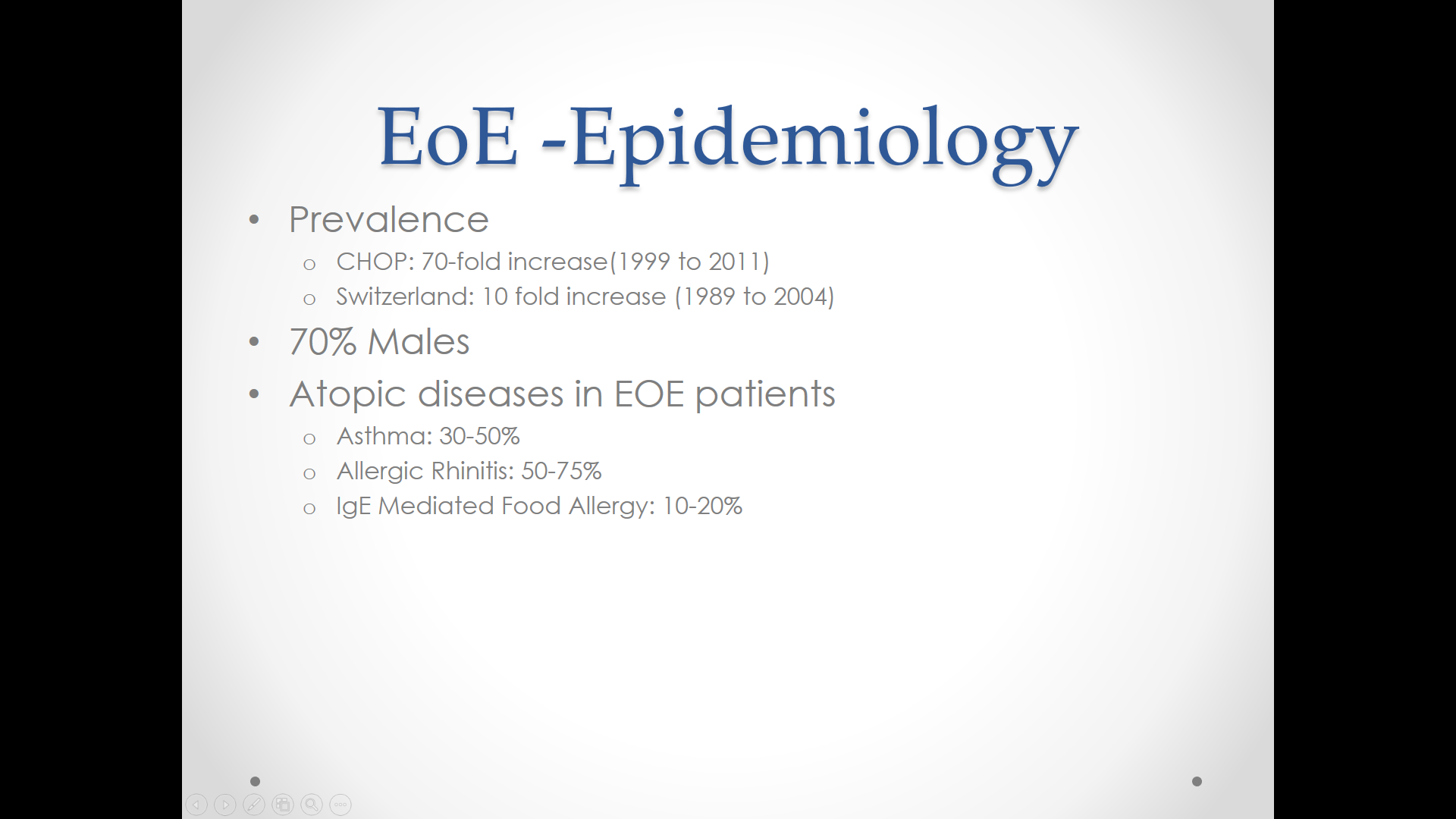
  • Estimated prevalence of eosinophilic esophagitis (EoE) 0.4% in Western countries.  Symptoms are often underestimated due to patient ‘accommodation’ which includes eating slowly/carefully, drinking a lot of liquids and avoiding items more prone to become lodged (meats, pills, breads)
  • Pathogenesis: “Birth by cesarean section, premature delivery, antibiotic exposure during infancy, food allergy, lack of breast-feeding, and living in an area of lower population density have all been associated with eosinophilic esophagitis.”
  • Impaired barrier function and enhanced the activity play a role in pathogenesis
  • Food allergy is a non-IgE-mediated process.  Omalizumab, an anti-IgE biologic, is ineffective in EoE and EoE can develop in IgE-null mice
  • Male predominance (3:1) suggests that there is a genetic component.
Esophagus with ringed appearance, furrowing, and loss of vascular markings

Esophagus with ringed appearance, furrowing, and loss of vascular markings

Another useful reference on Eosinophilic Gastritis in Children: Am J Gastroenterol 2014; 109; 1277-85.  This article provides data on clinical and histologic remission with eosinophilic gastritis (>70 eos/hpf), n=30 children.  “Response to dietary restriction was high” (82% clinical, 78% histologic response) Thanks to Seth Marcus for this reference.

Related blog posts:

Useful Information on Eosinophilic Disorders

A review (JB Wechsler et al. J Asthma Allergy 2014; 7: 85-94) provides practical advice on dietary management of eosinophilic esophagitis (EoE); the section on food reintroduction from elemental diets for patients with EoE is particularly helpful.  They start with typically less allergenic foods (group A) to most allergenic (group D) -from their Table 2:

Group A:

  • Vegetables (nonlegume): carrots, squash, sweet potato, white potato, string beans, broccoli, lettuce, beets, asparagus, cauliflower, Brussel sprouts
  • Fruit (noncitrus, nontropical) apples, pear, peaches, plum, apricot, nectarine, grape, raisins
  • Vegetables: tomatoes, celery, cucumber, onion, garlic, and other vegetables

Group B

  • Citrus fruit: orange, grapefruit, lemon, lime
  • Tropical fruit: banana, kiwi, pineapple, mango, papaya, guava, avocado
  • Melons: honeydew, cantaloupe, watermelon
  • Berries: strawberry, blueberry, raspberry, cherry, cranberry

Group C

  • Legumes: lima beans, chickpeas, white/black/red beans
  • Grains: oat, barley, rye, other grains
  • Meat: lamb, chicken, turkey, pork

Group D

  • Fish/shellfish
  • Corn
  •  Peas
  • Peanut
  • Wheat
  • Beef
  • Soy
  • Egg
  • Milk

Also, this review includes a long list of “freebie” foods allowed while on elemental diet, including artificial flavors/colors, corn syrup, oils, salt, crystal lite, and many others.

The authors note that “in our practice, the period of exclusive elemental formula is limited to 4 weeks prior to therapeutic assessment by endoscopy and reintroduction…Single foods are introduced every 5-7 days” within a group and then endoscopy after 3-4 foods are clinically tolerated.”  Foods from groups C and D are introduced more cautiously.

Also noted: HM Ko et al. Am J Gastroenterol 2014; 109: 1277-85.  This retrospective study of 30 children with severe gastric eosinophilia (mean age 7.5 years) provides a good deal of useful information.  Key point: “the disease is highly responsive to dietary restriction therapies.”  82% of patients responded to dietary restrictions and 78% had a histologic response as well.  Dietary treatments included amino acid-based diet in 6 (n=6), 7-food group empiric diet (n=6), and empiric avoidance of 1-3 foods (n=5).  Pharmacologic treatments (proton pump inhibitor or cromolyn) were attempted in a total of four patients in this series with half responding clinically and one of four responding histologically.

Related blog posts:

Disclaimer: These blog posts are for educational purposes only. Specific dosing of medications/diets (along with potential adverse effects) should be confirmed by prescribing physician/nutritionist.  This content is not a substitute for medical advice, diagnosis or treatment provided by a qualified healthcare provider. Always seek the advice of your physician or other qualified health provider with any questions you may have regarding a condition.