Cool Microflora Translational Study with Celiac Disease

There has been a deluge of articles regarding the microbiome; yet, many aspects of microbiome derangements may have limited clinical significance.  In addition, in many circumstances, it is not clear if the changes in the microbiome represent the proverbial chicken or the egg.  How much of the changes in the microbiome are a consequence rather than a cause of a clinical problem?

One fascinating article (A Caminero et al. Gastroenterol 2016; 151: 670-83) looks at the role of the microflora with regard to gluten breakdown and immunogenicity.  Thanks to Ben Gold who prompted me to take a 2nd look at this study.

In this study, the authors took bacteria isolated from the small intestines of Celiac disease (CD) patients or controls and colonized germ-free mice.  Subsequently, “after gluten gavage, gliadin amount and proteolytic activities were measured” and characterized.

Key findings:

  • Pseudomonas aeruginosa isolated from CD patients “produced peptides that better translocated the mouse intestinal barrier.”
  • The P aeruginosa-modified gluten peptides activated gluten-specific T-cells from CD patients.
  • In contrast, Lactobacillus spp isolated from the duodenum of non-CD controls degraded gluten peptides and reduced their immunogenicity.

The others selected P aeruginosa from CD patients as it was not present in controls, though most strains were in fact within the phylum Firmicutes.  Lactobacillus spp was chosen from the healthy subjects “because it constitutes a core resident group in the human small intestine that is involved in gluten metabolism in vitro and is altered in CD patients.”

  • Figure 2 specifies the distinct gluten metabolic patterns induced by the intestinal bacteria.
  • Figure 3-6 show numerous changes in the immunogenicity of gluten peptides induced the intestinal bacteria.

Overall, the study provides some evidence that changes in microbiome could trigger intestinal inflammation.  Thus, since autoimmunity and celiac disease have an environmental trigger, this study implicates changes in the microflora as a risk factor for developing celiac disease in the susceptible host (see Figure 7 in the source article).

My take (from authors): This study identified “both pathogenic and protective microbe-gluten-host interactions that may modulate autoimmune risk in HLA-DQ2 susceptible persons.”

Acadia Natl Park

Acadia Natl Park

Antibiotics Given Early in Life Linked to Childhood Obesity…Again

While yesterday’s post discussed quadruple therapy for H pylori/need for multiple antibiotics, today’s post will focus on one of the downsides of antibiotic usage. For several years, this blog has highlighted numerous studies which show a link between antibiotics and later obesity (see related blog posts below).  Another study (FI Scott et al. Gastroenterol 2016; 151: 120-29), using a large database, quantifies this risk further.

This retrospective study used prospectively collected data from The Health Improvement Network (THIN), using a cohort of 21,714 children from the UK.

Key findings:

  • In the cohort, 1306 (6.4%) were obese at age 4 years.
  • Antibiotic exposure was associated with an increased risk of obesity at 4 years, with odds ratio of 1.21. The OR went to 1.41 for 3-5 prescriptions.
  • Antifungal agents were not associated with an increased risk of obesity., OR 0.81

In the discussion the authors make a number of useful points:

  • In the U.S. between 2006-2008, there “were >10 million antibiotic prescriptions…annually for children without clear indication.” Thus, this is modifiable contributing factor to obesity.
  • The risk is modest with “approximately 1.2% absolute and 25% relative increase in the risk of early childhood obesity. This relationship is strongest when considering repeat exposures.”
  • Though this is a large study, the authors had many limitations, as expected in a retrospective study.  These included a lack of awareness of the indication for the antibiotic, potential selection bias, and difficulty adjusting for some confounders like breast feeding and physical activity.

The study is in agreement with data from agriculture.  Numerous studies have highlighted how antibiotics can improve weight gain in industry.  Here are some useful references:

  • Gaskins HR, et al. Antibiotics as growth promotants: mode of action. Animal Biotechnol 2002; 13: 29-42
  • Lassiter CA. Antibiotics as growth stimulants for dairy cattle: a review. J Dairy Sci 1955; 38: 1102-38.
  • Moore P, et al. Use of sulphasuccidine, streptothricin and streptomycin in nutrition studies with the chick. J Biol Chem 1946; 165: 437-41.
  • Cho I, et al. Antibiotics early in life alter the murine colonic microbiome and adiposity. Nature 2012; 488 (7413): 621-26.
  • Cox LM, et al. Altering the intestinal microbiota during a critical developmental window has lasting metabolic consequences. Cell 2014; 158: 705-21.

My take: Farmers have understood that antibiotics fatten up young animals for 70 years.  Yet, this basic information is NOT commonly understood by parents and many physicians. If this risk for obesity were widely known, it would help limit the use of antibiotics for well-recognized indications.

Related blog posts:

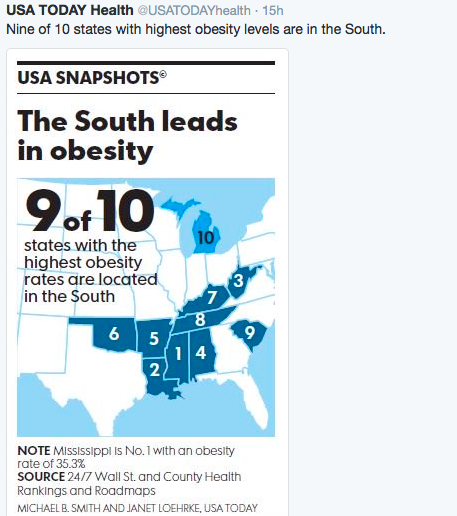
South Leads Obesity

Balanced Summary of Probiotics & Microbiome Effects on the Brain

A good updated summary on probiotics from 538 GutScienceWeek:

Do probiotics work? Are they good for me?

This link reviews a good deal of science and has a nice table explaining costs.

Take home message: Probiotics which vary greatly by strain and often lack rigorous production standards may be beneficial for specific conditions like preventing antibiotic-induced diarrhea but probably are not beneficial on an ongoing basis.

The final post in the series looks at How the Gut Affects Your Mood.

While the author explains that there is likely a microbiome effect on the central nervous system as well as some intriguing animal studies, it is too early to know that manipulation of the microbiome will have beneficial effects on neurological/developmental concerns.

Screen Shot 2016-05-19 at 6.32.33 PM

Super cool and its effects on the microbiome

A terrific review (ED Rosen. NEJM 2016; 374: 885-7) explains how cool temperature can alter the microbiome and the implications of this finding.

Background: mammals have at least two types of adipose tissue: “the familiar (and all too abundant) white fat that stores calories, and brown adipose tissue that dissipates energy…studies of mice have identified several drivers of the appearance of beige fat cells in white fat pads, a process known as ‘browning.'”

Reviewed study: Chevalier et al. Cell 2015; 163: 1360-74.

“This new work shows that cold exposure, like dietary change, provokes alterations in the gut microbiota of mice.  Moreover, when cold-adapted flora are transferred to a germ-free animal, the recipient mouse loses fat mass and has improved insulin sensitivity…[they] are better able to defend their body temperature on being placed in the cold.”

  • “This new work shows that prolonged cold exposure induces a massive increase in the absorptive surface of the gut…cold causes a profound increase in the ratio of Firmicutes to Bacteroidetes”
  • “A companion article from the same group suggests that antibiotic therapy, which depletes gut microbiota, also induces browning and weight loss.”

My take: In totality, these studies demonstrate how multiple organs (in this case: adipose tissue and the gut) work together to face an environmental challenge.  Furthermore, changes in the gut microbiome may be important for therapeutic advantage in many disease states including obesity, type 2 diabetes, short bowel syndrome, irritable bowel syndrome and many others.  Now, that is cool.

Related blog posts:

View from Walnut Street Bridge, Chattanooga

View from Walnut Street Bridge, Chattanooga

Microbiome Predicts Constipation plus two

In brief:

G Parthasarathy et al. Gastroenterol 2016; 150: 367-79.  Mucosal and fecal microbiota samples were collected from 25 healthy women and 25 women with chronic constipation.  Key finding: The mucosal, but not fecal, microbiota profile were 94% predictive of constipation. The associated editorial (pg 300) provides a framework for understanding these findings and show the complexity of trying understand the interations between diet, motility and microbes.

S Fukudo et al. Gastroenterol 2016; 150: 358-66.  This prospective study of Ramosetron for 576 women with IBS-D.  Key finding: 50.7% of treatment patients reported global improvement compared with 32.0% of control patients.  Patients had less abdominal pain, less discomfort, and better stool consistency.  Ramosetron, a 5-HT3 antagonist, has not been reported to cause ischemic colitis (in contrast to alosetron).

In followup to a post earlier in the week, another worrisome study on the Zika virus in pregnancy from NEJM. Here’s an excerpt:

Fetal abnormalities were detected by Doppler ultrasonography in 12 of the 42 ZIKV-positive women (29%) and in none of the 16 ZIKV-negative women. Adverse findings included fetal deaths at 36 and 38 weeks of gestation (2 fetuses), in utero growth restriction with or without microcephaly (5 fetuses), ventricular calcifications or other central nervous system (CNS) lesions (7 fetuses), and abnormal amniotic fluid volume or cerebral or umbilical artery flow (7 fetuses).

Farjado, Puerto Rico

Farjado, Puerto Rico

What We Should Not Worry About

A few useful studies provide reassurances regarding exposures in the prenatal period and perinatal period that we should NOT worry about.

CN Bernstein et al. Clin Gastroenterol Hepatol 2016; 14: 50-7.

In this study with 1671 individuals with inflammatory bowel disease and 10,488 controls, “people with IBD were not more likely to have been born by cesarean section than controls or siblings without IBD.  These findings indicate that events of the immediate postpartum period that shape the developing intestinal microbiome do not affect risk for IBD.”

J Julvez et al. Am. J. Epidemiol. (2016) Full Text Link: doi: 10.1093/aje/kwv195. 

For parents of autistic kids who avoid fish, this article provides information indicating that this is counter-productive.  ” Seafood consumption during pregnancy is thought to be beneficial for child neuropsychological development, but to our knowledge no large cohort studies with high fatty fish consumption have analyzed the association by seafood subtype.” The authors “evaluated 1,892 and 1,589 mother-child pairs at the ages of 14 months and 5 years, respectively, in a population-based Spanish birth cohort established during 2004–2008…” Key finding: “Consumption of large fatty fish during pregnancy presents moderate child neuropsychological benefits, including improvements in cognitive functioning and some protection from autism-spectrum traits.”

My take: We often worry about the wrong things.  These articles provide reassurance that mode of birth and consumption of seafood during pregnancy are things we should not worry about.

Screen Shot 2016-01-30 at 3.22.06 PM


Expect More on Microbiome Modulation with Enteral Nutrition

Similar to a study reviewed on this blog (Why Does Enteral Nutrition Work for Crohn’s Disease? Is it due to the Microbiome?), another publication has shown decreased microbiome diversity associated with exclusive enteral nutrition (C Quince et al. Am J Gastroenterol 2-15; 110: 1718-29 -thanks to Ben Gold for this reference). The overall findings suggest that enteral nutrition makes the gut microbiome more ‘dysbiotic’ (more dissimilar to healthy controls) than prior to enteral nutrition.  This study examined 23 children with Crohn’s disease and 21 healthy children.

My take: Due to the increased ease and fascination of studying our stools, a lot more of this research is going to be published.  At some point, hopefully, these observational studies will transition to hypothesis-driven studies regarding which microbial species need to be modulated to improve inflammatory bowel disease.

Screen Shot 2016-01-13 at 8.02.25 PM

PPIs Alter the Microbiome

A couple of comments –today’s blog (below) and yesterday’s blog both point out potential concerns with proton pump inhibitors (PPIs).  There is a danger that when publications emphasize the potential consequences of PPI use (including NPR’s recent piece on kidney disease and PPIs) that physicians and families will overlook the value of these medications.

With regard to the benefits of PPIs, there are a large number of studies supporting the effectiveness of PPIs for various GI conditions.  As a result, there is little being published on drug effectiveness at this time.  On a daily basis, these medications prevent a great deal of suffering, heal esophagitis, heal ulcers and contribute to improved health.  If one looks only at the negative side of the ledger, this could create harm.

My personal belief is that when PPIs are used, that it is important to consider both the advantages and the disadvantages.  If the benefits are unclear, this increases the necessity of evaluating the risks, especially in vulnerable populations.  In addition, when the benefits are unclear, determining the length of therapy and/or performing appropriate diagnostic workup becomes essential.

Also, for pediatric gastroenterologists reading this blog, it is important to realize that my blog’s following is tiny in comparison to the circulation of the Journal of Pediatrics and news organizations like NPR.  Therefore, we need to engage our pediatrician/family medicine colleagues to help make sure that PPIs are used effectively.  I am looking forward to the January 26 NASPGHAN webinar on this topic.

——–

The degree to which proton pump inhibitors (PPIs) affect the gut microbiome is unclear.  A recent study of 12 healthy volunteers (DE Freedberg et al. Gastroenterol 2015; 149: 883-85, Clearing Out My Desk | gutsandgrowth) indicated that this was not much; however, an even more recent study (F Imhann et al. Gut 2015 December 9 (Gut doi:10.1136/gutjnl-2015-310376)suggests otherwise (abstract below) -their conclusion: “On a population level, the effects of PPI are more prominent than the effects of antibiotics or other commonly used drugs.”  

Link: Proton pump inhibitors affect the gut microbiome

Abstract

BACKGROUND AND AIMS: Proton pump inhibitors (PPIs) are among the top 10 most widely used drugs in the world. PPI use has been associated with an increased risk of enteric infections, most notably Clostridium difficile. The gut microbiome plays an important role in enteric infections, by resisting or promoting colonisation by pathogens. In this study, we investigated the influence of PPI use on the gut microbiome.

METHODS: The gut microbiome composition of 1815 individuals, spanning three cohorts, was assessed by tag sequencing of the 16S rRNA gene. The difference in microbiota composition in PPI users versus non-users was analysed separately in each cohort, followed by a meta-analysis.

RESULTS: 211 of the participants were using PPIs at the moment of stool sampling. PPI use is associated with a significant decrease in Shannon’s diversity and with changes in 20% of the bacterial taxa (false discovery rate <0.05). Multiple oral bacteria were over-represented in the faecal microbiome of PPI-users, including the genus Rothia (p=9.8×10(-38)). In PPI users we observed a significant increase in bacteria: genera Enterococcus, Streptococcus, Staphylococcus and the potentially pathogenic species Escherichia coli.

CONCLUSIONS: The differences between PPI users and non-users observed in this study are consistently associated with changes towards a less healthy gut microbiome. These differences are in line with known changes that predispose to C. difficile infections and can potentially explain the increased risk of enteric infections in PPI users. On a population level, the effects of PPI are more prominent than the effects of antibiotics or other commonly used drugs.

My take: It is likely that the effects on the microbiome are even more notable in infants/younger children; in neonates, the changes in the microbiome could increase the risk of serious diseases like necrotizing enterocolitis.

Related blog posts:

Yosemite

Yosemite

Why Does Enteral Nutrition Work for Crohn’s Disease? Is it due to the Microbiome?

A recent study (K Gerasimidis et al. Am J Gastroenterol advance online publication 3 November 2015; doi: 10.1038/ajg.2015.357. Full Text: Extensive Modulation of the Fecal Metagenome in Children With Crohn’s Disease During Exclusive Enteral Nutrition) finds that treatment with Exclusive Enteral Nutrition further reduces microbiome diversity compared to healthy controls. This was an unexpected finding as the authors state: “we would expect EEN treatment to normalize the perceived ‘dysbiotic’ microbiota toward a healthier state.”

Reference from KT Park’s twitter feed. Here’s the abstract:

OBJECTIVES:

Exploring associations between the gut microbiota and colonic inflammation and assessing sequential changes during exclusive enteral nutrition (EEN) may offer clues into the microbial origins of Crohn’s disease (CD).

METHODS:

Fecal samples (n=117) were collected from 23 CD and 21 healthy children. From CD children fecal samples were collected before, during EEN, and when patients returned to their habitual diets. Microbiota composition and functional capacity were characterized using sequencing of the 16S rRNA gene and shotgun metagenomics.

RESULTS:

Microbial diversity was lower in CD than controls before EEN (P=0.006); differences were observed in 36 genera, 141 operational taxonomic units (OTUs), and 44 oligotypes. During EEN, the microbial diversity of CD children further decreased, and the community structure became even more dissimilar than that of controls. Every 10 days on EEN, 0.6 genus diversity equivalents were lost; 34 genera decreased and one increased during EEN. Fecal calprotectin correlated with 35 OTUs, 14 of which accounted for 78% of its variation. OTUs that correlated positively or negatively with calprotectin decreased during EEN. The microbiota of CD patients had a broader functional capacity than healthy controls, but diversity decreased with EEN. Genes involved in membrane transport, sulfur reduction, and nutrient biosynthesis differed between patients and controls. The abundance of genes involved in biotin (P=0.005) and thiamine biosynthesis decreased (P=0.017), whereas those involved in spermidine/putrescine biosynthesis (P=0.031), or the shikimate pathway (P=0.058), increased during EEN.

CONCLUSIONS:

Disease improvement following treatment with EEN is associated with extensive modulation of the gut microbiome.

My take: We really don’t know why EEN works and we have a lot to learn about a ‘healthy’ microbiome.

Related blog posts: