Will Emerging Therapies for Fatty Liver Disease Be Affordable?

With non-alcoholic steatohepatitis (NASH), there are currently no established medical therapies.  However, several candidate medications look promising. However in recent years, many new medications have come with an impressive price tag and this has led to questions about whether emerging therapies for NASH will be affordable.

A recent article looked at the medication Obeticholic Acid, which was approved for treating primary biliary cholangitis.  It is possible that it will be helpful for NASH.  Yet, its cost , currently, is about $70,000 per year

GIHepNews: Despite clinical promise, obeticholic acid may be too expensive for treating NASH

Here’s an excerpt:

In the 72-week Phase II trial, called FLINT, 273 men and women with NASH were randomly assigned to receive OCA or placebo (Lancet 2015;385:956-965). Liver histology improved in 45% of those receiving OCA versus 21% in those receiving sham therapy (P=0.002). An increased risk for pruritus was the most notable adverse event among patients taking OCA (23% vs. 6% for placebo), according to the researchers. Based on the favorable benefit–risk results of the Phase II study, a Phase III trial is ongoing…

The expected benefit of OCA over lifestyle modifications for all the major long-term outcomes, such as decompensated cirrhosis (10% vs. 9.4%), liver-related mortality (9% vs. 8.1%) and transplant-free survival (72.2% vs. 71.5%), were relatively modest, the researchers reported. Those differences resulted in a cost per quality-adjusted life-year saved of $5.2 million with the assumption that 16% of patients would relapse…

 “If the efficacy compared to placebo is of the same order found in the FLINT trial, the current cost of the drug would be prohibitive in a population-based context,” said Dr. Lavine, who was a co-investigator on the trial.

My take: Given the growing burden of NASH, new effective treatments are needed.  In my view, though, cost-effectiveness has to be a consideration.

Prague Castle
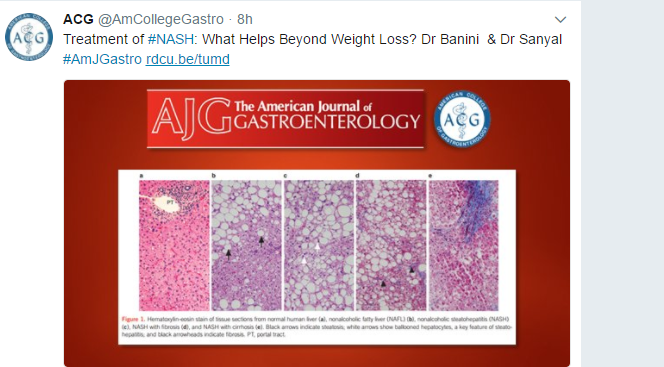
NASH: What Helps Beyond Weight Loss?

Full text from ACG article: NASH: What Helps Beyond Weight Loss?

The article reinforces the value of weight loss and exercise for nonalcoholic steatohepatitis (NASH).  It suggests that Vitamin E and/or pioglitazone may be helpful. Many more medications are being evaluated.

My take: As of now, losing weight and exercise remain the cornerstone for NASH treatment.

Bariatric Surgery and Reversal of NASH

A small prospective study (M Manco et al. J Pediatr 2017; 180: 31-7) provides evidence that bariatric surgery/sleeve gastrectomy is effective at reversing nonalcoholic steatohepatitis (NASH) and hepatic fibrosis in adolescents (n=20).

All patients in this study had BMI >35 and weere 13-17 yrs of age.

Key findings at one year following intervention:

  • Among the 20 patients who underwent sleeve gastrectomy, there was a 21.5% loss in baseline weight, which compared with weight loss of 3.4% among 20 patients who received intragastric balloon device and weight increase of 1.7% among 53 patients who received lifestyle intervention counseling.
  • Sleeve gastrectomy group had resolution of NASH in all 20 and disappearance of hepatic fibrosis in 18 (90%).  In the intragastric balloon group, NASH reverted in 24% and fibrosis in 37% whereas there was no improvement in the lifestyle intervention group.

Full text link: Sleeve Gastrectomy for NASH

Limitations are discussed in the editorial by Inge and Xanthakos (pgs 6-7) and included small sample size, absence of patients with type 2 diabetes, and short followup period.  Nevertheless, this is “the largest and most informative series…in select adolescents with severe obesity.”

My take: Given the lack of effective pharmaceutical therapy and the typically impotent effects of lifestyle intervention, this data supports bariatric surgery to facilitate weight loss/NASH reversal in select adolescents.

Related article: JCF Leung et al. Hepatology 2017; 65: 54-64.  This study showed that the histologic severity and clinical outcomes are modestly better in nonobese patients (n=72) with NAFLD compared with obese patients (n=307). High triglycerides and higher creatinine were associated with more advanced liver disease in nonobese patients.

Briefly noted: D Houghton et al. Clin Gastroenterol Hepatol 2017; 15: 96-102.  This study with 24 subjects with nonalcoholic steatohepatitis showed that exercise reduced hepatic triglyceride content, visceral fat, and plasma triglycerides. However, circulating markers of inflammation and fibrosis was not reduced.  The implication is that exercise should be part of NASH treatment but that weight management/diet are needed as well.

Glacier Natl Park

Glacier Natl Park

. Related blog posts:

Learned Fear of Gastrointestinal Sensations Plus Two

Briefly noted: The authors of a recent study (E Ceunen et al. Clin Gastroenterol Hepatol 2016; 14: 1552-58) set out to study whether it is likely that healthy adults could learn to fear “innocuous visceral sensations.”  Fifty-two healthy subjects received  2 types of esophageal balloon distentions –one that was perceptible and non-painful and one that was painful.  Not surprisingly, when the researchers paired these two interventions in the experimental group, the experimental group learned to fear the innocuous stimulation as well as the painful distention.  This study provides theoretical support for one mechanism that could trigger ongoing functional gastrointestinal symptoms and a potential rationale for therapies, like cognitive behavioral therapy, which attempt to extinguish these symptoms.

In a retrospective study (AM Moon et al. Clin Gastroenterol 2016; 14: 1629-37) with 6451 patients with cirrhosis (mean age 60.6 yrs), the authors note that use of antibiotics during upper gastrointestinal bleeding (which is currently recommended) is associated with reduced mortality by ~30% at 30 days.  Despite its benefit, this intervention is often overlooked.  In the current study, only 48.6% of admissions received timely antibiotics; however, during the course of the study, the rate of antibiotic use improved from 30.6% in 2005 to 58.1% in 2013.

A recent retrospective study (N Goossens et al. Clin Gastroenterol 2016; 14: 1619-28) with 492 subjects showed that histologic NASH (in 12% of cohort) was associated with increased risk of death in patients who underwent bariatric surgery compared to patients without NASH.  Overall, bariatric surgery reduced the risk of death during the study period with HR of 0.54; the median follow-up was 10.2 years, with surgery taking place 1997-2004.  However, in patients with NASH the HR 0.90 which indicated that there was not a significant reduction in the risk of death.

Bar Harbor, ME (low tide)

Bar Harbor, ME (low tide)

Elafibranor Study & “My compliments to the photographer”

A while back, I remember seeing a cartoon with a dissatisfied patron leaving a restaurant and saying “my compliments to the photographer.”

Sometimes reading journal titles has the same feel.  The title does not always indicate what you are really going to get.  A recent study (V Ratziu et al. Gastroenterol 2016; 150: 1147-59) has the following title: “Elafibranor, an Agonist of the Peroxisome Proliferator –Activated Receptor –α and –β, Induces Resolution of Nonalcoholic Steatohepatitis Without Fibrosis Worsening.”  Sounds great –a new effective treatment for NASH, right?

Here’s are the results:

  • “In intention-to-treat analysis, there was no significant difference between elafibranor and placebo groups in the protocol-defined primary outcome.”
  • However, based on a post-hoc analysis with a modified definition, the treatment group had  a 19% NASH resolution compared with 12% of the placebo group.

This study examined 276 patients in a randomized double-blind placebo-controlled trial.

To me these results are not impressive.  The associated editorial (pg 1073) expresses more optimism and indicates that there have been evolving outcome measures in NASH studies to look for the combination of NASH resolution without worsening fibrosis.  Thus, prior studies that used only NASH resolution, such as pioglitazone (47%), vitamin E (36%) and obeticholic acid (22%) cannot be compared to his current study.

My take: Pretty picture or not, what this really means -is that we need more studies, including the outcome of phase III studies of this medication.

Georgia Terrace

The Georgian Terrace

Interesting Fatty Liver Articles -Spring 2016

J Bousier et al. Hepatology 2016; 63: 764-75.  This study showed an association between the severity of nonalcoholic fatty liver disease and gut dysbiosis/shift in gut microbiome in 57 patients.  Specifically, Bacteroides was independently associated with NASH and Ruminococcus with significant fibrosis.

V WS Wong et al. Hepatology 2016; 63: 754-63. This study showed that NAFLD (identified by ultrasonography screening) was frequent (58.2%) among 612 consecutive patients who were undergoing coronary angiogram. During a followup (3679 patient-years), NAFLD patients had a lower adjusted HR of death (0.36).  Older age and diabetes were indepenently associated with cardiovascular events.  In addition, during f/u NAFLD patients in their cohort rarely developed liver cancer or cirrhotic complications.  Thus, NAFLD is common among patients with coronary artery disease but did not predict a worsened outcome.

F Piscaglia et al. Hepatology 2016; 63: 827-38. This report was a study of 756 patients with liver cancer (HCC) due to either NAFLD (145) or HCV (611). HCC in NAFLD patients had a larger volume, was more infiltrative, and was detected outside surveillance.  NAFLD-HCC was associated with a lower survival (25.5 months compared with 33.7 months for HCV-HCC). The authors note that after patient matching for tumor stage, the survival rate was similar. The difference in survival does not account for lead-time bias (What’s More Important: Improving Mortality Rate or Survival …).  Overall, the study indicates that without surveillance, HCC is detected later.  Due to the frequency of NAFLD, it is unclear which patients would benefit from surveillance and what type of surveillance should be recommended.

Related blog posts:

Farjado, Puerto Rico

Farjado, Puerto Rico


Reaching Consensus on Bariatric Intervention in Children and Adolescents

A recent medical position paper (Nobili V, et al. JPGN 2015; 60: 550-61) provides guidance for bariatric surgery intervention in children and adolescents with and without nonalcoholic fatty liver disease (NAFLD).

While the authors acknowledge that bariatric surgery can “dramatically reduce the risk of adulthood obesity and obesity-related diseases,” they advocate its use in adolescents with the following:

  • BMI >40 kg/m-squared with severe comorbidities: type 2 diabetes mellitus, moderate-to-severe sleep apnea, pseudotumor cerebri, or NASH with advanced fibrosis (ISHAK score >1)
  • BMI >50 kg/m-squared with mild comorbidities: hypertension, dyslipidemia, psychological distress, gastroesophageal reflux, anthropathies, NASH, impairment in activities of daily living, mild obstructive sleep apnea, panniculitis, chronic venous insufficiency, urinary incontinence
  • Additional criteria: have attained 95% of adult stature, failed behavioral/medical treatments, psychological evaluation perioperatively, avoid pregnancy for 1 year after surgery, will adhere to nutritional guidelines after surgery, informed assent from teenager (along with parental consent)

Key points:

  • “There is a lack of randomized controlled trials examining the effects of bariatric surgery on NAFLD or NASH.”  In Table 3, the authors provide a summary of 16 previous studies/outcomes; though none of the studies enrolled more than 60 patients.
  • In an adult prospective study with 381 patients (Mathurin P et al. Gastroenterol 2009; 137: 532-40), there was a significant decline in the severity/prevalence of steatosis and resolution of NASH at 1 and 5 years.
  • Bariatric surgery, in adult studies, have improved diabetes, insulin resistance, hypertension, and dyslipidemia.
  • Patients who have “undergone bariatric surgery show higher suicide rates than the general population.”  Psychological evaluation should be integrated with surgical decision.
  • Type of surgery: Roux-en-Y Gastric Bypass (RYGB) is favored by the authors; they also discuss studies with Laparoscopic Adjustable Gastric Banding (LAGB).  “RYGB and LAGB are the 2 main surgical procedures that have been used in pediatric obesity.  RYGB is considered a safe and effective option for adolescents with extreme obesity, as long as appropriate long-term follow-up is provided. LAGB has not been approved by Food and Drug Administration for use in adolescents, and there should be considered investigational only.”

It is interesting that the authors are so deferential to the Food and Drug Administration.  It is clear from their position paper that LAGB has similar evidence supporting its use in adolescents as RYGB.  They even note that it has potential for reversibility and “an excellent safety profile with a lower risk of postoperative vitamin deficiencies when compared with biliopancreatic diversion and RYGB.”

Bottomline: Given the continuation of the obesity epidemic, additional pediatric medical expertise will be needed to help evaluate adolescents for bariatric surgery and to follow them postoperatively.

Related blog posts:

Weight Loss Improves NASH

A recent study (http://dx.doi.org/10.1053/j.gastro.2015.04.005) helps confirm the notion that the most effective therapy for nonalcoholic steatohepatitis is weight loss. (From Rohit Kohli twitter feed).

Abstract:

Background & Aims

It is not clear how weight loss affects histologic features of liver in patients with nonalcoholic steatohepatitis (NASH). We examined the association between the magnitude of weight loss through lifestyle modifications and changes in histologic features of NASH.

Methods

We conducted a prospective study of 293 patients with histologically proven NASH who were encouraged to adopt recommended lifestyle changes to reduce their weight over 52 weeks, from June 2009 through May 2013, at a tertiary medical center in Havana, Cuba. Liver biopsies were collected when the study began and at week 52 of the diet, and analyzed histologically.

Results

Paired liver biopsies were available from 261 patients. Among 293 patients who underwent lifestyle changes for 52 weeks, 72 (25%) achieved resolution of steatohepatitis, 38 (47%) had reductions in NAFLD activity scores (NAS), and 56 (19%) had regression of fibrosis. At week 52, 88 subjects (30%) had lost 5% or more of their weight. Degree of weight loss was independently associated with improvements in all NASH-related histological parameters (odds ratios, 1.1–2.0;P<.01). A higher proportion of subjects with 5% weight loss or more had NASH resolution (51/88, 58%) and a 2-pt reduction in NAS (72/88, 82%) than subjects that lost less than 5% of their weight (P<.001). All patients who lost 10% of their weight or more had reductions NAS, 90% had resolution of NASH, and 45% had regression of fibrosis. All patients who lost 7%−10% of their weight and had few risk factors also had reduced NAS. In patients with baseline characteristics that included female sex, body mass index ≥35, fasting glucose >5.5 mmol/L, and many ballooned cells, NAS scores decreased significantly with weight reductions of 10% or more.

Conclusions

A greater extent of weight loss, induced by lifestyle changes, is associated with the level of improvement in histologic features of NASH. The highest rates of NAS reduction, NASH resolution, and fibrosis regression occurred in patients with weight losses of 10% or more.

“This Is A Stick Up — Your Money or Your Life”

When I read a recent Hepatology editorial (Hepatology 2015; 61: 1106-8), I could not help think of the aforementioned title of this blog.

Here’s the scoop:

The two most commonly used medications for Wilson’s disease are trientine (Syprine) and D-penicillamine (Cupramine). For about 20 years, the original manufacturer of these medications kept the consumer cost at ~$1 per 250 mg tablet.  Currently the cost of Syprine is ~$200 per 250 mg tablet and Cuprimine costs ~$55 per 250 mg tablet.  This 200-fold increase translates into a yearly cost of ~$300,000.

How did this happen?

  • Little competition
  • Profit motive
  • Patients are reluctant to protest (they need this medication to be manufactured)

Why is this outrageous?

This increase in cost was not driven by any new discovery or research innovation.

Are there options?

Zinc is inexpensive and may be an option after initial period of chelation/normalization of liver biochemistries.  Zinc needs to be taken two to three times per day and “well away from meals for best absorption.”

Bottomline: These medication prices are outrageous.

Briefly noted:

  • “Molecular pathophysiology of portal hypertension”  Hepatology 2015; 61: 1406-15. Terrific review with excellent figures.
  • “Ezetimibe for the treatment of Nonacloholic Steatohepatitis” (MOZART trial) Hepatology 2015; 61: 1239-50. This randomized double-blind, placebo-controlled trial with 50 patients (biopsy-proven NASH) showed that Ezetimbe was not significantly different from placebo in histologic response rates, serum aminotransferases, or in magnetic resonance elastography findings.
  • Van Biervliet et al. “Clinical Zinc Deficiency as Early Presentation of Wilson Disease” JPGN 2015; 60: 457-9. Case report.

Screen Shot 2015-04-19 at 8.55.40 PM

Hepatology Update -Summer 2014

Preventing Perinatal Transmission of Hepatitis B Virus (HBV): Hepatology 2014; 60: 468-76.  This nonrandomized study, conducted between 2009-2011 with approximately 700 patients, showed that the rate of perinatal transmission of can be brought down almost to zero by instituting therapy with either telbivudine or lamivudine in the third trimester of pregnancy.  The accompanying editorial (pgs 448-51) indicates that either telbivudine or tenofovir (both pregnancy class B agents with regard to teratogenicity) are preferred agents due to higher barrier to resistance. And, the article suggests starting as early as week 28 (especially if high viral HBV DNA load) and no later than 32 weeks gestation. Other recommendations from editorial include stopping antiviral after delivery in women who intend to breastfeed.

More on coffee: Hepatology 2014; 60: 661-69.  Coffee but not tea conferred protection from cirrhosis mortality.  “Compared to non-daily coffee drinkers, those who drank two or more cups per day had a 66% reduction in mortality risk.”  This study also had an accompanying editorial (pg 464-67) which reviews the biologic plausibility and potential mechanisms.

NASH pathology: Hepatology 2014; 60: 565-75.  The study describes a more precise way to categorize the diagnosis of nonalcoholic steatohepatitis (NASH) using the European Fatty Liver Inhibition of Progression (FLIP) pathology consortium proposal.  The diagnosis of NASH requires the presence of ballooning and lobular inflammation in addition to steatosis.  Using the FLIP approach, diagnosis concordance increased significantly.

Related blog posts: