AGA Guideline on Pouchitis Management

Key recommendations

  • AGA recommends metronidazole and/or ciprofloxacin as preferred treatment of pouchitis with duration of treatment 2-4 weeks.
  • For Crohn’s-like disease of the pouch, AGA guideline recommends using either ileal-release budesonide or advanced immunosuppressive agents (eg. Biological therapies and small molecule therapies)
  • “In patients with cuffitis, topical therapies should be the first-line therapy, such as mesalamine suppositories, corticosteroid suppositories, or corticosteroid ointment applied directly to the cuff. Biological therapies and small molecule therapies are recommended in refractory cases

Related blog posts:

Endoscopy of the Ileal Pouch Anal Anastomosis

A Bousvarous et al. JPGN 2023; 77: 691-694. Endoscopy of the Ileal Pouch Anal Anastomosis

This is a terrific review with some good pictures.

  • The authors note that in their practice in their IBD center, a pouchoscopy is performed 1-2 years after ileostomy closure irrespective of symptoms; in those with symptoms, it is performed sooner.
  • Some complications like strictures and ulcers can occur with few symptoms
  • Table 1 reviews common complications like strictures, cuffitis, infectious pouchitis, Crohn’s disease like pouch inflammation, pouch ischemia, and irritable pouch syndrome. Figure 2 provides useful endosopic picture

Related blog posts:
Another article on pouch management/evaluation:

P Santiago et al. Am J Gastroenterol 2023; 118(11):p 1931-1939 | DOI: 10.14309/ajg.0000000000002348. Open access: Classification and Management of Disorders of the J Pouch

Vedolizumab for Chronic Pouchitis

S Travis et al. NEJM 2023; 388: 1191-1200. Vedolizumab for the Treatment of Chronic Pouchitis

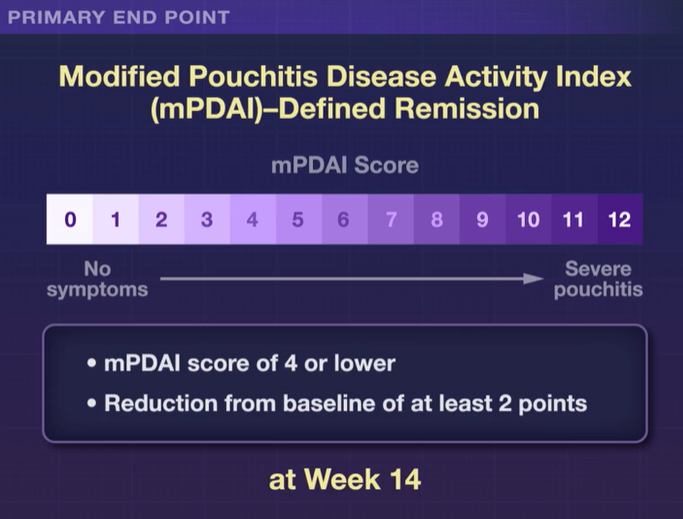
Methods: This was a a phase 4, double-blind, randomized trial (n=102 adults,EARNEST trial) to evaluate vedolizumab in adult patients in whom chronic pouchitis had developed after undergoing IPAA for ulcerative colitis.All patients received 4 weeks of ciprofloxacin and the treatment group received standard vedolizumab dosing. The primary end point was modified Pouchitis Disease Activity Index (mPDAI)–defined remission (an mPDAI score of ≤4 and a reduction from baseline of ≥2 points in the mPDAI total score; scores range from 0 to 12, with higher scores indicating more severe pouchitis) at week 14. The mPDAI is based on clinical symptoms and endoscopic findings.

Key findings:

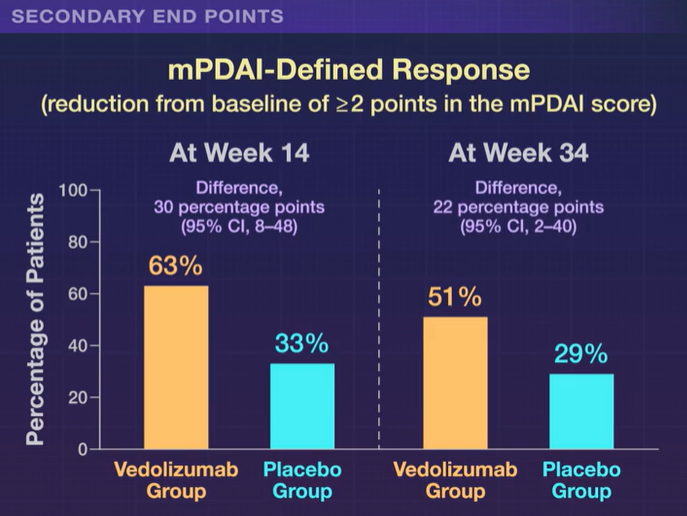
  • The incidence of mPDAI-defined remission at week 14 was 31% (16 of 51 patients) with vedolizumab and 10% (5 of 51 patients) with placebo
  • Differences in favor of vedolizumab over placebo were also seen with respect to mPDAI-defined remission at week 34 (difference, 17 percentage points, 35% vs 18%)

My take: Vedolizumab is an effective treatment for chronic pouchitis.

This figure is from NEJM Twitter Feed

Related blog posts:

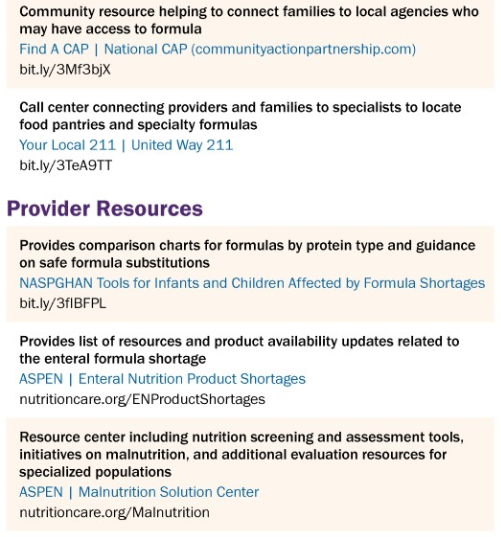
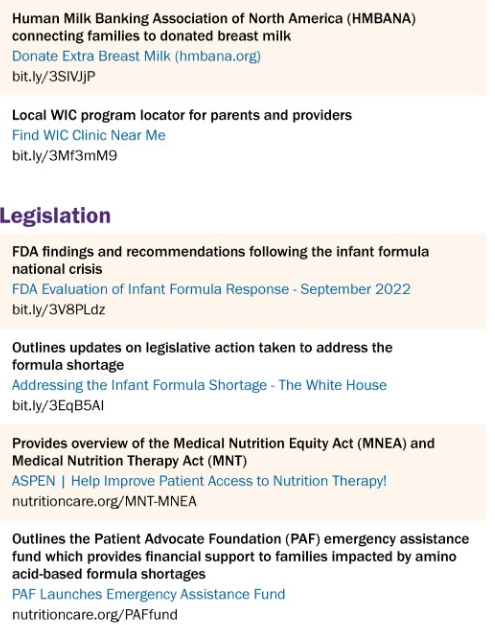
Vancomycin for Chronic Pouchitis & ASPEN Infant Formula Resources

G Lupu et al. Inflamm Bowel Dis 2022; 28: 1610-1613. Vancomycin Is Effective in the Treatment of Chronic Inflammatory Conditions of the Pouch

In this retrospective study of 41 adults with history of ileal pouch-anal anastomosis (IPAA) for ulcerative colitis (UC), the authors evaluated the clinical response (subjective judgement of provider) to chronic vancomycin therapy (125 mg twice a day).

Key findings:

  • At 4 weeks, 21 (51%) of patients had a clinical response. 16 of these patients maintained a clinical response at 3 and 6 months (remained on treatment).
  • 6 additional patients demonstrated a later response. In total 22 (54%) were considered clinical responders at 3 and 6 months.
  • The mean number of antibiotics utilized prior to vancomycin was 4, including ciprofloxacin, metronidazole, levofloxacin, rifaximin, sulamethoxazole-trimetoprim, amoxicillin, and amoxicillin-clavulanic acid

My take: Since vancomycin has poor enteral absorption, it’s side effect profile is very favorable. More prospective and objective data is needed; however, vancomycin’s high cost will likely limit frequent use.

Related blog posts:

Link: ASPEN Formula Resource Practice Tool (sponsored by ByHeart)

Chicago Classification of J Pouch Outcomes

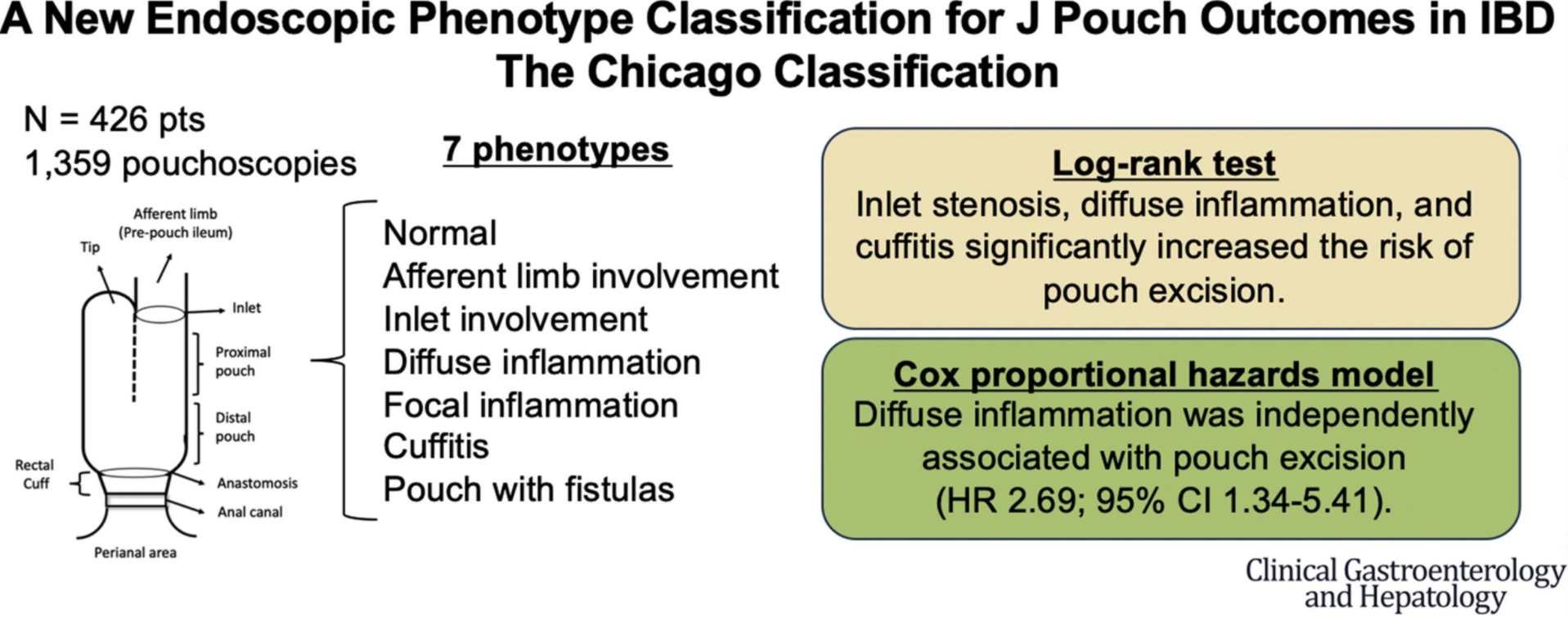
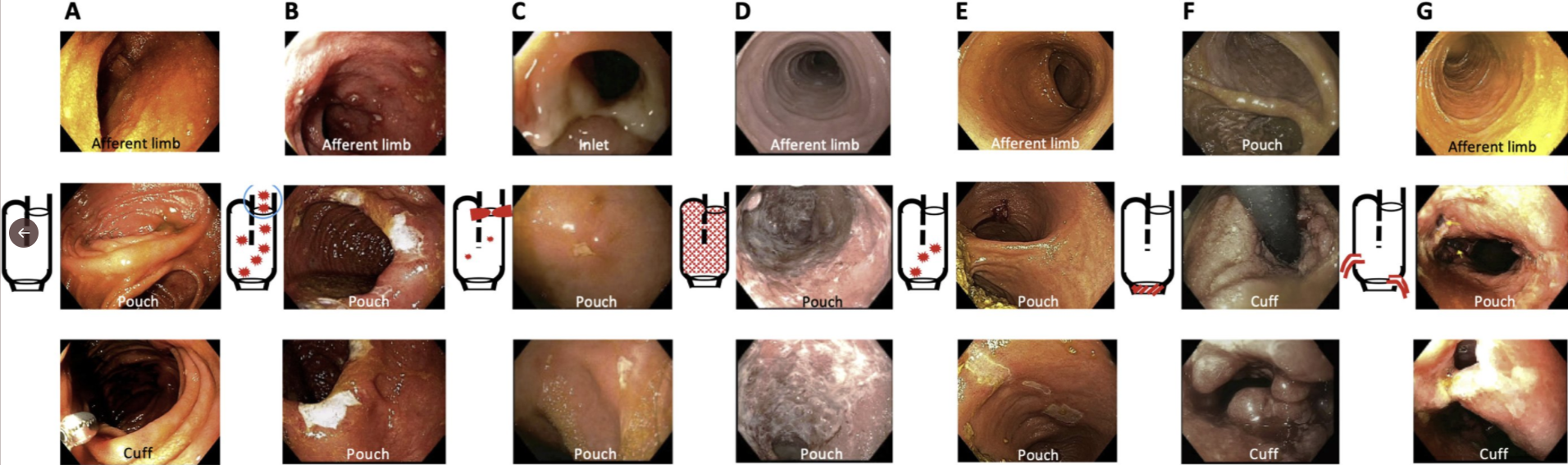
S Akiyama et al. Clin Gastroenterol Hepatol 2021; https://doi.org/10.1016/j.cgh.2021.02.010 Endoscopic Phenotype of the J Pouch in Patients With Inflammatory Bowel Disease: A New Classification for Pouch Outcomes

The authors retrospectively reviewed 1359 pouchoscopies and classified them into 7 main pouch phenotypes: (1) normal, (2) afferent limb involvement, (3) inlet involvement, (4) diffuse, (5) focal inflammation of the pouch body, (6) cuffitis, and (7) pouch with fistulas noted 6 months after ileostomy takedown.

Key finding: Diffuse inflammation was associated independently with pouch excision (hazard ratio, 2.69; 95% CI, 1.34–5.41; P = .005).

Related blog posts:

Which Crohn’s Disease Ulcerations Are Harder to Treat — Small Bowel or Colon?

K Takenaka et al. Clin Gastroenterol Hepatol 2020; 18: 1545-1552. Small Bowel Healing Detected by Endoscopy in Patients With Crohn’s Disease After Treatment With Antibodies Against Tumor Necrosis Factor

Methods: This was a post-hoc analysis of data from a clinical trial from 116 patients with CD (46 with ileal and 70 with ileocolonic type) who received induction and then maintenance therapy with anti-TNF agents (2013-18). Median age 29 years.

Key findings (based on findings from balloon-assisted enteroscopy )

  • Before treatment, small bowel ulcerations were present in 114 patients (98%); 42 patients (60%) with ileocolonic disease had colon ulcerations.
  • During maintenance therapy, 41/114 patients (36%) had small bowel endoscopic healing; all the patients with small bowel endoscopic healing also had colonic endoscopic healing.
  • Failure to achieve small bowel endoscopic healing was significantly associated with stricturing or penetrating disease (P = .014), lack of concomitant treatment with immunomodulators (P = .015), and having received previous treatment with an anti-TNF agents (P = .018).
  • The authors found that endoscopic healing was only 35% (36% for small bowel and 79% for colonic inflammation)

My take: Small bowel inflammation did not respond to treatment as well as colonic inflammation.  The implication of this study is that even in patients who are doing well clinically with treatment, disease progression especially in the small bowel may be ongoing.

Briefly noted: M Kayal et al. Inflamm Bowel Dis 2020; 26: 1079-1086.  Inflammatory Pouch Conditions Are Common After Ileal Pouch Anal Anastomosis in Ulcerative Colitis Patients.

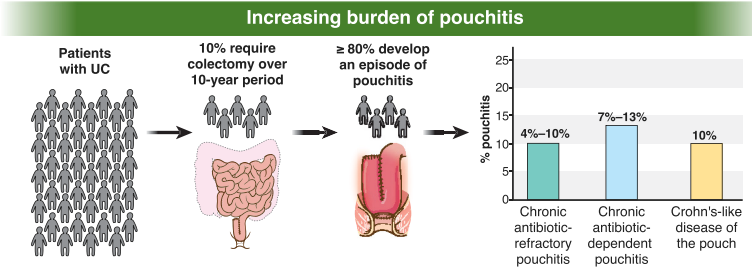
  • In this retrospective study of adults with ulcerative colitis who had undergone total proctocolectomy (TPC) with ileal pouch anal anastomosis (IPAA). Acute pouchitis occurred in 205 patients (53%), 60 of whom (30%) progressed to chronic pouchitis.
  • Cuffitis and Crohn’s disease-like condition (CDLC) of the pouch occurred in 119 (30%) patients and 46 (12%) patients
  • Pouch failure was noted in 6.7%
  • Only one-third of patients with chronic pouchitiis, cuffitis and CDLC responded to biologic therapy

Related blog posts:
What is Going On With Pouchitis? & No More Handshakes

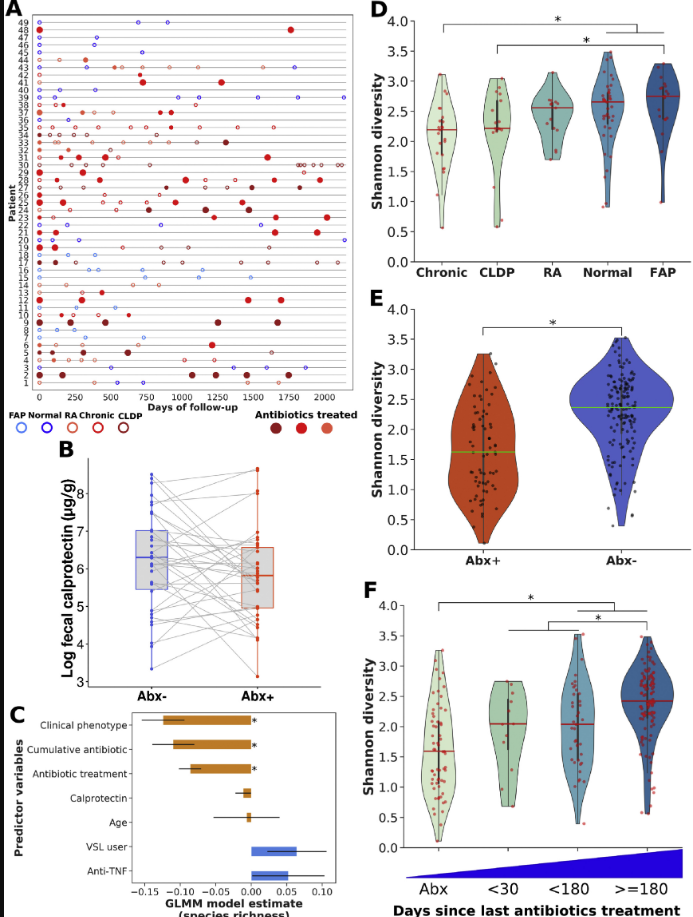
A prospective study (V Dubinsky et al. Gastroenterol 2020; 158: 610-24) followed 49 patients who had undergone pouch surgery for ulcerative colitis or for familial adenomatous polyposis (FAP).

The authors followed multiple parameters including calprotectin, metagenomes/bacterial diversity, antibiotic resistance testing, and virulence factors/toxins. 33 patients received antibiotics for a median of 425 days.  Most patients were treated with a combination of ciprofloxacin and metronidazole.

Full text link: Predominantly Antibiotic-resistant Intestinal Microbiome Persists in Patients With Pouchitis Who Respond to Antibiotic Therapy

Key findings:

  • Pouch phenotype: normal from UC (n=10), recurrent acute pouchitis (n=6), chronic pouchitis and Crohn’s-like disease of the pouch (n=27), and normal from FAP (n=6)
  • 79% of antibiotic-treated patients had a clinical response to each course of antibiotics
  • 89% of those who completed a 4-week course relapsed within 3 months
  • Median calprotectin values decreased by 40% in response to antibiotics
  • Antibiotic treatment reduced disease-associated bacteria including Clostridium perfringens, Ruminococcus gnavus, and Klebsiella pnneumoniae. However, F prausnitzii, a putative anti-inflammatory species, also decreased during antibiotic treatment
  • While antibiotic resistance was noted, these strains had a tendency toward lower potential for virulence and “did not induce secretion of inflammatory cytokines by epithelial cells”

Why do patients become antibiotic-dependent?

“We observed a drastic shift in microbiome composition on antibiotics cessation, characterized by blooms of nonintestinal bacteria, especially those originating from the oral cavity, as well as of opportunistic pathogens. Intestinal colonization by oral bacteria has been associated with UC and Crohn’s disease, and shown to trigger severe intestinal inflammation in germ-free mice…[this] drug-resistant microbiome may be fragile and unable to prevent colonization by exogenous bacteria that are ecologically fitter once antibiotics are discontinued.”

My take: This study provides insight into how antibiotics improve pouchitis; namely, they reduce disease-associated bacteria and promote an antibiotic-resistant microbiome with lower inflammatory potential.

Related blog posts:

Figure 1:

Link:  34 AAP Publications regarding COVID-19 and children

ESPGHAN Position Paper: Biosimilars in Pediatric Inflammatory Bowel Disease

A recent position paper from ESPGHAN/Porto Group:

Full text: Use of Biosimilars in Pediatric Inflammatory Bowel Disease: An Updated Position Statement of the Pediatric IBD Porto Group of ESPGHAN. L de Riddler et al. JPGN 2019; 68: 144-53

Key points:

  • There are sufficient data (by extrapolation from different indications, adult data and limited pediatric data) to state that in children with IBD who are indicated for IFX treatment, CT-P13 is a safe and efficacious alternative to the originator IFX for
    induction, and maintenance, of remission. 97% agreement
  • A switch from the originator infliximab to CT-P13 may be considered in children with IBD in clinical remission, following at least 3 induction infusions. 84% agreement
  • Multiple switches (>1 switch) between biosimilars and reference drug or various biosimilars are not recommended in children with IBD, as data on interchangeability is limited and traceability of the drugs in case of loss of efficacy and/or safety signals may be compromised. 97% agreement
  • Physicians/institutions should keep records of brands and batch numbers of all biological medicines (including biosimilars) administered. 89% agreement

Related blog posts:

Disclaimer: These blog posts are for educational purposes only. Specific dosing of medications/diets (along with potential adverse effects) should be confirmed by prescribing physician/nutritionist.  This content is not a substitute for medical advice, diagnosis or treatment provided by a qualified healthcare provider. Always seek the advice of your physician or other qualified health provider with any questions you may have regarding a condition.

IBD Shorts July 2018

DJ Gracie et al. Gastroenterol 2018; 154: 1635-46. This study of 405 adults indicated that IBD triggers anxiety and that anxiety triggers IBD. Specifically: “Baseline CD or UC disease activity were associated with an almost 6-fold increase in risk for a later abnormal anxiety score (hazard ratio [HR], 5.77; 95% CI, 1.89-17.7).  In patients with quiescent IBD at baseline, baseline abnormal anxiety scores were associated with later need for glucocorticosteroid prescription or flare of IBD activity (HR 2.08; 95% CI, 1.31-3.30).”

RL Dalal, B Shen, DA Schwartz. Inflamm Bowel Dis 2018; 24: 989-96.  This review provides updated information on epidemiology, diagnosis, and treatment recommendations for pouchitis.

A Alper et al. JPGN 2018; 66: 934-6. Key finding: Celiac disease is “not increased in children with IBD compared with non-IBD children with gastrointestinal symptoms.”  False-positive tTG serology can occur.

AK Shaikhkhalil et al. JPGN 2018; 66: 909-14. The authors showed that using a quality-improvement effort, there was increase utilization of enteral exclusive therapy (EEN).  Baseline 5.was <5% and by completion of intervention, utilization increased to approximately 50%. The interventions to achieve this are specified in this article, including talking points.  EEN is described as “nutrition therapy.” Patients are offered oral EEN and if not adequate by 3-4 days, nasogastric feedings are initiated (~15%).  Interestingly, of those to complete EEN therapy, 97% did not need NG placement.

Pictures from Ameilia Island:

Amelia Island

Low Rate of Ocular Disease in Pediatric Crohn’s Disease

A recent study (S Naviglio et al. Inflamm Bowel Dis 2017; 23: 986-90) confirms that there is a low rate of ocular disease in pediatric inflammatory bowel disease (IBD); in this cohort, half had Crohn’s disease (CD) and half had ulcerative colitis.

In this single center study, 94 children with a median age of 13.4 yrs were offered ophthalmologic examination (2014-2016).  None of these patients reported ocular symptoms.  The authors assert that 70% had intestinal remission, though 64% had elevated fecal calprotectin levels (>100 mg/kg). Key finding: One patient (1.06%) had ocular finding of uveitis (previously diagnosed prior to study)

The authors indicate that hepatobiliary manifestations, present in 9, were the most common extraintestinal IBD manifestation (EIM). Arthropathy occurred in 8, cutaneous manifestations occurred in 6 and ‘metastatic’ CD occurred in 4.

My take:  Ocular disease is an infrequent EIM in pediatric patients with IBD.

Related articleK Hata et al. Inflamm Bowel Dis 2017; 23: 1019-24. This article found that patients with EIMs were more likely to have chronic pouchitis after colectomy for ulcerative colitis. Overall, chronic pouchitis developed in 3.3%, 7.6% and 16.6% at 2, 5, and 10 years respectively. Key finding: preoperative EIM yielded a HR of 4.52.