Long-term Effects on Bone Health of PPIs in Infancy?

A recent study –summarized by Pediatric News (MDedge): Antacid use in infants linked to increased fracture risk.

In this large study (874,447 children), more than 90% of the cohort had not received a prescription for any antacid.

An excerpt:

The large study revealed that use of proton pump inhibitors (PPIs) before age 1 year was linked to a 22% increased risk of fracture, compared with those not prescribed antacids…

The retrospective study’s cohort comprised 874,447 children born between 2001 and 2013 who had been in the U.S. Military Health System for at least 2 years…

Adjustment for preterm birth, low birth weight, sex, and a previous fracture barely reduced those risks: 22% increased risk for PPI use, 4% increased risk for H2 blocker use, and 31% increased risk for using both. The vast majority of children who took antacids had been prescribed them in their first 6 months, so the researchers calculated adjusted risk by age of exposure. 

My take: There are a lot of reasons to resist using PPIs in most infants, particularly lack of efficacy.  Potential harms of these medications, particularly at the youngest ages, should not be overlooked either.

Related blog posts:

Prague Castle and Charles Bridge

How often are acid blockers used in neonates?

A recent study (JL Slaughter et al. J Pediatric 2016l 174: 63-70) shows a high rate of acid blockers in neonatal intensive care units.  This study retrospectively analyzed the Pediatric Health Information System database (PHIS) from 2006-2013.

  • Of 122,0002 infants: 23.8% received either a histamine-2-receptor antagonist (H2RA) or proton pump inhibitor (PPI).
  • 19.0% had received an H2RA
  • 10.5% had received a PPI

My take (borrowed from authors): “despite limited evidence and  increasing safety concerns, H2RAs/PPIs are frequently prescribed to extremely preterm neonates…Our findings support the need for innovative studies.”  Wouldn’t it be nice if there was proof of efficacy in this population?

Vickery Creek, Roswell

Vickery Creek, Roswell

All Bleeding Stops (part 2)

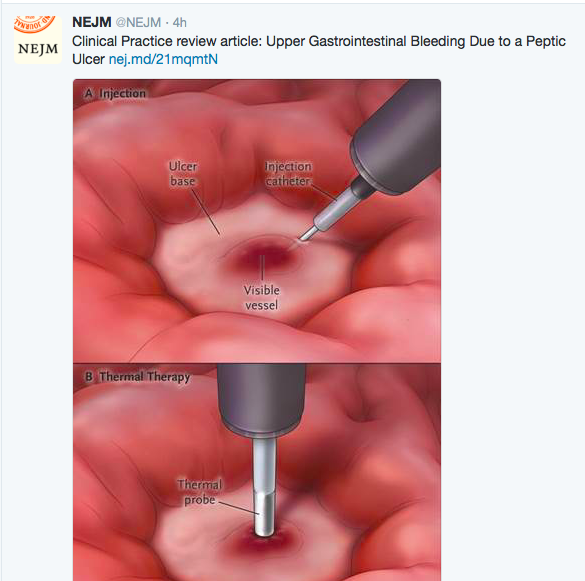
Several years ago, this blog provided a summary of the guidelines for stopping upper gastrointestinal bleeding (All bleeding stops | gutsandgrowth).  Most of the recommendations are unchanged.  A nice review of this topic (L Laine. NEJM 2016; 374: 2367-76), specifically focused on peptic ulcers, provides a few new pointers.

Two areas with more data:

  1. Transfusion.  “A randomized trial showed lower rates of death (the primary outcome), rebleeding, and adverse events with a transfusion threshold of 7 g per deciliter than with a transfusion threshold of 9 g per deciliter.”
  2. Proton pump inhibitors. “A recent meta-analysis showed that intermittent oral or intravenous proton-pump inhibitor therapy results in outcomes that were non inferior to those after continuous infusion.”  (JAMA Intern Med 2014; 174: 1755-62) For adults, the suggested dosing was 80 mg followed by 40 to 80 mg twice daily for 72 hours.

As before, the author recommends preoperative (30 min prior) erythromycin (250 mg) and states that a nasogastric tube in not needed.  The author also recommends that in patients with idiopathic ulcers (not due to NSAIDs or H pylori) that ongoing (indefinite) use of once-daily maintenance therapy with a proton-pump inhibitor is recommended to prevent rebleeding.

Related blog posts:

Screen Shot 2016-06-16 at 2.33.58 PM

Proton Pump Inhibitors Webinar

For those who missed the live NASPGHAN webinar, it is also available on demand: Link: Proton Pump Inhibitors Webinar. CME credit is available too.

Overall, this is a terrific review and intended for a high level audience. Here are a couple of key points from the talk:

  • Dr. Jennifer Lightdale introduced the webinar.  She noted that there has been a tremendous rise in the use of proton pump inhibitors (PPIs) in children over the past 15 years, including in infants.
  • Preponderance of evidence does not support use of PPIs for reducing GER symptoms or crying in infants.
  • PPIs are extremely effective at acid suppression.
  • Excellent discussion by Dr. Rachel Rosen on Nonerosive Reflux Disease (NERD) and distinguishing this entity from erosive reflux disease, hypersensitive esophagus, and functional heartburn.
  • On a microscopic level, NERD is similar to erosive reflux with microscopic inflammation and dilated intracellular spaces.
  • With regard to testing, it is recommended that for impedance studies, that acid suppression be stopped prior due to improved sensitivity/accuracy.
  • For those at odds with their pulmonologists and ENT colleagues, Dr. Ben Gold reviewed the literature on asthma, cough, and laryngeal-pharyngeal pathology related to reflux. The sensitivity of laryngoscopic findings to identify reflux is poor.  “There is insufficient evidence to recommend for OR against the use of acid suppression therapy.”
  • Dr. Jose Garza reviewed the indications for PPI use which include eosinophilic esophagitis/PPI-REE, erosive esophagitis, NSAID prophylaxis, Upper GI bleeding, and H pylori therapy.
  • Dr. Carlo DiLorenzo provided an in-depth discussion of the potential risks of PPI therapy and explained some of the context as well as absolute risks.  He noted that besides the risk of infection, particularly C difficile, other risks demonstrated in adults have not yet been confirmed in children.
  • “Prolonged acid suppression should be used only when indicated.”  Thus, management should include strategies for treatment discontinuation in the majority of those receiving PPI therapy.

Related blog posts:

Isla Verde, San Juan

Isla Verde, San Juan


PPIs Alter the Microbiome

A couple of comments –today’s blog (below) and yesterday’s blog both point out potential concerns with proton pump inhibitors (PPIs).  There is a danger that when publications emphasize the potential consequences of PPI use (including NPR’s recent piece on kidney disease and PPIs) that physicians and families will overlook the value of these medications.

With regard to the benefits of PPIs, there are a large number of studies supporting the effectiveness of PPIs for various GI conditions.  As a result, there is little being published on drug effectiveness at this time.  On a daily basis, these medications prevent a great deal of suffering, heal esophagitis, heal ulcers and contribute to improved health.  If one looks only at the negative side of the ledger, this could create harm.

My personal belief is that when PPIs are used, that it is important to consider both the advantages and the disadvantages.  If the benefits are unclear, this increases the necessity of evaluating the risks, especially in vulnerable populations.  In addition, when the benefits are unclear, determining the length of therapy and/or performing appropriate diagnostic workup becomes essential.

Also, for pediatric gastroenterologists reading this blog, it is important to realize that my blog’s following is tiny in comparison to the circulation of the Journal of Pediatrics and news organizations like NPR.  Therefore, we need to engage our pediatrician/family medicine colleagues to help make sure that PPIs are used effectively.  I am looking forward to the January 26 NASPGHAN webinar on this topic.

——–

The degree to which proton pump inhibitors (PPIs) affect the gut microbiome is unclear.  A recent study of 12 healthy volunteers (DE Freedberg et al. Gastroenterol 2015; 149: 883-85, Clearing Out My Desk | gutsandgrowth) indicated that this was not much; however, an even more recent study (F Imhann et al. Gut 2015 December 9 (Gut doi:10.1136/gutjnl-2015-310376)suggests otherwise (abstract below) -their conclusion: “On a population level, the effects of PPI are more prominent than the effects of antibiotics or other commonly used drugs.”  

Link: Proton pump inhibitors affect the gut microbiome

Abstract

BACKGROUND AND AIMS: Proton pump inhibitors (PPIs) are among the top 10 most widely used drugs in the world. PPI use has been associated with an increased risk of enteric infections, most notably Clostridium difficile. The gut microbiome plays an important role in enteric infections, by resisting or promoting colonisation by pathogens. In this study, we investigated the influence of PPI use on the gut microbiome.

METHODS: The gut microbiome composition of 1815 individuals, spanning three cohorts, was assessed by tag sequencing of the 16S rRNA gene. The difference in microbiota composition in PPI users versus non-users was analysed separately in each cohort, followed by a meta-analysis.

RESULTS: 211 of the participants were using PPIs at the moment of stool sampling. PPI use is associated with a significant decrease in Shannon’s diversity and with changes in 20% of the bacterial taxa (false discovery rate <0.05). Multiple oral bacteria were over-represented in the faecal microbiome of PPI-users, including the genus Rothia (p=9.8×10(-38)). In PPI users we observed a significant increase in bacteria: genera Enterococcus, Streptococcus, Staphylococcus and the potentially pathogenic species Escherichia coli.

CONCLUSIONS: The differences between PPI users and non-users observed in this study are consistently associated with changes towards a less healthy gut microbiome. These differences are in line with known changes that predispose to C. difficile infections and can potentially explain the increased risk of enteric infections in PPI users. On a population level, the effects of PPI are more prominent than the effects of antibiotics or other commonly used drugs.

My take: It is likely that the effects on the microbiome are even more notable in infants/younger children; in neonates, the changes in the microbiome could increase the risk of serious diseases like necrotizing enterocolitis.

Related blog posts:

Yosemite

Yosemite

The Prosecution Rests…PPIs on Trial

For physicians who use proton pump inhibitors in a cavalier manner, a recent review (CM Stark, CM Nylund. J Pediatr 168: 16-22) provides a sobering reassessment of the potential side effects and potential complications of proton pump inhibitors (PPIs).  After finishing the article, the impression left was of a lawyer putting these medications on trial for high crimes and misdemeanors.

Here were the key points:

Infectious disease: PPI-induced hypochloridia is known to alter the gastrointestinal bacteria motif, allowing certain normally absent or depleted pathogenetic microorganisms to survive and proliferate.  This can lead to all of the following:

  • small bowel bacterial overgrowth
  • increased gastrointestinal infections (including Clostridium difficile, Salmonella, Campylobacter, and acute viral gastroenteritis)
  • pneumonia (particularly community acquired pneumonia and hospital acquired pneumonia)
  • upper respiratory infections
  • spontaneous bacterial peritonitis.

The magnitude of these associations is discussed in detail in the review.

Gastrointestinal disease: Use of PPIs has been associated with an increased incidence of the following:

  •  celiac disease which persisted after excluding prescriptions in the year preceding diagnosis (association does not prove causation)
  • benign gastric fundic polyps
  • rebound acid hypersecretion

Malabsorption: PPIs can affect absorption of multiple nutrients, though more studies are needed, particularly in the pediatric age group.

  • calcium: “there is significant evidence to suggest that PPI use can alter calcium and bone metabolism…associated with an increased risk of hip fractures in older adults….It is reasonable to hypothesize that PPI administration during adolescence and early adulthood could decrease an individual’s peak bone density.”
  • magnesium: PPI have been hypothesized to affect magnesium absorption.  “A study of 366 Canadian patients hospitalized with hypomagnesemia…found PPIs [were] associated with a 43% increased risk of hospitalization.”  More studies are needed to determine the whether this risk is truly significant.
  • iron, vitamin B12, and vitamin C absorption may be affected by PPI use.

Cardiovascular/Renal/Microbiome:

  • Cardiac: In adults, PPI use has been associated with adverse cardiac events.  The pathophysiology could have been pediatric implications.  PPIs can increase asymmetrical dimethylarginine (ADMA) which is an endogenous inhibitor of nitric oxide synthase.
  • Renal: PPIs have been associated with cases of acute interstitial nephritis
  • Microbiome: “PPIs alter the microbiome.”  Decreased diversity of the microbiome has been associated with a large number of medical conditions, including irritable bowel syndrome, inflammatory bowel disease, nonalcoholic fatty liver disease, necrotizing enterocolitis as well as many non-gastrointestinal conditions.  “The temporality of dysbiosis and subsequent disease development has  not been explored fully for most conditions.”

My take: PPIs can be life-saving and disease-altering medications.  At the same time, (per authors) “PPIs should not be prescribed without consideration for all short- and long-term side effects.”

Related blog posts:

Screen Shot 2016-01-07 at 6.33.04 PM

This Webinar Will Review Issues with Regard to Optimal PPI Usage and Includes My Esteemed Colleagues (Dr. Gold and Dr. Garza)

This NASPGHAN Webinar Will Review Issues with Regard to Optimal PPI Usage and Includes My Esteemed Partners (Dr. Gold and Dr. Garza)

Acid Suppression/C difficile and Adrenal Suppression/Topical Steroids

Briefly noted:

J Jimenez et al. (JPGN 2015; 61: 208-11) provide more data that gastric acid suppression is associated with an increase risk of Clostridium difficile infection (CDI). This was a retrospective case-control study with 138 children with CDI and 276 controls. After adjustment, acid-suppression therapy had a 1.8 Odds Ratio association with CDI.

S Harel et al. (JPGN 2015; 61: 190-3) in this retrospective ‘pilot’ study of  patients receiving topical budesonide for eosinophilic esophagitis, 6 of 14 (43%) had mild biochemical evidence of adrenal suppression, as measured by ACTH testing. Bottomline: a prospective study is likely needed to confirm or refute these findings. In the meanwhile, stress steroid coverage could be considered in patients on prolonged budesonide.

NASPGHAN Postgraduate Course 2014 -3rd Module

This blog entry has abbreviated/summarized the presentations. Though not intentional, some important material is likely to have been omitted; in addition, transcription errors are possible as well.  All of the speakers had terrific presentations.  The course syllabus is attached:

PG Course Syllabus 2014

The 3rd Module had a “potpourri” of GI problems.

Extraesophageal Manifestations of Gastroesophageal Reflux –Ben Gold, MD (GI Care For Kids, Atlanta) (pg 86)

Is reflux really the scurge of the earth and the cause of every malady known to human-kind in the head, neck, and lungs…?

Key points:

Airway protection: “Aerodigestive disease reflexes are intact by 38 weeks gestation.”

Central deglutition apnea: a normal protective mechanism to prevent aspiration during swallowing. (Hasenstab KA, Jadcherla, S. J Pediatr 2014; 165:250-255).  No proof at present that central apnea is caused by reflux though there is a biologic plausibility.

“Although reflux causes physiologic apnea, it causes pathologic apneic episodes in only a very small number of newborns and infants.”  “When reflux causes pathological apnea, the infant is more likely to be awake and the apnea is more likely to be obstructive in nature.”

Laryngeal Reflux:

  • Chronic cough, chronic laryngitis, hoarseness, and asthma may be associated with GERD BUT the data showing a relation between reflux and upper airway disease are weak
  • Airway symptoms attributed to reflux in adults include hoarseness, chronic cough, and globus sensation
  • Affected adults rarely have typical reflux symptoms
  • The sensitivity of laryngoscopic findings to identify reflux disease are poor. Sherman et al. Am J Gastroenterol. 2009;104:1278-95. Vandenplas et al. J Pediatr Gastroenter Nutr. 2009;49:498-547.

Asthma:

“Chronic cough, chronic laryngitis, hoarseness and asthma are multifactorial disease processes and acid reflux can be an aggravating cofactor.” GER is an unlikely contributor to asthma if reflux testing is negative.

“Two NIH-funded blinded, randomized placebo-controlled trials (RCT), one in adults (using esomeprazole), one in children (using lansoprazole) showed NO difference in asthma outcomes comparing placebo and acid suppression therapy”

Multi-Channel Intraluminal Impedance/pH probe studies: Pediatric studies are critically needed to determine if knowing the amount of nonacid reflux changes treatment or outcome

Proton Pump Inhibitors can cause gastric bacterial overgrowth (Rosen R et al JAMA Pediatr 2014; JAMA Pediatr. doi:10.1001/jamapediatrics.2014.696)

Ben Gold (speaker) and Jay Hochman prior to 5K Run

Ben Gold (speaker) and Jay Hochman prior to 5K Run

Related blog posts:

EoE: PPI, PPI-REE, TCS, OVB, SFED, 4FED….…Alphabet Distress — Sandeep K Gupta, MD (Indiana University) pg 105 in Syllabus

Treatment endpoints discussed -histologic, symptomatic, fibrosis, etc.

  • Proton pump inhibitor responsive eosinophilic esophagitis (PPI-REE) may work by blocking STAT6 binding to Eotaxin-3 promoter rather than by acid suppression (PLos ONE 2012;7:e50037).  PPIs work (eos <6/hpf) in in 30-40%.  May need high dose to work long-term (Dr Molina-Infante – DDW 2014)
  • Topical corticosteroids (TCS) -higher dose = better response.  (Budesonide. Gupta SK, Vitanza J, Collins, MH Clin Gastro Hepatol 2014 [ePub], Fluticasone. Butz BK. Gastroenterology 2014). Clinical symptoms do not correlate with histologic response. Discussed long term safety concerns.
  • Reviewed diets -elemental, targeted, 4-food elimination and 6-food elimination.

Related blog posts:

“Gotta keep on movin”: New tricks and treatments for motility disorders –Carlo DiLorenzo (Nationwide Children’s Hospital) pg 116 in Syllabus

Key points:

  1. Most important motility study is a normal study.  If normal study, then there is more concern for sensory dysfunction.   Look for significant findings on motility studies not minor changes.
  2. Key to confirm if motility disorder is present. Hx/o small intestinal transplant in medical child abuse/Munchausen syndrome by proxy (Trans Proc 1996; 28: 2790)
  3. New tool: wireless motility capsule (J Pediatr. 2013;162:1181-7)
  4. Easier to obtain full thickness biopsies (Gastrointest Endosc 2011;73:949-54)

Treatments reviewed -“try everything”

  • prucalopride (JPGN 2014; 57: 197-203
  • cisapride -still available
  • lubiprostone (JPGN 2014;58:283–291)
  • linaclotide boxed warning not for <17 years of age –though has been used by motility specialists
  • cyproheptadine (J Pediatr 2013; 163: 261-7) –use in dyspepsia
  • fludrocortisone -used in orthostatic intolerance
  • augmentin -for small bowel motility (JPGN 2012;54: 780–784)
  • octreotide -for bowel motility
  • pyridostigmine (Colorectal Disease 2010 12, 540–548)
  • iberogast
  • botulinum toxin (Gastrointest Endosc. 2012 ;75:302-9)
  • treat bacterial overgrowth
  • surgery: Jube, GJ tube, ileostomy. “Every child with pseudoobstruction on TPN needs a gastrostomy and an ileostomy –(me, now)”
  • gastric electrical stimulation
  • emerging treatment: Elobixibat (for constipation) Expert Opin. Investig. Drugs

Related blog posts:

What’s New in the Diagnosis and Management of Constipation –Manu Sood (Children’s Hospital of Wisconsin) -page 130 in Syllabus

Reviewed recent guidelines from NASPGHAN

“Miralax is considered a 1st line agent”

Outcomes in children with constipation:

  • Almost 50% of patients experienced at least one relapse in first 5 yrs.
  • Almost 20% of children were symptomatic at 10 yrs. follow up (Bongers ME, et al. Pediatrics. 2010)

Pointers:

  • Slow transit is common
  • Rectal compliance does not predict success with treatment. Van den Berg MM, et al. Gastroenterology 2009.  Patients with mega-rectum may have motility disturbance as well.
  • Success rates for antegrade continence enemas (ACE) 65% to 89%. Colon manometry can help predict ACE success.  Up to 40% may be able to stop ACE w/in 2 years

Related blog posts:

“If You Never Give Up, You Cannot Possibly Lose”

Recently I was reviewing the “Black Knight scene” from Monty Python’s Holy Grail.  This scene in which the Black Knight continues to insist on fighting King Arthur even after losing all of his limbs came to mind as I was reading a recent study (JPGN 2014; 58: 226-36).  The blog title comes from an explanation of the scene from John Cleese who intended the scene to mock this philosophy. (Wikipedia link: Black Knight (Monty Python) – Wikipedia, the free encyclopedia)

The study is another trial of a proton pump inhibitor (rabeprazole) for 1- to 11-month old infants with symptomatic GERD.  In the discussion the authors note that this is the “fourth DB randomized placebo-controlled study published in the last 4 years that fails to show the efficacy of PPIs to treat symptomatic GERD in infants younger than 1 year.”

If anything, the design of this study should have allowed a therapeutic effect to be witnessed if present.  Infants selected for participation (n=268 in the double-blind phase) had been responsive to a 10 mg open-label usage of rabeprazole before randomization.  Yet, those infants who continued to receive 5 mg or 10 mg daily fared no better than placebo-treated patients.

The good news: no new safety signals in those who were treated compared to placebo.

The findings of this study are in marked distinction to clinical practice which has embraced PPIs in all age groups. In the same issue of JPGN, using a national database, De Bruyne et al (JPGN 2014; 58: 220-25) show a huge increase in PPI usage over the past decade in the Netherlands, especially in children ages 2 years and younger.  From 2004 to 2008, use of PPIs nearly doubled in this population.

The rabeprazole study manuscript which had nearly as many pediatric GI investigators as enrolled patients discusses the potential drawbacks of PPI therapy in infants including enteric infections like Clostridium difficile, lower respiratory infections (e.g.. pneumonia), and “perhaps even an increased incidence of necrotizing enterocolitis in premature infants.”  Unlike the Black Knight, after four blows to the PPI cause, the authors recommend yielding on PPIs except under much more stringent criteria (1 of 3):

  • Nonimproving symptoms at 1 year of age & resistant to conservative measures
  • Presence of underlying conditions that predispose to a natural history of severe chronic unremitting reflux
  • Erosive reflux esophagitis proven on endoscopy

Take-home message: PPIs have not been shown to be effective in infants…again!

Related blog posts:

PPIs -another reference for EoE

“The outcome of patients with oesophageal eosinophilic infiltration after an eight-week trial of a proton pump inhibitor”

  1. G. Vazquez-Elizondo1,
  2. S. Ngamruengphong1,
  3. M. Khrisna2,
  4. K. R. DeVault1,
  5. N. J. Talley1,
  6. S. R. Achem1,*

Article first published online: 5 OCT 2013

DOI: 10.1111/apt.12513

Link to article: bit.ly/18bA3SS (from John Pohl’s twitter feed)

Methods: Sixty consecutive symptomatic patients with documented oesophageal eosinophilia received open-label omeprazole 20 mg orally twice daily before meals for 8 weeks.  Mean age 48.7 years (18-79).

Results: Clinical improvement occurred in 43 (71.6%), endoscopic signs were reduced in 34 (61.8%) and normalised in 12 (21.8%), and histologically, 34 (56.6%) improved, while 15 (25%) obtained complete resolution. Overall, 22 patients (36.7%) obtained both complete clinical and histological remission

Additional related blog entries: