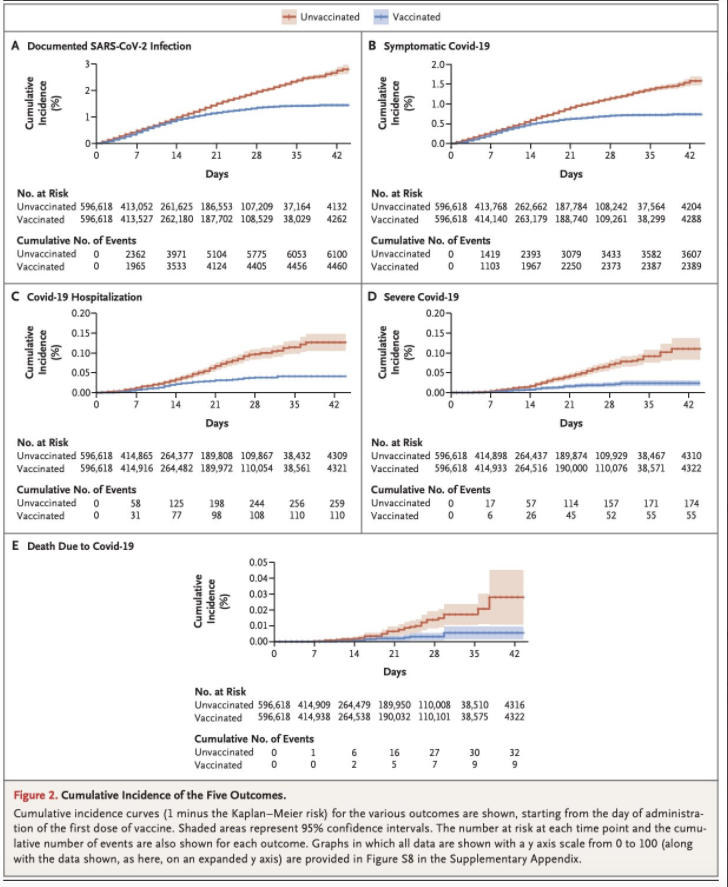
Key point: At 6 months after acute infection, COVID-19 survivors (n=1733 enrolled in study) were mainly troubled with fatigue or muscle weakness, sleep difficulties, and anxiety or depression. Patients who were more severely ill during their hospital stay had more severe impaired pulmonary diffusion capacities and abnormal chest imaging manifestations
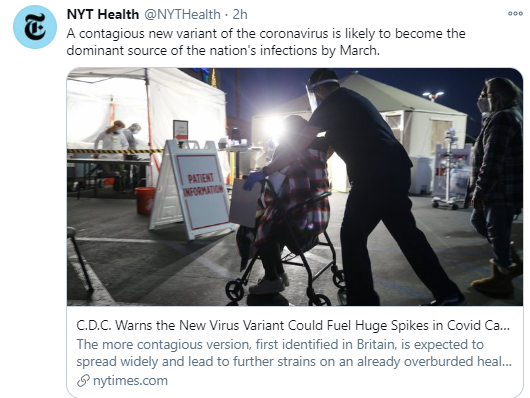
NY Times (1/15/21): C.D.C. Warns the New Virus Variant Could Fuel Huge Spikes in Covid Cases “The new variant, called B.1.1.7, was first identified in Britain, where it rapidly became the primary source of infections, accounting for more than 80 percent of new cases diagnosed in London and at least a quarter of cases elsewhere in the country.”
Between November 1, 2020, and December 13, 2020, the 7-day moving average for daily COVID-19 deaths tripled, from 826 to 2430 deaths per day
As occurred in the spring, COVID-19 has become the leading cause of death in the United States (daily mortality rates for heart disease and cancer, which for decades have been the 2 leading causes of death, are approximately 1700 and 1600 deaths per day, respectively)
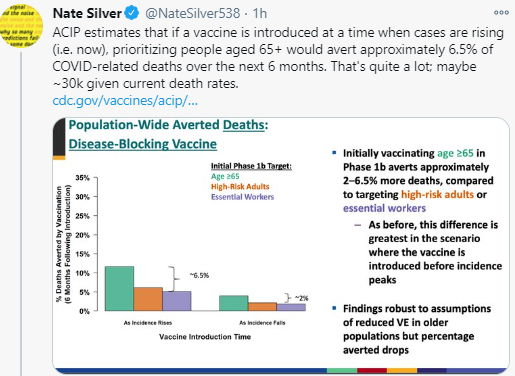
Vaccine Strategy: Nate Silver’s twitter feed suggests that after vaccination of medical personnel, focus of vaccine efforts should rely on age rather than at-risk conditions (which could affect 100 million in U.S). Using an age-based system would also be easier; it would minimize influence and wealth in the distribution of the vaccine.
Methods: A state-transition model of chronic HCV was developed to conduct a cost-effectiveness analysis comparing treatment at age 6 years vs delaying treatment until age 18 years
Key findings:
After 20 years, treating 10 000 children early would prevent 330 cases of cirrhosis, 18 cases of hepatocellular carcinoma, and 48 liver-related deaths
The incremental cost-effectiveness ratio of early treatment compared to delayed treatment was approximately $12 690/quality-adjusted life-years gained and considered cost-effective
My take (=conclusion from authors): Delaying treatment until age 18 years results in an increased lifetime risk of late-stage liver complications. Early treatment in children is cost effective. Our work supports clinical and health policies that broaden HCV treatment access to young children.
Related blog posts:
Hepatitis C in 2020: NASPGHAN Position Paper -includes the following: “We recommend treatment be considered and offered to all children with chronic HCV as early as 3 years of age with currently approved and anticipated DAA combination therapies”
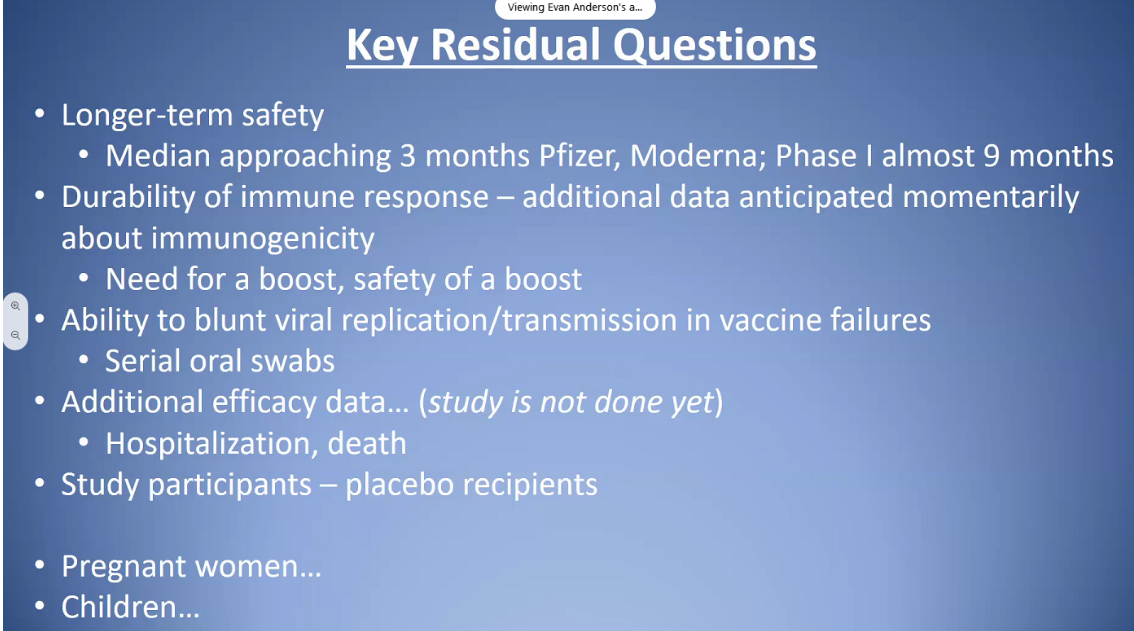
Our hospital system has been arranging frequent staff meetings to provide situational updates amid the pandemic. On 12/2/20, Evan Anderson (infectious disease) provided an an excellent update on COVID-19/rollout of vaccines.
Key Points:
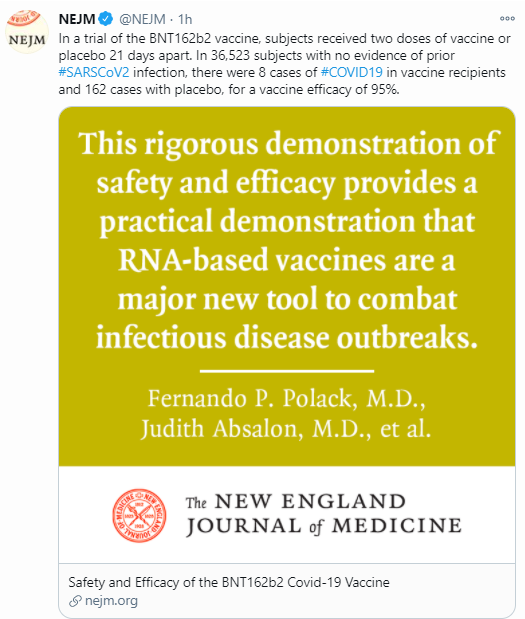
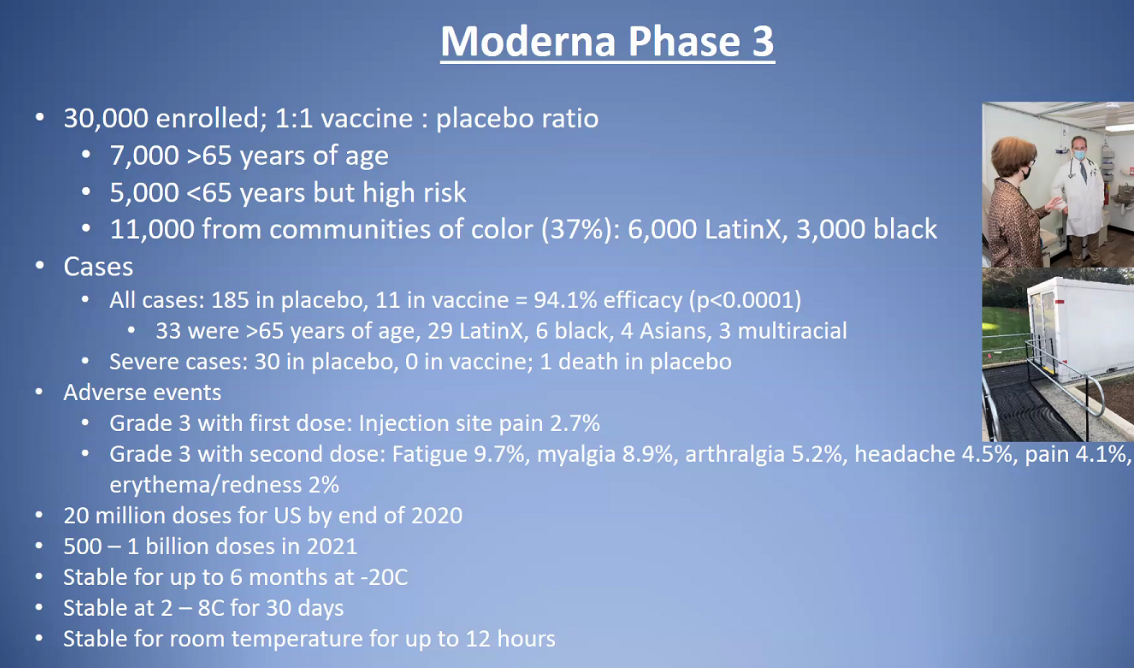
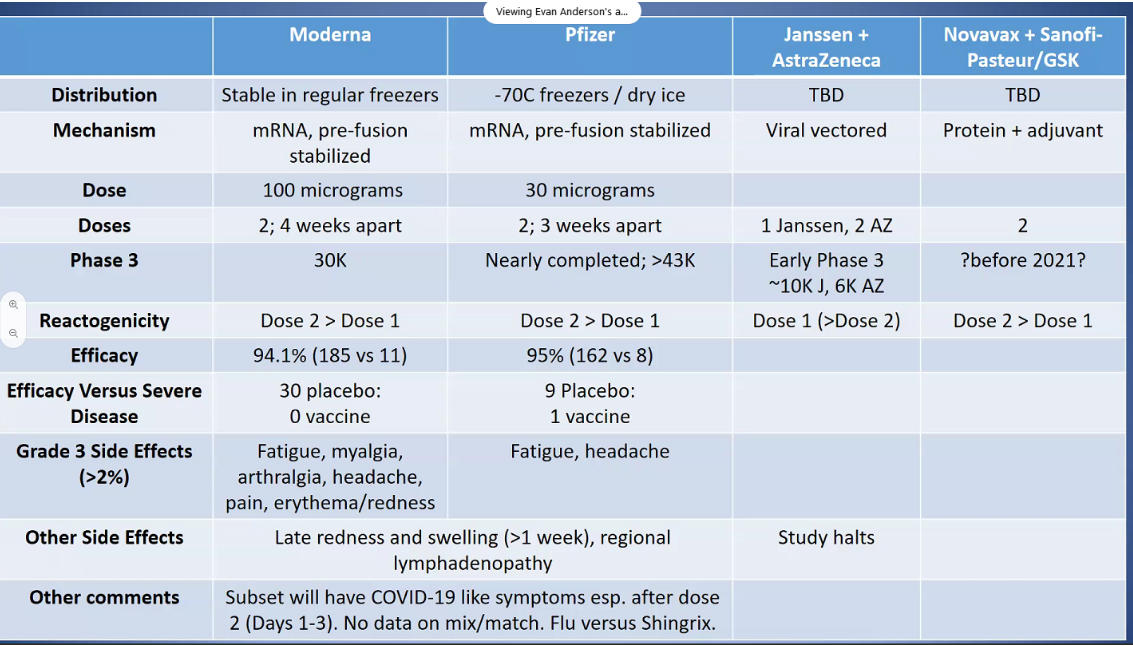
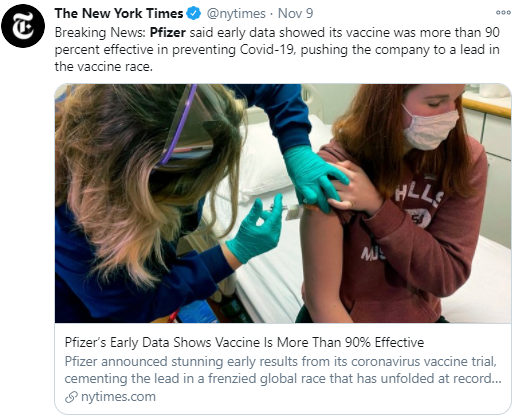
mRNA vaccines have been remarkably effective, both ~95% and also effective against severe disease (>90%)
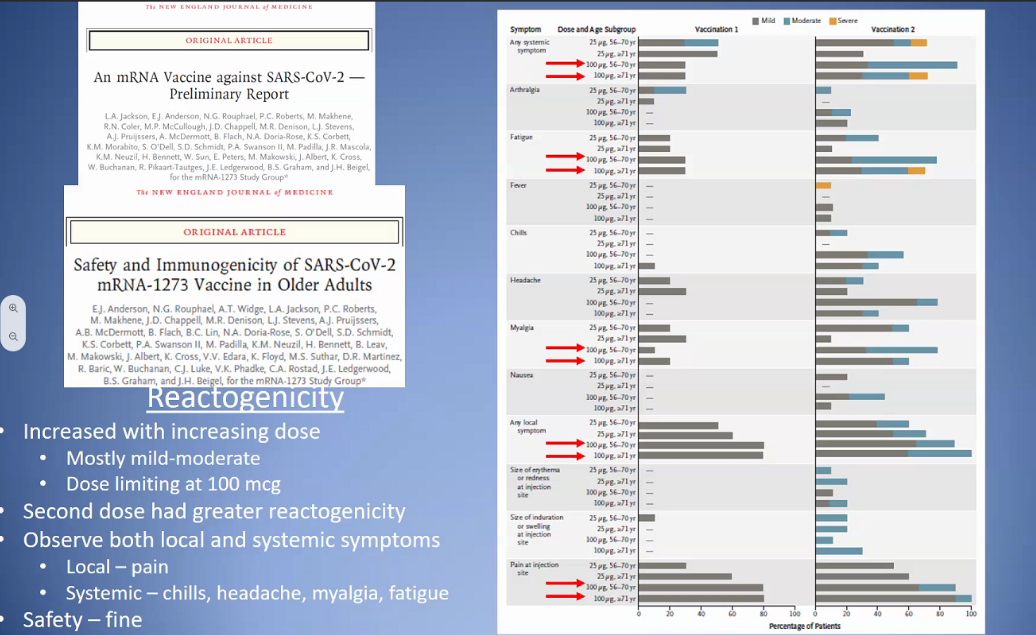
Severe reactogenicity occurs >2%. Systemic symptoms like fatigue, myalgia, and chills are more common after 2nd dose
Local reactions are typically more pronounced than flu vaccine but less pronounced compared to shingles vaccine (Shingrix)
Not wise to vaccinate entire care areas at same time
No need to check antibody titers after vaccination
Current contraindications: Pregnant women and children due to lack of data (Pfizer vaccine may be approved for those older than 12 yrs)
Study participants were allowed to take antipyretics
Slides used with permission.
Current pandemic situation in metro Atlanta (slide from Dan Salinas)
Top curve is total cases and bottom curve is ICU beds –both thru 11/27/20
This study used multicenter data from the Society of Pediatric Liver Transplantation on first-time pediatric (aged <18 years) liver transplant recipients (n = 3801) in the US and Canada (1995-2016).
Key findings:
7.4% developed HAT within the first 90 days of transplantation.
Of those who were retransplanted, 20.7% developed recurrent HAT.
Those less than 1 year had the highest risk OR 1.20).
Lower Risk for HAT:
Recipients with split, reduced, or living donor grafts had decreased odds of HAT (OR, 0.59; P < .001 compared with whole grafts)
Adolescents aged 11-17 years (OR, 0.53; P = .03).
HAT increased risk of graft failure and mortality:
Fifty percent of children who developed HAT developed graft failure within the first 90 days of transplantation (adjusted hazard ratio, 11.87; 95% CI, 9.02-15.62)
Mortality risk (w/in 90 days after transplantation): adjusted hazard ratio, 6.18 (95% CI, 4.01-9.53).
The finding that split grafts had lower rates of HAT may be related to the fact that these grafts more typically come from larger donors with larger vessels. Historically, split grafts had been described as a risk factor for HAT. The authors note that high-performing centers with the lowest incidence of HAT “also tend to have high rates of living and split transplants, suggesting that surgical expertise may play a role in the decreased risk of HAT in select recipients with technical variant grafts.”
Increased rates of HAT among those who were retransplanted, in some, could be related to thrombophilic conditions; thus, consideration of anticoagulation protocol could be needed
My take: Continued efforts are needed to reduce HAT due to its impact on liver transplantation outcomes. One of the biggest risk factors is age. While this would seem to be a nonmodifiable factor, improving recognition and treatment of biliary atresia could help.
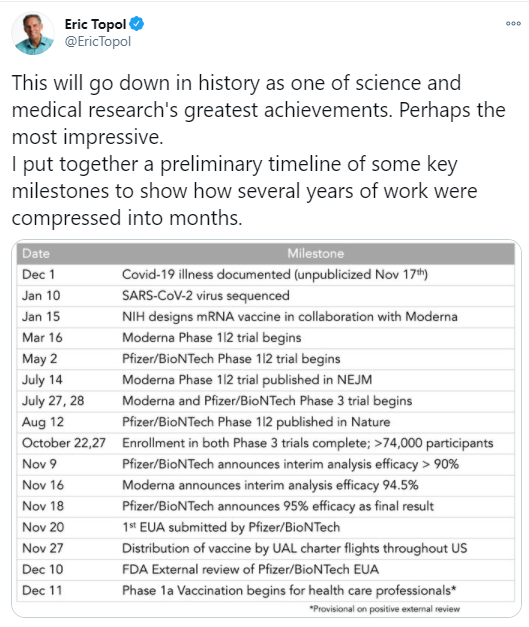
As an aside, I have always thought that the name, “Operation Warp Speed,” sounded like a line from the movie Spaceballs.
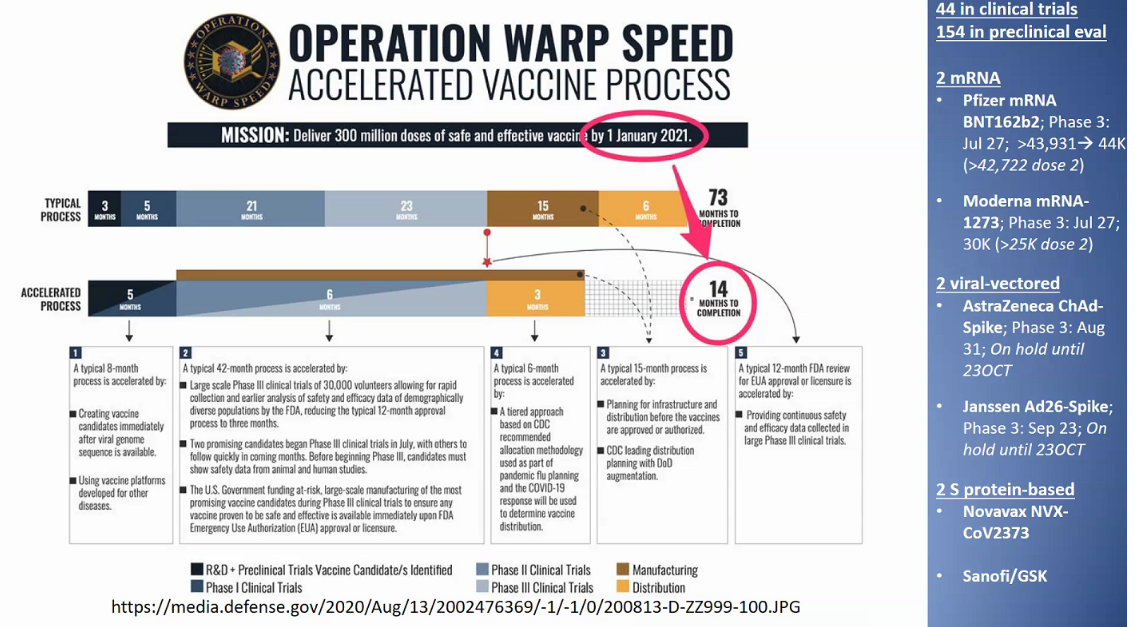
This article provides insight into the strategy for “Operation Warp Speed” (OWS). An excerpt:
OWS’s strategy relies on a few key principles. First, we sought to build a diverse project portfolio that includes two vaccine candidates based on each of the four platform technologies…In addition, advancing eight vaccines in parallel will increase the chances of delivering 300 million doses in the first half of 2021…
Of the eight vaccines in OWS’s portfolio, six have been announced and partnerships executed with the companies: Moderna and Pfizer/BioNTech (both mRNA), AstraZeneca and Janssen (both replication-defective live-vector), and Novavax and Sanofi/GSK (both recombinant-subunit-adjuvanted protein). These candidates cover three of the four platform technologies and are currently in clinical trials. The remaining two candidates will enter trials soon...
No scientific enterprise could guarantee success by January 2021, but the strategic decisions and choices we’ve made, the support the government has provided, and the accomplishments to date make us optimistic that we will succeed in this unprecedented endeavor.
Maskne — the most common kind of which is acne mechanica, a.k.a. the type of acne a football player may get where the helmet rubs — is also enough of a thing that the Covid-19 task force of the American Academy of Dermatology (A.A.D.) felt compelled to release advice on the subject.
The article describes how mask can trigger acne and ways to prevent/treat this.
“The good news is: If you don’t like small talk in the elevator, those days are over,”…“Imagine if you have a 30-story office building in New York City and you’re trying to get 5,000 people in between 7 and 9 in the morning,”
From NPR:
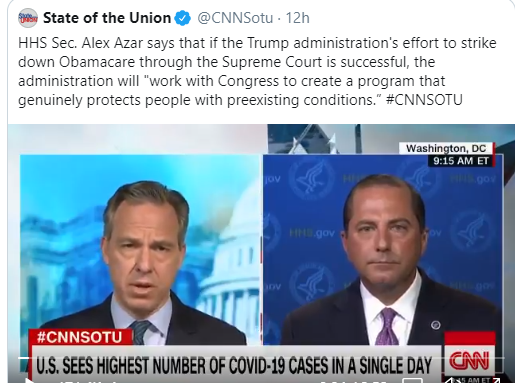
This administration should present its ‘plan’ and pass it before taking healthcare insurance from millions.
YH Yeo et al. Hepatology 2019; 69: 1385-97. The prevalence of high risk individuals in the U.S. who are susceptible (not immune) to hepatitis B has decreased from 83% to 69% from 2003 to 2014. That still leaves 64 million who would benefit from HBV vaccination.
M Sharma et al.Hepatology 2019; 69: 1657-75. This meta-analysis compared therapies for primary prevention of esophageal varices and concluded that nonselective beta-blocker (NSBB) monotherapy may decrease all-cause mortality and carried a lower risk of serious complications than variceal band ligation (VBL). However, the commentary (1382-84 by L Laine) reaches a different conclusion. “Current recommendations for primary prevention with VBL or NSBB or carvediolo still appear to be acceptable…using a shared decision-making approach” to weigh issue such as daily medication or periodic endoscopy.
J Nguyen et al. J Pediatr 2019; 207: 90-6. This study modeled the cost-effectiveness of early treatment with direct-acting antiviral therapy in adolescents with hepatitis C infection. With pangenotypic agenst, the cost would be $10000 to $21000 per QALY gained.
S Trinh et al. Clin Gastroenterol Hepatol 2019; 17: 948-56. This retrospective hepatitis B study examined the changes in renal function between 239 tenofovir disoproxil fumarte (TDF) treated patients and 171 entecavir treated patients. Key finding: TDF was not associated with higher risk of worsening renal function in this cohort with a mean followup of 43-46 months in patients with baseline normal renal function. In patients with renal impairment, deterioration of renal function was noted in TDF-treated patients. Thus, TDF should be avoided in patients with impaired renal function.
Briefly noted: A recent study (L Vuitton et al. Clin Gastroenterol Hepatol 2018; 16: 1768-76) document a high prevalence of anal canal high-risk human papillomavirus (HPV) infection in all subjects (n=469, median age 54 years) and even higher rates in patients with Crohn’s disease (n=70). The authors detected HPV DNA in anal tissues from 34% of the subjects and high risk (oncogenic) HPV in 18%. In patients with Crohn’s disease, high risk HPV was detected in 30%.
My take: HPV infection predisposes to anal cancer which represent 3-4% of lower-digestive tract cancers. The high rate of HPV