Fast Track Recovery/Enhanced Recovery After Surgery (ERAS is Awesome!)

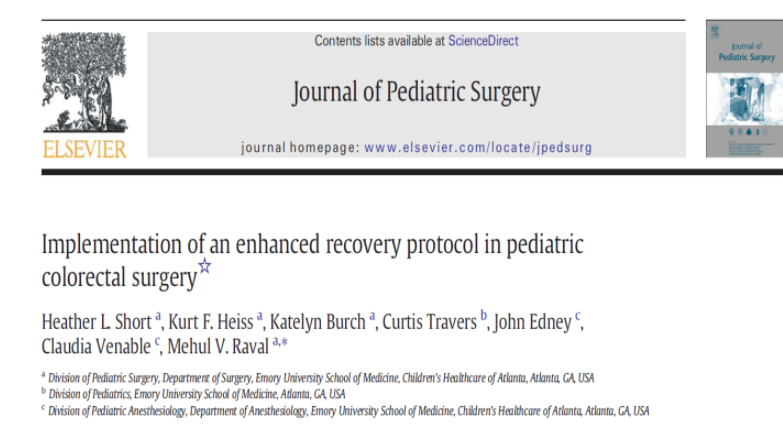
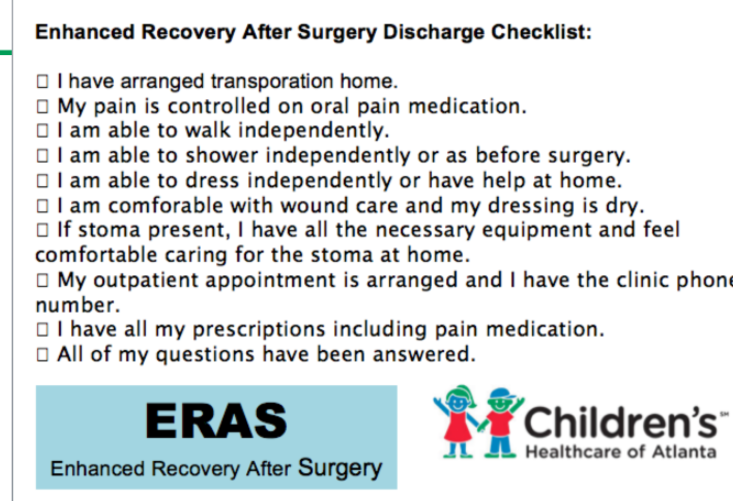
At a recent ImproveCareNow population management meeting for our group, Dr. Kurt Heiss provided an update on the expanding use of ERAS.  In addition to colorectal surgery, uses at our hospital system have included bariatric surgery, craniofacial surgery, and umbilical hernia repairs. The results of this bundled care show fewer complications, less pain/less narcotics (more blocks), and shorter hospital stays (without increased readmission rates).

For those who are not as familiar as they would like (and for patients), I recommend a 7 minute Lego ERAS YouTube link: LEGO Surgery -Enhanced Recovery After Surgery

Related blog post: ERAS -Enhanced Recovery After Surgery (2016) With full slide set explaining ERAS further


Assessment of Organ Donation –MRI Often Precludes Need for a Liver Biopsy

A recent retrospective single-center study (J Satkunasingham et al. Liver Transplantation 2018; 24: 470-77) shows that MRI is a good tool to assess hepatic steatosis.  In total there were 144 liver donor candidates; a subset of 32 underwent liver biopsy.

When examining magnetic resonance spectroscopy (MRS) and MRI -proton pump density fat fraction (PDFF), the authors found that MRS-PDFF and MRI-PDFF had 95% and 100% negative predictive value in identifying patients with clinically  significant histologic steatosis (≥10%).

The associated editorial by James Trotter (pg 457-58) makes several important points:

  • Currently living donor transplantation in the U.S. accounts for 4% of all transplants
  • In his center (and most centers), protocol biopsy are not required prior to liver donation.  The main indications for donor liver biopsy are biochemical dysfunction or steatosis on imaging studies.

My take (borrowed from editorial): “Noninvasive estimation of hepatic steatosis is sufficiently accurate to forgo liver biopsy in most donors, although ultimately this decision will continue to rest with the individual center.”


Opiates, Inflammatory Bowel Disease and Mortality

A recent retrospective study (NE Burr et al. Clin Gastroenterol Hepatol 2018; 16: 534-41) with 3517 patient’s with Crohn’s disease (CD) and 5349 with ulcerative colitis (UC) examined the frequency of opioid prescriptions and the relationship to fatal outcomes.

Key findings:

  • Compared to 1990-93, the period of 2010-13 saw a sharp rise in the use of opiods in England: 10% compared to 30%.
  • Prescription of strong opioids (>3 prescriptions per calendar year) was associated with premature mortality: Hazard ratio 2.18 for CD and 3.3 for UC.

This study is in agreement with other data showing increasing use of opiate prescriptions worldwide for chronic noncancer pain (although there has been a drop in the past year).  As with other studies of patients with inflammatory bowel disease, this study shows an association between opioid use and mortality.

My take: Needing an opioid may be a marker for more severe disease. Whether the opioid use directly contributes to mortality remains unclear.


When Should a Spleen Guard Be Recommended?

A survey (O Waisbourd-Zinman, et al. JPGN 2018; 66: 447-49) of 44 pediatric hepatologists (with 935 years of clinical practice) examined the issue of splenic rupture and spleen guards.  ~90% of those surveyed reported following at least 30 patients with portal hypertension and splenomegaly.

  • In total, the hepatologists could recall 13 cases of splenic rupture among patients with portal hypertension/splenomegaly due to cirrhosisalmost all of these occurred after a fall or in a motor vehicle accident.  Only one of these falls happened during a sports-related event (soccer).
  • 11 cases were serious. 9 of these cases resulted in shock with subsequent splenectomy, embolization, and/or death. Death reported in 2 cases.
  • In this survey,  61% of hepatologists recommended “absolute restriction from activity with high risk of blunt abdominal trauma;” whereas 23% indicated that activities with risk of blunt trauma were acceptable if wearing a spleen guard.
  • To prevent splenic rupture in patients with portal hypertension/splenomegaly, among the participating hepatologists, the majority identified the following ‘high risk’ sports: football (95%), hockey (82%), and wrestling (66%).  A smaller percentage advocated a spleen guard for skiing (42%), soccer (41%), basketball (30%) and other sports.

While I did not participate in this survey, the one patient with chronic liver disease that I followed who had a splenic rupture had fallen down a flight of steps; fortunately, he recovered with supportive care.

My take: This survey shows that there is wide variability in the use of spleen guards.  In almost all cases of splenic rupture, this was precipitated by severe trauma.  Though, patients with portal hypertension may avoid high contact sports and thus the risks are for these sports is unclear.

Related blog post:

Foggy Morning in Sandy Springs

113 Recommendations for Crohn’s Disease Management from ACG

Full Text Link: ACG Clinical Guideline: Management of Crohn’s Disease. GR Lichtenstein et al. Am J Gastroenterol 2018; 113:481–517

A few of the recommendations from Table 1:

  • (Insurance companies –please read this one): #1 Fecal calprotectin is a helpful test that should be considered to help differentiate the presence of IBD from irritable bowel syndrome (IBS) (strong recommendation, moderate level of evidence).
  • #9 Perceived stress, depression, and anxiety, which are common in IBD, are factors that lead to decreased health-related quality of life in patients with
    Crohn’s disease, and lead to lower adherence to provider recommendations. Assessment and management of stress, depression, and anxiety should be
    included as part of the comprehensive care of the Crohn’s disease patient (strong recommendation, very low level of evidence)
  • #24, 25 Anti-TNF agents (infliximab, adalimumab, certolizumab pegol) should be used to treat Crohn’s disease that is resistant to treatment with corticosteroids (strong recommendation, moderate level of evidence). Anti-TNF agents should be given for Crohn’s disease refractory to thiopurines or methotrexate (strong recommendation, moderate level of evidence).
  • #26 Combination therapy of infliximab with immunomodulators (thiopurines) is more effective than treatment with either immunomodulators alone or
    inflximab alone in patients who are naive to those agents (strong recommendation, high level of evidence).
  • #27 For patients with moderately to severely active Crohn’s disease and objective evidence of active disease, anti-integrin therapy (with vedolizumab) with
    or without an immunomodulator is more effective than placebo and should be considered to be used for induction of symptomatic remission in patients with
    Crohn’s disease (strong recommendation, high level of evidence).
  • #30 Ustekinumab should be given for moderate-to-severe Crohn’s disease patients who failed previous treatment with corticosteroids, thiopurines, methotrexate, or anti-TNF inhibitors or who have had no prior exposure to anti-TNF inhibitors (strong recommendation, high level of evidence).
  • #46 Oral 5-aminosalicylic acid has not been demonstrated to be effective for maintenance of medically induced remission in patients with Crohn’s disease,
    and is not recommended for long-term treatment (strong recommendation, moderate level of evidence).
  • # 58 In high-risk patients, anti-TNF agents should be started within 4 weeks of surgery in order to prevent postoperative Crohn’s disease recurrence
    (conditional recommendation, low level of evidence).

From Table 2:

  • #9 Symptoms of Crohn’s disease do not correlate well with the presence of active inflammation, and therefore should not be the sole guide for therapy. Objective evaluation by endoscopic or cross-sectional imaging should be undertaken periodically to avoid errors of under– or over treatment.
  • #23 Routine use of serologic markers of IBD to establish the diagnosis of Crohn’s disease is not indicated.
  • #30 Small bowel imaging should be performed as part of the initial diagnostic workup for patients with suspected Crohn’s disease.
  • #44 Insufficient data exist to support the safety and efficacy of switching patients in stable disease maintenance from one biosimilar to another of the same biosimilar molecule.

Disclaimer: These blog posts are for educational purposes only. Specific dosing of medications/diets (along with potential adverse effects) should be confirmed by prescribing physician/nutritionist.  This content is not a substitute for medical advice, diagnosis or treatment provided by a qualified healthcare provider. Always seek the advice of your physician or other qualified health provider with any questions you may have regarding a condition.

EPA OK with “Polluting Developing Brains”

For those unable to grasp the fact that the current EPA director is harmful to our health, it may not be their fault.  According to this commentary (VA Rauh. N Engl J Med 2018; 378:1171-1174), organophosphates like chlorpyrifos have likely resulted in the loss of ~17 million IQ points among 0 to 5 year olds; by extrapolation, this affects those older than 5 years too. Link: Polluting Developing Brains — EPA Failure on Chlorpyrifos

An excerpt: The regulatory plan developed by the U.S. Environmental Protection Agency (EPA) just before the 2016 elections was excellent: revoke all allowances for foods to contain residue of the organophosphate insecticide chlorpyrifos (“food tolerances”), essentially prohibiting agricultural and all remaining uses of the chemical… A total ban was the logical conclusion after decades of risk assessment showing increasing evidence of threats to human health, and children’s safety in particular…

However, the plan was scrapped in March 2017 by incoming EPA Administrator Scott Pruitt, who overrode the recommendation of agency scientists to ban all commercial use of chlorpyrifos… this action essentially violates the EPA’s statutory duty to protect human health, ignoring explicit child health policy dating back to 1995 that requires all national public health standards to address the special vulnerability of infants and children…

Harmful effects of chlorpyrifos on the developing brain are hardly surprising, given that this chemical was initially developed to attack the nervous system by inhibiting neurotransmitters in the body. First introduced as nerve-gas agents during World War II, organophosphate chemicals were later repurposed by chemical companies as insecticides and other pesticides…

Among the most worrisome findings are the corroborative results from several prospective cohort studies of children, which show an inverse dose–response effect of prenatal exposure to chlorpyrifos on cognition at 7 years of age..

In fact, one review (assuming a population of 25.5 million children 0 to 5 years of age in the United States) calculates a total loss of 16.9 million IQ points due to exposure to organophosphates, of which chlorpyrifos is the most widely used..

Because adult occupational exposures to chlorpyrifos have been clearly linked to Parkinson’s disease, there is good reason to worry that early exposures may set in motion a pathogenic trajectory potentially leading to neurodegenerative disease…

The EPA …may be putting an entire generation of young brains in harm’s way.

Estimated Agricultural Use for Chlorpyrifos, 2015 (Preliminary).
Estimates are from the U.S. Geological Survey National Water-Quality Assessment Project.

Wilson’s Disease –Pediatric Guideline

P Socha et al. JPGN 2018; 334-4. This ESPGHAN position paper makes recommendations for Wilson’s disease. This is a helpful paper, though the AASLD Wilson’s guideline is more comprehensive. A couple of pointers from the JPGN publication:

  • The authors recommend molecular testing if available and using liver copper measurement “if molecular testing is inconclusive”
  • Screen siblings of any new patients
  • Urinary copper excretion in the 200-500 mcg per 24 hours is consistent with adequacy of treatment
  • With treatment, liver function tests improve over 2-6 months. “If increased transaminases remain or relapse despite treatment, poor compliance should be suspected.”

Related blog posts:


January 2018 -Sunrise in Sandy Springs

Eliminating Gluten Challenge for the Diagnosis of Celiac Disease

Many patients receive a gluten-free diet (GFD) prior to a definitive diagnosis of celiac disease.  The diagnostic yield of serology can significantly decrease within a month after institution of a GFD.  A recent study (VK Sarna et al. Gastroenterol 2018; 154:886-96) has identified an HLA-DQ-Gluten Tetra

mer Blood test which can accurately identify celiac disease despite the implementation of a GFD.  This test quantifies HLA-DQ-gluten tetramer binding to T cells with flow cytometry. Key findings:

  • For patients receiving a GFD, the sensitivity was 97% and the specificity was 95% for the diagnosis of celiac disease
  • For patients not receiving a GFD, the sensitivity was 100% and the specificity was 90% for the diagnosis of celiac disease

My take: An accurate test to determine if celiac disease is present for those who have started a GFD would be quite helpful.  This HLA-DQ-Gluten Tetramer blood test still needs further validation in more patient populations. This test is NOT commerically-available at this time.

Morgan Falls

Related blog posts:

Disclaimer: These blog posts are for educational purposes only. Specific dosing of medications (along with potential adverse effects) should be confirmed by prescribing physician.  This content is not a substitute for medical advice, diagnosis or treatment provided by a qualified healthcare provider. Always seek the advice of your physician or other qualified health provider with any questions you may have regarding a condition.

Chattahoochee river -Morgan Falls

Hepatitis C Infections Increasing -Tied to Opioid Crisis

Just when it looked like new treatments could eliminate/cure hepatitis C virus (HCV), it turns out that with the opioid epidemic, HCV infections are increasing at a rapid pace (TJ Liang, JW Ward. NEJM 2018; 378: 1169-71).

Related blog posts:

Estimated number of new Hepatitis B and Hepatitis C Infections in the U.S. from CDC Data.

POEM for Achalasia in Children

Briefly noted: S Miao et al. JPGN 2018; 66: 257-62.  In this retrospective study, the authors examined the use of peroral endoscopic myotomy (POEM) in children.  They , describe a successful outcome in all 21 patients (range 11 months to 18 years).  Complications included subcutaneous emphysema (n=4), pneumoperitoneum (n=1), mediastinal emphysema ((n=4), pneumonia (n=1) and mucosal injury (n=1). The authors: “although Heller myotomy is still widely accepted as the standard treatment for achalasia in children, POEM …may provide a better treatment …due to less hospitalization, less trauma, …and long-term efficacy.”

Related blog posts:

Amber Cove, Dominican Republic