Capsule Endoscopy More Sensitive than MRE for Crohn’s Disease

Briefly noted: B Gonzalez-Suarez et al. IBD 24: 775-80.

In 47 patients with established (n=32) or suspected Crohn’s disease (n=15), MRE was first performed to exclude strictures and then subsequently capsule endoscopy (CE) (with patency capsule in 10 patients). Key finding: Small bowel lesions were found in 36 of 47 with CE compared with 21 of 47 with MRE (76.6% vs 44.7%, P=0.001)

Related blog post: Head-to-Head: Capsule endoscopy compared to colonoscopy

Time Will Tell: Granulomatous Upper GI Inflammation

A recent retrospective study (K Queliza et al. JPGN 2018; 66: 620-23) describes seven patients with granulomatous disease in the upper GI tract who were diagnosed with ulcerative colitis.

This study examined patients at a single center between 2007-2016 with ages ranging from 2 years to 17 years.  Median time of followup is not provided.  Two patients required colectomy.  All patients had non-casseating granulomas identified in either the stomach or duodenum (or both) along with moderate to severe pancolitis.  All of the patients had extensive investigations, generally cross-sectional imaging (MRE or CT) or capsule endoscopy

Key point::

  • “The final classification of IBD was based on expert opinion from gastroenterologists, radiologists, and pathologists upon thorough review of the medical records.”

My take: This study highlights the confusion of the essentially binary classification of IBD into either Crohn’s disease or ulcerative colitis, when in fact there are hundreds of genetic mutations which give rise to inflammatory bowel disease.  Given that granulomas are a hallmark of Crohn’s disease and there are no pathognomic features of ulcerative colitis, only time will tell if these patients have an ulcerative colitis phenotype.  I wonder how many centers would take exception to this classification and describe these patients as ‘indeterminate’ colitis/IBDU (IBD unclassified).

Related blog posts:

Lactobacillus rhamnosus GG Associated with Increased Necrotizing Enterocolitis in Observational Study

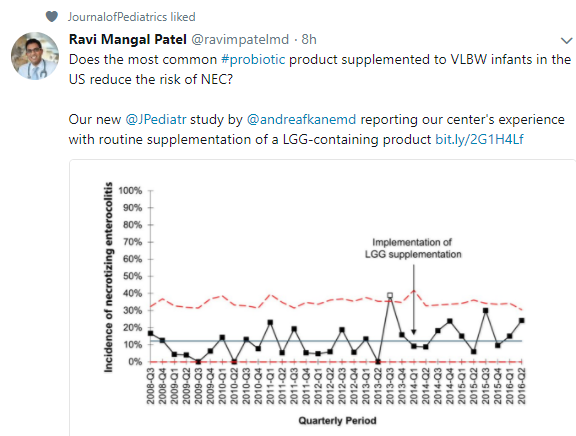
A recent retrospective study (AF Kane et al. J Pediatr 2018; 195: 73-9) with 640 VLBW infants found that the probiobiotic, Lactobacillus rhamnosus GG (LGG), was associated with an increased risk of necrotizing enterocolitis (NEC).

LGG supplementation was started at a median age of 6 days at a dose of 2.5 to 5 x 10 to the 9th CFU/day.

Key finding:

  • LGG group had an aOR of 2.10 for developing NEC.  LGG group NEC incidence was 16.8% whereas NEC incidence was 10.2% prior to institution of LGG.

The authors note their findings are in contrast to findings from 38 randomized trials (10,520) which have found that probiotics lowered the risk of NEC.

My take: This study reinforces the need for further studies to identify which factors and probiotic strains are likely to lead to reduced rates of NEC.

Related blog posts:

TPN Prior to Liver Transplantation for Biliary Atresia

Briefly noted:

D Wendel et al. JPGN 2018; 66: 212-7.  This single center retrospective review examined patients who received home TPN prior to liver transplantation.   These 18 patients, which represented 41% of their entire transplant cohort of 44 between 2010-2015, all had biliary atresia. Key findings:

  • Malnutrition improved or resolved in all but one patient
  • 8 catheter-related infections were noted (3.8/1000 catheter days)
  • There were no deaths in patients receiving TPN

My take: While there is an increased burden of care with TPN, improved nutrition may improve long-term outcomes.

Related blog posts:

Amber Cove, Dominican Republic


Joint Mobility –Not Associated with Increased Functional GI Disorders

According to a recent study (M Saps et al. JPGN 2018; 66: 387-90), joint hypermobility is not associated with an increased risk of functional gastrointestinal disorders (FGIDs).

From a school-based study of 654 children from a public school in Cali, Columbia, 148 (22.6%) were identified as having an FGID. Among this group, 136 children participated in the study along with 136 age/sex-matched healthy controls. Joint laxity was assessed to establish a Beighton score.

Key finding:

  • There was no significant difference in joint laxity between the FGID group and the control group, with OR of 1.03.

The implication of this study is that previous associations between joint hypermobility (JH) and FGIDs could be due to selection bias at tertiary care centers.  Alternatively, “it is possible that the association between FGIDs and JH exists, but it is only limited to a subset of patients that consult at specialized clinics.”

My take: This article challenges the idea that JH increases the risk of FGID.  Based on this study, if JH is a risk factor, it is hard to detect in a general population.

Related blog post:


Amber Cove, Dominican Republic

Double-Blind Randomized SMOFLipid Study

A recent double-blind randomized study (A Repa et al. J Pediatr 2018; 194: 87-93) compared a mixed lipid emulsion (SMOFlipid) to a soybean-oil lipid in 223 extremely low birth weight infants. Median time on parenteral nutrition was ~23 days.

Key findings:

  • The primary outcome of parenteral nutrition associated cholestasis (PNAC) was NOT significantly different in the two groups: 10.1% for SMOF and 15.9% for control group (P=.20).
  • No other outcome measures were affected, including ROP, BPD and growth.

The authors note that even the control group had less cholestasis than previous cohorts and indicated that the use of probiotics and possibly more aggressive enteral feeds were at work.

My take (borrowed in part from authors): These results “cannot be generalized to infants with substantially longer time on PN.” However, this study shows that SMOFlipid alone will not prevent cholestasis, which is well-known to be multifactorial.

Sandy Springs

Reassuring Study on Colonoscopy Safety in Adults

Full Abstract: Low Rates of Gastrointestinal and Non-Gastrointestinal Complicaitons for Screening or Surveillance Colonoscopies in a Population-Based Study

(L Wang, et al. Gastroenterol 2018; 154: 540-555https://doi.org/10.1053/j.gastro.2017.10.006)

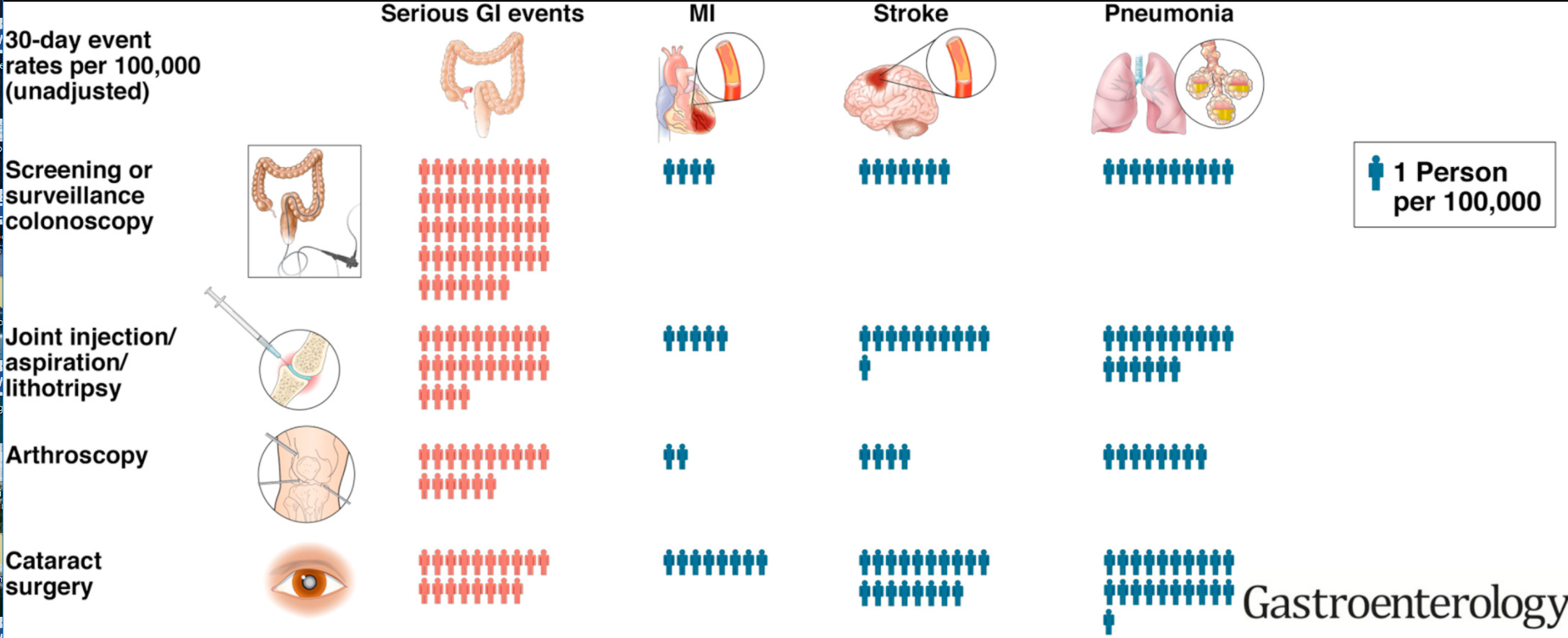
Using California’s Ambulatory Services Databases, the authors identified 1.58 million surveillance/screening colonoscopies (2005-2011) and compared complications to patients who underwent other ambulatory procedures like joint aspiration, arthroscopy and cataract surgery.

Availlable online: graphical abstract

Key findings:

  • GI complications including perforation and GI bleeding were low but more common with colonoscopy than comparator procedures
  • Rates of serious non-GI complications including myocardial infarction, stroke, and serious pulmonary events were no higher than other low-risk comparator procedures.
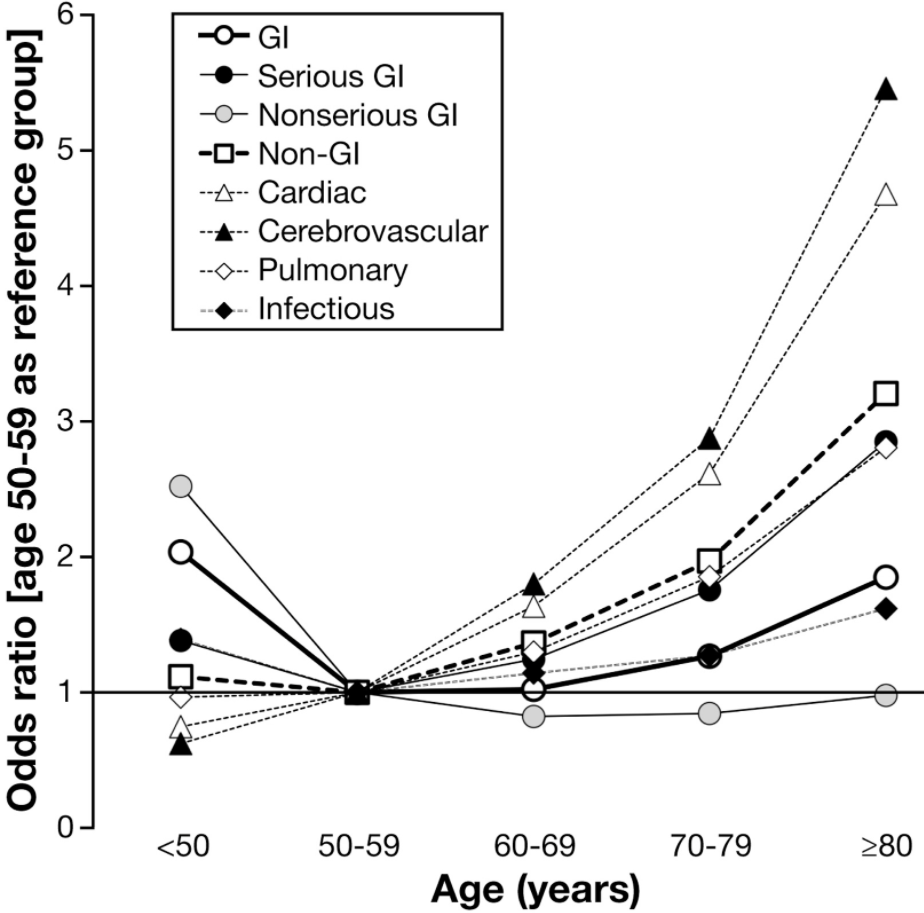
  • Complication rates were higher with advancing age, particularly in those >70 years. see Figure 2 below


Image available online: Figure 2


Vedozlizumab -Detectable in Breastmilk

A recent correspondence (M Julsgaard et al.Gastroenterol 2018; 154: 752-65) shows that vedolizumab is detectable in varying concentrations in breastmilk.  The authors collected samples from 5 mothers who were receiving vedolizumab (VDZ) for inflammatory bowel disease.

Key findings:

  • Peak VDZ concentration in breastmilk was 0.318 mcg/mL which was 1/179th of the corresponding concentration of the maternal serum levels.
  • The authors calculated a maximum oral dose of 0.048 mg/kg/day for breastfed infants based on this peak level. “This minute quantity is furthermore anticipated to undergo proteolysis in the stomach” and be bound/excreted in GI tract.
  • VDZ was detectable in all samples for 30 minutes prior to infusion (trough) through 14 days.

This study is in agreement with another study showing that levels in the breastmilk were minute (~1/100) of serum levels (A Lahat et al. J Crohns Colitis. 2018 Jan 5;12(1):120-123).

My take: These are low levels of VDZ –nevertheless further monitoring of infants to determine conclusively whether VDZ enterally causes any adverse effects is warranted.

Views from Mike O’Callahan -Pat Tillman Bridge


Pediatric Home and Office Biologic Infusions -What is Needed

A recent clinical report (E Barfield et al. JPGN 2018; 66: 680-86) will be influential.  This guideline is from the North American Society for Pediatric Gastroenterology, Hepatology, and Nutrition.  Congratulations to my partner, Chelly Dykes, who is one of the coauthors.

Full textAssuring Quality for Non-Hospital Based Biologic Infusions in Pediatric Inflammatory Bowel Disease: A Clinical Report from the North American Society for Pediatric Gastroenterology, Hepatology and Nutrition

For many years, our office has had an office-based infusion center which has provided infusions in a safe and cost-effective manner.  Recently, there have been some situations in which home-based infusions have been proposed either to lower costs and/or for convenience.  This report succinctly describes the hurdles that need to be addressed before recommending this treatment pathway. As noted below, patient safety encompasses a great deal more than infusion reactions. Delays in infusions (which can increase risk of loss of response) due to reactions and lapses in communication are additional issues.

Recommendation 1: Home- or office-based infusions should ensure safe administration of the biologic infusion, provide reliable execution of infusion-related orders (eg, laboratories for therapeutic drug monitoring, dose optimization protocols, etc), and be equipped to recognize and respond to potential complications.

  • Infusion reactions:  ” Infusion reactions associated with infliximab and vedolizumab can range from mild reactions such as fever and chills, dyspnea, pruritus, or urticaria (in approximately 5%–10%), to severe reactions including anaphylaxis, convulsions, and hypotension (<1%)”
  • Emergencies: “In the event of an urgent or emergent reaction during home- or office-based infusions, the in-home services agency (IHSA) nurse needs to be able to contact the appropriate ordering medical team member expeditiously by phone or pager to review/clarify specific concerns or needs to have an established clear policy on how to proceed with managing the reaction.” 
  • Communication: “We identified the lack or inconsistency of on-call coverage by the primary medical team when home- or office-based infusions occur as a significant barrier to safely initiating or continuing home- or office-based infusion programs. Difficulty in reaching a knowledgeable team member is a breach in reliable care and represents serious patient risk.”
  • Related work: “In addition to administering the biologic infusion, executing all other infusion-related orders is an important safety consideration. Implementing unique home infusion protocols is linked to treatment efficacy.”  

Recommendation 2: Pediatric home- or office-based infusions, particularly for patients 12 years and younger, should be staffed by a pediatric nurse professional with Pediatric Advanced Life Support (PALS) certification and clinical experience with pediatric patients.

Recommendation 3: Evidence-based standard of care for biologic therapy maximizing effectiveness and treatment sustainability should be established before initiating home or office-based infusions.

Recommendation 4: Home- or office-based infusion pathways that decrease opportunity loss for patients and families and deliver high-quality, patient-centered care should be supported and reproduced.

Recommendation 5: Pediatric gastroenterologists should ensure appropriate shared liability with IHSAs to deliver high-quality care in home-based infusions for children by executing pragmatic steps as outlined below:

  1. “Document discussion with the patient and family about the indication, risks, and adverse event management …
  2. Refer the patient to an accredited, licensed IHSA based on patient’s insurance coverage. If no accredited, licensed IHSA for the pediatric patient exists, this is grounds for not initiating home- or office-based infusions…
  3. & 4. Use an infusion protocol… with clear directives on recognition of signs/symptoms of reactions and administration of reaction medications and use of EMS or parent transport to an emergency room.
  4. Maintain accurate documentation and communication of therapy type, dose, and frequency.
  5. Provide a reliable communication mechanism for the IHSA to notify provider of changes or infusion-related events
  6. Regularly reviewing ongoing IHSA performance with regard to delivery of services, accurate laboratory ordering and turnaround time, safety and quality concerns and timely redressal of these issues.
  7. Switch to another IHSA if the performance reliability is unsatisfactory. …we acknowledge that changing IHSAs may be difficult.”

Recommendation 6: A more equitable division of labor should be established to offset increased administrative burden placed on the pediatric gastroenterologist and medical team to effectively facilitate and maintain home- or office-based infusions, especially when driven by payer-mandated policies.

Recommendation 7: …Among patients receiving home- or office-based infusions, unreliable follow-up care with the provider as scheduled is grounds for discontinuation of home- or office-based biologic therapy.

Recommendation 8: A proper appeals process should be in place to prevent cost transference from payer to patient in payer-mandated decisions for home- or office-based infusions.

Our office practice:

  • Emergencies: In our office, there is always one physician dedicated to being available to assess patients who are receiving infusions.  This helps insure safety and in addition, helps to make sure that minor medical problems do not needlessly postpone important treatment.
  • Documentation: With our office-based infusions, each infusion is documented by the administering nurse.  This documentation along with labs are embedded in the medical record (EPIC) to help modify treatment.
  • Communication: In our office, prior to each infusion, each patient’s chart is reviewed and specific orders are given.  This assures that needed blood tests/imaging, additional treatments (eg. iron infusion), insurance authorizations, necessary followup, and personalized adjustments are made.  This type of communication needs to be replicated for home-based infusions; hence, the use of home-based infusions could result in a huge increase in uncompensated work for the treating physician.

My take: In my experience, office-based infusions can be provided safely and in a cost-effective manner.  While the convenience of home-based infusion is desirable, before implementing broadly, issues regarding communication, safety protocols, and documentation to allow modifications in therapy need to be proactively addressed. Families may not realize some of the complexities involved in managing infusions and how these issues could affect their child’s long-term response to biologic therapy.

Related blog posts:

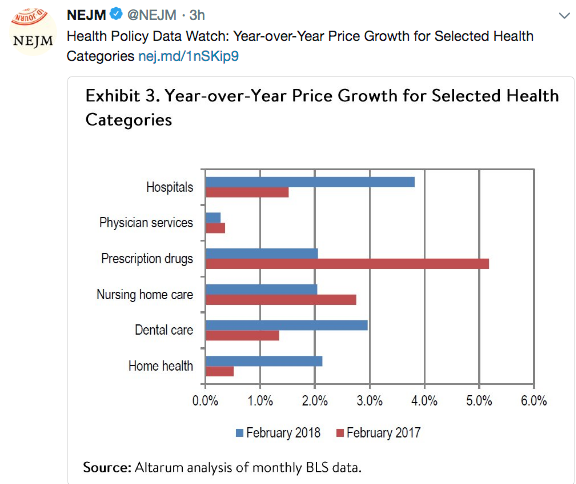
The following image relates to another convenience-related health trend:

Disclaimer: These blog posts are for educational purposes only. Specific dosing of medications/diets (along with potential adverse effects) should be confirmed by prescribing physician/nutritionist.  This content is not a substitute for medical advice, diagnosis or treatment provided by a qualified healthcare provider. Always seek the advice of your physician or other qualified health provider with any questions you may have regarding a condition.

Screening for Colorectal Cancer in Cystic Fibrosis

Briefly noted:

A Gini, et al. “Cost Effectiveness of Screening Individuals with Cystic Fibrosis for Colorectal Cancer” Gastroenterol 2018; 154: 556-67.

  • Key point: “Colonoscopy every 5 years, starting at age of 40 years was the optimal colonoscopy strategy for patients with cystic fibrosis” without prior organ transplantation.

D Hadjuliais, et al. “Cystic Fibrosis Colorectal Cancer Screening Consensus Recommendations: Gastroenterol 2018; 154: 736-45.

  • There are 10 Task Force recommendations. These include “initiation of screening at 40 years” in those without organ transplantation. Among those who have had organ transplantation, CRC screening is recommended at age 30 years and/or within 2 years of transplantation. Link: Abstract

My take: Fortunately, more individuals with cystic fibrosis are living long enough to benefit from CRC screening.  Due to increased risk, these guidelines recommend screening at a younger age than the general population.

More pics from Hoover Dam. The figure in this picture is a art piece honoring those who died while working on the construction