Unknown's avatar

About gutsandgrowth

I am a pediatric gastroenterologist at GI Care for Kids (previously called CCDHC) in Atlanta, Georgia. The goal of my blog is to share some of my reading in my field more broadly. In addition, I wanted to provide my voice to a wide range of topics that often have inaccurate or incomplete information. Before starting this blog in 2011, I would tear out articles from journals and/or keep notes in a palm pilot. This blog helps provide an updated source of information that is easy to access and search, along with links to useful multimedia sources. I was born and raised in Chattanooga. After graduating from the University of Virginia, I attended Baylor College of Medicine. I completed residency and fellowship training at the University of Cincinnati at the Children’s Hospital Medical Center. I received funding from the National Institutes of Health for molecular biology research of the gastrointestinal tract. During my fellowship, I had the opportunity to work with some of the most amazing pediatric gastroenterologists and mentors. Some of these individuals included Mitchell Cohen, William Balistreri, James Heubi, Jorge Bezerra, Colin Rudolph, John Bucuvalas, and Michael Farrell. I am grateful for their teaching and their friendship. During my training with their help, I received a nationwide award for the best research by a GI fellow. I have authored numerous publications/presentations including original research, case reports, review articles, and textbook chapters on various pediatric gastrointestinal problems. In addition, I have been recognized by Atlanta Magazine as a "Top Doctor" in my field multiple times. Currently, I am the vice chair of the section of nutrition for the Georgia Chapter of the American Academy of Pediatrics. In addition, I am an adjunct Associate Clinical Professor of Pediatrics at Emory University School of Medicine. Other society memberships have included the North American Society for Pediatric Gastroenterology Hepatology and Nutrition (NASPGHAN), American Academy of Pediatrics, the Food Allergy Network, the American Gastroenterology Association, the American Association for the Study of Liver Diseases, and the Crohn’s and Colitis Foundation. As part of a national pediatric GI organization called NASPGHAN (and its affiliated website GIKids), I have helped develop educational materials on a wide-range of gastrointestinal and liver diseases which are used across the country. Also, I have been an invited speaker for national campaigns to improve the evaluation and treatment of gastroesophageal reflux disease, celiac disease, eosinophilic esophagitis, hepatitis C, and inflammatory bowel disease (IBD). Some information on these topics has been posted at my work website, www.gicareforkids.com, which has links to multiple other useful resources. I am fortunate to work at GI Care For Kids. Our group has 17 terrific physicians with a wide range of subspecialization, including liver diseases, feeding disorders, eosinophilic diseases, inflammatory bowel disease, cystic fibrosis, DiGeorge/22q, celiac disease, and motility disorders. Many of our physicians are recognized nationally for their achievements. Our group of physicians have worked closely together for many years. None of the physicians in our group have ever left to join other groups. I have also worked with the same nurse (Bernadette) since I moved to Atlanta in 1997. For many families, more practical matters about our office include the following: – 14 office/satellite locations – physicians who speak Spanish – cutting edge research – on-site nutritionists – on-site psychology support for abdominal pain and feeding disorders – participation in ImproveCareNow to better the outcomes for children with inflammatory bowel disease – office endoscopy suite (lower costs and easier scheduling) – office infusion center (lower costs and easier for families) – easy access to nursing advice (each physician has at least one nurse) I am married and have two sons (both adults). I like to read, walk/hike, bike, swim, and play tennis with my free time. I do not have any financial relationships with pharmaceutical companies or other financial relationships to disclose. I have helped enroll patients in industry-sponsored research studies.

Current Impact of Climate Change

When I hear people say that the changes in climate are ‘just another weather cycle,’ I wonder if they understand the reasons why scientists are so worried.  It is not simply the historic increases in temperature.  The bigger concerns are the permanent changes in the environment that foster ongoing and worsening problems.  The atmosphere now has greenhouse gases that could take a 1000 years to dissipate even without further pollution (Related blog post: The Health Consequences of Climate Change).  This is akin to sleeping under more blankets except that in the middle of the night, when you are sweating, there is not a simple fix –no easy way to remove the greenhouse gases in the atmosphere.

A recent commentary (RN Salas. NEJM 2020; 382: 589-91) details the myriad ways that the climate crisis will affect clinical practice.

The climate crisis is a threat multiplier;  key points:

  • climate sensitive waterborne and foodborne illness
  • worsening mental health
  • heat strokes/heat-related hospitalizations
  • rising pollen levels
  • decreasing nutritional value of food
  • vector borne disease
  • trouble with medication storage (need to be stored at appropriate temperatures)
  • treatment disruptions by climate events
  • supply-chain disruptions by climate catastrophes
  • hospital power outages
  • rising temperatures could increase bacterial resistance to antibiotics

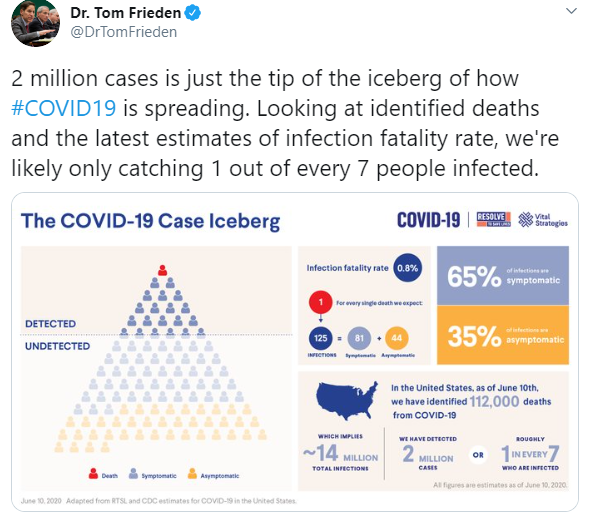
My take (borrowed from commentary): “Despite the irony, I often describe our current knowledge of the health effects of climate crisis as an iceberg.  Though we see a peak above the water’s surface, there is much to fear from the larger mass beneath –the effects that we haven’t yet identified.”

Related blog posts:

Garden at UNC Chapel Hill Campus

“The Truth About Allergies and Food Sensitivity Tests”

This is a link to a 20 minute video regarding “The Truth About Allergies and Food Sensitivity Tests” with Dr. Dave Stutkus and Dr. Mike Varshavski. (If trouble with link, then can find with quick search on YouTube.)

A couple of clarifications:

The video (~at the 3 minute mark) does not provide much nuance on “non-celiac gluten sensitivity” (see related blog posts below)

Some other points:

  • Don’t perform Food IgG testing -this is a memory antibody and does not reflect food allergy or sensitivity
  • So-called food sensitivity IgG tests do not have standardized normal values
  • Don’t perform broad-based IgE testing; there are many false-positives and false negative

Dr. Stutkus decided to undergone ‘food sensitivity’ tests and was reportedly sensitive to nearly 80 foods.

Related blog posts:

Disclaimer: This blog, gutsandgrowth, assumes no responsibility for any use or operation of any method, product, instruction, concept or idea contained in the material herein or for any injury or damage to persons or property (whether products liability, negligence or otherwise) resulting from such use or operation. These blog posts are for educational purposes only. Specific dosing of medications (along with potential adverse effects) should be confirmed by prescribing physician.  Because of rapid advances in the medical sciences, the gutsandgrowth blog cautions that independent verification should be made of diagnosis and drug dosages. The reader is solely responsible for the conduct of any suggested test or procedure.  This content is not a substitute for medical advice, diagnosis or treatment provided by a qualified healthcare provider. Always seek the advice of your physician or other qualified health provider with any questions you may have regarding a condition

Have Nonprofit Hospitals Lost Their Mission?

NY Times: Nonprofit Hospitals Are Too Profitable

An excerpt:

Seven of the 10 most profitable hospitals in America are nonprofit hospitals

It’s time to rethink the concept of nonprofit hospitals. Tax exemption is a gift provided by the community and should be treated as such. Hospitals’ community benefit should be defined more explicitly in terms of tangible medical benefits for local residents…

The average chief executive’s package at nonprofit hospitals is worth $3.5 million annually. (According to I.R.S. regulations, “No part of their net earnings is allowed to inure to the benefit of any private shareholder or individual.”) From 2005 to 2015, average chief executive compensation in nonprofit hospitals increased by 93 percent. Over that same period, pediatricians saw a 15 percent salary increase. Nurses got 3 percent…

Additionally, hospitals should not be allowed to declare Medicaid “losses” as a community benefit. While it’s true that Medicaid typically pays less than private insurance companies, Medicaid plays a crucial role for private insurance markets by acting as a high-risk pool for patients with severe illness and disability…These large medical centers also enthusiastically accept taxpayer money for research…

Particularly in communities with a shortage of health care resources, tax exemption can make sense. In medically saturated areas, where profits and executive compensation approach Wall Street levels, tax exemption should raise eyebrows.

My take: This opinion piece makes a strong argument that many nonprofit hospitals do not deserve to be exempt from taxes. At a minimum, more transparency regarding tangible benefits is needed to assure that hospitals earn this exemption.

AJC: Georgia hospital disclosures show disparities, seven-figure salaries  According to the AJC, the Children’s Healthcare of Atlanta’s CEO made 1.9 million last year. By comparison, the Northside CEO made 4.9 million. Other tidbits: Piedmont’s chief philanthropy officer was compensated 1.2 million.

Related blog posts:

“The problem with internet quotes is that you can’t always depend on their accuracy” ~Abraham Lincoln, 1864.

Working Together to Improve Outcomes for Children with Inflammatory Bowel Disease

Recently, we had an “ImproveCareNow Population Management” meeting.  At these regular meetings, we typically review at least one topic of interest, review data on how patients are doing (eg. hospitalizations, clinical remission, surgeries, followup visits), and discuss patients who have challenging clinical problems.  Credit for making these meetings work go to Clair Talmadge, PA-C, Samantha Gomez (ICN coordinator), and Chelly Dykes (physician leader).  Also, with regards to depression screening, we are fortunate to have the support of Bonney Reed-Knight and Jessica Buzenski.

At the latest meeting, we discussed our recent implementation of depression screening, expanded definitions of clinical remission/sustained clinical remission, and family support projects.

With regard to depression screening, we are finding that ~30% had actionable screens indicating some level of depression and ~4% screened as suicidal (requiring urgent attention).

My take: Each of these meetings and the work that goes into them make tangible improvements in outcomes.

Some of the slides are shown below.

Related blog posts:

Disclaimer: This blog, gutsandgrowth, assumes no responsibility for any use or operation of any method, product, instruction, concept or idea contained in the material herein or for any injury or damage to persons or property (whether products liability, negligence or otherwise) resulting from such use or operation. These blog posts are for educational purposes only. Specific dosing of medications (along with potential adverse effects) should be confirmed by prescribing physician.  Because of rapid advances in the medical sciences, the gutsandgrowth blog cautions that independent verification should be made of diagnosis and drug dosages. The reader is solely responsible for the conduct of any suggested test or procedure.  This content is not a substitute for medical advice, diagnosis or treatment provided by a qualified healthcare provider. Always seek the advice of your physician or other qualified health provider with any questions you may have regarding a condition.

Treating Helicobacter Pylori Lowers The Risk of Gastric Cancer

Related blog posts:

FDA ‘Safety Initiative’ Now Means an Ounce of Ethanol Costs $30,000

Ethanol locks are now going to be ridiculously expensive (possibly $30,000 per month -for 1 oz) due to an FDA initiative which aims to improve drug safety. Paradoxically, this could endanger the health of many vulnerable children.

Modern Healthcare: Unapproved Drug Initiative adds up to $30 billion in healthcare costs Thanks to Jennifer Sterner-Allison for this reference.

An excerpt:

A regulatory pathway that aims to ensure drug safety is inflating healthcare spending by billions of dollars, according to a new report.

Four widely used drugs funneled through the Unapproved Drug Initiative will increase spending by more than $20.25 billion over a five-year span as manufacturers hiked prices between 525% to 1,644%…

“Hospitals are absorbing additional cost for drugs that are not innovative, not curing new diseases, do not have overwhelming R&D investment, and are often the preferred drug of choice.”…

The 2006 Unapproved Drug Initiative requires manufacturers to pull these drugs and prove to the FDA that they are safe. Typically, fewer manufacturers remain in the market after the FDA intervenes, which allows price manipulation.

Drugs that go through the UDI pathway can earn the manufacturer up to seven years of patent protection, which can prevent competition. At minimum, other suppliers of the drug targeted by the UDI also have to leave the market and receive approval, which can reduce competition.

The situation with ethanol is particularly egregious, said Erin Fox, a drug shortage expert and senior director of drug information and support services at University of Utah Health.

Belcher Pharmaceuticals is charging $1,000 per milliliter, which equates to $30,000 for one shot of ethanol, since it received an orphan drug designation through the UDI, granting Belcher’s drug exclusivity through 2025, she said. Belcher won the orphan drug classification, a status for drugs that treat rare diseases, for its treatment of hypertrophic obstructive cardiomyopathy.

“It is the perfect example of how this FDA approval process is broken,” Fox said. “Pediatric hospitals are going to be particularly impacted because ethanol is sometimes used to ‘lock’ IV ports to prevent infections in high-risk patients.”..

“FDA’s Unapproved Drug Initiative continues to have serious unintended consequences and in my opinion should be halted,” she said

My take: I have contacted the American Academy of Pediatrics and asked them to try to work on this problem.  The high cost of ethanol may prevent its routine use and result in central line infections, hospitalizations and even death in vulnerable children.

Related blog posts (on utility of Ethanol Locks):

Blogs related to Pharmaceutical Practices:

Ethanol locks can minimize infections among patients who receive intravenous nutrition (“TPN”) which was popularized by Dr. Dudrick.  Due to the exorbitant costs of ethanol, this may lead to increased infections, hospitalizations and even death.


Lifesaving APPs (Advanced Practice Providers)

A recent study (EB Tapper et al. Hepatology 2020; 71: 225-34, editorial 11-13) shows that advanced practice providers (APPs) provide care that translates into better outcomes for adults with cirrhosis.  APPs include physician assistants and nurse practitioners.

In a retrospective analysis (2001-15) of the Optum Clinformatics database (private insurance) with 389,257 adult patients, the authors show that patients who had an APP involved in their care had better outcomes.

Key findings among patients with APP care (with and without specialist involvement):

  • Reduced risk of death, aHR 0.43
  • Improved metrics: higher HCC screening aOR 1.23, higher variceal screening OR 1.20, increased use of rifaximin after discharge for HE OR 2.09, and reduced risk of hospital 30-day readmission OR 0.68.
  • Overall, AAP care alone was inferior to specialist care alone for all metrics except 30-day readmissions; however, shared care (APP and specialist care) was more successful than specialist care alone (eg. 30-day readmissions OR 0.91 with shared care)
  • APP involvement was associated with an almost 2-fold increase in costs per person per year (~$9600 compared to $4500) and increased procedures
  • Due to the retrospective nature, it is unclear how many of the APPs had specialty training; as such, it is not clear whether primary care APP involvement is equivalent to specialty care APP involvement

My take: Based on my experience, this study likely could be replicated in most medical fields.  APPS improve patient outcomes.

Island Ford National Recreational Area, Sandy Springs

What to Expect After Pediatric Liver Transplantation: Cognitive Function and Quality of Life

A recent study (D Ohnemus et al. Liver Transplantation 2020; 26: 45-56, editorial 9-11) examined health-related quality of life (HRQOL) and cognitive functioning approximately 15 years after liver transplantation (LT).

Study details:

Median age 16 years.  Original group was a SPLIT research cohort recruited from 20 centers and then tested at multiple time points; for this study, 8 sites of the original 20 were included.  It is noted that patients with serious neurologic injury were excluded. Among an initial group of 108, there were 79 available for potential enrollment.  In this group, 65 parent surveys were completed and 61 child surveys.

Key findings:

  • For cognitive and school functioning, 60% and 51% of parents reported “poor” functioning, respectively (>1 SD below the health mean).  41% of children rated their cognitive function as poor.
  • Adolescents’ self-reported overall HRQOL was similar to that of healthy children; in contrast, parents rated their teenage children as having significantly worse HRQOL than healthy children in all domains.
  • The cognitive score in the poor functioning group at the latest time point was lower than at first time point measurement (ages 5-6 years and at least 2 years after LT), “suggesting that difficulties intensified in adolescence for those who have problems in early childhood.”
  • Almost half had received special educational services.

The editorial notes that the PedsQL Cognitive Functioning Scale scores used by the investigators were considered subjective.  “The more objective PedsPCF scores fell within the normal range.”

My take: This report indicates that a majority of children are likely to have some cognitive deficits and many are likely to have reduced HRQOL following liver transplantation; in addition, if these problems are detected at a younger age, they are likely to persist.

Related blog posts:


Mural on Atlanta’s Beltway