Recently, this blog post reviewed a case presentation of hereditary angioedema which often presents with bouts of severe abdominal pain: “A Swell Diagnosis”
Now, a study has shown how this can be effectively treated with CRISPR gene editing:
HJ Longhurst et al. N Engl J Med 2024; 390:432-441. CRISPR-Cas9 In Vivo Gene Editing of KLKB1 for Hereditary Angioedema.
My take: Gene therapies have been very expensive. If this therapy is approved for hereditary angioedema it will be too. However, some of the current treatments for preventing hereditary angioedema are also quite costly.
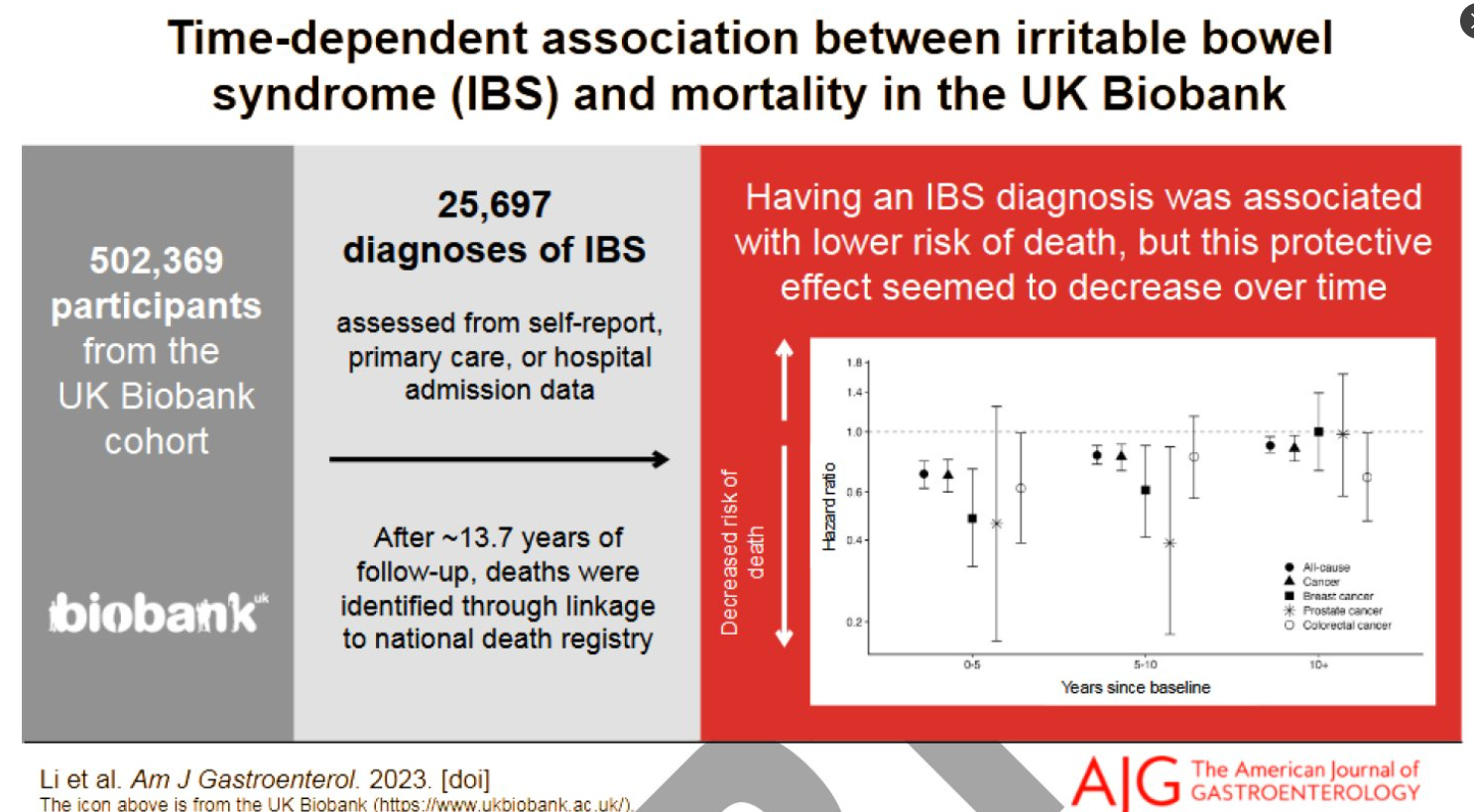
Having an IBS diagnosis was strongly associated with lower risks of all-cause (HR=0.70) and all cancer (HR=0.69) mortality in the first 5-years of follow-up. These associations were attenuated over follow-up, but even after 10 years of follow-up, associations remained inverse (all-cause: HR=0.89; all cancer: HR=0.87) after full adjustment.
Individuals with IBS had decreased risk of mortality from breast, prostate, and colorectal cancer in some of the follow-up time categories.
My take: Having IBS may cause suffering but appears to lower risk of death. The reason for this is not clear.
Of patients not achieving clinical response during 12-week induction, 53.7% achieved response following extended induction (additional 3 doses of IV infusion every 4 weeks)
With “extended induction,” total of 80.3% mirikizumab-treated patients achieved clinical response by W24
Methods: A network meta-analysis (NMA) was conducted to evaluate comparative efficacy of licensed biologics. Phase 3 randomized controlled-trials (RCTs) evaluating biologics approved by the European Medicines Agency or United States Food and Drug Administration as of 31 March 2023 for maintenance treatment of adult patients with moderate-to-severe CD were included, i.e. infliximab (IFX) intravenous (IV) and SC, adalimumab (ADL) SC, vedolizumab (VDZ) IV and SC, ustekinumab (UST) SC, and risankizumab (RZB) SC.
Key findings:
Among 8 comparator arms, IFX SC 120 mg every 2 weeks (Q2W) showed the highest odds ratio (95% credible interval) vs. PBO for clinical remission during the maintenance phase (3.52 [2.18–5.65]).
My take: This meta-analysis shows a favorable response for IFX SC; however, head-to-head trials are needed to really determine which biologic has the highest efficacy.
In this cross-sectional study with 104 children (24 with fatigue), biological parameters (CRP, fecal calprotectin) did not discriminate fatigued from non-fatigued patient
In this multicenter prospective study with 117 patients, the authors examined the success rate of adalimumab (ADA) in patients with CD with an intra-abdominal abscess resolved without surgery.
Key findings:
At W24, the survival rate without abscess recurrence or surgery was 74% (n=87)
Abscess drainage was significantly associated with ADA failure at W24 (odds ratio, 4.18)
My take (borrowed from authors): Provided that the abscess was carefully managed before initiating medical treatment, this study showed the high efficacy of ADA in the short and long term in biologic-naïve patients with CD complicated by an intra-abdominal abscess
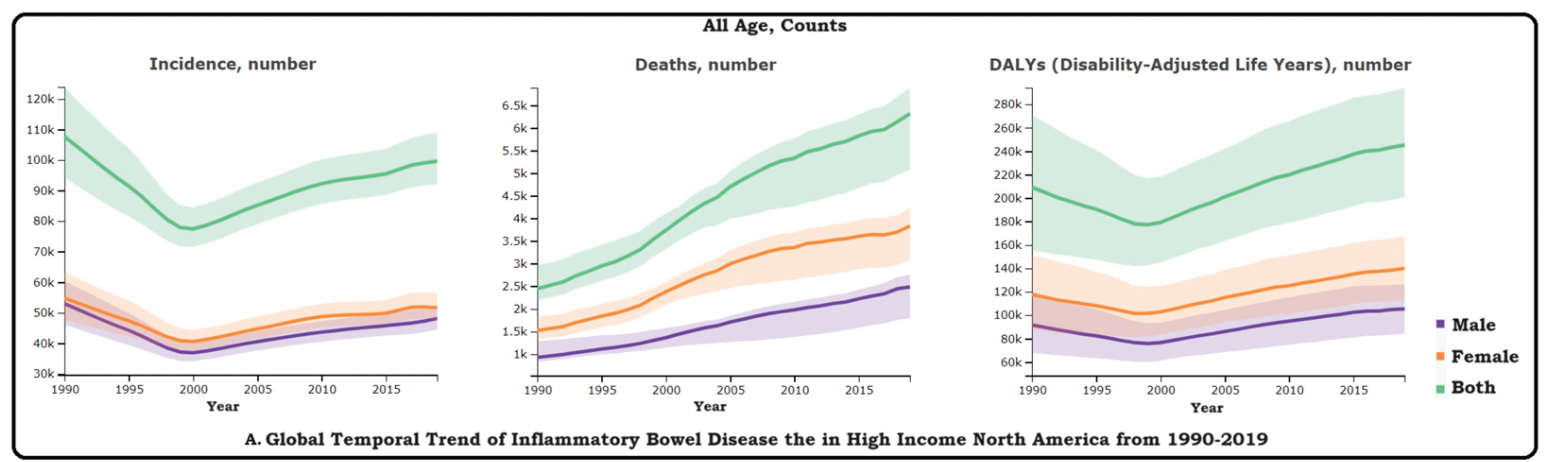
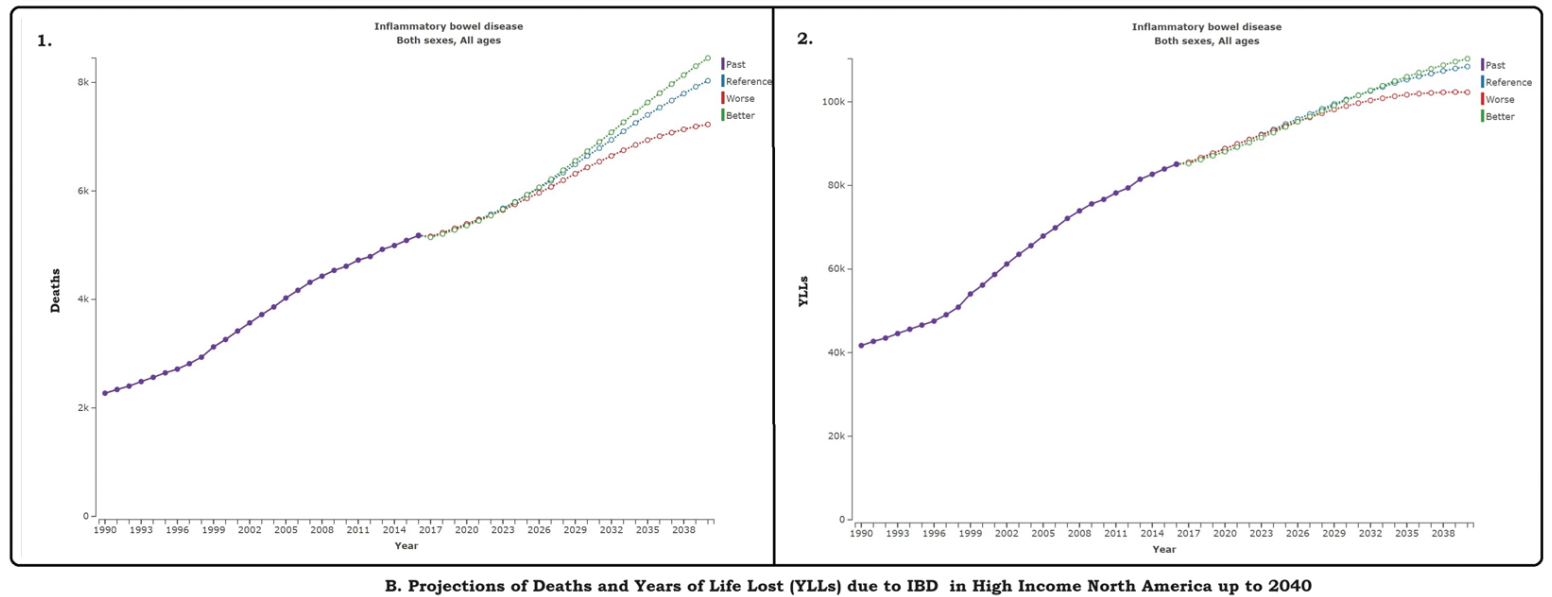
Methods: “Utilizing Global Burden of DIsease tool, we estimated IBD prevalence, incidence, mortality, and Disability Adjusted Life Years (DALYs) of IBD in High-Income North America. Standardized statistical techniques facilitated comparisons by age, sex, year within this specific region. The DisMod-MR 2.1 tool was employed to estimate incidence and prevalence, while mortality rates were discerned using the Cause of Death Ensemble Model (CODEm). Additionally, we projected the deaths and Years of Life Lost (YLLs) up to 2040 using regression analysis.”
Gastroenterol 2024; 166: 87. Open Access! Spotlight (1 page summary)
Key recommendations
AGA recommends metronidazole and/or ciprofloxacin as preferred treatment of pouchitis with duration of treatment 2-4 weeks.
For Crohn’s-like disease of the pouch, AGA guideline recommends using either ileal-release budesonide or advanced immunosuppressive agents (eg. Biological therapies and small molecule therapies)
“In patients with cuffitis, topical therapies should be the first-line therapy, such as mesalamine suppositories, corticosteroid suppositories, or corticosteroid ointment applied directly to the cuff. Biological therapies and small molecule therapies are recommended in refractory cases
Two recent articles review cannabis-related disorders:
DA Gorelik. NEJM 2023; 389: 2267-2275. Cannabis-Related Disorders and Toxic Effects
Background: “In the United States, an estimated 52.4 million persons 12 years of age or older used cannabis in 2021, representing 18.7% of the community-dwelling population in that age group,5 and 16.2 million persons met the diagnostic criteria for cannabis use disorder, which has as its core feature the use of cannabis despite adverse consequences…Cannabis use poses a global disease burden, albeit substantially less than that posed by other psychoactive substances such as alcohol, tobacco (nicotine), opioids, and stimulants.10 The Global Burden of Disease project calculated that cannabis use in 2016 was responsible for an estimated 646,000 years of healthy life lost to disability.”
Key points:
“Cross-sectional surveys suggest that recent cannabis use increases the risk of motor vehicle crashes by 30 to 40%.26 By comparison, a blood alcohol concentration of 0.08% increases the risk of crashes by 250 to 300%.26“
“Cannabis use disorder, like other substance use disorders, is a chronic, relapsing condition.”
“A substantial reduction or a cessation of cannabis use after heavy or long-term use results in a withdrawal syndrome that is usually mild and self-limiting.39…Common psychological symptoms of cannabis withdrawal include depressed mood, anxiety, restlessness, irritability, decreased appetite, and sleep disturbance. Physical signs and symptoms are less common and include abdominal cramps, muscle aches, tremor, headache, sweating, chills, and weight loss. These signs and symptoms typically begin within 1 to 2 days, peak within 2 to 6 days, and last for several weeks…The prevalence of any withdrawal symptoms is almost 50% in persons who were using cannabis daily.”
Neonatal cannabis exposure: “Pregnant persons who use cannabis expose their neonates to cannabis. Such in utero exposure is associated with increased risk among newborns of having low birth weight, being small for gestational age, and being admitted to the neonatal intensive care unit.”
“Cannabinoid hyperemesis syndrome, a form of cyclic vomiting syndrome that is often accompanied by abdominal pain, occurs during or within 48 hours after frequent and heavy cannabis use.75 Cannabinoid hyperemesis syndrome is a major reason for cannabis-related visits to emergency departments, and it accounts for about 10% of patients with cyclic vomiting syndrome.76 Cannabinoid hyperemesis syndrome is distinguished from cyclic vomiting syndrome by its temporal association with cannabis use, relief with hot baths or showers, and resolution with extended abstinence from cannabis…The symptoms of cannabinoid hyperemesis syndrome are treated with benzodiazepines, haloperidol, and topical capsaicin. “
M Camilleri, T Zheng. Clin Gastroenterol Hepatol 2023; 21: 3217-3229. Cannabinoids and the Gastrointestinal Tract This article focuses more on the GI tract effects of cannabinoids.
At a lot of IBD conferences, there is often a lot of focus on health maintenance including discussions on optimizing immunization levels and nutrition. It is often striking how, in comparison, so little attention is focused on emotional health which seems to cause a much greater health burden.
CS Tse et al. Inflamm BowelDis 2024; 30: 150-153. Increased Risks for Suicide, Self-Harm, Substance Use, and Psychiatric Disorders in AdultsWith Inflammatory Bowel Disease: A Nationwide Study in the United States From 2007 to2017
Background: Patients with IBD are also at an increased risk for chronic opioid use, depression, anxiety, sleep disturbance, and disease-related disability (eg, unemployment), all known risk factors for suicide
Methods: This cross-sectional study uses the Nationwide Emergency Department Sample of the Healthcare Cost and Utilization Project (HCUP) as a public domain representing 80% of the U.S. population. This analysis included more than 260 million emergency department visits across the United States from 2007 to 2017.
Key findings:
Inflammatory bowel disease conferred >10-fold risk for suicide deaths, self-harm, substance use, and psychiatric disorders.
The absolute numbers of self-harm rates were low (<1% of all-cause inflammatory bowel disease emergency department visits; total 56 suicide deaths). This amounts to about 5 suicide deaths per year (compared to 0.5 per year for patients with celiac disease.
The risk of self-harm was higher in patients with Crohn’s disease than ulcerative colitis (RR, 3.3; 95% CI, 1.2-5.4), though the suicide risk was not statistically different (RR, 2.3; 95% CI, 0.8-4.5).
From Table 2: RR of self-harm, suicide, psychiatric disorders, and substance use of adults with inflammatory bowel disease compared with celiac disease in the United States from 2007 to 2017. The authors found that rates of self-harm and suicide were the same for patients with celiac disease as the general population (RR 1.0).
My take: Attention to mental health is important component of good care for patients with inflammatory bowel disease.
D Alsoud et al Inflamm Bowel Dis 2024; izad315, https://doi.org/10.1093/ibd/izad315. Real-world Effectiveness and Safety of Risankizumab in Patients with Moderate to Severe Multirefractory Crohn’s Disease: A Belgian Multicentric Cohort Study
Methods: Data from consecutive adult CD patients who started risankizumab before April 2023 were retrospectively collected at 6 Belgian centers. A total of 69 patients (56.5% female, median age 37.2 years, 85.5% exposed to ≥4 different advanced therapies and 98.6% to ustekinumab, 14 with an ostomy) were included.
Key findings:
At week 24, 61.8% (34 of 55) and 18.2% (10 of 55) of patients without an ostomy achieved steroid-free clinical response and remission, respectively.
At week 52, these numbers were 58.2% (32 of 55) and 27.3% (15 of 55), respectively. Endoscopic data were available in 32 patients, of whom 50.0% (16 of 32) reached endoscopic response within the first 52 weeks.
Results in patients with an ostomy were similar (steroid-free clinical response and remission, 42.9% and 14.3%, respectively).
20.3% (14 of 69) of patients underwent CD-related intestinal resectionsand 18.8% (13 of 69) of patients discontinued risankizumab during followup (median 68 weeks).
Risankizumab was well tolerated with no safety issues.
Discussion points: “98.6% of patients in the current study were exposed to ustekinumab compared with less than 20% in the registration trials. This indicates that a previous lack or loss of response to the inhibition of the p40 subunit common to IL-12 and IL-23 does not preclude a potential response from subsequent selective inhibition of IL-23. “
My take: This study shows that risankizumab can be effective in refractory patients, even in those who have received similar type medications (eg. ustekinumab).
Disclaimer: This blog, gutsandgrowth, assumes no responsibility for any use or operation of any method, product, instruction, concept or idea contained in the material herein or for any injury or damage to persons or property (whether products liability, negligence or otherwise) resulting from such use or operation. These blog posts are for educational purposes only. Specific dosing of medications (along with potential adverse effects) should be confirmed by prescribing physician. Because of rapid advances in the medical sciences, the gutsandgrowth blog cautions that independent verification should be made of diagnosis and drug dosages. The reader is solely responsible for the conduct of any suggested test or procedure. This content is not a substitute for medical advice, diagnosis or treatment provided by a qualified healthcare provider. Always seek the advice of your physician or other qualified health provider with any questions you may have regarding a condition.
Methods: “Åkerström et al7 conducted a multi-national population-based cohort study of all patients with a diagnosis of Barrett’s esophagus in the national patient registries of Denmark (2012–2020), Finland (1987–1996 and 2010–2020), Norway (2008–2020), and Sweden (2006–2020). Patients with Barrett’s who underwent anti-reflux surgery (ARS) were compared with non-operated patients, most of whom were presumed to be using anti-reflux medication. The cohort consisted of 33,939 patients with Barrett’s esophagus, 542 (1.6%) of whom had undergone anti-reflux surgery.” Followup was up to 32 years. Mean age in the cohort was 64.3 years.
Key finding: “The main findings of the study were: 1) that the HR of developing EAC [esophageal adenocarcinoma] was actually greater in the ARS [anti-reflux surgery] cohort than in the non-operated cohort HR (adjusted HR 1.9, 95% CI 1.1–3.5); and 2) that the HR did not stabilize with a longer period of follow-up, but instead continued to increase, going from 1.8 (95% CI 0.6–5.0) within 1–4 years of follow-up to 4.4 (95% CI 1.4–13.5) after 10–32 years of follow-up.”
Discussion points:
The editorial suggests that ARS may not actually increase the risk of EAC, but instead the difference may be related to a selection of bias of choosing patients with more severe Barrett’s to have surgery.
For a patient at age 25 years with Barrett’s the cumulative risk of 50 years would translate to a 12% lifetime risk of EAC
The editorial reviews the use of PPIs from the AspECT trial and noted that “high-dose PPI plus low-dose aspirin was more effective than low-dose PPI alone in preventing that composite end point [all-cause mortality, EAC, or high-grade dysplasia]…a large part of the treatment effect was attributable to reduction in all-cause mortality (including cardiovascular) rather than EAC or high-grade dysplasia”
From editorial: Patient’s main reason for undergoing laparoscopic anti-reflux surgery in a community practice: 83 patients in a managed care environment. Data from Vakil et al.6
My take: This article provides good evidence that reflux surgery does not reduce the risk of esophageal adenocarcinoma in those at highest risk. For pediatric patients with severe reflux, this information is helpful for accurate counseling.
Previously, it has been noted that several immune mediated problems paradoxically can be triggered by the use of TNF inhibitors (eg. infliximab, adalimumab) even though these medications are often used to treat these problems (see posts below).
Using 2 nationwide cohorts (Danish & French), Ward et al (Clin Gastroenterol Hepatol 2024; 22: 135-143. Open Access! Tumor Necrosis Factor Inhibitors in Inflammatory Bowel Disease and Risk of Immune Mediated Inflammatory Diseases) report on the associated risk of developing a number of additional immune mediated inflammatory diseases (IMIDs) after treatment with anti-TNF agents for inflammatory bowel disease (IBD). The Danish and French cohorts comprised 18,258 and 88,786 subjects with IBD. Key findings:
Anti-TNF therapy was associated with an increased risk of rheumatoid arthritis, psoriasis, and hidradenitis suppurativa in both the Danish (HR, 1.66) and the French cohort (HR, 1.78), with a pooled HR of 1.76
The absolute risk of IMIDs in the Danish cohort was 5.3/1000 person years compared to 3.8/1000 PY those who had not received anti-TNFs; in the French cohort, the rate in anti-TNF exposed was 5.4/1000 PY compared to 3.0/1000 PY in the unexposed group.
Anti-TNF therapy was also associated with an increased risk of the IMIDs when compared with azathioprine (pooled HR, 2.94).
The results suggest that anti-TNFs paradoxically increase the risk of IMIDs; however, individuals receiving anti-TNFs are likely at higher risk for these disorders and this could be difficult to control for in a retrospective study.
My take: While anti-TNF agents have been a tremendous advance in the treatment of IBD, in a small number of individuals, these agents appear to trigger a paradoxical reaction.