Vitamin D and IBD, More Data

Another large study (Kabbani TA, et al. Am J Gastroenterol. 2016;doi:10.1038/ajg.2016.53) links low vitamin D status with worse outcomes in IBD.

An excerpt from summary from HealioGastro: (Low vitamin D linked to higher morbidity, disease severity in IBD)

Binion and colleagues identified 965 IBD patients (61.9% Crohn’s disease; 38.1% ulcerative colitis; 52.3% women; mean age, 44 years) with up to 5 years of follow-up data in University of Pittsburgh Medical Center’s longitudinal IBD natural history registry…

At enrollment, 8.9% of patients were vitamin D deficient and 33.1% had vitamin D insufficiency vs. 4.9% and 23.6%, respectively, at the conclusion of the study period. Among patients who received vitamin D supplements, 67.9% achieved normal levels by the end of the study…

Overall, patients with low vitamin D levels required significantly more steroids, biologics, narcotics, computed tomography scans, emergency department visits, hospital admissions and surgeries compared with those who had normal mean vitamin D levels (P < .05). They also had worse pain, disease activity scores and quality of life (P < .05).

“More importantly, correction of vitamin D deficiency was associated with overall improvement in clinical status,” Binion said.

My take: Vitamin D levels are often low when patients are acutely ill and can improve without supplements in many; this accounts for some of the association with worsened outcomes.  True vitamin D deficiency and insufficiency does have negative physiologic effects and should be treated.

Related blog posts:

Gibbs Gardens

Gibbs Gardens


NY Times: “Never Diet Again”

A thought-provoking editorial from the NY Times provides a lot of reasons why dieting to lose weight may be counter-productive.  This editorial comes right after recent reports that many of the most successful “biggest losers” have regained their weight.  Here’s the link. Never Diet Again

Key points:

  • Dieting is not successful in adults, with less than 1% achieving long-term success
  • Our body’s neuroscience has a setpoint for normal weight and when we drop below this, our body deploys a number of mechanisms to regain weight
  • Dieting may result in long-term weight gain
  • Dieting may not improve health

Here a few excerpts:

Setpoint: “When dieters’ weight drops below it, they not only burn fewer calories but also produce more hunger-inducing hormones and find eating more rewarding.”

Diet industry: ” A report for members of the industry stated: “In 2002, 231 million Europeans attempted some form of diet. Of these only 1 percent will achieve permanent weight loss.”

Does dieting increase weight gain? “The causal relationship between diets and weight gain can also be tested by studying people with an external motivation to lose weight. Boxers and wrestlers who diet to qualify for their weight classes presumably have no particular genetic predisposition toward obesity. Yet a 2006 study found that elite athletes who competed for Finland in such weight-conscious sports were three times more likely to be obese by age 60 than their peers who competed in other sports.”

Obesity overrated as cause of mortality: “But our culture’s view of obesity as uniquely deadly is mistaken. Low fitness, smoking, high blood pressure, low income and loneliness are all better predictors of early death than obesity. Exercise is especially important: Data from a 2009 study showed that low fitness is responsible for 16 percent to 17 percent of deaths in the United States, while obesity accounts for only 2 percent to 3 percent, once fitness is factored out.”

My take: This short article explains quite well why obesity is so hard to treat with diet approaches.  Primary prevention of obesity at younger ages along with emphasis on staying active are likely to achieve more than focusing on diet alone.

University of Michigan, Law Quad

University of Michigan, Law Quad


Parent Perspective, Pediatric Nutritionist and Traci Nagy

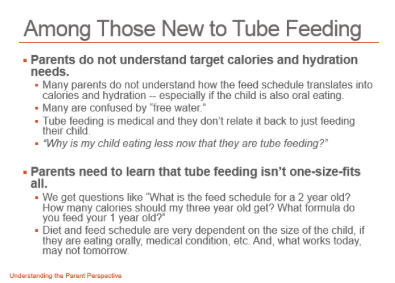
A recent post on The Pediatric Nutritionist blog (Kipp Ellsworth) provides a wealth of useful information for clinicians taking care of children with enteral tubes: Understanding the Parent Perspective: Communicating with Parents and Caregivers about Tube Feeding

The presentation was given by Traci Nagy who founded the FeedingTubeAwareness website, which I have been a big fan for several years.  I probably recommend this website at least once everyday at work.  Of course, I am not the only one familiar with this website which is why it has had more than 200,000 hits last year.

This post includes a 37 slide lecture and links to previous publications.  The “open letter number one” is particularly useful and is reviewed in the slide presentation.  The “open letter number two” also has some useful points, though many would disagree on the utility of testing gastric emptying before fundoplication.

My take: Look at this post -it will help you be a more effective clinician if you take care of kids with enteral tubes.

A few of the slides:

Screen Shot 2016-05-06 at 3.13.34 PM

Screen Shot 2016-05-06 at 3.28.53 PM Screen Shot 2016-05-06 at 3.27.36 PM Screen Shot 2016-05-06 at 3.27.24 PM

What Happened to Skepticism re: Lipid Emulsion Position Paper

A recent position paper (from ESPGHAN) (I Hojsak et al. JPGN 2016; 62: 776-92) made me wonder how different people can look at the same data and come to opposite conclusions.

In short, this article systemically reviews intravenous lipid emulsions and the risk of hepatotoxicity.  The review on the data is quite helpful.  The authors conclude that short-term use of the various emulsions currently in use do not result in a significant difference in neonates, infants and children.

The authors acknowledge that the data for long-term use of these emulsions is limited. They state that “there is evidence indicating that just tailoring and adjusting PN in children on long-term PN could improve liver disease, meaning that the focus should not only be on the type of ILE.”

“Although the quality of data are lacking there is some evidence that the use of multicomponent fish oil-containing ILE may contribute to a decrease” in liver toxicity.

What I don’t understand: The authors recommend: “it appears prudent to use multicomponent FO [fish oil]-containing ILE (GR C)” and literally the next sentence: “The present evidence base is inadequate to determine the optimal strategy for intravenous lipid supply.”

My take: I think we need to gather the data before having official position paper  recommendations.

Related blog posts:

2min warning doesn't help

Why a Diet History Can Be Helpful

A recent clinical problem-solving case report (D Hafez, et al. NEJM 2016; 374: 1369-74) highlights why a dietary history is important.  The initial paragraph indicated that a 2 year old with delayed speech and a picky eater presented with a 6 week history of progressive inability to bear weight.

The authors of this report explained the entire sequence of diagnosis which included extensive studies like bloodwork, radiographs, MRI, and bone marrow biopsy.  The last paragraph indicates that finally someone asked about the child’s diet: “approximately 1.4 liters of chocolate milk and ate two to four graham crackers per day. His mother acknowledged that these items were the mainstay of his diet.”

It turns out that the patient had vitamin C deficiency causing scurvy.  “Unfortunately, a comprehensive dietary review was performed only after an exhaustive and costly workup had been pursued.”  Personally, if I were involved in such a case, I would be embarrassed if it were published.

My take: While scurvy is interesting and rare in this country, the broader lesson of this report is to get a better dietary history before pursuing a huge workup.

Related blog posts:

Gibbs Gardens

Gibbs Gardens

The “EAT” Study

A recent study from MR Perkin et al (NEJM 2016; 374: 1733-43) examined whether early introduction (3 months) of allergenic foods in 1303 infants lowered the rate of allergies to these foods at 3 years of life compared to standard introduction (after 6 months).  The six foods: peanut, egg, cow’s milk, sesame, whitefish, and wheat.

This EAT study (“Enquiring about Tolerance”) required parents in the intervention group to give 3 rounded teaspoons of smooth peanut butter, one small egg, two portions (40-60 g) of cow’s milk yogurt, 3 teaspoons of sesame paste, 24 g of white fish, and two wheat-based cereal biscuits every week.

While the study did not reach a statistical significance, the absolute rate of allergies was modestly lower in those in the early introduction group (5.6% compared with 7.1%).  In a per-protocol analysis of those who strictly adhered to the assigned treatment regimen, there was an even lower rate of 2.4% (compared to 7.3% in the standard group).  The associated editorial (pg 1783-84) indicates that the demanding protocol limited those who adhered to the protocol and points out that those who were not adherent could have been due to reverse causation (eg. subtle avoidance to certain foods due to reactions).  The editorial conclusion: “evidence is building that early consumption rather than delayed introduction of foods is likely to be more beneficial as a strategy for the primary prevention of food allergy.”

My take: Early introduction of allergenic solids at ~3 months of age probably lowers the risk of developing allergies to these foods.

Here’s a link to <2 minute quick take summary: The EAT Study NEJM

Screen Shot 2016-05-08 at 8.13.21 PM

Reference on consensus for guidance on introducing peanuts:  J Allergy Clin Immunol 2015; 136: 258-61.

Related blog posts:

Screen Shot 2016-05-04 at 8.23.59 PM

Get Here If You Can: Improved Vitamin D Status

“I don’t care how you get here
Just get here if you can”

–Oleta Adams, “Get Here”

A recent study (Kugathasan et al. JPGN 2016; 62: 252-8) reminded me of the aforementioned song lyrics. (Full lyrics: Get Here)

This randomized pilot study comparing two regimens for low Vitamin D levels (serum 25-OH Vit D <30 ng/mL). During a treatment period of 6 weeks, patients were randomized to treatment with Vitamin D3 (cholecalciferol) at 10,000 units or to 5,000 units per 10 kg per week.  The maximum weekly dose in the first group was 50,000 units (IU) and the maximum dose in the latter group was 25,000 IU.

Both treatments were associated with improvement; in the higher dose group the mean serum level reached 49.2 whereas it was 41.5 in the lower dose group.  Of note, this repletion effect was nearly lost by the 12-week followup.

Other points:

  • This study used Vitamin D3 (cholecalciferol) which has greater bioavailability than Vitamin D2 (ergocalciferol).
  • No serious adverse effects were noted.  The study monitored Calcium, and parathyroid hormone concentrations.
  • The authors did not report any correlation with CRP values.   This is important because other studies (Why Adding Vitamin D May Not Help IBD | gutsandgrowth)
    have shown improvement in Vitamin D levels without vitamin D supplementation when underlying inflammation has been treated.

My take: This study shows that supplementation with Vitamin D is associated with improved levels  –one can ‘get here’ with either regimen the authors studied.  In those with low levels (not due to inflammation), it is likely that maintenance Vitamin D supplementation will be needed.

Related blog posts:

Michigan Union, Ann Arbor

Michigan Union, Ann Arbor

Disclaimer: These blog posts are for educational purposes only. Specific dosing of medications/diets (along with potential adverse effects) should be confirmed by prescribing physician/nutritionist.  This content is not a substitute for medical advice, diagnosis or treatment provided by a qualified healthcare provider. Always seek the advice of your physician or other qualified health provider with any questions you may have regarding a condition.

Pediatric Nutritionist: Blenderized & Pureed Gtube Diets

A recent Children’s Healthcare of Atlanta Nutrition Support Colloquium provided a terrific update on the use of blenderized and pureed diets via gastrostomy tube.

Here’s the link to the talk (including slides) and a summary on the Pediatric Nutritionist blog site: The Blenderized and Pureed by Gtube Diets

I’ve found these diets to be particularly useful in children with retching.  In addition, these diets can lower costs, reduce other symptoms like constipation, and appeal to parents who desire more typical foods in their child’s diet.

Related blog postNutrition University -Part 1 | gutsandgrowth

Gibbs Gardens

Gibbs Gardens


Fresh Fruit Study

A study from China has shown benefits associated with increased fresh fruit intake (H Du et al. NEJM; 2016; 374: 1332-43). Abstract Link: Fresh Fruit Consumption and Major Cardiovascular Disease in China

Study methods: 512,891 adults recruited from 2004-2008.  Prospective cohort.

Results: 18% of participants consumed fresh fruit daily.  This group had lower systolic blood pressure (by 4 mm Hg), lower glucose (by 0.5 mmol/L) (both with P<0.001).  The adjusted hazard ratio for cardiovascular death was 0.6 (CI 0.54-0.67), 0.66 for major coronary event, 0.75 for ischemic stroke, and 0.64 for hemorrhagic stroke.

Limitation: Fruit consumption was correlated with socioeconomic status and this may have affected findings even after adjustment due to residual confounding.

My take: While fruit consumption has not been proven to cause better health, daily fruit consumption is associated with better outcomes.

Related blog postEat your veggies…if you don’t want to get sick | gutsandgrowth

Savings with veggies