Ultra-Short Celiac Disease


It is well-recognized that obtaining a duodenal bulb biopsy increases the likelihood of making a diagnosis of celiac disease.  Another study (PD Mooney et al. Gastroenterol 2016; 150: 1125-34) has tried to quantitate the frequency of “ultra-short” celiac disease (USCD).

In this prospective study of 1378 patients (mean age 50.3 yrs) who underwent endoscopy between 2008-2014, there was a cohort who had a high clinical suspicion of celiac disease in which quadrantic biopsies of the duodenal bulb were obtained.

Key findings:

  • 268 (19.4%) were diagnosed with celiac disease
  • 26 (9.7%) of celiac population had disease identified primarily in the duodenal bulb.  These patients with USCD were younger (P=.03), had lower serologic titers of tissue transglutaminase antibody (tTG) (P=.001), and less frequently had diarrhea (P=.001).
  • In USCD, the tTG titers were a median of 4.8x ULN compared with 20x ULN in those with more extensive disease.
  • While the authors characterize 26 as having USCD, 19 of the 26 did have Marsh 1 (n=18, 69.2%) or Marsh 2 (n=1, 3.8%) lesions, indicating at least some involvement more distally. However, in these patients the duodenal bulb findings clinched the diagnosis.

Despite the protocol, the authors showed that a single biopsy from the bulb was sufficient to increase the diagnostic yield.

My take: This study reinforces the need for duodenal biopsies from both the bulb and more distally when the diagnosis of celiac disease is being considered.

Related blog posts:

Last Year at Turner Field

This is the last year at Turner Field

More Than 100 Leading Scientists: “Stop Bashing GMO Foods”

“Scientific and regulatory agencies around the world have repeatedly and consistently found crops and foods improved through biotechnology to be as safe as, if not safer than those derived from any other method of production,” the group of laureates wrote. “There has never been a single confirmed case of a negative health outcome for humans or animals from their consumption. Their environmental impacts have been shown repeatedly to be less damaging to the environment, and a boon to global biodiversity.”

Here’s the link: NY Times Stop Bashing GMO Foods

Related posts:

Sullivan's Island, SC

Sullivan’s Island, SC

Even Normal Body Mass Index Could Be a Problem

A recent study (G Twig et al. NEJM 2016; 374: 2430-40) which had more than 42 million person-years of followup (1967-2010) showed that adolescents with a BMI in the 50th to 74th percentile (CDC values), well within the accepted normal range, had increased cardiovascular and all-cause mortality.

The study involved more than 2.3 million Israeli adolescents with up to 40 years of followup information. The study utilized data obtained from 17 year olds who were seen 1 year prior to mandatory military service. There was increasing mortality associated with higher BMI subgroups.

Key findings:

  • For those between the 50-74% in adolescence: the hazard ratios for coronary heart disease 1.49, for stroke 1.18, and total cardiovascular causes was 1.32.
  • For those ≥95% (obese) in adolescence: the hazard ratios for coronary heart disease 4.89, for stroke 2.64, and total cardiovascular causes was 3.46.

My take: this study shows that even modest increases in BMI are associated with modest increase in cardiovascular mortality over 40 years.  Whether the BMI itself plays a causal role or is more of an epiphenomenon of other risk factors (eg. sedentary risk factors) is not clear.


Screen Shot 2016-06-27 at 1.05.47 PM

Elafibranor Study & “My compliments to the photographer”

A while back, I remember seeing a cartoon with a dissatisfied patron leaving a restaurant and saying “my compliments to the photographer.”

Sometimes reading journal titles has the same feel.  The title does not always indicate what you are really going to get.  A recent study (V Ratziu et al. Gastroenterol 2016; 150: 1147-59) has the following title: “Elafibranor, an Agonist of the Peroxisome Proliferator –Activated Receptor –α and –β, Induces Resolution of Nonalcoholic Steatohepatitis Without Fibrosis Worsening.”  Sounds great –a new effective treatment for NASH, right?

Here’s are the results:

  • “In intention-to-treat analysis, there was no significant difference between elafibranor and placebo groups in the protocol-defined primary outcome.”
  • However, based on a post-hoc analysis with a modified definition, the treatment group had  a 19% NASH resolution compared with 12% of the placebo group.

This study examined 276 patients in a randomized double-blind placebo-controlled trial.

To me these results are not impressive.  The associated editorial (pg 1073) expresses more optimism and indicates that there have been evolving outcome measures in NASH studies to look for the combination of NASH resolution without worsening fibrosis.  Thus, prior studies that used only NASH resolution, such as pioglitazone (47%), vitamin E (36%) and obeticholic acid (22%) cannot be compared to his current study.

My take: Pretty picture or not, what this really means -is that we need more studies, including the outcome of phase III studies of this medication.

Georgia Terrace

The Georgian Terrace

Concise Review: Fatty Liver in Pediatrics

A recent review (J Schwimmer. Hepatology 2016; 1718-25) provides a succinct up-to-date approach to the common problem of Nonalcoholic Fatty Liver Disease.

As this was a review, much of the material has been covered by this blog and previous publications.  The review discusses the upper limit of normal for alanine aminotransferase and its utility.  Liver imaging is discussed: “MRI is well suited for use in clinical research” whereas “ultrasound does not meet the standard clinical threshold required to be used to diagnose fatty liver…or used as an outcome measure.”

Dr. Schwimmer reviews a prospective study of 347 overweight or obese children with suspected NAFLD (blog review of this study: Screening for NAFLD).  He notes that 24% (n=61) of those who underwent liver biopsy ultimately had other diagnoses, especially autoimmune liver disease (n=11) and celiac disease (n=4). “The clinical challenge is to determine who needs how much of a workup. The greater potential for hepatotoxicity and the more advanced the disease is believed to be, the greater the need to be certain of the diagnosis and to properly grade and stage the disease.”  Currently, “no other diagnostic modality has shown sufficient accuracy to be appropriate for clinical use in the place of biopsy.”

He reviews associated health conditions with NAFLD including obesity, dyslipidemia, hypertension, cardiac dysfunction, and obstructive sleep apnea (~60% of NAFLD patients).

What about treatment? “There is not an available, proven, safe, and effective [pharmacologic] treatment for NAFLD in children…Current treatment is …focused on optimizing lifestyle, including nutrition, physical activity, and mental well-being.”

My take: Despite 20 years of clinical practice, the workup for NAFLD remains a vexing problem.  It is not practical to offer a liver biopsy to 10% of the pediatric population.  So determining who (besides those with more severe presentations) will benefit from an exhaustive workup remains unclear.  In the meanwhile, at a minimum, we need to keep looking for treatable liver conditions (eg. autoimmune hepatitis, celiac disease, Wilson’s disease, and viral hepatitis).

An article with a similar focus (Dr. Schwimmer is the corresponding author): J Pediatric 2016; 172: 9-13.  This report and Dr. Schwimmer’s review both tout the safety of liver biopsy.  Neither report presents much data on costs of either liver biopsies or MRI.

Related blog posts:

Zoo Atlanta 2016

Zoo Atlanta 2016


Why some kids are short & understanding linear growth

If you want to explore the biological basis for short stature, then an excellent review (YH Jee, J Bacon. J Pediatr 2016; 173: 32-7) is worthwhile.

The article begins by explaining the reasons why linear growth is rapid in infancy, slows in childhood and accelerates in adolescence through a process of growth plate chondrogenesis.  In addition, the idea that growth plate fusion causes growth cessation is not accurate.  Fusion of the growth plate occurs because of growth cessation. In addition, in many with “catch-up growth” the “delay in maturation appears to be driven by subtle undernutrition due to diminished appetite.”

Altered Growth Plate Chondrogenesis:

  • Nutritional intake -excess and inadequate nutrient intake affects growth, often through modulation of endocrine hormones.  Overnutrition accelerates linear growth “but the adult height is not substantially affected.”
  • Hormones –thyroid hormones, growth hormone, IGF-1, androgen, and estrogen all positively regulate linear growth.  Glucocorticoids negatively regulate linear growth.
  • Inflammatory cytokines –these cytokines (including TNF-α, IL-6, IL-1β) negatively regulate chondrogenesis
  • Paracrine growth factors, Extracellular Matrix, Intracellular Proteins –local growth factors can be deficient in those with specific genetic mutations:  FGFR3 -achondroplasia, GNAS -Albright hereditary osteodystrophy, PTH1R -Blomstrand chrondrodysplasia, PTPN11 (& others) -Noonan, SHOX -Langer mesmeric dysplasia.  SHOX mutations accounts for 2-5% of children with formerly idiopathic short stature.  SHOX gene is also involved in Turner syndrome short stature. More listed in their Table (pg 35).

My take: It is cool to see the evolved understanding of the various factors affecting stature.  While the authors conclude that exome sequencing will alter the diagnostic approach to children with severe short or tall stature, it seems that a genetic panel would be quite practical and less expensive than many endocrinological evaluations.

Related blog postHere’s Why Biologic Therapy for Crohn’s Helps Adolescents …

Imodium

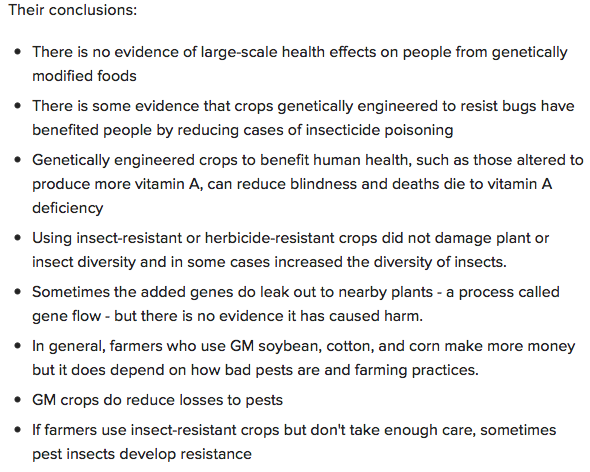
Expert Review: GMOs are safe

Here’s a link to NBC report on National Academies of Science review of Genetically Modified & Genetically Engineered crops: Genetically Modified Crops Are Safe

Here’s an excerpt:

Screen Shot 2016-05-18 at 9.39.35 PM

Here’s a website with full report and data:

National Academies of Science Genetically Engineered Crop Website

Related blog post: War on Science and Genetically-Modified Food | gutsandgrowth

Report also covered by USATODAY:

Screen Shot 2016-05-18 at 9.44.10 PM

Vitamin D and IBD, More Data

Another large study (Kabbani TA, et al. Am J Gastroenterol. 2016;doi:10.1038/ajg.2016.53) links low vitamin D status with worse outcomes in IBD.

An excerpt from summary from HealioGastro: (Low vitamin D linked to higher morbidity, disease severity in IBD)

Binion and colleagues identified 965 IBD patients (61.9% Crohn’s disease; 38.1% ulcerative colitis; 52.3% women; mean age, 44 years) with up to 5 years of follow-up data in University of Pittsburgh Medical Center’s longitudinal IBD natural history registry…

At enrollment, 8.9% of patients were vitamin D deficient and 33.1% had vitamin D insufficiency vs. 4.9% and 23.6%, respectively, at the conclusion of the study period. Among patients who received vitamin D supplements, 67.9% achieved normal levels by the end of the study…

Overall, patients with low vitamin D levels required significantly more steroids, biologics, narcotics, computed tomography scans, emergency department visits, hospital admissions and surgeries compared with those who had normal mean vitamin D levels (P < .05). They also had worse pain, disease activity scores and quality of life (P < .05).

“More importantly, correction of vitamin D deficiency was associated with overall improvement in clinical status,” Binion said.

My take: Vitamin D levels are often low when patients are acutely ill and can improve without supplements in many; this accounts for some of the association with worsened outcomes.  True vitamin D deficiency and insufficiency does have negative physiologic effects and should be treated.

Related blog posts:

Gibbs Gardens

Gibbs Gardens


NY Times: “Never Diet Again”

A thought-provoking editorial from the NY Times provides a lot of reasons why dieting to lose weight may be counter-productive.  This editorial comes right after recent reports that many of the most successful “biggest losers” have regained their weight.  Here’s the link. Never Diet Again

Key points:

  • Dieting is not successful in adults, with less than 1% achieving long-term success
  • Our body’s neuroscience has a setpoint for normal weight and when we drop below this, our body deploys a number of mechanisms to regain weight
  • Dieting may result in long-term weight gain
  • Dieting may not improve health

Here a few excerpts:

Setpoint: “When dieters’ weight drops below it, they not only burn fewer calories but also produce more hunger-inducing hormones and find eating more rewarding.”

Diet industry: ” A report for members of the industry stated: “In 2002, 231 million Europeans attempted some form of diet. Of these only 1 percent will achieve permanent weight loss.”

Does dieting increase weight gain? “The causal relationship between diets and weight gain can also be tested by studying people with an external motivation to lose weight. Boxers and wrestlers who diet to qualify for their weight classes presumably have no particular genetic predisposition toward obesity. Yet a 2006 study found that elite athletes who competed for Finland in such weight-conscious sports were three times more likely to be obese by age 60 than their peers who competed in other sports.”

Obesity overrated as cause of mortality: “But our culture’s view of obesity as uniquely deadly is mistaken. Low fitness, smoking, high blood pressure, low income and loneliness are all better predictors of early death than obesity. Exercise is especially important: Data from a 2009 study showed that low fitness is responsible for 16 percent to 17 percent of deaths in the United States, while obesity accounts for only 2 percent to 3 percent, once fitness is factored out.”

My take: This short article explains quite well why obesity is so hard to treat with diet approaches.  Primary prevention of obesity at younger ages along with emphasis on staying active are likely to achieve more than focusing on diet alone.

University of Michigan, Law Quad

University of Michigan, Law Quad


Parent Perspective, Pediatric Nutritionist and Traci Nagy

A recent post on The Pediatric Nutritionist blog (Kipp Ellsworth) provides a wealth of useful information for clinicians taking care of children with enteral tubes: Understanding the Parent Perspective: Communicating with Parents and Caregivers about Tube Feeding

The presentation was given by Traci Nagy who founded the FeedingTubeAwareness website, which I have been a big fan for several years.  I probably recommend this website at least once everyday at work.  Of course, I am not the only one familiar with this website which is why it has had more than 200,000 hits last year.

This post includes a 37 slide lecture and links to previous publications.  The “open letter number one” is particularly useful and is reviewed in the slide presentation.  The “open letter number two” also has some useful points, though many would disagree on the utility of testing gastric emptying before fundoplication.

My take: Look at this post -it will help you be a more effective clinician if you take care of kids with enteral tubes.

A few of the slides:

Screen Shot 2016-05-06 at 3.13.34 PM

Screen Shot 2016-05-06 at 3.28.53 PM Screen Shot 2016-05-06 at 3.27.36 PM Screen Shot 2016-05-06 at 3.27.24 PM