Progression of Fatty Liver Disease in Children

SA Xanthakos et al. Gastroenterol 2020; 159: 159: 1731-1751. Progression of Fatty Liver Disease in Children Receiving Standard of Care Lifestyle Advice

This prospective study followed the natural history of NAFLD in children with timed liver biopsy reassessment in children (n=122) using the placebo arms of 2 large multicenter clinical trials; patients received standard of care lifestyle advice. The study population had a mean age of 13 years; 71% were Hispanic participants

Key findings:

  • At enrollment, 31% of the children had definite NASH, 34% had borderline zone 1 NASH, 13% had borderline zone 3 NASH, and 21% had fatty liver but not NASH
  • Over a mean period of 1.6 ± 0.4 years, borderline or definite NASH resolved in 29% of the children, whereas 18% of the children with fatty liver or borderline NASH developed definite NASH
  • Fibrosis improved in 34% of the children but worsened in 23%
  • Progression was more likely with increasing ALT, increasing GGT, type 2 diabetes/increasing HgbA1c
  • Overall, one-third had histologic features of progression within 2 years, in association with increasing obesity and serum levels of aminotransferases and loss of glucose homeostasis.
  • The study conclusions are limited by selection bias, potential liver biopsy sampling errors, limited enrollment of non-Hispanic children, and relatively short duration of follow-up

Related blog posts:

Sickle Cell Related Liver Disease

A terrific review of sickle cell disease (SCD) associated liver problems: F Lacaille et al. JPGN 2021; 72: 5-10. The Liver in Sickle Cell Disease

While the most frequent liver-related problem in individuals is cholelithiasis (>25% after age 5 yrs), a host of other problems can develop –this article is a good reference.

Key points:

  • Acute Sickle Cell Hepatic Crisis, Intrahepatic cholestasis, and acute hepatic sequestration
    • ~6% of children and 10% of adults develop severe liver complications of SCD
    • With sequestration, indications include pain with acute drop in hemoglobin (>2 g/dL)
    • Acute hepatic crisis is often signaled by elevated conjugated bilirubin
    • With severe liver disease/liver ischemia, authors advocated for exchange transfusion which “more efficiently decreases HbS percentage, faster restoring the blood flow than simple transfusion.” Consider after excluding biliary complication if INR is >1.4 with increased conjugated bilirubin (>3 mg/L). “Simple transfusion should be discussed in other cases.”
  • Cholangiopathy and autoimmune liver disease
    • Although autoimmune sclerosing cholangitis/autoimmune hepatitis are rare, it may account for 8% of children with SCD referred for hepatic dysfunction
    • Liver biopsy, needed for diagnosis, “is a dangerous procedure in SCD, which cannot be performed without at least a transfusion”
    • “Steroids can induce sickle crisis”
    • Look for ANA, SMA, LKM, and ANCA
  • Iron Overload
    • “It is not usually a significant concern in children…In our patients, the median ferritin level was about 3000 ng/mL, and none had a severe overload on MRI”
  • Infections/Drug toxicity
    • Need to consider hepatitis B, hepatitis C, and hepatitis E in particular
    • Inquire about herbal medicines and recreative drugs
  • Liver transplantation
    • Results are often poor.
    • Problems include sickle cell crisis in the transplanted liver, and drug toxicity which can add to the neurological and renal morbidities of SCD
  • Stem cell transplantation
    • Consider for severe complications of SCD including hepatic complications

Related blog posts: 

From NY Times

Prenatal Liver Pollutants: Perfluoroalkyl Substances

It is very difficult to try to understand potential toxic substances in our environments. Some of the reasons for this are that there are always numerous simultaneous exposures and harm from substances can accrue over long periods. Once a substance is identified, it can take a long time to develop convincing evidence and even longer time frames to try to enact policy changes.

Despite these challenges, fortunately researchers continue to try to tease out these dangerous agents. A recent study (N Stratakis et al. Hepatology 2020; 72: 1758-1770. Free Full text: Prenatal Exposure to Perfluoroalkyl Substances Associated With Increased Susceptibility to Liver Injury in Children)

Background/Methods: Per- and polyfluoroalkyl substances (PFAS) are widespread and persistent pollutants that have been shown to have hepatotoxic effects in animal models. However, human evidence is scarce. PFAS chemicals have a myriad industrial/household applications which include nonstick cookware and products that confer resistance to stains. According to the editorial (MC Cave, pg 1518-21), some refer to PFAS as “forever chemicals” due to their decades-long half-lives.

The study authors used data from 1105 mothers and their children (median age 8.2 years) from the European Human Early-Life Exposome cohort. Key findings:

  • High prenatal exposure to PFAS resulted in children who were at higher risk of liver injury (odds ratio, 1.56; 95% confidence interval, 1.21–1.92)
  • PFAS exposure is associated with alterations in key amino acids and lipid pathways characterizing liver injury risk.

Related blog posts:

2020 AASLD President: Jorge Bezerra

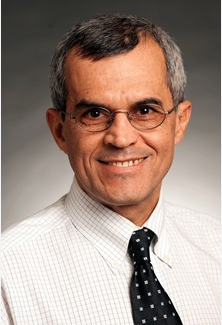
One of the first articles that I read this year (2021) was “Introducing Jorge A Bezerra, MD, Our 2020 AASLD President” (WF Balistreri. Hepatology 2020; 72: 801-806).

I have a deep admiration and fondness for Jorge. When I first did a gastroenterology rotation during my pediatric residency, he was the first person who handed me an endoscope and showed me how to handle it. During my training as a resident and as a fellow (1991-1997), I had the opportunity to get to know Jorge; for some of that time, he was completing his training as he started his GI fellowship in 1990.

I really enjoyed reading this introduction to learn a lot more about Jorge, because I don’t remember Jorge speaking about himself. Of course, he has been part of some very important advances in pediatric hepatology including the very useful MMP-7 assay, the ‘Jaundice chip’ and the START study.

The article delves into some personal attributes including the description of Jorge being ‘the Pele of pediatric hepatology’ (per Dr. Ronald Sokol). It also describes his family and some characteristics. “He has inspired us with his calm demeanor, decency, humor, positivity, and kindness.”

It is a personal thrill for me to read about one of my heroes in our field.

Related blog posts:

Bone Health in Children with Biliary Atresia

S Ruuska et al. JPGN 2020; 71: 707-712. Impaired Bone Health in Children With Biliary Atresia

This retrospective study from Finland details the bone health of children with biliary atresia (BA). Key findings:

  • Out of 49 patients, 7 (14%) were diagnosed with rickets during infancy. Clearance of jaundice [odds ratio 0.055, 95% confidence interval [CI] 0.00266–0.393; P < 0.01] was a protective factor against rickets.
  •  In DXA measurements, median lumbar spine aBMD anthropometrically adjusted z-scores were as follows:
    • in native liver survivors 0.8 (interquartile range [IQR] −1.9 to 1.4) at 5 and −0.3 (IQR −1.3 to 0.8) at 10 years
    • in liver transplanted patients 0.4 (IQR −0.2 to 1.1) at 5 and 0.6 (IQR −0.1 to 1.3) at 10 year.
  • Most BA patients have aBMD within normal range between 5 and 10 years of age irrespective of liver transplantation status.

My take: This study shows that early in life there is frequent bone impairment in children with BA. This generally improves in most children as cholestasis resolves (with or without liver transplantation).

Related blog posts:

Indian Rocks Beach, FL

Treating Pediatric Hepatitis C Infections is Cost-Effective. Plus COVID-19 mRNA Vaccine Study

E Greenaway et al. J Pediatr 2020; DOI:https://doi.org/10.1016/j.jpeds.2020.08.088. Free full text: Treatment of Chronic Hepatitis C in Young Children Reduces Adverse Outcomes and Is Cost-Effective Compared with Deferring Treatment to Adulthood

Methods: A state-transition model of chronic HCV was developed to conduct a cost-effectiveness analysis comparing treatment at age 6 years vs delaying treatment until age 18 years

Key findings:

  • After 20 years, treating 10 000 children early would prevent 330 cases of cirrhosis, 18 cases of hepatocellular carcinoma, and 48 liver-related deaths
  • The incremental cost-effectiveness ratio of early treatment compared to delayed treatment was approximately $12 690/quality-adjusted life-years gained and considered cost-effective

My take (=conclusion from authors): Delaying treatment until age 18 years results in an increased lifetime risk of late-stage liver complications. Early treatment in children is cost effective. Our work supports clinical and health policies that broaden HCV treatment access to young children.

Related blog posts:


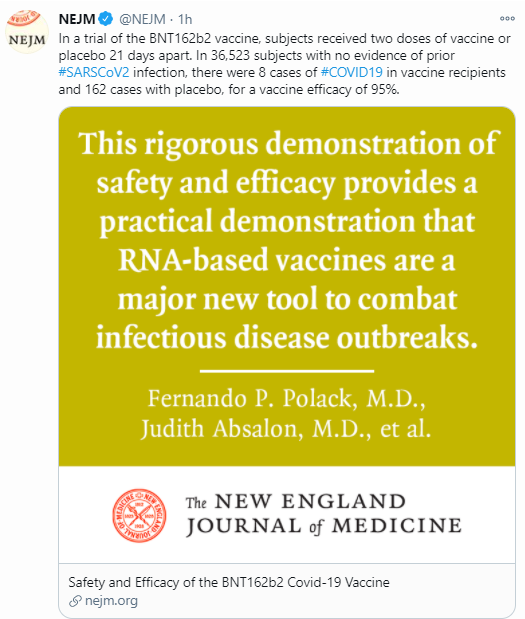
FP Polack et al. NEJM Full text link: Safety and Efficacy of the BNT162b2 mRNA Covid-19 Vaccine

Published data on the Pfizer/BioNTech vaccine

New Information on Hepatic Artery Thrombosis in Pediatric Liver Transplantation & COVID-19 Vaccine Timeline

NE Ebel et al. J Pediatr 2020; 226: 195-201. Decreased Incidence of Hepatic Artery Thrombosis in Pediatric Liver Transplantation Using Technical Variant Grafts: Report of the Society of Pediatric Liver Transplantation Experience

This study used multicenter data from the Society of Pediatric Liver Transplantation on first-time pediatric (aged <18 years) liver transplant recipients (n = 3801) in the US and Canada (1995-2016).

Key findings:

  • 7.4% developed HAT within the first 90 days of transplantation.
  • Of those who were retransplanted, 20.7% developed recurrent HAT.
  • Those less than 1 year had the highest risk OR 1.20).
  • Lower Risk for HAT:
    • Recipients with split, reduced, or living donor grafts had decreased odds of HAT (OR, 0.59; P < .001 compared with whole grafts)
    • Adolescents aged 11-17 years (OR, 0.53; P = .03).
  • HAT increased risk of graft failure and mortality:
    • Fifty percent of children who developed HAT developed graft failure within the first 90 days of transplantation (adjusted hazard ratio, 11.87; 95% CI, 9.02-15.62)
    • Mortality risk (w/in 90 days after transplantation): adjusted hazard ratio, 6.18 (95% CI, 4.01-9.53).

The finding that split grafts had lower rates of HAT may be related to the fact that these grafts more typically come from larger donors with larger vessels. Historically, split grafts had been described as a risk factor for HAT. The authors note that high-performing centers with the lowest incidence of HAT “also tend to have high rates of living and split transplants, suggesting that surgical expertise may play a role in the decreased risk of HAT in select recipients with technical variant grafts.”

Increased rates of HAT among those who were retransplanted, in some, could be related to thrombophilic conditions; thus, consideration of anticoagulation protocol could be needed

My take: Continued efforts are needed to reduce HAT due to its impact on liver transplantation outcomes. One of the biggest risk factors is age. While this would seem to be a nonmodifiable factor, improving recognition and treatment of biliary atresia could help.

Related blog posts:

Fatty Liver Disease in Children is Increasing

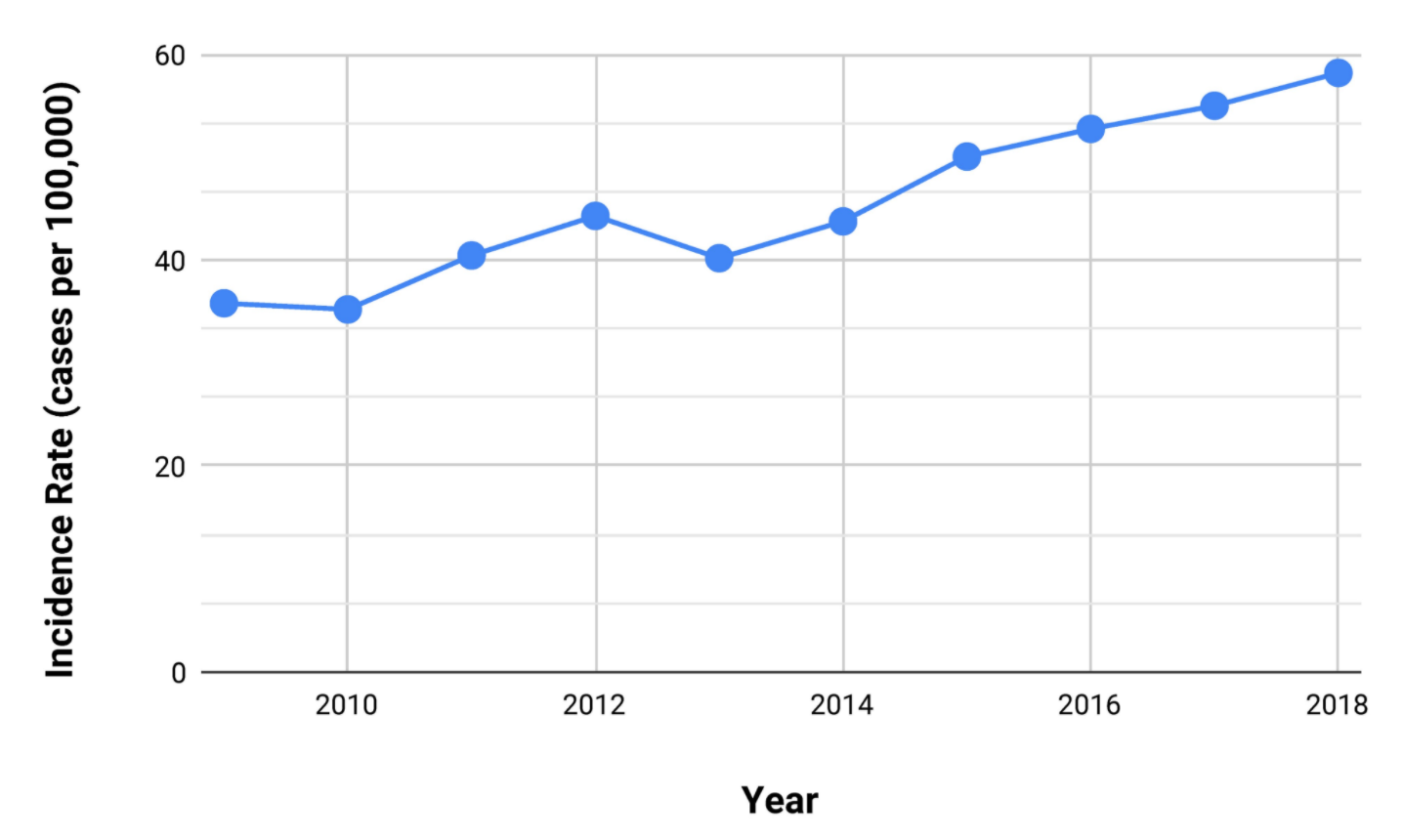
AK Sahota et al. Pediatrics 2020; DOI: https://doi.org/10.1542/peds.2020-0771. Incidence of Nonalcoholic Fatty Liver Disease in Children: 2009–2018

Key finding:  The incidence of an NAFLD diagnosis significantly increased over time, with 36.0 per 100 000 in 2009 and 58.2 per 100 000 in 2018 (P < .0001), based on study of a large integrated health care system in southern California

Intracranial Hypertension & Papilledema with Alagille Syndrome

NM Rock et al. JPGN 2020; 71: 655-662. Intracranial Hypertension and Papilledema in a Large Cohort of Pediatric Patients With Alagille Syndrome

Key findings:

  • In this retrospective cohort of 69 patients, Nine (13.0%) had papilledema and Five (7.2%) had confirmed or probable intracranial hypertension. All five had undergone liver transplantation.
  • Age (in months) when intracranial hypertension was diagnosed: 35, 43, 55, 62, and 103.

Discussion Points:

  • “Cerbrovascular abnormalities, including moyamoya disease, are increasingly describe in patients with” Alagille syndrome.
  • “Opthalmic complications in relation with papilledema seem to appear mostly after” liver transplantation. This could indicate that LT/immunosuppression exaccerbate underlying disorder, that those who need LT have more severe phenotype or could be related to closer scrutiny (‘follow-up bias”).
  • First line treatment for intracranial hypertension in this group is generally acetazolamide.

My take: I agree with the authors who propose regular eye exams for patients with Alagille syndrome, especially if needing liver transplantation. Further evaluation is recommended for patients who have greater than mild papilledema. This includes MRI and lumbar opening pressure.

Related blog posts:

Sunrise -Isle of Palms

Gene Replacement Therapy for Spinal Muscular Atrophy and Subacute Liver Failure

A recent study (AG Feldman et al. J Pediatr 2020; 225: 252-258. Subacute Liver Failure Following Gene Replacement Therapy for Spinal Muscular Atrophy Type 1) describes two children who developed subacute liver failure after treatment with onasemnogene (AVXS-101). This gene therapy was approved by the FDA in 2019 and more than 335 children have been treated. Both children presented about 3-8 weeks after their AVXS-101 infusion (despite steroid therapy), at 6 months of age and 20 months of age respectively, with ALT values above 1600 and INR of at least 1.5 (despite Vitamin K). Both had liver biospies and then were treated with methylprednisolone, starting at 20 mg/kg/day.

Key points:

  • The authors speculate that subacute liver failure was due to a systemic hyperinflammatory reaction
  • The authors recommend screening prior to AVXS-101 therapy with LFTs, GGT, and INR; if baseline labs are elevated, further workup is recommended (eg. A1AT, HBV, HCV, ANA, anti-SMA, anti-LKM, and ultraound)
  • While this reaction has been with AVXS-101, there are other gene therapies with adenovirus-vector which could trigger similar reactions
  • The authors note that the “package insert for onasemnogene recommends prednisolone (1 mg/kg/day) should be given in the 24 hours before infusion and should be continued for 30 days after infusion.”
  • After infusion, it is “necessary to monitor liver tests frequently in the first 2 months”

My take: This new therapy’s risks are substantial; however, the benefits from treatment can be life-altering as well.

Related blog post: Understanding the New Therapies for Spinal Muscular Atrophy