New Information on Hepatic Artery Thrombosis in Pediatric Liver Transplantation & COVID-19 Vaccine Timeline

NE Ebel et al. J Pediatr 2020; 226: 195-201. Decreased Incidence of Hepatic Artery Thrombosis in Pediatric Liver Transplantation Using Technical Variant Grafts: Report of the Society of Pediatric Liver Transplantation Experience

This study used multicenter data from the Society of Pediatric Liver Transplantation on first-time pediatric (aged <18 years) liver transplant recipients (n = 3801) in the US and Canada (1995-2016).

Key findings:

  • 7.4% developed HAT within the first 90 days of transplantation.
  • Of those who were retransplanted, 20.7% developed recurrent HAT.
  • Those less than 1 year had the highest risk OR 1.20).
  • Lower Risk for HAT:
    • Recipients with split, reduced, or living donor grafts had decreased odds of HAT (OR, 0.59; P < .001 compared with whole grafts)
    • Adolescents aged 11-17 years (OR, 0.53; P = .03).
  • HAT increased risk of graft failure and mortality:
    • Fifty percent of children who developed HAT developed graft failure within the first 90 days of transplantation (adjusted hazard ratio, 11.87; 95% CI, 9.02-15.62)
    • Mortality risk (w/in 90 days after transplantation): adjusted hazard ratio, 6.18 (95% CI, 4.01-9.53).

The finding that split grafts had lower rates of HAT may be related to the fact that these grafts more typically come from larger donors with larger vessels. Historically, split grafts had been described as a risk factor for HAT. The authors note that high-performing centers with the lowest incidence of HAT “also tend to have high rates of living and split transplants, suggesting that surgical expertise may play a role in the decreased risk of HAT in select recipients with technical variant grafts.”

Increased rates of HAT among those who were retransplanted, in some, could be related to thrombophilic conditions; thus, consideration of anticoagulation protocol could be needed

My take: Continued efforts are needed to reduce HAT due to its impact on liver transplantation outcomes. One of the biggest risk factors is age. While this would seem to be a nonmodifiable factor, improving recognition and treatment of biliary atresia could help.

Related blog posts:

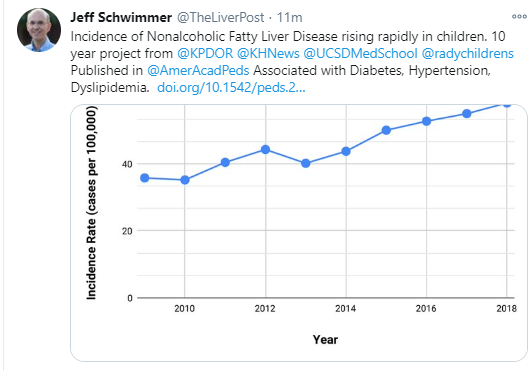
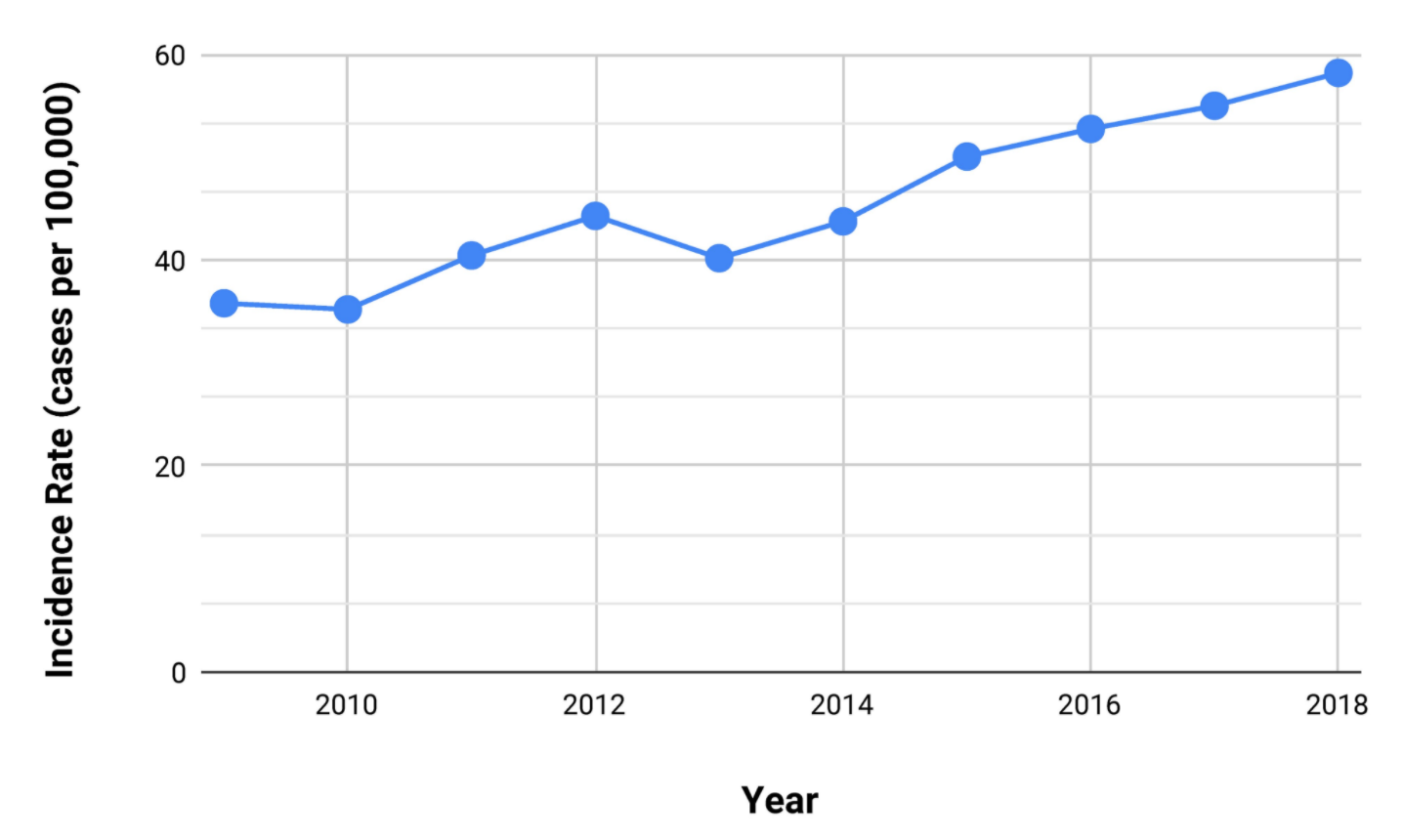
Fatty Liver Disease in Children is Increasing

AK Sahota et al. Pediatrics 2020; DOI: https://doi.org/10.1542/peds.2020-0771. Incidence of Nonalcoholic Fatty Liver Disease in Children: 2009–2018

Key finding:  The incidence of an NAFLD diagnosis significantly increased over time, with 36.0 per 100 000 in 2009 and 58.2 per 100 000 in 2018 (P < .0001), based on study of a large integrated health care system in southern California

Intracranial Hypertension & Papilledema with Alagille Syndrome

NM Rock et al. JPGN 2020; 71: 655-662. Intracranial Hypertension and Papilledema in a Large Cohort of Pediatric Patients With Alagille Syndrome

Key findings:

  • In this retrospective cohort of 69 patients, Nine (13.0%) had papilledema and Five (7.2%) had confirmed or probable intracranial hypertension. All five had undergone liver transplantation.
  • Age (in months) when intracranial hypertension was diagnosed: 35, 43, 55, 62, and 103.

Discussion Points:

  • “Cerbrovascular abnormalities, including moyamoya disease, are increasingly describe in patients with” Alagille syndrome.
  • “Opthalmic complications in relation with papilledema seem to appear mostly after” liver transplantation. This could indicate that LT/immunosuppression exaccerbate underlying disorder, that those who need LT have more severe phenotype or could be related to closer scrutiny (‘follow-up bias”).
  • First line treatment for intracranial hypertension in this group is generally acetazolamide.

My take: I agree with the authors who propose regular eye exams for patients with Alagille syndrome, especially if needing liver transplantation. Further evaluation is recommended for patients who have greater than mild papilledema. This includes MRI and lumbar opening pressure.

Related blog posts:

Sunrise -Isle of Palms

Gene Replacement Therapy for Spinal Muscular Atrophy and Subacute Liver Failure

A recent study (AG Feldman et al. J Pediatr 2020; 225: 252-258. Subacute Liver Failure Following Gene Replacement Therapy for Spinal Muscular Atrophy Type 1) describes two children who developed subacute liver failure after treatment with onasemnogene (AVXS-101). This gene therapy was approved by the FDA in 2019 and more than 335 children have been treated. Both children presented about 3-8 weeks after their AVXS-101 infusion (despite steroid therapy), at 6 months of age and 20 months of age respectively, with ALT values above 1600 and INR of at least 1.5 (despite Vitamin K). Both had liver biospies and then were treated with methylprednisolone, starting at 20 mg/kg/day.

Key points:

  • The authors speculate that subacute liver failure was due to a systemic hyperinflammatory reaction
  • The authors recommend screening prior to AVXS-101 therapy with LFTs, GGT, and INR; if baseline labs are elevated, further workup is recommended (eg. A1AT, HBV, HCV, ANA, anti-SMA, anti-LKM, and ultraound)
  • While this reaction has been with AVXS-101, there are other gene therapies with adenovirus-vector which could trigger similar reactions
  • The authors note that the “package insert for onasemnogene recommends prednisolone (1 mg/kg/day) should be given in the 24 hours before infusion and should be continued for 30 days after infusion.”
  • After infusion, it is “necessary to monitor liver tests frequently in the first 2 months”

My take: This new therapy’s risks are substantial; however, the benefits from treatment can be life-altering as well.

Related blog post: Understanding the New Therapies for Spinal Muscular Atrophy

Vedolizumab -Not Likely to Help Primary Sclerosing Cholangitis

A recent retrospective study (TJ Laborda et al. JPGN 2020; 71: 459-464 Vedolizumab Therapy in Children With Primary Sclerosing Cholangitis: Data From the Pediatric Primary Sclerosing Cholangitis Consortium) indicates that vedolizumab (VDZ) is unlikely to be helpful for primary sclerosing cholangits (PSC).

VDZ was initiated at median age of 16 years [IQR 15–18], 69% were male, 65% had large duct involvement, 19% had (Metavir F3/F4) fibrosis and 59% had ulcerative colitis.

Key findings:

  • Overall, there was a mild increase in median GGT after initiation of VDZ. Of 32 patients with abnormal GGT at baseline, 22% had a liver biochemical response (defined as GGT <50 or at least a 75% decline) after 9 to 12 months
  • For IBD, 32% achieved remission, 30% had a clinical response, and 38% had no response

In the discussion, the authors note that their findings are in agreement with three retrospective studies in adults which have shown that VDZ is not effective for PSC in patients with IBD.

My take: This study indicates that VDZ is not likely to help with PSC, though 62% of IBD patients had improvement in their GI disease.

From The Onion

Cholangitis After Kasai Procedure for Biliary Atresia

K Cheng et al. JPGN 2020; 71: 452-458. Cholangitis in Patients With Biliary Atresia Receiving Hepatoportoenterostomy: A National Database Study

This study, which relied on data from a pediatric database (PHIS) with 48 pediatric centers, identified 1112 subjects with biliary atresia (2004-2013).

Key findings:

  • Median age at time of Kasai (hepatoportoenterostomy) procedure: 63 days
  • Median number of admissions for cholangitis within 2 years was 2 episodes. The presence of portal hypertension (OR 2.24) and black race (OR 1.51) were associated with higher risk of cholangitis
  • When Kasai was performed at >90 days, this lowered the likelihood of cholangitis (OR 0.46)
  • With regards to those with 5 or more bouts of cholangitis, risk factors included Asian ethnicity (OR 2.66), public insurance (OR 1.72), and portal hypertension (OR 2.88)
  • 56% of patients had portal hypertension and 15.6% had esophageal varices
  • Neither steroids nor ursodeoxycholic acid were found to affect patient outcome
  • Limitations: lack of clear definition for cholangitis diagnosis and episodes of cholangitis may not have been captured if patients received care outside the participating centers

My take: Cholangitis is a common problem following hepatoportoenterostomy. Earlier diagnosis of biliary atresia provides the best opportunity for improving long-term outcomes.

Related blog posts:

Disclaimer: This blog, gutsandgrowth, assumes no responsibility for any use or operation of any method, product, instruction, concept or idea contained in the material herein or for any injury or damage to persons or property (whether products liability, negligence or otherwise) resulting from such use or operation. These blog posts are for educational purposes only. Specific dosing of medications (along with potential adverse effects) should be confirmed by prescribing physician.  Because of rapid advances in the medical sciences, the gutsandgrowth blog cautions that independent verification should be made of diagnosis and drug dosages. The reader is solely responsible for the conduct of any suggested test or procedure.  This content is not a substitute for medical advice, diagnosis or treatment provided by a qualified healthcare provider. Always seek the advice of your physician or other qualified health provider with any questions you may have regarding a condition.

Insight Into Alpha-1 Antitrypsin Heterozygosity

CV Schneider, K Hamesch et al. Gastroenterol 2020; 159: 534-548Liver Phenotypes of European Adults Heterozygous or Homozygous for Pi∗Z Variant of AAT (Pi∗MZ vs Pi∗ZZ genotype) and Noncarriers)

Key findings:

  • Ten percent of subjects with the Pi∗MZ genotype vs 4% of noncarriers had LSMs (liver stiffness measurements) of 7.1 kPa or more (adjusted odds ratio, 4.8; 95% confidence interval, 2.0–11.8)
  • Obesity and diabetes were the most important factors associated with LSMs ≥7.1 kPa in subjects with the Pi∗MZ genotype.
  • AAT inclusions were detected in liver biopsies of 63% of subjects with the Pi∗MZ genotype, vs 97% of subjects with the Pi∗ZZ genotype, and increased with liver fibrosis stages.

The associated editorial (pg 433-34) noted that Pi∗MZ genotype is a disease modifier in cystic fibrosis, alcoholic liver disease, and nonalcoholic liver disease.

My take: This study indicates that Pi∗MZ genotype for alpha-one antitrypsin are more likely to develop liver fibrosis in the presence of other risk factors like obesity and diabetes mellitus.

Related blog posts:

Hepatitis C in 2020: NASPGHAN Position Paper

DH Leung et al. JPGN 2020; 71: 407-17.  Full Text: Hepatitis C in 2020: A North American Society for Pediatric Gastroenterology, Hepatology, and Nutrition Position Paper

This is a very useful summary and some important recommendations –here are a few:

  • Direct-acting antivirals (DAAs) which …[are] highly effective antiviral agents are now approved for use in children as young as 3 years of age and have demonstrated sustained virologic responses exceeding 90% in most genotypes
  • We recommend treatment be considered and offered to all children with chronic HCV as early as 3 years of age with currently approved and anticipated DAA combination therapies.
  • Currently, the American Academy of Pediatrics recommends anti-HCV antibody screening of children with maternal HCV risk factors at 18 months of age, when detection of passively acquired transplacental immunoglobulin G should have waned … Waiting until 18 months of age or older is, however, frequently unpalatable for parents and physicians concerned about reliable follow-up. Therefore, after the infant is 2 months of age, the AASLD-IDSA HCV Guidance Panel suggests consideration of examining serum HCV RNA by polymerase chain reaction (PCR)
  • Interestingly, in the image below, the authors note that most children are asymptomatic; however, the figure suggests the possibility of thyroid disease.  In the text of the article: ” Extrahepatic manifestations of chronic hepatitis C, including membranoproliferative glomerulonephritis, thyroid dysfunction with or without thyroid autoimmune disease, and the development of nonorgan specific antibodies, are exceedingly rare

Recommended Resources for Pediatric Gastrointestinal and Liver Providers

Related blog posts:

Disclaimer: This blog, gutsandgrowth, assumes no responsibility for any use or operation of any method, product, instruction, concept or idea contained in the material herein or for any injury or damage to persons or property (whether products liability, negligence or otherwise) resulting from such use or operation. These blog posts are for educational purposes only. Specific dosing of medications (along with potential adverse effects) should be confirmed by prescribing physician.  Because of rapid advances in the medical sciences, the gutsandgrowth blog cautions that independent verification should be made of diagnosis and drug dosages. The reader is solely responsible for the conduct of any suggested test or procedure.  This content is not a substitute for medical advice, diagnosis or treatment provided by a qualified healthcare provider. Always seek the advice of your physician or other qualified health provider with any questions you may have regarding a condition

Doing “LESS” is Beneficial -Combining ERCP and Cholecystectomy

A recent retrospective study (DS Fishman et al. JPGN 2020; 71: 203-207) identified 25 patients who underwent combined Laparascopic cholecystectomy/ERCP in Same Session (=LESS) to more conventional ERCP followed by laparoscopic cholecystectomy (n=42).  The center utilized prospectively-collected data from 13 centers and 67 consecutive ERCPs.

Key findings:

  • Median hospital stay was shorter for LESS patients, 3 days vs. 4 days (P=.32)
  • Total procedure time was similar, though a decrease in total anesthesia time was reported for LESS patients: mean 177 minutes compared to 205 minutes (P=.04)
  • No significant adverse events were reported in either group, though both groups had two patients who required repeat care due to suspected retained stones
  • The authors note that concerns about gaseous distention following ERCP “is likely unfounded as all cholecystectomies were completed.”
  • No local or systemic infections were reported.  The authors recommend antibiotic prophylaxis with the LESS approach

My take: Given the recommendation that cholecystectomy should take place during the same hospitalization for patients with choledocholithiasis, this combined approach makes a lot sense and is supported by this study.

Related posts:

Isle of Palms, SC

Liver Shorts -August 2020

V Cardenas et al. JPGN 2020; 71: 197-202.  Incidence and Sequelae of Liver Injury Among Children Treated for Solid Tumors: Analysis of a Large Single-Center Prospective Cohort

  • Of 1136 solid tumor patients, 160 (14%) experienced liver injury, and the overall frequency of DILI was 4%.
  • DILI was the leading identified cause of liver injury (31%), followed by infection (17%), metastatic/malignant biliary disease (13%), and perioperative liver injury (13%).
  • Most DILI cases (>90%) were mild acute hepatocellular injury episodes that did not result in modification to the chemotherapy plan, and all DILI eventually resolved.

N Kapila et al. Hepatology 2020; 72: 32-41. Full Text Link: Hepatitis C Virus NAT‐Positive Solid Organ Allografts Transplanted Into Hepatitis C Virus–Negative Recipients: A Real‐World Experience

Background: As of April 1, 2019, an estimated 103,000 kidney, 13,500 liver, and 3,800 heart transplant (HT) candidates are awaiting transplantation

Key findings:

  • Seventy‐seven patients who were HCV negative underwent solid organ transplantation from a donor who was HCV viremic. Only one has been a HCV-treatment nonresponder (though several have not completed SVR12).
  • “Our study is the largest to describe a real‐world experience of the transplantation of HCV‐viremic organs into recipients who are aviremic. In carefully selected patients, the use of HCV‐viremic grafts in the DAA era appears to be efficacious and well tolerated.”

M Martinello et al. Hepatology 2020; 72: 7-18Short‐Duration Pan‐Genotypic Therapy With Glecaprevir/Pibrentasvir for 6 Weeks Among People With Recent Hepatitis C Viral Infection

  • This was an  open‐label, single‐arm, multicenter, international pilot study; adults with recent HCV (duration of infection < 12 months) received glecaprevir/pibrentasvir 300/120 mg daily for 6 weeks.
  • At baseline, median estimated duration of infection was 29 weeks (range 13, 52) and median HCV RNA was 6.2 log10 IU/mL (range 0.9, 7.7). SVR12 in the intention‐to‐treat and per‐protocol populations was achieved in 90% (27/30) and 96% (27/28), respectively.

H Verkade et al. JPGN 2020; 71: 176-83. Systematic Review and Meta-analysis: Partial External Biliary Diversion in Progressive Familial Intrahepatic Cholestasis

  • With regard to  pruritus improvement, 104/155 (67%) were responders, 14/155 (9%) had partial response, and 37/155 (24%) were nonresponders.

K Patel et al. Hepatology 2020; 72: 58-71. Cilofexor, a Nonsteroidal FXR Agonist, in Patients With Noncirrhotic NASH: A Phase 2 Randomized Controlled Trial

  • “Cilofexor for 24 weeks was well‐tolerated and provided significant reductions in hepatic steatosis, liver biochemistry, and serum bile acids in patients with NASH.”