Do Occult Spinal Abnormalities on MRI Affect Constipation Outcomes?

R Bolia et al. J Pediatr Gastroenterol Nutr. 2025;81:262–265. Open Access! Impact of occult spinal abnormalities on clinical outcomes in children with refractory constipation

Methods: This was a retrospective review of records of children (n=54, median age 9 years) who underwent MRI of spine between January 2021 and December 2023 for evaluation of refractory constipation (RC). RC was defined as constipation not responding to optimal conventional treatment for at least 3 months. Conventional treatment included—education, disimpaction (if required), osmotic and stimulant laxatives, timed‐toileting and biofeedback.

Key findings:

  • Thirteen children (24%) had an abnormal MRI. Findings included—syringomyelia‐8,sacral canal meningeal cyst‐2, filum terminale lipoma‐1,spina bifida occulta‐1 (SBO‐1), and Schmorl’s node‐1. None of these patients had a tethered cord
  • Only one patient with a Chiari malformation and syrinx required a neurosurgical intervention. The surgery did not improve his constipation
  • On a median follow‐up duration of 677 (range181–1240) days, constipation resolved in 48% (n = 26) of the entire cohort
  • There was no difference in the number of patients or time to constipation resolution between those with and without abnormal MRI respectively

My take: In children with refractory constipation who do not have abnormal cutaneous/abnormal neurological exam, an MRI is unlikely to be helpful.

Related blog posts:
Disclaimer: This blog, gutsandgrowth, assumes no responsibility for any use or operation of any method, product, instruction, concept or idea contained in the material herein or for any injury or damage to persons or property (whether products liability, negligence or otherwise) resulting from such use or operation. These blog posts are for educational purposes only. Specific dosing of medications (along with potential adverse effects) should be confirmed by prescribing physician.  Because of rapid advances in the medical sciences, the gutsandgrowth blog cautions that independent verification should be made of diagnosis and drug dosages. The reader is solely responsible for the conduct of any suggested test or procedure.  This content is not a substitute for medical advice, diagnosis or treatment provided by a qualified healthcare provider. Always seek the advice of your physician or other qualified health provider with any questions you may have regarding a condition

Altered Microbiome and Colic (2025)

E Van Daele et al. J Pediatr Gastroenterol Nutr. 2025;81:217–225. Aberrant microbiota signatures precede symptomdevelopment in infantile colic

My take: There has been an interest in altered microbiome and colic for a long time. Whether these alterations are causally-related to colic and whether there is a way to treat these alterations remains unclear.

Related blog posts:
Enhanced Placebo Effect For Irritable Bowel Syndrome and Functional Abdominal Pain in Adolescents

R Rexwinkel, NK Vermeijeden et al. Gastroenterol 2025; 169: 94-103. Open Access! Mebeverine and the Influence of Labeling in Adolescents With Irritable Bowel Syndrome or Functional Abdominal Pain Not Otherwise Specified: A 2 × 2 Randomized, Placebo-Controlled Trial

Methods:  This was a randomized trial with 12-17 yr olds with irritable bowel syndrome or functional abdominal pain who received mebeverine (200 mg twice daily) or placebo for 8 weeks. Treatment was labeled as “mebeverine or placebo” (blinded trial label) or “mebeverine” (mebeverine label), creating the following 4 groups: (1) mebeverine-blinded trial label, (2) mebeverine-mebeverine label, (3) placebo-blinded trial label, and (4) placebo-mebeverine label. Randomization (1:1:1:1) was masked to physicians, except for drug labeling. Primary end point was treatment success (>50% reduction of abdominal pain intensity and frequency) after 8 weeks. The key secondary end point was adequate relief of symptoms.

Key findings:

  • Blinded Trial Label: Treatment success was similar between those receiving mebeverine (groups 1 and 2) (n = 31 [23.4%]) and placebo (groups 3 and 4) (n = 30 [22.0%]; odds ratio [OR], 1.08
  • Effect of Being Informed of Treatment with Active Medication: Treatment success was higher in groups with the mebeverine label (groups 2 and 4) (n = 42 [31.6%]) compared with the blinded trial label (groups 1 and 3) (n = 19 [14.1%]; OR, 2.84

Discussion Points:

  • “This is the first study evaluating the impact of positive labeling on pain in a pediatric population. Our findings of a doubled treatment effect rate (32.9% vs 15.1%) when children were told they were receiving the active drug, are in line with adult studies showing higher pain reduction with positive labeling..14,19 It underscores the importance of positive expectations in pain management, which operates via multiple mechanisms.”
  • “Results of previous research has shown that children with IBS can also report symptom relief when they know that they are receiving an inert compound, known as an ‘“’open-label placebo.’22
  • “Ethical norms state that ‘“’the use of a placebo without the patient’s knowledge may undermine trust, compromise patient–physician relationship, and result in medical harm to the patient.’26

My take: This is a fascinating study showing how expectations for treatment can enhance the placebo effect. While the authors and the associated editorial mull over the ethical issues regarding deception of giving placebo without the family’s knowledge, in clinical practice many of the current drugs (eg. antispasmotics, neuromodulators, probiotics) have uncertain benefit and can be given without concern for deception.

Related blog posts:
Improving Ultrasound Examination to Identify Biliary Atresia

A Upton et al. J Pediatr Gastroenterol Nutr. 2025;81:204–211. An ultrasound approach to visualize the “duct at the hilum” in infants undergoing evaluation for biliary atresia

Methods: Ultrasound exams were reviewed from infants undergoing evaluation for biliary atresia at Texas Children’s Hospital during two periods. First, exams performed before 2021 were reviewed to develop a systematic approach to visualize the duct at the hilum (DaH). Second, exams performed during a subsequent 26-month period were reviewed to assess the approach’s diagnostic performance in 64 infants (mean age 25 days).

Key findings:

  • The approach identified all 12 patients with biliary atresia and excluded 49 out of 52 infants without biliary atresia, for a sensitivity of 1.00 and specificity of 0.94.
  • There were three false-positive studies (i.e., the DaH was absent, but diagnosis was not BA) in infants with choledochal cyst, Trisomy 18, and an aberrant main portal vein (which interfered with the US examination),
  • The approach could be performed in feeding infants and often in <5 min.

Discussion:

  • “First, the DaH was easier to identify when infants were allowed to feed. In some cases, a DaH could be seen in fasting images but was longer and more prominent in subsequent non-fasting images”
  • “Tthe approach had high sensitivity and could efficiently rule out infants who did not have biliary atresia”
  • “We have not determined the precise segment of the extrahepatic biliary tree visualized by our approach; however, in contrast to previous reports, we do not think the approach is imaging the “common bile duct.” Rather, the DaH is a segment closer to the liver and could be the common hepatic duct.”
  • “Larger, multisite studies are needed…we may have overestimated sensitivity because the 12 infants with biliary atresia were all categorized as Japanese Biliary Atresia Society classification Type II or III…Similarly, we may have overestimated specificity because all ultrasound exams were performed by 1 sonographer with 10+ years of experience.”
  • Link to instructional video on this technique: jpn370081-sup-0001-Duct_at_the_Hilum_v_001_241127.mp4 985.2 MB

My take: It does seem that the presence of biliary atresia should be identifiable with ultrasound. However, this likely relies on the skills of the ultrasonographer, especially given the small size of these patients. Thus far, in clinical practice, an ultrasound has been mainly helpful at excluding choledochal cysts/anatomic malformations. A tiny or contracted gallbladder (with fasting) does increase the likelihood of biliary atresia. In my experience, other ultrasound findings like the ‘triangular cord’ sign are less helpful than serum matrix metalloproteinase 7 (MMP-7) tests.

Related blog posts:
Disclaimer: This blog, gutsandgrowth, assumes no responsibility for any use or operation of any method, product, instruction, concept or idea contained in the material herein or for any injury or damage to persons or property (whether products liability, negligence or otherwise) resulting from such use or operation. These blog posts are for educational purposes only. Specific dosing of medications (along with potential adverse effects) should be confirmed by prescribing physician.  Because of rapid advances in the medical sciences, the gutsandgrowth blog cautions that independent verification should be made of diagnosis and drug dosages. The reader is solely responsible for the conduct of any suggested test or procedure.  This content is not a substitute for medical advice, diagnosis or treatment provided by a qualified healthcare provider. Always seek the advice of your physician or other qualified health provider with any questions you may have regarding a condition

JAKne: JAK inhibitor–induced acne

S Honap et al. Clinical Gastroenterology and Hepatology 2025 (EPUB). Open Access! Janus Kinase (JAK) Inhibitor-Induced Acne in Inflammatory Bowel Disease: An International, Multicenter, Retrospective Cohort Study

Mehtods: This international, multicenter, retrospective cohort study consecutively enrolled JAK-inhibitor-treated patients with IBD who subsequently developed acne (aka JAKne).

Key findings:

  • Among 2183 JAK inhibitor–treated patients with IBD, 272 developed acne
  • 70% of acne cases occurred within the first 3 months of treatment initiation
  • The crude prevalence rates of acne were 15.9% for upadacitinib, 4.3% for tofacitinib, and 1.9% for filgotinib, with dose-dependent relationships observed for upadacitinib and tofacitinib
  • Most cases were mild-moderate in severity. Mild (<10% of body surface area) was noted in 68%, Moderate (10-30% of BSA) was noted in 24%, and Severe (>30% of BSA) was note in 8%
  • Among those who developed acne, areas that were affected included the face in 89%, the back in 33%, the chest in 27% and the scalp in 1%
  • 40% received pharmacologic intervention
  • 18% of patients who developed acne had JAK inhibitor dose reduction or discontinuation

My take: JAKne is a common adverse effect.  Early identification, proactive counseling, and timely interventions, such as dose reduction, acne therapies or referral to dermatology, are crucial in managing this side effect.

Related blog posts:
St James’s Park, London

Disclaimer: This blog, gutsandgrowth, assumes no responsibility for any use or operation of any method, product, instruction, concept or idea contained in the material herein or for any injury or damage to persons or property (whether products liability, negligence or otherwise) resulting from such use or operation. These blog posts are for educational purposes only. Specific dosing of medications (along with potential adverse effects) should be confirmed by prescribing physician.  Because of rapid advances in the medical sciences, the gutsandgrowth blog cautions that independent verification should be made of diagnosis and drug dosages. The reader is solely responsible for the conduct of any suggested test or procedure.  This content is not a substitute for medical advice, diagnosis or treatment provided by a qualified healthcare provider. Always seek the advice of your physician or other qualified health provider with any questions you may have regarding a condition.

Chronic Nonbacterial Osteomyelitis (CNO): What a GI Doctor Should Know

L Lim et al. The Journal of Pediatrics, Volume 283, 114636. Open Access! Chronic Nonbacterial Osteomyelitis: A Noninfectious Autoinflammatory Disorder of Bone

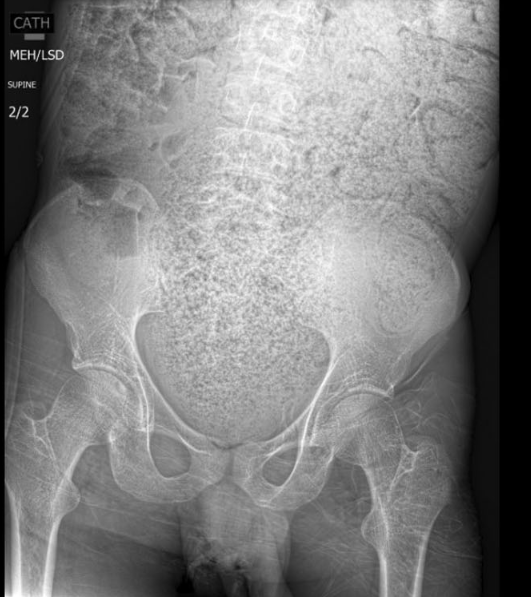
Prior to this review, I was familiar with the term chronic recurrent multifocal osteomyelitis (CRMO) but not CNO. CRMO is a severe form of CNO, usually characterized by symmetrical inflammatory bone lesions (DY Zhao et al. J Transl Autoimmun 2021; 4:100095. Chronic nonbacterial osteomyelitis (CNO) and chronic recurrent multifocal osteomyelitis (CRMO)).

In this useful review, it is noted that IBD was associated with ~9% of cases of chronic nonbacterial osteomyelitis (CNO).

    Key points:

    • “IBD identified before, during, or after CNO diagnosis, has been well-reported as an associated condition.34-37 A review of cases of CNO with IBD showed that the diagnosis of CNO preceded the diagnosis of IBD in over half of the reported cases.38
    • “Children with CNO frequently experience a high burden of pain and impaired physical function. CNO can cause permanent deformities in any bone, but especially if there is spinal involvement and diagnosis and treatment are delayed”
    • “Bone biopsies should be performed if there is clinical suspicion of infection or malignancy, although tissue usually is not needed for diagnosis unless the clinical presentation is atypical”
    • “MRI is now the standard imaging test that usually starts with targeted examination of the affected area…A whole-body MRI (WB-MRI) should be considered for all patients with CNO at diagnosis when possible, as it may help support a diagnosis of CNO by detecting additional sites of bone inflammation that may be clinically inapparent, particularly vertebral lesions”
    • “Non-steroidal anti-inflammatory drugs (NSAIDs) are usually first-line treatment for children with CNO, except for those with vertebral lesions, who require systemic treatment… over half of children treated with NSAIDs experience a disease flare within the first 2 years,14 requiring either retreatment with NSAIDs or another systemic medication”
    • “In the presence of vertebral CNO lesions, or after failing NSAID monotherapy, three categories of systemic treatments are recommended by the Childhood Arthritis and Rheumatology Research Alliance (CARRA)56: 1) synthetic DMARDs, 2) bisphosphonates, or 3) tumor necrosis factor-inhibitor (TNFi) biologic agents with or without methotrexate (to prevent the development of antibodies to the drug)”
    • “In practice, TNFi tends to be used more if children also have comorbid conditions for which TNFi already is indicated such as inflammatory arthritis and sacroiliitis,7 IBD,4,72 and psoriasis.4,14,24 “

    My take: Being familiar with CNO is important for GI physicians as it can occur (rarely) in our patients with IBD. Another important caveat, which is not discussed in this review, is that CNO can occur paradoxically due to the use of TNFi treatment.

    Related blog posts:
    The London Eye. This view makes it look a lot like a bicycle wheel.

    Ten-Year Trends in Pediatric Pharmacology for Gastroesophageal Reflux and Pediatric Feeding Disorders

    S Hirsch et al. J Pediatr 2025;283:114628. Ten-Year Trends in Pharmacologic Management of Gastroesophageal Reflux Disease and Pediatric Feeding Disorders in Young Children

    Methods: Single-center, retrospective cohort study of children less than 2 years (49,483) diagnosed with GERD or PFD (pediatric feeding disorder) between January 2014 and December 2023. Prescriptions were searched for proton pump inhibitors (PPI), H2-receptor antagonists (H2RA), cyproheptadine, erythromycin, metoclopramide, or prucalopride, and procedures were searched for intrapyloric botulinum injections.

    Key findings:

    • There was an increasing number of patients seen annually (6516 in 2014 vs 9109 in 2023)
    • The percent of patients receiving any prescription for GERD or PFD declined by almost 50%, from 36.5% in 2014 to 18.7% in 2023 (P < .001)
    • There was a particular decline in PPI prescriptions, with 25.3% of patients receiving PPI in 2014 and 7.1% receiving PPI in 2023 (P < .001)
    • There was also a decline in H2RA prescriptions, with 17.0% of patients receiving H2RA in 2014 and 11.1% receiving H2RA in 2023 (P < .0001).
    • In their discussion, the authors note that: “in contrast to the current findings, prior studies typically have shown increasing PPI prescriptions, with some of these studies demonstrating declining H2RA prescriptions (9-17)…. However, it is notable that 3 more recent international studies did demonstrate declining PPI prescriptions specifically in the final years of the study (18-20).”
    • “Multiple studies have failed to demonstrate efficacy of acid suppression in infants with nonspecific gastroesophageal reflux symptoms, and there is no evidence that acid suppression affects feeding behaviors.(21-23)”
    • “In addition, there has been growing concern about PPI side effects, which include increased infections, decreased bone density, and increased allergy development
      including eosinophilic esophagitis, with numerous recent studies on these risks.(24-26)”

    My take: I’ve been a big fan of the aerodigestive research from the pediatric GI group in Boston. This is another useful study showing less use of acid suppression, especially PPIs in young children and infants. This likely indicates better alignment of clinical practice with consensus recommendations that advise against acid suppression as first-line management in this population.

    Related blog posts:
    Esophageal and Gastric Outcomes of Bleach Ingestion in Children

    P Quitadamo et al. J Pediatr Gastroenterol Nutr. 2025;81:11–17. The effects of liquid bleach ingestion on children’s esophageal and gastric mucosa

    Background:  It has been recently reported that household bleach ingestion cause no or low-grade esophagitis in adults.13

    Methods: This prospective observational study was carried out between January 2017 and December 2023. One hundred children with a mean age of 58.7 months were included and divide into three groups. Group 1, children who had ingested household chlorine-based bleach; Group 2, children who had ingested household peroxidase-based bleach; Group 3, children who had ingested artisanal or industrial bleaches.

    Key findings:

    • Eighty-nine/100 (89%) children had ingested household bleaches (both chlorine- or peroxidase-based) while 11/100 (11%) had ingested homemade or industrial bleaches
    • 73/100 (73%) patients were symptomatic. The most commonly reported symptoms were vomiting and drooling
    • 13/100 (13%) were intentional with self-injurious or suicidal purposes
    • Among the 71 children who performed EGD, no children reported severe esophageal lesions
    • Zargar’s score 2a in 2/71 (2.8%). Both patients who reported moderate esophageal mucosal lesions (Zargar’s grade 2a) had ingested a homemade NaOCl-based (sodium hypochlorite) bleach with unknown dilution
    • Gastric injury was reported in 6/71 (8.5%) patients, including hemorrhagic gastritis in one child. Among these children, five had ingested an artisanal or industrial bleach, and two had ingested a peroxidase-based bleach

    My take (borrowed from authors): “Endoscopy is generally unnecessary in case of household bleach ingestion …[but] should be performed in children who ingest homemade or industrial bleaches.” Children having ingested commercially available household bleaches did not report significant mucosal lesions. The authors also advocated endoscopy in those with large volume ingestions (>100 mL) if symptomatic.

    Related blog posts:
    Disclaimer: This blog, gutsandgrowth, assumes no responsibility for any use or operation of any method, product, instruction, concept or idea contained in the material herein or for any injury or damage to persons or property (whether products liability, negligence or otherwise) resulting from such use or operation. These blog posts are for educational purposes only. Specific dosing of medications (along with potential adverse effects) should be confirmed by prescribing physician.  Because of rapid advances in the medical sciences, the gutsandgrowth blog cautions that independent verification should be made of diagnosis and drug dosages. The reader is solely responsible for the conduct of any suggested test or procedure.  This content is not a substitute for medical advice, diagnosis or treatment provided by a qualified healthcare provider. Always seek the advice of your physician or other qualified health provider with any questions you may have regarding a condition

    Navigating FDA-Approved International Infant Formulas

    A Porto et al. J Pediatr Gastroenterol Nutr. 2025;81:5–10. New international infant formulas in the United States: Understanding the Food and Drug Administration-enforcement discretion

    Background: In February 2022, the United States experienced a significant infant formula shortage, due to a major product recall by the country’s largest infant formula manufacturer, compounded by global supply chain issues and import restrictions.12 In response, the Food and Drug Administration (FDA) launched Operation Fly Formula in mid-2022, which allowed international infant formula manufacturers to market, import and distribute their formulas in the United States…Currently, a total of five companies, who produce 14 international formulas, have opted to work with the FDA in transitioning to the US market.5 Many of these international formulas are significantly cheaper than the domestic alternatives, which have contributed to their rising popularity.

    Key points:

    • 8 of 14 formulas are stage formulas with Stage 1 for 0-6 months, and Stage 2 for >6 months. “Stage 1 formulas tend to contain less iron, which may provide an insufficient amount of iron for infants >6 months.11 Also, infants <6 months should not consume Stage 2 formula since it does not contain carnitine, believed to be an essential nutrient in this age group.12
    • Of the 14 formulas, all the labels were in English and contained all the FDA nutrient requirement
    • “Two of the imported formulas [Aptamil brands] contained less than 1 mg/100 calories of formula of iron, the minimum amount to be considered iron fortified by the FDA, and did include a label which highlighted that additional iron may be necessary”
    • “All the foreign formulas contained prebiotics… The FDA, however, reports that probiotics can be dangerous for preterm infants and put them at risk for potentially fatal infection caused by the bacteria or yeast contained in the probiotic.6 Therefore, pediatricians should be aware that international formulas should not be used for preterm infants.”
    • MIXING INSTRUCTIONS: “Eleven out of the fourteen international formulas use a different scoop to water ratio from what is typically standard of American formulas…coops from international formulas may also be a different size compared to their US counterparts. Given the variation in different mixing ratios and scoop sizes, there is a risk of formula being mixed incorrectly”
    • “Consider that the family may be purchasing from a 3rd party vendor and ask for the specific website that they are purchasing from. Formulas should not be purchased at 3rd party vendor websites due to them being unregulated, and safety concerns with improper shipping or storage”
    • “If the label is not in English, it is highly likely that the formula has been purchased through a 3rd party vendor. Recommend counseling on safety concerns as listed above. Many of the foreign infant formulas use different mixing ratios so it is important that parents read the label to confirm mixing ratios”

    My take: The availability of FDA-approved international formulas has been helpful especially with recent shortages. This article makes several important points to assure their proper use, especially regarding mixing instructions and using Stage formulas for appropriate age.

    Related blog posts: