Inpatient Admission to Achieve Enteral Autonomy in Children with Intestinal Failure

Happy New Year!

——-

A Fialdowski et al. J Pediatr 2024; 275: 114226. Achieving Enteral Autonomy in Children with Intestinal Failure Following Inpatient Admission: A Case Series

This retrospective review identified 6 patients (out of 153) who were weaned off parenteral nutrition (PN) as part of an inpatient admission.

Key findings:

  • Except for one admission of 8 days, all of these patients required a prolonged admission 1-5 months.
  • Two of the patients were receiving PN primarily due to abdominal pain in the absence of a recognizable motility disorder.
  • Two of the patients had a suspected factitious disorder imposed on a medical disorder; one received this diagnosis.
  • All patients had chronic feeding intolerance despite favorable prognostic factors including underlying necrotizing enterocolitis (n=1), preserved ileocecal valve (n=5), longer bowel length (n=5), and retention of entire colon (n=5).
  • Post-pyloric feeds aided conversion to EN in 5 patients.

My take: In order to achieve enteral autonomy, hospital admission may be needed for patients who require long-term PN despite favorable prognostic factors.

  • Be prepared for a lengthy stay
  • Anticipate the need for an interdisciplinary team (eg. nutrition, social work, and others).

Related blog posts:

From the Lake by Georgia O’Keefe (1924). High Museum, Atlanta.

Early Acid Blocker Use Linked to Lung Disease in CF

C Liu et al. J Pediatr Gastroenterol Nutr. 2024;79:1124–1133. Open Access! Impact of acid blocker therapy on growth, gut microbiome, and lung disease in young children with cystic fibrosis

Background: Historically, acid suppression has been given as adjuvant therapy to optimize PERT and thereby improve growth and nutritional needs in CF

Methods: This was a prospective cohort of 145 infants followed in 6 CF centers. This was a retrospective study examining the effects of acid blocker therapy and outcomes at 3 years of life in children with cystic fibrosis.

Key findings:

  • Acid blocker therapy (ABT) use before age 3 years was frequent, with 81 (56%) of patients on H2 receptor antagonist (H2RA) or proton pump inhibitor (PPI), and higher among pancreatic insufficient (60%) versus pancreatic sufficient (26%) children.
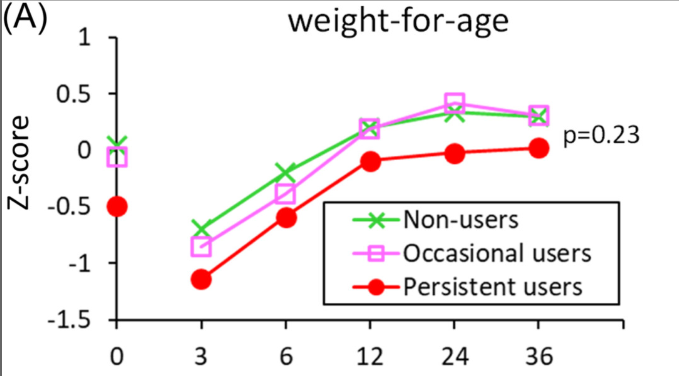
  • Growth improvements were not significantly greater.
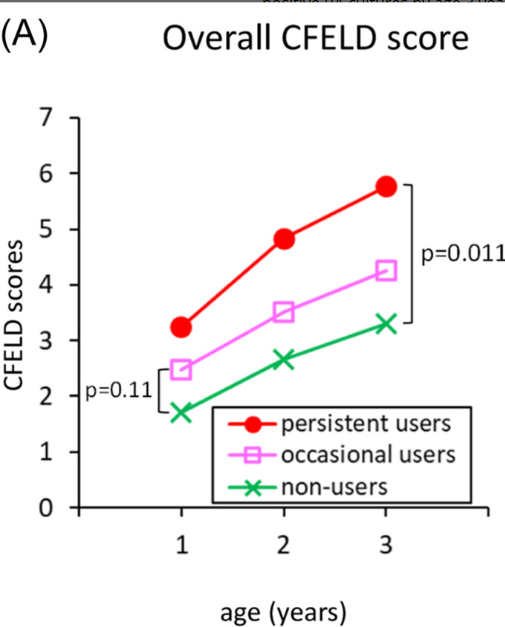
  • Early-onset lung disease was more severe, in persistent ABT users compared to nonusers of ABT.
  • ABT was associated with reduced gut microbiome diversity
CFELD =CF Early-Onset Lung Disease

Discussion:

  • “Results from our FIRST cohort of infants and toddlers with CF showed that prolonged ABT was not associated with significant improvements in growth but instead significant negative alterations to the GM and progression of early-onset lung disease. Evidence from our study is in line with the growing body of literature advocating for more judicious PPI therapy as it has been associated with adverse outcomes such as pulmonary infections, fractures, and anemia.2224
  • One limitation, which was NOT discussed in the article, was selection bias. Since there was not randomization of PPI use, it could be that PPI prescription was more common in children with more severe disease.

My take (borrowed in part from authors): Despite the potential for selection bias, it is clear that “acid blockers are not benign.” Given the potential for worse outcomes, PPI prescription should be restricted to those with a clear indication.

Related blog posts:

Conversations on Palliative Care for Children

K Wu. NEJM 2024; 391; 2288-2289. Well Known to Us.

This commentary focuses on the personal experience of being an hospital-based physician tasked with taking care of chronically-ill complex and neurologically-compromised children through recurrent and prolonged admissions.

An excerpt:

Teetering on the precipice of death at every admission, they are a testament to how far medicine has come in keeping people alive — and how far it still has to go in treating their underlying conditions. Having realistic conversations about long-term outcomes and palliative care for these patients remains difficult, with pediatricians afraid of disrupting fragile relationships with parents who have endured so much.1

With increasing numbers of such children being admitted to PICUs and limited expansion of capacity,2-4 questions have been raised about the value and necessity of the care provided to them — not in terms of their condition in isolation, but in terms of who else is being deprived of care. Patients with complex, chronic, life-limiting, multiorgan conditions are often described as “well known to us,” but they’re also called “bed blockers” — a label reflecting one answer to the uncomfortable ethical question of which patients are most deserving of limited resources.5

Often all I could do was bear witness to their sickness and wellness, their deterioration and recovery, again and again. But in their short lives filled with suffering and struggle and a constant parade of caregivers, I was their pediatrician, and I had become well known to them.

Related blog post: Navigating Difficult Conversations in Children’s GI Healthcare

“Diagnostic Stewardship” –Reducing Unnecessary Clostridioides difficile Treatment by Changing Testing Approach

D Ilges, et al.  Infection Control & Hospital Epidemiology. Published online 2024:1-6. doi:10.1017/ice.2024.180. Open Access! Positive impact of a diagnostic stewardship intervention on syndromic panel ordering practices and inappropriate C. difficile treatment.

In this retrospective study, the authors examined the impact of removing C diff (Clostridioides difficile) testing from a  gastrointestinal pathogen panel (GIPP) and only testing with preferred method which consisted of glutamate dehydrogenase and toxin antigen immunoassay, followed by toxin gene testing for discrepant result.

Key findings:

  • At baseline (prior to implementing a change), the most common positive target was C. diff (517 of 1,018, 51%), which resulted in treatment for C. difficile infection in 94.9% (337 of 355) of cases.
  • Following GIPP C. diff target removal, GIPP orders decreased from 3.23 to 2.7 per 1,000 patient visits (P < .001). Standalone C. diff testing increased from 0.92 to 3.06 per 1,000 patient visits (P < .001).
  • Outpatient C. diff prescriptions declined over the study, with a mean of 2.36 per 1,000 outpatient visits in the baseline period and 1.81 per 1,000 outpatient visits in the postintervention period (P = <.001). For the inpatient setting, days of therapy (DOT) per 1,000 decreased from 13.77 in the baseline period to 10.58 in the postintervention period, though the reduction did not meet statistical significance (P = .051).

My take: This study shows the benefit of removing C. diff from GIPPs to drive more appropriate testing and targeted treatment. GIPPs, while convenient, often identify C. diff colonization. This approach is cost-effective and reduces harms of unnecessary antibiotic treatment.

Related blog posts:

Ten Americas: Examining Health Disparities and Life Expectancy

L Dwyer-Lindgren et al. The Lancet; 2024. Online first. Open Access! Ten Americas: a systematic analysis of life expectancy disparities in the USA

Background: Nearly two decades ago, the Eight Americas study offered a novel lens for examining health inequities in the USA by partitioning the US population into eight groups based on geography, race, urbanicity, income per capita, and homicide rate. That study found gaps of 12·8 years for females and 15·4 years for males in life expectancy in 2001 across these eight groups. In this study, we aimed to update and expand the original Eight Americas study, examining trends in life expectancy from 2000 to 2021 for ten Americas (analogues to the original eight, plus two additional groups comprising the US Latino population), by year, sex, and age group.

Methods: The authors tabulated deaths from the National Vital Statistics System and population estimates from the US Census Bureau and the National Center for Health Statistics from Jan 1, 2000, to Dec 31, 2021.

Key findings: .

  •  At the beginning of the 21st century, there was already a 12.6-year gap in life expectancy among Americas, but this gap grew even larger during the 2000s and 2010s and accelerated to 20.4 years after the first 2 years of the COVID-19 pandemic.
  • One’s life expectancy varies dramatically depending on where one lives, the economic conditions in that location, and one’s racial and ethnic identity.
  • There are limitations with the data that were used. For example, there is known to be substantial misreporting of race and ethnicity on death certificates

My take (borrowed from the authors): “The extent and magnitude of health disparities in the USA are truly alarming. In a country with the wealth and resources of the USA, it is intolerable that so many are living in conditions and with health outcomes akin to those of an entirely different country.”

Related blog posts:

Unrelated link: N Kristof NY Times, Gift Ideas That Push Back the Darkness

Gift ideas included the following charities

  • Fistula Foundation which arranges obstetric fistula repair. This restores a woman’s life after this life-altering complication –a corrective surgery that costs just $619 per person
  • Muso Health helps reduce childhood mortality. In Mali, this organization reduced childhood mortality by 95%. The cost of bringing one more person into the Muso health care network is only $22 per year.
  • Reach Out and Read. This U.S-based charity allows doctors to “prescribe” reading to the child. This promotes reading as well as childhood well-child visits.
  • Crisis Text Line is for those who want to volunteer, rather than donate. This organization trains (15-20 hrs) volunteers to help individuals needing mental health support. “More than 90 percent of the volunteers report that their own mental health improves as a result of their participation.”

Improvements in Toddler Diet Quality: 1999-2018 Study

M Zimmer et al. Pediatrics 2024; 154: e2024067783.

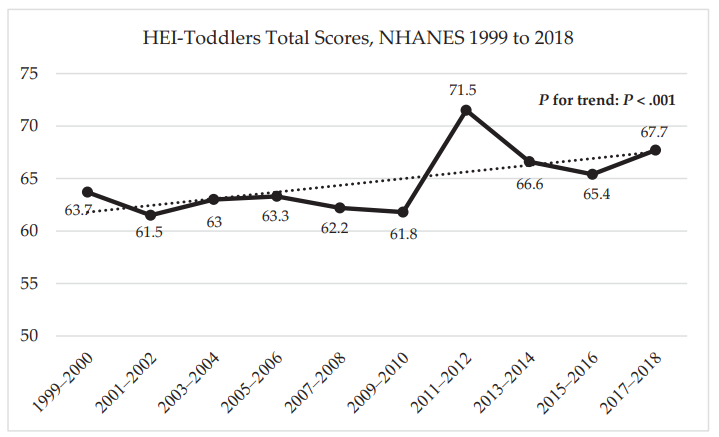
Methods: This serial cross-sectional analysis of National Health and Nutrition Examination Survey (NHANES) data was performed with 2541 toddlers from 10 NHANES cycles from 1999 to 2018.

Key findings:

  • Toddler diet quality improved significantly from 1999 to 2018 (P < .001), from 63.7
    points on average in 1999-2000 to 67.7 points in 2017-2018
  • A significant positive linear trend in total diet quality was observed for all socioeconomic status groups (P < .05)
  • Several dietary component scores improved, as follows: Whole Fruits (P < .001), Whole
    Grains (P 5 .016), Fatty Acids (P 5 .002), Refined Grains (P 5 .009), and Added Sugars
    (P < .001)
HEI-Toddlers -Healthy Eating Index has total score ranging from 0-100 points with higher score indicating healthier diets.

In the discussion, the authors note that other age groups besides toddlers have seen modest improvements in diet. Even small improvements can be consequential on a population-basis. In adults, a 4-point increase in HEI scores has been associated with a reduced risk of cardiovascular disease. The strongest improvement between 1999 and
2018 in toddler diet quality was in scores for added sugars…attributed to declines in
added sugars from sweetened beverages. “A heightened awareness of added sugars in sweetened drink products among caregivers themselves may have led to a cultural shift
around feeding toddlers less sweetened drinks.”

While in toddlers there was no significant difference in dietary scores based on socioeconomic status, “, the diet quality gap for adults has widened over time by SES,14,15
race and Hispanic origin, and Supplemental Nutrition Assistance Program participation status.”

“Although toddlers do not receive school meals, their diets can be similarly impacted by other large-scale programs like the Special Supplemental Nutrition Program for Women, Infants, and Children (WIC) and the Child and Adult Care Food Program. Changes to the WIC food package have been consistently linked to improved child diet quality, and may have contributed to the gains in toddler diet quality observed in this study.”

Study limitations are related to self-reported dietary intake.

My take: It feels like improving diet quality is like swimming against a strong tide. Yet, this study shows improvements can happen. Ongoing efforts are needed to encourage healthier diets.

Related blog posts:

When Is It OK To Ignore Laryngeal Penetration?

AL Miller et al. Dysphagia 2024; 39: 33-42. Predictive Value of Laryngeal Penetration to Aspiration in a Cohort of Pediatric Patients

This was a retrospective study with 97 patients over a 6 month period in 2018. The authors note that “there is no universally accepted protocol for pediatric video swallows across ages and conditions.”

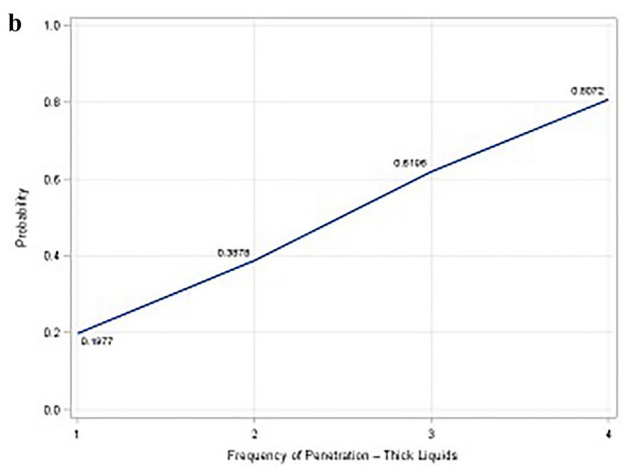
Methods: Depth of penetration and/or aspiration and reaction were classified according to the 8-point Penetration–Aspiration scale [JC Rosenbek, et al. Dysphagia 11, 93–98 (1996). https://doi.org/10.1007/BF00417897]. The frequency of penetration events and aspiration was grouped into categories: none (1); infrequent or occasional episodes (at least 1 event to less than 30%) (2); intermittent episodes (30–40% of total swallows) (3); frequent episodes
(50% or greater of total swallows) (4). Data for all swallowing parameters was stratified by bolus type (thin liquid, thickened liquid, puree solid). All VFSS were independently
scored by two speech-language pathologists and two radiologists.

Key findings:

  • Aspiration was seen in 21% of patients (n=20 of 97).
  • Penetration events were more frequent and occurred in 64% of participants (n=62 of 97). . Of patients with any penetration events, 30% also had documented aspiration
  • Frequency of penetration and aspiration: 80% of patients showing frequent penetration [frequency 4] demonstrating aspiration compared to 2.3% of patients with isolated penetration [frequency 1]. There was a higher risk of aspiration at lower frequency penetration if this occurred with thicker liquids (see below)
  • Depth of penetration and aspiration:. For patients with penetration contacting the vocal folds [depth 5], nearly 95% demonstrated documented aspiration within the same study; however, those with depths 1-3 had minimal risk of aspiration (see below). There was a higher risk of aspiration at shallow depths with thicker liquids.


My take
(borrowed from authors): “children with shallow, intermittent penetration events
without associated aspiration are likely to be demonstrating clinically insignificant events. Such children are therefore not appropriate candidates for compensatory or alternative feeding strategies such as changes in mode of delivery (e.g., gastrostomy tube), alteration of flow rate, or modification of liquid viscosity, such as thickened feedings.”

Related blog posts:

Endoscopically-Identified Incidental Appendicitis

There are a lot of interesting recent case reports on the JPGN Reports website. A recent example includes the following:

Mostafavi et al report (JPGN Reports 2024; 5:511–513. Open Access! Endoscopic diagnosis of asymptomatic appendicitis in a pediatric patient) on the incidental diagnosis of appendicitis. A followup colonoscopy in a 14 year-old with ulcerative colitis identified purulent fluid from the appendiceal orifice after ileal intubation; subsequently, after MRI imaging, an appendectomy was performed. The appendicitis was thought to be unrelated to the ulcerative colitis.

Other examples of some recent JPGN case reports:

Efficacy and Safety of Odevixibat with Alagille Syndrome (ASSERT Trial)

N Ovchinsky et al. The Lancet Gastroenterology & Hepatology, Volume 9, Issue 7, 632 – 645. Open Access! Efficacy and safety of odevixibat in patients with Alagille syndrome (ASSERT): a phase 3, double-blind, randomised, placebo-controlled trial

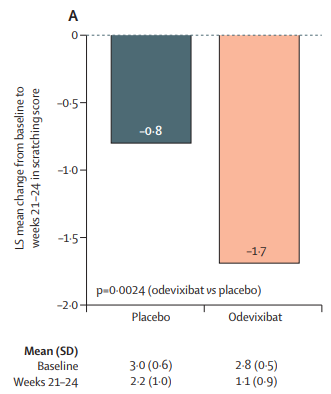
Methods: “The ASSERT study was a phase 3, double-blind, randomised, placebo-controlled trial that enrolled patients at 21 medical centres or hospitals in ten countries” with 52 patients (enrolled 2021-2022). “The primary efficacy endpoint was change in caregiver-reported scratching score (on the PRUCISION instrument; range 0–4) from baseline to weeks 21–24.” The treatment group received odevixibat 120 µg/kg per day.

Key findings:

  • There were improvements in both scratch scores and bile acid concentrations
  • There were improvements in sleep parameters including falling asleep and ability to sleep without a caregiver
  • Adverse events: diarrhea was reported in ten (29%) of 35 patients who received odevixibat and in one (6%) of 17 patients who received placebo; all cases were mild in severity and no cases of diarrhea led to treatment interruption or discontinuation

Scratch Scores:

Bile Acid Levels

Other points:

  • Overall, 50 (96%) of the 52 patients chose to enter the open-label extension study
  • The authors note that this is the first randomized placebo-controlled trial for Alagille syndrome
  • A direct comparison of odevixibat and maralixibat in patients with Alagille syndrome is complicated by differences in study design and endpoints across the their studies

My take (borrowed in part from authors): “As pruritus is a major driver of liver
transplantation in patients with Alagille syndrome, these results suggest that odevixibat could have the potential to delay or prevent liver transplantation”

Related blog posts:

Hollywood Beach, FL

Safety of JAK Inhibitors Compared to Anti-TNF Agents

C Crist. GI & Hepatology News; 11/20/24: In IBD Patients, No Increased Risk for MACE Seen for JAK Inhibitors vs Anti-TNF

Background: There have been concerns that JAK inhibitors (JAKi), like tofacitinib (Xeljanz) and upadacitinib (Rinvoq) could increase the risk of major adverse cardiovascular events (MACE); as such, the FDA has placed warnings on these medications (see blog post: FDA Slaps Restrictions on JAK Inhibitors Over Serious Safety Risks).

An excerpt:

According to a study presented at the American College of Gastroenterology (ACG) 2024 Annual Scientific Meeting, .

Alsakarneh and colleagues conducted a retrospective cohort study using the TriNetX database to identify adult patients with IBD who were treated with JAKi or anti-TNF therapy after diagnosis. After matching patients in the JAKi cohort [n=3740] with patients in the anti-TNF cohort [n=3740], the research team looked for MACE and VTE within a year of medication initiation…

After excluding those with a history of a prior cardiovascular event, 57 patients (1.76%) in the JAKi cohort developed MACE, compared with 63 patients (1.94%) in the anti-TNF cohort. There weren’t significant differences between the groups in MACE (adjusted hazard ratio [aHR], 0.99) or VTE (aHR, 0.9).

Among patients aged ≥ 65, 25 patients (5.3%) in the JAKi cohort developed MACE, as compared with 30 patients (6.4%) in the anti-TNF cohort.

My take: Several studies now have not identified an increased risk of JAKi compared to other therapies for IBD. Perhaps, this will lead to a change in labeling by the FDA which has stated that JAKi should be used only in those with prior anti-TNF failure.

Related blog posts:

Museum of Illusions (Atlantic Station)
This “bulging squares” illusion has straight lines across and vertically when you are right in front of it.