How to Successfully Appeal Health Insurance Denials

Both of these articles are behind paywall. Thanks to Seth for these references.

Excerpt from first article:

“Health insurers process more than five billion payment claims annually, federal figures show. About 850 million are denied, according to calculations by appeals company Claimable, based on data from health-policy nonprofit KFF and the Centers for Medicare and Medicaid Services. Less than 1% of patients appeal.

Few people realize how worthwhile those labors can be: Up to three-quarters of claim appeals are granted, studies show…”

The author then details how one man overcame a denial to receive a life-saving liver transplantation and how a family helped their child receive immunoglobulin therapy for her neurologic condition. However, this only occurred after numerous appeals and after letters to the Georgia governor and Georgia attorney general.

Excerpts from the second article:

“Here are five things you can do to appeal a denied health-insurance claim.

1. Read up

Know what your plan covers. A good place to start is the summary of benefits and coverage. More detailed information should be available from your employer or insurer, which can provide a more in-depth document sometimes called the “evidence of coverage.” Check to make sure a denial met your insurer’s own rules. These policies are generally available online.

2. Take note

Log dates of calls to your insurer and whom you spoke to. Save paperwork including billing codes for denied services. And act quickly: Insurers have deadlines to file appeals.

3. Fight back

Call your insurer at the number on the back of your insurance card and ask why treatment wasn’t covered. You can ask how to file an appeal. If you have a denial or explanation of benefits letter, look for the section explaining appeals.

4. Get help

State assistance programs and nonprofits including the Patient Advocate Foundation and the Medicare Rights Center can help craft appeals. A startup called Claimable is trying to use technology to smooth the process. You can hire an advocate, looking through a directory or a third-party company, Solace Health. The nonprofit Dollar For helps with hospital bills. You can also ask your doctor’s office or hospital to appeal for you, and try to ensure they keep you in the loop on their communications.

5. Escalate

After you determine why your insurer denied a claim, you can write a letter explaining why the rejection wasn’t warranted. Your doctor can write a letter explaining why care is medically necessary. Pertinent medical studies can strengthen your case. Request the “designated record set” relevant to your case.

If your appeal is rejected, you can often appeal to a higher authority within the insurer. If that fails, you can generally appeal to a third party, often an independent review organization or a government-administered program. Your rejection letter or state insurance department should explain those steps. Practices vary state by state. You can also escalate your appeal to an administrative law judge.”

Related blog posts:

What It Might Look Like When Trying To Get Past an Insurance Denial

Antibiotics and IBD Risk: A Systematic Review

R Duan et al. Clin Gastroenterol Hepatol 2025; 23: 45-58. Open Access! Antibiotic Exposure and Risk of New-Onset Inflammatory Bowel Disease: A Systematic Review and Dose-Response Meta-Analysis

Twenty-eight studies involving 153,027 patients with IBD were included.

Key findings:

  • Antibiotic exposure was significantly associated with an increased risk of new-onset IBD for prescription-based studies (pooled OR, 1.41; 95% CI, 1.29–1.53) and for questionnaire-based studies (pooled OR, 1.35; 95% CI, 1.08–1.68). ‘
  • This association existed for both Crohn’s disease and ulcerative colitis, as well as in children and adults for prescription-based studies. 

Some of the limitations:

  1. There was statistical heterogeneity was high in the primary analysis, possibly because of inconsistencies in study design
  2. Most studies included a clear lag time, yet an inadequate lag time still creates the possibility of reverse causality.
  3. The authors could not disentangle the risk of antibiotics from the risk of infection in leading to the development of IBD.
Nonlinear dose-response relationship between antibiotic exposure and risk of new-onset IBD (solid black line and short dash black line represent estimated ORs and corresponding 95% CIs of nonlinear relationship)

My take: This is another study showing an association between antibiotic use and new-onset IBD. While this study does not prove causation, it is another reason for good antibiotic stewardship.

Related blog posts:

Managing Drug-Induced Acne in IBD: A Guide for Gastroenterologists

MJ Temido et al. Am J Gastroenterol 2025;120:125–134. Drug-Induced Acne in Inflammatory Bowel Disease: A Practical Guide for the Gastroenterologist

“Corticosteroids and Janus kinase inhibitors (JAKi) are commonly used for the treatment of inflammatory bowel disease (IBD) and are known to aggravate a prior tendency to acne or trigger the development of new acneiform eruptions. Both randomized controlled trials and real-world studies have identified acne as one of the most common treatment-emergent adverse events in JAKi… This review examines the characteristics of drug-induced acne in IBD treatments, provides a practical guide for gastroenterologists to manage mild-to-moderate occurrences, and highlights when to seek specialist dermatology advice.”

My take: This is a helpful review of acne management in the setting of IBD.

Related blog posts:

Disclaimer: This blog, gutsandgrowth, assumes no responsibility for any use or operation of any method, product, instruction, concept or idea contained in the material herein or for any injury or damage to persons or property (whether products liability, negligence or otherwise) resulting from such use or operation. These blog posts are for educational purposes only. Specific dosing of medications (along with potential adverse effects) should be confirmed by prescribing physician.  Because of rapid advances in the medical sciences, the gutsandgrowth blog cautions that independent verification should be made of diagnosis and drug dosages. The reader is solely responsible for the conduct of any suggested test or procedure.  This content is not a substitute for medical advice, diagnosis or treatment provided by a qualified healthcare provider. Always seek the advice of your physician or other qualified health provider with any questions you may have regarding a condition.

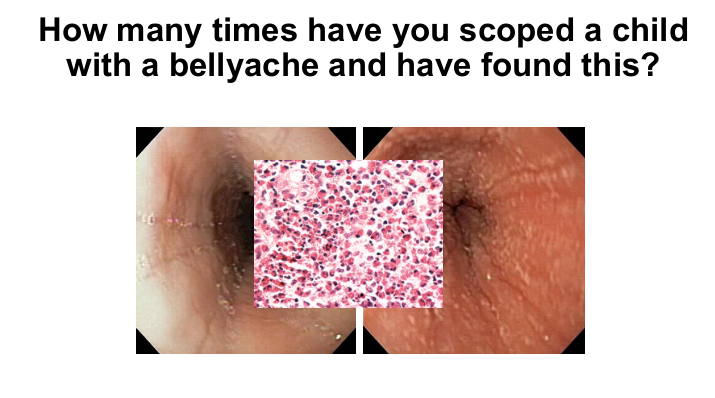
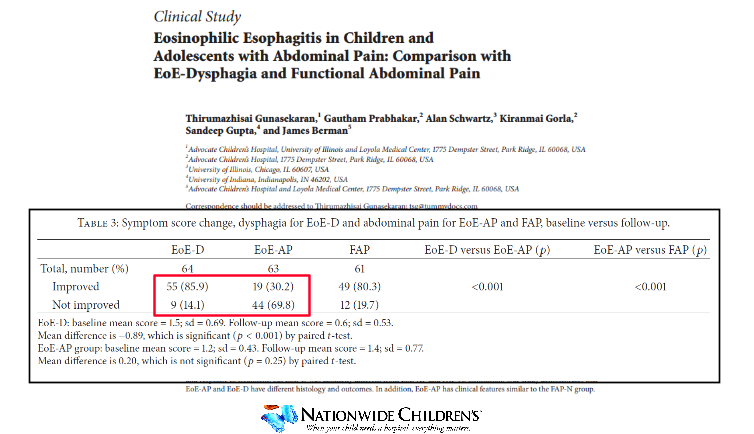
ACG 2025 Guidelines for Eosinophilic Esophagitis

ES Dellon et al. The American Journal of Gastroenterology  2025;120(1):p 31-59. Open Access! ACG Clinical Guideline: Diagnosis and Management of Eosinophilic Esophagitis or bit.ly/acg-eoe-2025.

Related blog posts:

The Future of Medicine: AI’s Role vs Human Judgment

Pranav Rajpurkar and Eric J. Topol. NY Times Feb 2, 2025: The Robot Doctor Will See You Now

An excerpt:

“The medical community largely anticipated that combining the abilities of doctors and A.I. would be the best of both worlds, leading to more accurate diagnoses and more efficient care…That assumption might prove to be incorrect. A growing body of research suggests that A.I. is outperforming doctors, even when they use it as a tool…

Simply giving physicians A.I. tools and expecting automatic improvements doesn’t work. Physicians aren’t completely comfortable with A.I. and still doubt its utility, even if it could demonstrably improve patient care…

Medical training will need to adapt to help doctors understand not just how to use A.I., but when to rely on it and when to trust their own judgment…But the promise for patients is obvious: fewer bottlenecks, shorter waits and potentially better outcomes. For doctors, there’s potential for A.I. to alleviate the routine burdens so that health care might become more accurate, efficient and — paradoxically — more human.”

In a related Substack article (open access: Opinion | When A.I. Alone Outperforms the Human-A.I. Partnership), Dr. Topol and Dr. Rajpurkar list several studies showing that AI alone may be better than physicians with AI under some circumstances:

My take (borrowed from the authors): “The future of medicine won’t be shaped by a simple choice between human or artificial intelligence, but by our ability to understand their respective strengths and limitations, and to orchestrate their collaboration in ways that truly benefit patient care.”

Related blog posts:

Early Management of Caustic Ingestions in Children

Briefly noted: ES Gordon, E Barfiedl, BD Gold. J Pediatr Gastroenterol Nutr. 2025;1–12. Early management of acute caustic ingestion in pediatrics

Congratulations to my partner Dr. Gold and his coauthors.

Key points:

  • In symptomatic patients, EGD within 24‐hours is most optimal to evaluate the degree of injury and for prognostication
  • Further research is needed on the use of steroids, antibiotics, and acid‐suppression
  • Early placement of NGT under direct visualization during endoscopy may help prevent stricture formation and allow for enteral nutrition in cases of significant injury (Zargar grade 2b and above)
Related blog posts:

Henoch-Schonlein Purpura Findings in the Duodenum

L Torelli et al. J Pediatr Gastroenterol Nutr. 2025;80:242–244. Gastrointestinal involvement in Henoch–Schönlein purpura

A 10 yo underwent an EGD due to nausea, melena and abnormal CT (showing thickening in the  the duodenum and first jejunal loop. Two days later, she developed a cutaneous rash appeared on her legs, buttocks, and elbows.

Mucosal congestion with shallow ulcerations in the descending duodenum.
Related blog posts:

Urgent Need for New Chemical Regulations For Kids

The Consortium for Children’s Environmental Health. NEJM 2025; 392: 299-305. Manufactured Chemicals and Children’s Health — The Need for New Law

This review article explains the worsening toll that chemicals in our environment are exacting on the health of children.

Here are some of the key excerpts:

  • “An estimated 350,000 manufactured chemicals, chemical mixtures, and plastics are currently listed in global inventories.3 Most are produced from fossil fuels — gas, oil, and coal. Production has expanded 50-fold since 1950, is currently increasing by about 3% per year, and is projected to triple by 2050.4 Environmental pollution5,6 and human exposure7 are widespread.”

  • In the past half-century, “the incidence of childhood cancers has increased by 35%.10 Male reproductive birth defects have doubled in frequency.11 Neurodevelopmental disorders now affect 1 in 6 children, and autism spectrum disorder is diagnosed in 1 in 36.12 Pediatric asthma has tripled in prevalence.13 Pediatric obesity has nearly quadrupled in prevalence and has driven a sharp increase in type 2 diabetes among children and adolescents.14 In adults, by contrast, illness, disability, and death due to cardiovascular disease, stroke, and many cancers have decreased.15,16
  • “Research in environmental pediatrics has flourished over the past 25 years. Two key catalysts of this growth were the 1993 publication of the National Research Council report, Pesticides in the Diets of Infants and Children21 which elucidated the biologic bases of children’s heightened susceptibility to toxic chemicals, and the passage in 1996 of the Food Quality Protection Act (FQPA), the U.S. law on pesticides. The FQPA made protecting children’s environmental health a national priority and required generation of data on chemical hazards to children, stimulating substantial expansion of federally funded research in environmental pediatrics…Prenatal exposures are particularly hazardous…diseases associated with early-life exposures can manifest any time during the life span.23
  • “Prospective, birth-cohort epidemiologic studies that measure chemical exposures in pregnant persons and fetuses and follow children longitudinally over many years are particularly powerful platforms for discovering associations between synthetic chemicals and disease because they link exposures to outcomes in individual children and eliminate recall bias.”
  • “Widespread childhood exposure to a toxic chemical can damage the health, economic viability, and security of an entire society. For example, each year from the 1950s through the 1970s, about 100,000 tons of tetraethyl lead were added to gasoline in the United States to enhance automotive performance, causing massive environmental lead contamination and extensive human exposure… The average IQ among U.S. children was reduced by an estimated 2 to 5 points,32 the number of children with an IQ above 130 decreased by more than 50%, and the number with an IQ below 70 (the criterion used in the International Classification of Diseases to define intellectual disability) increased by more than 50%…reducing toxic chemical exposures can produce major economic benefits…because each additional IQ point is associated with an increase of 1.8 to 2.4% in lifelong earning potential.
  • “Chemicals should no longer be presumed harmless until proven otherwise…National chemical policies should take into consideration findings from animal and mechanistic toxicology studies, which are highly predictive of human health risks, including risks to children.49

My take: Pollution from chemicals and plastics is worsening and resulting in worsening health/intellectual outcomes for children. I doubt any legislation will be forthcoming to improve the situation. It is unfortunate that protecting profits is prioritized over protecting our health.

Related blog posts:

A ‘good demon’ at The Grand Palace in Bangkok

Understanding Alpha-Gal Syndrome: Key Symptoms and Findings

E Lesmana et al. Clin Gastroenterol Hepatol 2025; 23: 69-78. Open Access! Clinical Presentation and Outcomes of Alpha-Gal Syndrome

This was a retrospective chart review of patients who underwent serological testing for suspected Alpha-Gal Syndrome (AGS) between 2014 and 2023 at Mayo Clinic. Of 1260 patients who underwent testing,124 tested positive for AGS. –matched with 380 seronegative control subjects. 40 patients had long-term followup data available

Key findings:

  • AGS patients reported a higher frequency of tick bites (odds ratio [OR], 26.0)
  • AGS patients reported a higher prevalence of urticaria (56% vs 37%; P = .0008)
  •  A total of 47% experienced at least 1 GI symptom, such as diarrhea, nausea, vomiting, abdominal pain, abdominal cramps, bloating, heartburn, and constipation, in descending order of frequency
  • 11% of AGS patients presented solely with GI symptoms
  • After institution of red meat restriction, 22 of 40 were asymptomatic at followup, 14 of 40 were improved, and 4 of 40 reported no improvement. 7 of the asymptomatic group were able to resume a diet without restrictions.

Discussion point:

  • “Symptom onset in AGS typically occurs more than 4 hours after allergen exposure, with studies emphasizing a tight association with delayed reactions within the 3- to 6-hour range.”

My take: This study provides some more granular data on Alpha-gal and highlights the importance of asking about tick bites and urticaria in patients with possible AGS.

Related blog posts:

Wat Arun (Temple of Dawn). Bangkok

IBD Briefs: Upadacitinib in Children, Predicting Crohn’s Disease, and Autoimmune Diseases Associated with IBD

J Runde et al. J Pediatr Gastroenterol Nutr. 2025;80:133–140. Upadacitinib is associated with clinical response and steroid-free remission for children and adolescents with inflammatory bowel disease

In this single-center retrospective study, n=20 (3 CD, 13 UC, 4 IBD-U), steroid-free clinical remission (SF-CR) was seen in 75% (16/20) following induction and maintained in 65% (11/17) reaching Week 24 of therapy

J Gaifem et al. Nature Immunology 2024; 25: 1692-1703. Open Access! A unique serum IgG glycosylation signature predicts development of Crohn’s disease and is associated with pathogenic antibodies to mannose glycan.

“Analysis of preclinical serum samples, up to 6 years before IBD diagnosis (from the PREDICTS cohort), revealed the identification of a unique glycosylation signature on circulating antibodies (IgGs)…[which] elicits a proinflammatory immune pathway through the activation and reprogramming of innate immune cells.”

LR Jolving et al. Inflamm Bowel Dis 2025; 31: 87-94. Children and Adolescents Diagnosed With Inflammatory Bowel Disease Are at Increased Risk of Developing Diseases With a Possible Autoimmune Pathogenesis

Using Danish registry and 50-fold matched controls, there was a significant increase for a large number of autoimmune diseases: The adjusted hazard ratio after full follow-up was 4.72 for psoriatic arthritis, 5.21 for spondyloarthritis, 2.77 for celiac disease, 2.15 for rheumatoid arthritis, 1.69 and 1.64 for type 1 and type 2 diabetes, respectively. For thyroid disease, it was 1.16.

Related blog posts:

La Fortuna, Costa Rica