“Leaky Gut Syndrome: Myths and Management”

BE Lacy et al. Gastroenterology & Hepatology 2024; 20: 264-272. Open Access! Leaky Gut Syndrome: Myths and Management

Background: “Leaky gut syndrome is a recent diagnosis now popularized in the lay literature. It has been associated with a myriad of disorders (eg, Alzheimer disease, autism, dementia, diabetes, fibromyalgia),5-8…Despite lay literature claims of gut permeability’s pathologic nature, it is important to understand that all individuals are subject to a baseline level of intestinal permeability, as normal intestinal physiology involves selectively permeable tight junctions that respond to a variety of biological factors…Minimal to no reliable evidence exists to suggest that leaky gut syndrome maintains a causative role in the pathogenesis of conditions that are most commonly associated with it in lay discussion, including fibromyalgia, chronic fatigue syndrome, allergies, headache, and brain fog.11,19 “

Key Points:

  • Myth: Leaky Gut Syndrome Is Common and Causes Extraintestinal Symptoms
  • Myth: Leaky Gut Syndrome Develops Owing to Stress and Eating Gluten – “a variety of factors may influence intestinal permeability, including illness, antibiotic and drug use, alcohol consumption, and physical activity.1,21-24
  • Myth: Leaky Gut Syndrome Is Just a Break in the Gut Lining 
  • Myth: Leaky Gut Syndrome Can Be Confidently Diagnosed by Symptoms Alone  -“reported symptoms typically include bloating, abdominal pain, fatigue, headache, and food sensitivities, among dozens of other symptoms.1,9 Such symptoms are nonspecific in nature”
  • Myth: Leaky Gut Syndrome Can Be Readily Diagnosed by Blood Work and Standard Endoscopy -“Although available, the clinical utility of using orally ingested saccharide probes and in vitro techniques is limited partly owing to unknown normal values for comparison, lack of standardized protocols, and limited attempts at validation.47…As noted previously, confocal laser endomicroscopy may provide valuable information on intestinal permeability, although it may not be as sensitive as once thought for the evaluation of food sensitivities.45 For now, no validated tool exists to accurately diagnose leaky gut syndrome.39…The utility of measuring zonulin in over-the-counter kits is thus suspect. Other plasma biomarkers measuring bacterial translocation, such as lipopolysaccharide-binding protein, may correlate more reliably with intestinal permeability.52 Currently, no blood test to diagnose leaky gut syndrome exists, and further investigation is needed to identify valid, reliable, and clinically useful serum biomarkers of impaired intestinal barrier function.”
  • Myth: Leaky Gut Syndrome Can Be Diagnosed by Stool Studies -“stool testing for leaky gut syndrome has been marketed to consumers…such tests are unregulated, and minimal evidence exists to support their use in the clinical setting… Even if testing were to reliably measure intestinal permeability, results would be of unclear significance, as no standard of care currently exists for treating and managing leaky gut syndrome. “
  • Myth: Leaky Gut Syndrome Can Be Cured by Diet and Probiotics -“a direct link between diet and treatment of leaky gut syndrome has not been established.” 
  • Myth: Nutritional Supplements Can Cure Leaky Gut Syndrome -“although several nutritional supplements have been suggested to improve intestinal permeability, only glutamine has been shown to improve leaky gut syndrome in the context of IBD and IBS. More data are needed before any nutritional supplements, including glutamine, can be recommended in clinical practice”
  • Myth: Medications Cannot Change Intestinal Permeability -“Several medications can alter intestinal permeability.” Examples include lubiprostone (for IBS), and prednisone and infliximab (for IBD).
  • Myth: Once Leaky Gut Syndrome Develops, It Will Never Go Away -“no study has been performed to properly evaluate changes in symptoms and underlying pathophysiology over time.”

Overall:  A leaky gut “cannot be accurately diagnosed by symptoms, blood work, or stool studies. Although the term leaky gut syndrome implies changes in intestinal permeability, it is the rare patient who undergoes objective testing to identify changes in intestinal permeability…changes in intestinal permeability are not always deleterious, and the relationship with symptoms is unclear.”

My take: It is not unusual for me to take a deep breath and sigh when I see that I am about to see a patient with a chief complaint of a “leaky gut.” Typically, this visit will mean a lengthy discussion indicating that previous testing was not worthwhile and there are no specific treatments. Many times this discussion is not well-received.

Related blog post: Is Intestinal Function in Children with Autism Different?

Bryce National Park

Linaclotide -Here’s the Pediatric Data

Last year, the FDA approved linaclotide, a guanylate cyclase C agonist, for the treatment of pediatric constipation (related post: Linaclotide -Now FDA-Approved for Children).

Here’s the phase III study data: C DiLorenzo et al. The Lancet Gastroenterol Hepatol 2024; 9: 238-250. Efficacy and safety of linaclotide in treating functional constipation in paediatric patients: a randomised, double-blind, placebo-controlled, multicentre, phase 3 trial

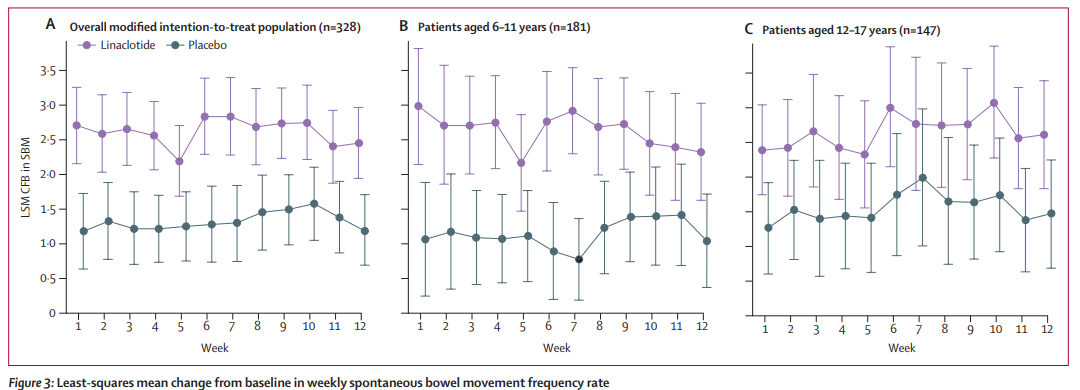
Children 6-17 yrs of age (n=328) received either oral linaclotide 72 μg or placebo once daily for 12 weeks. Key findings:

  • The mean frequency rate for spontaneous bowel movements (SBMs) was 1·28 SBMs per week (SD 0·87) for placebo and 1·16 SBMs per week (0·83) for linaclotide, increasing to 2·29 SBMs per week (1·99) for placebo and 3·41 SBMs per week (2·76) for linaclotide during intervention. 
  • Linaclotide also significantly improved stool consistency over placebo
  • Straining with stooling also improved. Change from baseline improvement (Least squares mean change) −1·19 in linaclotide group compared to −0·75 in placebo group (p<0·0001). Straining scale based on responses to the following question: When you pooped, how hard did you push? (0=not hard at all; 1=I pushed a tiny bit hard; 2=I pushed a little hard; 3=I pushed hard; 4=I pushed very hard)
  • Abdominal bloating improved as well compared to placebo, Change from baseline improvement (Least squares mean change): −0·51 vs −0·35 (p=0·027)
  • The authors note that “the subgroup analysis by age for CFB in SBM frequency rate suggests that the response of the older cohort (aged 12−17 years) was not as strong as the response of the younger cohort (aged 6–11 years).” This could indicate that a higher dose may be beneficial in this age group. “Further studies evaluating increased dosing regimens for older children will be important.”
  • The most frequent treatment-related TEAE was diarrhoea (linaclotide: six [4%] patients; placebo: two [1%] patients).
72 mcg per day dosing

Here’s the phase II study data: C DiLorenzo et al. JPGN 2024; https://doi.org/10.1002/jpn3.12184. Randomized controlled trial of linaclotide in children aged 6−17 years with functional constipation

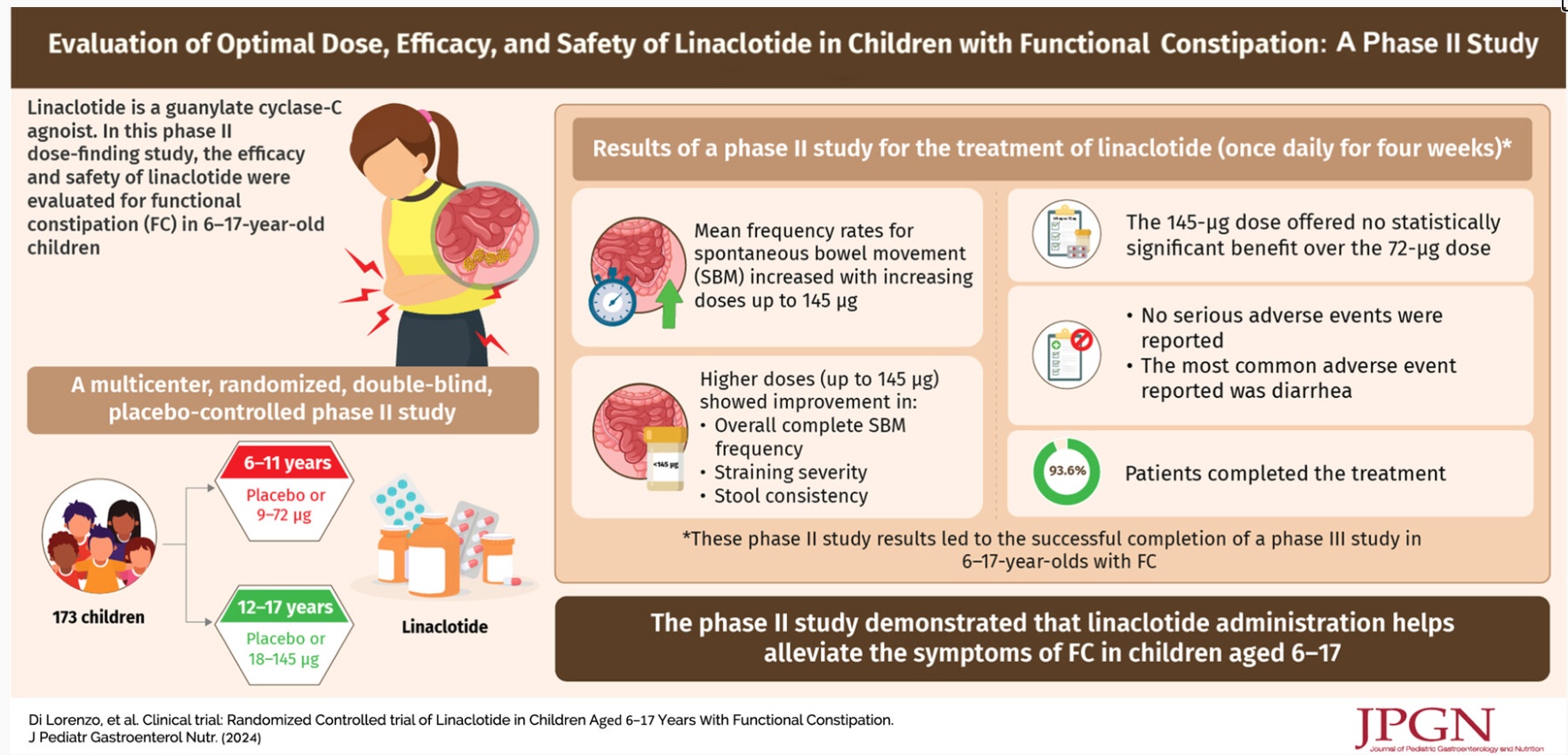
This was a multicenter, randomized, double-blind, placebo-controlled phase 2 study, with 173 children with functional constipation (based on Rome III criteria) were randomized to once-daily linaclotide or placebo.

Key findings:

  • A numerical improvement in mean spontaneous bowel movement (SBM) frequency was observed with increasing linaclotide doses (1.90 in 6- to 11-year-olds [36 or 72 μg] and 2.86 in 12- to 17-year-olds [72 μg]).
  • The most reported treatment-emergent AE was diarrhea, with most cases being mild; none were severe. The most reported treatment-emergent AE was diarrhea, with most cases being mild; none were severe.

My take: It is good news to have the an FDA-approved treatment for pediatric functional constipation. It is worth remembering that the estimated cost for a monthly supply is $560 via GoodRx (with coupon, queried on 5/22/24). 

Reducing Opioid Use and Reducing Pain In Hospitalized Patients with IBD

Gastroenterology & Endoscopy News 4/12/24: Pain Management Protocol Reduces Opioid Use in Hospitalized IBD Patients

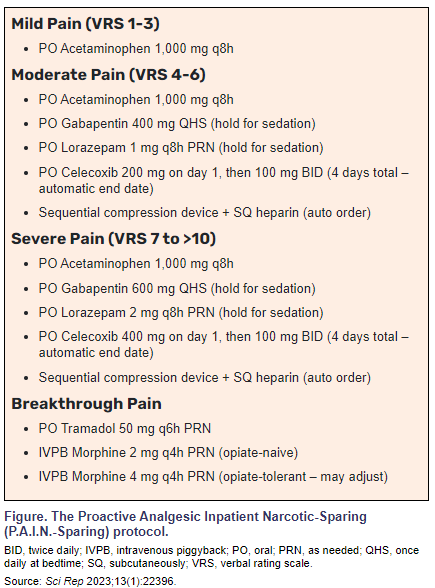
“Dr. Berry and his co-investigators developed the Proactive Analgesic Inpatient Narcotic-Sparing (P.A.I.N.-Sparing) protocol. The approach relies on scheduled nonopioid pain medications tailored to the severity of a patient’s pain (Figure). However, patients have the option to request opioid medication for uncontrolled breakthrough pain.”

Open Access! Berry, S.K., Takakura, W., Patel, D. et al. A randomized controlled trial of a proactive analgesic protocol demonstrates reduced opioid use among hospitalized adults with inflammatory bowel diseaseSci Rep 13, 22396 (2023). https://doi.org/10.1038/s41598-023-48126-0

The authors conducted a randomized controlled trial in hospitalized patients with IBD (n=33) to evaluate the impact of a proactive opioid-sparing analgesic protocol. 

Key findings:

Those randomized to the intervention tended to have lower pain scores than the control group regardless of hospital day (3.02 ± 0.90 vs. 4.29 ± 0.81, p = 0.059), used significantly fewer opioids (daily MME 11.8 ± 15.3 vs. 30.9 ± 42.2, p = 0.027), and had a significantly higher step count by Day 4 (2330 ± 1709 vs. 1050 ± 1214; p = 0.014)

My take: It is a good idea to have a set pain management pathway –especially if it works to reduce pain and reduce the risk of excess opioid use.

Disclaimer: This blog, gutsandgrowth, assumes no responsibility for any use or operation of any method, product, instruction, concept or idea contained in the material herein or for any injury or damage to persons or property (whether products liability, negligence or otherwise) resulting from such use or operation. These blog posts are for educational purposes only. Specific dosing of medications (along with potential adverse effects) should be confirmed by prescribing physician.  Because of rapid advances in the medical sciences, the gutsandgrowth blog cautions that independent verification should be made of diagnosis and drug dosages. The reader is solely responsible for the conduct of any suggested test or procedure.  This content is not a substitute for medical advice, diagnosis or treatment provided by a qualified healthcare provider. Always seek the advice of your physician or other qualified health provider with any questions you may have regarding a condition.

The Case for Universal Cholesterol Screening During Childhood

MP McGowan, AL Peterson et al. J Pediatr 2024; 113928. Open Access! Universal Pediatric Cholesterol Screening: The Time Has Come!

Background: More than a decade ago, the AAP has previously “endorsed the National Heart, Lung, and Blood Institute’s pediatric cholesterol guidelines, recommending screening for all children between 9 and 11 years of age and, if normal, again between 17 and 21 years of age.” However, these guidelines conflict with “the US Preventive Services Task Force (USPSTF) [which] values the rigorous evidence from randomized controlled trials (RCTs).” The USPSTF has stated “there is insufficient evidence to assess the balance of benefits and harms of universal screening for cholesterol disorders in children and adolescents ages ≤20 years.7” In addition, ” recent data suggest only between 2% and 22% of children in the US are screened between the ages of 9 and 11.2345

What is Familial Hypercholesterolemia (FH)?

  • Heterozygous FH (HeFH) “should be suspected in a child with an LDL-C of ≥160 mg/dL, after the exclusion of secondary causes and adherence to a heart-healthy diet, especially in the setting of a family history of ASCVD or with a parent with elevated LDL-C”
  • “Homozygous FH (HoFH) [is] much rarer, occurring in 1:250 000-1:360 000 people…HoFH should be suspected in children with an LDL-C of ≥400 mg/dL in the setting of a family history of early ASCVD and/or with 1 or both parents having an untreated LDL-C of ≥190 mg/dL13

Why Screening in Childhood is Important?

  • “HeFH is the second most common potentially fatal genetic disorder in humans, affecting 1 in 250-300 people.8…Homozygous FH (HoFH) [is] much rarer, occurring in 1:250 000-1:360 000 people.”
  • Given the limitations of family history and lack of findings on physical exam, universal screening is needed to avert symptomatic atherosclerotic vascular disease (ASCVD).
  • Proof that screening can make a difference: “In a 20-year follow-up study, Luirink et al followed a cohort of individuals with genetically confirmed HeFH who had initiated statin therapy in childhood. When compared with their HeFH parents who had not had the benefit of childhood therapy, statins virtually eliminated excess ASCVD risk in adulthood.16 At age 40, 26% of parents had experienced a cardiac event and 7% had died of ASCVD, whereas only 1% of the those treated as children had needed a vascular procedure (coronary artery stenting) and none had died.16
  • “Currently available therapies have the potential to completely normalize LDL-C in children with both HeFH and HoFH.12,17 Such normalization of LDL-C in childhood will presumably prevent future cardiac morbidity and mortality.”
  • “An RCT in 214 children with HeFH aged 8-18 years found that those randomized to statin therapy experienced regression of carotid atherosclerosis, whereas those randomized to placebo experienced progression.25 Importantly, no safety concerns with statin treatment were identified.25 …in a follow-up study26 …found that age of statin initiation was an independent predictor of the degree of carotid atherosclerosis, indicating that earlier initiation is protective.26
  • Cost burden of screening could be less in childhood. There is a higher rate of insurance coverage in U.S. for children 0-17 years compared to adults 18-64 years: in 2022, it was >95% compared to 88% respectively.
  • Identification of children with HeFH and HoFH has the potential to identify siblings and parents “through a process known as reverse cascade screening.”

Cholesterol-Lowering Therapy:

  • Many with HeFH and HoFH will respond to statin therapy
  • Some need the addition of ezetimibe
  • For severe cases (esp HoFH) injectable agents (eg.  evinacumab-dgnb, an angiopoietin-like3 inhibitor) may be needed

My take: There is a strong case for universal screening for hypercholesterolemia in childhood to prevent cardiovascular disease.

Related blog posts:

Ring Arch at Arches National Park

Educating Families About Chronic Pain

AN Borucki et al. JPGN 2024; 78:169–173. Terminology for discussing chronic pain: Using metaphors to educate families on chronic pediatric pain

This article provides a good review and practical advice regarding chronic pain which “affects 25% of all children in U.S.”

Defining pain: “Acute pain is protective pain, which is related to tissue damage that resolves with healing. Acute pain processes often respond to rest and treatments aimed at reducing inflammation. The problem is when acute pain treatments are applied to chronic pain. Chronic pain is not protective; it is due to functional dynamic changes at the level of the brain and spinal cord that are pronociceptive…When pain persists after the expected time for the tissue to be healed or infection to have cleared, the pain is considered chronic.”

Education on chronic pain: “Patients may also have felt their pain dismissed when medical workup returned as normal. When providers explain the neurobiology of pain, families can be validated that the pain IS real and that pain CAN exist without evidence of structural damage.”

Pain treatment:

  • “There is little evidence to support the efficacy of medications within chronic pain treatment. A systematic review including over 1000 children with functional abdominal pain found very low evidence for the efficacy of antihistamines, antiemetics, serotonin agonists, buspirone, melatonin and concluded antispasmodics or antidepressants can be considered given their tolerability.”
  • “Cognitive behavioral therapy has the most support in treatment of functional abdominal pain in children.”
  • “Metaphors used to distinguish acute and chronic pain …[Alarm metaphor] :Pain is an experience with body, mind, and social factors produced by the brain. Pain is supposed to alert us of bodily harm. If this alarm does not shut off, we have chronic pain. Imagine that you’re in a building and the fire alarm goes off because there is afire. Once the fire is extinguished, then the alarm stops, just like as the body heals, pain goes away. This is acute pain. Now imagine that the fire alarm goes off, firefighters arrive, investigate, and then announce that fortunately there is no fire. But unfortunately, they cannot turn off the fire alarm because it’s broken—the alarm continues. This is chronic pain. With chronic pain, the wiring of the alarm system itself is malfunctioning. The system that detects the fire and then signals the danger is not working and, in fact, is sending a false alarm. This is your nervous system with chronic pain. It is detecting danger to your body and signaling pain when it should not be. Now normal everyday experiences, including thoughts, feelings, and sensations are being interpreted as pain.”
  • Three-legged stool for resetting system: 1. Medical treatments, like certain medications, therapies like acupuncture, or procedures 2. Physical/occupational therapy which teaches us how to move more effectively with the pain we are experiencing 3. Psychological interventions like CBT.

My take: This article provides a good approach for addressing chronic pain.

Related blog posts:

Bryce Canyon (using vertical pano)

Choledochal Cyst and Pancreatitis

SG Hegde et al. JPGN 2024; 78:685–690. An observational study on the prevalence of choledochal cyst with pancreatitis: Geographical implications and management

Choledochal cyst has been associated with acute pancreatitis. Previous studies have found the prevalence of pancreatitis “reported in recent pediatric choledochal cyst (CDC) cohorts is 43.7% and 35%.” South Asia also also has a high prevalence of chronic pancreatitis of 114–200 cases per 100,0000 population; this is mostly idiopathic. This retrospective study over an 11 year timeframe identified 96 children with choledochal cyst. Key findings:

  • 40.2% of children with CDC had pancreatitis based on elevation of enzymes or radiological imaging
  • 47% of those with radiological features of pancreatitis had imaging features of chronic pancreatitis.

The authors note that the incidence of CDC at 1in 1000 live births in South Asia is significantly higher compared to the incidence of 1 in 100,000–150,000 live births in the western population. Thus, their findings may not be generalizable.

My take: Among kids with acute pancreatitis, a history of choledochal cyst is not uncommon. This report indicates that some are likely to develop chronic pancreatitis.

Related blog posts:

Fiery Furnace Hike in Arches National Park

ESPGHAN Guidance for Suspected Cow’s Milk Allergy in Infants

J Vandenplas et al. JPGN 2024; 78: 386-413. An ESPGHAN Position Paper on the Diagnosis, Management, and Prevention of Cow’s Milk Allergy

In this lengthy report, the authors provide 72 recommendations/statements -as such it does not do a great job focusing on key points.

Some of the points:

  • Changes in stool characteristics, feeding aversion, or occasional spots of blood in stool are common and in general should not be considered as diagnostic of CMA, irrespective of preceding consumption of cow’s milk.
  • Overdiagnosis of CMA occurs much more frequently than underdiagnosis; both have potentially harmful consequences. Therefore, the necessity of a challenge test after a short diagnostic elimination diet of 2–4 weeks is recommended as the cornerstone of the diagnosis

Conclusions: “Accurate diagnosis, avoiding under- and overdiagnosis, is mandatory but remains challenging due to the lack of specific symptoms and adequate diagnostic tests…Reintroduction of CM protein in non-IgE-mediated allergy and OFC [oral food challenge] in IgE-mediated allergy are the “gold standard” diagnostic tests, yet these are often not performed by caregivers. As a result, there is a risk of overdiagnosis and the implementation of long-term elimination diets, posing potential nutritional risks. The choice of formula for the treatment of CMA should take into consideration cost and availability of the therapeutic formula. Cow’s milk eHF is the first choice treatment option.”

My take: Only a tiny number of individuals are going to remember 72 recommendations.

Related blog posts:

Disclaimer: This blog, gutsandgrowth, assumes no responsibility for any use or operation of any method, product, instruction, concept or idea contained in the material herein or for any injury or damage to persons or property (whether products liability, negligence or otherwise) resulting from such use or operation. These blog posts are for educational purposes only. Specific dosing of medications (along with potential adverse effects) should be confirmed by prescribing physician.  Because of rapid advances in the medical sciences, the gutsandgrowth blog cautions that independent verification should be made of diagnosis and drug dosages. The reader is solely responsible for the conduct of any suggested test or procedure.  This content is not a substitute for medical advice, diagnosis or treatment provided by a qualified healthcare provider. Always seek the advice of your physician or other qualified health provider with any questions you may have regarding a condition.

Allergy Prevention Strategy: Early Exposure Beneficial (Long-term Data for Peanuts)

GD Toit et al. NEJM Evid 2024;3(6) DOI: 10.1056/EVIDoa2300311. Follow-up to Adolescence after Early Peanut Introduction for Allergy Prevention

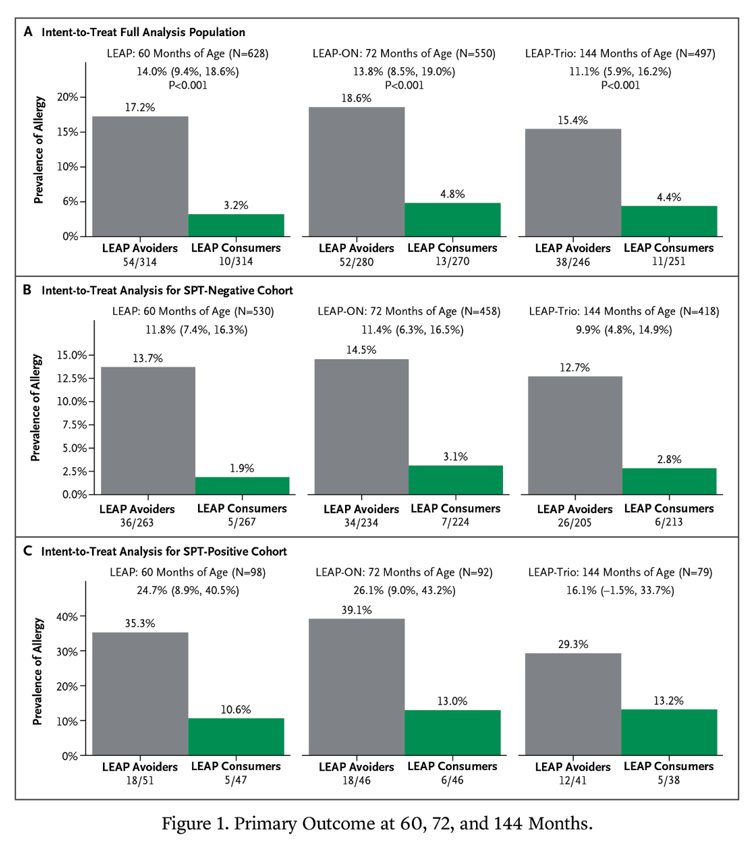
Methods: This follow-up trial (followed ~80% of initial randomized cohort) examined the durability of peanut tolerance at age 144 months after years of ad libitum peanut consumption.

Key findings:

  • At age 144 months, peanut allergy remained significantly more prevalent in participants in the original peanut avoidance group than in the original peanut consumption group (15.4% [38 of 246 participants] vs. 4.4% [11 of 251 participants].
  • Both groups (early peanut avoidance group and early peanut consumption group) had periods of prolonged peanut avoidance between 72 months and 144 months.

My take (borrowed from authors) Peanut consumption, starting in infancy and continuing to age 5 years, provided lasting tolerance to peanut into adolescence irrespective of subsequent peanut consumption.

Related blog posts:

Links: Prevent Peanut Allergy (National Peanut Board)

Lubiprostone -Effective for Pediatric Constipation Plus One

E Elkaragy et al. JPGN; 78:800–809. Efficacy of lubiprostone for functional constipation treatment in adolescents and children: Randomized controlled trial

Methods:In this single‐blinded, randomized controlled study with 280 patients (aged 8–18) s with FC, patients were randomized either to a weight‐based lubiprostone dose (n= 140) or conventional laxatives (n= 140), for 12 weeks, followed by4 weeks posttreatment follow‐up. Patients weighing <50 and ≥50 kg were administered lubiprostone 8 mcg TID or 24 mcg BID, respectively.

Key findings:

  • Improvement in constipation was achieved in 128 (91.4%) patients in the lubiprostone group, and in 48 (34.3%) patients of the conventional therapy group (p< 0.001) and was sustained after treatment discontinuation
  • Mild self‐limited colicky abdominal pain and headache were the most prevalent side effects in the lubiprostone group

In their discussion, they note that a clinical trial by Benninga et al., which was designed to evaluate the efficacy and safety of lubiprostone in patients with FC aged 6–17 years in a placebo-controlled design, concluded that lubiprostone was not superior to placebo in terms of efficacy (18.5% vs. 14.4% response rates), in contrast to this study.11 Some of the factors that could account for the discrepancy: this trial did not enroll patients with a fecal impaction, lower enrollment of patients with prior laxative failure, and shorter duration of constipation.

My take: It is good to see pediatric data for lubiprostone! Particularly for milder constipation, it appears to be effective compared to typical laxatives.

Related blog post: Lubiprostone Study: Ineffective for Pediatric Functional Constipation

In the same issue of JPGN, a separate study showed that antegrade continence enemas may be helpful in children (n=33) with autism and soiling. One safety issue is tube dislodgement. In this study, the authors noted that three patients (9.1%) had inadvertent tube dislodgement, and all tubes were uneventfully replaced. One patient had behavioral issues that prohibited utilization of an ACE.

Related blog posts:

IBD Updates: Reducing Postoperative Crohn’s Disease, How Effective is IFX after Adalimumab, UST vs VDZ in Pediatric UC

C Hernandez-Rocha et al. J Crohns Colitis 2024: 18: 615–627. Clinical Predictors of Early and Late Endoscopic Recurrence Following Ileocolonic Resection in Crohn’s Disease

Prospective Study n=365 adult patients with post-operative Crohn’s disease. Findings: At first colonoscopy, 109 [29.9%] had recurrence. Male gender (odds ratio [OR] = 1.95), non-White ethnicity [OR = 2.48], and postoperative smoking [OR = 2.78] were associated with recurrence, while prophylactic anti-TNF reduced the risk [OR = 0.28]. Postoperative anti-TNF prophylaxis had a protective effect on anti-TNF experienced patients but not on anti-TNF naïve patients. Among patients without recurrence at first colonoscopy, Rutgeerts score i1 was associated with subsequent recurrence [OR = 4.43]

A Lecoutour et al JPGN 2024; 78:1116–1125. Efficacy of infliximab after loss of response of/intolerance to adalimumab in pediatric Crohn’s disease: A retrospective multicenter cohort study of the “GETAID pédiatrique”

Key findings: In this retrospective study, 27 of 32 patients (84.4%) were still on IFX at 12 months of the switch. Among them, 13 had discontinued ADA because of a LOR, 12 for insufficient response and 2 due to primary nonresponse. At 1 year, 22 patients were in corticosteroid free clinical remission (68.7%).

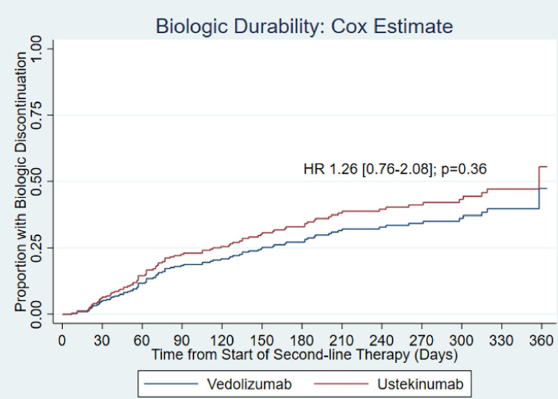
PV Patel et al. JPGN 2024; 78:1126–1134. Real‐world effectiveness of ustekinumab and vedolizumab in TNF‐exposed pediatric patients with ulcerative colitis

Using the ICN registry, this observational study had 262 anti-TNF refractory patients receiving VDZ and 74 patients receiving UST. Key finding: At 6 months, 28.3% of patients on VDZ and 25.8% of those on UST achieved CFCR (p= 0.76)

Orchid, Atlanta Botanical Gardens