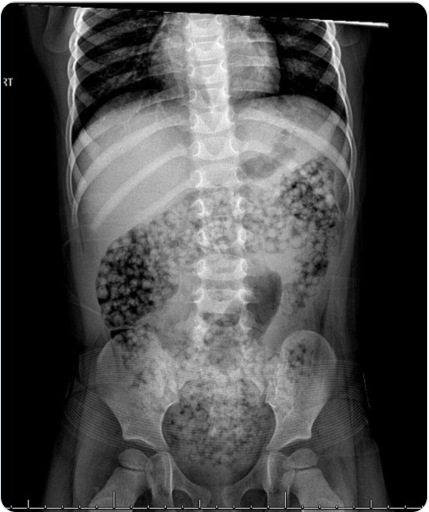
“There is no consensus regarding optimal management in instances of Orbeez™ ingestion. However, a review of reported cases from 2021 indicated that of 43 cases of bowel obstruction secondary to water bead ingestions, two patients required endoscopic removal and the remaining 41 required surgical enterotomy or intestinal resection. We report a case of successful medical management following ingestion of over 1000 water beads…The patient was placed on a clear liquid diet and received a mineral oil enema with minimal passage of beads. She was then started on sennosides and erythromycin ethylsuccinate to help stimulate expulsion. Stools were closely monitored and revealed passage of greater than 1000 beads over the next 24 h.”
The authors utilized prospectively collected data from 3 population-based birth cohorts (Danish National Birth Cohort, Norwegian Mother, Father, and Child Cohort, and All Babies in Southeast Sweden). This collectively included nearly 170,000 offspring.
Key findings:
During median follow-up of 16.3–22.3 years, between 1996 and 2021, 543 offspring were diagnosed with IBD
In each country, there was no association between exclusive breastfeeding duration and offspring IBD risk
Discussion:
“In contrast to majority of case-control studies, both cohort studies reported null association between breastfeeding, treated as a binary exposure (any versus no breastfeeding) or by duration, and offspring IBD risk. Similarly, 2 nested case-control studies, leveraging prospectively collected data on early life exposures as part of the population-based Jerusalem Perinatal Study and 2 United Kingdom birth cohorts (the 1946 National Survey of Health & Development and the 1958 National Child Development Study) reported null associations between breastfeeding and IBD risk.22,23 Data from these studies, which are more rigorous in methodology compared with case-control studies, are consistent with findings from our analyses.”
My take: While this study has some limitations inherent in observational data, this study with prospectively-collected data indicates that breastfeeding did not modulate the risk of developing IBD.
With regard to achalasia, “Botox can be considered only in patients in whom rapid weight gain is important to improve surgical outcomes.”
With regard to gastroparesis/delayed gastric emptying in children, the authors note the following:
‘A recent retrospective study from the Mayo Clinic analysed the response to intrapyloric Botox in children (n = 20) with gastroparesis and concluded that intrapyloric Botox injection in children is safe and can provide temporary relief for patients with refractory upper gastrointestinal symptoms with and without gastroparesis.43 [This was] a meta-analysis, including six studies, 160 patients, which showed that 68% of patients responded to intrapyloric Botox irrespective of the presence of gastroparesis, while among patients diagnosed with gastroparesis the therapeutic response was 66%.43 These results suggest that intrapyloric Botox can be effective not only in children with gastroparesis but also in children with refractory functional upper gastrointestinal symptoms.’ In their conclusion, the authors note “Intrapyloric Botox injection is increasingly used for the treatment of gastroparesis but evidence supporting its use in children is still scarce.”
A recent Vanity Fair Article echoed some of the problems that our group has experienced with insurance companies.
An excerpt:
While no one can seriously justify the decision to gun down a father of two to make a political point, Americans seem to agree on one thing: Something does need to be done about the country’s broken health insurance system.
The brutal slaying, and the frenzied manhunt that followed, have exposed widespread frustration with a system of for-profit health insurance that many Americans feel is actually killing them, one delayed-or-denied health insurance claim at a time. And doctors are as fed up as their patients…
Struggling with the seemingly arbitrary policies and undermarket reimbursements offered by UnitedHealth Group and other insurers, doctors feel trapped in a zero-sum game that has robbed them of their clinical independence.
Four companies, known collectively as BUCA—Blue Cross and Blue Shield, UnitedHealth, Cigna, and Aetna—have become so powerful that “when doctors try to negotiate, they have to take whatever that carrier gives them,” says Ron Howrigon, a health care consultant who represents doctors in their dealings with insurers…
Amid this anger, UnitedHealth stands out for its sheer size, its aggressive moves to vertically integrate healthcare, and its expansive denial of claims, say health care experts and doctors. Headquartered in Minnetonka, Minnesota, it is a behemoth that took in more than $370 billion last year, making it America’s fourth-largest corporation by revenue. It insures more than 26 million Americans. More than one tenth of US doctors are either employed by or affiliated with the UnitedHealth subsidiary Optum Health…
Doctors in independent practice groups describe strong-arm tactics by the company—suddenly pushing them out of network, slashing their reimbursements, and stranding their patients with almost no notice. “Their interest is in killing private practice physicians,” says a North Carolina anesthesiologist…
The travails of Rheumatology Associates, P.C., the largest private rheumatology practice in Indiana, is a case in point. UnitedHealth offered the doctors in the group such paltry reimbursements that negotiations on a new contract ground to a halt…The group met with the Indiana attorney general’s office…
The company’s conduct was often nightmarish, even for patients in network. “Even when we get approvals on their letterhead, they would turn around, deny claims, and say they were approved incorrectly.”…
“They have so much power, they are out of control. They believe they are untouchable.”
My take: In the article, a health policy physician states the following: “Commercial Insurance Isn’t in the Health Care Business. It’s in the Financial Business.”
Our group is currently out of network with UnitedHealth. We negotiated with them for more than two years and offered them rates that were as good or better than all of the other commercial insurers. Their claims about trying to negotiate rates that are “affordable for consumers and providers” are misleading. In our case, they are making their insured patients pay much more by forcing them to see other providers at an academic center with much higher costs, less availability, and longer travel distances. They don’t care about forcing patients, who have had long-standing relationships, to find new doctors or the inconvenience and cost to patient families. Their aim is to leverage their consolidation of coverage to force smaller groups to accept lower reimbursements. Over time, this will lead to even fewer options for patients.
This retrospective review identified 6 patients (out of 153) who were weaned off parenteral nutrition (PN) as part of an inpatient admission.
Key findings:
Except for one admission of 8 days, all of these patients required a prolonged admission 1-5 months.
Two of the patients were receiving PN primarily due to abdominal pain in the absence of a recognizable motility disorder.
Two of the patients had a suspected factitious disorder imposed on a medical disorder; one received this diagnosis.
All patients had chronic feeding intolerance despite favorable prognostic factors including underlying necrotizing enterocolitis (n=1), preserved ileocecal valve (n=5), longer bowel length (n=5), and retention of entire colon (n=5).
Post-pyloric feeds aided conversion to EN in 5 patients.
My take: In order to achieve enteral autonomy, hospital admission may be needed for patients who require long-term PN despite favorable prognostic factors.
Be prepared for a lengthy stay
Anticipate the need for an interdisciplinary team (eg. nutrition, social work, and others).
Background: Historically, acid suppression has been given as adjuvant therapy to optimize PERT and thereby improve growth and nutritional needs in CF
Methods: This was a prospective cohort of 145 infants followed in 6 CF centers. This was a retrospective study examining the effects of acid blocker therapy and outcomes at 3 years of life in children with cystic fibrosis.
Key findings:
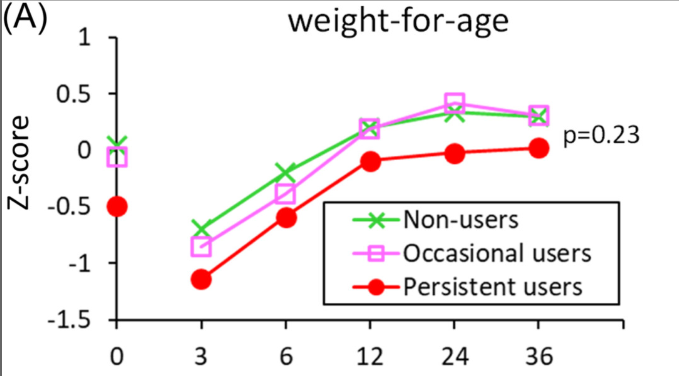
Acid blocker therapy (ABT) use before age 3 years was frequent, with 81 (56%) of patients on H2 receptor antagonist (H2RA) or proton pump inhibitor (PPI), and higher among pancreatic insufficient (60%) versus pancreatic sufficient (26%) children.
Growth improvements were not significantly greater.
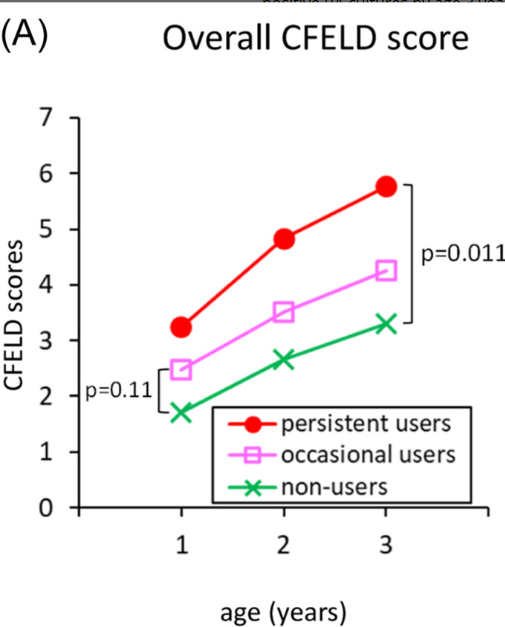
Early-onset lung disease was more severe, in persistent ABT users compared to nonusers of ABT.
ABT was associated with reduced gut microbiome diversity
CFELD =CF Early-Onset Lung Disease
Discussion:
“Results from our FIRST cohort of infants and toddlers with CF showed that prolonged ABT was not associated with significant improvements in growth but instead significant negative alterations to the GM and progression of early-onset lung disease. Evidence from our study is in line with the growing body of literature advocating for more judicious PPI therapy as it has been associated with adverse outcomes such as pulmonary infections, fractures, and anemia.22–24“
One limitation, which was NOT discussed in the article, was selection bias. Since there was not randomization of PPI use, it could be that PPI prescription was more common in children with more severe disease.
My take (borrowed in part from authors): Despite the potential for selection bias, it is clear that “acid blockers are not benign.” Given the potential for worse outcomes, PPI prescription should be restricted to those with a clear indication.
K Wu. NEJM 2024; 391; 2288-2289. Well Known to Us.
This commentary focuses on the personal experience of being an hospital-based physician tasked with taking care of chronically-ill complex and neurologically-compromised children through recurrent and prolonged admissions.
An excerpt:
Teetering on the precipice of death at every admission, they are a testament to how far medicine has come in keeping people alive — and how far it still has to go in treating their underlying conditions. Having realistic conversations about long-term outcomes and palliative care for these patients remains difficult, with pediatricians afraid of disrupting fragile relationships with parents who have endured so much.1
With increasing numbers of such children being admitted to PICUs and limited expansion of capacity,2-4 questions have been raised about the value and necessity of the care provided to them — not in terms of their condition in isolation, but in terms of who else is being deprived of care. Patients with complex, chronic, life-limiting, multiorgan conditions are often described as “well known to us,” but they’re also called “bed blockers” — a label reflecting one answer to the uncomfortable ethical question of which patients are most deserving of limited resources.5 …
Often all I could do was bear witness to their sickness and wellness, their deterioration and recovery, again and again. But in their short lives filled with suffering and struggle and a constant parade of caregivers, I was their pediatrician, and I had become well known to them.
In this retrospective study, the authors examined the impact of removing C diff (Clostridioides difficile) testing from a gastrointestinal pathogen panel (GIPP) and only testing with preferred method which consisted of glutamate dehydrogenase and toxin antigen immunoassay, followed by toxin gene testing for discrepant result.
Key findings:
At baseline (prior to implementing a change), the most common positive target was C. diff (517 of 1,018, 51%), which resulted in treatment for C. difficile infection in 94.9% (337 of 355) of cases.
Following GIPP C. diff target removal, GIPP orders decreased from 3.23 to 2.7 per 1,000 patient visits (P < .001). Standalone C. diff testing increased from 0.92 to 3.06 per 1,000 patient visits(P < .001).
Outpatient C. diff prescriptions declined over the study, with a mean of 2.36 per 1,000 outpatient visits in the baseline period and 1.81 per 1,000 outpatient visits in the postintervention period (P = <.001). For the inpatient setting, days of therapy (DOT) per 1,000 decreased from 13.77 in the baseline period to 10.58 in the postintervention period, though the reduction did not meet statistical significance (P = .051).
My take: This study shows the benefit of removing C. diff from GIPPs to drive more appropriate testing and targeted treatment. GIPPs, while convenient, often identify C. diff colonization. This approach is cost-effective and reduces harms of unnecessary antibiotic treatment.
Background: Nearly two decades ago, the Eight Americas study offered a novel lens for examining health inequities in the USA by partitioning the US population into eight groups based on geography, race, urbanicity, income per capita, and homicide rate. That study found gaps of 12·8 years for females and 15·4 years for males in life expectancy in 2001 across these eight groups. In this study, we aimed to update and expand the original Eight Americas study, examining trends in life expectancy from 2000 to 2021 for ten Americas (analogues to the original eight, plus two additional groups comprising the US Latino population), by year, sex, and age group.
Methods: The authors tabulated deaths from the National Vital Statistics System and population estimates from the US Census Bureau and the National Center for Health Statistics from Jan 1, 2000, to Dec 31, 2021.
Key findings: .
At the beginning of the 21st century, there was already a 12.6-year gap in life expectancy among Americas, but this gap grew even larger during the 2000s and 2010s and accelerated to 20.4 years after the first 2 years of the COVID-19 pandemic.
One’s life expectancy varies dramatically depending on where one lives, the economic conditions in that location, and one’s racial and ethnic identity.
There are limitations with the data that were used. For example, there is known to be substantial misreporting of race and ethnicity on death certificates
My take (borrowed from the authors): “The extent and magnitude of health disparities in the USA are truly alarming. In a country with the wealth and resources of the USA, it is intolerable that so many are living in conditions and with health outcomes akin to those of an entirely different country.”
‘Fistula Foundation which arranges obstetric fistula repair. This restores a woman’s life after this life-altering complication –a corrective surgery that costs just $619 per person
Muso Health helps reduce childhood mortality. In Mali, this organization reduced childhood mortality by 95%. The cost of bringing one more person into the Muso health care network is only $22 per year.
Reach Out and Read. This U.S-based charity allows doctors to “prescribe” reading to the child. This promotes reading as well as childhood well-child visits.
Crisis Text Line is for those who want to volunteer, rather than donate. This organization trains (15-20 hrs) volunteers to help individuals needing mental health support. “More than 90 percent of the volunteers report that their own mental health improves as a result of their participation.”
M Zimmer et al. Pediatrics 2024; 154: e2024067783.
Methods: This serial cross-sectional analysis of National Health and Nutrition Examination Survey (NHANES) data was performed with 2541 toddlers from 10 NHANES cycles from 1999 to 2018.
Key findings:
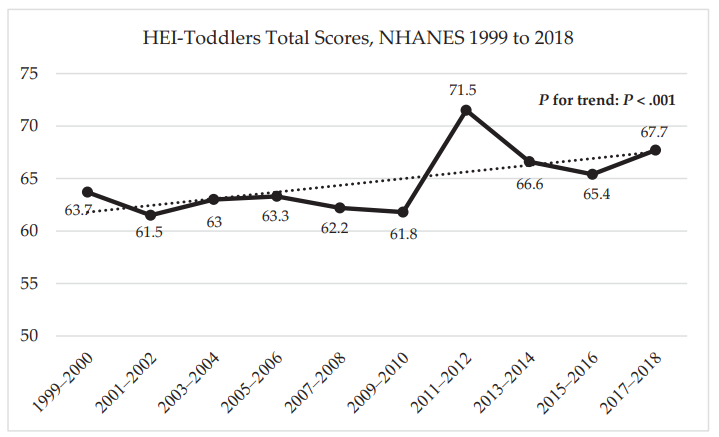
Toddler diet quality improved significantly from 1999 to 2018 (P < .001), from 63.7 points on average in 1999-2000 to 67.7 points in 2017-2018
A significant positive linear trend in total diet quality was observed for all socioeconomic status groups (P < .05)
HEI-Toddlers -Healthy Eating Index has total score ranging from 0-100 points with higher score indicating healthier diets.
In the discussion, the authors note that other age groups besides toddlers have seen modest improvements in diet. Even small improvements can be consequential on a population-basis. In adults, a 4-point increase in HEI scores has been associated with a reduced risk of cardiovascular disease. The strongest improvement between 1999 and 2018 in toddler diet quality was in scores for added sugars…attributed to declines in added sugars from sweetened beverages. “A heightened awareness of added sugars in sweetened drink products among caregivers themselves may have led to a cultural shift around feeding toddlers less sweetened drinks.”
While in toddlers there was no significant difference in dietary scores based on socioeconomic status, “, the diet quality gap for adults has widened over time by SES,14,15 race and Hispanic origin, and Supplemental Nutrition Assistance Program participation status.”
“Although toddlers do not receive school meals, their diets can be similarly impacted by other large-scale programs like the Special Supplemental Nutrition Program for Women, Infants, and Children (WIC) and the Child and Adult Care Food Program. Changes to the WIC food package have been consistently linked to improved child diet quality, and may have contributed to the gains in toddler diet quality observed in this study.”
Study limitations are related to self-reported dietary intake.
My take: It feels like improving diet quality is like swimming against a strong tide. Yet, this study shows improvements can happen. Ongoing efforts are needed to encourage healthier diets.