What Happens When Infliximab is Stopped in Patients in Deep Remission Plus One

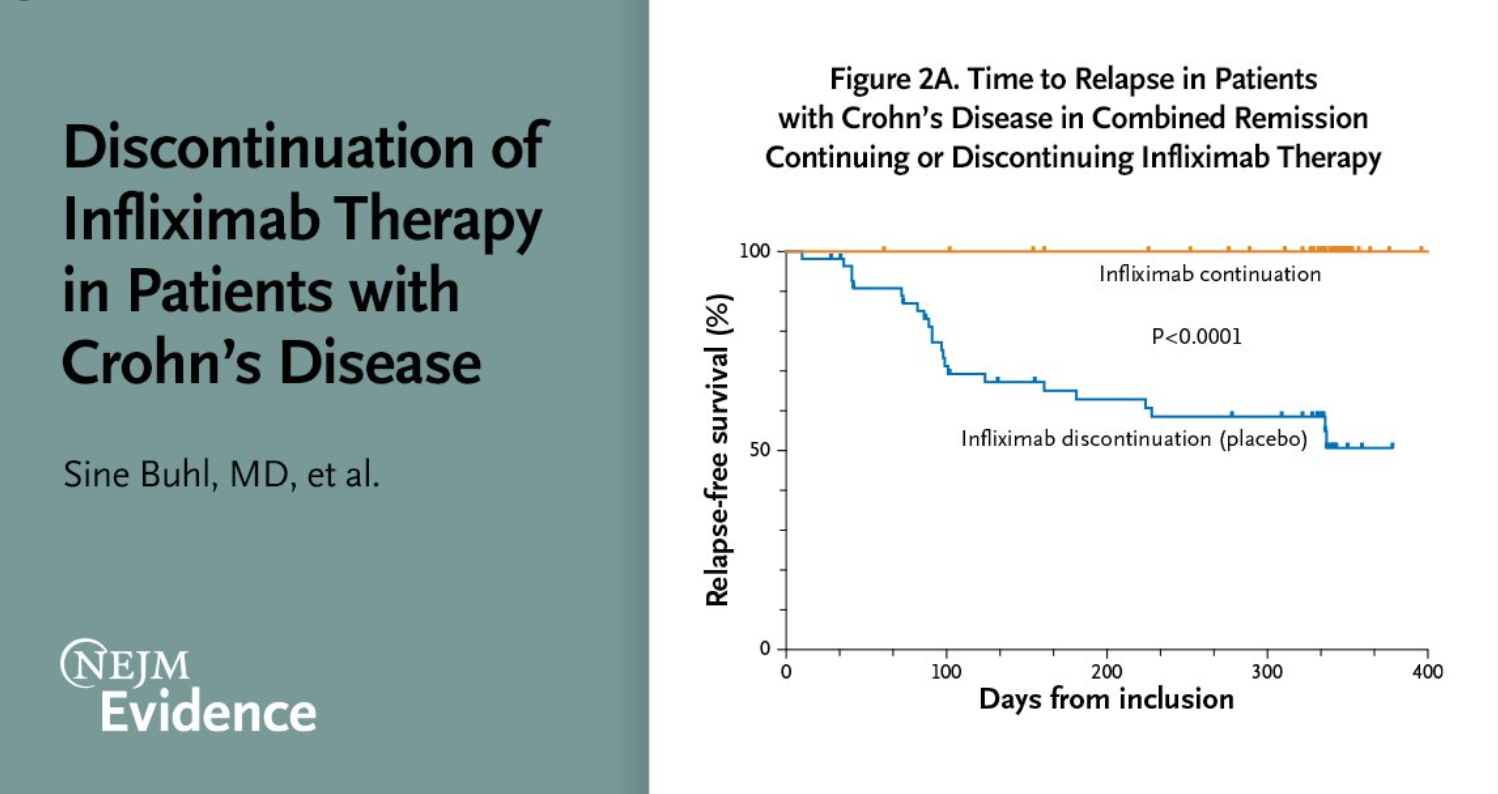
S Buhl et al. NEJM 2022; DOI:https://doi.org/10.1056/EVIDoa2200061. Discontinuation of Infliximab Therapy in Patients with Crohn’s Disease

Design: This was a multicenter, randomized, double-blind, placebo-controlled withdrawal study of infliximab in patients (n=115) with Crohn’s disease who were in clinical, biochemical, and endoscopic remission after standard infliximab maintenance therapy for at least 1 year. Patients were randomly assigned 1:1 to continue infliximab therapy or to receive matching placebo for 48 weeks.

Key finding:

  • At the end of the trial at week 48, relapse-free survival was 100% in the infliximab-continuation group and 51% in the infliximab-discontinuation group

My take (borrowed from authors): Discontinuation of infliximab for patients with Crohn’s disease receiving long-term infliximab therapy and in clinical, biochemical, and endoscopic remission leads to a considerable risk of relapse

Related blog posts:

Figure from NEJM Evidence Twitter Feed

S Sassine et al. AJG 2022; Volume 117 – Issue 4 – p 637-646. doi: 10.14309/ajg.0000000000001650. Risk Factors of Clinical Relapses in Pediatric Luminal Crohn’s Disease: A Retrospective Cohort Study

Key findings–The following variables were associated with clinical relapse:

  • female sex (adjusted hazard ratio [aHR] = 1.52, P = 0.0007)
  • exposure to oral 5-ASA (aHR = 1.44, P = 0.04),
  • use of immunomodulatory agents compared with tumor necrosis factor-alpha inhibitors (methotrexate aHR = 1.73, P = 0.003; thiopurines aHR = 1.63, P = 0.002)
  • presence of granulomas (aHR = 1.34, P = 0.02)
  • increased eosinophils on intestinal biopsies (aHR = 1.36, P = 0.02)
  • high levels of C-reactive protein (aHR = 1.01, P < 0.0001)
  • fecal calprotectin (aHR = 1.08, P < 0.0001)
  • low serum infliximab levels (<7 mcg/mL) (aHR = 2.32P = 0.001).

What is the Best Ferritin Threshold and Why It Needs to Be Checked In 1-Year-Olds

E Mantadakis. J Pediatr 2022; 245: 12-14. (Editorial) Open access. Serum Ferritin Threshold for Iron Deficiency Screening in One-Year-Old Children nutrition.

N Mukhtarova et al. J Pediatr 2022; 245: 217-221. Serum Ferritin Threshold for Iron Deficiency Screening in One-Year-Old Children. This study included 3153 infants, with 698 included in the final analysis.

Key points:

  • 11.4% had iron deficiency, 3.5% had iron deficiency anemia, 8.2% had anemia, and 76.9% were normal.
  • “The authors showed that the hemoglobin threshold of 110 g/L that  is currently recommended for diagnosing anemia at 1-year-old well-child visit corresponds with a very low serum ferritin (4.42 mcg/L).”
  • In a previous study, TARGet Kids!, “a higher serum ferritin was associated with higher cognitive function, with a serum ferritin of 17 mcg/L corresponding with the maximum level of cognition.” That is, iron deficiency, even in the absence of anemia, can contribute to detrimental cognitive outcomes.
  • Thus, current hemoglobin levels and ferritin need to be revised.  Neither a hemoglobin of 11.0 g/dL nor a ferritin of 12 mcg/L is sensitive in detecting iron deficiency in toddlers.
  • In the U.S., only ~40% of anemia in toddlers is attributable to iron deficiency; thus, checking a ferritin can help determine if iron supplementation is worthwhile.

My take: Iron deficiency anemia is a late indicator of iron deficiency and relying on hemoglobin alone could have irreversible detrimental effects on cognitive outcomes. These articles make a strong argument for the following:

  1. Use a ferritin threshold of at least 18 mcg/L to determine if iron deficient
  2. Check a ferritin along with a hemoglobin at 1-year well-child check. 

Related blog post: Briefly Noted: Ferritin Levels and Cognitive Outcomes

Rock Garden, Calhoun Ga

Clever Technique to Avoid Hemospray Catheter Occlusion

JA Tau. Gastroenterology and Endoscopy News (July 14, 2022): Open Accss: EndoHacks: Thinking Outside the Traditional Endoscopy Box Optimizing Hemospray Delivery With Bone Wax

“Catheter occlusion, which occurs when the powder contacts blood or fluid within the catheter, is the main technical obstacle to successful powder delivery. Here is a cost-effective technique that overcomes this issue via the addition of a protective bone wax plug and stopcock (VideoGIE. 2021;6(9):387-389).”

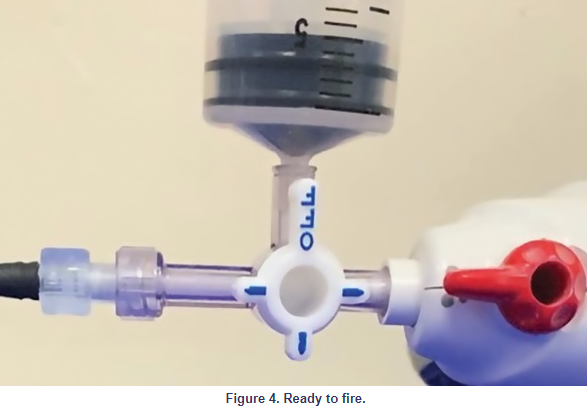
“To set up, a tiny piece of bone wax is shaped into a 1-mm bead and applied to the tip of the 7 or 10 Fr delivery catheter (Figure 1). The catheter is then affixed to the Luer-lock end of a 3-way stopcock. The activated hemostatic powder device and an air-filled syringe are attached to the remaining ends of the stopcock. The stopcock initially is turned to oppose the device (Figure 2)…To fire without drying the working channel or air flushing the catheter, pass the bone wax–tipped catheter down the channel. The catheter tip is protected from moisture, and fluid can be suctioned, especially when using the 7 Fr catheter in a therapeutic gastroscope. When ready to fire, the bone wax plug is ejected with an air flush (Figure 3), the stopcock is turned to oppose the syringe (Figure 4), and the hemostatic powder is deployed.”

My take: If you follow the hemospray instructions carefully, this minimizes issues with catheter occlusion. This clever technique is likely to further eliminate this problem.

Related blog posts:

Bob Callan Trail, Atlanta

Good Episode of Bowel Sounds on Reflux

Several pointers from this bowel sounds episode:

  • For thickeners, Dr. Rosen recommends Gelmix for infants with reflux who are breastfed or receiving amino acid formulas. Cereal does not work for breastmilk or amino acid formulas.
  • For infants, acid suppression, especially proton pump inhibitors, have not been shown to be effective but could contribute to a higher risk of allergies, infections and possibly bone complications.
  • The podcast reviewed the rationale for a time-limited trial of hydrolysates for infants with reflux symptoms due to the overlap of symptoms between reflux and MSPI. However, if it is not effective in several weeks, then it should be stopped.
  • Dr. Rosen does use “spit-up formulas” which can help reduce reflux symptoms and potentially help with swallow dysfunction. These are particularly well-suited for NG tubes as additional cereal in other formulas result in clogged NG tubes.
  • Several new technologies have helped understand esophageal physiology much better including pH-impedance, high-resolution manometry and FLIP device. PH-impedance can help better categorize reflux symptoms into non-erosive reflux disease, reflux hypersensitivity, and functional heartburn; however, this test is used fairly infrequently at Dr. Rosen’s center as the test is burdensome.
  • For older children/teenagers with functional heartburn symptoms, Dr. Rosen most frequent neuromodulator is gabapentin, which may alleviate coughing as well.
  • Fundoplications have fallen out of favor and are undertaken much less frequently. The use of blenderized formulas or gastrojejunostomy tubes are often used to manage reflux symptoms in patients with neurologic impairment.
  • Other treatments like prucalopride are emerging but quite limited in use in part due to lack of insurance coverage/cost.

Closing points:

  • Red throat on ENT exam is not specific for reflux
  • Aspiration, not reflux, is a common reason for infants who have coughing or BRUEs
  • In infants, nonacid reflux is the main issue, not acid reflux

My take: If you like one of these podcasts, is it proper to say “I liked hearing your bowel sounds?”

If you want to listen to the episode click this link: https://www.buzzsprout.com/581062/10918260 or listen to it on apple podcast, Spotify, or where every you listen to podcasts.

Related article: S Yang et al. J Pediatr 2022; 245: 158-164. Pediatric Prescriptions of Proton Pump Inhibitors in France (2009-2019): A Time-Series Analysis of Trends and Practice Guidelines Impact Key findings:

  • Between 2009 and 2019, the PPI prescription rate increased by 41% in the overall pediatric population (+110% in infants)
  • There was a a mean PPI prescription rate of 52.5 per 1000 with the highest prescription rate in infants (131.5 per 1000 children)
  • There was a seasonal pattern with prescriptions increased in the winter compared with the summer

Related blog posts:

Safe Sleep Recommendations

This blog has discussed safe sleep many times. Sleep-related infant deaths exact an enormous toll. All pediatric physicians should take the opportunity to counsel parents to reduce this risk.

Recently, the AAP updated their recommendations, open access: RY Moon et al. Pediatrics (2022) 150 (1): e2022057990. Sleep-Related Infant Deaths: Updated 2022 Recommendations for Reducing Infant Deaths in the Sleep Environment

Some of the recommendations:

  • Sleep surfaces: Use a flat, noninclined sleep surface. A crib, bassinet, portable crib or play yard should conform to the safety standards of the Consumer Product Safety Commission (CPSC). Recent biomechanical analyses have demonstrated that sleep surfaces that are inclined more than 10 degrees from horizontal are unsafe for infant sleep.
  • Sleep location Infants should sleep in the parents’ room, close to the parents’ bed but on a separate surface designed for infants, ideally for at least the first six months.
  • Bedding Do not place any soft objects, including pillows, blankets or bumper pads, in the infant’s sleep environment.
  • Pacifiers Pacifier use is associated with a reduced risk of SIDS. For infants who are not directly breastfed, pacifiers can be introduced at any time. For breastfed infants, the pacifier can be started once breastfeeding is firmly established 

Bed-sharingAlthough the AAP cannot recommend bed-sharing based on the evidence, it also respects that many parents choose to bed-share routinely for a variety of reasons. It is important for clinicians and parents to have frank and nonjudgmental discussions about the family’s bed-sharing circumstances. The policy provides a risk-stratification analysis to guide these discussions…The safest place for a baby to sleep is on a separate sleep surface designed for infants close to the parents’ bed.

These situations “increase the risk of SIDS or unintentional injury or death while bed sharing, and these should be avoided at all times:

  • Bed sharing with a term normal weight infant aged <4 mo and infants born preterm and/or with low birth weight…even for breastfed infants…
  • Bed sharing with a current smoker (even if he or she does not smoke in bed) or if the mother smoked during pregnancy
  • Bed sharing with someone who is impaired in his or her alertness or ability to arouse because of fatigue or use of sedating medication
  • Bed sharing on a soft surface, such as a waterbed, old mattress, sofa, couch, or armchair
  • Bed sharing with soft bedding accessories, such as pillows or blankets

Summary of new guidelines from AAP News: New safe sleep recommendations can help pediatricians guide families

My take: It is a good idea to incorporate safe sleep messages when infants are seen for a variety of disorders including reflux and colic.

Related blog posts:

  • Safe Sleep A terrific website that focuses on this crucial issue: Charlieskids.org; it has videos, do’s and don’ts as well as a link to Cribs for Kids (discounted safe crib website). In addition,this website has a book called “Sleep Baby Safe and Snug” which incorporates updated recommendations on safe sleep practices.
  • The High Toll of Sudden Infant Death From 2013-2015, there was an average of 3523 US infants each year who died from SUID (sudden unexpected infant death), peaking at 1-2 months of life.  More black infants died of SUID in the first year than black children who died from firearm homicides in all of childhood through age 19 years. SUID deaths from 2013-2015 (10,568) was similar to the total number of motor vehicle-traffic deaths in all of childhood (10,714) and greater than the total number of any of the other causes.
  • Are We Making Progress on Infant Sleep-Related Deaths? (not anymore) 
  • Safe Sleep (AAP 2017) 
Momma deer in our backyard
Chattahoochee National Recreational Area (Sandy Springs)

Safety of Live-Virus Vaccines in Infants After In Utero Biologic Medicine Exposures

O Zerbo et al. Pediatrics 2022; 150: e2021056021. Open access: Safety of Live-Attenuated Vaccines in Children Exposed to Biologic Response Modifiers in Utero

This large retrospective cohort study (2006-2017) identified 960 infants with in utero biologic medicine exposures (most commonly etanercept, anakinra, adalimumab, and infliximab) among 582,759 infants. Key findings:

  • Receipt of live-attenuated rotavirus vaccine in their first year or measles vaccine during their first 24 months were not at increased risk of prespecified adverse events compared to unexposed children
  • There was not a significant difference in diarrhea, bloody stools, intussusception, vomiting, encephalitis, myelitis, hepatitis, ataxia, or fevers
  • Receipt of the recommended number of doses of rotavirus vaccines in the first year of life was lower among biologic-exposed than among unexposed children (81.00% vs 85.20%, adjusted OR = 0.74)

Examples of guideline recommendations with regard to live-virus vaccination:

The Toronto Consensus Statements for the Management of Inflammatory Bowel Disease in Pregnancy,” (Gastroenterology. 2016; 150(3):734–757) states the following: “live vaccinations are not recommended within the first 6 months of life in the offspring of women who were on anti-TNF therapy during pregnancy.”

Inflammatory Bowel Disease in Pregnancy Clinical Care Pathway: A Report From the American Gastroenterological Association IBD Parenthood Project Working Group (Gastroenterology. 2019; 156(5):1508–1524.open access)” states the following: “if the mother is exposed to any biologic therapy, other than certolizumab, during the third trimester of pregnancy (ie, after 27 weeks gestation) avoidance of live vaccines is recommended for the first 6 months of life.”

In their discussion, the authors note that this “provide some reassurance to parents and pediatricians regarding live-attenuated vaccines for children exposed to BRM [biologics] in utero. Professional societies may want to consider reevaluating their live-attenuated vaccines recommendations for these children as new safety data accumulates.”

My take: There are clearly theoretical concerns about biologic-exposures of infants in utero since some are actively transported across the placenta barrier and can remain in infants for up to 12 months after birth. However, this study could not identify significant adverse effects in exposed infants.

This is an impression from a starfish (no starfish in this picture)

Head-to-Head (Sort of): Infliximab vs Ustekinumab for Crohn’s Disease

N Narula et al. Clin Gastroenterol Hepatol 2022; 20: 1579-1587. Comparative Efficacy and Rapidity of Action for Infliximab vs Ustekinumab in Biologic Naïve Crohn’s Disease

Using a post hoc analysis of 2 large Crohn’s disease (CD) trial with 420 biologic-naive adult patients, the authors found the following Key Findings:

  • At week 6, a comparable number of patients achieved clinical remission with infliximab compared with patients treated with ustekinumab (44.9% vs 37.9%; adjusted odds ratio [aOR], 1.22)
  • At week 6 the clinical response rates were not significantly different (58.4% infliximab vs 54.9% ustekinumab; aOR, 1.25)
  • At week 6, 42.3% infliximab vs 34.7% ustekinumab had fecal calprotectin level less than 250 mcg/L in those with increased values at baseline

My take: A true head-to-head trial, rather than a post-hoc analysis, would more definitively determine relative efficacy and relative time to response. This study indicates that both agents have similar efficacy by week 6.

Related blog posts:

Fountain at Forsyth Park in Savannah

More Data: COVID-19 Vaccine Effective in Patients with IBD & Maternal COVID-19 Vaccination Protects Infants

A Jena et al. Clin Gastroenterol Hepatol 2022; 20: 1456-1479. Open access: Effectiveness and Durability of COVID-19 Vaccination in 9447 Patients With IBD: A Systematic Review and Meta-Analysis

This was a systematic review and meta-analysis that included 46 studies.

  • Key findings:
    In 9,447 subjects who were completely vaccinated, the pooled seroconversion relative risk was 0.96 (95%CI, 0.94-0.97), and was higher for mRNA vaccines (0.97, 95%CI 0.96-0.98) than for adeno-associated vaccines (0.87, 95%CI: 0.78-0.93)
  • The pooled seroconversion rates were similar regardless of IBD therapy, and ranged from 0.93 to 0.99.
  • The pooled relative risk of breakthrough COVID-19 infections in vaccinated patients with IBD was not significantly different from that of vaccinated controls. However, a decay in antibody titers after 4 weeks from vaccination appeared to be accelerated in those on anti-TNF agents, immunomodulators or their combination.

My take: IBD patients benefit from complete COVID-19 vaccination similar to healthy controls.

Related blog post: COVID Booster Advice for IBD from Dr. David Rubin (@IBDMD)

NB Halasa et al. NEJM 2022; 387: 109-119. Open access: Maternal Vaccination and Risk of Hospitalization for Covid-19 among Infants

Using a case-control design, the authors found that complete (2 dose) vaccination during pregnancy —Key findings:

  • The effectiveness of maternal vaccination against hospitalization for Covid-19 among infants < 6 months was 52% overall, 80% during the delta period, and 38% during the omicron period.

My take: Vaccination protects mother and infant. “Maternal vaccination with two doses of mRNA vaccine was associated with a reduced risk of hospitalization for Covid-19, including for critical illness, among infants younger than 6 months of age.”

Long-Term Treatment of Eosinophilic Esophagitis with Budesonide

ES Dellon et al. Clin Gastroenterol Hepatol 2022; 1488-1498. Open access: Long-Term Treatment of Eosinophilic Esophagitis With Budesonide Oral Suspension

Methods: 48 patients who had fully responded to a 12-week induction course of budesonide 2 mg BID oral suspension were randomized to continuation of therapy or to placebo, for 36 weeks.

Key findings:

  • Patients randomized to placebo experienced relapse at a numerically higher rate than those who continued budesonide (43.5% vs 24.0%; p=.13). This reached statistical significance in a per-protocol analysis
  • In a separate arm, 13% of the 106 patients with previous partial or no response did subsequently fully respond to budesonide
  • Budesonide therapy was well-tolerated; candidiasis-related events occurred in 17 patients overall and were mild to moderate, and abnormal adrenocorticotropic hormone stimulation tests were reported in 5%

My take: Most patients who respond to induction with budesonide will continue to respond to ongoing treatment. A high rate of relapse is seen in those randomized to placebo.

Related blog posts:

Artificial Intelligence in the Endoscopy Suite

I never saw the show, “Office Space.” However, I did see the opening trailer (1 min) recently and it is very funny. YouTube Link: Office Space – Peter’s Original Traffic Scene

Hydrangeas in Sandy Springs

MB Wallace et al. Gastroenterol 2022; 162: 295-304. Open access: Impact of Artificial Intelligence on Miss Rate of Colorectal Neoplasia

Design: In a multicenter and multicountry randomized crossover trial, patients (n=230) undergoing CRC screening or surveillance were enrolled in 8 centers (Italy, UK, US), and randomized (1:1) to undergo 2 same-day, back-to-back colonoscopies with or without AI (deep learning computer aided diagnosis endoscopy) in 2 different arms, namely AI followed by colonoscopy without AI or vice-versa.

Key finding: There was an approximately 50% reduction of the miss rate of colorectal neoplasia, mainly due to a decreased miss rate of flat and small lesions.

The editorial (pg 35-38, DK Rex et al. Artificial Intelligence Improves Detection at Colonoscopy: Why Aren’t We All Already Using It?) provides some perspective regarding the study limitations and why AI will not be widely adopted in the near term.

Limitations:

  • “Tandem studies are more often positive than parallel design studies.  In a parallel design study, endoscopist bias toward any study arm is mitigated by the clinical and medical-legal demands to protect patients from colorectal cancer in a single withdrawal.”
  • “Detection gains for AI are largely for diminutive lesions.3 This is generally true for detection gains from ancillary devices, because powering trials for improved advanced lesion detection is not practical”

Slow Uptake of AI:

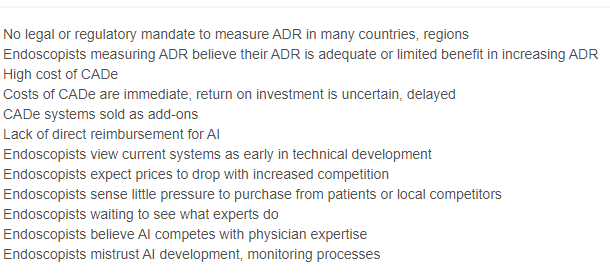
  • First, other adjunctive detection devices have received approval from the US Food and Drug Administration and then failed to reach widespread use…the limited adoption of this entire category suggests that physicians attach a relatively low price point to the value of detection gains produced by add-on devices…Incorporating detection devices with add-on cost is particularly problematic in US ambulatory surgery centers.”
  • The authors indicate that an endoscopy company could add AI to standard equipment as one way to advance use of this technology

My take: AI will likely improve interpretation and usefulness of colonoscopy, whether for cancer surveillance and other reasons. Cost and familiarity are current barriers to early adoption.

Related blog post: #NASPGHAN19 Impact of New Technologies on Patient Health