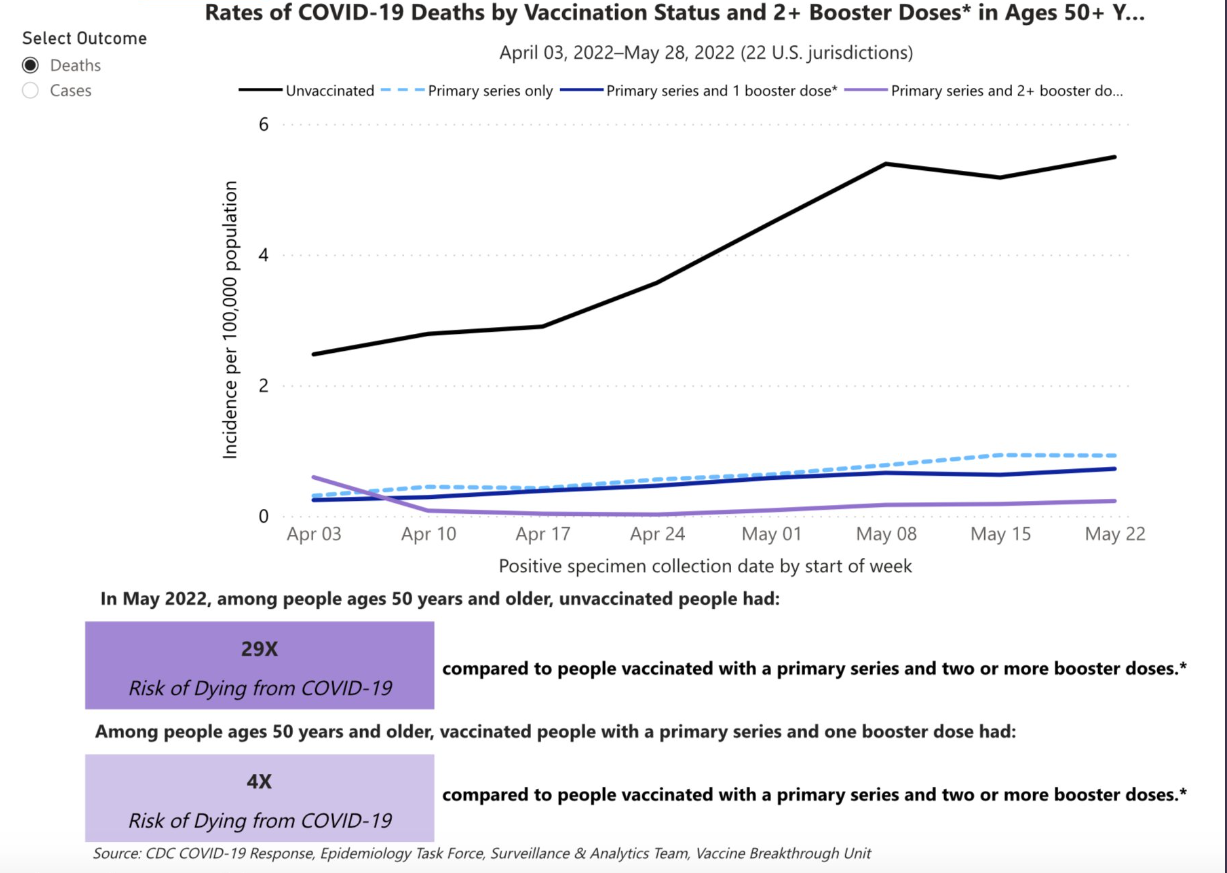
COVID-19 Hospitalization Data from CDC on UnVax, Vax, and Vax + Boosted

CA Taylor et al. MMWR 3/18/22, Open Access: COVID-19–Associated Hospitalizations Among Adults During SARS-CoV-2 Delta and Omicron Variant Predominance, by Race/Ethnicity and Vaccination Status — COVID-NET, 14 States, July 2021–January 2022

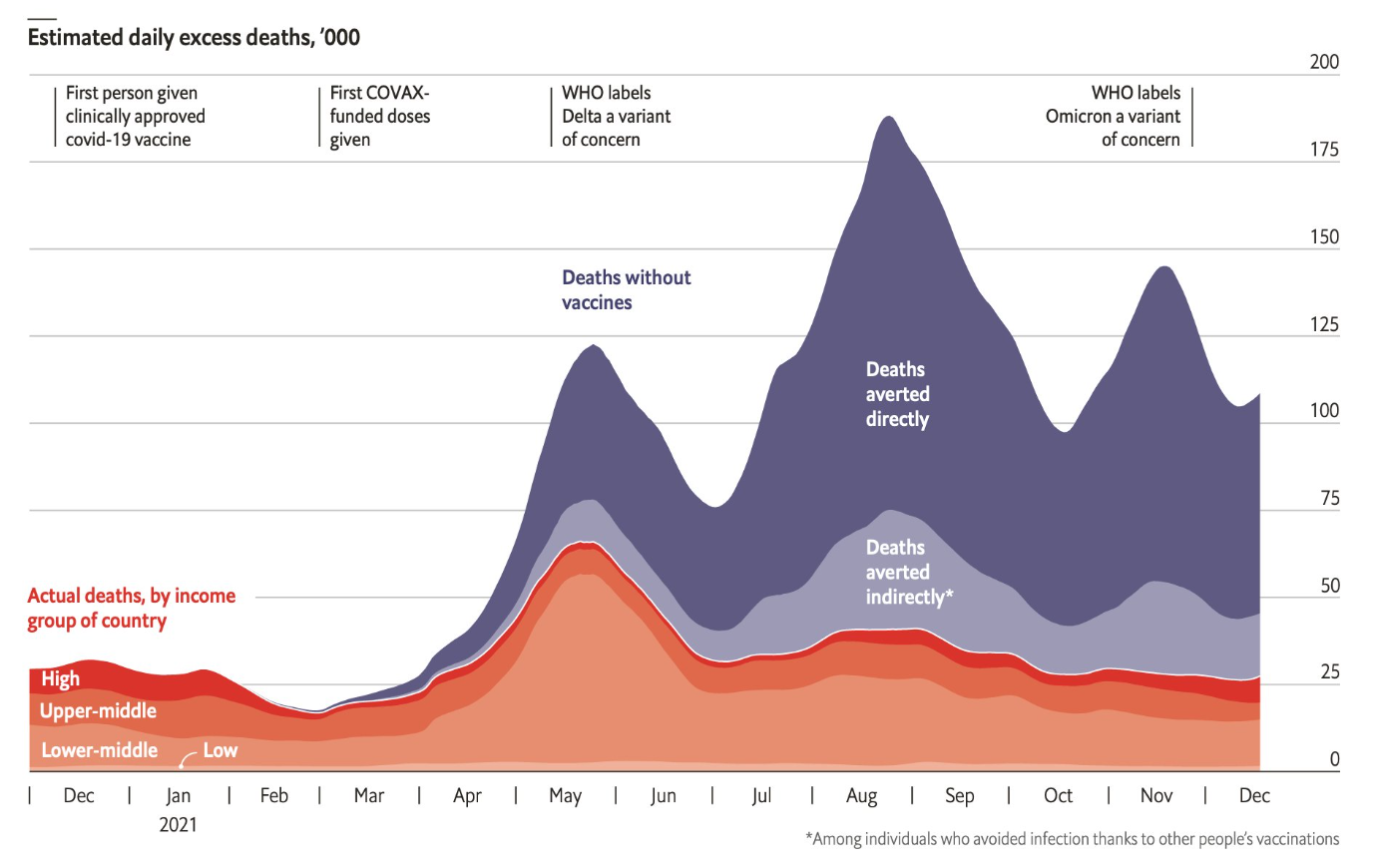
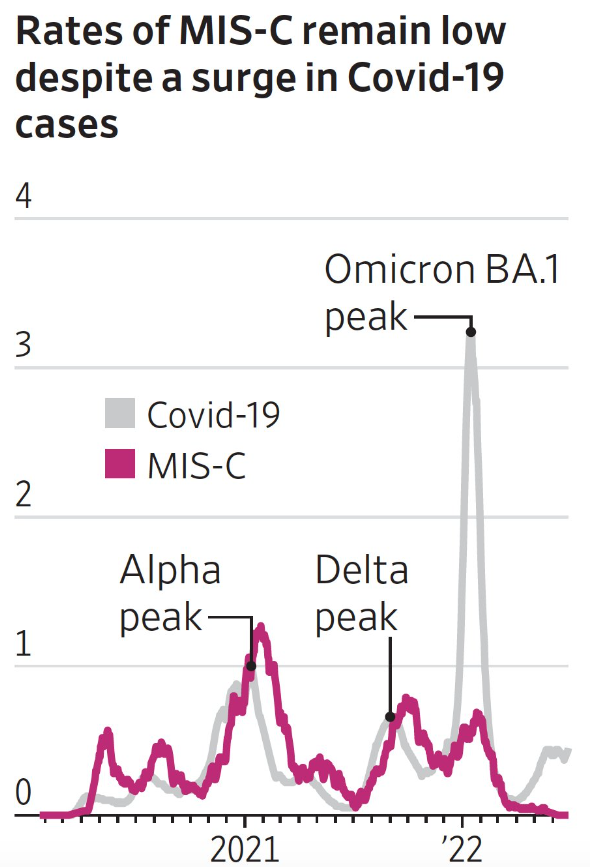
  • During the omicron wave, hospitalization among unvaccinated adults remained 12 times the rates among vaccinated adults who received booster or additional doses and four times the rates among adults who received a primary series, but no booster or additional dose.
  • The rate among adults who received a primary series, but no booster or additional dose, was three times the rate among adults who received a booster or additional dose
  • A previous study conducted before the Omicron-predominant period that showed increased risk for COVID-19–associated hospitalization among certain racial and ethnic groups, including Black adults, and suggested the increased hospitalization rates were likely multifactorial and could include increased prevalence of underlying medical conditions, increased community-level exposure to and incidence of COVID-19, and poor access to health care in these groups
  • The increase in transmissibility of the Omicron variant might have amplified these risks for hospitalization…the increased risk for hospitalization among Black adults during the Omicron-predominant period might also be due, in part, to lower proportions of Black adults receiving both the primary vaccination series and booster doses

My take: This study shows the value of getting vaccinated and booster shot. I would speculate that many of the unvaccinated have had previous infections and this further indicates that vaccination may provide greater protection than immunity following infection.

Vitamin K Shots Protect Newborns from Severe Bleeding: AAP Policy Statement

HealthyChildren.org: Why Your Newborn Needs a Vitamin K Shot

AAP Policy Statement (I Hand et al. Pediatrics (2022) 149 (3): e2021056036) Open Access: Vitamin K and the Newborn Infant

This policy is welcome as there has been an increase in parents refusing vitamin K administration and a resultant increase in the number of cases of late-onset VKDB (vitamin K deficiency bleeding); some of these cases result in devastating outcomes.

Summary and Recommendations

VKDB remains a significant concern in newborn and young infants. Parenteral vitamin K has been shown to be the most effective way to prevent VKDB of the newborn and young infant, and the AAP recommends the following:

  1. Vitamin K should be administered to all newborn infants weighing >1500 g as a single, intramuscular dose of 1 mg within 6 hours of birth.
  2. Preterm infants weighing ≤1500 g should receive a vitamin K dose of 0.3 mg/kg to 0.5 mg/kg as a single, intramuscular dose. A single intravenous dose of vitamin K for preterm infants is not recommended for prophylaxis.
  3. Pediatricians and other health care providers must be aware of the benefits of vitamin K administration as well as the risks of refusal and convey this information to the infant’s caregivers.
  4. VKDB should be considered when evaluating bleeding in the first 6 months of life, even in infants who received prophylaxis, and especially in exclusively breastfed infants.

Related blog posts: 

What is An Emulsifier and Are They Safe in Our Diets?

Two recent articles examine emulsifiers and their potential impact on the GI tract and beyond.

Levine et al provide a good overview of the topic of emulsifiers. Key points:

  • Emulsifiers allow “the mixing of water and and water-soluble agents with fats and fat-soluble agents that is they possess both hydrophilic and lipophilic properties”
  • The FDA “has been responsible for approving the use of all direct food additives” (n=~3000) and “for regulatory purposes, [the FDA excluded] some substances that were generally regarded as safe (GRAS) (n=~450)…Precisely how some emulsifiers gained GRAS status is unclear.
  • “Lecithin” is derived from the Greek name for egg yolk (lekithos). “Over the years the use of the term “lecithin” has been taken to include various mixtures of different phospholipids” (not just phosphatidylcholine).
  • Lecithin can provide the substrate “for the production of trimethylamine N-oxide (TMAO)…linked to cardiac events and cardiovascular inflammation.”
  • “The list of emulsifiers that are widely used, but not considered GRAS, most notably include polysorbate 80 (p80), carboxymethylcellulose (CMC) and carrageenan…these emulsifiers have been linked to the disruption of the microbiota and gut mucosal lining…In addition, low-grade inflammation [has been] associated with consumption of emulsifying agents such as CMC and p80” [in mouse models].
  • The International Organization for the Study of Inflammatory Bowel Disease (IOIBD) has recommended that IBD patients “limit consumption of certain commonly encountered synthetic emulsifiers, specifically carboxymethylcellulose (E466/cellulose gum) and polysorbate 80 (E433) [which] are present in many processed foods, such as ice cream. The group also recommends a decrease in foods containing carrageenan”

In the second study by Chassaing et al with 16 healthy adults, the authors studied the effects of CMC in those with an emulsifier-free diet (n=9) or an identical diet enriched with CMC (n=7).

Key findings:

  • Relative to control subjects, CMC consumption modestly increased postprandial abdominal discomfort and perturbed gut microbiota composition in a way that reduced its diversity
  • CMC-fed subjects exhibited changes in the fecal metabolome, particularly reductions in short-chain fatty acids and free amino acids
  • 2 subjects consuming CMC who exhibited increased microbiota encroachment into the normally sterile inner mucus layer, a central feature of gut inflammation, as well as stark alterations in microbiota composition

My take: The dramatic increase in the prevalence of IBD over the past 50 years indicates a strong influence of environment factors, particularly diet. Determining which of these factors are most important will be challenging. These articles indicate that some emulsifiers could be contributing to GI tract inflammation and non-GI tract inflammation as well.

The challenges with identifying dietary factors relate to difficulties with using randomized controlled trials (especially eliminating delicious foods) to assess the impact over a long period of follow-up.

Related blog posts:

Liver Transplant Outcomes in Children: Two Studies

Jean de Ville de Goyet et al. Hepatology 2022; 75: 634-645. European Liver Transplant Registry: Donor and transplant surgery aspects of 16,641 liver transplantations in children

This is an amazing study — “50-year period (1968–2017), clinical and laboratory data were collected from 133 transplant centers and analyzed retrospectively (16,641 liver transplants in 14,515 children).”

Key findings:

  • Overall, the 5-year graft survival rate has improved from 65% in group A (before 2000) to 75% in group B (2000-2009) (p < 0.0001) and to 79% in group C (since 2010) (B versus C, p < 0.0001).
  • Graft half-life was 31 years, overall; it was 41 years for children who survived the first year after transplant.
  •  The use of living donors steadily increased from A to C (A, n = 296 [7%]; B, n = 1131 [23%]; and C, n = 1985 [39%]; p = 0.0001)

My take: Liver transplantation provides a durable cure for most infants and children with severe liver disease.

A Shingina et al. Liver Transplantation 2022; 28: 437-453. Long-term Outcomes of Pediatric Living Versus Deceased Donor Liver Transplantation Recipients: A Systematic Review and Meta-analysis

Associated editorial: EM Dugan, AD Griesemer. Pediatric Living Donor Liver Transplantation: Optimizing Outcomes for Recipients, Donors, and the Waiting List

A total of 24 studies with 3677 patients who underwent living donor liver transplantation (LDLT) and 9098 patients who underwent deceased donor liver transplantation (DDLT) were included for analysis. Key findings:

Overall, this meta-analysis shows improved patient and graft survival at 1, 3, 5, and 10 years with LDLT compared to DDLT:

  • Patient survival: LDLT vs DDLT: 1-year (odds ratio [OR], 0.68), 3-year (OR, 0.73), 5-year (OR, 0.71), and 10-year (OR, 0.42)
  • Graft survival — LDLT vs DDLT: 1-year (OR, 0.50), 3-year (OR, 0.55), 5-year (OR, 0.5; 95), and 10-year (OR, 0.26)

While LDLT is often technically more challenging, it provides timely access (reducing wait-time deaths/deterioration) to a high-quality organ with minimal preservation time. In this cohort, LDLT patients had higher MELD and PELD scores at transplantation compared to the DDLT.

My take: Increasing use of LDLT, at centers with appropriate expertise, will lead to better outcomes in children with severe liver disease.

Related blog posts:

Chattahoochee River in Sandy Springs, Ga

What’s Wrong with Step Therapy Reform: Safe Step Act

RE Sachs, MA Kyle. NEJM 2022; 386: 901-904. Step Therapy’s Balancing Act — Protecting Patients while Addressing High Drug Prices

Step therapy is a utilization-management strategy whereby insurers implement tiered treatment pathways for various conditions. Patients (and their physicians) who seek approval for restricted therapies must document unsuccessful attempts at treatment with less expensive therapies in earlier ‘steps.’ Most employer-sponsored insurance plans incorporate requirements for step therapy into their drug formularies.”

The fundamental flaw with step therapy: “Payers have turned to step-therapy protocols because we have failed to address high drug prices at a societal level, instead transferring the problem to the point of care and imposing administrative burdens on physicians and patients.”

While step therapy makes sense with high-cost, low-value medications, it is problematic with high-cost, high efficacy medications. To mitigate some of the harmful effects of step therapy, lawmakers have drafted the Safe Step Act.

“The Safe Step Act also lists five specific circumstances under which insurers would be required to grant an exception to step-therapy protocols. It would require exceptions in cases in which the required treatments have previously been ineffective for the patient, delay of effective treatment would lead to “severe or irreversible consequences,” required treatments are contraindicated, required treatments would prevent the patient from performing activities of daily living, or the patient’s condition is stable on the existing medication and the patient has previously received coverage approval for it. The act would also empower the executive branch to identify other circumstances that might require exemptions. Most of these exceptions, however, could create additional administrative burdens for patients and clinicians that might pose challenges for maintaining continuity of care.”

My take (from authors): “the Safe Step Act focuses on legal action at the individual-prescription level, failing to bring down drug prices while increasing administrative costs.”

Related blog posts:

Chattahoochee River in Sandy Springs

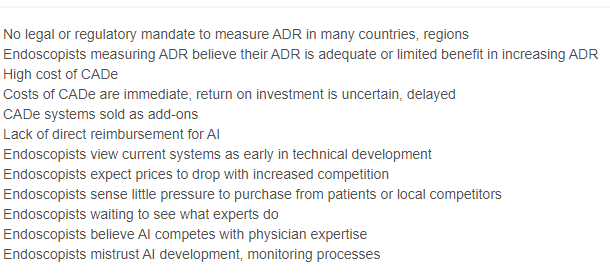
PEnQuIN and Improving the Quality of Pediatric Endoscopy

Several articles in a recent JPGN supplement issue describe the efforts to develop quality standards and indicators for pediatric endoscopy. All of these articles are open access.

The overview article (CM Walsh et al. JPGN 2022;74: S3–S15) is the most important: Open Access: Overview of the Pediatric Endoscopy Quality Improvement Network Quality Standards and Indicators for Pediatric Endoscopy: A Joint NASPGHAN/ESPGHAN Guideline

The reporting article (CM Walsh et al. JPGN 2022;74: S53–S62) lays out the details that should be included in an endoscopy procedure note: open access PDF: Pediatric Endoscopy Quality Improvement Network Pediatric Endoscopy Reporting Elements: A Joint NASPGHAN/ESPGHAN Guideline

The other articles:

JR Lightdale et al. JPGN 2022;74: S16–S29 Open Access: Pediatric Endoscopy Quality Improvement Network Quality Standards and Indicators for Pediatric Endoscopy Facilities: A Joint NASPGHAN/ESPGHAN Guideline

JR Lightdale et al. JPGN 2022;74: S30-S43 Open Access: Pediatric Endoscopy Quality Improvement Network Quality Standards and Indicators for Pediatric Endoscopic Procedures: A Joint NASPGHAN/ESPGHAN Guideline

CM Walsh et al. JPGN 2022;74: S44–S52. Open Access: Pediatric Endoscopy Quality Improvement Network Quality Standards and Indicators for Pediatric Endoscopists and Endoscopists in Training: A Joint NASPGHAN/ESPGHAN Guideline

My view: These detailed articles provide a good framework for improving pediatric endoscopy. After assuring that the facility and personnel are high quality, the pediatric endoscopist has the important responsibility of providing a high quality endoscopy. We need to strive to provide the best care for every single child entrusted in our care. In my view, the most important step is having an appropriate indication and despite guidelines, this remains highly subjective.

Related blog posts:

Internet Survey: Lots of People Have Rumination

A Josefsson et al. Gastroenterol 2022; 162: 731-742. Open Access: Global Prevalence and Impact of Rumination Syndrome

Key findings:

  • Using internet surveys from 26 countries (54,127 subjects), the authors identified an overall prevalence of rumination syndrome of 3.1% (Rome IV criteria)
  • Factors independently associated with rumination syndrome were depression (odds ratio [OR], 1.46), anxiety (OR, 1.8), body mass index (OR, 1.04), and female sex (OR, 1.19)
  • Limitations: this was “an Internet survey with self-reported symptoms. In clinical practice, investigations, including endoscopy and esophageal manometry, are often carried out, so we cannot completely exclude that some subjects had other conditions, misclassified as rumination syndrome” (especially reflux)
  • As noted in the commentary (pgs 696-697), the prevalance drops to 0.122% in those with daily symptoms, which is common in tertiary referral centers, the prevalence drops to 0.122%

My take: Rumination syndrome is common and likely underdiagnosed.

Related blog posts:

Why Do Some People Recover from Acute Liver Failure and Some People Don’t?

Briefly noted: T Lin et al. Hepatology 2022; 322-337. Open Access: Follistatin-controlled activin-HNF4α-coagulation factor axis in liver progenitor cells determines outcome of acute liver failure

Design: After preliminary work in 19 patients with acute liver failure (ALF) and in a zebrafish model, a prospective clinical study followed up 186 patients with cirrhosis for 80 months to observe the relevance of follistatin (FST) levels in prevalence and mortality of acute-on-chronic liver failure.

Key findings: Recovered patients with ALF robustly express HNF4α in either LPCs (liver progenitor cells) or remaining hepatocytes. Serum FST levels could predict the incidence and mortality of acute-on-chronic liver failure.

Implication of study: “Our results indicate that serum FST levels might be a surrogate marker reflecting the extent of hepatocyte death and hepatic insulin resistance, which point to the danger of coagulopathy and clinical deterioration. The hypothesis requires further confirmation in the future.”


Hormone-controlled activin-HNF4α-coagulation factor axis in LPCs

Incidental Liver Lesions -What to Do

B Karmazyn et al. JPGN 2022; 74: 320-327. Diagnosis and Follow-up of Incidental Liver Lesions in Children

This article summarizes the authors’ diagnostic approach to incidental liver lesions. Figure 1 provides provides an overview. The authors note that an MRI is preferred for multiple lesions, complex cysts, and solid cysts >3 cm in size. This algorithm recommends the following:

  • Consideration of liver biopsy for lesions 5 cm or greater (though imaging surveillance can be considered for some lesions with typical benign appearance). Most malignant lesions are >5 cm.
  • For those lesions less than 5 cm, in those with features of hepatocellular adenoma or lesions with atypical features, consider a biopsy if feasible
  • For those lesions less than 5 cm, in those with a typical appearance of a simple cyst, hemangioma or focal nodular hyperplasia, the algorithm recommends surveillance every 6-12 months. When a lesion is stable in size, surveillance can be changed to every 2-3 years. In those lesions that are increasing size, either a biopsy or more frequent surveillance (every 3-6 months) is recommended.
  • In terms of modality, if initial imaging is an ultrasound, the algorithm recommends an MRI if the lesion is a complex cyst, and for solid lesions >3 cm. No followup is recommended for “typical focal fatty infiltration or sparing.”

Related blog post: Liver Masses -Helpful Reference

Dawn in Sandy Springs (no filter)

Disclaimer: This blog, gutsandgrowth, assumes no responsibility for any use or operation of any method, product, instruction, concept or idea contained in the material herein or for any injury or damage to persons or property (whether products liability, negligence or otherwise) resulting from such use or operation. These blog posts are for educational purposes only. Specific dosing of medications (along with potential adverse effects) should be confirmed by prescribing physician.  Because of rapid advances in the medical sciences, the gutsandgrowth blog cautions that independent verification should be made of diagnosis and drug dosages. The reader is solely responsible for the conduct of any suggested test or procedure.  This content is not a substitute for medical advice, diagnosis or treatment provided by a qualified healthcare provider. Always seek the advice of your physician or other qualified health provider with any questions you may have regarding a condition.