Florida Surgeon General Hinders Public Health

In response to the Florida Surgeon General’s comments about COVID-19 vaccine safety in children, the following editorial was published (from Eric Topol’s twitter feed) in The Washington Post –Opinion: Vaccines work for children. Ignore the nonsense spoken in Florida:

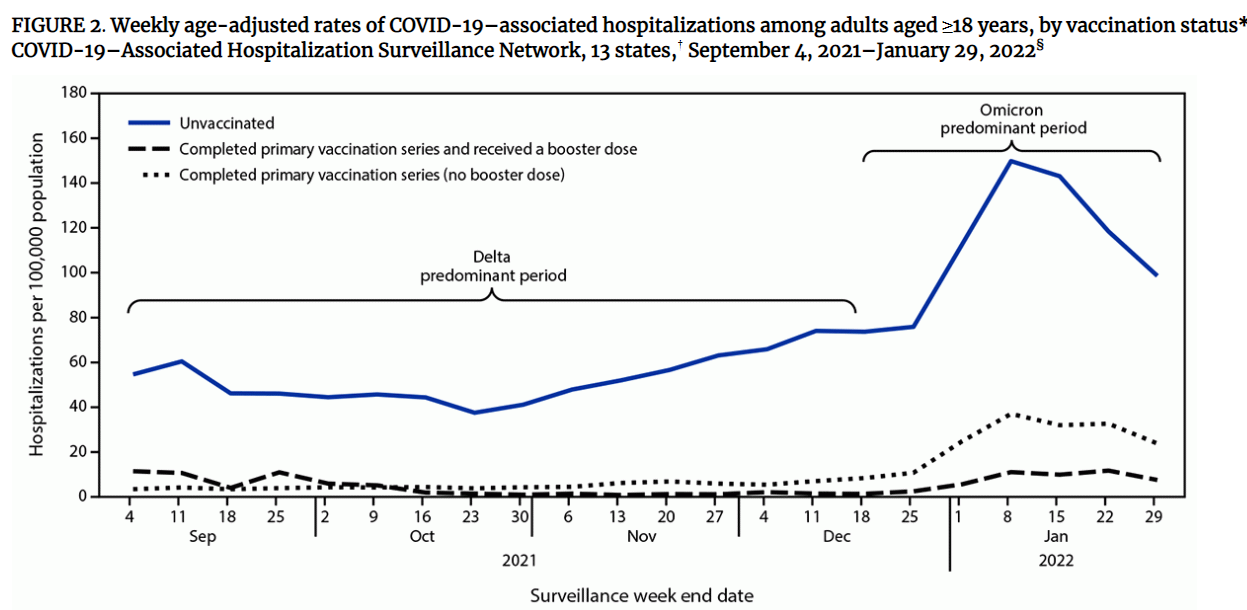
Here’s the data:

Vaccine effectiveness against hospitalization ranged from 73% to 94%.

Here is the MMWR/CDC article (open access) with full data: Effectiveness of COVID-19 Pfizer-BioNTech BNT162b2 mRNA Vaccination in Preventing COVID-19–Associated Emergency Department and Urgent Care Encounters and Hospitalizations Among Nonimmunocompromised Children and Adolescents Aged 5–17 Years — VISION Network, 10 States, April 2021–January 2022

And safety data from MMWR/CDC (open access): Safety Monitoring of COVID-19 Vaccine Booster Doses Among Persons Aged 12–17 Years — United States, December 9, 2021–February 20, 2022

AAP Views: Summary of data publicly reported by the Centers for Disease Control and Prevention Date: 3/2/22

Insider: Florida’s surgeon general breaks with CDC advice, says the state will be the first to ‘officially recommend against the COVID-19 vaccine for healthy children’

My take: It is disgraceful that a prominent physician would jeopardize the health of children and worsen vaccine misinformation more broadly. I think his actions merit review by the ABIM. If you want to share your views with the ABIM: Contact ABIM

“Temporary” Diversion for Distal Crohn’s Disease & Latest COVID Stats

AL Lightner et al. Inflamm Bowel Dis 2022; 28: https://doi.org/10.1093/ibd/izab126. Is Intestinal Diversion an Effective Treatment for Distal Crohn’s Disease?

In this retrospective study (n=132 adults), the indications for surgery were medically refractory proctocolitis with perianal disease (n = 59; 45%), perianal disease alone (n = 24; 18%), colitis (n = 37; 28%), proctitis (n = 4; 3%), proctocolitis alone (n = 4; 3%), and ileitis with perianal disease (n = 4; 3%)

Key findings :

  • The clinical and endoscopic response to diversion was 43.2% (n = 57) and 23.9% (n = 16).
  • At a median follow-up of 35.3 months, 25 patients (19%) had improved and had ileostomy reversal, but 86 (65%) did not improve, with 50 (38%) undergoing total proctocolectomy for persistent symptoms
  • Also, 24% experienced stoma morbidity (peristomal abscess, hernia or prolapse)

My take: In this study of adults with distal Crohn’s disease, a “temporary” stoma/fecal diversion was only temporary in ~20%. This information is quite important for patients when considering this treatment option.

Associated commentary: NEK Wieghard. Inflamm Bowel Dis 2022; 28: 325-326. The Difficulty of Distal Crohn’s Disease and the Utility of Diverting Stomas

From March 8, 2022

Losartan: Not Effective for Pediatric NAFLD

M Vos et al. Hepatology 2022; https://doi.org/10.1002/hep.32403. Open Access: Randomized placebo-controlled trial of losartan for pediatric NAFLD (Thanks to Jeff Schwimmer’s twitter feed for this link)

Rationale for study: “A number of studies suggest the utility of losartan in NAFLD.[11–17] In adults, two meta-analyses have found that angiotensin receptor blockers (ARBs) improve insulin sensitivity and reduce the incidence of type 2 diabetes.[18, 19] A large retrospective review of hypertensive patients treated with angiotensin-converting enzyme inhibitors and/or ARBs demonstrated a significant association of renin-angiotensin system (RAS) antagonists with reduced odds of advanced hepatic fibrosis on biopsy.[20] “

Design: 83 participants (81% male, 80% Hispanic) with histologically proven NAFLD were randomized to losartan (100 mg daily) (n = 43) or placebo (n = 40). ALT was chosen as a primary endpoint, because “reduction of elevated serum ALT … has been shown to significantly correlate with improvement in histology in children, including fibrosis”

Key findings:

  • The 24-week change in ALT did not differ significantly between losartan versus placebo groups (adjusted mean difference: 1.1 U/l; p = 0.95), although alkaline phosphatase decreased significantly in the losartan group (adjusted mean difference: −23.4 U/l; p = 0.01).
  • The authors “found no benefit of losartan on markers of insulin sensitivity, despite an improvement in systolic blood pressure”

My take: This study shows a very low likelihood that Losartan could be beneficial in NAFLD. I would recommend a book (a quick read) to my colleagues: “How I Killed Pluto and Why It Had It Coming.” In this book, the author, Michael Brown, describes years of seemingly-Sisyphean efforts to locate planetoids in our distant solar system; his work ultimately yielded important discoveries.

Related blog posts:

Low Anti-TNF Levels or Antibodies Are Associated with Antibodies to Subsequent Anti-TNF Agent

NV Castelle et al. Clin Gastroenterol Hepatol 2022; 20: 465-467. Open Access: Patients With Low Drug Levels or Antibodies to a Prior Anti-Tumor Necrosis Factor Are More Likely to Develop Antibodies to a Subsequent Anti-Tumor Necrosis Factor

Design: Retrospective case-control study in 5828 patients (2171 cases, 1445 controls). Subjects needed to have consecutively orders of 2 anti-TNF therapies (infliximab (IFX) prior to adalimumab (ADM) or vice versa).

Key findings:

  • Before switch from IFX to ADM, median (interquartile range) IFX serum concentrations were lower in cases versus control subjects (1.0 μg/mL [1.0–1.0] vs 11.7 μg/mL [4.2–27.1]; P < .0001).
  • As noted in figure below, prior antidrug antibodies ADAb) to anti-TNF agent was associated with development of ADAb with 2nd anti-TNF agent. This risk was >2-fold higher when switching from IFX to ADM (B in Figure) and even more when switching from ADM to IFX (D in Figure)
  • Increasing concentrations of ADAb to IFX were associated with higher proportions of patients developing ADAb to ADM (P < .0001). In contrast, increasing concentrations of ADAb to ADM did not result in a significantly higher proportion of patients developing ADAb to IFX.

My take:

  • In my experience, many patients with subtherapeutic anti-TNF levels, even those with ADAb, can remain on initial anti-TNF with more frequent dosing and often with combination therapy. So before jumping off the initial treatment, make sure it has been optimized.
  • In those who do start a 2nd anti-TNF agent, the authors recommend using combination therapy (with an immunomodulator) which “leads to lower rates of clinical failure and more favorable pharmacokinetics, compared with monotherapy.”
  • “Alternatively, a strategy with optimized monotherapy using proactive TDM may be effective as well, but remains to be assessed in a prospective manner.”
Kaplan-Meier curves representing proportion of patients who developed ADAb when (A) switched from infliximab to adalimumab and (C) switched from adalimumab to infliximab. Difference in rate of ADAb formation between cases (red) and control subjects (teal) for those patients who (B) switched from infliximab to adalimumab and (D) switched from adalimumab to infliximab.

Related blog posts:

Disclaimer: This blog, gutsandgrowth, assumes no responsibility for any use or operation of any method, product, instruction, concept or idea contained in the material herein or for any injury or damage to persons or property (whether products liability, negligence or otherwise) resulting from such use or operation. These blog posts are for educational purposes only. Specific dosing of medications (along with potential adverse effects) should be confirmed by prescribing physician.  Because of rapid advances in the medical sciences, the gutsandgrowth blog cautions that independent verification should be made of diagnosis and drug dosages. The reader is solely responsible for the conduct of any suggested test or procedure.  This content is not a substitute for medical advice, diagnosis or treatment provided by a qualified healthcare provider. Always seek the advice of your physician or other qualified health provider with any questions you may have regarding a condition.

Good News for Fans of Gluten

EW Lopes et al. Clin Gastroenterol Hepatol 2022; 20: 303-313.Open Access: Dietary Gluten Intake Is Not Associated With Risk of Inflammatory Bowel Disease in US Adults Without Celiac Disease

Key finding: In 3 large adult US prospective cohorts (n=208,280), gluten intake was not associated with risk of CD or UC in 5,115,265 person-years of follow-up evaluation.

My take (from authors): These ” findings are reassuring at a time when consumption of gluten has been increasingly perceived as a trigger for chronic gastrointestinal diseases.”

Related blog posts:

Chattahoochee River, Atlanta

Slinky for Short Bowel Syndrome?

From GeneralSurgeryNews.com: Open Access: Novel Device Uses Mechanotransduction To Treat Small Bowel Syndrome

An excerpt:

“The basic concept is similar to distraction osteogenesis, which orthopedic surgeons have used for years, applying distraction force to broken bone that will grow up to a millimeter a day,” said Andre Bessette, the CEO and a co-founder of Eclipse Regenesis, Inc…

To regenerate small-bowel tissue, a surgeon inserts the device, which looks like a small, compressed coil, inside the small intestine and secures both ends with plication sutures applied to the outside of the intestine. Over two to three weeks, the device slowly expands to its uncompressed state, stimulating new tissue growth—ultimately two to three times the segment’s original length, about 4 cm...[thus]  they’ll need more than one device applied or more than one procedure.

Once this process is complete, the chromic sutures dissolve over about a month, allowing the device to pass through the body to be excreted...

[The researchers] expect to start these [human] trials in the first half of 2022, and they have identified two primary investigator sites: Boston Children’s Hospital and Cincinnati Children’s Hospital

Preclinical studies: Eclipse’s website at www.eclipseregenesis.com/ publications.

The Consequences of Prior Authorizations

Like many clinicians, I would very much like to tell insurance companies how I really feel about their prior authorization policies, and peer-to-peer processes to get approvals needed for treating our patients.

Most of the time I resent the imposition on my time to craft detailed letters explaining my rationale for treatment. Some obstructionist tactics are particularly aggravating. For example, when I am asked to do a peer-to-peer call and find out on the call that the person on the other end is neither a peer (often a pharmacist) and more importantly that this person is not authorized to remedy the situation but only to arrange another call. Another tactic of asking me to write multiple letters at different stages of the authorization process is extremely annoying. All told, these authorization requests are becoming more frequent and further impinging on my free time.

Now it turns out a study has shown the harmful effects of these maneuvers for our patients:

Constant BD, de Zoeten EF, Stahl MG, et al. Delays Related to Prior Authorization in Inflammatory Bowel Disease. Pediatrics. 2022;149(3):e2021052501 (Thanks to Ben Gold for this reference)

In this retrospective study of 190 pediatric patients ((median age 14.5 years) with IBD initiating biologics at a tertiary care hospital, key findings:

  • Prior authorization and complicated prior authorizations (requiring appeal, step therapy, or peer-to-peer review) were associated with 10.2-day (95% confidence interval [CI] 8.2 to 12.3) and 24.6-day (95% CI 16.4 to 32.8) increases in biologic initiation time, respectively.
  • Prior authorizations increased the likelihood of IBD-related healthcare utilization within 180 days by 12.9% (95% CI 2.5 to 23.4) and corticosteroid dependence at 90 days by 14.1% (95% CI 3.3 to 24.8). 

In their discussion, the authors note that “in a recent survey conducted by the American
Medical Association, 94% of physicians reported that prior authorizations delay access to
necessary care, 90% perceived a negative impact on clinical outcomes, and 30% reported that a prior authorization led to a serious adverse event for a patient in their care.”

My take: Prior authorization policies usually delay needed care unnecessarily and lead to complications in children with IBD.

Related blog posts: 

“Do Not Stop Anti-TNF Medications in Children with IBD When They Are Working”

In 2014, one of the posts on this blog addressed stopping anti-TNF therapy: Marriage, Divorce and Separation with Anti-TNF Therapy. My take at that time was “most patients are better off staying married to their anti-TNF therapy.”

Despite changes in therapeutic options, a recent study and editorial come to the same conclusion in 2022:

In the retrospective study, 78 patients with CD and 56 patients with UC underwent endoscopic reassessment. Key findings:

  • Mucosal healing (MH) was achieved by 32 patients with CD (41%) and 30 patients with UC (53.6%); 26 patients with CD (33.3%) and 22 patients with UC (39.3%) achieved histologic healing (HH)
  • Among 45 patients (n=24 CD, n=21 UC) with both MH & HH, anti-TNF therapy was stopped & patients received either an immunomodulatory or mesalamine. 76% of patients with CD had clinical relapse within 3 years and 17% within 1 year. Importantly, objective markers of relapse, including calprotectin and endoscopy were NOT performed; thus, this is certainly an underestimation of relapse rate and time to relapse.

In the commentary, the authors note the high rate of relapse in other studies with anti-TNF withdrawal (eg. STORI trial) and high rate of surgery in patients with perianal CD who stopped therapy. In the STORI trial, “the best outcomes [for infliximab withdrawal] were those with subtherapeutic infliximab trough levels, ie, those for whom infliximab was not responsible for maintaining their remission.”

The data are less certain for UC. The editorial notes that 85% of the 21 patients in the Scarallo study had limited left-sided colitis and only 17 were followed for at least 1 year. In adult studies on anti-TNF discontinuation with UC (Kennedy et al. Aliment Pharm Ther 2016; 43: 910-23 and Molander et al. Inflamm Bowel Dis 2014; 20: 1021-28), 42% and 35% relapsed within 12 months, whereas another small study (Farkas et al. World J Gastroenterol 2014; 20: 2995-3001) found 100% of patients on combination therapy who stopped anti-TNF agent had to restart anti-TNF therapy.

My take (from editorial): “The totality of the currently available evidence suggests that discontinuing anti-TNF medications in children with IBD is associated with a greatly increased risk of disease exacerbation, especially if the anti-TNF trough level was therapeutic.”

Broadwalk; Hollywood, FL

How Effective are Stents for Anastomotic Esophageal Strictures in Patients with Esophageal Atresia

O Baghdadi et al. JPGN 2022; 74: 221-226. Predictors and Outcomes of Fully Covered Stent Treatment for Anastomotic Esophageal Strictures in Esophageal Atresia

This retrospective review of 45 patients (n=92 stents) examine the effectiveness of esophageal stenting in patients with esophageal atresia (EA). All patients had multiple dilatations prior to stenting and/or had a stricture diameter that rapidly narrowed within 2 weeks of dilatation to a diameter that was the same or smaller to predilatation. Patients were observed in the hospital after stent placement and outpatient management was considered if oral nutrition was tolerated for at least 3 days.

Key findings:

  • According to the authors, the stents prevented surgical resection in 41% of patients
  • ΔD (change in diameter) of ≤4 mm (area under the curve = 0.790; 95% confidence interval: 0.655–0.924; P < 0.001) was the optimal cutoff point in differentiating stent success. If the change in diameter decreases by 4 mm or more after stent removal at endoscopic followup, it is likely that stricture contains significant scar tissue and is not amenable to dilatation/stenting.
  • Median stent duration was 11.5 days
  • The most common adverse events were erosions/ulcerations (29%), granulation tissue formation (27%), vomiting/retching (26%) and stent migration (9%). Three stents were complicated by an esophageal leak (treated medically).

My take: Complications were frequent; thus, stenting for refractory strictures requires highly-specialized technical expertise.

Related blog posts:

Azalea trail, near the Chattahoochee River (Atlanta)