Vedolizumab vs Adalimumab: Histology Outcomes from Varsity Trial

L Peyrin-Biroulet et al. Gastroenterol 2021; Open Access DOI:https://doi.org/10.1053/j.gastro.2021.06.015. Histologic Outcomes With Vedolizumab Versus Adalimumab in Ulcerative Colitis: Results From An Efficacy and Safety Study of Vedolizumab Intravenous Compared to Adalimumab Subcutaneous in Participants With Ulcerative Colitis (VARSITY)

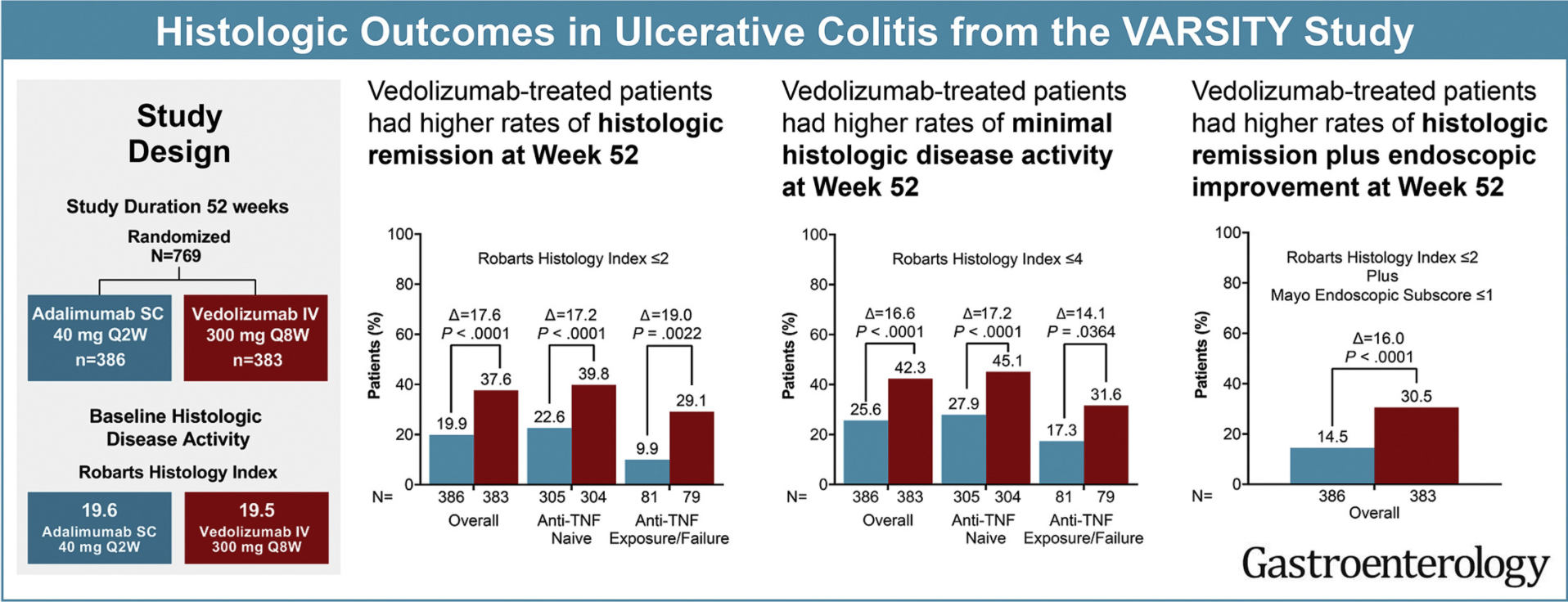
In total, 769 patients received vedolizumab (n = 383) or adalimumab (n = 386). Geboes Index and Robarts Histopathology Index (RHI) scores were used to assess prespecified histologic exploratory end points of histologic remission (Geboes <2 or RHI ≤2) and minimal histologic disease activity (Geboes ≤3.1 or RHI ≤4) at weeks 14 and 52.

Key findings:

Vedolizumab induced greater histologic remission than adalimumab:

  • week 14: Geboes: 16.7% vs 7.3%, RHI: 25.6% vs 16.1%
  • week 52: Geboes: 29.2% vs 8.3%, RHI: 37.6% vs 19.9%
  • Histologic outcomes were generally better in anti–TNF-naïve vs -failure patients

My take: This study shows that histologic outcomes with vedolizumab, similar to clinical outcomes, were better than with adalimumab. Some of this difference could be due to the trail design which did not allow optimization of adalimumab dosing.
Related posts:

Digital Messages from Patients Spiked During Pandemic

The Verge: Digital messages from patients to doctors spiked during the pandemic (Link from Bryan Vartabedian 33mail)

An excerpt:

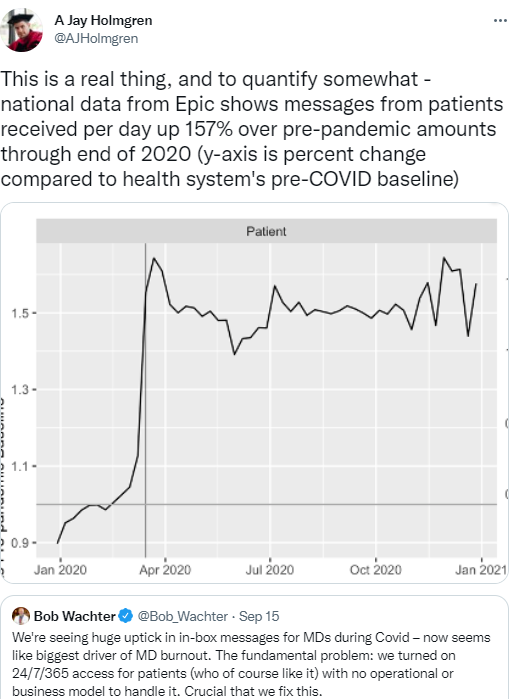
Doctors say they’re overwhelmed by the volume of digital messages they receive from patients during the pandemic, and new data backs up their experience. The number of messages increased by over 150 percent at the start of the COVID-19 pandemic, and the levels stayed high over the course of 2020, according to an early look at data from the electronic health record company Epic.

My take: I generally prefer receiving patient information (outside the office) from my nurse rather than directly from patients. Patient messages can contribute to the feeling that you are never done with work. I do like the idea that these portals allow families to let us know if patients have trouble reaching our office.

Related blog posts:

Enteral Naloxone for Opioid-Induced Constipation

At a recent pharmacy committee meeting, we discussed the potential use of enteral naloxone for ICU patients with opioid-induced constipation.

Background:

  • Opioids bind to mu receptors within the gastrointestinal tract. Activation of the bowel opioid receptors slow gastric transit time, decreases gastric secretions, and reduces intestinal muscle tone leading to enhanced fluid absorption and subsequently dry and hard stools.
  • Naloxone (Narcan®) solution for oral/enteral use
    • Mechanism of action:
      • Pure opioid antagonist that competes and displaces opioid at opioid receptor sites
    • FDA-approved indication: Antidote; opioid antagonist
    • Mechanism of action:
      • As an antidote – pure opioid antagonist that competes and displaces opioids at opioid receptor sites
      • As an oral agent – Enteral administration of naloxone blocks opioid action at the intestinal receptor level but has low systemic bioavailability (if dosed properly) due to marked hepatic first-pass metabolism. As a result, oral naloxone only binds strong enough for a pharmacologic response at opioid receptors in the gastrointestinal tract without reducing the central effect of the opioid and precipitating systemic withdrawal.

Potential alternatives:

  • Methylnaltrexone (Relistor®) SQ 12mg/0.6mL (much more expensive)
  • Rectal treatments: Bisacodyl (Dulcolax®), Enema
  • Oral constipation medications:
    • Polyethylene glycol (Miralax®)
    • Bisacodyl (Dulcolax®)
    • Senna (Senokot®)

Administration:

  • Dose recommendations: 10 – 20 mcg/kg dose PO q8h (max dose: 400mcg) for 5 – 7 days, then re-evaluate therapy
  • Oral/enteral dose should be not administered intravenously to prevent systemic effect and withdrawal in patients

My take: Enteral naloxone (IV solution) may be helpful for opioid-induced constipation but caution is needed to assure it is administered enterally and at proper dose.

Some of the research studies:

  1. Tofil N, Benner K, Faro S, Winkler M. The Use of Enteral Naloxone to Treat Opioid-Induced Constipation in a Pediatric Intensive Care Unit. Pediatr Crit Care Med. 2006;7(3):254-272.
  2. Akkawi R, Eksborg S, Andersson A, et al. Effect of Oral Naloxone Hydrochloride on Gastrointestinal Transit in Premature Infants Treated with Morphine. Acta Paediatrica.2008;98:442-447
  3. Liu M, Wittbrodt E. Low-Dose Oral Naloxone Reverses Opioid-Induced Constipation and Analgesia. J Pain Symptom Manage. 2002;23(1):48-53
  4. Friedman J, Dello Buono F. Opioid antagonist in the Treatment of Opioid-Induced Constipation and Pruritus. Ann Pharmcother. 2001;35:85-91
  5. Meissner W, Schmidt U, Hartmann M, et al. Oral Naloxone Reverses Opioid-Associated Constipation. Pain. 2000;84:105-109

Disclaimer: This blog, gutsandgrowth, assumes no responsibility for any use or operation of any method, product, instruction, concept or idea contained in the material herein or for any injury or damage to persons or property (whether products liability, negligence or otherwise) resulting from such use or operation. These blog posts are for educational purposes only. Specific dosing of medications (along with potential adverse effects) should be confirmed by prescribing physician.  Because of rapid advances in the medical sciences, the gutsandgrowth blog cautions that independent verification should be made of diagnosis and drug dosages. The reader is solely responsible for the conduct of any suggested test or procedure.  This content is not a substitute for medical advice, diagnosis or treatment provided by a qualified healthcare provider. Always seek the advice of your physician or other qualified health provider with any questions you may have regarding a condition.

“In America: Remember”

About 10 days ago, I was in Washington D.C. The image below is from my trip.

NPR: More Than 600,000 White Flags On The National Mall Honor Lives Lost To COVID (9/17/21)

An excerpt:

For more than two weeks starting this week, more than 600,000 white flags will fill the National Mall — symbolizing the lives lost to COVID-19 in the United States.

Each of the flags, displayed across the 20 acres of grass, will hold a written personalized message from loved ones honoring their memory.

The art installation, titled In America: Remember, was created by Suzanne Brennan Firstenberg, the Washington, D.C

Smoking, Alcohol and Obesity Increase Risk of Malignancies + Staff Morale (Humor)

S-M Wang et al. The American Journal of Gastroenterology: September 2021 – Volume 116 – Issue 9 – p 1844-1852. Open Access: Population Attributable Risks of Subtypes of Esophageal and Gastric Cancers in the United States

This study examined population risks for esophageal squamous cell carcinoma (ESCC), esophageal adenocarcinoma (EAC), gastric cardia adenocarcinoma (GCA), and gastric noncardia adenocarcinoma (GNCA).

“We prospectively examined the associations for risk factors and these cancers in 490,605 people in the National Institutes of Health-the American Association of Retired Persons Diet and Health cohort Diet and Health Study cohort from 1995 to 2011.”

Key findings:

My take: Tobacco, Obesity and Alcohol are associated with increased risk for a large proportion of esophageal and gastric cancers in the United States

Related article: VK Rustgi et al. Gastroenterol 2021; 161: 171-184. Open Access: Bariatric Surgery Reduces Cancer Risk in Adults With Nonalcoholic Fatty Liver Disease and Severe Obesity

Key findings:

  • The IPTW (inverse probability of treatment weighting)-adjusted risk of any cancer and obesity-related cancer was reduced by 18% (hazard ratio, 0.82; 95% CI, 0.76–0.89) and 25% (hazard ratio, 0.65; 95% CI, 0.56–0.75), respectively, in patients with versus without bariatric surgery.
  • In cancer-specific models, bariatric surgery was associated with significant risk reductions for colorectal, pancreatic, endometrial, thyroid cancers, hepatocellular carcinoma, and multiple myeloma.

Link: Improving Morale (53 seconds)

Pseudomelanosis -Blue-Black Staining of Colon

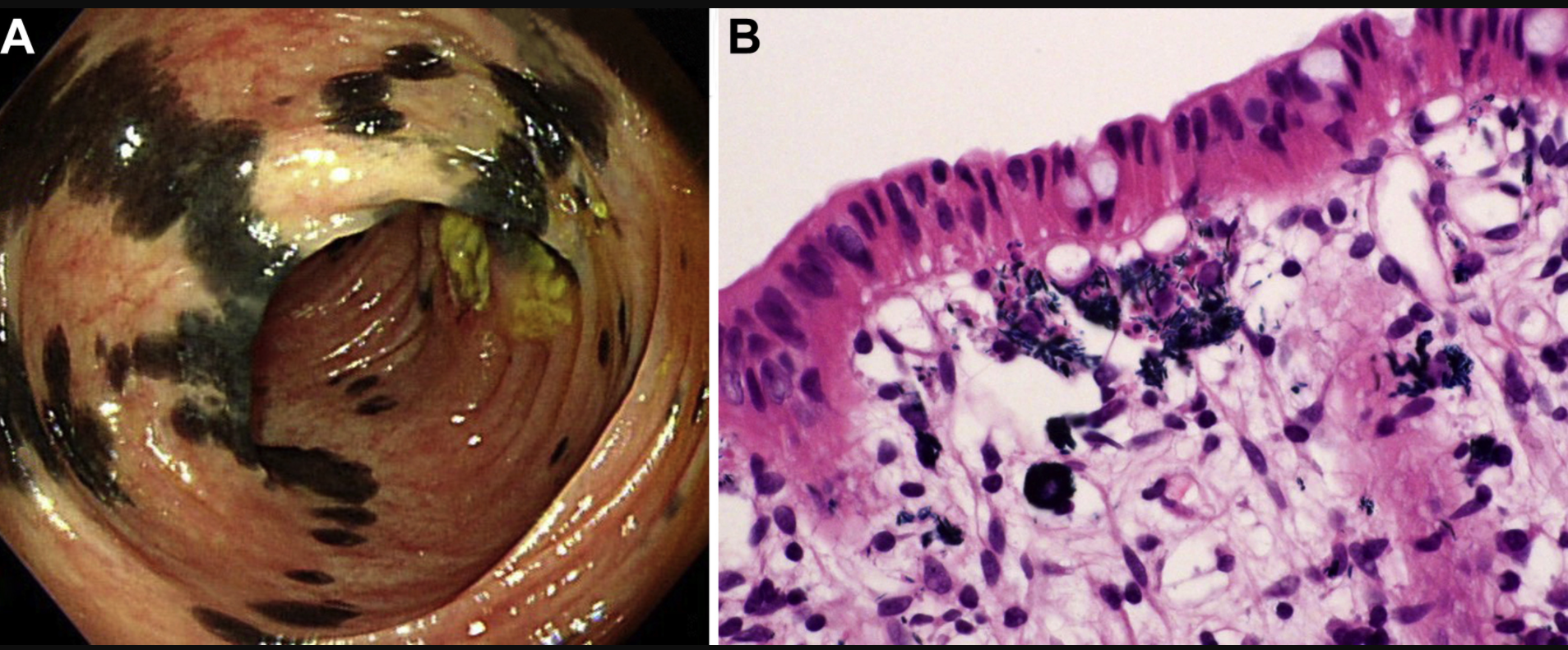
The image below is from a 57 yo woman with Crohn’s disease who was taking a supplement, indigo naturalis (Qing-Dai). “Higher magnification disclosed bluish, needle-like crystals in the cytoplasm of these histiocytes. In light of the presence of pigment-laden histiocytes, we called the lesions indigo naturalis-related pseudomelanosis. Unlike melanosis coli, which typically shows continuous homogeneous brown or black discoloration of colon mucosa (snake-skin appearance or starry sky appearance), indigo naturalis-related pseudomelanosis exhibits a haphazard distribution of black discoloration reminiscent of the skin markings of Holstein Friesian cattle…It remains to be seen whether deposition of indigo naturalis has any long-term adverse effect, although histologically the mucosa with indigo deposition was not accompanied by significant inflammatory activity.”

Link: P-H Le et al. Gastroenterol 2021; 161: e10-e11. Colonic Bluish–Black Patches in a 57-Year-Old Woman with Crohn’s Disease

What To Do with Perianastomotic Ulcerations

C Madre et al. JPGN 2021; 73: 333-337. A European Survey on Digestive Perianastomotic Ulcerations, a Rare Crohn-like Disorder Occurring in Children and Young Adults

This survey study with 51 children described the etiology and treatment of perianastomic ulcerations (PAU).

Key findings:

  • Most common initial etiologies: necrotizing enterocolitis (n = 20) or Hirschsprung disease (n = 11)
  • Median onset of symptoms: 39 [22–106] months after surgery
  • Clinical features: Anemia was the most prevalent symptom followed by diarrhea, abdominal pain, bloating, and failure to thrive. Hypoalbuminemia, elevated CRP, and fecal calprotectin were common
  • Deep ulcerations were found in 59% of patients usually proximally to the anastomosis (68%)
  • Treatments:  treatments reported to be the most effective included exclusive enteral nutrition (31/35, 88%), redo anastomosis (18/22, 82%), and alternate antibiotic treatment (37/64, 58%). The authors note that despite similarity to Crohn’s disease, there was a lack of response to immunosuppressors and anti-TNF therapies
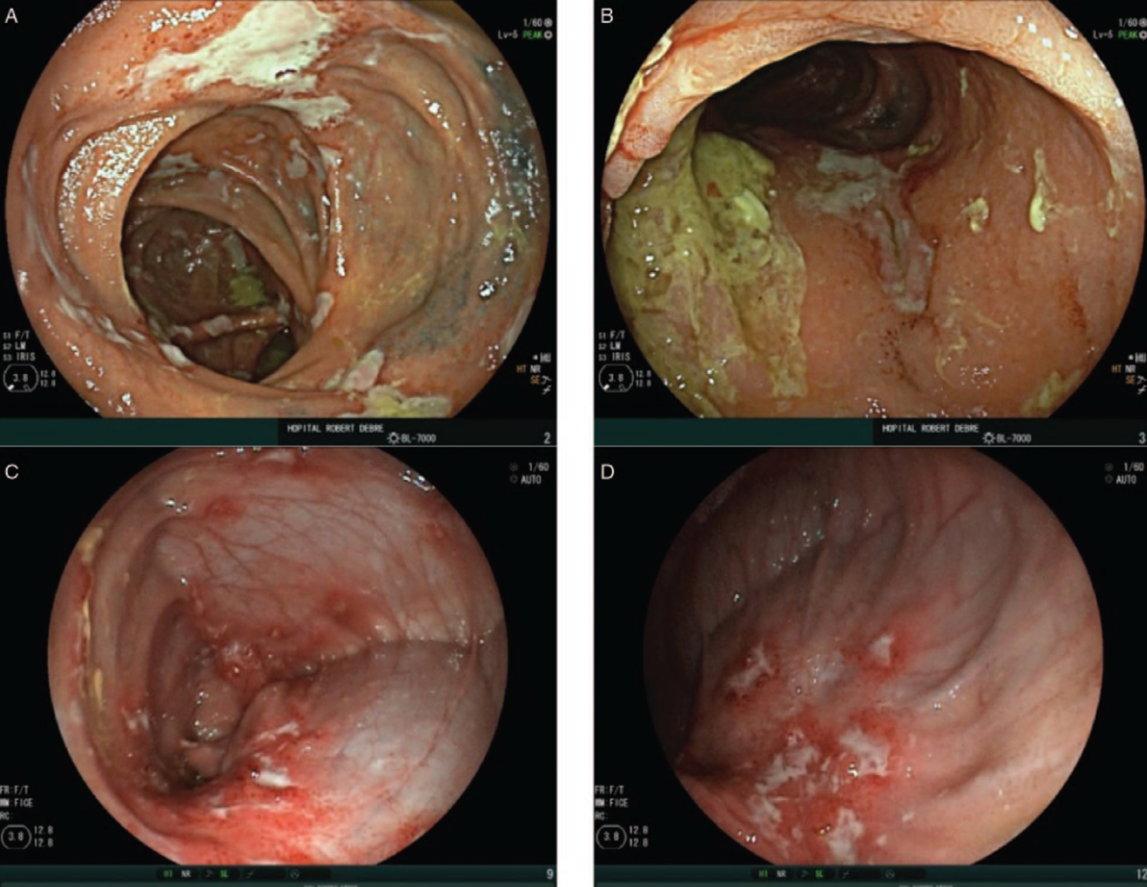
From JPGN twitter feed. Figure 2 in article showing examples of ileocolonic ulcerations

Related article: H Barraclough et al. JPGN 2021; 73: 329-332. Anastomotic Ulcers: A Tertiary Centre Experience of Endoscopic Management Techniques This study summarized a tertiary care center experience with 9 patients (2 with IBD). Frequent treatment included aminosalicylates, and endoscopic treatments (APC, endoclips).

Related blog posts:

Not The Onion: Cow Potty Training

AP: No bull: Scientists potty train cows to use ‘MooLoo’

An excerpt:

Turns out cows can be potty trained as easily as toddlers… 11 out of 16 cows learned to use the “MooLoo” when they had to go…And it took only 15 days to train the young calves.

[Results were] published Monday in the journal Current Biology...Massive amounts of urine waste is a serious environmental issue,…A single cow can produce about 8 gallons (30 liters) of urine a day… toilet training animals makes it easier to manage waste products and reduce greenhouse gas emissions

The researchers mimicked a toddler’s training, putting the cows in the special pen, waiting until they urinated and then giving them a reward: a sweet liquid of mostly molasses… If the cows urinated outside the MooLoo after the initial training, they got a squirt of cold water…

The biggest environmental problem for livestock, though, is the heat-trapping gas methane they emit in belches and flatulence, a significant source of global warming. The cows can’t be trained not to belch or fart, Matthews said: “They would blow up.”

And below from The Onion:

From The Onion

Celiac Disease and Lack of Response to Hepatitis B Immunization

A Aneja et al. JPGN Reports February 2021 – Volume 2 – Issue 1 – p e046: Open Access: Clinical Characteristics of Children With Celiac Disease Not Responding to Hepatitis B Vaccination in India

Methods: The study population from consisted of 3 groups—50 newly diagnosed CD children (group 1), 50 previously diagnosed CD children who were on gluten free diet (GFD) >3 months (group 2), and 100 age and gender matched healthy controls (group 3).

Key findings:

  • Positive anti-HBs response was found in 46% in newly diagnosed CD children, 60% in CD children on GFD, and 83% in healthy controls (P < 0.001)
  • Ongoing gluten intake has significant impact on protective immune response to Hepatitis B vaccine
  • 44 out of 45 (97.77%) nonresponders from CD group seroconverted after a single booster dose

My take: Check Hep B immune response in patients with celiac disease.

Related blog post: Improving Care Process in Celiac Disease

COVID Update: Atlanta Stats, Nationwide Immunization -We’re #45 (for at least 1 dose), Vaccination with Superior Immune Protection in IBD Patients

  • Source: CHOA COVID-19 Webpage The graph below depicts the number of patients hospitalized at CHOA (Egleston and Scottish Rite) during 2021, currently 8.7% of admissions are due to COVID-19.
  • Here’s a link showing the U.S Vaccination Rate Compared to Other Countries (from Eric Topol): U.S. Fallen to #45 in World with Percentage of Population with 1 or More Doses of Vaccine
  • J Dailey et al. Inflammatory Bowel Diseases, izab207https://doi.org/10.1093/ibd/izab207 Open Access: Antibody Responses to SARS-CoV-2 After Infection or Vaccination in Children and Young Adults With Inflammatory Bowel Disease This article showed that there was a “lower and less durable SARS-CoV-2 S-RBD IgG response to natural infection in IBD patients receiving biologics [which] puts them at risk of reinfection. The robust response to immunization is likely protective.” Also, “hospitalized pediatric patients with PCR documented SARS-CoV-2 infection, S-RBD IgG antibody levels were significantly lower in the IBD cohort and by 6 months post infection most patients lacked neutralizing antibody.” This study provides a strong rationale for vaccination, especially in our IBD patients. (Thanks to Stan Cohen for this reference)