How to Do a Colonoscopic Polypectomy & U.S. COVID-19 Tracker

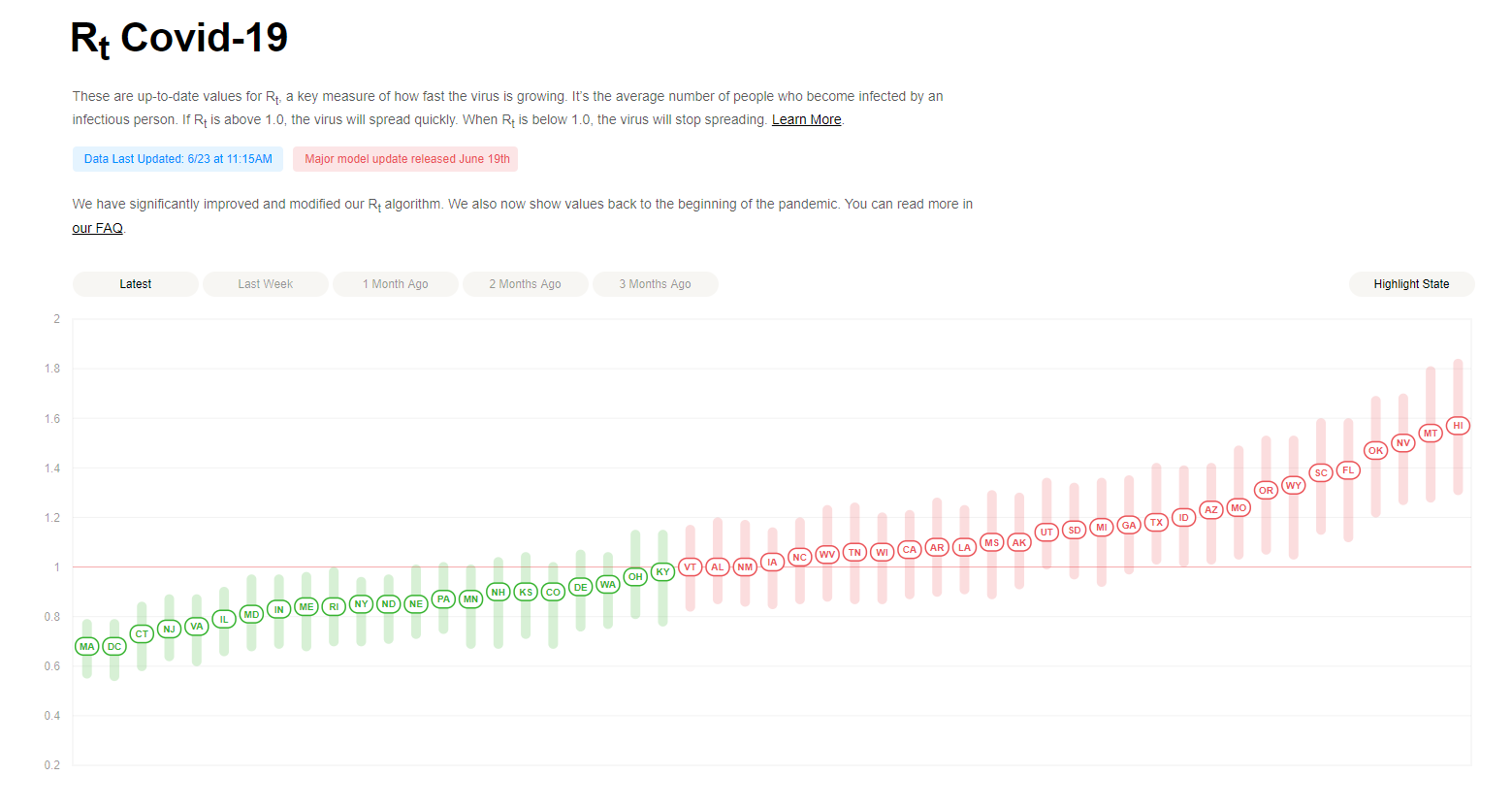
NPR’s website has a good tracker of what is going in each state.  Here’s the link:

NPR: Map: Tracking The Spread Of The Coronavirus In The U.S  One example: on this tracher, in Georgia, March 27, 8:30 am: 1642 reported cases, 56 deaths. (However, Georgia has conducted less than 10,000 tests in a population of more than 10 million).

——————–

A recent review (M Kay, R Wyllie. JPGN 2020; 70: 280-4) provides some practical tips for improving polypectomy technique.

Key points:

The optimal position for the polyp is in the 5-7 o’clock position.

  • Snaring juvenile polyps close to the head rather than close to the colonic wall “allows for easier therapeutic intervention if polypectomy bleeding occurs” (eg. hemoclip) and may lower the risk of complications like perforation
  • Epinephrine volume reduction (for larger polyps) (use 1:10,000 dilution) and saline-assisted polypectomy may facilitate procedure.  Large polyps (>2 cm) could require piecemeal resection; epinephrine reduction may result in a decreased size as well.
  • “Cold snare technique has replaced use of hot biopsy forceps in adults for removal of small sessile polyps”
  • Electrosurgical units (ESUs) -settings are specific to each unit.  Newer ‘smart’ ESUs have suggested default settings, typically lower settings for right colon. “Most endoscopists use pure coagulation current or a combination of coagulation and cutting settings (blended current) for snare polypectomy. Use of pure cutting current without coagulation will result in bleeding.”

Related blog posts:

Disclaimer: This blog, gutsandgrowth, assumes no responsibility for any use or operation of any method, product, instruction, concept or idea contained in the material herein or for any injury or damage to persons or property (whether products liability, negligence or otherwise) resulting from such use or operation. These blog posts are for educational purposes only. Specific dosing of medications (along with potential adverse effects) should be confirmed by prescribing physician.  Because of rapid advances in the medical sciences, the gutsandgrowth blog cautions that independent verification should be made of diagnosis and drug dosages. The reader is solely responsible for the conduct of any suggested test or procedure.  This content is not a substitute for medical advice, diagnosis or treatment provided by a qualified healthcare provider. Always seek the advice of your physician or other qualified health provider with any questions you may have regarding a condition
Pipeline Medications for Ulcerative Colitis (Part 2)

To continue with topic of new medications for ulcerative colitis started yesterday -two more articles:

  • WJ Sandborn et al. Gastroenterol 2020; 158: 537-49
  • S Danese. Gastroenterol 2020; 158: 467-70 (commentary)

The first reference describes a randomized phase 2 study of mirikizumab with 249 patients.  Mirikizumab is a monoclonal antibody to the p19 subunit of IL23. A similar agent, ustekinumab is a monoclonal antibody directed at the p40 subunit of IL23 and IL12; thus mirikuzumab is more selective targeting of IL23. the authors examined response to the study drug at 3 doses: 50 mg, 200 mg, and 600 mg and compared to intravenous placebo.  All patients received dosing at weeks 0, 4, and 8. A subset of patients continued with subcutaneous treatment starting at week 12, with 47 receiving 200 mg every 4 weeks and 46 receiving 200 mg every 12 weeks. 63% of patients in this trial had previous exposure to biologics.

Key findings:

  • At week 12, 15.9% (50 mg), 22.6% (200 mg), and 11.5 % (600 mg) in the treatment groups achieved clinical remission compared to 4.8% of the placebo group
  • Clinical responses occurred in 41.3%, 59.7%, and 49.2% in the respective treatment groups compared to 20.6% in placebo group
  • At week 52, clinical remission was achieved in 46.8% of SC every 4 weeks and 37.0% every 12 weeks.

In the commentary, Danese reviews the pipeline of new drugs emerging for ulcerative colitis.  Full Text Link: New Drugs in the Ulcerative Colitis Pipeline: Prometheus Unbound

A couple of key points:

  • “Like Prometheus, who gave fire to humans and paid with the price of eternal torment, so the gift of new drugs in ulcerative colitis brings the consequence of patients with heterogeneous disease being cycled indiscriminately through similarly modestly effective agents.”
  • “Predictive biomarkers are needed” to optimize treatment and avoid ineffective and potentially harmful treatments

My take: The emergence of new treatments is welcome given the frequent loss of response or lack of response to current therapies.  Two questions: How will we decide which agent(s) is the best one to use? When will pediatric studies be available?


Pipeline Medications for Ulcerative Colitis (Part 1) & Face Mask Shortages

Before getting to today’s post, I wanted to provide a link on why we are desperately short of face masks in the midst of this crisis: NY Times: How the World’s Richest Country Ran Out of a 75-Cent Face Mask

An excerpt:

The answer to why we’re running out of protective gear involves a very American set of capitalist pathologies — the rise and inevitable lure of low-cost overseas manufacturing, and a strategic failure, at the national level and in the health care industry, to consider seriously the cascading vulnerabilities that flowed from the incentives to reduce costs…

Given the vast global need for masks — in the United States alone, fighting the coronavirus will consume 3.5 billion face masks, according to an estimate by the Department of Health and Human Services — corporate generosity will fall short. People in the mask business say it will take a few months, at a minimum, to significantly expand production…

Hospitals began to run out of masks for the same reason that supermarkets ran out of toilet paper — because their “just-in-time” supply chains, which call for holding as little inventory as possible to meet demand, are built to optimize efficiency, not resiliency.

My take: Conserve, conserve, conserve PPE -supply chains meeting the need is NOT imminent.

—————

Several articles from Gastroenterology highlight emerging medications for ulcerative colitis (UC).

Two of the studies:

  • WJ Sandborn et al. Gastroenterol 2020; 158: 550-61.
  • WJ Sandborn et al. Gastroenterol 2020; 158: 562-72.

The first study was a phase 2 randomized trial of etrasimod which is an oral selective sphingosine 1-phosphate receptor modulator.  A total of 156 patients were randomized into 3 groups: placebo, 1 mg etrasimod, and 2 mg etrasimod.

Key findings (graphical abstract):

In the second phase 3, double-blind, double-dummy study, Sandborn et al show that, after the initial 2 intravenous doses,  among patients with an initial response subcutaneous vedolizumab (108 mg every 2 weeks) had similar effectiveness to intravenous vedolizumab (300 mg every 8 weeks); both SC and IV vedolizumab resulted in higher clinical remission rates compared to placebo at 52 weeks in the 216 patients: 46.2%, 42.6%, and 14.3% respectively.

Full text link: Efficacy and Safety of Vedolizumab Subcutaneous Formulation in a Randomized Trial of Patients With Ulcerative Colitis

Iron Injectables

At bottom of post, more information on COVID-19.

——————————————————-

At a recent Pharmacy, Nutrition, and Therapeutics (PNT) meeting, one of the topics that we reviewed was injectable iron agents, primarily iron sucrose (Venofer ®) and ferric carboxymaltose (Injectafer®).  Iron dextran is mainly used as a supplement in parenteral nutrition in our patient population.

Also, this topic is reviewed in Practical Gastroenterology Jan 2020 (M Auerbach et al. January 2020 • Volume XLIV, Issue 1: Treatment of Iron Deficiency in Gastroenterology: A New Paradigm

Key points:

  • Venofer® is much less expensive and currently has an FDA indication for children. To provide 1500 mg, Venofer®, 5 doses of 300 mg (~$75/dose)~$375. Injectafer®, 2 doses of 750 mg (~$600/dose) ~1200.  This does not include potential travel and other ancillary costs.
  • Dosing: Injectafer® can give large amounts of iron; in adults, typical dose is 750 mg given 7 days apart (in children 15 mg/kg/dose with 750 mg max).  FDA approved method is to administer over 15 minutes. Venofer® in children is 5-7 mg/kg/dose with 300 mg max per dose.
  • Injectafer® has been associated with hypophosphatemia (in 27%, <2 mg/dL); Hypophosphatemia has also been reported with iron sucrose.  The reported incidence of hypophosphatemia is higher with ferric carboxymaltose vs iron sucrose.
  • Other Adverse Effects
Iron Sucrose (Venofer®) Ferric Carboxy (Injectafer®)
Nausea 8.6% 7.2%
Vomiting 5% 1.7%
Diarrhea 7.2% <1%
Dizziness 6.5% 2%
Hypertension 6.5% 3.8%

Oral vs IV Iron for IBD: Auerbach et al recommends that “iron should only be given orally to IBD patients with inactive disease, mild anemia, and good tolerance of oral iron; in patients with active IBD oral iron should be avoided.”  They state that “oral iron has been shown to exacerbate intestinal inflammation of IBD independent of anemia, and cause luminal changes in microbiota and bacterial metabolism, which may negatively alter the microbiome.” (Has IV iron’s effect on the microbiome been studied/compared to oral iron?)

Safety of intravenous iron: “In a recent meta-analysis, the results of more than 10,000 patients who were treated with intravenous iron were reported. Compared to oral iron, placebo, and even intramuscular iron (which should never be given), while minor infusion reactions were observed with IV iron, there was no increase in serious adverse events compared to any comparator including placebo.”

My take: Injectafer® is likely preferable to Venofer® in the outpatient setting as adequate dosing can be given in 1 or 2 infusions.

Related blog posts:

Trail on Blood Mountain

Disclaimer: This blog, gutsandgrowth, assumes no responsibility for any use or operation of any method, product, instruction, concept or idea contained in the material herein or for any injury or damage to persons or property (whether products liability, negligence or otherwise) resulting from such use or operation. These blog posts are for educational purposes only. Specific dosing of medications (along with potential adverse effects) should be confirmed by prescribing physician.  Because of rapid advances in the medical sciences, the gutsandgrowth blog cautions that independent verification should be made of diagnosis and drug dosages. The reader is solely responsible for the conduct of any suggested test or procedure.  This content is not a substitute for medical advice, diagnosis or treatment provided by a qualified healthcare provider. Always seek the advice of your physician or other qualified health provider with any questions you may have regarding a condition
————————————

Here’s a link to Financial Times COVID-19 Tracker –includes logrithmic charts plotting the rates of reported infection and deaths and allows quick comparison between countries and high-volume locations (eg. Madrid, Lombardia, NY City).  Some figures from March 23, 2100 GMT noted below; unfortunately, the U.S is likely to the world leader in number of reported cases quite soon.

Other relevant tweets:


Allocating Scarce Resources During COVID-19 Pandemic

Here’s a link to CDC website and COVID-19 symptom self-checker (advice for families):

CDC Link: Testing for COVID-19

———

Full Link NEJM 2020 (Ezekial J Emmanuel et al): Fair Allocation of Scarce Medical Resources in the Time of Covid-19

This article spells out an ethical approach to the likely need to ration care in the midst of this pandemic.

Here’s an excerpt:

Recommendation 1: In the context of a pandemic, the value of maximizing benefits is most important…Saving more lives and more years of life is a consensus value across expert reports… Because young, severely ill patients will often comprise many of those who are sick but could recover with treatment, this operationalization also has the effect of giving priority to those who are worst off in the sense of being at risk of dying young and not having a full life….Because maximizing benefits is paramount in a pandemic, we believe that removing a patient from a ventilator or an ICU bed to provide it to others in need is also justifiable and that patients should be made aware of this possibility at admission..Undoubtedly, withdrawing ventilators or ICU support from patients who arrived earlier to save those with better prognosis will be extremely psychologically traumatic for clinicians — and some clinicians might refuse to do so. However, many guidelines agree that the decision to withdraw a scarce resource to save others is not an act of killing and does not require the patient’s consent

Recommendation 2: Critical Covid-19 interventions — testing, PPE, ICU beds, ventilators, therapeutics, and vaccines — should go first to front-line health care workers and others who care for ill patients and who keep critical infrastructure operating, particularly workers who face a high risk of infection and whose training makes them difficult to replace…Priority for critical workers must not be abused by prioritizing wealthy or famous persons or the politically powerful above first responders and medical staff — as has already happened for testing. Such abuses will undermine trust in the allocation framework.

Recommendation 3: For patients with similar prognoses, equality should be invoked and operationalized through random allocation, such as a lottery, rather than a first-come, first-served allocation process

Recommendation 4: Prioritization guidelines should differ by intervention and should respond to changing scientific evidence. For instance, younger patients should not be prioritized for Covid-19 vaccines

Recommendation 5: People who participate in research to prove the safety and effectiveness of vaccines and therapeutics should receive some priority for Covid-19 interventions

Recommendation 6: There should be no difference in allocating scarce resources between patients with Covid-19 and those with other medical conditions.

Placing such burdens on individual physicians could exact an acute and life-long emotional toll… To help clinicians navigate these challenges, institutions may employ triage officers, physicians in roles outside direct patient care, or committees of experienced physicians and ethicists,

My take: Reading this article is so sad.  It is heart-breaking just contemplating the need for these well-considered recommendations.  Also, see below -ACG shared data indicating significant fallibility with testing for Sars-Cov2/COVID-19.

Projected 20-Year and 30-Year Survival Rates for Pediatric Liver Transplant Recipients (U.S.)

A recent study (MG Bowring et al. JPGN 2020; 70: 356-63) provides data on pediatric liver transplantation (LT) survival rates and projected survival rates.

This retrospective cohort study included 13,442 first-time pediatric (<18) LT recipients from 1987-2018.

Key findings:

  • Projected 20-year survival rate for pediatric LT from 2007-18: 84.0%
  • Prior 20-year survival rates: 72.8% (1997-2006 cohort) and 63.6% (1987-1996 cohort)
  • Projected 30-year survival rates for pediatric LT from 2007-18: 80.1%
  • Prior 30-year survival rates: 68.6% (1997-2006 cohort) and 57.5% (1987-1996 cohort)
  • Projected outcomes with split LT (28% of 2007-2018 cohort) are similar to outcomes with whole LT

My take: While projections can overestimate and underestimate survival rates, the clear trend has been a remarkable improvement in long-term outcomes.  This published data can provide current expectations when counseling families, though with ongoing improvements in management/development of tolerance, the hope is for even better outcomes.

Related blog posts:

View from the top of Blood Mountain, Ga

Esophagus! & Nutritional/GI Outcomes with Esophageal Atresia

In 8th grade, our English teacher would say ‘Esophagus, recite that poem.’  He would say this to everybody.  It is possible that the flask that he carried could have influenced his word choice.

That anecdote came to mind as reading a recent article (K Birketvedt et al. J Pediatr 2020; 218: 130-7) which showed that a large number of adolescents with history of esophageal disease (esophageal atresia [EA]) had a high likelihood of suboptimal nutritional parameters. In this study with 68 pediatric subjects, extensive investigations including 4-day diet records, blood tests, pH measuring, EAT (eating assessment test) questionnaire, and interviews. Median age at follow-up was 16 years.

Key findings:

  • Median height-for-age Z score was -0.6. 10 patients (15%) were considered stunted (height-for-age Z score <-2).
  • More than two-thirds reported symptoms of dysphagia (EAT score ≥3) and avoided specific foods.
  • 48 (71%) had suboptimal energy intake on diet records –intake below age-appropriate recommendations.  Many had low vitamin D and iron intake.
  • 13 of 68 patients had VACTERL association and 17 (25%) had congenital heart disease

My take: If your esophagus is not working right, it definitely can impair one’s nutritional status.  Some patients have other reasons (other comorbidities) that could influence these reported results.

As for the anecdote, I still remember some of the poems we had to recite.  The one I remember best:

To An Athlete Dying Young  A. E. Housman – 1859-1936 

The time you won your town the race
We chaired you through the market-place; 
Man and boy stood cheering by, 
And home we brought you shoulder-high.  

To-day, the road all runners come,    
Shoulder-high we bring you home,  
And set you at your threshold down,  
Townsman of a stiller town.  

Smart lad, to slip betimes away  
From fields where glory does not stay, 
And early though the laurel grows  
It withers quicker than the rose.  

Eyes the shady night has shut  
Cannot see the record cut,  
And silence sounds no worse than cheers 
After earth has stopped the ears:  

Now you will not swell the rout  
Of lads that wore their honours out,  
Runners whom renown outran  
And the name died before the man. 

So set, before its echoes fade,  
The fleet foot on the sill of shade,  
And hold to the low lintel up  
The still-defended challenge-cup.  

And round that early-laurelled head
Will flock to gaze the strengthless dead,  
And find unwithered on its curls  
The garland briefer than a girl’s.

Related blog posts:


How to Protect Healthcare Workers from COVID-19: Lessons from Hong Kong and Singapore

Atul Gawande has a very pertinent article in the New Yorker:  Keeping the Coronavirus from Infecting Health-Care Workers

An excerpt:

There are lessons to be learned from two places that saw the new coronavirus before we did and that have had success in controlling its spread. Hong Kong and Singapore…

 All health-care workers are expected to wear regular surgical masks for all patient interactions, to use gloves and proper hand hygiene, and to disinfect all surfaces in between patient consults. Patients with suspicious symptoms (a low-grade fever coupled with a cough, respiratory complaints, fatigue, or muscle aches) or exposures (travel to places with viral spread or contact with someone who tested positive) are separated from the rest of the patient population, and treated—wherever possible—in separate respiratory wards and clinics, in separate locations, with separate teams. Social distancing is practiced within clinics and hospitals: waiting-room chairs are placed six feet apart; direct interactions among staff members are conducted at a distance; doctors and patients stay six feet apart except during examinations.

What’s equally interesting is what they don’t do. The use of N95 masks, face-protectors, goggles, and gowns are reserved for procedures where respiratory secretions can be aerosolized. Their quarantine policies are more nuanced, too. What happens when someone unexpectedly tests positive—say, a hospital co-worker or a patient in a primary-care office or an emergency room? In Hong Kong and Singapore, they don’t shut the place down or put everyone under home quarantine. They do their best to trace every contact and then quarantine only those who had close contact with the infected person. In Hong Kong, “close contact” means fifteen minutes at a distance of less than six feet and without the use of a surgical mask; in Singapore, thirty minutes. If the exposure is shorter than the prescribed limit but within six feet for more than two minutes, workers can stay on the job if they wear a surgical mask and have twice-daily temperature checks. People who have had brief, incidental contact are just asked to monitor themselves for symptoms…

Transmission seems to occur primarily through sustained exposure in the absence of basic protection or through the lack of hand hygiene after contact with secretions…

Singapore so far appears not to have had a single recorded health-care-related transmission of the coronavirus, despite the hundreds of cases that its medical system has had to deal with…

For those who cannot stay home, the lesson is that it is feasible to work and stay coronavirus-free, despite the risks….a greater likelihood of staff picking up infections at home than at work. 

Ethical Dilemmas and Digestive Symptoms –Common with COVID-19

Ethical Dilemmas:

Full link: NEJM: Facing Covid-19 in Italy — Ethics, Logistics, and Therapeutics on the Epidemic’s Front Line

That truth is rather grim. Though Italy’s health system is highly regarded and has 3.2 hospital beds per 1000 people (as compared with 2.8 in the United States), it has been impossible to meet the needs of so many critically ill patients simultaneously…

If protecting patients is difficult, so is protecting health care workers, including nurses, respiratory therapists, and those tasked to clean the rooms between patients…

Though approaches vary even within a single hospital, I sensed that age was often given the most weight.

In the midst of the outbreak’s peak in northern Italy, as physicians struggled to wean patients off ventilators while others developed severe respiratory decompensation, hospitals had to lower the age cutoff — from 80 to 75 at one hospital, for instance…

The first and most important is to separate clinicians providing care from those making triage decisions. The “triage officer,” backed by a team with expertise in nursing and respiratory therapy, would make resource-allocation decisions and communicate them to the clinical team, the patient, and the family.

Digestive Symptoms:

From ACG: Full Link: ACG Media Statement

Excerpt:  (March 18, 2020) – Digestive symptoms are common in COVID19, occurring as the chief complaint in nearly half of patients presenting to hospital according to a new
descriptive, cross-sectional multicenter study from China by investigators from the Wuhan Medical Treatment Expert Group for COVID-19 published today in The American Journal of Gastroenterology

Key findings:

  • Compared to COVID-19 patients without digestive symptoms, those with digestive symptoms have a longer time from onset to admission and a worse clinical outcome according to this analysis by investigators from several hospitals and research centers in China who gathered data on 204 patients with COVID-19 presenting to three
    hospitals in Hubei province from January 18, 2020 to February 28, 2020.
  • Patients with digestive symptoms had a variety of manifestations, such as anorexia (83 [83.8%] cases), diarrhea (29 [29.3%] cases), vomiting (8 [0.8%] cases), and abdominal pain (4 [0.4%] cases)
  • As the severity of the disease increased, digestive symptoms became more pronounced.
  • Link to study: Pan L, et al., Clinical characteristics of COVID-19 patients with digestive symptoms in Hubei, China: a descriptive, cross-sectional, multicenter study, Am J Gastroenterol 


“Crushing it:” Practice Guidance for Hepatitis C

Today’s post on Hepatitis C follows a few screenshots from twitter regarding the coronavirus epidemic.

Pediatric report of coronavirus in children: NEJM Full link: SARS-CoV-2 Infection in Children A recent review of 72,314 cases by the Chinese Center for Disease Control and Prevention showed that less than 1% of the cases were in children younger than 10 years of age (n=171)…3 patients required intensive care support and invasive mechanical ventilation; all had coexisting conditions. There was one death in a 10-month-old child with intussusception had multiorgan failure and died 4 weeks after admission.

——-

As noted yesterday, this post will review a recent practice guidance for hepatitis C

Some specific recommendations for children:

Testing:

  • “All children born to HCV-infected women should be tested for HCV infection. Testing is recommended using an antibody-based test at or after 18 months of age.”
  • “Testing with an HCV-RNA assay can be considered in the first year of life, but the optimal timing of such testing is unknown” (but can be done as early as 2 months of life).
  • “The siblings of children with vertically-acquired chronic HCV should be tested for HCV infection, if born from the same mother.”

Counseling for parents:

  • “Parents should be informed that hepatitis C is not transmitted by casual contact and, as such, children with HCV infection do not pose a risk to other children and can participate in school, sports, and athletic activities, and engage in all other regular childhood activities without restrictions.”
  • “Parents should be informed that universal precautions should be followed at school and in the home of children with HCV infection. Educate families and children about the risk and routes of HCV transmission, and the techniques for avoiding blood exposure, such as avoiding the sharing of toothbrushes, razors, and nail clippers, and the use of gloves and dilute bleach to clean up blood.”

Treatment:

  • “Direct-acting antiviral (DAA) treatment with an approved regimen is recommended for all children and adolescents with HCV infection aged ≥3 years as they will benefit from antiviral therapy, regardless of disease severity.”
  • Early treatment in childhood is expected to be cost-effective compared to treatment at later ages based on previous studies

This chart provides recommendations for pediatric patients who have not received prior direct-acting antivirals. More information at HCVguidelines.org