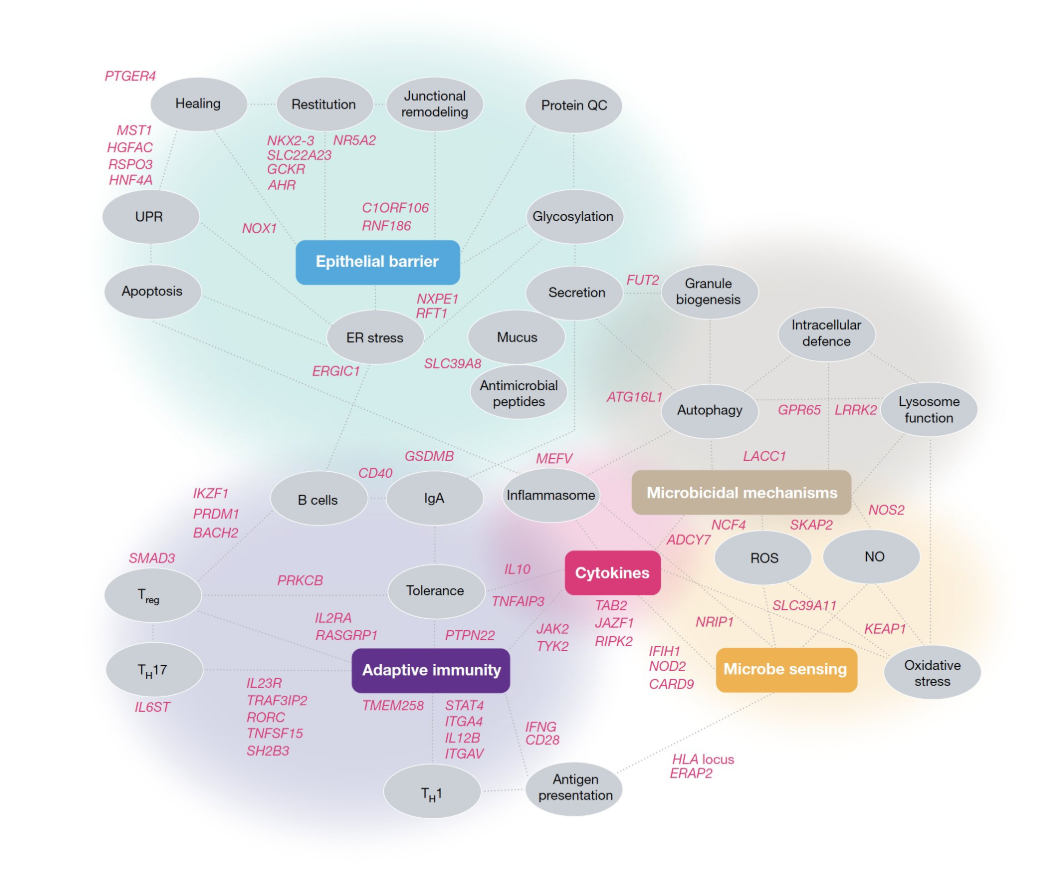
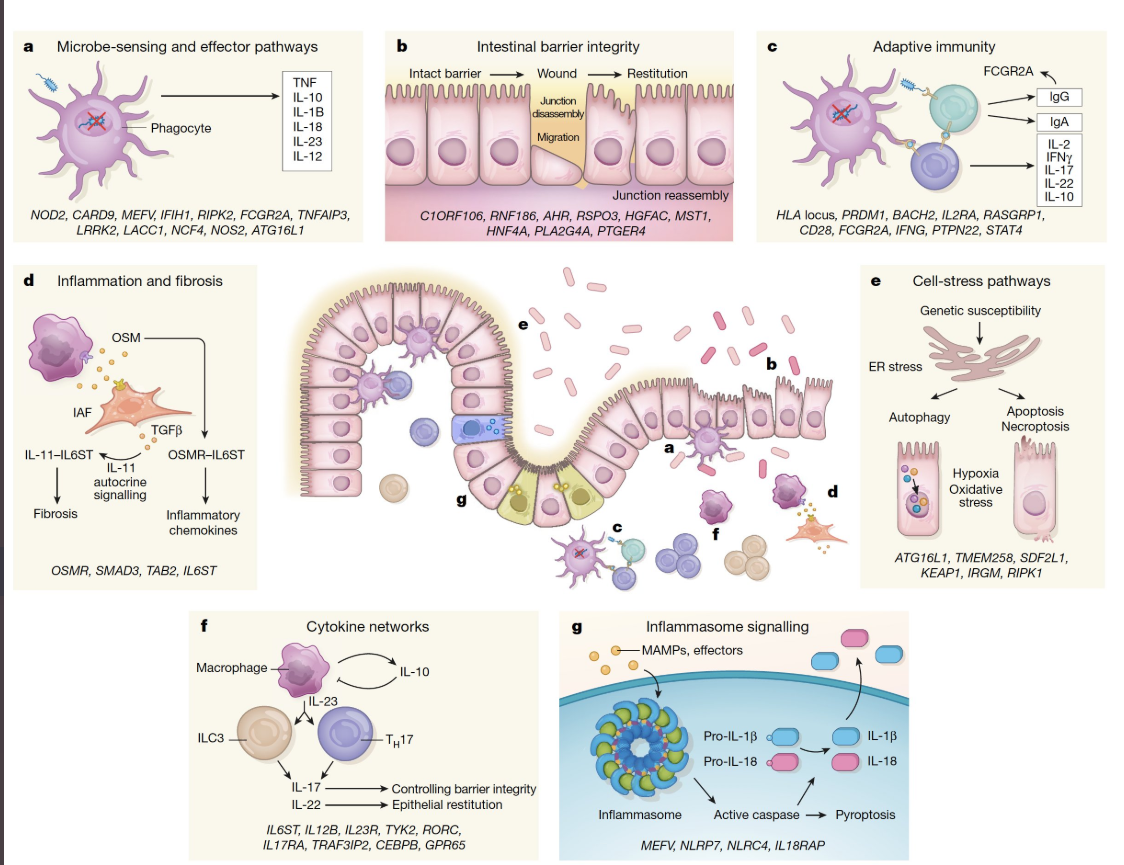
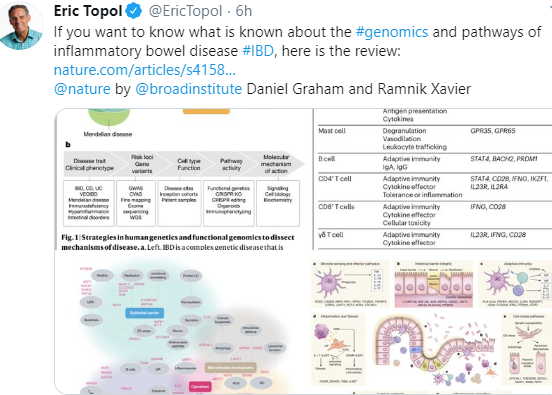
#NASPGHAN19 Postgraduate Course (Part 1)

Here are some selected slides and notes from this year’s NASPGHAN’s postrgraduate course.  My notes from these lectures may contain errors in omission or transcription.

Link to the full NASPGHAN PG Syllabus 2019

8:00 – 9:00 Module 1 – Endoscopy

11  David Brumbaugh, MD, Children’s Hospital Colorado  Management of foreign bodies

Related blog posts:

22 Petar Mamula, MD, Children’s Hospital of Philadelphia Advanced endoscopic techniques for gastrointestinal bleeding

This talk had some terrific videos (not available in syllabus) and useful practical points.  For example, with cautery, the speaker recommended not just quickly taping the lesion, count for several seconds when applying.  For hemospray, the speaker considers this technically much easier but is using this mainly as a backup option.

Here are two screenshots (not from lecture) which provide information from manufacturer on Hemospray use (link to PDF on Hemospray Manufacturer’s PDF on Hemospray)

Related blog posts:

36 Srinadh Komanduri, MD, Northwestern Medicine  Cancer screening top to bottom

Some of the key points:

  • IBD and colorectal cancer (CRC) screening 8-10 years after disease onset
  • ~10% of CRC in general population occurs between 20-49 years
  • Chromoendoscopy results in higher detection rates of dysplasia

Related blog posts:

Disclaimer: NASPGHAN/gutsandgrowth assumes no responsibility for any use or operation of any method, product, instruction, concept or idea contained in the material herein or for any injury or damage to persons or property (whether products liability, negligence or otherwise) resulting from such use or operation. The discussion, views, and recommendations as to medical procedures, choice of drugs and drug dosages herein are the sole responsibility of the authors. Because of rapid advances in the medical sciences, the Society cautions that independent verification should be made of diagnosis and drug dosages. The reader is solely responsible for the conduct of any suggested test or procedure. Some of the slides reproduced in this syllabus contain animation in the power point version. This cannot be seen in the printed version.

#NASPGHAN19 Liver Symposium (Part 4)

Although I was unable to attend this year’s liver symposium at NASPGHAN19, I reviewed the lecture notes.  There is some terrific content.  Here are some of the slides (borrowed with permission from NASPGHAN).

Link to complete NASPGHAN Chronic Liver Disease Symposium 2019

SESSION IV – LIVER TRANSPLANT: PRE- AND POST-TRANSPLANT CONSIDERATIONS

Referring your patient for liver transplantation Shikha S. Sundaram, MD MSCI, FAASLD, Children’s Hospital Colorado

Where will we get our organs from in 2020?  Jean Emond MD, Columbia University Medical College (Slides not available in online handout)

What should I do if my liver transplant patient has elevated liver tests?  Udeme Ekong MD, Georgetown University Hospital

What is a “normal” childhood after liver transplantation? Estella Alonso MD, Ann and Robert H Lurie Children’s Hospital

Disclaimer: NASPGHAN/gutsandgrowth assumes no responsibility for any use or operation of any method, product, instruction, concept or idea contained in the material herein or for any injury or damage to persons or property (whether products liability, negligence or otherwise) resulting from such use or operation. The discussion, views, and recommendations as to medical procedures, choice of drugs and drug dosages herein are the sole responsibility of the authors. Because of rapid advances in the medical sciences, the Society cautions that independent verification should be made of diagnosis and drug dosages. The reader is solely responsible for the conduct of any suggested test or procedure. Some of the slides reproduced in this syllabus contain animation in the power point version. This cannot be seen in the printed version.

#NASPGHAN19 Liver Symposium (Part 3)

Although I was unable to attend this year’s liver symposium at NASPGHAN19, I reviewed the lecture notes.  There is some terrific content.  Here are some of the slides (borrowed with permission from NASPGHAN).

Link to complete NASPGHAN Chronic Liver Disease Symposium 2019

SESSION III – UPDATE ON PORTAL HTN: ASSESSMENT AND MANAGEMENT

What do I do now? The management of portal hypertensive complications: Varices, ascites, and encephalopathy Rene Romero, MD, Children’s Hospital of Atlanta

When there is good function, but the flow is all wrong: Approach to non-cirrhotic portal hypertension Evelyn Hsu, MD, Seattle Children’s Hospital

The role of the interventional radiologist in the treatment of portal HTN: How can I help you?  Jared R. Green, MD, Ann and Robert H. Lurie Children’s Hospital (SLIDES NOT AVAILABLE)

When to consider surgery in the treatment of portal HTN?  Riccardo Superina, MD, FRCS(C), FACS, Northwestern University  (SLIDES NOT AVAILABLE)

#NASPGHAN19 Liver Symposium (Part 2)

Although I was unable to attend this year’s liver symposium at NASPGHAN19, I reviewed the lecture notes.  There is some terrific content.  Here are some of the slides (borrowed with permission from NASPGHAN).

Link to complete NASPGHAN Chronic Liver Disease Symposium 2019

SESSION II – FRONTIERS IN LIVER THERAPEUTICS

Keynote Speaker: Outcomes for the future: How do we improve on the status quo? Ronald J. Sokol, MD, FAASLD, Children’s Hospital Colorado  (SLIDES NOT AVAILABLE in onliine handout)

Recognition and stabilization of the pediatric patient with acute liver failure Robert Squires MD Children’s Hospital of Pittsburgh at UPMC

Should I offer treatment for my patients with Hepatitis B or Hepatitis C? Regino P. Gonzalez-Peralta MD, AdventHealth for Children

Are there any medical therapies for NASH?   Marialena Mouzaki, MD, Cincinnati Children’s Hospital Medical Center

This lecture describes a lot of the emerging pharmacologic treatments; none of these are currently recommended.

#NASPGHAN19 Liver Symposium Notes (Part 1)

Although I was unable to attend this year’s liver symposium at NASPGHAN19, I reviewed the lecture notes.  There is some terrific content.  Here are some of the slides (borrowed with permission from NASPGHAN).

Link to complete NASPGHAN Chronic Liver Disease Symposium 2019

Session I

How do I best evaluate a cholestatic infant? Sanjiv Harpavat MD Texas Children’s Hospital 

Related blog post: What is the evidence that biliary atresia starts in utero?

As for this algorithm, in my opinion, the 1st step needs to be to exclude emergencies associated with infantile cholestasis: coagulopathy, hypoglycemia, sepsis, and checking urine for reducing substances (cow’s milk formula can worsen liver disease if galactosemia is present). Subsequently, evaluation needs to proceed quickly to determine the etiology.

How do I interpret genetic results?  Saul J. Karpen MD, PhD, Emory University School of Medicine/Children’s Healthcare of Atlanta

What do abnormal liver enzyme levels mean in a tween?  William F. Balistreri MD, Cincinnati Children’s Hospital Medical Center

What do I do with this abnormal radiology finding? Jean Molleston MD, Riley Children’s Hospital

I have not selected slides from Dr. Molleston’s handout –the images are terrific.  For most of the problems that are presented, the lecture notes do not provide specific recommendations for management.

Disclaimer: NASPGHAN/gutsandgrowth assumes no responsibility for any use or operation of any method, product, instruction, concept or idea contained in the material herein or for any injury or damage to persons or property (whether products liability, negligence or otherwise) resulting from such use or operation. The discussion, views, and recommendations as to medical procedures, choice of drugs and drug dosages herein are the sole responsibility of the authors. Because of rapid advances in the medical sciences, the Society cautions that independent verification should be made of diagnosis and drug dosages. The reader is solely responsible for the conduct of any suggested test or procedure. Some of the slides reproduced in this syllabus contain animation in the power point version. This cannot be seen in the printed version.


Food Safety Lecture–It is Still A Jungle Out There

Yesterday, I posted a blog that tried to summarize some of William Balistreri’s talk on Global Health.  He gave a 2nd Excellent Lecture on Food Safety at the Georgia AAP Nutrition Symposium.  One audience member suggested that this lecture was well-paired with the previous lecture as the awareness of food-borne illnesses might deter gluttony.

This lecture was packed with information regarding food safety; he highlighted the extensive and frequent food-borne illnesses.

Key points:

  • The problem of food-borne illness was put under a spotlight by Upton Sinclair in The Jungle (1906) which led to reforms in meat packing industry.  However, more work is needed
  • FSMA -Food Safety Modernization Act was signed into law in 2011; it’s aim is to create a proactive rather than reactive approach, Historic opportunity to increase food safety
  • Food-borne illnesses: 1 in 10 persons worldwide will be sick every year & leads to 1/2 million deaths worldwide each year.  125,000 deaths in children
  • Food-borne illnesses: 48 million cases in U.S. each year (CDC estimates) and 3000 deaths (MMWR 64:2, 2015)
  • Besides significant mortality rates for food-borne illnesses, they also contribute to post-infectious irritable bowel syndrome (~13% of all cases) and these illnesses can be indefinite
  • Social media, including “IwasPoisoned.com” and Yelp, will likely help identify outbreaks more quickly.  Newer molecular technologies during food processing has the potential to improve food safety.

Resources:

  • For those who want to keep up food-borne illnesses, Dr. Balistreri recommended food safety news, which provides daily emails. Link to subscribe: Food Safety News
  • Two books that were recommended: The Poison Squad by Deborah Blum and Outbreak by Timothy Lytton
  • The CDC has plenty of advice and a useful pamphlet regarding the key 4 steps with food preparation: Clean, Separate, Cook, Chill. https://www.cdc.gov/foodsafety/keep-food-safe.html
  • Another resource: FoodSafety.gov

Link to full talk slides PDF: FOOD SAFETY (10-10-19)  I have placed about 20 slides below which summarize much of the information that he conveyed.


“The Paramount Health Challenge for Humans in the 21st Century”

I had the privilege recently of introducing William Balistreri as the keynote speaker for the Georgia AAP Nutrition Symposium.  Dr. Balistreri is a personal hero for me; someone I admire greatly.  Hopefully, if he reads this, he will forgive me for forgetting to mention in my introduction that he also is a Lacrosse coach for one of his grandchildren’s team.

He gave a tour de force presentation on the global challenge of obesity.  In addition, he discussed undernutrition, endobariatrics, gastroenteritis, climate change and even food waste; 40% of U.S. food is thrown away. In Finland, there is a ‘Grocery Store Happy Hour‘ for distribution of reduced cost/free groceries which may help reduce food waste.  In general, I try to condense what I read or hear –that was pretty much impossible with this lecture which was packed with information based on the latest research as well as information dating back to the 5th Century BC/Plato.  What follows are some of my favorite slides.

Here is a link to the full talk: WHAT’S HOT in Pediatric Gastroenterology? Global Nutrition Lecture (10-10-19)

Two Articles received the most attention:

  1. LANCET Commission on Global Syndemic (Obesity, Undernuturition, and Climate Change)
  2. EAT- LANCET Commission on Healthy Diets

What Can Be Done?

Additional References:

A recent book (not discussed in lecture) provides related information. “We Are The Weather” by Jonathan Foer, was reviewed this past weekend in the NY Times: Meat is Murder: “[This book] has a point, and that is to persuade us to eat fewer animal products. Foer makes the case that, for Americans and citizens of other voracious meat-eating countries, this is the most important individual change we can make to reduce our carbon footprints.” However, the reviewer, Mark Bittman, states that “we’re not good at making positive decisions about our future. And we’re really not good at denying ourselves cheap pleasures like cheeseburgers.”  He advocates for stronger laws, government leadership, and pricing the products to account for their true costs in terms of their contributions to climate change, public health, and environmental degradation.

Related blog posts:


Anti-TNF Therapy: Might Save Your Health But Not Your Wallet

A recent study (LE Targownik, EI Benchimol, J Witt et al. Inflamm Bowel Dis 2019; 25: 1718-28) shows that direct health care costs are increased with anti-TNF therapy.

In this retrospective study using the Manitoba IBD Database, the authors examined the direct costs associated with anti-TNF therapy initiation in 928 patients (676 CD, 252 UC).  Only 84 subjects were <18 years.

Key findings:

  • The median costs for health care in the year of anti-TNF initiation increased compared to prior year.  In year prior to initiation, median costs were $4698 for CD and $6364 for UC; in the first year of anti-TNF treatment, costs rose to $39,749 and $49,327 respectively.
  • Costs remained elevated through 5 years of anti-TNF therapy for continuous users with total median of $210,956 and $245,260 respectively
  • There were reductions in non-drug costs. Inpatient and outpatient costs decreased in the year after anti-TNF initiation by 12% and 7% respectively, when excluding the costs of anti-TNFs.  These observed savings are considerably less than the medication expenditures.

Discussion:

  • Costs for medications are likely to improve with the introduction of biosimilars.  Currently these are being used mainly in persons with a new diagnosis due to reticence to switch from originator product in established patients.
  • The authors note that costs were overall higher with infliximab (IFX) than adalimumab (ADA) though “it is possible that patients with higher-severity disease are channeled toward IFX over ADA.”
  • Indirect costs like ability to go to work and achieve educational potential could offset some of the direct costs.  In a prior study in the U.S., ADA treatment was estimated to reduce indirect costs of “nearly $11,000 per person treated.”

Limitations:

  • Some costs were not measured in the study including emergency room visits, over the counter medications and alternative health care use.
  • This was not a randomized study; thus, it is impossible to know what costs of persons with similar disease who were untreated would have been.

My take: This study shows that saving money is not the main reason to use anti-TNF therapies; rather, their effects on improved health and fewer complications.

Related blog posts:

Haystack Rock, Cannon Beach OR