Pediatric NAFLD Guidelines 2017

The concise recommendations (M Vos et al. JPGN 2017; 64: 319-34) from the Expert Committee on NAFLD (ECON)/NASPGHAN provide helpful advice on this increasingly common disorder. Link to full text: NASPGHAN Clinical Practice Guideline for NAFLD

The recommendations are graded on strength of recommendation and quality of the evidence.

Some key points:

  • Use ALT as a screening tool (despite its imperfections). Persistently elevations (>2xULN) should be evaluated for liver disease, including NAFLD.  (Norms: 22 U/L for girls, 26 U/L for boys). Values above 80 U/L “warrants increased clinical concern.”
  • Screening should be considered between ages 9 and 11 years for all obese children and for overweight children with additional risk factors.
  • Ultrasound and CT scans are NOT recommended.
  • Liver biopsy should be considered for the assessment of NAFLD in children who have increased risk of NASH and/or advanced fibrosis.  This could include those with splenomegaly, AST/ALT>1, higher ALT (>80 U/L), panhypopituitarism, and type 2 diabetes.
  • Treatment: Lifestyle modifications recommended.  No currently avaiable medications or supplements are recommended.
  • Look for & avoid comorbidities: dyslipidemias, hypertension, and diabetes. Assure vaccinations against Hep A/Hep B and counsel against binge drinking and against smoking.

Related blog posts:

screenshot-150

A Better Budesonide for Eosinophilic Esophagitis

A recent study (S Olivia et al. JPGN 2017; 64: 218-24) examines a preprepared viscous budesonide (PVB) for eosinophilic esophagitis (EoE).

The authors used higher doses than in previous studies: 1 mg twice a day if height <150 cm and 2 mg twice a day if height >150 cm.  Treatment period was 12 weeks.

Key findings:

  • 32 of 36 (89%) showed macroscopic remission at 12 weeks and median eosinophils count in histology dropped from 42.2 to 2.9 cells/hpf.  46.7% maintained remission (off therapy) at 36 weeks.
  • 89% achieved eosinophil count <20 cells/hpf at 12 weeks.
  • In this short study, the authors did not identify any changes in cortisol levels.

My take: A reliable composition from a manufacturer, if not too expensive, would be a big improvement for many kids with EoE. Higher doses of budesonide may be warranted in some cases of EoE.

Related article: “How I Approach the Management of Eosinophilic Esophagitis in Adults” I Hirano. Am J Gastroenterol 2017; 112: 197-99. (Thanks to Seth Marcus for this reference). The author states that he prefers to perform a baseline assessment prior to PPI initiation.  After diagnosis, he will use PPI and if no response, advance to either a dietary approach or topical steroids (he prefers fluticasone using the diskus formulations). His goals for therapy include: elimination of esophageal eosinophilia (<5-15 eos/hpf), resolution of dysphagia, and maintenance of esophageal diameter ≥16 mm. He does advocate annual testing for adrenal insufficiency for those taking long-term topical steroids.

Related blog posts:

screenshot-162

Protecting Animals in Medical Schools

An interesting development has been the abandonment of live animals to train surgical skills (DJ Simkin et al. NEJM 2017; 376: 713-15).  Last year, the last two medical schools, who used live (anesthetized) animals, dropped this part of a core curriculum for training in surgery.

While the use of animals for medical education had “been used in medical education for millennia, the practice has now been abolished from the standard curriculum of every U.S. medical school.”  While some alternative methods for training, like more sophisticated simulation, had been developed, clearly the change was driven by groups like “The Physicians Committee for Responsible Medicine” (8% of whose members are physicians).

While the goal of humane care for animals is laudable, it is worthwhile to contemplate that now “the brunt of the risks associated with learning tends to be borne by patients who are uninsured, undocumented, members of minority groups or otherwise marginalized.”

My take (borrowed from authors): “The underlying moral question –On whose bodies will clinical medicine first be practiced?–continues to require close attention.”

screenshot-157

Vitamin D and Ulcerative Colitis Remission

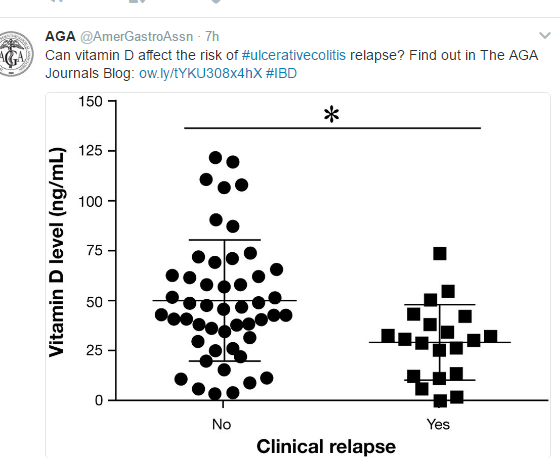
A recent study (J Gubatan et al. Clin Gastroenterol Hepatol 2017; 15: 240-6) examined a prospective study of 70 patients with ulcerative colitis (UC).  These patients (average age 48.6 yrs) were initially in clinical remission.  Key findings:

  • Mean baseline vitamin D (25-OH) level was lower among patients with subsequent relapse (29.5 ng/mL) than those without relapse (50.3 ng/mL)
  • Over 12 months, a 25-OH D value <35, was associated with a small increased risk of relapse (odds ratio1.25). 20% of patients with a value <35 had clinical relapse compared with 9% (P= .003) who had values >35.

Because vitamin D levels are inversely related to UC disease activity, this study is particularly intriguing.  By enrolling patients prospectively while in remission, this study suggests that good vitamin D levels may directly have immunoprotective and anti-inflammatory properties.

The AGA Journals blog provides an excellent summary of this study: Can Vitamin D Affect Risk of Ulcerative Colitis Relapse?

“In an editorial that accompanies the article, Stephen Hanauer reminds readers that the mean vitamin D level in the entire cohort was 44 ng/mL, and 60% of the subjects were taking vitamin D supplements. A normal vitamin D level is considered to be 20–40 ng/mL in healthy individuals, and the 35 ng/mL cut-off level used in the study was within this range.

Hanauer also mentions that in assessing the confidence intervals for risk of relapse at lower or higher vitamin D levels, there does not appear to be a dose–response effect in the odds ratios according to levels. Based on these findings, Hanauer says it would be premature to target a level of 35 ng/mL. He states that the best predictors of clinical relapse are still endoscopic and histologic markers of inflammation.”

My take: At this time, trying to maintain a normal vitamin D level is likely to be worthwhile; though, values obtained during acute flares remain unreliable.

Related blog posts:

Disclaimer: These blog posts are for educational purposes only. Specific dosing of medications/diets (along with potential adverse effects) should be confirmed by prescribing physician/nutritionist.  This content is not a substitute for medical advice, diagnosis or treatment provided by a qualified healthcare provider. Always seek the advice of your physician or other qualified health provider with any questions you may have regarding a condition.

screenshot-99

Complexity in Cystic Fibrosis Diagnosis

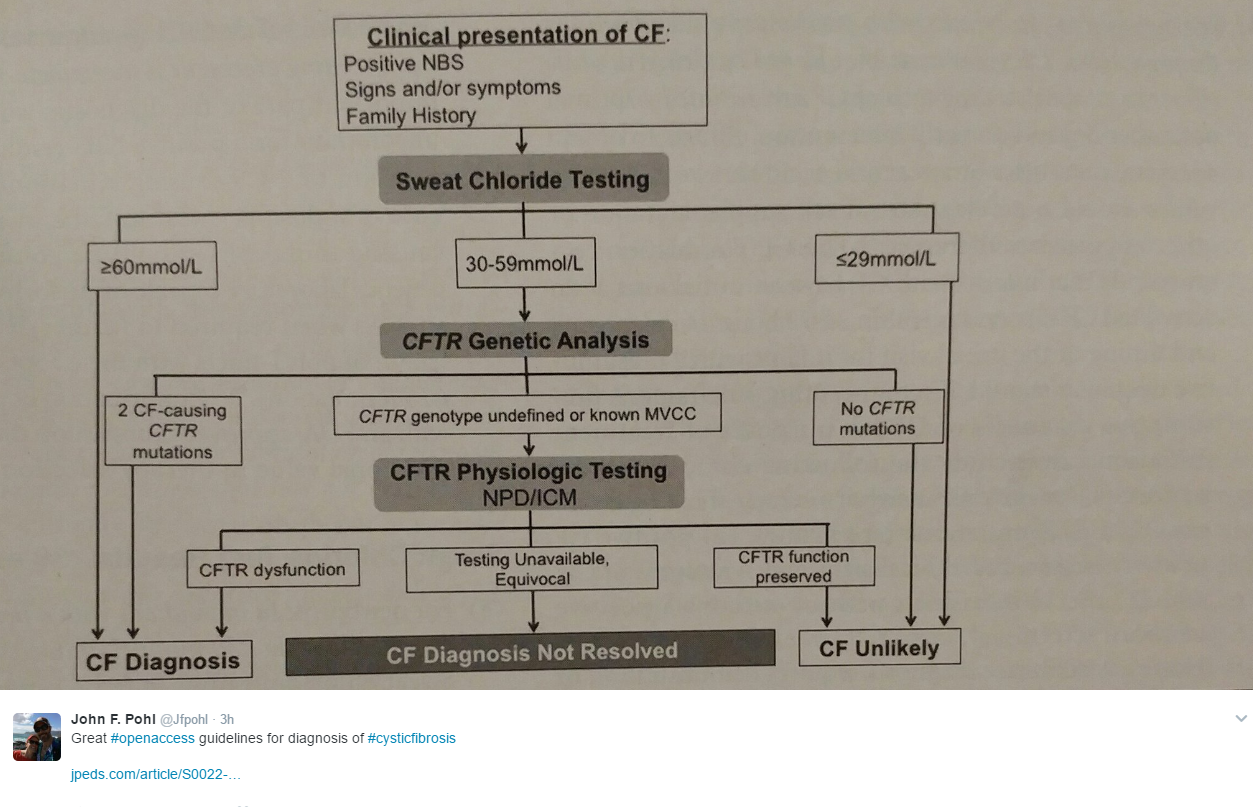
The availability of multiple diagnostic techniques for cystic fibrosis has increased the complexity and created areas of uncertainty.  A recent supplement (J Pediatr 2017; 181S: 1-55) delve into these issues.

“The diagnosis of CF has become increasingly complex, as CFTR mutations resulting in a wide spectrum of dysfunction have been increasingly identified.”

On page S6, 27 consensus recommendations are given.

The article S45-51, reviews cystic fibrosis transmembrane conductance regulator-related metabolic syndrome (CRMS) and cystic fibrosis screen positive, inconclusive diagnosis (CFSPID).  Key points:

  • CRMS and CFSPID are equivalent entities with CRMS being the preferred terminology in the US
  • CRMS/CFSPID are relatively frequent; for every 3 to 5 cases of CF, there is one case of CRMS/CFSPID.
  • The majority of CRMS/CFSPID do NOT develop CF. Approximately 10-20% develop clinical features concerning for CF.

screenshot-116

Related blog posts:


Do antibiotics contribute to obesity? Not in recent study

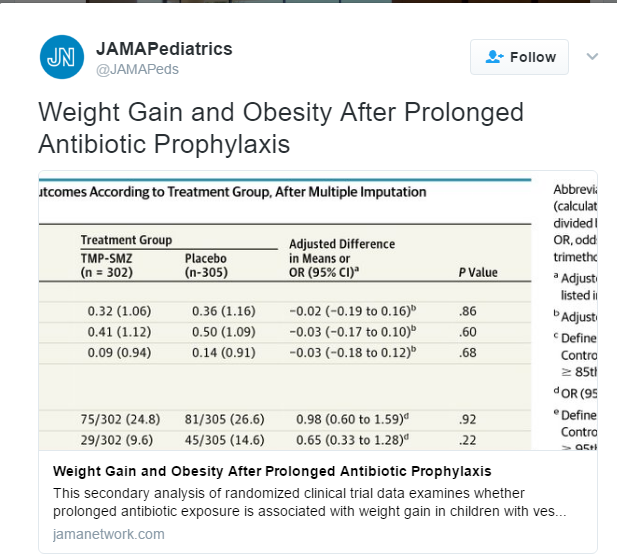
There have been studies suggesting that antibiotics at a young age promote obesity and other studies that have NOT found an association. A recent study (JAMA Pediatr. 2017;171(2):150-156. doi:10.1001/jamapediatrics.2016.3349could not find an effect of chronic prophylactic antibiotics.

Link: Weight Gain and Obesity in Infants and Young Children Exposed to Prolonged Antibiotic Prophylaxis

From Abstract:

Design, Setting, and Participants  Secondary analysis of data from the Randomized Intervention for Children With Vesicoureteral Reflux Study, a 2-year randomized clinical trial that enrolled participants from 2007 to 2011. All 607 children who were randomized to receive antibiotic (n = 302) or placebo (n = 305) were included. Children with urinary tract anomalies, premature birth, or major comorbidities were excluded from participation.

Interventions  Trimethoprim-sulfamethoxazole or placebo taken orally, once daily, for 2 years.

Results  Participants had a median age of 12 months (range, 2-71 months) and 558 of 607 (91.9%) were female. Anthropometric data were complete at the 24-month visit for 428 children (214 in the trimethoprim-sulfamethoxazole group and 214 in the placebo group). Weight gain in the trimethoprim-sulfamethoxazole group and the placebo group was similar (mean [SD] change in weight-for-age z score: +0.14 [0.83] and +0.18 [0.85], respectively; difference, −0.04 [95% CI, −0.19 to 0.12]; P = .65). There was no significant difference in weight gain at 6, 12, or 18 months or in the prevalence of overweight or obesity at 24 months (24.8% vs 25.7%; P = .82). Subgroup analyses showed no significant interaction between weight gain effect and age, sex, history of breastfeeding, prior antibiotic use, adherence to study medication, or development of urinary tract infection during the study.

My take: Whether antibiotics could contribute to obesity is not entirely clear –even the possibility could encourage better stewardship of antimicrobials.

Related blog posts:

screenshot-143

screenshot-144

Triglyceride Levels and Pancreatitis

A recent study (JAMA Intern Med 2016; 176: 1834-42) suggests that even mild to moderate hypertriglyceridemia may increase risk of pancreatitis.

Among two large cohorts that were followed prospectively for a median of 6.7 years, 434 out of 116,550 patients developed acute pancreatitis.

Key finding (which persisted after adjustment of multiple potential confounding factors):

screenshot-140

More complete summary at GI & Hepatology News: “Mild, moderate hypertriglceridemia tied to pancreatitis”


What’s Happening on the Edge of Viability

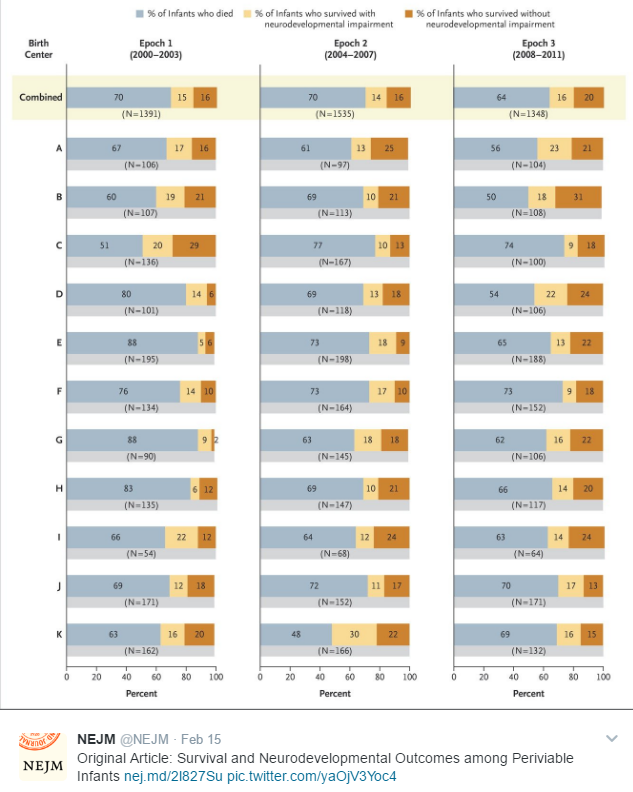
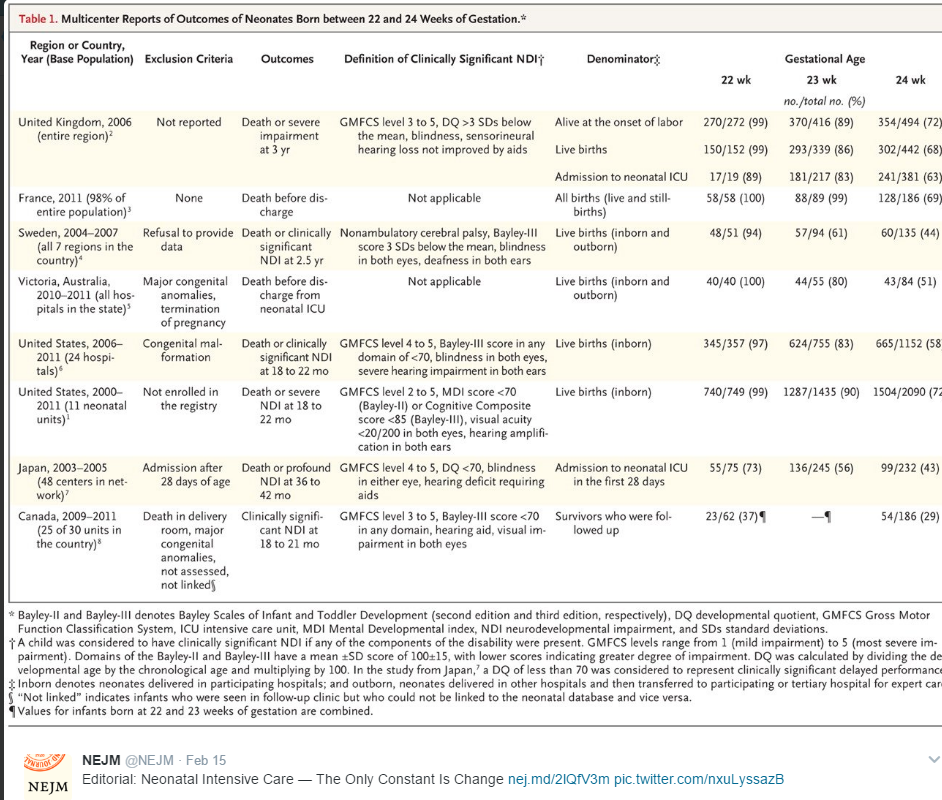
A study (N Younge et al. NEJM 2017; 376: 617-28) provides some data on the slowly changing survival and neurodevelopmental outcomes among periviable infants (22-24 weeks gestation).

From epoch 1 (2000-2003), to epoch 3 (2008-2011), there has been some improvements. Overall survival increased from 30% to 36% and the percentage without neurodevelopmental impairment increased from 16% to 20%.

Mortality and Neurodevelopmental Outcomes at ~18 months of age (combined data and 11 centers)

Mortality and Neurodevelopmental Outcomes at ~18 months of age (combined data and 11 centers)

The insightful commentary (pgs 694-6) notes that there has not been improvement in survival in infants born at 22 weeks.  Furthermore, in reviewing multiple studies on outcomes, neurodevelopmental impairment was >94% in patients born at 22 weeks and between 80-90% for infants born at 23 weeks.  At 24 weeks, neurodevelopmental impairment was present between 51-72%

screenshot-137

Related blog posts:

Will Bariatric Surgery Become an Endoscopic Procedure?

A recent study (BK A Dayyeh et al. Clin Gastroenterol Hepatol 2017; 15: 37-43) provides evidence that endoscopic sleeve gastoplasty can be an effective treatment for obesity.

AGA Website Summary Endoscopic Sleeve Gastroplasty: A Promising New Weight Loss Procedure

An excerpt:

In the fight against obesity, bariatric surgery is currently the most effective treatment; however, only 1 to 2 percent of qualified patients receive this surgery due to limited access, patient choice, associated risks and the high costs. A novel treatment method — endoscopic sleeve gastroplasty — might offer a new solution for obese patients. Endoscopic sleeve gastroplasty is a minimally invasive, safe and cost-effective weight loss intervention, according to a study1 published online in Clinical Gastroenterology and Hepatology, the official clinical practice journal of the American Gastroenterological Association…

In this study of 25 patients with obesity who underwent the procedure at the Mayo Clinic in Rochester, MN, endoscopic sleeve gastroplasty reduced excess body weight by 54 percent at one year. Further, the procedure delayed solid food emptying from the stomach and created an earlier feeling of fullness during a meal, which resulted in a more significant and long-lasting weight loss.

Endoscopic sleeve gastroplasty was well tolerated as an outpatient treatment, requiring less than two hours of procedure time. Patients resumed their normal lifestyle within one to three days. The treatment was performed using standard “off-the-shelf” endoscopic tools as opposed to specific weight loss devices or platforms. The cost of endoscopic sleeve gastroplasty is roughly one-third that of bariatric surgery.

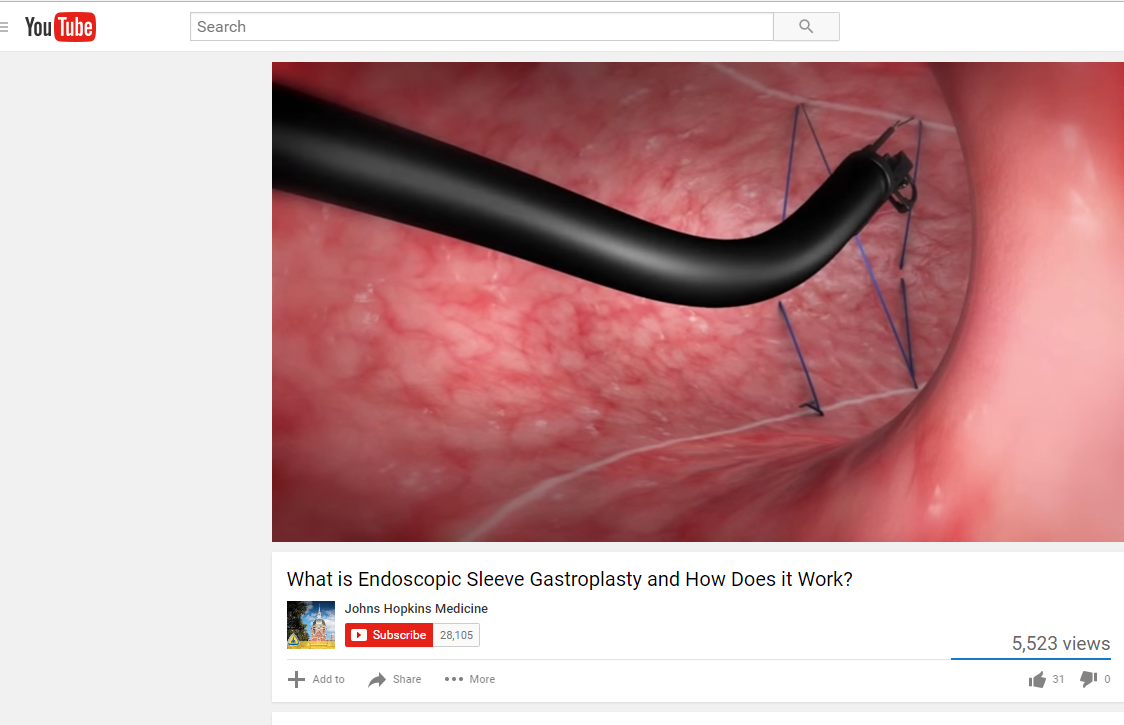
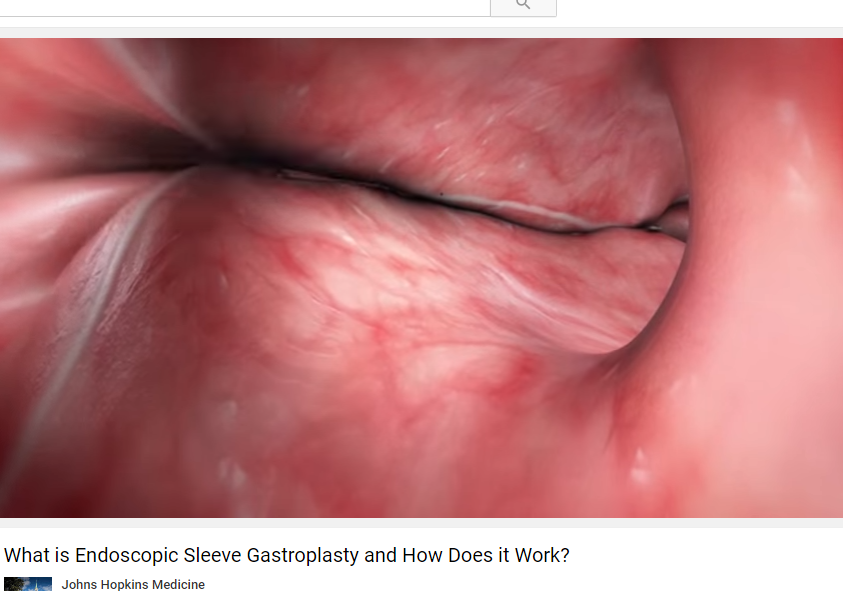
4 minute YouTube description from Johns Hopkins: What is Endoscopic Sleeve Gastroplasty and How Does it Work?

screenshot-73

screenshot-74 screenshot-75

Consensus Pancreatitis Recommendations

The INSPPIRE Group (CE Gariepy et al. JPGN 2017; 64: 95-103) has published consensus recommendations for acute recurrent pancreatitis (ARP) and chronic pancreatitis (CP).

While the authors acknowledge the need for high-level evidence/further research, they provide a large number of consensus recommendations.  These recommendations are succinctly summarized in Table 1 and Table 2.  From a reader’s perspective, my preference would have been to separate the recommendations for ARP and CP rather than to intermix them (though many of the recommendations are the same for both conditions).

ARP specific recommendations:

  • “Initial evaluation should include AST,ALT, GGT, Total bilirubin (fractionate if elevated), fasting lipids, and total serum calcium.”
  • Evaluate for fat-soluble vitamin deficiency, and pancreatic exocrine insufficiency at least annually

ARP and CP recommendations:

  • Consider ammonia and urine organic acids if there is a concern for undiagnosed metabolic disease.
  • Check for celiac disease.
  • Check for O&P if immunosuppressed, travel to endemic areas of Ascaris, or if peripheral eosinophilia.
  • Evaluation of genetic causes: should include sweat chloride test and PRSS1 gene testing. Consider SPINK1, CFTR, and CTRC evaluation.
  • Evaluate with MRCP (not ultrasound) acutely if GGT >2 x ULN or if direct bilirubin is elevated.
  • Non-acutely, MRCP recommended to evaluate pancreatic ductal abnormalities.  “When available, secretin-enhanced MRCP …should be obtained.” sMRCP can provide dynamic images of the pancreatic duct allowing differentiation of fixed from nonfixed lesions; this technique has not been widely adopted by pediatric radiologists compared with adult radiologists.

CP specific recommendations:

  • Evaluate for fat-soluble vitamin deficiency, pancreatic exocrine insufficiency, and pancreatic endocrine insufficiency at least annually

The authors did not recommend checking serum IgG4 in the absence of associated systemic disease or suggestive imaging for autoimmune pancreatitis.

Briefly noted: J-H Choi et al. Clin Gastroenterol Hepatol; 2017: 15: 86-92.  This study indicated that vigorous hydration with lactated ringer’s (LR) reduces risk of pancreatitis after ERCP.  A potential inference would be that LR would be an optimal fluid for pancreatitis more broadly. (Related: Why an ERCP Study Matters to Pediatric Care | gutsandgrowth)

Related blog posts:

Dragon Point, Labadee

Dragon Point, Labadee