Parent Perspective, Pediatric Nutritionist and Traci Nagy

A recent post on The Pediatric Nutritionist blog (Kipp Ellsworth) provides a wealth of useful information for clinicians taking care of children with enteral tubes: Understanding the Parent Perspective: Communicating with Parents and Caregivers about Tube Feeding

The presentation was given by Traci Nagy who founded the FeedingTubeAwareness website, which I have been a big fan for several years.  I probably recommend this website at least once everyday at work.  Of course, I am not the only one familiar with this website which is why it has had more than 200,000 hits last year.

This post includes a 37 slide lecture and links to previous publications.  The “open letter number one” is particularly useful and is reviewed in the slide presentation.  The “open letter number two” also has some useful points, though many would disagree on the utility of testing gastric emptying before fundoplication.

My take: Look at this post -it will help you be a more effective clinician if you take care of kids with enteral tubes.

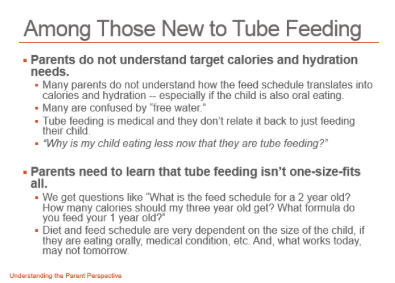
A few of the slides:

Screen Shot 2016-05-06 at 3.13.34 PM

Screen Shot 2016-05-06 at 3.28.53 PM Screen Shot 2016-05-06 at 3.27.36 PM Screen Shot 2016-05-06 at 3.27.24 PM

What Happened to Skepticism re: Lipid Emulsion Position Paper

A recent position paper (from ESPGHAN) (I Hojsak et al. JPGN 2016; 62: 776-92) made me wonder how different people can look at the same data and come to opposite conclusions.

In short, this article systemically reviews intravenous lipid emulsions and the risk of hepatotoxicity.  The review on the data is quite helpful.  The authors conclude that short-term use of the various emulsions currently in use do not result in a significant difference in neonates, infants and children.

The authors acknowledge that the data for long-term use of these emulsions is limited. They state that “there is evidence indicating that just tailoring and adjusting PN in children on long-term PN could improve liver disease, meaning that the focus should not only be on the type of ILE.”

“Although the quality of data are lacking there is some evidence that the use of multicomponent fish oil-containing ILE may contribute to a decrease” in liver toxicity.

What I don’t understand: The authors recommend: “it appears prudent to use multicomponent FO [fish oil]-containing ILE (GR C)” and literally the next sentence: “The present evidence base is inadequate to determine the optimal strategy for intravenous lipid supply.”

My take: I think we need to gather the data before having official position paper  recommendations.

Related blog posts:

2min warning doesn't help

Pacifiers & Reflux in Preterm Infants Plus Swallow Syncope

In a crossover study (J Pediatr 2016; 172: 205-8) with 30 preterm infants (adjusted age 33 weeks at time of study) showed that non-nutritive sucking with a pacifier had no effect on acid and nonacid gastroesophageal reflux based on esophageal pH-impedance.

My take: It is good that sucking a pacifier did not effect reflux.  What would the authors have proposed if it had?

Another curious report: “Syncope with Swallowing” J Pediatr 2016; 172: 209-11.  Case report of a teenager who had syncope with drinking and eating along with atrial septal defect; after repair of ASD, the symptoms persisted and ultimately the patient had a pacemaker placed due to an exaggerated vagoglossopharyngeal reflex leading to high-grade AV block.

Gibbs Gardens

Gibbs Gardens

Why a Diet History Can Be Helpful

A recent clinical problem-solving case report (D Hafez, et al. NEJM 2016; 374: 1369-74) highlights why a dietary history is important.  The initial paragraph indicated that a 2 year old with delayed speech and a picky eater presented with a 6 week history of progressive inability to bear weight.

The authors of this report explained the entire sequence of diagnosis which included extensive studies like bloodwork, radiographs, MRI, and bone marrow biopsy.  The last paragraph indicates that finally someone asked about the child’s diet: “approximately 1.4 liters of chocolate milk and ate two to four graham crackers per day. His mother acknowledged that these items were the mainstay of his diet.”

It turns out that the patient had vitamin C deficiency causing scurvy.  “Unfortunately, a comprehensive dietary review was performed only after an exhaustive and costly workup had been pursued.”  Personally, if I were involved in such a case, I would be embarrassed if it were published.

My take: While scurvy is interesting and rare in this country, the broader lesson of this report is to get a better dietary history before pursuing a huge workup.

Related blog posts:

Gibbs Gardens

Gibbs Gardens

What happens when anti-TNF therapy is stopped

Another study (NA Kennedy et al. Aliment Pharmacol Ther 2016; 43: 910-23) has examined the issue of outcomes after anti-TNF therapy withdrawal among patients with inflammatory bowel disease.

This study included 166 UK patient cohort (117 with Crohn’s disease [median 31 yrs], 19 with ulcerative colitis [median 40 years]) as part of a retrospective observational study and a meta-analysis incorporating 11 further cohorts totalling 746 patients (624 with Crohn’s dissease, 122 with ulcerative colitis).

Key findings:

  • In the UK cohort, relapse rates were 36% at year and 56% at 2 years for Crohn’s disease
  • In the UK cohort, relapse rates were 42% at year and 47% at 2 years for ulcerative colitis
  • Increased relapse rates were noted for those with a diagnosis prior to age 22 years (hazard ratio (HR) 2.78), calprotectin >50 mcg/g (HR 2.95).
  • In meta-analysis, 1-year relapse rates were 39% for CD and 35% for UC/IBDU patients
  • Retreatment with anti-TNF was successful in 88% for CD and 76% of UC/IBDU patients

To understand this study, it is important to note some of the study criteria.  In the UK cohort, inclusion criteria required the patient to have had at least 12 months of ant-TNF therapy and be in corticosteroid-remission for at least 6 months.  In addition, the relapse rate is likely to be underestimated due to using a definition of relapse that required either commencement of steroids, immunomodulator or anti-TNF therapy.  The meta-anlaysis cohort studies also used clinical relapse rather than endoscopic or other objective markers.

My take: Relapse of clinical symptoms occur in about 40% after withdrawal in highly-selected groups who were doing well prior.  Significantly higher rates of endoscopic relapse are likely.  This study provides strong reasons for not interrupting therapy when it is working.

Related blog posts:

Cures Tshirt


The “EAT” Study

A recent study from MR Perkin et al (NEJM 2016; 374: 1733-43) examined whether early introduction (3 months) of allergenic foods in 1303 infants lowered the rate of allergies to these foods at 3 years of life compared to standard introduction (after 6 months).  The six foods: peanut, egg, cow’s milk, sesame, whitefish, and wheat.

This EAT study (“Enquiring about Tolerance”) required parents in the intervention group to give 3 rounded teaspoons of smooth peanut butter, one small egg, two portions (40-60 g) of cow’s milk yogurt, 3 teaspoons of sesame paste, 24 g of white fish, and two wheat-based cereal biscuits every week.

While the study did not reach a statistical significance, the absolute rate of allergies was modestly lower in those in the early introduction group (5.6% compared with 7.1%).  In a per-protocol analysis of those who strictly adhered to the assigned treatment regimen, there was an even lower rate of 2.4% (compared to 7.3% in the standard group).  The associated editorial (pg 1783-84) indicates that the demanding protocol limited those who adhered to the protocol and points out that those who were not adherent could have been due to reverse causation (eg. subtle avoidance to certain foods due to reactions).  The editorial conclusion: “evidence is building that early consumption rather than delayed introduction of foods is likely to be more beneficial as a strategy for the primary prevention of food allergy.”

My take: Early introduction of allergenic solids at ~3 months of age probably lowers the risk of developing allergies to these foods.

Here’s a link to <2 minute quick take summary: The EAT Study NEJM

Screen Shot 2016-05-08 at 8.13.21 PM

Reference on consensus for guidance on introducing peanuts:  J Allergy Clin Immunol 2015; 136: 258-61.

Related blog posts:

Screen Shot 2016-05-04 at 8.23.59 PM

Antibiotic Overuse and Allergic Antibiotic Challenge

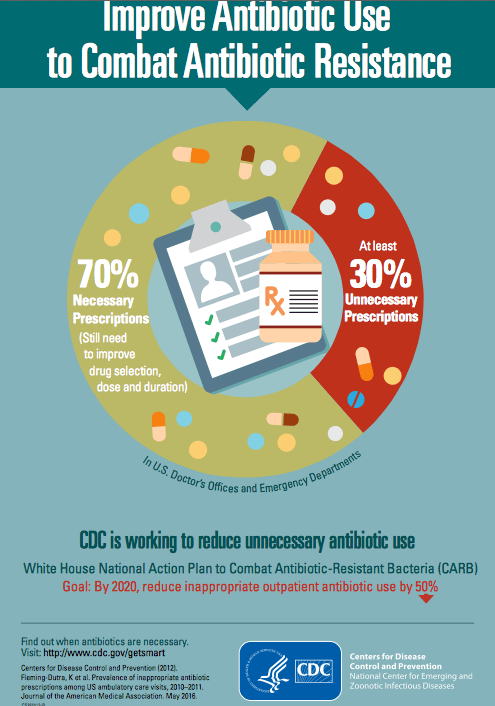
A recent study by Fleming-Dutra K et al (JAMA, May 2016), that has been widely reported, estimates that 1 in 3 antibiotic prescriptions in U.S. are unnecessary.  Here’s a CDC media release link: CDC: 1 in 3 antibiotic prescriptions unnecessary

“About 44 percent of outpatient antibiotic prescriptions are written to treat patients with acute respiratory conditions, such as sinus infections, middle ear infections, pharyngitis, viral upper respiratory infections (i.e., the common cold), bronchitis, bronchiolitis, asthma, allergies, influenza, and pneumonia.  An estimated half of these outpatient prescriptions are unnecessary.”

Some of the downside of unnecessary antibiotics:

  • Allergic reactions and other adverse reactions
  • Infections become more difficult to treat due to increased resistance
  • Expense
  • Clostridium difficile infection

My take: This study’s findings are NOT surprising.  Antibiotics are often prescribed without a clear indication.

Many children are labelled allergic to antibiotics like amoxicillin due to the development of a rash but have not undergone formal evaluation.  However, a recent study (Mill C et al. JAMA Pediatr 2016 Apr 4) shows that an oral provocative challenge that most will be able to tolerate amoxicillin.  Here is a summary of the article by DocAlert (forwarded to me by Mike Hart) -I highlighted in bold the key finding:

In an observational study, researchers offered a graded oral provocation test to all children referred to an allergy clinic in Montreal with suspected allergy to amoxicillin. Children were given 10% of the therapeutic dose of amoxicillin, observed for 20 minutes, then given 90% of the therapeutic dose and observed for at least 1 hour. Parents were instructed to report reactions that occurred the next week.

Of 818 participants (mean age, 1.7 years), 94% tolerated the provocation test and therefore were not allergic to amoxicillin. Of the others, 2% had immediate reactions (within 1 hour of the last dose) — all mild urticaria that resolved with antihistamines — and 4% had nonimmediate reactions (median of 12 hours after the last dose) — all mild maculopapular rash. Only 1 of the 17 children with immediate reactions tested positive on skin prick and intradermal testing 2 to 3 months later.

History of a rash lasting longer than 7 days and parental history of drug allergy were associated with nonimmediate reactions on the provocation test (adjusted odds ratios, 5 and 3, respectively); history of allergic reaction within 5 minutes was associated with immediate reactions (AOR, 10). During 3-year follow-up of children who tolerated the test, 55 received a subsequent full course of amoxicillin and 6 (11%) had nonimmediate reactions. All patients with reactions to amoxicillin tolerated cefixime.

My take (from summary): An oral provocation challenge to confirm either an immediate or nonimmediate allergic reaction to amoxicillin was found to be safe and more accurate than skin testing.

Screen Shot 2016-05-03 at 8.35.56 PM


How Likely is Reflux in Infants with “Reflux-like” Behaviors?

Another study (Funderburk et al. JPGN 2016; 62: 556-61) has shown that gastroesophageal reflux disease is infrequent in infants with a “strong clinical suspicion for reflux.”  This is a good to know since we also know that pharmacologic therapy for gastroesophageal reflux has not been proven to be effective in infancy either.

This retrospective study with 58 infants, including 40 preterm infants, evaluated for GERD with MII-pH studies.  Characteristics of cohort: median gestational age 31 weeks, median birth wt 1683 gm, and median age at study: 70 days. 10 patients were receiving acid suppression therapy.

Indications for testing:

  • Irritability 55%
  • Bradycardia  34%
  • Desaturation 31%
  • Cough 21%
  • Gagging 12%
  • Difficulty feeding 12%
  • Arching 10%
  • Apnea 5%

Key findings:

  • Only 6 infants (~10%) had abnormal MII-pH studies (defined as >95th percentile for reflux episodes/hours or >95th percentile for acid exposure time)
  • None of the symptom indices correlated with symptoms. SI, SSI, or SAP
  • The majority of reflux episodes did not correlate with clinical “reflux” behaviors
  • Small bore (5 Fr) NG tubes were not associated with increased reflux.

In the related commentary by Rachel Rosen (pgs 517-18), she noted that “there is little to no evidence to show that the 3 indices predict any meaningful clinical outcome…including response to fundoplication, or medications.” “The current literature fails to support the use of symptom indices to prove causality when resolution of symptoms with medical or surgical therapies is used as the criterion standard.”

My take: The vast majority of infants with “reflux behaviors” do not have reflux.  Even if they do, current pharmacologic therapies have not been shown to work.  So, there is little  value in reflux testing in most infants.  Finally, given the failure of symptom indices, does the addition of the impedance data to the pH data add any value?

Related blog posts:

Jerusalem Collage -Made from hundreds of postcards.  Vik Muniz

Jerusalem Collage -Made from hundreds of pictures/postcards. Look closely -it’s amazing.  by Vik Muniz

Another Rare Cause of Neonatal Diarrhea

A well-described case report (B Harter et al. JPGN 2016; 62: 577-80) provides a description of proprotein convertase 1/3 (PC1/3) deficiency. To date, only 21 cases have been reported.

Clinical features: congenital diarrhea and polyuria; normal endoscopy/histology. This patient required parenteral nutrition until 11 months of age. Her polyuria resolved at 13 months of age. Low serum levels of c-peptide and insulin along with elevated pro-insulin, combined with the polyuria, were suspicious for PC1/3 deficiency. This patient’s diagnosis was established with genetic analysis of the PCSK1 gene.

PC1/3 is responsible for peptide hormone processing in endocrine cells in the gut, and has targets in the hypothalamus and pancreas. Growth hormone deficiency, adrenal insufficiency, diabetes insipidus, and hypogonadism are commonly observed.

Related blog posts:

Gibbs Gardens

Gibbs Gardens

Get Here If You Can: Improved Vitamin D Status

“I don’t care how you get here
Just get here if you can”

–Oleta Adams, “Get Here”

A recent study (Kugathasan et al. JPGN 2016; 62: 252-8) reminded me of the aforementioned song lyrics. (Full lyrics: Get Here)

This randomized pilot study comparing two regimens for low Vitamin D levels (serum 25-OH Vit D <30 ng/mL). During a treatment period of 6 weeks, patients were randomized to treatment with Vitamin D3 (cholecalciferol) at 10,000 units or to 5,000 units per 10 kg per week.  The maximum weekly dose in the first group was 50,000 units (IU) and the maximum dose in the latter group was 25,000 IU.

Both treatments were associated with improvement; in the higher dose group the mean serum level reached 49.2 whereas it was 41.5 in the lower dose group.  Of note, this repletion effect was nearly lost by the 12-week followup.

Other points:

  • This study used Vitamin D3 (cholecalciferol) which has greater bioavailability than Vitamin D2 (ergocalciferol).
  • No serious adverse effects were noted.  The study monitored Calcium, and parathyroid hormone concentrations.
  • The authors did not report any correlation with CRP values.   This is important because other studies (Why Adding Vitamin D May Not Help IBD | gutsandgrowth)
    have shown improvement in Vitamin D levels without vitamin D supplementation when underlying inflammation has been treated.

My take: This study shows that supplementation with Vitamin D is associated with improved levels  –one can ‘get here’ with either regimen the authors studied.  In those with low levels (not due to inflammation), it is likely that maintenance Vitamin D supplementation will be needed.

Related blog posts:

Michigan Union, Ann Arbor

Michigan Union, Ann Arbor

Disclaimer: These blog posts are for educational purposes only. Specific dosing of medications/diets (along with potential adverse effects) should be confirmed by prescribing physician/nutritionist.  This content is not a substitute for medical advice, diagnosis or treatment provided by a qualified healthcare provider. Always seek the advice of your physician or other qualified health provider with any questions you may have regarding a condition.