Current Practices and Wide Variation in Autoimmune Hepatitis Treatment Across Europe

M Cananzi et al. J Pediatr Gastroenterol Nutr. 2025;80:260–270. Current practice in the management of paediatric autoimmune liver disease in Europe

Methods: Thirty-six centers from 22 European countries responded to the survey that was sent to European Reference Network for Rare Liver Disorders (ERN RARE-LIVER) and members of the Hepatology Interest Group (HIG) of the European Society for Paediatric Gastroenterology, Hepatology, and Nutrition (ESPGHAN)

Key findings:

  • All centers use predniso(lo)ne as first-line therapy, alone (15/36) or with azathioprine (21/36)
  • Azathioprine and mycophenolate are the preferred second-line options in centres using first-line steroid monotherapy (11/15) or combined steroid-azathioprine (19/21)
  • Tacrolimus is used as third-line agent in 15/36 centers
  • Proactive measurement of drug metabolites and target levels vary widely among centers. About 27/36 centers have thiopurine methyltransferase (TPMT) genotyping available, of which 21 (58%) routinely perform this test before prescribing AZA. Among the 12 centres that reported target metabolite levels, 10 aim for levels between 200 and 300 pmol/8 × 108 red blood cells (RBC).
  • About 24/36 centers routinely incorporate PPIs into steroid treatment protocols, seven prescribe PPIs solely when there are risk factors for peptic ulcer disease, and the remainder refrain from using PPIs unless gastrointestinal symptoms occur.

My take: There is a great deal of variation in the management of autoimmune hepatitis indicating the need for more collaborative efforts to advance evidence-based therapeutic strategies.

Related blog posts:

White Temple, Chiang Rai, Thailand

Teaching an Old Dog a New Trick: Optimizing Thiopurine Therapy in Autoimmune Hepatitis

Key findings:

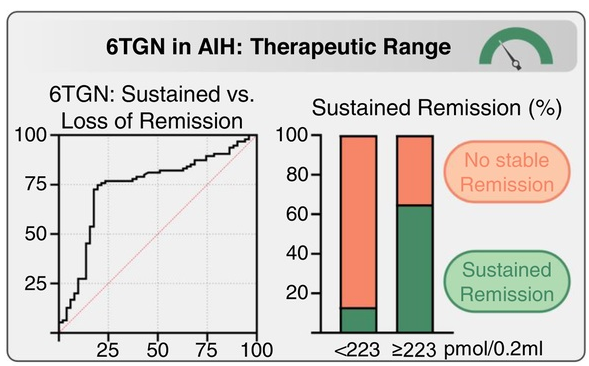
  • Over 4 years (N = 146), patients with higher average 6TGN levels were associated with those with stable complete biochemical remission (CBR) (260 pmol/0.2 mL) compared to those failing to maintain CBR (181 pmol/0.2 mL; p = 0.0014) or never achieving CBR (153 pmol/0.2 mL; p < 0.0001), with an optimal 6TGN cutoff of ≥223 pmol/0.2 mL
  • Adding allopurinol to thiopurines in difficult-to-treat patients (N = 36) raised 6TGN (168→321 pmol/0.2 mL; p < 0.0001) and lowered 6MMP (2125→184 pmol/0.2 mL; p < 0.0001), resulting in improved transaminases in all patients and long-term CBR in 75%.
  • Limitation: most of the 337 patients did NOT have sequential azathioprine metabolite monitoring. This could indicate that the 146 patients with sequential monitoring could have a selection bias favoring patients with a more aggressive disease course. Thus, the proposed 6-TGN level of 223 may not be applicable for all patients.

From editorial:

  • “In this issue of Hepatology, “Weltzsch et al1 conducted a multicenter study on the metabolic monitoring of thiopurines in AIH. The authors defined an optimal cutoff of ≥223 pmol/0.2 mL average 6TG level to maintain long-term biochemical remission (BR). Notably, 66% of patients with 6TG levels above this cutoff sustained BR rates. 
  • Allopurinol shifts the thiopurine metabolism toward 6TG production, allowing thiopurine dose reduction to 25%–30%, which improves efficacy and tolerability. (The 100 mg dose of allopurinol had more favorable 6MMP/6TG ratio).
  • However, they note that in a prior study (J Hepatol 2021; 75: 324-32), “patients with subtherapeutic 6TG levels (75–225) achieved similar BR rates (75% vs. 81%, p = 0.589) to those with therapeutic levels (225–450), while experiencing significantly fewer adverse drug reactions (44% vs. 86%, p = 0.0002).”
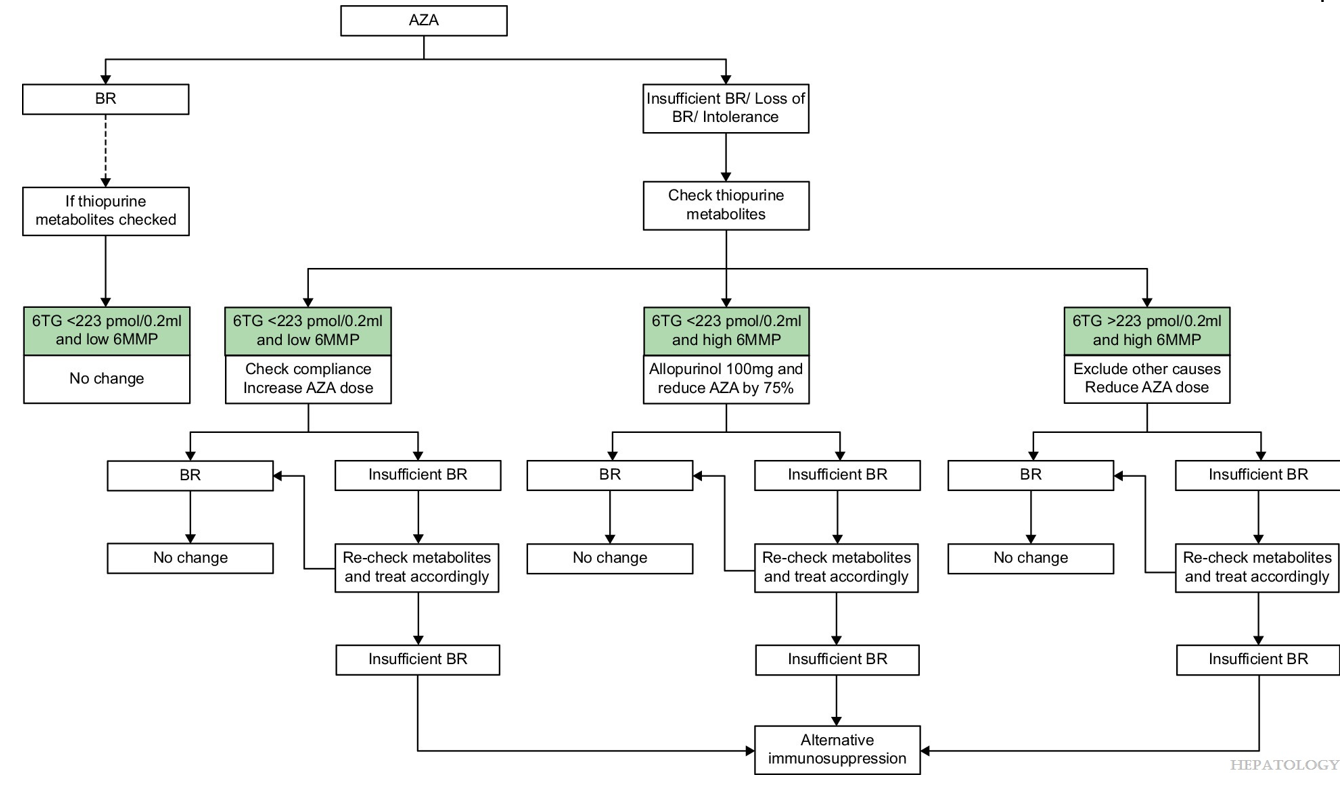
Proposed Algorithm

My take: This study shows in patients who have not achieved a biochemical remission, optimization of azathioprine dosing with metabolite monitoring improves biochemical remission. In those with low 6TG and low 6MMP, increasing the azathioprine should be considered. In those with low 6TG and high 6MMP, reducing azathioprine and adding allopurinol should be considered.

Related blog posts:

Disclaimer: This blog, gutsandgrowth, assumes no responsibility for any use or operation of any method, product, instruction, concept or idea contained in the material herein or for any injury or damage to persons or property (whether products liability, negligence or otherwise) resulting from such use or operation. These blog posts are for educational purposes only. Specific dosing of medications (along with potential adverse effects) should be confirmed by prescribing physician.  Because of rapid advances in the medical sciences, the gutsandgrowth blog cautions that independent verification should be made of diagnosis and drug dosages. The reader is solely responsible for the conduct of any suggested test or procedure.  This content is not a substitute for medical advice, diagnosis or treatment provided by a qualified healthcare provider. Always seek the advice of your physician or other qualified health provider with any questions you may have regarding a condition.

Is First Line Therapy for Autoimmune Hepatitis Changing? CAMARO Study Results

RJ Snijders et al. J Hepatol 2024; 80: 576-585. Open Access! An open-label randomised-controlled trial of azathioprine vs. mycophenolate mofetil for the induction of remission in treatment-naive autoimmune hepatitis

Methods: In this 24-week, prospective, randomised, open-label, multicentre superiority trial, 70 patients (mean age 57.9 years) with treatment-naive AIH received either MMF or azathioprine, both in combination with prednisolone. The primary endpoint was biochemical remission (BR) defined as normalisation of serum levels of alanine aminotransferase and IgG after 24 weeks of treatment.

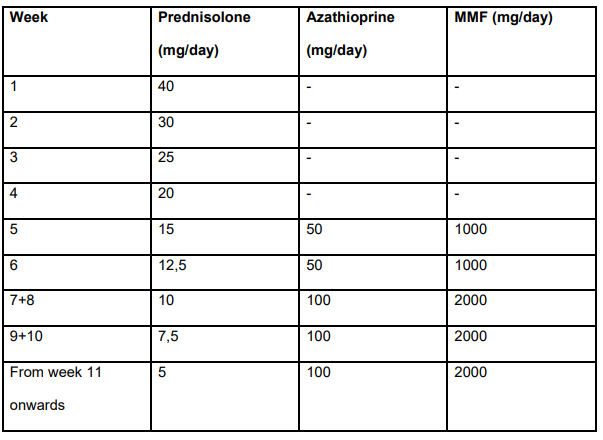
Treatment dosing in study (Table S2):

Key findings:

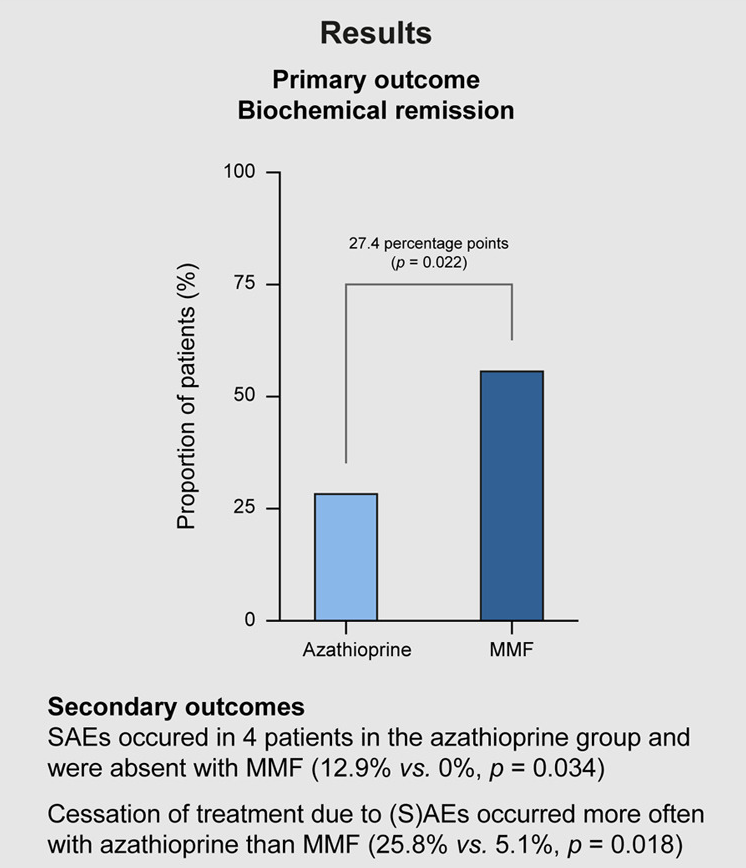
  • 56.4% of the MMF group and 29.0% of the azathioprine group achieved BR
  • No serious adverse events occurred in patients who received MMF (0%) but serious adverse events were reported in four patients who received azathioprine (12.9%) (p = 0.034)

Excerpts from the discussion:

  • “The evidence for the current standard induction therapy in AIH with azathioprine and prednisolone is limited and stems from the early seventies of the last century.”
  • “Patients assigned to azathioprine were significantly more prone to discontinuing treatment because of intolerance or SAEs, with nausea and vomiting as the main reasons for cessation of treatment.”
  • “MMF exhibits high teratogenicity. MMF should not be used during pregnancy and may only be used with strict contraceptive measures in women of childbearing age and men planning to father a child, as its use is absolutely contraindicated during pregnancy.”
  • “In addition, MMF must be administered twice daily, while azathioprine is given as a single dose daily…relevant for a disease that requires lifelong treatment.”

My take: This study needs to be replicated in the pediatric age group. Though many patients have some frequent side effects with MMF, the overall safety (and possibly effectiveness) appears improved with MMF compared with azathioprine.

Disclaimer: This blog, gutsandgrowth, assumes no responsibility for any use or operation of any method, product, instruction, concept or idea contained in the material herein or for any injury or damage to persons or property (whether products liability, negligence or otherwise) resulting from such use or operation. These blog posts are for educational purposes only. Specific dosing of medications (along with potential adverse effects) should be confirmed by prescribing physician.  Because of rapid advances in the medical sciences, the gutsandgrowth blog cautions that independent verification should be made of diagnosis and drug dosages. The reader is solely responsible for the conduct of any suggested test or procedure.  This content is not a substitute for medical advice, diagnosis or treatment provided by a qualified healthcare provider. Always seek the advice of your physician or other qualified health provider with any questions you may have regarding a condition.

Adjustment of azathioprine dose in NUDT15 intermediate metabolizers, COVID-19 in Georgia & COVID-19 Phase 1 Vaccine Study

LA Jackson et al. NEJM 2020; DOI: 10.1056/NEJMoa2022483. Link:  An mRNA Vaccine against SARS-CoV-2 — Preliminary Report  The mRNA-1273 vaccine induced anti–SARS-CoV-2 immune responses in all participants (n=45), and no trial-limiting safety concerns were identified.

______________________________________________________________________

COVID-19 in Georgia (Data from 7/13/20):


B Kang et al. AP&T 2020; https://doi.org/10.1111/apt.15810. Thanks to Ben Gold for this reference. Full text: Adjustment of azathioprine dose should be based on a lower 6‐TGN target level to avoid leucopenia in NUDT15 intermediate metabolizers

Background: “In addition to TPMT polymorphisms, a recent genome‐wide association study reported that a missense variant of nudix hydrolase 15 (NUDT15 ), which encodes a novel thiopurine‐metabolizing enzyme, was strongly associated with thiopurine‐induced leucopenia especially in Asians”

Key findings:

  • Among the 167 pediatric patients included, leucopenia was observed in 16% (19/119), 44% (20/45) and 100% (3/3) of the NUDT15 normal, intermediate and poor metabolizers respectively ( < 0.001)
  • There was a positive association between 6‐TGN levels and leucopenia among the NUDT15 intermediate/TPMT normal metabolizers
  • In order to reduce the development of thiopurine‐induced leucopenia (<15%) in NUDT15 intermediate metabolizers, adjustment of azathioprine doses should be based on a lower 6‐TGN target level (<167.1 pmol/8 × 108 RBC)

Limitations: single-center, retrospective study and possible selection bias

My take: While 6-TGN levels between 235-400 are typically considered therapeutic, individuals with intermediate metabolism are at increased risk for leukopenia and may respond at lower levels.  This study indicates that careful dosing and close monitoring is needed for NUDT15 intermediate metabolizers

Related blog posts:

Disclaimer: This blog, gutsandgrowth, assumes no responsibility for any use or operation of any method, product, instruction, concept or idea contained in the material herein or for any injury or damage to persons or property (whether products liability, negligence or otherwise) resulting from such use or operation. These blog posts are for educational purposes only. Specific dosing of medications (along with potential adverse effects) should be confirmed by prescribing physician.  Because of rapid advances in the medical sciences, the gutsandgrowth blog cautions that independent verification should be made of diagnosis and drug dosages. The reader is solely responsible for the conduct of any suggested test or procedure.  This content is not a substitute for medical advice, diagnosis or treatment provided by a qualified healthcare provider. Always seek the advice of your physician or other qualified health provider with any questions you may have regarding a condition

Video for Patients: Benefits and Risks of IBD Treatment & Risks of Untreated IBD

A recent study (NE Newman, KL Williams, BJ Zikmunde-Fisher, J Adler. JPGN 2020;70: e33-36) highlights work to communicate the benefits and risks of the treatment for inflammatory bowel disease (IBD) along with the risks of untreated IBD.  “We developed a simple video aid to illustrate competing risks associated with medications and underling disease in context of inflammatory bowel disease…Those who viewed the video aid had more realistic perceptions than those who did not view it.”

Here is a link to the ~13 minute online video: IBD: Risk of Disease and Treatments

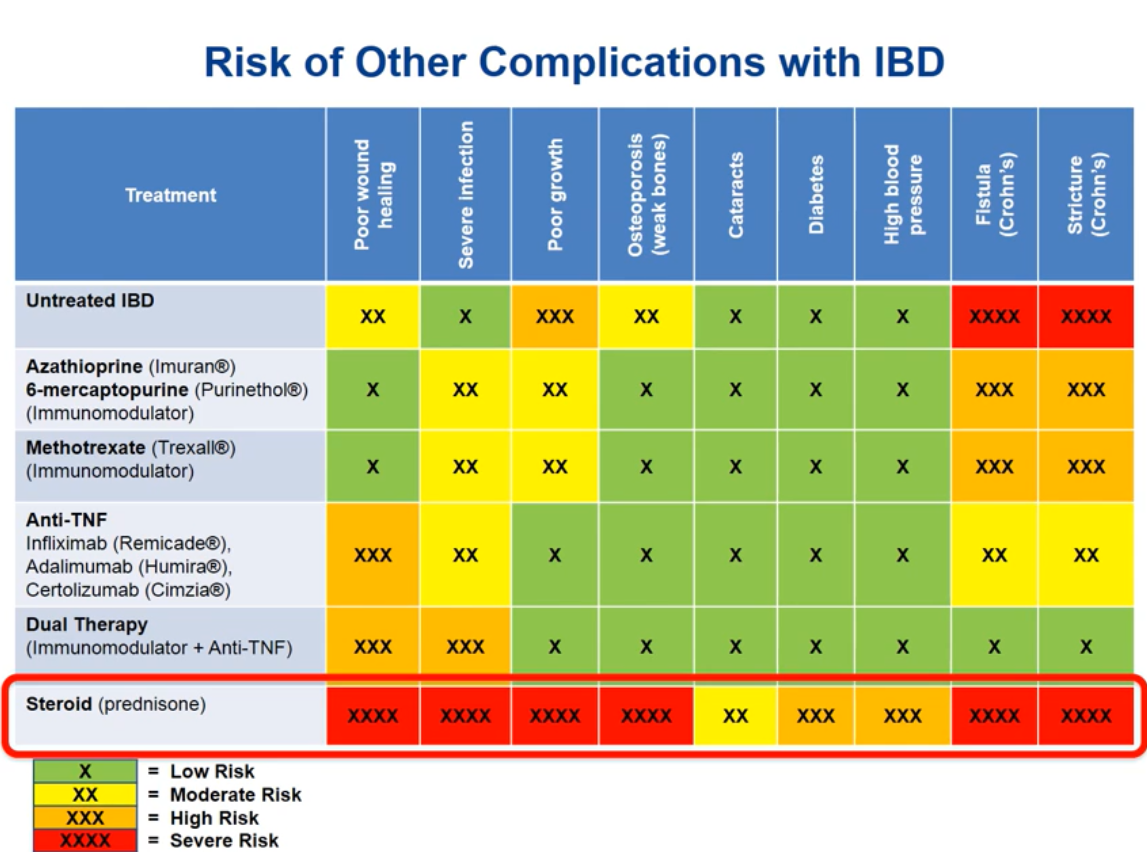
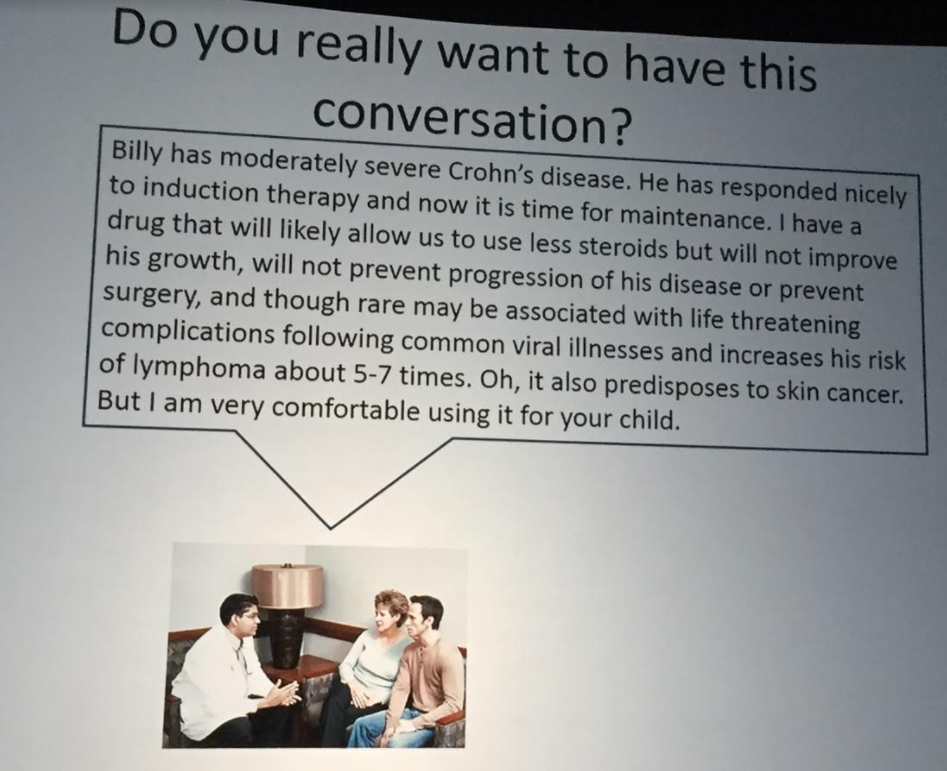
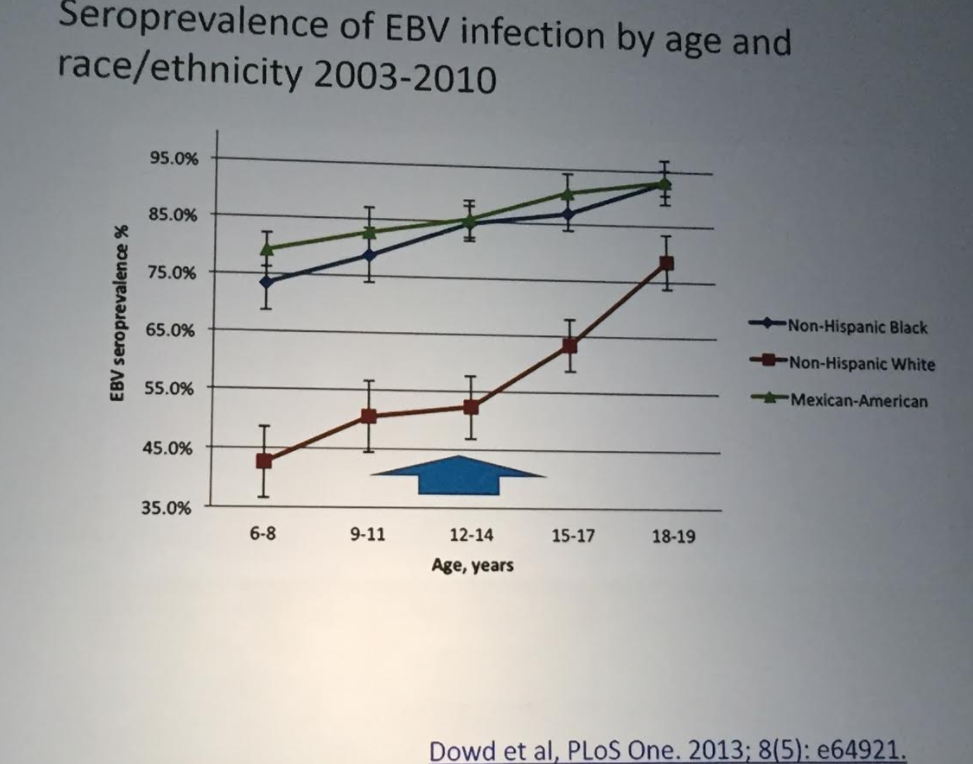
Overall, the presentation is very helpful and thoughtful.  I think this would be an excellent overview for families.  For practitioners, a few points that could benefit from some nuance are noted below some screenshots.  It is worth stating that the authors had started this project a few years ago and some of the points below are related to more information that has emerged.

In the section of treatment benefits (above), the presentation suggests that thiopurines (azathioprine, 6-mercaptopurine) and methotrexate both are effective in about 50%; this is probably an overestimate; in addition, methotrexate as monotherapy is definitely less effective (if effective at all) for ulcerative colitis .  Also, it would be worthwhile to indicate that anti-TNF monotherapy with therapeutic drug monitoring may help achieve similar benefits as dual therapy.

In the section of colon cancer, the authors provide useful data that current treatments lower this risk substantially.  It is notable that more recent reports suggest that there have been improvements in the rates of colon cancer associated with IBD.

Overall, the section on lymphoma is very good.

In the section on other complications, the presentation suggests that there may be impaired wound-healing with anti-TNFs.  I think this risk is overstated in this slide. Also, I think the risk of severe infection with thiopurines is a little bit higher than stated; though, this can be mitigated with careful monitoring.

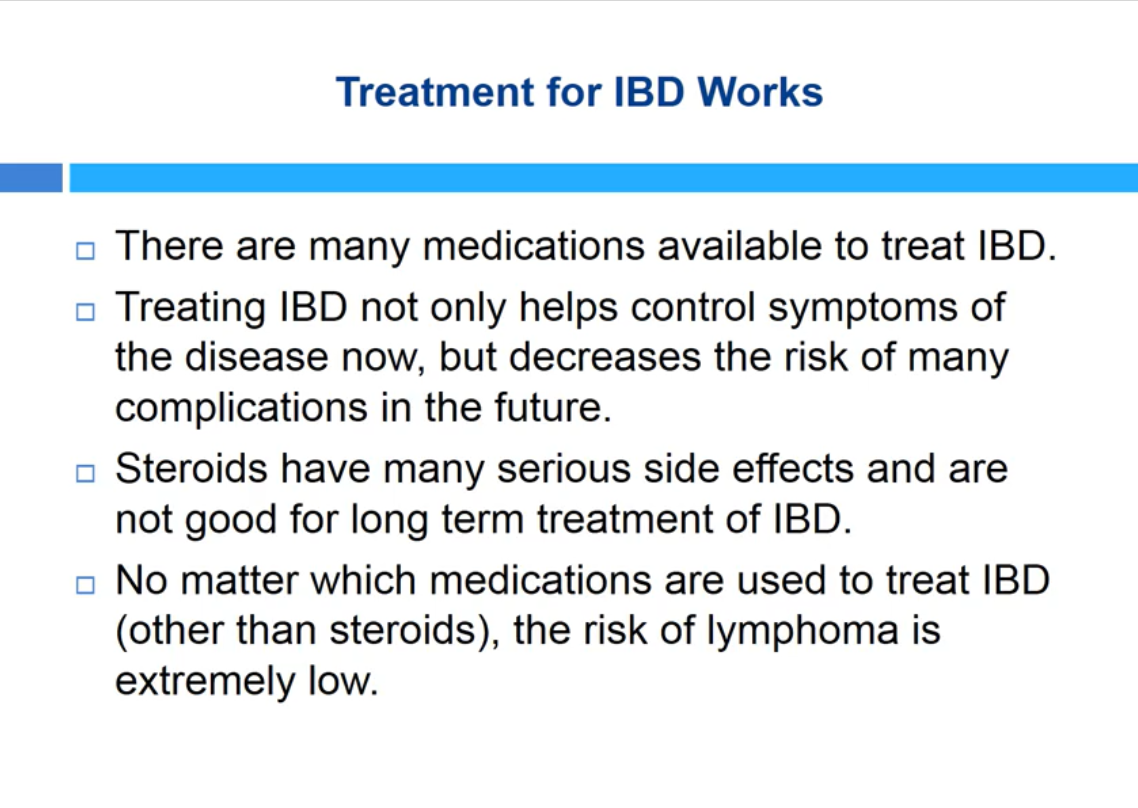
I think this summary slide could be improved by noting that the overall risk of serious cancers is likely lowered by treating IBD.  Since colon cancer is a fairly common cancer and IBD treatment reduces the risk, this likely outweighs the increased risk of other cancers (eg. lymphoma) which are much less common.

Another link to video: https://tinyurl.com/IBDTreatments

Related posts:

Disclaimer: This blog, gutsandgrowth, assumes no responsibility for any use or operation of any method, product, instruction, concept or idea contained in the material herein or for any injury or damage to persons or property (whether products liability, negligence or otherwise) resulting from such use or operation. These blog posts are for educational purposes only. Specific dosing of medications (along with potential adverse effects) should be confirmed by prescribing physician.  Because of rapid advances in the medical sciences, the gutsandgrowth blog cautions that independent verification should be made of diagnosis and drug dosages. The reader is solely responsible for the conduct of any suggested test or procedure.  This content is not a substitute for medical advice, diagnosis or treatment provided by a qualified healthcare provider. Always seek the advice of your physician or other qualified health provider with any questions you may have regarding a condition.

Combination Therapy Study Points to Central Role of Adequate Drug Levels

A recent study (JF Colombel et al. Clin Gastroenterol Hepatol 2019; 17: 1525-32) examines the effect of combination therapy and drug levels in achieving corticosteroid-free remission at week 26 (CSFR26).

The authors performed a post hoc analysis from 206 patients with Crohn’s disease (CD): 97 monotherapy with infliximab & 109 with combination infliximab/azathioprine

Key findings:

  • The proportions of patients achieving CSFR26 were not significantly greater among those receiving combination therapy vs monotherapy within the same serum infliximab concentrations
  • Mean trough infliximab concentrations in the combination therapy were higher than for monotherapy: 3.54 mcg/mL vs. 1.55 mcg/mL
  • Higher levels of antidrug antibodies were seen with monotherapy: 35.9% vs 8.3% of those with combination therapy.  Antidrug antibodies were detected only in those with lowest quartile of infliximab trough levels.

My take: This study indicates that combination therapy’s higher efficacy is due to  favorable pharmacokinetics rather than drug synergy.  If good infliximab trough levels can be achieved with infliximab monotherapy, this may obviate the need for combination therapy.  The uncertain factor is whether closer attention to trough levels will minimize the development of antidrug antibodies as effectively as the use of combination therapy.

Related blog posts:

Disclaimer: These blog posts are for educational purposes only. Specific dosing of medications/diets (along with potential adverse effects) should be confirmed by prescribing physician/nutritionist.  This content is not a substitute for medical advice, diagnosis or treatment provided by a qualified healthcare provider. Always seek the advice of your physician or other qualified health provider with any questions you may have regarding a condition.

Sagrada Familia, Barcelona

Steroid-Free Approach in Autoimmune Hepatitis

A recent case report (A Wehrman et al. J Pediatr 2019; 207: 244-7) described steroid free treatment of autoimmune hepatitis (AIH) in 8 patients.

This retrospective review of all patients with AIH at CHOP between 2009-2014 compared patients who had AIH treated with (n=12) and without steroids (aka azathioprine monotherapy). Near normalization of ALT was defined as less than 2 x ULN.

Key findings:

  • All children in the steroid group had normalization of liver enzymes by 12 months of therapy compared with only 2 of 8 in the steroid-free group. Though, near normalization of ALT occurred at a median of 5.5 months in the steroid free group (compared with 1.8 months in the steroid group).
  • Adverse effects were evident in 75% of the steroid group compared with 11% of the steroid-free group

The authors conclude that “liver enzymes may take longer to normalize without steroids, but this difference was not statistically significant in our small cohort, nor did it lead to any adverse outcomes.”

My take: Standard therapy for AIH is prednisone for induction with subsequent azathioprine.  This study shows that in patients unwilling to take steroids or with intolerance that azathioprine monotherapy may be an effective alternative though liver enzymes are likely to take much longer to improve.

Related blog posts:

Barcelona/Mediterranean Sea

Sub-Analysis of DIAMOND Study

K Watanabe et al. Clin Gastroenterol Hepatol 2018; 16: 542-9.

The DIAMOND study evaluated monotherapy with adalimumab (n=85) compared with combination therapy of adalimumab with azathioprine (n=91).

Key findings:

  • In this subanalysis of patients with moderate and severe Crohn’s disease (CD), endoscopic response (defined by SES-CD drop of at least 8 points or SES-CD <4) was significantly higher at week 26: 71.6% vs 54.4%. The OR for endoscopic response was 2.12 at week 26 with combination therapy.
  • At week 52 the endoscopic response difference was not statistically significant: 60% vs. 50%.
  • Similarly, mucosal healing was more common (but not statistically significant) in the combination group compared with monotherapy: 20.9% vs 103% at week 26, and 21.5% vs 12.2% at week 52.
  •  While not statistically significant, the combination group had ADA trough that was higher (7.6 compared with 6.5).

My take: The results described above for endoscopic responses and mucosal healing rates are depicted in figure 2 (I do not have a digital copy of figure or permission to use).  After one looks at this figure, depicting the data noted above, there certainly appears to be an advantage for the use of combination therapy in patients with moderate-to-severe CD.

Related blog posts:


I have not independently verified the claims on this tweet

#NASPGHAN17 Is it time to stop using thiopurine therapy?

This blog entry has abbreviated/summarized this presentation. Though not intentional, some important material is likely to have been omitted; in addition, transcription errors are possible as well.

Safety in Pediatric IBD Therapy: Is it time to stop using thiopurines?

Jeffrey Hyams  Connecticut Children’s Medical Center

Key points from this lecture:

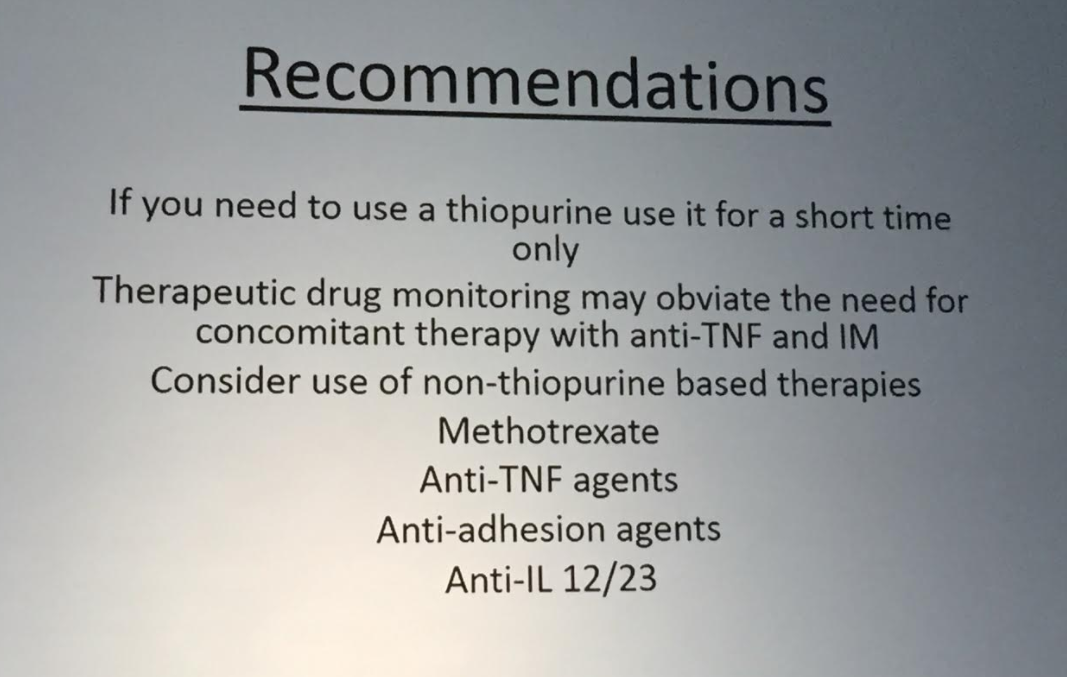
  • Dr. Hyams:  “There are better options than thiopurines in 2017 due to infrequent but serious risks”
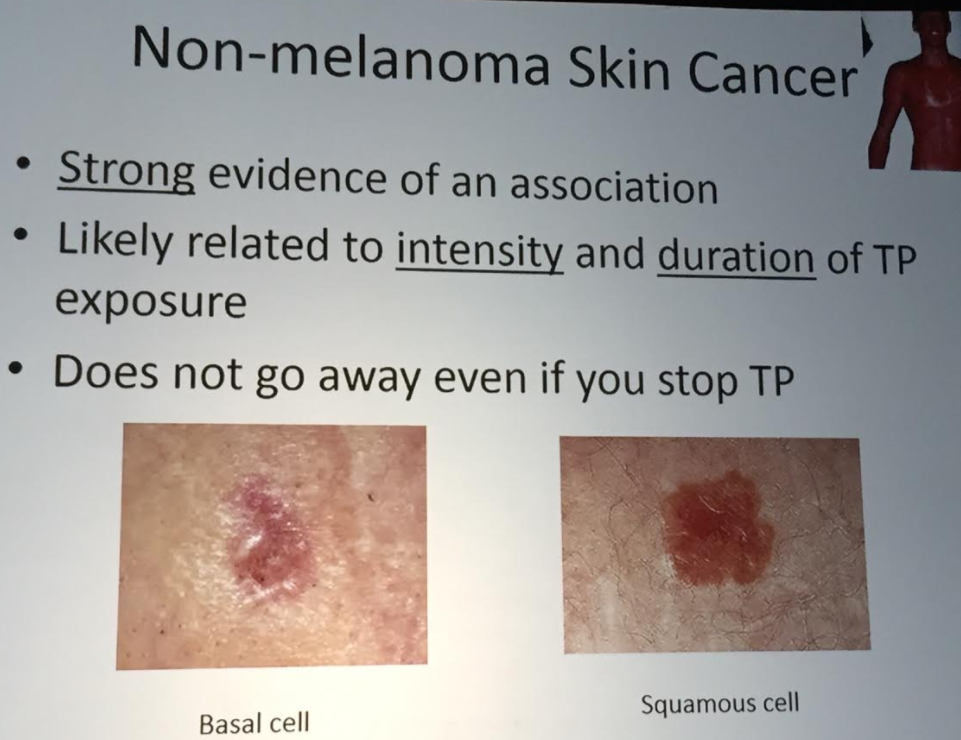
  • The DEVEVOP study showed that anti-TNF agents did NOT increase the risk of lymphoma or hemophagocytic lymphohistiocytosis (HLH).  In contrast, these risks do occur with thiopurines –this is infrequent but remains significant.
  • Therapeutic drug monitoring may obviate the need for combination/dual therapy which has been shown to improve response rates to anti-TNF agents; methotrexate may work for combination therapy and may be safer than thiopurines
  • If a thiopurine is used as part of combination therapy, short duration (~6 months) is likely to have low risks
  • In addition to Dr. Hyams, Dr. Baldassano, in his discussion of treat to target (discussed in subsequent post), echoed the sentiment that he no longer recommends thiopurine therapy

Dr. Hyams slides list some of the relative risks of thiopurine therapy.  To understand these risks, the absolute risk is probably more helpful.

My take: This lecture did not focus on the main benefit of thiopurines which is its use in combination therapy. Many experts consider combination therapy to be the standard of care for adults with Crohn’s disease.  The advantages of combination therapy are mainly due to improved durability of anti-TNF therapy and lower antidrug antibodies.  How this benefit stacks up against the risks discussed in this lecture and whether this benefit can be supplanted by the use of therapeutic drug monitoring is uncertain.


Related blog posts:

Disclaimer: These blog posts are for educational purposes only. Specific dosing of medications (along with potential adverse effects) should be confirmed by prescribing physician.  This content is not a substitute for medical advice, diagnosis or treatment provided by a qualified healthcare provider. Always seek the advice of your physician or other qualified health provider with any questions you may have regarding a condition.

6-Thioguanine Levels in Autoimmune Hepatitis

A recent retrospective study (MA Sheiko et al JPGN 2017; 65: 80-5) examines the issue of azathioprine (AZA) metabolites and outcomes in pediatric autoimmune hepatitis (AIH).

Study characteristics:

  • 66 children
  • Mean age of diagnosis 9.6 years
  • Mean follow-up 2.9 years
  • Study period 2002-2013

Key findings:

  • 79% achieved biochemical remission (defined as ALT ≤50 U/L); mean time was 6.2 months
  • 6% required liver transplantation
  • 18% were weaned off immunosuppression and remained in remission
  • 6-thioguanine (6-TGN) levels ranging from 50 to 250 (pmol/8 x 10 to 8th red blood cell count) were associated with biochemical remission

Our study suggests that AZA dosing of approximately 1.2 to 1.6 mg/kg/day will achieve 6-TGN levels of 50 to 250 pmol, which is sufficient to maintain biochemical remission in the majority of patients.

This is significantly lower than dosing recommended for inflammatory bowel disease (recommended levels 250-450). The associated editorial (pg 2-3, N Kerkar) cautions that while “lower levels are sufficient for maintaining biochemical remission…higher levels, similar to that used in IBD, are required for inducing remission.”

My take: Lower doses of azathioprine are likely to maintain biochemical remission and cause fewer side effects.  Metabolite levels can be helpful to assure reasonable levels of 6-TGN and to assure medication adherence.

Related blog entries:

Disclaimer: These blog posts are for educational purposes only. Specific dosing of medications (along with potential adverse effects) should be confirmed by prescribing physician.  This content is not a substitute for medical advice, diagnosis or treatment provided by a qualified healthcare provider. Always seek the advice of your physician or other qualified health provider with any questions you may have regarding a condition.

Shem Creek, SC