CALM Study: Tight Control Improves Outcomes in Crohn’s Disease

A recent study (JF Colombel et al. Lancet 2017; http://dx.doi.org/10.1016/S0140-6736(17)32641-7 ) shows that “tight control” improves outcomes in Crohn’s disease.  This study was alluded to in a previous post: CCFA 2017 Updates (part 2)

Background: The CALM study was an open-label, randomized study.  122 adult patients were randomized to typical clinical management and 122 patients received “tight control” in which treatment was modified by fecal calprotectin (≥250 mcg/g) and CRP (≥ 0.5 mg/dL) values in addition to clinical symptoms.

Treatment was escalated in both groups in a stepwise manner.  Initial treatment was with adalimumab induction and then every other week. If patient did not meet treatment objectives, which differed in the groups, then adalimumab would be given every week, and then, if still needed, azathioprine would be added. Interestingly, both groups had ~25% of participants who were smokers which is known to worsen outcomes.

Key Findings:

  • Mucosal healing (CDEIS <4) was significantly improved in tight control group at week 48: 46% vs. 30%.
  • Similarly, steroid-free remission based on CDAI <150 was better in tight control group compared with standard treatment at week 48: 59.8% vs. 39.3%.  Endoscopic response was 50.8% compared with 40.2% respectively.

My take (1st part borrowed from authors): “Tight control of inflammation in patients with Crohn’s disease, with objective markers of disease activity  and clinical symptoms to drive treatment decisions, achieved better endoscopic and clinical outcomes than conventional care based on symptoms alone.” Yet, there are a large number who do not respond adequately and better treatments in these patients are needed.

As an aside, these response rates based on objective markers are far lower than the remission rates claimed by ImproveCareNow; thus, while ImproveCareNow is forward-thinking and helping improve outcomes with inflammatory bowel disease, we need to be careful about citing remission rate trends that are not directly linked to objective markers.

Breastfeeding: Protection from Inflammatory Bowel Disease

Xu L, et al. Systematic review with meta-analysis: breastfeeding and the risk of Crohn’s disease and ulcerative colitisAliment Pharmacol Ther2017;46:780-789.

https://doi.org/10.1111/apt.14291Thanks to Mike Hart for this reference.

From abstract:

Results

A total of 35 studies were included in the final analysis, comprising 7536 individuals with CD, 7353 with UC and 330 222 controls. Ever being breastfed was associated with a lower risk of CD (OR 0.71, 95% CI 0.59-0.85) and UC (OR 0.78, 95% CI 0.67-0.91). While this inverse association was observed in all ethnicity groups, the magnitude of protection was significantly greater among Asians (OR 0.31, 95% CI 0.20-0.48) compared to Caucasians (OR 0.78, 95% CI 0.66-0.93; P = .0001) in CD. Breastfeeding duration showed a dose-dependent association, with strongest decrease in risk when breastfed for at least 12 months for CD (OR 0.20, 95% CI 0.08-0.50) and UC (OR 0.21, 95% CI 0.10-0.43) as compared to 3 or 6 months.

From associated editorial by David Rakel:

This meta-analysis of 35 studies shows that there is a dose–response protective effect of the duration of breastfeeding on inflammatory bowel disease. The association shows as much as an 80% reduction in risk for both Crohn’s disease and ulcerative colitis for breastfeeding more than 12 months.

Breast Feeding Graph

Inflammatory bowel disease arises from a complex set of interactions related to genetic susceptibility, environmental exposures, and a dysregulated immune response to dysbiotic intestinal microbiota, according to the study authors. These data will give us one more reason to encourage breastfeeding, ideally for a year or more.

Related blog post: Nutrition Week (Day 7) Connecting Diet and Epidemiology in IBD


Early Results with Upadacitinib -a JAK1 Inhibitor for Crohn’s Disease

From Gastroenterology & Endoscopy News: New JAK1 Inhibitor Treats Most Challenging Crohn’s Patients

An excerpt:

An experimental oral JAK1 inhibitor, upadacitinib (AbbVie), has been tested in the most clinically challenging patients with Crohn’s and yielded impressive results. The drug led to a clinical response in 61% of these patients and remission in 22%, the new data show…

William Sandborn, MD, chief of gastroenterology at the University of California, San Diego, who led the study. “It seems to be a really effective drug in a very difficult-to-treat patient population, and the oral route of administration is attractive.”

Dr. Sandborn’s group presented the findings at the 2017 Digestive Disease Week (abstract 974h).

The CELEST trial enrolled 220 patients with active, moderate to severe Crohn’s disease. Patients received 16 weeks of induction therapy with one of five dosing regimens of upadacitinib or a placebo…

Dr. Sandborn called the findings particularly impressive given that the study participants are the most refractory patient population ever recruited in a trial for Crohn’s disease. “And this is also one of the first trials to meet new FDA requirements for demonstrating clinical remission using patient-reported outcomes as well as endoscopic improvement,” he noted.

My take: It is exciting that another oral agent may be helpful. Tofacitinib, a different JAK1 inhibitor, has data supporting its use in ulcerative colitis but not with Crohn’s disease.

Related blog posts:

Briefly: Notable Recent IBD Publications

Vermeire S et al. Lancet 2017; 389: 266-75.  The “FITZROY ” study examined clinical remission in patients with moderate-to-severe Crohn’s disease treated with filgotinib, a orally administered selective JAK inhibitor.  This agent is 30 times more selective fo rJAK1 over JAK3. This study enrolled 174 patients in a phase II study. Key findings:

  • Among patients naive to anti-TNF agents, clinical remission (based on CDAI <150 at week 10) noted in 47% of filgotinib-treated compared with 23% of placebo group (P=.0077)
  • Among patients naive to anti-TNF agents, clinical response was noted in 67% of filgotinib-treated compared with 44% in the placebo group.

H Singh et al. Gastroenterol 2017; 153: 430-8.  Using the large Manitoba Epidemiology Database with 1.3 million population (2005-2014), the authors found that individuals with IBD had a 4.8 fold increase risk of Clostridium difficile infection.

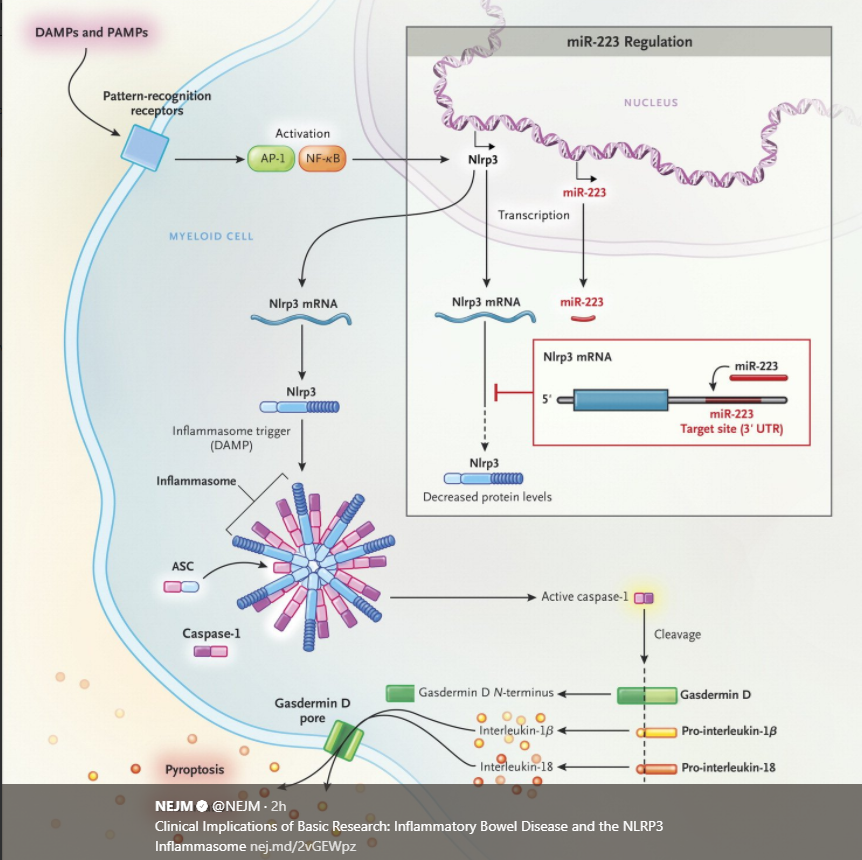
T-D Kanneganti. NEJM 2017; 377: 694-6. This review examined the NLRP3 Inflammasome.  Neudecker et al (J Exp Med 2017; 214: 1737-52) identified microRNA miR-223 which functions “to suppress the Nlrp3 inflammasone during acute colitis.” Other useful points in this review of basic research:

  • “The majority of the immune cells in the body are located in the intestine, where they are spatially separated from more than 10 trillion microorganisms by a layer of mucus and a layer of epithelial cells.  Deterioration of this physical barrier …underlies inflammatory bowel disease.”
  • miR-223 is increased in the inflamed colon. “During inflammation, the expression of miR-223 is also upregulated..and the molecule binds to its complementary sequence in a regulatory part of Nlrp3 mRNA…lead[ing] to decreased Nlrp3 expression and the consequent dampening of interleukin-1β maturation and associated inflammation.”

IPAA (Pouch) for Crohn’s Disease and Indeterminate Colitis

A recent review (S Chang, B Shen, F Remzi. Gastroenterology & Hepatology 2017; 13: 466-75 Full text link: When Not to Pouch: Important Considerations for Patient Selection for Ileal Pouch-Anal Anastomosis) makes recommendations regarding Ileal pouch-anal anastomosis (IPAA) for Crohn’s disease and indeterminate colitis. Key points:

  • In CD patients with isolated colitis and without perianal disease, “there were no differences in the rates of postoperative complications, pelvic sepsis, or pouch failure compared with UC patients” (GE Reese et al. Dis Colon Rectum 2007; 50: 239-50).
  • Rates of pouch retention for CD (Table 2) ranged from 43% to 94% in 19 studies. Most of these studies had small numbers (less than 40 patients). In the two largest studies with 97 patients and 150 patients, both with ~10 year followup, pouch retention rates were 74% and 87% respectively.
  • “Patients carrying the diagnosis of IC have pouch function on par with patients with UC, with no significant difference in the number of bowel movements…However, ..are more likely to develop CD of the pouch. Nevertheless, pouch failure rates among IC, IBD-unclassified, and UC are similar in multiple cohorts.”
  • Rates of pouch retention for IC ranged from 73%-100% among the 13 cited studies, though only 2 studies reported rates less than ~90%. The two largest studies with ~340 patients had retention rates of ~95% and followup of 3.4 yrs and 10.2 years.

This review also discusses IPAA and other issues including obesity (which increases the likelihood of complications), sphincter dysfunction, elderly patients, and radiation therapy.

Of note, recent ESPGHAN IBD Porto Group guideline for surgical Crohn’s disease management in children (J Amil-Dias et al JPGN 2017; 64: 818-35) at first glance seems to be at odds with Chang et al recommendations:

  • “Statement 8. Ileal pouch-anal anastomosis is not recommended when a patient has CD. (Agreement 100%)”
  • The body of the report is more nuanced: “There is, however, recent growing evidence that supports highly selective use of restorative proctocolectomy with ileal pouch-anal anastomosis for CD. These patients have isolated colonic CD and no evidence of ileal or perianal involvement.”

To me, statement 8 should have been worded to include “except in limited circumstances.”  As it stands now, it misleads those who do not carefully review the entire report.

My take: The report by Chang et al makes a strong case for its conclusion: “Although it is true that the diagnosis of CD is a potential contraindication to IPAA, patients with isolated Crohn’s colitis may thrive after pouch surgery.  At this time, patients with isolated Crohn’s colitis (without perianal disease or small bowel involvement) have good pouch retention rates.”  Their review prompted me to look more closely at the ESPGHAN IBD Porto Group guideline; their Statement 8 recommendation is, in fact, quite misleading.

Disclaimer: These blog posts are for educational purposes only. Specific dosing of medications (along with potential adverse effects) should be confirmed by prescribing physician.  This content is not a substitute for medical advice, diagnosis or treatment provided by a qualified healthcare provider. Always seek the advice of your physician or other qualified health provider with any questions you may have regarding a condition.

Keyhole view , looking into the Rotunda UVa, of Thomas Jefferson (or TJ for those in the know)

Good Safety Data on Infliximab vis a vis Malignancy and Hemophagocytic Lymphohistiocytosis

Using data from 5766 pediatric participants with inflammatory bowel disease in a prospective DEVELOP study (JS Hyams, MC Dubinsky et al. Gastroenterol 2017; 152: 1901-14) provide more reassurance regarding the safety of infliximab.  This study took place between 2007 to 2016 and accounted for 24,543 patient-years of followup.  While the study examined rates of malignancy, the SEER database does not include non-melanoma skin cancer; thus, the authors did not have a suitable comparator for this outcome; there were two cases of basal cell carcinoma in the study population.  This article’s abstract was published on this blog previously: Infliximab Not Associated with Malignancy

Key findings:

  • There was NO increased risk of malignancy or hemophagocytic lymphohistiocytosis (HLH) in patients exposed to infliximab as monotherapy.
  • Malignancy risk was 0.46 per 1000 patient-years in patients with infliximab exposure compared with 1.12/1000 patient-years in patients who had no exposure to biologics.
  • HLH risk was 0 in those with infliximab monotherapy compared with 0.56 per 1000 patient-years in those who had no exposure to biologics.
  • Patients exposed to thiopurines with or without biologics did have increased risks of malignancy compared with comparative populations. 13 of 15 patients who developed a malignancy and all 5 patients who developed HLH had thiopurine exposure.
  • Thiopurine exposed patients had 0.75 malignancy events per 1000 patient-years compared to 0.27 malignancy events per 1000 patient-years for patients who had no thiopurine exposure
  • Thiopurine exposed patients had 0.29 HLH events per 1000 patient-years compared to 0 HLH events per 1000 patient-years for patients who had no thiopurine exposure
  • In their discussion, the authors note that after discontinuation of thiopurine therapy for 1 or more years, the standardized incidence ratio (SIR) for malignancy approached the non-exposed group (1.48 compared to 1.30); whereas ongoing or recent thiopurine exposure had SIR of 4.45.

Limitations: Study duration (<10 years). Hard to detect changes in rare malignancies

My take: In this largest prospective pediatric cohort to date, there is NO increased risk of malignancy (excluding non-melanoma skin cancer) or HLH with infliximab therapy; however, there is a trend towards increased risk among those with thiopurine exposure. Nevertheless, as malignancy is a rare event, very low increased risk of malignancy with infliximab cannot be entirely excluded.

Related blog posts:

For HLH:


Long Distance (Medical) Relationships Don’t Always Work

Another study (NZ Borren et al Inflamm Bowel Dis 2017; 23: 1234-9) has shown detrimental outcomes due to distance from the health care team.

In this study with 2136 patients with IBD (1197 Crohn’s disease, 9393 ulcerative colitis) with mean age of 41 years, the distance from the hospital (Massachusetts General) was compared with need for IBD-related surgery and secondary outcomes of needing biological and immunomodulator therapy.

Key findings:

  • In the four quartiles, mean distance was 2.5, 8.8, 22.0, and 50.8 miles.
  • Need for surgery was increased with distance from hospital: closest with odds ratio of 1.0, quartile 2 had OR of 1.68, quartile 3 had OR of 1.94, and quartile 4 had OR of 2.44

According to the authors, with other indications besides IBD, “over three-quarters of the examined studies demonstrated a distance-decay association with worse outcomes in individuals living further away from health care facilities.  Limitation: it is possible that patients who travel a greater distance have more disease severity and that those who have milder diseases are more likely to receive care closer to home.

My take: When highly qualified subspecialists are far away, the associated reduced access likely counters this potential benefit.  Early effective therapy is important in reducing complications.

Related blog posts:

Shem Creek, SC

Low Rate of Ocular Disease in Pediatric Crohn’s Disease

A recent study (S Naviglio et al. Inflamm Bowel Dis 2017; 23: 986-90) confirms that there is a low rate of ocular disease in pediatric inflammatory bowel disease (IBD); in this cohort, half had Crohn’s disease (CD) and half had ulcerative colitis.

In this single center study, 94 children with a median age of 13.4 yrs were offered ophthalmologic examination (2014-2016).  None of these patients reported ocular symptoms.  The authors assert that 70% had intestinal remission, though 64% had elevated fecal calprotectin levels (>100 mg/kg). Key finding: One patient (1.06%) had ocular finding of uveitis (previously diagnosed prior to study)

The authors indicate that hepatobiliary manifestations, present in 9, were the most common extraintestinal IBD manifestation (EIM). Arthropathy occurred in 8, cutaneous manifestations occurred in 6 and ‘metastatic’ CD occurred in 4.

My take:  Ocular disease is an infrequent EIM in pediatric patients with IBD.

Related articleK Hata et al. Inflamm Bowel Dis 2017; 23: 1019-24. This article found that patients with EIMs were more likely to have chronic pouchitis after colectomy for ulcerative colitis. Overall, chronic pouchitis developed in 3.3%, 7.6% and 16.6% at 2, 5, and 10 years respectively. Key finding: preoperative EIM yielded a HR of 4.52.

Surgical Reset for Anti-TNF Therapy with Crohn’s Disease

A recent study (A Assa et al. Inflamm Bowel Dis 2017; 23: 791-97) indicates that after surgery, anti-TNFα treatment is worth another try.

In this retrospective study with 53 children, 18 had “pharmacodynamic failure” with anti-TNFα medications (PK group) and 35 were controls. “Phamacocynamic failure is characterized by either a lack of improvement of CD symptoms or  loss of response after initial improvement in the setting of adequate serum drug levels without ADAs” [antidrug antibodies].

Key findings:

  • Mean age at time of intestinal resection was 14.8 years
  • Median time from resection to anti-TNF initiation was 8 months
  • Compared to the control group, the PK group had similar response to anti-TNF therapy.   “Similar proportions of patients from both groups were in clinical remission on anti-TNF treatment after 12 months and at the end of follow-up (1.8 years)”
  • At 12 months, remission rates were 89% (PK) versus 88.5% (control)

The authors propose an explanation: “A plausible explanation for this finding is that in severely inflamed tissue with high inflammatory burden, local high levels of TNFα serves as a sink for anti-TNFα antibodies and that tissue injury and local hypoxia might further limit drug penetrance to its target.”

My take: This information is useful.  Many patients who have surgery may respond to anti-TNFα therapy subsequently.  The unanswered question: Could more frequent dosing of anti-TNFα therapy have averted surgery in some patients by overcoming areas of intense disease?


Ileocecal Resection in Pediatric Crohn’s Disease

A recent retrospective study (K Diederen et al. Inflamm Bowel Dis 2017; 23: 272-82) provides data on the likelihood of complications and recurrence following ileocecal resection in pediatric Crohn’s disease (n=122).

Key findings:

  • Severe postoperative complications were noted in 9.8%.  Risk factors included colonic disease (Odds ratio 5.6), microscopically positive resection margins (OR 10.4), and emergency surgery (OR 6.8)
  • Overall complication rate was reported as 29.5% which is similar to rates reported in adults
  • Clinical recurrence rates after 1, 5, and 10 years: 19%, 49%, and 71%
  • Surgical recurrence rates after 1, 5, and 10 years: 2%, 12%, and 22%
  • Immediate postoperative therapy reduced the risk of clinical recurrence (HR 0.3) and surgical recurrence (HR 0.5)
  • “In this study, postoperative catch-up growth was found in patients younger than 16 years in the year after surgery.” Thus, surgery could be an important to reverse growth retardation.

Complications within 30 days of surgery were categorized with the Clavien-Dindo classification. Those with grade ≥III which required either surgical, endoscopic or radiologic intervention were considered severe.  In this population, the complications included intraabdominal septic complications and/or anastomotic leakage.

My take: In some patients, ileocecal resection should NOT be a last resort.  Waiting too late, increases the risk of complications.  The task at hand is prospectively identifying those who merit surgery sooner and then convincing the family to proceed.

screenshot-118

Related blog posts: