Long-Term Treatment of Eosinophilic Esophagitis with Budesonide

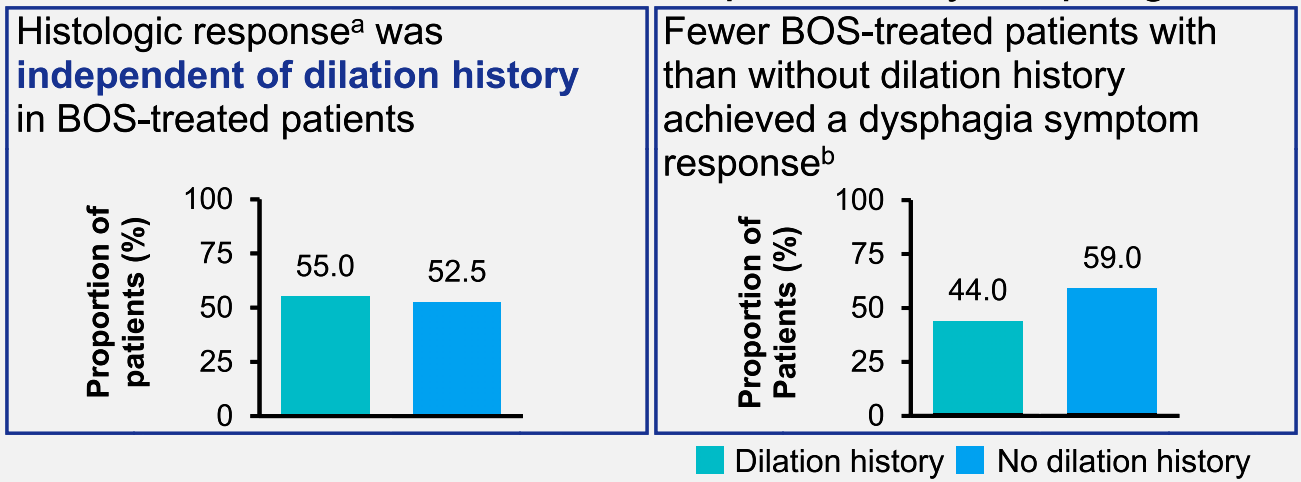
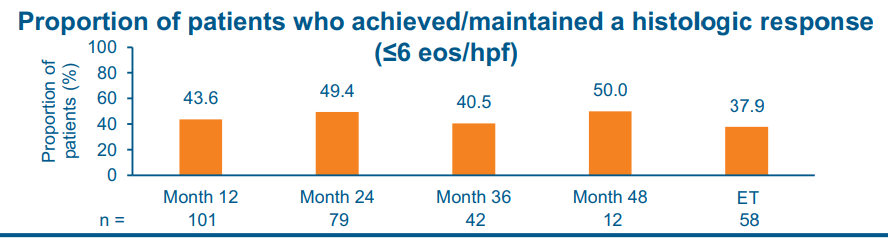
The study by Dellon et al was a 4-year, phase 3, open-label study in patients with EoE who completed up to 52 weeks of BOS therapy (Budesonide oral suspension 2 mg 2/day) in 2 preceding phase 3 studies.

Key findings:

  • At month 48 of treatment, 50.0% and 58.3% of patients achieved/maintained a histologic response (< or =6 and <15 eosinophils per high-power field, respectively)

Safety:

  • Treatment-emergent adverse events (TEAEs) occurred in 76.3% of patients; most were mild/moderate in severity and unrelated to study drug.
  • The most frequently reported BOS-related TEAEs included abnormal adrenocorticotropic hormone stimulation test results (8.4%, 11/131; number of events [m] [ 12) and adrenal insufficiency (2.3%, 3/131; m [ 3). Esophageal candidiasis occurred in 3.1% of patients (4/131)

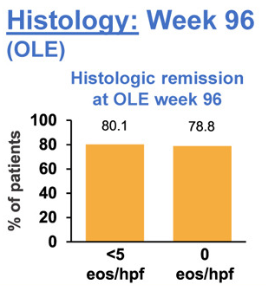
The study by Biedermann et al explored the use of an orodipsersible tablet for EoE up to 3 years in patients who achieved remission during a 12-week induction. This tablet is not available in the U.S.

Key findings:

  • At week 96, 80.1% of patients were in histologic remission, defined as peak eosinophils per high-power field of <5, at week 96 vs 91.8% at open label extension baseline
  • No new safety concerns were observed across 96 weeks of treatment. Suspected symptomatic candidiasis occurred at similar rates to prior BOT studies and was predominantly mild and resolved with treatment

My take: The pharmaceutical budesonide suspension, Eohilia, is labelled by the FDA for use as a 12 week treatment course. Since EoE is a chronic disease, 12 weeks is insufficient. These long-term studies provide data that may address this shortcoming.

Related blog posts:

Etrasimod for Eosinophilic Esophagitis?

ES Dellon et al. Lancet Gastroenterol Hepatol 2025; 10: 622–33. Etrasimod as a treatment for eosinophilic oesophagitis (VOYAGE): a double-blind, placebo-controlled, randomised, phase 2 trial

Background: “Etrasimod is an oral, once-daily, selective S1P1,4,5 receptor
modulator for the treatment of moderately to severely active ulcerative colitis and in development for the treatment of other immune-mediated inflammatory diseases. Etrasimod prevents trafficking of lymphocytes to inflamed mucosal tissue and sites of primary disease
manifestation, offering a unique, promising mechanism for the treatment of eosinophilic oesophagitis.”

There were 108 participants in this study: 41 patients received etrasimod 2 mg, 39 received etrasimod 1 mg, and 28 received placebo.

Key findings:

  • Median percentage changes from baseline in peak eosinophil count (PEC) at week 16:6 were −58·4% for etrasimod 2 mg (p=0·010 vs placebo), −39·4% for etrasimod 1 mg (p=0·29 vs placebo) and −21·5% for placebo.
  • Significant reductions from baseline in oesophageal PEC were achieved with both etrasimod
    doses (n=27 for 2 mg n=28 for 1 mg) at week 24 versus placebo (n=19), with a numerically larger reduction seen with the 2 mg dose, which had a median placebo-adjusted difference of –103·9% from baseline in oesophageal PEC. Oesophageal PEC did not decrease further with longer etrasimod treatment during the extension period (to 52 weeks in a smaller subset)
  • Etrasimod 2 mg was associated with a significant improvement in DSQ score at week 24 versus placebo in patients with no history of dilation (LS mean −21·6 vs –9·6, p=0·031)
  • No serious treatment-emergent adverse events occurred.

My take (borrowed from the authors): “This [phase 2] study provides the first evidence
that targeting the S1P pathway can improve disease activity in eosinophilic oesophagitis. Given that current treatment options for eosinophilic oesophagitis have variable and incomplete response rates, etrasimod presents a promising option.” Larger studies are warranted.

Related blog posts:

Wat Arun (Temple of Dawn), Bangkok

Budesonide Tablet vs Off-Label Corticosteroids in Eosinophilic Esophagitis

G Pellegatta et al. Clin Gastroenterol Hepatol 2025; 23: 1058-1060. Open Access! Switch From Off-Label Swallowed Topical Corticosteroids to Budesonide Orodispersible Tablets in Eosinophilic Esophagitis Patients

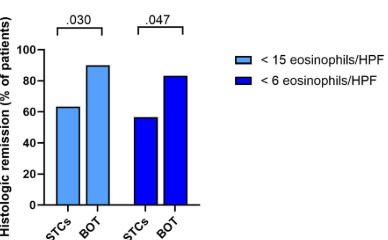
Methods: This was a single center, prospective, observational study with adult patients previously diagnosed with EoE. Thirty EoE patients, receiving off-label swallowed topical corticosteroids (STCs), were consecutively enrolled. “This is the first study to evaluate the clinical, histological, and endoscopic efficacy of the switch from STCs to BOT [Budesonide Orodispersible Tablet]”

Key findings:

  • The median Dysphagia Symptoms Score decreased from 5 (range 0–9) under STCs therapy to 0 (range 0–6) under BOT therapy (P < .0001)
  • After switching to BOT, there was a significant increase in the number of patients in histological remission (STCs: n = 19 of 30 [63.3%] vs BOT: n = 27 of 30 [90%]; P = .030) and histological deep remission (STCs: n = 17 of 30 [56.6%] vs BOT: n = 25 of 30 [83.3%]; P = .047) 
  • Another important improvement following the switch was the improved patient satisfaction with the therapy in terms of a faster and easier modality of assumption…favors a better compliance to BOT
  • There was a “slight increase in oral Candida infection after BOT”

The authors did not include any cost information regarding the switch. In U.S., BOT is not an available treatment option. However, Eohilia, which is a budesonide suspension with a 12-week FDA approval period, costs ~$2100 per month (for 600 mL =30 day supply), whereas budesonide ampules at same dosage cost ~$300 per month (60 1 mg ampules).

My take: BOT therapy, which was targeted for esophageal delivery, was associated with better response rates. However, the cost of targeted FDA approved budesonide therapy in U.S, is exorbitant.

Related blog posts:

Eosinophilic Esophagitis: Once vs Twice Daily Steroid Treatment

CC Reed et al. Clin Gastroenterol Hepatol 2025; 23: 946-953. Open Access! Daily or Twice Daily Treatment With Topical Steroids Results in Similar Responses in Eosinophilic Esophagitis

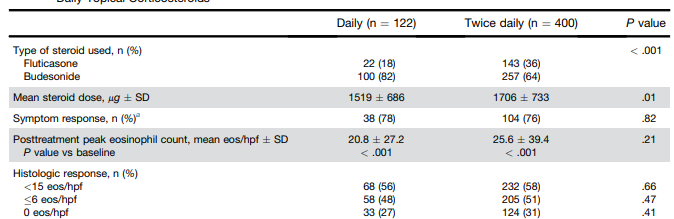
Methods: This was a retrospective cohort study using the UNC EoE Clinicopathologic Database of newly diagnosed patients with EoE treated with a tCS who had a follow-up endoscopy with biopsy. In total, there were 522 patients, including 195 pediatric patients (<18 yr). 122 patients received once daily dosing and 400 patients received twice daily dosing.

At our center, patients are typically treated on a clinical basis with either oral viscous budesonide or fluticasone from a multidose inhaler, with daily doses ranging from 1–2 mg for budesonide and 440–1760 μg for fluticasone based on patient size and at the discretion of the provider.

Key findings:

  • Global symptomatic response (78% vs 76%; P = .82), posttreatment eosinophil count (20.8 vs 25.6; P = .21), posttreatment EoE Endoscopic Reference Score (2.2 vs 2.2; P = .92), and histologic response (<15 eos/hpf; 56% vs 58%; P = .66) did not differ by dosing frequency
  • Candida was less frequent with daily dosing (2% vs 8%; P = .04)

My take: This study suggests that once daily dosing can be as effective as twice daily dosing. It may be that the total dose administered may be more important than the frequency. More studies are needed to confirm these results.

Related blog posts:

Impact of Disease Severity on Eosinophilic Esophagitis Treatment Responses

CC Reed et al. Clinical Gastroenterology and Hepatology 2025; Worsening Disease Severity as Measured by I-SEE Associates With Decreased Treatment Response to Topical Steroids in Eosinophilic Esophagitis Patients

This was a retrospective study with children and adults with eosinophilic esophagitis (EoE). Among 1312 patients, there were 657 (50%), 461 (35%), and 194 (15%) with mild, moderate, and severe disease by I-SEE, respectively. Disease activity was categorized as mild (I-SEE 1–6), moderate (I-SEE 7–14), or severe (I-SEE ≥15).

Key findings:

  • Patients with severe disease were less likely to have histologic response (49% (severe) vs 55% (moderate) vs 64% (mild); P = .03 for <15 eosinophils per high-power field) 
  • Patients with severe EoE also had lower global symptom response rates (53% vs 79% vs 83%, respectively) and higher post-treatment EoE Endoscopic Reference Scores (EREFS; 3.6 ± 2.3 vs 2.4 ± 1.8 vs 1.6 ± 1.6, respectively)

My take: More severe disease is harder to treat with EoE (and most everything else too).

Related blog posts:

Link: I-SEE Tool Scoring Table

Crazy wiring in Chiang Mai, Thailand (but prevalent in many areas of Thailand)

Eosinophilic Esophagitis: Prevalence and Costs in the U.S.

HL Thel et al. Clin Gastroenterol Hepatol 2025; 23: 272-280. Open Access! Prevalence and Costs of Eosinophilic Esophagitis in the United States

Methods: Using two  large administrative databases, MarketScan and Medicare, the authors estimated  annual prevalence of EoE, as well as age- and sex-stratified estimates, standardized to the U.S. population. Health care utilization, including medications and endoscopic procedures, was quantified, and annual EoE-associated costs were calculated.

Key findings:

  •  There was a 5-fold increase in prevalence in both databases since 2009.
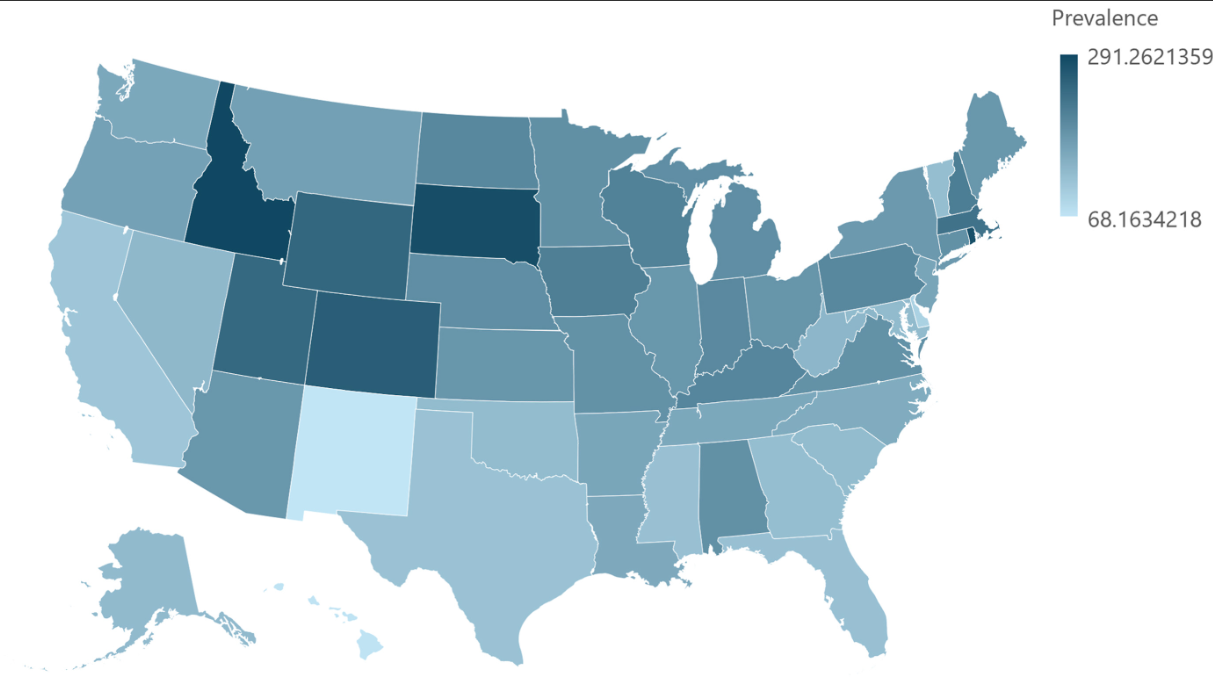
  •  Standardized to the U.S. population, the prevalence of EoE was 142.5/100,000, extrapolating to 472,380 cases. This equates to ~1 in 700 persons.
  • Total EoE-associated annual health care costs were estimated to be $1.32 billion in 2024 dollars after accounting for inflation.
  • PPIs were used more commonly than steroids for treatment. For Marketscan in 2022, PPIs were used in 41% and steroids in 26%.
There has been a 5-fold prevalence increase since 2009
Prevalence by State. Overall, ~1 in 700 EoE Prevalence in U.S.

My take: There is likely a true increase in the number of affected individuals, though some changes in prevalence are due to an increased recognition/testing of eosinophilic esophagitis.

Related blog posts:

ACG 2025 Guidelines for Eosinophilic Esophagitis

ES Dellon et al. The American Journal of Gastroenterology  2025;120(1):p 31-59. Open Access! ACG Clinical Guideline: Diagnosis and Management of Eosinophilic Esophagitis or bit.ly/acg-eoe-2025.

Related blog posts:

1-Food vs 4-Food Elimination Diet for Eosinophilic Esophagitis

KL Kliewer et al. Journal of Allergy and Clinical Immunology, 2024; One-food versus 4-food elimination diet for pediatric eosinophilic esophagitis: A multisite randomized trial

Methods: This was a multisite, randomized comparative efficacy trial of a 1-food (milk) elimination diet (1FED) versus 4-food (milk, egg, wheat, soy) elimination diet (4FED) in pediatric EoE. The 12-week study enrolled 63 patients (6-17 yrs). Primary end point was symptom improvement by Pediatric Eosinophilic Esophagitis Symptom Score (PEESS).

Key findings:

  • 1FED vs 4FED: The mean PEESS improved −25.0 versus −14.5 (P = .04), but remission rates (41% vs 44%; P = 1.00), histology scoring system (−0.25 vs −0.29; P = .77), endoscopic reference score (−1.10 vs −0.58; P = .47), and QoL scores were similar between groups.
  • The 4FED withdrawal rate (32%) exceeded that of 1FED (11%) (P = .0496).

My take: A 4FED diet is difficult to maintain. In this 12 week study, more than 30% of patients withdrew from the 4FED diet. In addition, dairy elimination alone resulted in similar response rates.

Related blog posts:

Dr. Sana Syed: AI Advancements in Pediatric Gastroenterology

Recently, Dr. Sana Syed gave Children’s Healthcare of Atlanta Grand Rounds. She provided an excellent update on the development of artificial intelligence (AI) to select targeted therapies for pediatric gastroenterology diseases.  My notes below may contain errors in transcription and in omission. Along with my notes, I have included many of her slides.

Key points:

  • One of the goals of using AI is to identify the right therapy at the time of diagnosis. Currently, diseases like eosinophilic esophagitis (EoE) and Crohn’s disease have multiple treatment options. However, many patients do not respond to first-line treatments; many develop complications due to not responding to treatment.
  • Currently we are lacking adequate biomarkers for individualized therapy. AI has the potential to sort through massive amounts of data (histologic, genetic, pharmacokinetics, transcriptome, metabolomics, etc) to allow for precision therapy.
  • For EoE, machine-learning has already identified three subtypes that may affect clinical management. EoE1 is associated with a normal-appearing esophagus. EoE2 is associated with being steroid refractory. EoE3, when compared to the other two endotypes, is associated with adult-onset and narrow-caliber esophagus or stricturing.
  • For Crohn’s disease, research has shown that younger age has been associated with an increased risk of not responding to anti-TNF therapy
This is a quote from President Obama when his administration announced massive funding
toward precision medicine in January of 2015, that the promise of precision medicine is
”delivering the right treatments at the right time, every time to the right person.” This figure illustrates some of the kinds of data that Dr. Syed had access to as faculty at UVA, including
genomics, epigenome, transcriptomics, proteomics, metabolomics, etc.
Shoda and colleagues, used a combination of histology data, endoscopic features, histologic and endoscopic scoring indices, and transcripts that make up the eosinophilic esophagitis diagnostic
panel, a quantitative PCR assay with 96 EoE representative genes. The key message from all of those visualizations is that they found that EoE can be divided into three distinct endotypes after analyzing transcriptomics changes via partition-around-medoid clustering, a machine-learning method.
In this project, the researcher intend to curate a novel metabolic network specific to the ileum,
which is relevant to Crohn’s disease, link metabolic processes with Crohn’s disease phenotypes
using in silico metabolic network modeling and ‘omics and characterize and target metabolic
pathways in an organoid model generated from patient-derived Crohn’s disease tissue.
In CoMPAS, the researchers aim to leverage artificial intelligence methods (AI) methods to build predictive
models for CD using histology slides and single-cell RNA sequencing, allowing for risk
stratification of B1 patients who will respond to anti-TNF therapy
The goal of our project is to create a multi-omics reference dataset with scRNA-seq data
coupled with contextual data on tissue morphology, ancestry, social determinants of health, and
the environment. The cohort for this study is enrolling patients who have clinical indications for endoscopy like foreign body removal, reflux, abdominal pain

My take: This work is necessary to identify the right treatments for each patient and will lead to better outcomes. We are already seeing the early stages of machine-learning’s impact on clinical care. In many other fields, AI work is much further along (especially in oncology). A recent study in Nature identified JAK inhibitors as potential life-saving therapy with toxic epidermal necrolysis (TEN).

Reference: Nordmann, T.M., Anderton, H., Hasegawa, A. et al. Spatial proteomics identifies JAKi as treatment for a lethal skin disease. Nature (2024). https://doi.org/10.1038/s41586-024-08061-0

Summary from Eric Topol (Ground Truths) focusing on spatial omics: Thierry Nordmann, Matthias Mann and their international consortium, used deep visual proteomics from 3μm PPFE sections of skin biopsies in patients affected by TEN…

More than 5,000 proteins were quantified from single cells—keratinocyte and immune cells—using mass spec, for the 4 different skin conditions (proteome cluster in Figure below, left panel). This led to the finding that the TEN patients had marked increased in Type 1 and 2 interferon signaling and activation of phosphorylated STAT1, which invoked the janus kinase (JAK/STAT) pathway. Subsequent steps were to test JAK inhibitors in cell culture (with live cell imaging) and in two different mouse models, all showing highly potent, dose-dependent impact on inhibition of the intense inflammatory process and disease severity…

They went on to treat seven patients at Fuian Medical University, the course of one patient shown below, treated with a JAKi on day 4 after diagnosis, and manifesting a marked response starting within 48 hours. All 7 patients fully resolved, with no side effects…

For spatial medicine, there are multiple analytical challenges that invoke the need for machine learning and A.I., including segmentation of cell types, automated capture of cells of microdissection, extracting useful information from the >5,000 proteins quantified per cell, and ultimately, as we’ll see more in the future, A.I. powering the construction of high-resolution 3D maps.

Related blog posts:

ESPGHAN Eosinophilic Esophagitis Guidelines

Yesterday was “National Dog Day.” Here’s our pooch:

J Amil-Dias et al. JPGN;79:394–437. Open Access! Diagnosis and management of eosinophilic esophagitis in children: An update from the European Society for Paediatric Gastroenterology, Hepatology and Nutrition (ESPGHAN)

This report makes 52 statements and 44 recommendations. Overall this is a helpful report but there are many statements and recommendations that have NO value for pediatric gastroenterologists (except for those trapped in a cave for the last 10 years). Here are a couple examples of that:

  • “ESPGHAN EGID WG recommends that pediatricians should be aware of the higher incidence of EoE in relatives.”
  • “ESPGHAN EGID WG recommends that a high index of suspicion for EoE must be maintained in children with concomitant atopic disease.”
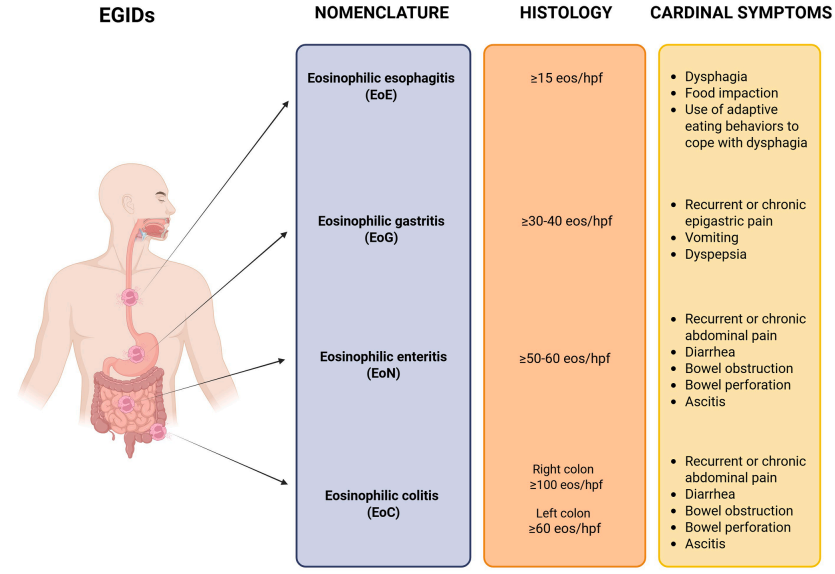
  • “ESPGHAN EGID WG recommends the peak value of 15 eos/HPF as the cut‐off value in esophageal biopsy specimens, for the histological diagnosis of EoE in an appropriate clinical context”

Some helpful recommendations:

  • “ESPGHAN EGID WG recommends against using available allergy tests to predict dietary triggers of EoE.” This is not new information but helpful to have clearly stated in guidelines.”
  • “ESPGHAN EGID WG recommends maintenance therapy to all patients after achieving histological remissionCommentary: “There are no prospective data on the best duration of maintenance therapy in pediatric EoE…[In a large study of adults} sustained untreated combined remission was seen in only 1.3% of patients who discontinued treatment.”
  • “ESPGHAN EGID WG suggests endoscopic and histological re‐evaluation after 1‐3 years during the maintenance phase in cases of stable clinical remission”
  • “ESPGHAN EGID WG recommends that dupilumab can be used in selected cases of children over1 year old weighing >15 kg with EoE refractory to conventional treatment and in those with concomitant atopic burden with approved indications for biologics”
  • “ESPGHAN EGID WG suggests that a short course of systemic steroids be considered as an alternative to dilation in the presence of moderate to severe esophageal strictures with severe symptoms.” “Treatment with short term systemic steroids can significantly reduce the need for mechanical esophageal dilation in moderate to severe strictures associated with pediatric EoE”
  • Suggested drug dosing is noted in Table 3 (see below)

Related blog posts:

Disclaimer: This blog, gutsandgrowth, assumes no responsibility for any use or operation of any method, product, instruction, concept or idea contained in the material herein or for any injury or damage to persons or property (whether products liability, negligence or otherwise) resulting from such use or operation. These blog posts are for educational purposes only. Specific dosing of medications (along with potential adverse effects) should be confirmed by prescribing physician.  Because of rapid advances in the medical sciences, the gutsandgrowth blog cautions that independent verification should be made of diagnosis and drug dosages. The reader is solely responsible for the conduct of any suggested test or procedure.  This content is not a substitute for medical advice, diagnosis or treatment provided by a qualified healthcare provider. Always seek the advice of your physician or other qualified health provider with any questions you may have regarding a condition.