Better Diet -Less Fatty Liver

A recent study (J Ma et al. Gastroenterol 2018; 155: 107-17) shows that a “better diet” was associated with less liver fat.

Among the 1521 participants form a Framingham Heart Study cohort (Mean age 51 years at start of study), the authors assessed diet with a 125-item Harvard food frequency questionnaire and liver fat using liver-phantom ratio (LPR) on CT images between 2002-2005 and then again 2008-2011.  They specifically looked at 2 diet scores:

  • Mediterranean-style diet score (MDS)
  • Alternative Healthy Eating Index (AHEI)

Key findings:

  • For each 1 standard deviation increase in MDS, the LPR increased (less liver fat) by 0.57 and the odds for incident fatty liver decreased by 26% (P=.002)
  • Similarly, for each 1 standard deviation increase in AHEI, LPR increased by 0.56 and the odds for incident fatty liver decreased by 21% (P=.02)

My take: This study shows that Improved diet quality over 6 years was associated with reduced liver fat accumulation

Related posts:

Lake Louise, Banff


Liver Shorts August 2018

M Yakoot et al. JPGN 2018; 67: 86-89. This prospective, open-label, unblinded study from Egypt indicated that 29 of 30 (96.7%) pediatric (12-17 yr) patients with HCV (genotype 4) attained an SVR12 with sofusbuvir/daclatasvir.  No serious adverse effects were evident.  The one patient who did not achieve SVR12 was lost to followup but had viral negativity after completing treatment.

Related blog post: New HCV Treatment Effective in Adolescents –Important Study Now Published Online

O El-Sherif, ZG Jiang et al. Gastroenterol 2018; 154: 2111-21. This study showed that a “BE3A Score” based on BMI <25, no Encephalopathy, no Ascites, Albumin >3.5 and ALT >60 IU/L could be used to discriminate the likelihood of reducing the Child-Pugh-Turcotte (CPT) score to class A in patients with hepatitis C virus-associated decompensated cirrhosis who received DAA therapy.  This retrospective  analysis was based on 4 trials of a sofusbuvir-therapy with 502 CPT class B and 120 CPT class C patients.

AH Ali et al. Hepatology 2018; 67: 2338-51.  This study convincingly shows that surveillance for hepatobiliary cancers improves outcomes in patients with primary sclerosing cholangitis.  Among their cohort of 830 patients (Mayo clinic), 79 developed malignancies.  Of those under surveillance (n=40), the 5-year survival was 68% compared to 20% for those who had not been under surveillance.  While the true cynic might ascribe some of the difference to ‘lead-time’ bias, this is unlikely to account for this difference at 5 years.

F Aberg et al. Hepatology 2018; 67: 2141-49.  This Finish-population prospective study, over an 11 year follow-up, using a nationally-representative cohort (n=6771) showed that even moderate alcohol consumption worsened outcomes (eg hepatic decompensation, hepatocellular carcinoma) in patients with nonalcoholic fatty liver disease.  In addition, the authors showed that diabetes the most significant predictor of poor outcome (HR 6.79). In a related commentary, pg 2072-73, the authors state that this article “put an end to the ongoing ddebate whether moderate alcohol drinking (less than 20 g of alcohol/day or 2 drinks per day) could be helpful.”

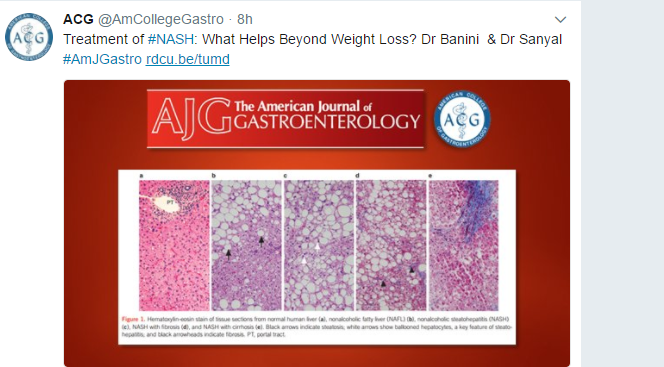
NASH: What Helps Beyond Weight Loss?

Full text from ACG article: NASH: What Helps Beyond Weight Loss?

The article reinforces the value of weight loss and exercise for nonalcoholic steatohepatitis (NASH).  It suggests that Vitamin E and/or pioglitazone may be helpful. Many more medications are being evaluated.

My take: As of now, losing weight and exercise remain the cornerstone for NASH treatment.

Pediatric NAFLD Guidelines 2017

The concise recommendations (M Vos et al. JPGN 2017; 64: 319-34) from the Expert Committee on NAFLD (ECON)/NASPGHAN provide helpful advice on this increasingly common disorder. Link to full text: NASPGHAN Clinical Practice Guideline for NAFLD

The recommendations are graded on strength of recommendation and quality of the evidence.

Some key points:

  • Use ALT as a screening tool (despite its imperfections). Persistently elevations (>2xULN) should be evaluated for liver disease, including NAFLD.  (Norms: 22 U/L for girls, 26 U/L for boys). Values above 80 U/L “warrants increased clinical concern.”
  • Screening should be considered between ages 9 and 11 years for all obese children and for overweight children with additional risk factors.
  • Ultrasound and CT scans are NOT recommended.
  • Liver biopsy should be considered for the assessment of NAFLD in children who have increased risk of NASH and/or advanced fibrosis.  This could include those with splenomegaly, AST/ALT>1, higher ALT (>80 U/L), panhypopituitarism, and type 2 diabetes.
  • Treatment: Lifestyle modifications recommended.  No currently avaiable medications or supplements are recommended.
  • Look for & avoid comorbidities: dyslipidemias, hypertension, and diabetes. Assure vaccinations against Hep A/Hep B and counsel against binge drinking and against smoking.

Related blog posts:

screenshot-150

Prevalence of Diabetes with Pediatric NAFLD

Prevalence of Prediabetes and Type 2 Diabetes in Children With Nonalcoholic Fatty Liver Disease  (JAMA Pediatr. Published online August 01, 2016. doi:10.1001/jamapediatrics.2016.1971)

According to a a multicenter, cross-sectional study at 12 pediatric clinical centers across the United States participating in the National Institute of Diabetes and Digestive and Kidney Diseases NASH Clinical Research Network and with 675 participants (mean age 12.6 yrs):

Screen Shot 2016-08-05 at 7.31.17 AM

More on Anti-TNF Drug Levels (part 2) and a Few Mentions

Another study (K Papamichael et al. Clin Gastroenterol Hepatol 2016; 14: 543-9) examined therapeutic drug levels with regard to infliximab induction and mucosal healing.

In this retrospective study with 101 patients with ulcerative colitis, 54 (53.4%) achieved mucosal healing between weeks 10-14, defined by a Mayo endoscopic score of 0 or 1.  97% of patients were treated with 5 mg/kg infusions.

Key finding:

  • Infliximab threshold concentrations of 28.3 mcg/mL at week 2, 15 mcg/mL at week 6, and 2.1 mcg/mL at week 14 were associated with mucosal healing.

My take: While this study provides information on what type of levels to expect at 2, 6, and 14 weeks, what is really important is figuring out which patients need higher doses of infusions from the start.

Unrelated, briefly noted:

R Yadlapati et al. Clin Gastroenterol Hepatol 2016; 14: 535-42. In this prospective blinded cohort study of 59 subjects, oropharyngeal pH testing (Restech Dx-pH) and salivary pepsin analysis was not able to distinguish between healthy volunteers and subjects with a combination of laryngeal and reflux symptoms.

M Moris et al. Clin Gastroenterol Hepatol 2016; 14: 585-93. This study reports increasing findings of small pancreatic cysts with more (and better) MRI imaging.

Y Kawamura et al. Clin Gastroenterol Hepatol 2016; 14: 597-605. This retrospective study shows, among almost 10,000 patients with fatty liver disease, that alcohol consumption of ≥40 g/day is an independent risk factor for hepatocellular carcinoma.

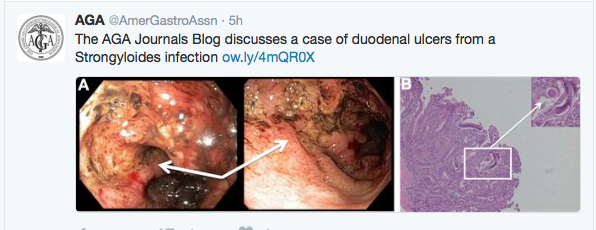
Strongloides

Overlooking Obesity in Hospitalized Children

A recent study (MA King et al. J Pediatr 2015; 167: 816-20) shows that physicians and physician trainees rarely addressed overweight/obesity in hospitalized children at a Utah pediatric hospital.

Using a chart review and an administrative database, the authors note that overweight/obesity was identified in 8.3% (n=25) and addressed in 4% (n=12) of 300 hospitalized children with overweight/obesity.  They conclude that “this represents a missed opportunity for both patient care and physician trainee education.”

My take: In many cases, addressing overweight/obesity at a stressful time like a hospitalization may be unwelcome. In children who are not very sick, offering nutritional counseling would be worthwhile.  For others, I think encouraging outpatient followup would be reasonable.

Also noted: “High Prevalence of Nonalcoholic Fatty Liver Disease in Adolescents Undergoing Bariatric Surgery” SA Xanthakos et al. Gastroenterol 2015; 149: 623-34. In this cohort of 242 adolescents, 59% had NAFLD.  None had cirrhosis; stage 3 fibrosis was identified in 0.7%. Comment: I’m surprised that only 59% had NAFLD.

white flower

In NASH, is ALT Wrongly Used as a Marker of Liver Injury?

According to a recent report (Hepatology 2015; 61: 153-60), elevation of alanine aminotransferase (ALT) which is frequently used as an indicator to select patients for further investigations (eg. liver biopsy) is NOT a good indicator of liver parenchymal injury in patients with nonalcoholic fatty liver disease (NAFLD).

The researchers enrolled 440 patients and divided them into three groups: no NAFLD (n=60), NALFLD with normal ALT (n=165), and NAFLD with elevated ALT (n=215). The patients were overweight/obese patients prospectively recruited from newspaper ads, general medicine clinics and hepatology clinics at several VA hospitals. Those with history of alcohol abuse were excluded.

Numerous investigations were performed including liver fat by proton magnetic resonance spectroscopy (H-MRS), liver biopsy (n=293), and insulin resistance measurements.

Key findings:

  • NAFLD & NASH patients with elevated ALT had higher liver triglyceride content (P<0.0001), worse adipose tissue insulin resistance (ATIR) (P<0.0001), and lower plasma adiponectin (P<0.05).
  • Steatosis was worse on liver biopsy in those with NASH and elevated ALT (P<0.0001).
  • There were no differences in liver inflammation (P=0.62), ballooning (P=0.13), or fibrosis (P=0.12). Thus, patients with normal versus elevated ALT had similar severity of NASH liver histology.

Take-home message:  In adults, ALT values are “poor surrogate markers of disease activity” in NAFLD.  ALT values, in these patients, are indicative of metabolic disease.  Given the staggering numbers of individuals, adults and children, with fatty liver disease, the lack of simple screen tool is quite problematic.  Equally problematic is a lack of a simple treatment approach.

Related blog posts:

Imaging in NAFLD -Don’t Rely on Ultrasound

A recent article (Clin Gastroenterol Hepatol 2014; 12: 765-73) notes that ultrasound is not accurate for diagnosing NAFLD:

The link to the article: http://goo.gl/R1GdAG, video abstract: http://youtu.be/spnlSPTS-SE (from Jeff Schwimmer’s twitter feed) ,and an excerpt from the article’s abstract:

Results

We analyzed 9 studies comprising 610 children; 4 studies assessed ultrasonography and 5 studies assessed magnetic resonance imaging (MRI). Ultrasonography was used in the diagnosis of fatty liver with positive predictive values of 47% to 62%. There was not a consistent relationship between ultrasound steatosis score and the reference measurement of hepatic steatosis. Liver fat as measurements by MRI or by spectroscopy varied with the methodologies used. Liver fat measurements by MRI correlated with results from histologic analyses, but sample size did not allow for an assessment of diagnostic accuracy.

Conclusions

Available evidence does not support the use of ultrasonography for the diagnosis or grading of fatty liver in children. Although MRI is a promising approach, the data are insufficient to make evidence-based recommendations regarding its use in children for the assessment of hepatic steatosis.

Related blog posts:

The Liver –Front and Center

Before proceeding with today’s post, those who read yesterday’s post may be interested in Atul Gawande’s take on the NEJM checklist publication -here’s the link (from Atul Gawande’s twitter feed): bit.ly/1d6v31z

A recent review “Extrahepatic Complications of Nonalcoholic Fatty Liver Disease” (NAFLD)(Hepatology 2014; 59: 1174-97) seems to position the liver as the center of a multitude of problems rather than one of many associated problems.

It is known that NAFLD increases the risk of end-stage liver disease and hepatocellular carcinoma.  However, the majority of deaths among individuals with NAFLD are attributed to cardiovascular disease and malignancy.  This lengthy review describes in great detail the associations between NAFLD and the risk of developing cardiovascular disease (CVD), type 2 diabetes mellitus (T2DM), chronic kidney disease (CKD), and colorectal neoplasm.  The presence of NAFLD appears to convey an independent increase in risk for these conditions.

Key points:

  • “The aggregated evidence provides strong evidence that individuals with NAFLD are at increased “independent” risk of developing CVD.  The risk of CVD mortality may be greater in subgroups of subjects with NASH and advanced fibrosis, compared to those with simple steatosis.”
  • “USS-defined NAFLD is associated with a 2- to 5-fold risk of developing T2DM after adjustment of several lifestyle and metabolic confounders.”
  • “NAFLD (in particular, biopsy-proven NASH) is associated with a greater prevalence of CKD (20% to 50% of patients). USS-defined NAFLD carries a 1.5- to 2-fold adjusted risk of incident CKD.”
  • “A true causal relationship between and NASH and colorectal cancer cannot be confirmed.”
  • Other potential extrahepatic manifestations: hypothyroidism, polycystic ovarian syndrome, obstructive sleep apnea syndrome, and osteoporosis.

Take-Home Message: NAFLD has independent associations for greater risk of CVD, hyperglycemia, and malignancy.  Whether these associations are simply an epiphenomenon  of more aggressive metabolic syndrome or whether the liver injury primarily causes these additional risks remains unclear.

Related blog posts: