Higher Stool Infliximab Correlates with Poor Response in Severe Ulcerative Colitis

A recent study (full text link: “Loss of Infliximab into feces is associated with lack of response to therapy in patients with severe ulcerative colitisGastroenterol 2015; 149; 350-55.e2) provides information about patients with ulcerative colitis who do not respond well to infliximab therapy.

In this study, the authors obtained fecal samples from 30 consecutive patients with moderate to severe UC during the 1st 2 weeks of therapy.  In addition, they obtained serum infliximab levels as well as assessed clinical and endoscopic response at 2 weeks, 8 weeks, and 3 months after treatment began.

Key findings:

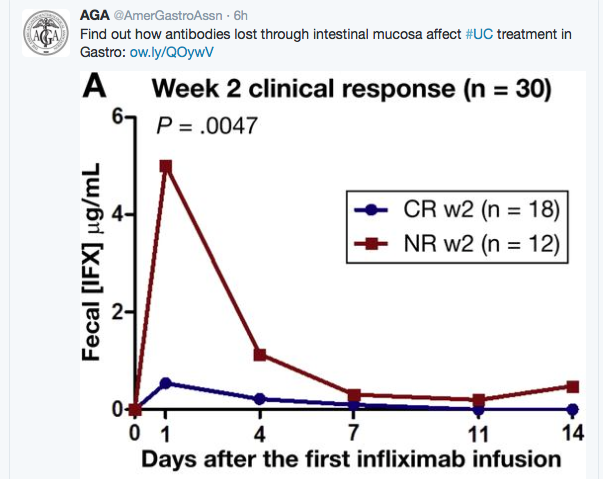
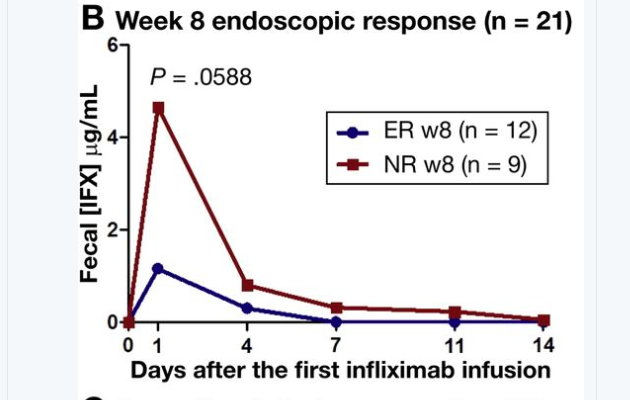
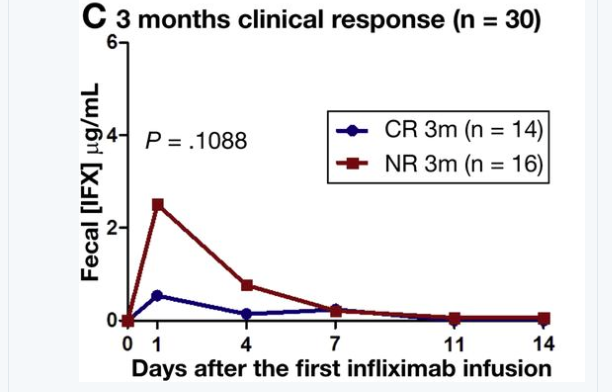
  • Fecal infliximab was detected in 129 of 195 (66%) samples.  The greatest loss was observed approximately 2 days after infusion. Low serum albumin was associated with greater infliximab levels in the stool.
  • Clinical nonresponders at week 2 had significantly higher fecal infliximab
  • The authors did not observe a correlation between fecal and serum infliximab concentrations.  However, it is possible that stool losses could indicate lower mucosal concentrations of infliximab.
From AGA twitter account

From AGA twitter account

From AGA twitter account

From AGA twitter account

From AGA twitter feed

From AGA twitter feed

Bottomline: It is not clear whether stool losses of infliximab directly contribute to drug failure or whether the loss is another biomarker of disease activity/high-risk patients.

The study authors note that “intestinal loss of IFX in moderate to severely active UC is associated with a diminished response to this treatment.  Patients with severe disease can, therefore, benefit from more intensive dosing regiments. This strategy warrants a prospective clinical trial.”

Related blog posts:

What HBV Testing is Needed Before Tumor Necrosis Factor Inhibitor Therapy

As noted in a previous blog post (What’s Going on with Hepatitis A and Hepatitis B?):

Hepatitis B Reactivation risk & recommendation: (For all of the specifics — Full text article link)

  • High risk of reactivation (>10%): B cell depleting agents (eg. rituximab, ofatumumab), anthracycline derivatives (eg. doxorubicin, epirubicin), and daily moderate to high dose steroids (>10 mg) for at least 4 weeks. Recommendation: Use HBV prophylaxis
  • Moderate risk of reactivation (1-10%): anti-TNF therapy, integrin inhibitors (eg. ustekinimab, vedolizumab), tyrosine kinase inhibitors, low-dose steroids daily (<10 mg/day) for at least 4 weeks.  Recommendation: Use HBV prophylaxis if HBsAg-positive but not if only anti-HBc-positive
  • Low risk of reactivation (<1%): azathiopurine, 6-mercaptopurine, methotrexate. Recommendation: No antiviral prophylaxis required.

For those interested in a more detailed summary of the recommendations: AGA Website HBV Reactivation Recommendations

In line with the reactivation risk, a new study (and editorial) (M Barone et al. Hepatology 2015; 62: 40-6; editorial BP Perillo. Hepatology 2105; 62: 16-8) indicates that for those receiving tumor necrosis inhibitor (anti-TNF) monotherapy, hepatitis B screening requires only checking HBsAg. The study examined a total of 1218 Caucasian rheumatologic patients (receiving biologic agents) between 2001-12. In this cohort, the authors identified 179 patients who had a previously resolved HBV infection; 146 treated with anti-TNF, 14 with rituximab, and 19 with other biologic therapy. Key finding: HBV reactivation was not seen in these patients.

Bottomline: For most pediatric patients receiving anti-TNF monotherapy (eg. infliximab, adalimumab), screening with HBsAg alone should suffice.

Disclaimer: These blog posts are for educational purposes only. Specific dosing of medications/diets (along with potential adverse effects) should be confirmed by prescribing physician/nutritionist.  This content is not a substitute for medical advice, diagnosis or treatment provided by a qualified healthcare provider. Always seek the advice of your physician or other qualified health provider with any questions you may have regarding a condition.

Grand Tetons from Jackson Lodge

Grand Tetons from Jackson Lodge

Will Infliximab Worsen Flare-ups Associated with Cytomegalovirus Infection?

Another look (Pillet S, et al. Inflamm Bowel Dis 2015; 21: 1580-86) at Cytomegalovirus (CMV) infection in patients with ulcerative colitis (UC) examines 109 flareups in 73 patients who were receiving maintenance therapy with anti-TNF therapy.

This was a single-center prospective observational study.  CMV load was determined with PCR based on a pair of biopsies. DNA load was either undetectable, mild (10-250 copies/mg of tissue) or high (>250 copies/mg of tissue). 69 patients with anti-TNF therapy were compared with 40 patients receiving azathioprine. Key findings:

  • CMV reactivation was noted in 35% of anti-TNF therapy patients and 38% in azathioprine patients.
  • Among 45 patients requiring infliximab optimization, clinical remission was not significantly impacted by the presence of CMV reactivation.
  • 17 of 20 who had repeat biopsies 8 weeks later had stable or decreased CMV load.

Bottomline: This prospective, small study shows that “in patients with moderate-to-severe UC, treatment with anti-TNF mab does not increase the risk of colonic CMV infection.”  In addition, “no adverse influence of CMV colonic infection was observed in patients with flare-up treated by anti-TNF mabs.”

Disclaimer: These blog posts are for educational purposes only. Specific dosing of medications/diets (along with potential adverse effects) should be confirmed by prescribing physician/nutritionist.  This content is not a substitute for medical advice, diagnosis or treatment provided by a qualified healthcare provider. Always seek the advice of your physician or other qualified health provider with any questions you may have regarding a condition.

Zoo Atlanta

Zoo Atlanta

Immune-Mediated Reactions to Anti-TNFs and What to Do About Them

Statue

A recent review article (Feuerstein JD et al. Inflamm Bowel Dis 2015; 21: 1176-86) serves as a useful reference regarding immune-mediated reactions to anti-tumor necrosis factor (anti-TNF) medications used in inflammatory bowel disease (IBD).

Background:

  • All anti-TNF agents induce antidrug antibodies (ADAs).
  • With regard to infliximab (IFX) which has the most literature, it is well-recognized that combination therapy with an immunomodulator reduces the risk of antibodies to infliximab (ATIs).  For example, in the SONIC study, ATIs were noted in 0.9% of those with combination therapy compared with 14.6% of those receiving monotherapy with IFX.  With the UC-SUCCESS, the rates were 19% and 3% respectively.

Acute Infusion Reactions -Key points:

  • Acute infusion reactions (IRs) are more common in patients with ADAs.  IRs can be categorized as acute (w/in 24h) and chronic (2-14 d after infusion).
  • Acute IRs can be mild (dizziness, flushing, nausea, palpitation), moderate (chest pain, hypertension [SBP increase of more than 20], hypotension, fevers urticaria, mild dyspnea, chills, rash) or severe (severe hypertensions [SBP increase of more than 40] , severe hypotension, significant dyspnea with brochospasm, stridor, and rigors)
  • The authors provide a treatment algorithm (Figure 1) based on severity of acute IR.  All reactions are initially treated by stopping infusion, but many can be restarted at a low rate after administration of acetaminophen (mild & moderate), normal saline (mild & moderate), diphenhydramine (moderate), and possibly hydrocortisone (if needed in moderate cases).  While the algorithm suggests the possibility of restarting infusion reaction in severe cases without anaphylaxis, if this is considered, it may be worthwhile to attempt in a hospital setting.
  • Typically if infusions are restarted, the rates are 10 mL/hr x 15 minutes –>20 mL/hr x 15 minutes–> 40 mL/hr x 15 minutes –>80 mL/hr x 15 minutes –>100 mL/hr x 15 minutes–>125 mL/hr until completion.
  • Following an IR, the authors recommend checking for ATIs and for IFX level.
  • Prophylaxis for mild IRs includes the use of acetaminophen and antihistamines (2nd generation antihistamine daily for 5 days prior or first generation antihistamine an hour prior to infusion).  In addition, the infusion should be started at 10 mL/hr
  • Prophylaxis for moderate IRs includes the use of acetaminophen and antihistamines and steroids (prednisone 50 mg q12 hr x 3 doses prior or hydrocortisone 100 mg (or equivalent) 20 minutes prior to infusion).  In addition, the infusion should be started at 10 mL/hr
  • The authors recommend against premedication in those who have not had IRs. Use of premedication may cause a paradoxical increase in IRs due to symptoms induced by the antihistamine.

Autoimmune Complications:

  • Autoantibodies: anti-nuclear antibody (ANA), anti-double-stranded DNA antibody (anti-dsDNA), anti-cardiolipin antibody, antihistone antibody
  • Drug-Induced Lupus Erythematosus (DILE) -“the most frequently presenting symptoms, seen in 90% of cases, is symmetric arthralgias.”  Systemic involvement of the kidneys or central nervous system is rare. Treatment is cessation of the offending medication.
  • Vasculitis -likely due to the development of circulating immune complexes that deposits into smaller capillaries–>result in a type III hypersensitivity reaction.  The most common manifestation would be palpable purpura due to a leukocytoclastic vasculitis.
  • While autoimmune complications can be a class effect, many patients have been able to switch to a different anti-TNF.

Dermatologic Complications:

The authors review both anti-TNF induced psoriasis and eczema.  Treatment should be in conjunction with dermatology.  For psoriasis that involves >5% of body surface area, this could require changing to a different anti-TNF or a different drug class.  For severe cases, “anti-TNF therapy should be discontinued.”

Related blog posts:

Disclaimer: These blog posts are for educational purposes only. Specific dosing of medications/diets (along with potential adverse effects) should be confirmed by prescribing physician/nutritionist.  This content is not a substitute for medical advice, diagnosis or treatment provided by a qualified healthcare provider. Always seek the advice of your physician or other qualified health provider with any questions you may have regarding a condition.

Sunflowers

New Target Drug Levels in Inflammatory Bowel Disease

According to a recent review (Vaughn BP, Sandborn WJ, Cheifetz AS. Inflamm Bowel Dis 2015; 21: 1435-42), higher target levels of infliximab should be considered.

After reviewing the relevant studies which are summarized in Table 1, the authors state that in their experience infliximab (IFX) levels of 5 to 10 mcg/mL are desirable.  Using this standard, they note in a retrospective review that proactive testing identifies only 29% of patients in this range.

Similarly, the TAXIT study (Casteele NV et al. Gastroenterol 2015; 148: 1320-29) identified 44% of patients with a trough concentration of 3-7 mcg/mL at baseline screening.  In this study, after achieving an adequate trough concentration, they found that patients had ~70% clinical remission at 1 year.  TAXIT acronym = the Trough Concentration Adapted Infliximab Treatment trial.  The TAXIT study was a 1-year randomized control trial with 263 adults (178 with CD and 85 with UC).

Recommendations from this review:

  • When therapeutic drug monitoring is used to react to symptomatic patients (Figure 1), if they test negative for antibodies to infliximab (ATIs) and have a low IFX level, then increasing the dose is recommended.  In those with therapeutic IFX and negative ATIs, then consider change in drug class or surgery (rather than dose escalation).
  • When therapeutic drug monitoring is used to react to symptomatic patients, if they test positive for ATIs, if there is a low level ATI (<15 mcg/mL for the referenced assay), then increasing the dose is recommended, otherwise consider change in drug class or surgery (rather than dose escalation).
  • For proactive monitoring, if negative ATI, and IFX trough level is >10 mcg/mL consider extending interval.  If the IFX level is low, increase dose.  If IFX is therapeutic, continue same dose and consider re-check in 6-12 months.
  • For proactive monitoring (Figure 3), if positive ATI, the authors recommend increasing dose if faced with low level ATI and consider change in drug class or surgery (rather than dose escalation). [If someone is doing well, I would not agree with this recommendation.  I would not stop a therapy based on a single blood test.]

One more useful point:

The authors note that combination therapy improves IFX levels and lessens the likelihood of ATIs.  “Current evidence suggests that combination of an anti-TNF with an immunomodulator is the most efficacious treatment for new-onset IBD.”  They speculate that proactive monitoring may allow IFX monotherapy without the need for combination therapy or allow de-escalation of combination therapy.

Bottomline: Consider a higher infliximab target level (5-10 mcg/mL) and using proactive monitoring to achieve higher remission rates.

Related blog posts:

Cumberland Island

Cumberland Island

Briefly noted:

Casen C, et al. Aliment Pharmacol There 2015; 42: 71-83. (Thanks to Ben Gold for this reference). After studying the stool of 165 healthy controls, the authors used 54 DNA probes targeting >300 bacteria.  This genetic analysis-map dysbiosis test, subsequently analyzed 330 more patients; it confirmed dysbiosis in 73% of IBS patients, 70% of treatment-naive IBD patients and 80% of IBD patients in remission compared with 16% of healthy individuals.  Take-home point: Ultimately stool analysis could lead to more accurate evaluation and monitoring of individuals with suspected IBS or IBD.

Disclaimer: These blog posts are for educational purposes only. Specific dosing of medications/diets (along with potential adverse effects) should be confirmed by prescribing physician/nutritionist.  This content is not a substitute for medical advice, diagnosis or treatment provided by a qualified healthcare provider. Always seek the advice of your physician or other qualified health provider with any questions you may have regarding a condition.


Why ImproveCareNow is Needed

A few recent articles make a strong argument for collaborative networks, like ImproveCareNow, to improve data collection to determine the most effective therapies.

  1. Kierkus J, et al. JPGN 2015; 60: 580-85.
  2. Audu GK, et al. JPGN 2015; 60: 586-91
  3. Dotson JL, et al. Inflamm Bowel Dis 2015; 21: 1109-14
  4. Saps M, et al. JPGN 2015; 60: 645-53.

A brief description of each study.

1. This study presented a multi-center randomized open-label trial of 99 pediatric patients with Crohn’s disease (CD) who were administered infliximab (IFX) along with an immunomodulator (azathioprine or methotrexate).  After a 10 week induction, 84 were randomized to either monotherapy for 54 weeks or dual therapy for 26 weeks. The authors did not find significant differences in response between the groups.  However, they reached a conclusion: “Twenty-six weeks likely represent (sic) the safe duration of combined IFX/immunomodulator therapy in our sample of pediatric patients with CD.”

2. The second study described three cases of chronic recurrent multifocal ostesomyelitis (CRMO) associated with inflammatory bowel disease.  They tried to identify all pediatric cases in UK in the last 10 years. (As an aside, I have treated one teenager with CRMO and ulcerative colitis.)

3. The third study is a retrospective single center of 30 patients with pediatric Crohn’s disease (CD) who developed intra-abdominal abscesses (IAA) over a 12-year period.  The authors note that this is “the largest single-center review of children and adolescents with CD and IAA to date.” Yet due to the small sample size, the study provides little guidance on this important medical problem; there were no predictors of successful medical or percutaneous drainage therapy.  In addition, with the increasing use of biologics, the authors note that “the issue of which patients will eventually require surgery is even less clear.” Changes in imaging (eg. MRE) and changes in medical management (eg. more enteral nutrition and less corticosteroids) are not discussed.

4. The fourth study is a comprehensive review of randomized placebo-controlled pharmacological clinical trials in children with functional abdominal pain disorders.  They found “no evidence to support the use of most commonly used drugs in children. Only 7 pharmacological RCTs on AP-FGIDs in children were found. Most studies were single center based and had a small sample size.  The methods and outcomes were heterogeneous…We found a considerable risk of bias in most studies…There is an urgent need for well-designed randomized clinical trials using age-appropriate validated outcome measures.”

Each of these studies makes a compelling argument for collaborative research networks.  The first study had a relatively small number of patients, short follow-up period, lack of blinding, and numerous methodological limitations.  How did the authors determine that 26 weeks was the time to stop dual therapy? Among adults with CD, a well-designed SONIC study (NEJM 2010; 362: 1383) showed the superiority of dual therapy during the study period.  In children, because of concerns about thiopurine safety, the best approach is still unclear. The second study identified only three patients despite examining a large population.  Similarly, the third study describes 30 patients with a common complication of CD but provides little insight.

The fourth study is a cautionary tale illustrating the lack of progress due to the absence of collaborative research.  Reports indicate a high prevalence of functional abdominal pain; one study indicated that abdominal pain affects “38% of school children weekly” (J Pediatr 2009; 154: 322-6).  In fact, studies on the high prevalence of this disorder dates back for 60 years (Apley, 1975; Apley & Hale, 1973; Apley & Naish, 1958). Despite the prevalence of this problem, the data for all of the treatments is poor.  The lack of progress in defining treatments for functional abdominal pain is multifactorial, including the following:

  • Cost: For many of the available treatments, there is not a financial incentive to conduct research.
  • Biomarker: lack of objective markers for improvement
  • Disease Stigma: many people attribute functional disorders as being due solely to psychological factors
  • Physician Champions: in pediatric gastroenterology, it took concerted physician efforts over many years to develop ImproveCareNow.  Similar physician champions would be needed to improve the outcomes for children with functional disorders

Bottomline: While ImproveCareNow has a lot of work ahead including improving data reliability and ascertaining accurate outcome measures, I think the effort is forward-thinking and will make a difference in understanding and treating children with IBD.  ImproveCareNow has more than 600 participating pediatric gastroenterologists and more than 20,000 patients. What I would like to see is a sister network to address the morbidity from functional disorders so that in 60 years (or sooner), we will be better equipped to treat children with abdominal pain that is not due to IBD.

Related blog posts:

Fox Theater

Fox Theater

More on Adalimumab (Humira) in Pediatrics

A recent ‘observational cohort’ study (Cozijnsen M, et al. JPGN 2015; 60: 205-10) provides more information regarding the use of adalimumab in pediatrics.  The authors attempted to identify all Dutch patients <18 years of age with Crohn’s disease who received adalimumab after infliximab therapy.  Excluded patients were those with “bad treatment adherence,” conflicting comorbidity, and previous participation in prospective study by Hyams et al Gastroenterol 2012; 143: 365-74 (Related blog postAdalimumab for children with Crohn’s disease | gutsandgrowth).

Key findings:

  • 53 patients met the inclusion criteria.  12 received monotherapy with adalimumab; cotherapy in 21 with thiopurines, 11 with methotrexate, 7 with steroids, and 2 with enteral nutrition.
  • Median followup was only 12 months.
  • Remission noted in 34 (64%) patients based on either wPCDAI or PGA (physician global assessment) after a median of 3.3 months.  Remission was durable in 50% of these patients for 2 years.
  • Adalimumab failure was noted in 18 (34%).  Only 3 patients in this study were primary infliximab nonresponders and only 1/3 responded to adalimumab.
  • One serious adverse event (infection) was reported.

One weakness of this study (& many others) is its reliance on clinical disease activity indices rather than more precise measures of mucosal healing.

Take-home point: This small study provides some information about the utility of adalimumab in clinical practice in pediatrics.  As noted in other studies, those with a loss of response to infliximab, rather than primary nonresponders, appear to have a more favorable response to adalimumab. In addition, the glaring weakness in this study (i.e. small number of participants) validates the rationale behind efforts like ImproveCareNow which can generate information quickly from a large patient population.

Related study: “Levels of Drug and Antidrug Antibodies are Associated with Outcome of Interventions After Loss of Response to Infliximab or Adalimumab.” Yanai H, et al. Clin Gastroenterol Hepatol 2015; 13: 522-30. Retrospective study of 247 adult and pediatric patients. Key findings:

  • Patients with adequate trough levels (>4.5 mcg/mL for adalimumab, >3.8 mcg/mL for infliximab) “identified patients who failed to respond to an increase in dosage or a switch to another anti-TNF agent with 90% specificity.”
  • “Levels of antibody against adalimumab >4 mcg/mL-eq or antibodies against infliximab >9 mcg/mL-eq identified patients who did not respond to an increased drug dosage with 90% specificity.” These patients were likely to benefit by switching to an alternative anti-TNF.

Related study: Clin Gastroenterol Hepatol 2015; 13: 539-47.  Trough levels of infliximab (>3 mcg/mL) at week 30 was associated with improved outcomes, including mucosal healing and corticosteroid-free remission.

Briefly noted from ImproveCareNow: Dotson JL et al. “Feasibility and Validity of the Pediatric Ulcerative Colitis Activity Index in Routine Clinical Practice.” JPGN 2015; 60: 200-04.  This study, with 2503 patients, found that the PUCAI was completed in 96% if visits.  The PUCAI correlated with PGA chain scores.

Related blog posts:

Don’t be Fooled About Withdrawing Immunomodulator Cotherapy -Look Past the Headline

The coverage on a recent study (Clinical Gastroenterology and Hepatology 2015: 13(3): 514-521.e4suggests that it should be fine to stop immunomodulator co-therapy.  I recommend reading the entire study (or at least this blog post)–you will probably come to a different conclusion.

“The addition of immunomodulators increases the efficacy of maintenance therapy with infliximab for up to one year in patients with Crohn’s disease who have not been previously treated with immunomodulators. However, there are questions about the effect of withdrawing immunomodulator therapy from these patients. David Drobne and colleagues studied the effects of treatment with infliximab and immunomodulators (co-treatment) and then immunomodulator withdrawal on long-term outcomes of patients, as well as trough levels of infliximab and formation of anti-infliximab antibodies (ATI). Reporting in Clinical Gastroenterology and Hepatology, they find that, in a retrospective analysis, withdrawal of immunomodulators after at least six months (median, 13 months) of co-treatment with infliximab does not reduce the trough levels of infliximab in patients with Crohn’s disease. Detectable trough levels of infliximab at the time of immunomodulator withdrawal are associated with long-term response.”

Clinical Gastroenterology and Hepatology 2015: 13(3): 514-521.e4

Some additional details:

This was a retrospective open-label cohort study with 223 patients and median followup of 34 months. At baseline, 65 received infliximab (IFX) monotherapy and 158  received co-therapy with an immunomodulator (46 methotrexate, 112 thiopurine).  Immunomodulators were withdrawn “only in patients with durable response (ongoing clinical benefit with lasting disease control with low C-reactive protein [CRP] [below 10 mg/L]).”  Among the 158 on co-therapy, 117 reached a durable response and had withdrawal of immunomodulator after >6 months of combination therapy (median time 13 months).

Key findings:

  • At baseline, co-therapy patients, compared to monotherapy patients, had higher IFX trough levels (adjusted mean increase of 1.44-fold) and lower likelihood of antibodies to infliximab (ATI): 35/158 (22%) compared with 25/65 (38%), P=.01.
  • When immunomodulator was withdrawn, IFX levels remained stable: before 3.2 mcg/mL compared with after 3.7 mcg/mL. However, 45 of 117 (38%) required increasing doses of IFX and 21 of 117 (18%) discontinued IFX.
  • Trough levels of IFX and CRP  were most strongly associated with response to IFX dosing on monotherapy.
  • “Only 9 of 74 patients (12%) with detectable IFX trough levels at the time of immunomodulator withdrawal developed undetectable IFX trough levels during the subsequent follow-up.”
  • None of the 27 patients with IFX trough level >5 mcg/mL at time of immunomodulator withdrawal lost response to IFX during median follow-up of 29 months.

Though the headlines covering this article have suggested that IFX levels will stay stable when immunomodulators are withdrawn after >6 months, the authors proposed algorithm only recommends withdrawal for those with IFX trough level >5 mcg/mL.  In addition, the data showed that a large number of patients required dose escalation and/or lost detectable IFX levels. Despite their proposed algorithm to withdraw in this small group, the authors further backtrack in their conclusion:  “a prospective parallel group trial during a period of 5-10 years in a large group of patients is required to ascertain the real long-term benefit to risk ratio of continuing combined infliximab and immunomodulator treatment.”

Bottomline: If a patient is doing well, withdrawing immunomodulator co-therapy still has risks. I worry that the misleading reporting of this article will result in detrimental outcomes.

Related blog posts:

Disclaimer: These blog posts are for educational purposes only. Specific dosing of medications (along with potential adverse effects) should be confirmed by prescribing physician.  This content is not a substitute for medical advice, diagnosis or treatment provided by a qualified healthcare provider. Always seek the advice of your physician or other qualified health provider with any questions you may have regarding a condition.


Short Takes on IBD Articles

Singh S, et al. Gastroenterol 2015; 148: 64-76.  In this study, the authors identified 21 trials with 2006 participants to examine the comparative efficacy of pharmacologic interventions to prevent relapse of Crohn’s disease (CD) after surgery.  Conclusion: “anti-TNF monotherapy appears to be the most effective strategy for postoperative prophylaxis for CD.” The relative risk of clinical relapse and endoscopic relapse with anti-TNF monotherapy was estimated to be between 0.02-0.20 and 0.005-0.04, respectively. Thus, those at highest risk for recurrence, including younger individuals, smokers, penetrating CD, perianal CD, and recurrent surgeries) are most likely to benefit.(Related blog post: More Lessons in TNF Therapy (Part 1) | gutsandgrowth)

Pariente B, et al. Gastroenterol 2015; 148: 52-63. The researchers in this cross-sectional study developed the Lémann Index which measures cumulative structural bowel damage in patients with CD.  My only complaint with this study was the associated editorial on pages 8-10, titled “The Holy Grail, or Only Half Way There?”  There are too many medical advances compared to ‘the holy grail’ and, in my opinion, this shouldn’t be one of them.

Zitomersky NL et al. Inflamm Bowel Dis 2015; 21: 307-14.  In this study the authors examine the relationship between the development of antibodies to infliximab (ATI) and the risk of surgery in a cross-sectional cohort of pediatric and young adult patients.  Not surprisingly, development of ATI, which was noted in 20% of cohort, correlated with reductions in infliximab levels and higher risk of surgery.  Interestingly, prior (but not current) immunomodulator therapy was associated with lower antibody levels (P=0.007).  Perhaps, “step-up” therapy may lower the risk of ATI. (This was a point noted by James Markowitz in a previous post: More NASPGHAN Meeting Notes: IBD Hot Topics | gutsandgrowth)

Rogler G, Vavricka S. Inflamm Bowel Dis 2015; 21: 400-08. This review article discusses the exposome in IBD.  Exposures include air pollution, diet, drugs, infections, water pollution, food additives, and smoking.  These exposures influence the gut microbiome and genetic susceptibility. “Only environmental influences…explain the rising incidence in IBD worldwide. The investigation of the exposome…is an enormous challenge…[but] of crucial importance.” (Related blog post: What do you know about the “exposome”? | gutsandgrowth)

Kalmon RS. Inflamm Bowel Dis 2015; 21: 428-35. Review article provides information when there is a prior personal or family history of malignancy (=avoid thiopurines).  Figure 2 is a suggested algorithm for those with IBD and a previous diagnosis of cancer.

  • In those in which the cancer is adequately controlled, the recommendations indicate that if it has been more than 2 years since completion of therapy to use a ‘step-up’ management and favor methotrexate over thiopurines
  • In those with less than 2 years since completion of cancer treatment and not responsive to 5-ASAs/antibiotics, then “consider monotherapy with biologic agents.”
  • In those still receiving chemotherapy, the authors suggest “hold immunosuppression and follow course of IBD.  If IBD not well controlled despite chemotherapy, 5-ASAs and antibiotics, treat flares with steroids, then consider biologic agents.”

Accelerated Infliximab Dosing in Acute Severe Ulcerative Colitis -plus one link

A small retrospective study (n=50) suggests that more rapid induction with infliximab may improve response and lower colectomy rate in acute severe ulcerative colitis (UC).

Link: Accelerated Infliximab in Acute UC

Here’s the abstract:

Background & Aims

Administration of infliximab to patients with acute severe ulcerative colitis (ASUC) (rescue therapy) can reduce the rate of early colectomy (within 12 months), but long-term rates of colectomy are the same as those of the pre-biologic era for these patients. The half-life of infliximab is shorter in patients with ASUC than in patients with non-severe UC, so more frequent dosing might be required to produce a therapeutic effect.

Methods

We performed a retrospective analysis of 50 hospitalized patients who received infliximab for steroid-refractory ASUC at a single academic center from September 2005 through 2013. In 2011 an accelerated dosing strategy for infliximab was introduced; we compared outcomes of standard and accelerated dosing regimens. One group of patients (n = 35) were placed on a standard dosing regimen for infliximab and then given the drug at 0, 2, and 6 weeks and then every 8 weeks thereafter. A second group (n = 15) were placed on an accelerated regimen and received 3 induction doses of infliximab within a median period of 24 days. Rates of colectomy were compared between the groups during induction and follow-up periods.

Results

There were no differences between groups in median baseline levels of C-reactive protein, albumin, or hemoglobin. The rate of colectomy during induction therapy was significantly lower with the accelerated regimen (6.7%, 1 of 15) than with the standard regimen (40%, 14 of 35) (Fisher exact test, P = .039). The standard regimen was associated with shorter time to colectomy (log-rank test, P = .042). Among patients who completed induction therapy, subsequent need for colectomy was similar between the groups during the follow-up period. Multivariate analysis showed that factors independently associated with successful induction therapy were level of albumin (g/L) when the treatment began (P = .003) and the accelerated dosing regimen (P = .03).

Conclusions

In patients with ASUC, an accelerated infliximab induction strategy reduces the need for early colectomy. An intensified infliximab dosing strategy in response to clinical or laboratory signs of breakthrough inflammation merits consideration in prospective studies.

One other link: IBD and College: Do the two play nicely (from Jeremy Adler and UofM) -describes college transition issues for our IBD patients.  Probably the most important piece of advice: “Take your medicine.”  Many really good kids decide to see what happens off therapy, often to their detriment.