Improving Liver Organ Transplantation Allocation with Artificial Intelligence

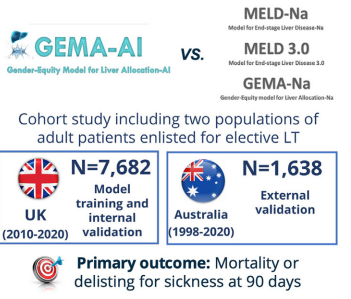
AM Gomez-Orellana et al. Clin Gastroenterol Hepatol 2025; 23: 2187-2196. Open Access! Gender-Equity Model for Liver Allocation Using Artificial Intelligence (GEMA-AI) for Waiting List Liver Transplant Prioritization

Background: “The current gold standard for ranking patients in the waiting list according to their mortality risk is the Model for End-Stage Liver Disease corrected by serum sodium (MELD-Na), which combines 4 serum analytic and objective parameters, namely bilirubin, international normalized ratio (INR), creatinine, and sodium…2

“The Model for End-Stage Liver Disease (MELD) 3.0 was developed and internally validated in the United States,4 and the gender-equity model for liver allocation corrected by serum sodium (GEMA-Na) was trained and internally validated in the United Kingdom and externally validated in Australia.5… GEMA-Na was associated with a more pronounced discrimination benefit than MELD 3.0, probably owing to the replacement of serum creatinine with the Royal Free Hospital cirrhosis glomerular filtration rate (RFH-GFR)6 in the formula.5

Methods:

Key findings:

  • GEMA-AI made more accurate predictions of waiting list outcomes than the currently available models, and could alleviate gender disparities for accessing LT
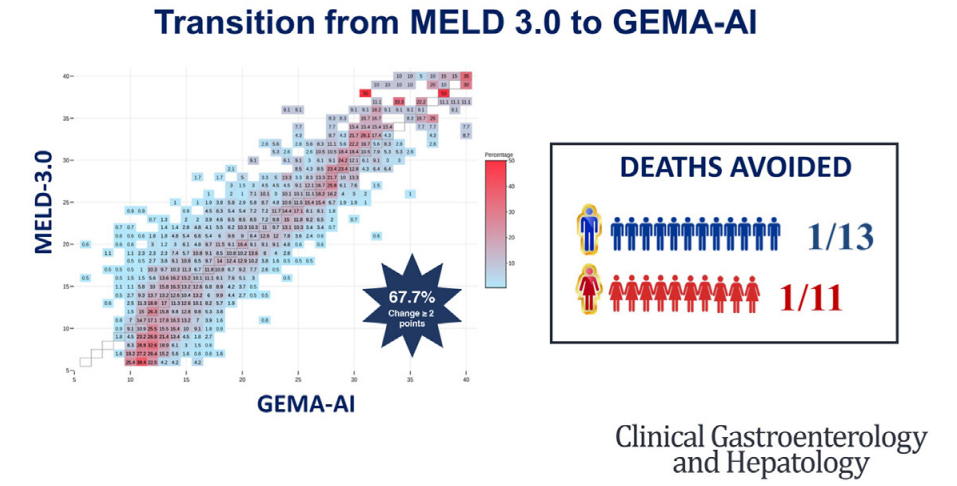
Discussion Points:

  • The components of the current scores available for waiting list prioritization provide objective and reproducible information…which in turn are associated with the probability of mortality or clinical deterioration resulting in transplant unsuitability.18 However, this relationship is nonlinear…at a certain point, for the highest values typically found in the sickest patients, the relationship with the outcome risk becomes exponential.5 …GEMA-AI was the only adequately calibrated model and showed the greatest advantage on discrimination”
  • An “advantage of nonlinear methodologies, and particularly of ANNs [artificial neural network], is their ability to identify patterns of combinations of values that are associated with an increased risk of death or delisting due to clinical worsening. While linear models give a fixed weight to each variable irrespective of its value or the value of other variables in the model, ANNs could capture specific combinations to modulate the weighting.19

My take: In the movie, iRobot, Detective Spooner instructs the robot: “Sonny, save Calvin.” While things worked out in the movie, it turns out that the robot would usually make a better decision. This study shows that AI has the potential to reduce waiting list mortality by taking advantage of weighing non-linear variables.

Related blog posts:

Living-Donor Transplant Availability Lifts All Boats

“A rising tide lifts all boats” has been used to express the sentiment that a good economy is beneficial to all. However, this has been criticized as not all boats are lifted equally and some boats are a lot nicer than others. I was thinking about this expression with these recent publications. The articles indicate that the availability of living donor liver transplant (LDLT) is clearly beneficial to the recipients but also is helpful, in a lesser way, to others on the transplant list as well.

Researchers analyzed data from 474 pediatric candidates listed for liver transplants at a single center from 2001 to 2023 (Toronto).

Key findings:

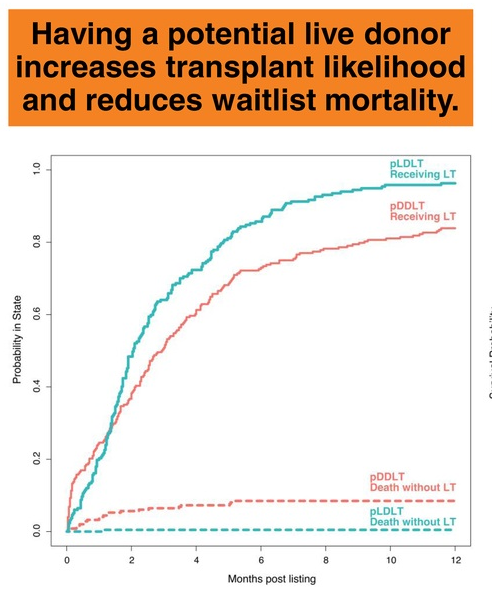
  • The pLDLT group had a higher likelihood of receiving a liver transplantation (adjusted HR: 1.38)  a lower risk of dying without a transplant (adjusted HR: 0.11)
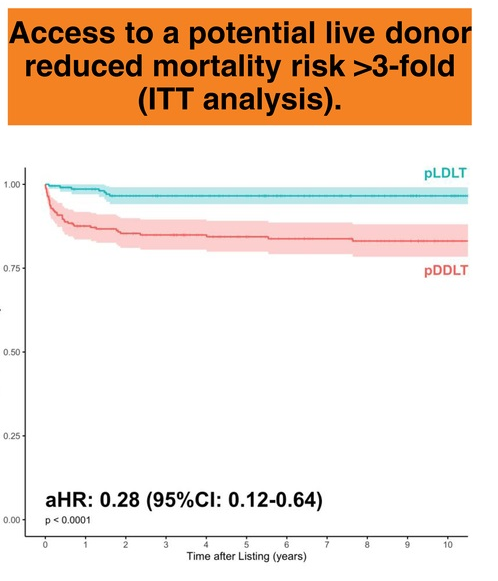
  • Survival rates from the time of listing were significantly better in the pLDLT group compared to the pDDLT (on live donor) at 1—(98.6% vs. 87.6%), 5—(96.6% vs. 84.4%), and 10—(96.6% vs. 83.1%) years
  • Having a potential live donor was linked to a 72% reduction in mortality risk (adjusted HR: 0.28)
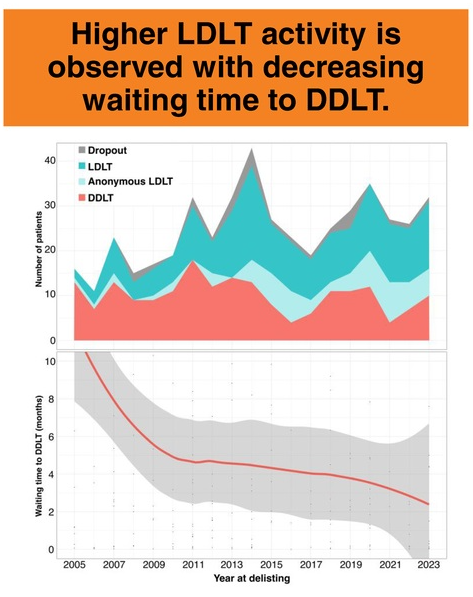
  • The waiting time for deceased donation shortened. This correlated with increased LDLT utilization, suggesting LDLT not only improved outcomes but also shortened wait times even for pDDLT patients

From the associated editorial:

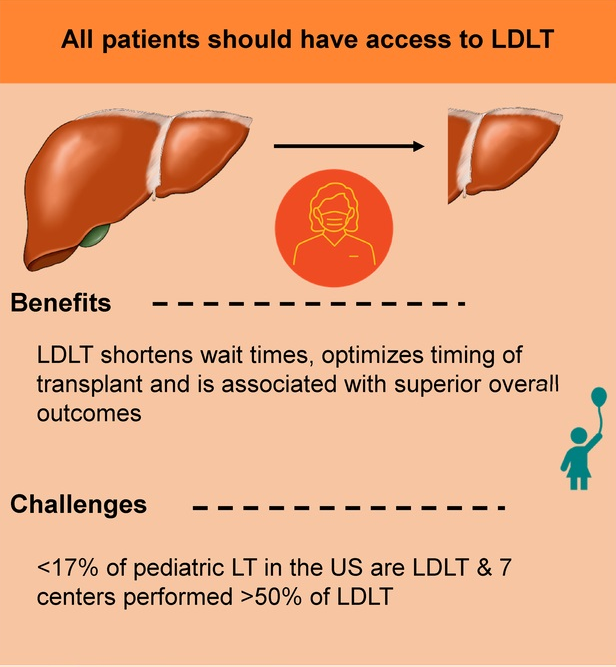
  • “LDLT continues to be underutilized in the United States with only 15% of all pediatric LTs being LDLTs.1… In 2024, only 6 pediatric centers across the United States performed 5 or more LDLTs.6…”
  • “Black and African-American and Hispanic candidates and those with public insurance are half as likely to undergo LDLT compared with Caucasian candidates and those with private insurance.7,8
  • “In a survey of over 200 parents of pediatric candidates and recipients of LT, only 72% reported knowing the steps to gain access to LDLT, and only 69% knew that donor costs were covered by the recipient’s insurance.7
  • The authors recommend collaboration between centers offering LDLT and those that don’t so that more patients could benefit

My take: More use of LDLT will result in better outcomes.

Related blog posts:

Liver Transplantation for PSC: Long-term Outcomes and Complications

M Mouchli et al. Liver Transplantation 2025; 31: 781-792. Long-term (15 y) complications and outcomes after liver transplantation for primary sclerosing cholangitis: Impact of donor and recipient factors

Methods: Using Mayo clinic prospectively maintained transplant database, 293 adult patients (>18 y, mean age 47 yrs) with PSC who underwent LT from 1984-2012 were identified. Patients with cholangiocarcinoma were excluded. One hundred and thirty-four patients received LT before 1995, and 159 were transplanted after 1995.

Key findings:

  • The 1-, 5-, 10-, and 15-year cumulative incidence of recurrent PSC was 1.0%, 8.0%, 23.5%, and 34.3%, respectively.
  • Vascular and biliary complications are frequent: hepatic artery thrombosis (N = 30), portal vein stenosis/thrombosis (N = 48), biliary leak (N = 47), biliary strictures (N = 87)
  • Graft failure occurred in 70 patients
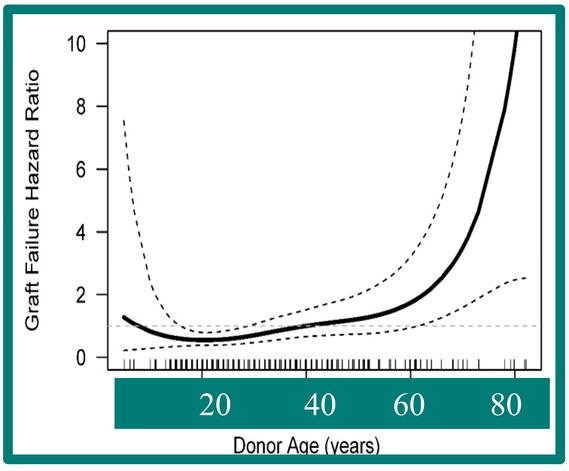
  • Donor age >60 years was associated with an increased risk of recurrent PSC. 

My take: Overall, there was a good survival rate despite the increased frequency of vascular and biliary complications. Also, 2/3rds of patients did NOT have recurrent PSC. Older donor age was associated with higher graft failure in this cohort.

Related blog posts:

PRO and CON: All Pediatric Transplant Centers Should Have Living Donor Liver Transplant Option

S Zielsdorf et al. Liver Transplantation 2025; 31: 832-835. PRO: All pediatric transplant centers should have LDLT as an option

Zielsdorf et make a compelling argument that all liver transplant patients should have access to LDLT. By improving access to transplantation, transplant recipients are in better health at the time of LDLT and have better outcomes. This also results in fewer deaths on the waiting list, even for patients who do not receive a LDLT.

The authors note that “whether LDLT is a superior option in and of itself or is instead a proxy for higher volume and more experienced centers, with associated better outcomes, may not be entirely feasible to tease out from the data.”

N Galvan et al. Liver Transplantation 2025; 31: 836-839. CON: LDLT should not be a requirement for pediatric transplant programs

Galvan et al counter with their good statistics from their large-volume center in Houston. In their center, 91% of the liver transplants performed over a decade were size-matched, whole organ allografts. They attribute some of their success to their central U.S. location allowing them to access more donors without compromising warm ischemia time. Other factors that make LDLT less viable at their center include lack of Medicaid reimbursement for living donor operations (51% of their patients rely on public insurance) and concern that the donor is oftentimes a primary caregiver.

They note that most programs in U.S. “are low-volume centers, that is, <5 pediatric liver transplants/year, making up 75% of the pediatric centers in the country that account for 38.5% of the pediatric cases…Experience is garnered by volume, and so the question,…is whether it is worth consolidating small-volume programs.”

My take: LDLT is an important tool to improve outcomes. The ability to access LDLT and technical variant grafts could be life-saving for a patient. Thus, from a public policy standpoint, it would make more sense to have fewer high-volume liver transplant centers that offer these options. Centers, like Houston, which have improved organ availability/acceptance and main high-volume, are the exception and not the rule with regard to outcomes.

Related blog posts:

Fairness Lost: The Shift in Organ Transplant Practices

BM Rosenthal et al. NY Times 2/26/25: Organ Transplant System ‘in Chaos’ as Waiting Lists Are Ignored

An excerpt:

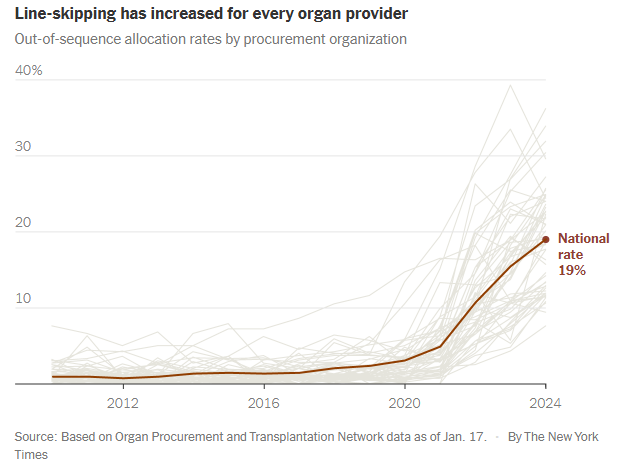
The sickest patients are supposed to get priority for lifesaving transplants. But more and more, they are being skipped over…For decades, fairness has been the guiding principle of the American organ transplant system…today, officials regularly ignore the rankings, leapfrogging over hundreds or even thousands of people when they give out kidneys, livers, lungs and hearts…

Last year, officials skipped patients on the waiting lists for nearly 20 percent of transplants from deceased donors, six times as often as a few years earlier. It is a profound shift in the transplant system, whose promise of equality has become increasingly warped by expediency and favoritism…

Under government pressure to place more organs, the nonprofit organizations that manage donations are routinely prioritizing ease over fairness. They use shortcuts to steer organs to selected hospitals, which jockey to get better access than their competitors.

These hospitals have extraordinary freedom to decide which of their patients receive transplants, regardless of where they rank on the waiting lists. Some have quietly created separate “hot lists” of preferred candidates...

More than 100,000 people are waiting for an organ in the United States, and their fates rest largely on nonprofits called organ procurement organizations…

The procurement organization is supposed to offer the organ to the doctor for the first patient on the list. But the algorithms can’t necessarily identify exact matches, only possible ones. So doctors often say no, citing reasons like the donor’s age or the size of the organ…

Until recently, organizations nearly always followed the list. On the rare occasion when they went out of order and gave the organ to someone else, the decision was examined by the United Network for Organ Sharing — the federal contractor that oversees the transplant system — and a peer review committee. Ignoring the list was allowed only as a last resort to avoid wasting an organ...

Procurement organizations regularly ignore waiting lists even when distributing higher-quality organs. Last year, 37 percent of the kidneys allocated outside the normal process were scored as above-average…

Skipping patients is exacerbating disparities in health care. When lists are ignored, transplants disproportionately go to white and Asian patients and college graduates

How a rare shortcut became routine

In 2020, procurement organizations felt under attack. Congress was criticizing them for letting too many organs go to waste. Regulators moved to give each organization a grade and, starting in 2026, fire the lowest performers... the organizations increasingly used a shortcut known as an open offer. Open offers are remarkably efficient — officials choose a hospital and allow it to put the organ into any patient...

Open offers are a boon for favored hospitals, increasing transplants and revenues and shortening waiting times. When hospitals get open offers, they often give organs to patients who are healthier than others needing transplants…Healthier patients are likelier to help transplant centers perform well on one of their most important benchmarks: the percentage of patients who survive a year after surgery...

It is impossible to gauge whether line-skipping prevents wasted organs. But data suggests it does not. As use of the practice has soared, the rate of organs being discarded is also increasing.

My take: This article was eye-opening for me as I am not actively involved in listing patients for transplantation. I was unaware of this increasing tendency of line-skipping and open source allocation. It is disturbing to see the distribution process undermined in this manner –better oversight is needed to assure fairness for those whose lives are at stake.

Related blog posts:

How to Improve the Gift of Life

MS Cattral et al. Gastroenterol 2023; 165: 1315-1317. Open access (PDF)! Anonymous Living Donor Liver Transplantation: The Altruistic Strangers

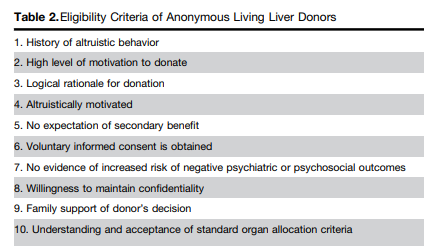
This commentary, from Toronto General Hospital practitioners, discusses the increasing use of anonymous living liver donation (ALLD) in North America and donor altruism which is a term coined and popularized by the French philosopher Auguste Comte in the 1800s. Altruism is the principle and moral practice of concern for the welfare or happiness of others.

Key points:

  • Living-donor liver transplantation (LDLT) … in Toronto currently makes up 30% of adult and 80% of pediatric liver transplants.
  • Over the past 4 years, ALLD activity has doubled and now accounts for 15% of our yearly LDLT activity (80–85/year). Similar rates of growth in ALLD have occurred in the USA, whereas it remains rare outside of North America
  • The Canadian system provides several important advantages for anonymous donors: publicly funded health care that covers the cost of the donor assessment, surgery, and
    postoperative care; supportive employers and social programs that minimize financial losses; and a provincially funded program (Prelod) that reimburses incidental costs related to travel, accommodation, and meals up to $6000.
  • Important steps toward supporting living donation have been taken in the USA, such as the development of the National Living Donor Assistance Center as well as the Patient Protection and Affordable Care Act, which makes it illegal for insurance companies to deny
    health coverage to living donors…
  • Donors in the USA, however, still face significant obstacles to obtaining life insurance, long term care insurance, and disability insurance. Notably, the National Living Donor Protection act, which aims to rectify this problem (https://www.congress.gov/bill/117th-congress/
    house-bill/1255/text
    ) has yet to move through Congress despite pressure from the transplant community

My take: It is definitely a good idea to promote living donors by removing insurance obstacles/discrimination

Related blog posts:

Does a Liver Transplantation Improve the Course of Inflammatory Bowel Disease?

AR Safarpour et al. Inflamm Bowel Dis 2023; 29: 973-985. Alterations in the Course of Inflammatory Bowel Disease Following Liver Transplantation: A Systematic Review and Meta-analysis

The authors identifed 25 studies which met inclusion criteria. Key findings:

  • In the analysis of studies with 3-category outcomes (n = 13), the pooled frequencies of patients (n=646) with improved, unchanged, or aggravated IBD course after LT were 29.4%, 51.4% (, and 25.2%.
  • Subgroup analyses revealed that patients with ulcerative colitis (UC), younger age at LT, or shorter duration of follow-up were more likely to have an improved disease course.
  • In the analysis of studies with 2-category outcomes (n = 12), the pooled frequencies of patients (n=672) with improved/unchanged or aggravated IBD course were 73.6% and 24.1%, respectively

My take: Despite the intensification of immunosuppression, most often the course of IBD is unchanged in patients following a liver transplantation.

Related blog posts:

View from L’Jaardin Exotique in Eze, France

Costs and Opportunity Costs in Pediatric Liver Transplantation

GV Mazariegos et al. Liver Transplantation 2023; 29: 671-682. Open access! Center use of technical variant grafts varies widely and impacts pediatric liver transplant waitlist and recipient outcomes in the United States

Background: Waitlist (WL) mortality is highest in children under the age of 1 year (12.5 deaths/100 WL years).2 It is thought that TVG (technical variant grafts) [including living donor (LD) and deceased donor split/partial grafts] improve outcomes.

Methods: The authors, in this retrospective study, analyzed Organ Procurement and Transplantation Network (OPTN) data on first-time LT or liver-kidney pediatric candidates listed at centers that performed >10 LTs during the study period, 2004–2020. 

Key findings:

  • Sixty-four centers performed 7842 LTs; 657 children died on the WL
  • Death from listing was significantly lower with increased center TVG usage (HR = 0.611) and LT volume (HR = 0.995)
  • Recipients of LD transplants (HR = 0.637) had significantly increased survival from transplant compared with other graft types, and recipients of deceased donor TVGs (HR = 1.066) had statistically similar outcomes compared with whole graft recipients

My take (borrowed from authors): “LD partial grafts and overall volume performed by the center in the preceding 3 years was significantly associated with increased post-LT survival. Deceased donor graft type (DD TVG vs. DD Whole) was not a predictor of post-LT survival after accounting for patient diagnosis, center volume, and other significant factors that were predictive of survival. DD TVG should not be considered an inferior graft option in experienced centers…LD grafts are associated with a survival advantage.”

BA Sayed, M Cattral, VL Ng. Liver Transplantation 2023; 29: 663-664. Open access! (editorial) Insufficient use of technical variant grafts: An unfulfilled promise in pediatric liver transplantation Key points:

  • “While outcomes have improved, with current 1- and 5-year patient survival >97% and 94%, respectively, many children continue to die on the waitlist (WL) or are removed because they are too sick.1,2
  • “As expected, these children were younger, smaller, sicker (more status 1 listings), and remained on the WL longer than children who received a transplant during the same time period…These small infants are particularly at risk because of the difficulty of obtaining an appropriately sized-matched graft. Data indicate that this problem can be solved largely by increasing the use of technical variant grafts (TVGs), which includes living donor (LD) grafts and split/reduced grafts from deceased donors (DDs).4,5
  • “This manuscript obliquely touches on another pressing issue within the pediatric LT community, namely, the core skill set of a pediatric LT surgeon. Currently, there is no such distinct designation in the North American training environment, and therefore, no training requirements exist. To provide the full spectrum of surgical care, the technical skill set should include LD hepatectomies and graft implantations, DD graft reduction/splitting, the reduction or hyper-reduction of left lateral segment grafts, and staged abdominal closure.”

My take: Where a patient is listed is a very important variable in outcomes. Choosing a low volume center without availability to perform TVG increases the risk of lethal outcomes. This information should be disclosed to families at all centers.

Also: T Miloh et al. Liver Transplantation 2023; 29: 735-744. Open access! Costs of pediatric liver transplantation among commercially insured and Medicaid-insured patients with cholestasis in the US

Health care resource utilization and costs associated with pediatric LT were retrospectively assessed using insurance claims data from the US IBM MarketScan Commercial and Medicaid databases collected between October 2015 and December 2019. Study cohort: 53 commercially insured and 100 Medicaid-insured children

  • Key findings: Commercially insured and Medicaid-insured patients averaged US $512,124 and $211,863 in medical costs and $26,998 and $15,704 in pharmacy costs, respectively

Related blog posts:

Place Massena, Nice France
Le Plongeoir (restaurant) Nice, France

How Obesity Permeates Transplant Medicine

A Mathur. Liver Transplantation 2023; 29: 465-466. Open Access! Salvaging the fatty liver for transplant: is short duration NMP enough? (ed)

 “As of 2020, the Center for Disease Control (CDC) notes that 40% of the ~258 million US adults suffer from obesity. This represents just more than a 100 million people suffering from obesity. In addition, about 23 million people suffer from severe obesity with a body mass index >40 kg/m2.” Fatty liver disease (aka NAFLD), driven primarily by obesity, is a leading cause of liver transplantation. In addition, fatty liver disease is impacting the ability to treat liver failure.

“The end result of this epidemic is that we are identifying a greater proportion of organ donors with varying degrees of liver steatosis. Transplantation of steatotic livers is associated with an increased degree of ischemia-reperfusion injury (IRI) and release of inflammatory cytokines from the graft. The consequences of this can range from severe reperfusion syndromes with immediate vasoplegia and circulatory collapse to distant organ dysfunction with acute kidney injury, liver allograft dysfunction, and primary nonfunction (PNF).”

In order to try to identify suitable liver organs for transplantation, researchers are trying to identify strategies to utilize steatotic grafts safely. Patrono et al (Liver Transplantation 2023; 29: 508-502) examined the feasibility of using normothermic machine perfusion (NMP) in the setting of macrovesicular steatosis (MaS) ≥30%. They identified 10 patients who had liver transplants using NMP in patients with MaS ≥30%; 4 additional organs were not used despite NMP. 8 of 10 patients showed good liver function, representing 57% (8 of 14) of NMP fatty organs.

Another study in the same issue (NB Ha et al. Liver Transplantation 2023; 29: 476-484) showed that patients with sarcopenic obesity (=low muscle mass obesity) had high waitlist mortality of 40% compared to 21% and 12% for those with sarcopenia without obesity and for those with obesity without sarcopenia, respectively.

My take: Obesity increases the risk of fatty liver associated cirrhosis/liver failure, and is impacting the availability of suitable organs for those in need. Furthermore, in those with obesity, the presence of sarcopenia increases the risk of death on transplant waitlist.

Tucson Botanical Gardens

How Low Can You Go with Split Livers?

Z Wang et al. Liver Transplantation 2023; 29: 58-66. Outcome of split-liver transplantation from pediatric donors weighing 25 kg or less

DJ Stoltz et al. Liver Transplantation 2023; 29: 3-4.(Editorial) Open Access! Exploring the lower weight limit of splitable liver grafts for pediatric recipients

From the editorial:

“In this issue of Liver Transplantation, Wang et al.7 describe the results of an innovative strategy to increase organ availability, particularly for low‐weight pediatric recipients, by utilizing a low‐weight donor population (≤25 kg) that historically has been avoided in pediatric split‐liver transplantation (SLT)…They found no significant differences in perioperative data, postoperative complications, patient survival, or graft survival between SLTs from donors ≤25 kg and the other three groups.”

Implications of study findings:

  • Splitting livers from donors weighing less than 25 kg will increase the pediatric donor pool and could improve waitlist mortality
  • Split smaller livers may mitigate “the clinical consequences of large‐for‐size syndrome and subsequent graft dysfunction”
  • “This approach requires a substantial level of surgical expertise to achieve comparable outcomes with more conventional operative techniques”
  • “1‐year graft survival for pediatric recipients receiving technical variant grafts was significantly worse at low‐volume centers performing an average of <5 pediatric liver transplantations per year” compared with high‐volume centers (89.9% vs. 95.3%; p < 0.001)
  • Limitations: Retrospective study. Also, only 22 of the split livers were from <25 kg donors

My take: Making the best use of this precious resource is a solemn responsibility. This study provides another reason for more transplants to be done in centers with a high level of expertise and more reasons to continue to use split livers. In those with sufficient expertise, even smaller livers can save two lives instead of one.

Related blog posts: