When Will MRI Obviate the Need for a Liver Biopsy in Pediatric NAFLD?

A recent study (JB Schwimmer et al. Hepatology 2015; 1887-95, editorial Vos MB, pages 1779-80) examines the accuracy of magnetic resonance imaging (MRI) compared with liver histology in children with nonalcoholic fatty liver disease.

This prospective validation study enrolled 174 children with a mean age of 14 years.  The MRI estimated the liver proton density fat fraction (PDFF).

Key findings:

  • Liver MRI-PDFF correlated with steatosis grade; the correlation was particularly strong at high and low end values.  Thus, a very low MRI-PDFF was highly likely to predict a steatosis grade 0 or 1 while a very high value corresponded to high steatosis levels.
  • Liver MRI-PDFF was weaker in children with stage 2-4 fibrosis than in children with no fibrosis

The editorial notes that this study “is one of hundreds now published in the literature on MRI and NAFLD…The superiority of MR-based methods…over ultrasound is clear.  The question is why are we still ordering abdominal ultrasounds to diagnose NAFLD in children?”  The barriers for usage of MRI include cost, potential sedation, and nonuniform methods for MRI usage.

The paper conclude that “MRI is not yet sufficient to replace liver biopsy in children.”  The editorial also indicates that the MRI era is fast approaching but not viable today.

Take-home point: Due to the huge numbers of patients with pediatric NAFLD, MRI remains a terrific area for research but remains problematic in clinical practice.  Given the expense of MRI, until its use can reduce liver biopsies or improve management, its role is likely to remain limited.

Turner Field

Turner Field


Hepatitis C -Can We Really Accomplish Widespread Screening?

A pessimist sees the difficulty in every opportunity; an optimist sees the opportunity in every difficulty.  -Winston Churchill

The aforementioned quote leads a recent editorial (Lutchman G, Kim WR, Hepatology 2015; 1455-8) which discusses the challenges of widespread Hepatitis C virus (HCV) screening and avoiding late diagnosis/missed opportunity for timely treatment.  The associated article (Moorman AC et al. Hepatology 2015; 1479-84) reviewed a large cohort of 14,717 patients with HCV and noted that 17% (n=1056) had a ‘late diagnosis’ which resulted in high rates of hospitalization and mortality.  Late diagnosis was defined as having cirrhosis at time of diagnosis or hepatic decompensation within 12 months of initial diagnosis.

The editorialists note that the related article presents data from 2006-11 which models ‘real-life’ practice settings.  Late diagnosis was more common in African-Americans and in patients with Medicare insurance.

With regard to widespread screening, pessimists argue that “we do not have coherent strategies and resources” to implement.

  • there are too few health care providers who are qualified and interested
  • the ‘treat-all” strategy is too expensive.  “For example, in the first 3 months after the release of sofosbuvir, a large commercial health insurance carrier announced that it had spent over $100 million on hepatitis C prescriptions…cause[d] a substantial drop in its stock price”
  • “while prioritizing treatment to patients who are at risk of future problems seems the optimal solution to deliver the most benefits at the lowest costs, the problems lies in the identification of those patients.”

Optimists see the opportunity for early intervention and improved outcomes.

Bottomline: While more effective treatment is available, there are still many questions, especially who should receive treatment and how to identify those most in need.  If/when costs of therapy are reduced, some of the difficult questions will resolve.

Related blog posts:

Briefly noted:

  • “Adding Pegylated Interferon to Entecavir for Hepatitis e Antigen-Positive Chronic Hepatitis B: A Multicenter Randomized Trial (ARES Study)” Brouwer WP et al. Hepatology 2015; 1512-22). “Peg-IFN add-on therapy may facilitate the discontinuation of nucleus(t)ice analogs.”
  • “The Impact of Phlebotomy in Nonalcoholic Fatty Liver Disease: A prospective, randomized, controlled trial.” Adams LA et al. Hepatology 2015; 1555-64).  “Reduction in ferritin by phlebotomy does not improve liver enzymes, hepatic fat, or IR in subjects with NAFLD”
  • “Nonalcoholic Steatohepatitis is the Second Leading Etiology of Liver Disease Among Adults Awaiting Liver Transplantation in the United States.” Wong RJ et al. Gastroenterol 2015; 148: 547-55.
Chattahoochee River

Chattahoochee River

Reaching Consensus on Bariatric Intervention in Children and Adolescents

A recent medical position paper (Nobili V, et al. JPGN 2015; 60: 550-61) provides guidance for bariatric surgery intervention in children and adolescents with and without nonalcoholic fatty liver disease (NAFLD).

While the authors acknowledge that bariatric surgery can “dramatically reduce the risk of adulthood obesity and obesity-related diseases,” they advocate its use in adolescents with the following:

  • BMI >40 kg/m-squared with severe comorbidities: type 2 diabetes mellitus, moderate-to-severe sleep apnea, pseudotumor cerebri, or NASH with advanced fibrosis (ISHAK score >1)
  • BMI >50 kg/m-squared with mild comorbidities: hypertension, dyslipidemia, psychological distress, gastroesophageal reflux, anthropathies, NASH, impairment in activities of daily living, mild obstructive sleep apnea, panniculitis, chronic venous insufficiency, urinary incontinence
  • Additional criteria: have attained 95% of adult stature, failed behavioral/medical treatments, psychological evaluation perioperatively, avoid pregnancy for 1 year after surgery, will adhere to nutritional guidelines after surgery, informed assent from teenager (along with parental consent)

Key points:

  • “There is a lack of randomized controlled trials examining the effects of bariatric surgery on NAFLD or NASH.”  In Table 3, the authors provide a summary of 16 previous studies/outcomes; though none of the studies enrolled more than 60 patients.
  • In an adult prospective study with 381 patients (Mathurin P et al. Gastroenterol 2009; 137: 532-40), there was a significant decline in the severity/prevalence of steatosis and resolution of NASH at 1 and 5 years.
  • Bariatric surgery, in adult studies, have improved diabetes, insulin resistance, hypertension, and dyslipidemia.
  • Patients who have “undergone bariatric surgery show higher suicide rates than the general population.”  Psychological evaluation should be integrated with surgical decision.
  • Type of surgery: Roux-en-Y Gastric Bypass (RYGB) is favored by the authors; they also discuss studies with Laparoscopic Adjustable Gastric Banding (LAGB).  “RYGB and LAGB are the 2 main surgical procedures that have been used in pediatric obesity.  RYGB is considered a safe and effective option for adolescents with extreme obesity, as long as appropriate long-term follow-up is provided. LAGB has not been approved by Food and Drug Administration for use in adolescents, and there should be considered investigational only.”

It is interesting that the authors are so deferential to the Food and Drug Administration.  It is clear from their position paper that LAGB has similar evidence supporting its use in adolescents as RYGB.  They even note that it has potential for reversibility and “an excellent safety profile with a lower risk of postoperative vitamin deficiencies when compared with biliopancreatic diversion and RYGB.”

Bottomline: Given the continuation of the obesity epidemic, additional pediatric medical expertise will be needed to help evaluate adolescents for bariatric surgery and to follow them postoperatively.

Related blog posts:

Nutrition University -Part 1

While issues with nutrition are ubiquitous, among the three areas of expertise for pediatric gastroenterologists (gastroenterology, hepatology, and nutrition), it does seem that nutrition expertise receives the least interest overall.  One effort to work on this is Nutrition University (N2U) sponsored by NASPGHAN/NASPGHAN foundation.

This is the first year in which the program has been opened up to physicians who have been in practice for more than 10 years and I am looking forward to a great review. Prior to attending, the participants were asked to review previous N2U modules which are available at NASPGHAN website: 2012 N2U Course ( a good source for CME as well).

This year’s syllabus: 2015 N2U Syllabus & Presentations (posted with permission from course organizers).

Last night the meeting started off with some comments by Praveen Goday (Praveen’s training in Cincinnati overlapped with mine) who has spearheaded this effort; subsequently the faculty addressed previously submitted attendee questions.

Here’s a sampling:

Should we be recommending a low FODMAPs diet for IBS? Rob Shulman indicated that about ~70% of adults responded in one study and that a similar study in children at Baylor College of Medicine produced similar results.  However, the diet is difficult and help from a dietician/nutritionist is needed.  If there is not a response in 7-10 days, then it is likely to be ineffective.

What should be the first formula for Cow’s Milk allergy/intolerance in infancy? The recommendation for most infants (not the very sickest) was to start with a hydrolysate formula which should be effective in more than 90%.  It was suggested that amino acid based formulas be reserved for hospitalized infants and those who do not respond to hydrolysates.

What about fish oil enterally or parenterally? James Heubi(*) noted that a lot more data is needed but fish oil either enterally or parenterally may be beneficial.  Rob Shulman commented that recent work indicates that vitamin E may be an important reason why fish oil could be better than soy-based lipid emulsions.

How practical are blenderized diets for gastrostomy fed children? Catherine Karls noted that the general goal is to provide nutrients which mimic the commercial formulas but there are many important caveats for DIY (do-it-yourself formula).

  • An RD needs to supervise to assure all micronutrient needs are being met.  Using computer programs, this facilitates calculating dietary reference intakes (DRIs).
  • Many parents prefer as homebrews are perceived as more natural or holistic
  • Some children have better tolerance (eg. volume-sensitive, patients with retching)
  • Drawbacks: time commitment, additional costs (though may be cheaper for some), and concerns regarding food safety
  • Homebrews are not recommended for jejunostomy feeds (gastrostomy only) or for those with small-caliber feeding tubes (needs to be at least 14 Fr)
  • Don’t use without the assistance of an RD!

Which is better for NAFLD -low carb or low fat? Ann Scheimann stated that this question is misleading –it is a lot more complicated.  It depends on the carbs and it depends on the fat.  Fructose clearly worsens NAFLD but so does a diet high in animal fat.

What are the nutritional management recommendations for acute pancreatitis? Justine Turner indicated that too many centers continue to rely on parenteral nutrition.  Yet, guidelines recommend the use of enteral nutrition due to lower risk of poor outcomes (eg. infections when NPO and on parenteral nutrition). ‘Resting pancreas is not helpful.’ With acute pancreatitis, enzyme secretion is reduced.  Her approach is to start nasogastric (NG) feedings at about 24 hours after presentation, as long as hemodynamically stable.  She indicated that nasojejunal (NJ) feedings can be done if NG is not well-tolerated.  NJ feedings are effective at reducing enzyme secretion.  However, Praveen Goday stated that his practice was often starting with NJ feeds.  “Sometimes there is only one shot” before the ICU team starts HAL.  Both physicians indicated that polymeric formulas were probably acceptable; however, starting with semi-elemental or elemental feedings are often done, again as a practical matter to minimize the likelihood of reverting to parenteral nutrition.

What is the advice regarding children who need far less than typical calories for weight (eg. wheelchair-bound inactive child)? Generally all nutrients are being met if a child less than 10 years is receiving 4 cans of commercial formula. For children 10 and older, receiving 6 cans per day should ensure adequate nutrients.  For those who fall below this threshold, several options:

  • Reduced calorie formula (eg. Pediasure Sidekicks, Compleat Reduced) are approximately 0.6 cal/mL but have all the other nutrients
  • Supplementation: multivitamin, calcium, phosphorus, protein
  • Need to meet at least 80% of typical fluid needs, thus not much rationale for 2 cal/mL formulas. As a practical matter, if the child is urinating well, they are receiving enough fluids.

*I was fortunate to have Jim as an attending during my fellowship at Cincinnati. In fact, even before then, Jim interviewed me when I was considering Cincinnati for my pediatric residency.  He is a terrific person and amazing to work with.

Disclaimer: This blog entry has abbreviated/summarized this presentation. Though not intentional, some important material is likely to have been omitted; in addition, transcription errors are possible as well.

These blog posts are for educational purposes only. Specific dosing of medications/diets (along with potential adverse effects) should be confirmed by prescribing physician/nutritionist.  This content is not a substitute for medical advice, diagnosis or treatment provided by a qualified healthcare provider. Always seek the advice of your physician or other qualified health provider with any questions you may have regarding a condition.


In NASH, is ALT Wrongly Used as a Marker of Liver Injury?

According to a recent report (Hepatology 2015; 61: 153-60), elevation of alanine aminotransferase (ALT) which is frequently used as an indicator to select patients for further investigations (eg. liver biopsy) is NOT a good indicator of liver parenchymal injury in patients with nonalcoholic fatty liver disease (NAFLD).

The researchers enrolled 440 patients and divided them into three groups: no NAFLD (n=60), NALFLD with normal ALT (n=165), and NAFLD with elevated ALT (n=215). The patients were overweight/obese patients prospectively recruited from newspaper ads, general medicine clinics and hepatology clinics at several VA hospitals. Those with history of alcohol abuse were excluded.

Numerous investigations were performed including liver fat by proton magnetic resonance spectroscopy (H-MRS), liver biopsy (n=293), and insulin resistance measurements.

Key findings:

  • NAFLD & NASH patients with elevated ALT had higher liver triglyceride content (P<0.0001), worse adipose tissue insulin resistance (ATIR) (P<0.0001), and lower plasma adiponectin (P<0.05).
  • Steatosis was worse on liver biopsy in those with NASH and elevated ALT (P<0.0001).
  • There were no differences in liver inflammation (P=0.62), ballooning (P=0.13), or fibrosis (P=0.12). Thus, patients with normal versus elevated ALT had similar severity of NASH liver histology.

Take-home message:  In adults, ALT values are “poor surrogate markers of disease activity” in NAFLD.  ALT values, in these patients, are indicative of metabolic disease.  Given the staggering numbers of individuals, adults and children, with fatty liver disease, the lack of simple screen tool is quite problematic.  Equally problematic is a lack of a simple treatment approach.

Related blog posts:

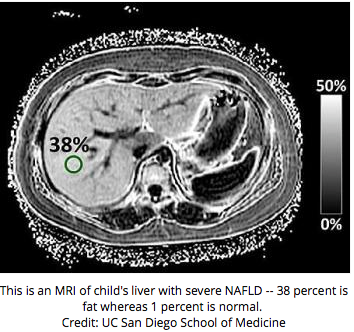
Improving MRI for NAFLD

From MedicalNewsToday – a summary of a recent Hepatology study by Jeffrey B. Schwimmer, MD and colleagues.

Excerpts from http://www.medicalnewstoday.com/releases/289088.php along with image.

In this study, the researchers compared a new MRI technique to the standard liver biopsy method of assessing fat in the liver. To do this, the team enrolled 174 children who were having liver biopsies for clinical care. For each patient, the team performed both MRI-estimated PDFF and compared the results to the standard pathology method of measuring fat on a liver biopsy.

Screenshot from MedicalNews

Screenshot from MedicalNewsToday

The team found a strong correlation between the amount of liver fat as measured by the new MRI technique and the grade of liver fat determined by pathology. This is an important step towards being able to use this technology for patients. Notably, the correlation was influenced by both the patient’s gender and the amount of scar tissue in the liver. The correlation between the two techniques was strongest in females and in children with minimal scar tissue.

Depending on how the new MRI technology is used, it could correctly classify between 65 and 90 percent of children as having or not having fatty liver tissue.”

“… However, further refinements will be needed before this or any other MRI technique can be used to diagnose NAFLD in an individual child.

Magnetic Resonance Elastography in Nonalcoholic Fatty Liver Disease

A recent study (Hepatolology 2014; 60: 1920-8) shows that magnetic resonance (MR) elastography can be an accurate noninvasive tool to assess liver fibrosis.

Background: Assessing severity of liver fibrosis provides important prognostic information in patients with nonalcoholic fatty liver disease (NAFLD); however, these patients are often obese which decreases the success of transient elastography.  In addition, high hepatic fat content may alter the results of transient elastography.  Hence, an alternative noninvasive technique is desirable.

Design: Prospective study with 117 consecutive patients with biopsy-proven NAFLD who also underwent 2D-MR elastography between 2011-2013.

Results:

  • Fibrosis stage: stage 0 n=43, stage 1 n=39, stage 2 n=13, stage 3 n=12, stage 4 n=10.
  • MR elastography identified stage 3-4 with an accuracy of 0.92, with little overlap between advanced (F3-4) and non-advanced (F0-2) values.  The specificity, sensitivity, positive/negative predictive values, and cutoff values are detailed in Table 2.
  • Figure 3 provides a cool picture demonstrating the different MR elastography stiffness heat maps correlated with liver fibrosis. Link to similar web-based image from Siemens.

Bottomline: This technology allows a noninvasive measure of liver fibrosis in NAFLD patients and will probably be of use in other liver conditions.  Given the fact that a liver biopsy is more risky and often expensive, this technology and other noninvasive markers of advanced liver disease will be important tools.

Related blog posts:

Clinical Science Year in Review in Pediatric GI – NASPGHAN 2014

For many participants at NASPGHAN, the “year in review” presentations are a highlight.  This year was no exception.

This blog entry has abbreviated/summarized this presentation. Though not intentional, some important material is likely to have been omitted; in addition, transcription errors are possible as well.

William Balistreri –Clinical Science Year in Review 

Lay press remains excellent source of information.

Benefit of microbiome. (from NPR) Now there is elephant poop coffee -$645/lb ($70/cup).  Link: No. 1 Most Expensive Coffee Comes From Elephant’s No. 2 : The ... Collecting elephant poop is probably a less ideal job than what most of us have.  As for coffee, “make mine de-crap.”

Elephant Microbiome Collector

Topic of the year: Hepatitis C

  • 25 years since identification of Hepatitis C in 1989
  • Now approaching cure (Related blog post: Wiping out Hepatitis C | gutsandgrowth). All-oral highly effective regimen –newest regimen as easy as one pill per day for 8-12 weeks. Direct-acting antivirals (DAAs). Moving past 1st generation of DAAs: telaprevir/boceprevir with interferon/ribavirin.(refs = Pawlotsky, Gastroenterology 146:1176, 2014 and Schmidt, Clinical Gastroent Hepatol 12:728, 2014)
  • New drugs for HCV –just in time –increasing risk of HCV complications. Ann Intern Med 2014; 160: 293.
  • Goal –SVR –sustained virological response
  • Reviewed large number of articles: Sofosbuvir, Simeprevir, Sofosbuvir/Ledipasvir (Harvoni).  3-D regimen: ABT-450, ABT-267, ABT-333 –will be approved in coming weeks (Related blog post:Have You Heard of Harvoni? | gutsandgrowth)
    • Gane, NEJM 368:34, 2013
    • Zeuzem, NEJM 370:1993,2014
    • Kowdley, N Engl J Med 370:1879, 2014
    • Lawitz, Lancet 383:515, 2014
    • Feld, New England Journal of Medicine, 370:1594, 2014
  • Mild side effects with newer drug therapies
  • Awaiting pediatric studies.
  • Costly $1000/pill –“if dog swallows it,” may have to look for it in the stool
  • Stay updated with recommendations: www.hcvguidelines.org  (AASLD/IDSA)

Hepatitis B –success of vaccination.

  • Preventing perinatal transmission with HBIG/vaccine. JAMA 2013; 310: 974. Those born after 1984, with much lower HCC. Ann Intern Med 2014; 160: 828; Hepatology 2014; 60: 448
  • Give antivirals (eg. telbivudine) for HBeAg-positive mothers prior to delivery. (Related blog post: Hepatology Update -Summer 2014 | gutsandgrowth) Greenup, Journ of Hepatology 61:502, 2014 AND Zhang, Hepatology 60:468, 2014
  • Antiviral therapy lowers the risk of HCC. Hepatology 2014; 147: 143 (Wu et al).
  • Make sure children with IBD are being screened for hepatitis B. ~13% may not be immune. Moses, Am J Gastro 107:133, 2012

Trend of the Year: Social Media

  • Genome sequencing –tremendous advance. Families may push for this option on their own.
  • Magnets –banned. Social media allowed this problem to be quickly identified. (Related blog post: Buckyball Recall –It’s Official | gutsandgrowth)
  • Social media allows family to share information and get answers. Internet blogging allows families to reach out to scientists.
    • Schumacher, Pediatrics 133:e1345, 2014
    • Enns, Genetics in Medicine, March 2014
  • BiliCam –can take picture with mobile phones.

Biliary Atresia

Threat of the Year: Obesity along with NAFLD

  •  NAFLD can have significant liver histologic abnormalities even with normal ALT levels. J Pediatr 2014; 164: 707.
  • Clinical burden of NAFLD is not restricted to liver-related morbidity or mortality Armstrong, HEPATOLOGY 59:1174, 2014. Also, concern for obstructive sleep apnea and cardiovascular disease.  Sundaram, J Pediatr 164:699, 2014. Pacifico, HEPATOLOGY 59:461, 2014
  • Elastography is promising tool. Xanthakos, J Peds 164:186, 2014
  • Current treatment –lifestyle changes. Snacking contributes to fatty liver. Sleep curtailment is associated with obesity. Spaeth. SLEEP 36:981, 2013, Taveras, Pediatrics 133:1013, 2014, Mitchell, Pediat 131:e1428, 2013
  • Increased antibiotics in early life associated with obesity due to alteration of microbiome. Bailey, JAMA Pediatrics, Sept 29, 2014
  • Suggestion for future: “Diet Water.”

Diet Water.jpg

For those who want to learn more from Dr. Balistreri directly, I would recommend the Aspen Conference:

Aspen Meeting

Related link: Dr. Balistreri’s Review of the Growth and Development of the Pediatric Gastroenterology Specialty.


“Genetic Testing and the Future of Pediatric Gastroenterology”

Last night, a symposium on “Genetic Testing and the Future of Pediatric Gastroenterology” sponsored by Children’s Healthcare of Atlanta took place.  The speakers included Dr. Ben Gold from our pediatric GI group (GI Care for Kids), Dr. Saul Karpen and Dr. Subra Kugasthasan (Emory), and Dr. Robert Heuckeroth (CHOP).

This blog entry has abbreviated/summarized the presentations. Though not intentional, some important material is likely to have been omitted; in addition, transcription errors are possible as well.  All of the speakers had terrific presentations.

GI Genetic Testing –Subra Kugathasan

Reasons for genetic testing:

  • Predicting prognosis: predicting stricturing/fibrosis in Crohn’s, predicting cancer in ulcerative colitis; BRCA1 in breast cancer
  • Choosing the right medicine: pharmcogenomics
  • Precision medicine: prevention of disease, slowing progression of disease.

Examples in current medicine:

  • Recurrent pancreatitis –novel mutations identified in SPINK1.  Also now hereditary pancreatitis may be due to mutations in CPA1, GGT1, CLDN2, MMP1, MTHFR in addition to CTRC, SPINK1, CFTR, and PRSS1.
  • Inflammatory bowel disease (IBD):IL10 Receptor mutation , TTC7A –>VEO IBD; IPEX gene (can worsen with immunosuppression). Panel testing now available for 40 genes –4 of 22 patients identified with IBD.  Identifying cause of VEO IBD may lead to treatment: bone marrow transplantation.
  • IBD: CLIA/CAP certified Emory Genetics panel ~50 genes (genetics.emory.edu/egl/tests/view.php?testid=4420). Dr. Kugathasan indicated that this testing is likely to be a better 1st step then exome testing. Yield with exome sequencing (in highly selected populations) about 25% at this time but likely to increase. If negative, can proceed with whole exome sequence.  Numerous problems with exome sequencing; for example, exome sequencing may identify genes of unknown significance and identifying genetic problems unrelated to clinical issue.

Who/When to test?

  • Very early onset disease (<10 years), atypical presentation, perhaps treatment-refractory.

Take-home point: “All GI diseases have genetic testing in future.” Testing for highly selected patients for gene defects can be accomplished with gene panel and if negative, whole exome testing.

Related blog posts:

Liver: Cholestatic & Metabolic Diseases of Infants and Children —Saul Karpen

Potential areas for genetic testing:

  • Neonatal cholestasis: PFIC, Metaboic, Biliary Atresia
  • NAFLD
  • Transplant

“Why bother…they all get transplanted anyway…”  According to Dr. Karpen, this view needs to be reconsidered.

Neonatal cholestasis:

  • (Front Pediatr 2014; 2: 65)  41% with biliary atresia, 13% idiopathic, and a lot of others.  N=82. Other etiologies: Genetic disorders; Biliary disease (eg. Caroli), transporter defects (PFICs/BRICs), Metabolic (Niemann-Pick C, tyrosinemia, HFI, Peroxisomal, GSDs, Peroxisomal, Mitochondrial, A1AT). Thus, panels to identify these disorders can be very helpful.
  • Emory Cholestasis 56+ Gene Panel. Testing is cheaper than endoscopy

PFIC: Progressive Familial Intrahepatic Cholestasis

  • PFIC1: ATP8B1 (Byler) –besides cholestasis, patients often with diarrhea, hearing loss, very itchy; can have cirrhosis at 2 years of life
  • PFIC2: ABCB11 (BSEP deficiency) –can have cirrhosis at 6 mo, prone to HCC (as early as 13 mo), very itchy
  •  PFIC3 (high GGT) ABCB4 –can have cirrhosis at 5 mo, can cause problems at later ages as well (eg. intrahepatic cholestasis of pregnancy, gallstones); increase risk for HCC/cholangiocarcinoma.
  • Identifying PFIC (could mimic PSC) and BRIC (Benign Recurrent Intrahepatic Cholestasis)–is helpful in following patients for specific management when symptoms recur and to screen for complications (eg. HCC).

Biliary Atresia:

  • No clear genetics in most
  • Laterality defects in 5-10% -asplenia/polysplenia, cardiac defects
  • GPC1 gene is a susceptibility gene in zebrafish
  • ADD3 gene identified in Han Chinese OR 2.38 –may be a susceptibility gene. (30% of cases, 17% of controls)

NAFLD: Associated with increased mortality compared with matched controls. Patients develop thicker atherosclerotic plaques. PNPLA3 gene identified as a susceptibility gene for NAFLD and is highly prevalent in Hispanic populations.  Similarly, PNPLA3 has been associated with NASH in Italian populations.  If you have this genotype, this increases risk of liver fat in the face of increased sugar consumption.

Transplant medicine: Deoxyguanosine Kinase Deficiency (DGUOK) –rapid sequencing for this gene pretransplant –If positive, should not be transplanted. These individuals have systemic disease that cannot be cured with liver transplantation.

Who/When for genetic testing?: DGUOK in liver failure patients, and in infants without diagnosis after liver biopsy/exclusion of A1AT

Take-home message: Genetic testing has a role in pediatric liver disease and it is affordable.

Related blog posts:

GI –Single Microbes to the Microbiome and GI Disease —Ben Gold

  • Described why changes in our environment can trigger development of disease due to changes in microbiome (eg. immigrants/children with IBD in developed countries at much higher rate than at developing countries)
  • Discussed Helicobacter pylori –‘how a single microbe which may have been good turned bad’
  • Described pathogenesis. What you get exposed to early on may lead to an exaggerated response by T-cells/immune system.  Healthy microbiota is critical to train the immune system via GALT to protect host and decrease the chances for immune overexpression.

Key points:

  • 100 trillion bacteria that live in our GI tract. 10x number of human cells in our body and 100x as many genes as there are in the human genome.  Partnership between humans and their microbiome developed over thousands of years.
  • Vaginal delivery is NOT sterile. Are there consequences to C-section? Food allergy for infant –OR 2.5 if Mom with food allergy delivers vaginally vs OR 7.8 if Mom has food allergy and delivers via C-section. Also, some data indicates increased risk of EoE if born via C-section.  From DAY 1, microbiome can be influence by environmental factors.
  • Influencing microbiome happens mainly during first three years of life.

Why the microbiome is so important/more pointers:

  1. Since 1950, there has been a huge decline in infectious diseases like measles, mumps, hepatitis A, tuberculosis, etc
  2. Coincident with these decreases there has been increased multiple sclerosis, Crohn’s disease, asthma, food allergy, autoimmune diseases
  3. Sanitized food supply, decrease in naturally fermented foods, urban lifestyle, antibiotics, C-section all lead to lower microbial exposure and altered intestinal microbiota. This in turn may lead to an inadequate immune response.
  4. Elie Metchnikoff 1845-1916: suggested ingested bacteria could be healthy. Probiotics/prebiotics are not a new idea!
  5. Obese patients had very high levels of Firmicutes and low Bacteroidetes.
  6. Fecal microbial transplantation (FMT)–reseeding GI microbiome. FMT may be beneficial to many diseases and is being  studied.

Helicobacter pylori -evidence of H pylori as far back as 60,000 years ago and has evolved with humans. H pylori may have helped provided a positive immune response in children and adults.

Bottomline: Human genetic diseases may be heavily influenced by the 300 trillion bacteria and their genes; these bacteria are susceptible to environmental disease.

Related blog posts:


Genetic Basis of Motility —Robert Heuckeroth

  • Basic machinery controlling motility described –enteric neurons, muscles, pacemaker cells.
  • Very little clinical overlap between modern genetic testing and applicable motility disorders: achalasia, gastroparesis, pseudoobstruction, Hirschsprung’s or irritable bowel
  • Focused testing for suspected diagnosis is being displaced by broader testing in serious disease, especially since more extensive genetic testing may be more cost-effective. When to do exome sequencing?

Hirschsprung’s disease:

  • 1:5000 children.
  • 100X higher risk in Down Syndrome.
  • Prenatal testing not helpful at this time. There may be >360 genes that increase risk (variable degree of risk) of Hirschsprung’s disease; hence prenatal testing not that helpful at this time.
  • 30 associated genetic syndromes with Hirschsprung’s, >12 known gene defects.  Hirschsprung’s disease: 25% with RET haploinsufficiency.  RET haploinsufficiency –increases risk of Hirschsprung’s disease >2500-fold risk.
  • Gene environment interactions can increase risk of developing Hirschsprung’s disease –if vitamin A deficient, mice with increased risk.
  • RET gene –>too little RET increases risk of Hirschsprung’s
  • RET gene –>too much RET increases risk of MEN2B, MEN2A.  Though 7.5% of MEN2A have Hirschsprung’s –works out to be 1 in 100 kids with Hirschsprung’s have MEN2A mutations.  ??test for this??

Pseudoobstruction genetic basis– a number of genes identified, including ACTG2 (smooth muscle actin gene).  If you understand etiology, this may lead to prevention and treatment.

Take-home message: Currently biggest problem with genetic testing, especially with motility disorders, is identifying genetic defect of unknown significance.  Thus, testing needs to be done as part of research studies.

Related blog posts:


Imaging in NAFLD -Don’t Rely on Ultrasound

A recent article (Clin Gastroenterol Hepatol 2014; 12: 765-73) notes that ultrasound is not accurate for diagnosing NAFLD:

The link to the article: http://goo.gl/R1GdAG, video abstract: http://youtu.be/spnlSPTS-SE (from Jeff Schwimmer’s twitter feed) ,and an excerpt from the article’s abstract:

Results

We analyzed 9 studies comprising 610 children; 4 studies assessed ultrasonography and 5 studies assessed magnetic resonance imaging (MRI). Ultrasonography was used in the diagnosis of fatty liver with positive predictive values of 47% to 62%. There was not a consistent relationship between ultrasound steatosis score and the reference measurement of hepatic steatosis. Liver fat as measurements by MRI or by spectroscopy varied with the methodologies used. Liver fat measurements by MRI correlated with results from histologic analyses, but sample size did not allow for an assessment of diagnostic accuracy.

Conclusions

Available evidence does not support the use of ultrasonography for the diagnosis or grading of fatty liver in children. Although MRI is a promising approach, the data are insufficient to make evidence-based recommendations regarding its use in children for the assessment of hepatic steatosis.

Related blog posts: