Why Pediatric Patients Need Higher Dosing of Infliximab

E Stenke et al. Inflamm Bowel Dis 2025; 31: 2331-2337. Higher-Dose Infliximab Induction Achieves Better Maintenance Trough Levels in a National Pediatric IBD Cohort—A Retrospective Study

In this single center retrospective study from Ireland, the authors examined 122 patients (93 with Crohn’s disease [CD], 18 with ulcerative colitis [UC], 1 with IBDU) who received infliximab and had prospectively-collected data. The earlier cohort 2018-2019 received 5 mg/kg/dose and the later group 10 mg/kg/dose. Both groups had proactive therapeutic drug monitoring (pTDM).

Key findings:

  • The 5 mg/kg group, compared to the 10 mg/kg group, was less likely to have target pre-third TLs (6% vs 80%, P < .001) with the stated goal of >/= 15 microgm/mL
  • Fewer patients in the 5 mg/kg than 10 mg/kg group had pre-fourth TLs ≥5 µg/mL (6/48 [12.5%] vs 28/50 [56%], P < .001; mean [SD] TL 3.5 [6.3] vs 10.0 [9.9], P < .001)
  • Concurrent immunomodulator therapy was more common in the 5 mg/kg group (43% compared to 24%)
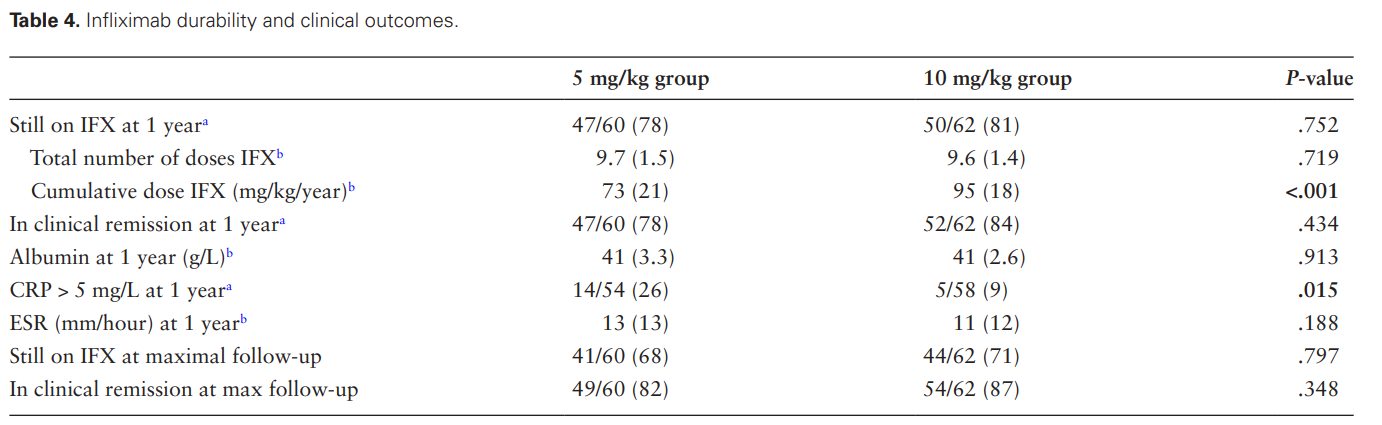
  • 80% of patients were still receiving infliximab at 1 year including 87% of patients with CD and 54% with UC
  • The higher dose group had a lower CRP at 1 year followup. 26% of patients receiving the lower dose had a CRP > 5 mg/L compared with 9% in the higher dose group.
  • Some other measures of long term outcome (eg. IFX durability, clinical remission) were slightly better but did not reach statistical significance (see below)

Discussion Points:

  • “Our data show higher rates of below-target infliximab levels during and after induction in the 5 mg/kg group. Higher rates of dose escalation in this group during the first year resulted
    in similar dosing regimens…Thus, the similar infliximab durability and clinical outcomes
    at 1-year follow-up reflect early-dose optimization leading to dose equalization between the 2 groups, rather than a lack of benefit to higher dosing regimens”
  • “Our data affirm that proactive TDM with pre-emptive dose escalation restores
    below-target infliximab TLs and sustains clinical response…Indeed, in our cohort, some patients with low IFX levels pre-third dose were given their fourth dose 6 weeks later, rather
    than the standard 8 weeks. Without proactive TDM results, our rate of suboptimal TLs pre-fourth and during maintenance therapy would have been higher in both groups”
  • “Rates of immunomodulator use in the 10 mg/kg group were lower than in the earlier cohort of 5 mg/kg, reflecting changes in clinical practice over time”

My take:

  1. This study shows that 94% of pediatric patients did NOT achieve adequate levels of infliximab at the pre-third dose with “standard” therapy. This was true even with 43% of the lower dose cohort receiving combination therapy (which often helps improve pharmacokinetics)
  2. Proactive therapeutic drug monitoring helped mitigate the clinical outcomes, especially in the lower dosed cohort
  3. “Children with IBD treated with the historic standard dose of 5 mg/kg induction are at increased risk of pharmacokinetic treatment failure related to high rates of suboptimal TLs”

Related blog posts:

Disclaimer: This blog, gutsandgrowth, assumes no responsibility for any use or operation of any method, product, instruction, concept or idea contained in the material herein or for any injury or damage to persons or property (whether products liability, negligence or otherwise) resulting from such use or operation. These blog posts are for educational purposes only. Specific dosing of medications (along with potential adverse effects) should be confirmed by prescribing physician.  Because of rapid advances in the medical sciences, the gutsandgrowth blog cautions that independent verification should be made of diagnosis and drug dosages. The reader is solely responsible for the conduct of any suggested test or procedure.  This content is not a substitute for medical advice, diagnosis or treatment provided by a qualified healthcare provider. Always seek the advice of your physician or other qualified health provider with any questions you may have regarding a condition.

NASPGHAN Pediatric Position Paper for Therapeutic Drug Monitoring

LM Felipez et al. J Pediatr Gastroenterol Nutr. 2025;81:1100–1117. Open Access! North American Society for Pediatric Gastroenterology, Hepatology, and Nutrition position paper on the therapeutic drug monitoring in pediatric inflammatory bowel disease

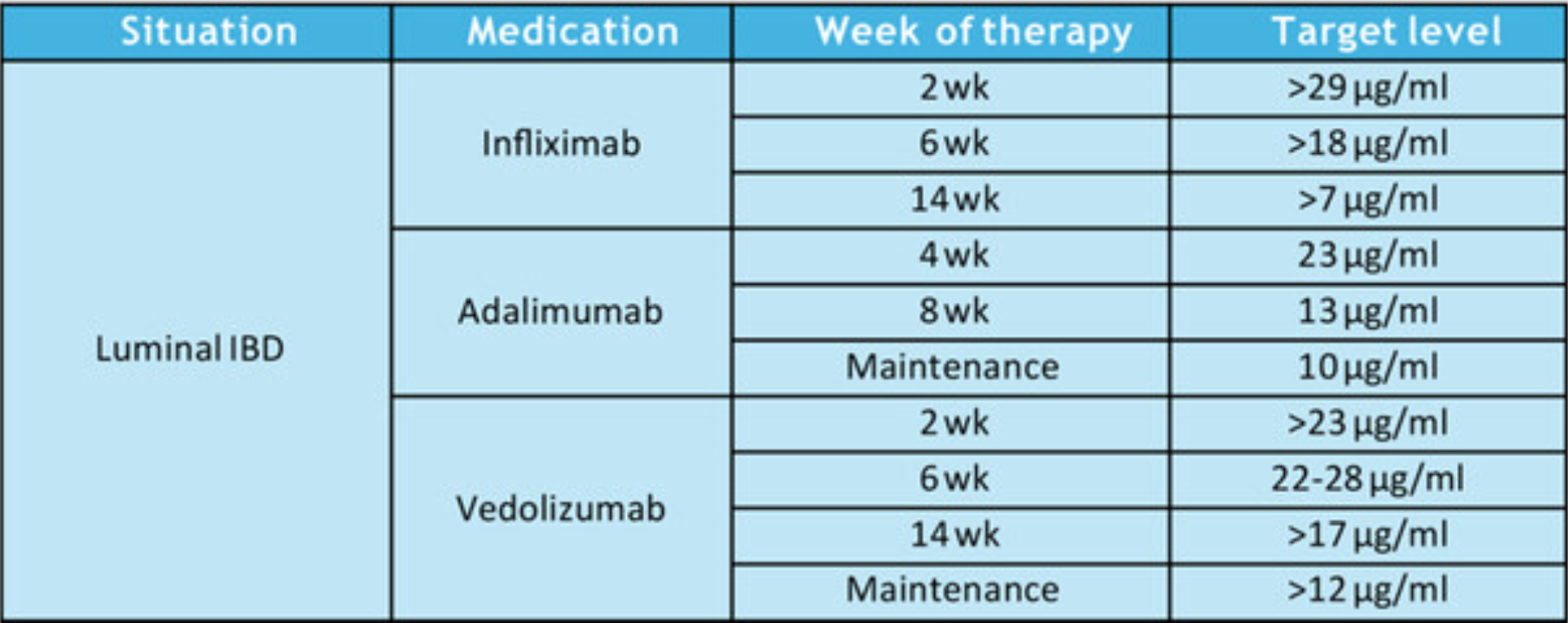
Therapeutic Drug Targets Based on Condition, Medication and Time of Therapy:

Discussion Points:

  • Pediatric Dosing is Different: “Pediatric studies have also determined adult infliximab targets are insufficient…In a prospective pediatric study, Clarkston et al. found that a trough level of 29 μg/mL at 2 weeks is required to achieve both clinical and biologic response. Patients with lower trough levels had 13-fold greater odds of clinical nonresponse. Additionally, a trough of 18 μg/mL at 6 weeks was associated with improved response. Patients with lower trough levels had sixfold greater odds of clinical nonresponse. They also observed that patients who did not achieve a trough >5–7 μg/mL by 14 weeks of therapy had a 21-fold increase in the odds of clinical nonresponse.62
  • Undetectable/very low anti-TNF levels: “If the serum level is extremely low or undetectable, then full re-induction is warranted in addition to dose escalation.”
  • Timing of TDM: “As a practice point, TDM is routinely recommended at the end of induction for most patients. We recommend obtaining TDM earlier during induction in at-risk populations, including younger age children, those with hypoalbuminemia, and those with increased inflammatory burden.”
  • Maintenance proactive TDM: “Based on prospective randomized trial evidence, we recommend proactive TDM during maintenance every 6–12 months…yearly proactive TDM was associated with 55% reduced risk of developing antidrug antibodies.26
  • Increased Antidrug Antibodies with Lower Infliximab Dosing: “In the pivotal REFINE study on immunogenicity in pediatric IBD, Coleman et al. found that antibodies to infliximab were detected in 68% of patients in the cohort, and starting dose under 7.5 mg/kg was one of the strongest predictors of developing antidrug antibodies.4
  • Higher Doses Prevent Antidrug Antibodies: “The best available evidence for preventing immunogenicity supports initiating therapy with infliximab doses greater than 8 mg/kg, and in the case of hypoalbuminemia, doses greater than 10 mg/kg. For children <40 kg, doses of 200 mg/m2 are more appropriate.”
  • Perianal fistulas: “Overall, there is less evidence to support adalimumab use over infliximab for treatment of perianal fistulas. It is possible that adalimumab may have lower efficacy for perianal fistula.105 However, it is unclear if this is inherent to adalimumab, or if it relates to less frequent TDM or less frequent dose escalation in practice.”
  • Vedolizumab: “In general, as with other biologic therapies, a higher serum vedolizumab concentration is associated with higher likelihood of treatment response…Multiple studies identified that in patients with IBD (either UC or CD) early trough levels at Week 2132 with a cut off of >23.2 μg/mL or Week 6133134 with a cut off of above 22–28 μg/mL or at Week 14135) above 16.55 μg/mL predicted a higher likelihood of sustained response over the first year. In regard to clinical remission one study identified that corticosteroid free, clinical and biochemical remission was correlated to higher trough vedolizumab concentration.136
  • Vedolizumab in younger patients: “Children under 30 kg require vedolizumab doses of 200 mg/m2 or 10 mg/kg.”

My take: “This NASPGHAN position paper should also serve to document that high-dose therapy, especially guided by TDM, is evidence-based standard of care.” This article clearly establishes three key points:

  1. “Intensive anti-TNF⍺ dosing strategies are not experimental. The initial doses of infliximab and adalimumab approved by the United States Food and Drug Administration (FDA) routinely lead to under-treatment, poor outcomes, and treatment discontinuation.60117 There is a rich, corroborated, and verified evidence-base to support the safety and efficacy of high-dose therapy anti-TNF⍺ therapy when clinically indicated, especially as supported by TDM.506265100101103118
  2. Therapeutic drug monitoring is essential in the pediatric population to optimize drug levels, allow many patients to do well with monotherapy, and to help avoid development of antidrug antibodies.
  3. The best available evidence supports TDM during induction of vedolizumab as well.

Related blog posts:

Disclaimer: This blog, gutsandgrowth, assumes no responsibility for any use or operation of any method, product, instruction, concept or idea contained in the material herein or for any injury or damage to persons or property (whether products liability, negligence or otherwise) resulting from such use or operation. These blog posts are for educational purposes only. Specific dosing of medications (along with potential adverse effects) should be confirmed by prescribing physician.  Because of rapid advances in the medical sciences, the gutsandgrowth blog cautions that independent verification should be made of diagnosis and drug dosages. The reader is solely responsible for the conduct of any suggested test or procedure.  This content is not a substitute for medical advice, diagnosis or treatment provided by a qualified healthcare provider. Always seek the advice of your physician or other qualified health provider with any questions you may have regarding a condition.

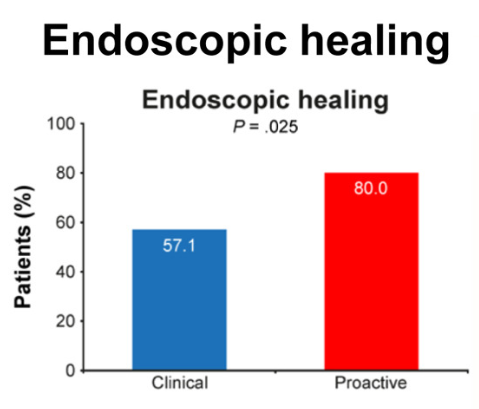
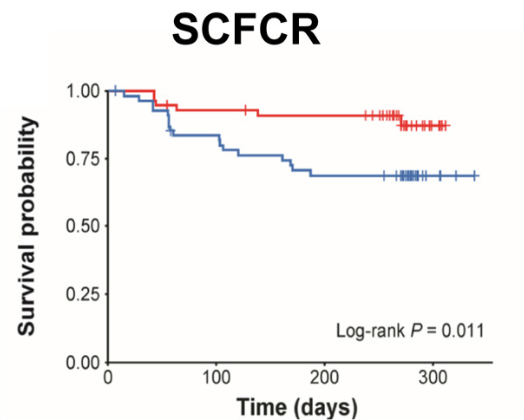
Proactive Therapeutic Drug Monitoring and Better Outcomes in Pediatric Crohn’s Disease (2024)

S Ali et al. Clinical Gastroenterology and Hepatology, Volume 22, Issue 10, 2075 – 2083.e1. Characterization of Biologic Discontinuation Among Pediatric Patients With Crohn’s Disease

Methods:  Prospective ImproveCareNow registry data (n=823, from 7 centers) were supplemented with medical record abstraction. 

Treatment/Monitoring:

  • 86% started biologics (78% infliximab, 21% adalimumab, <1% others)
  • Twenty-six percent used concomitant immunomodulators for ≥12 months
  • Most (85%) measured TDM including 47% induction, 69% proactive, and 24% reactive

Key findings:

  • Twenty-nine percent discontinued their first biologic after median 793 days because of inefficacy (34%), anti-drug antibodies (8%), adverse events (8%), or non-adherence (12%)
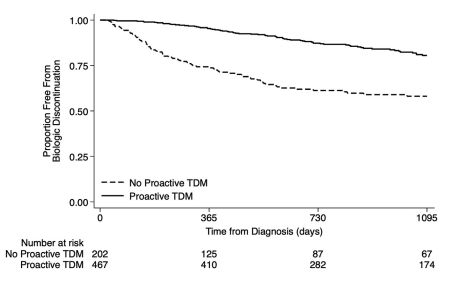
  • Proactive TDM and concomitant immunomodulators were associated with 60% and 32% reduced biologic discontinuation
  • Half of patients discontinued biologics without trial of high-dose therapy and 14% without any evaluation
  • Among patients started with infliximab therapy, 62% of patients started at a dose of <6 mg/kg, 18% stared at a dose >8 mg/kg. 67% of patients underwent dose escalation. This is agreement with other studies indicating that as many as 80% of children need doses in excess of ‘standard’ dosing (5 mg/kg every 8 weeks)
  • In patients with anti-TNF medication inefficacy with TDM availability, 36% had infliximab or adalimumab levels below 5 mcg/mL. and 20% had levels between 6-8 mcg/mL.
  • Among patients who discontinued anti-TNF medications, 60% had serum trough levels less than 10 mcg/mL.
  • The rate of biologic durability was lower for those (n=61) receiving a 2nd biologic who had rates of remaining on agent of 56% at 1 yr, 28% at 2 yrs, and 10% at 4 yrs. In contrast, the first biologic had durability of 90% at 1 year, 79% at 2 years, and 66% at 4 yrs.

My take: This study strongly supports the use of proactive therapeutic drug monitoring. In addition, the authors make a compelling argument to optimize a therapy and evaluate carefully before switching to a new medication/biologic. Finally, the use of concomitant immunomodulators can improve medication durability; it is particularly important if needing to switch from one anti-TNF agent to another due to anti-drug antibodies.

Related blog posts:

Pitt Street Bridge (Mt Pleasant, SC)

REMSWITCH: Infliximab IV to SC Study

A Buisson et al. Clin Gastroenterol Hepatol 2023; 21: 2338-2346. Open Access! Effectiveness of Switching From Intravenous to Subcutaneous Infliximab in Patients With Inflammatory Bowel Diseases: the REMSWITCH Study

In this study, 133 ot 184 patients in clinical remission agreed to switch to subcutaneous infliximab. Key findings:

  •  At visit 3, a relapse occurred in 10.2% (n = 6 of 59), 7.3% (n = 3 of 38), 16.7% (n = 3 of 18), and 66.7% (n = 10 of 15) (P < .001) of patients receiving 5 mg/kg every 8 weeks (5Q8W), 10Q8W, 10Q6W, and 10Q4W, respectively. 
  • Dose escalation to 240 mg every other week led to recapture clinical remission in 93.3% (n = 14 of 15).
  • Infliximab serum levels increased after the switch (P < .0001) except for patients receiving 10 mg/kg every 4 weeks.
  • Conclusion (borrowed from authors): Switching from intravenous to subcutaneous infliximab 120 mg every other week is safe and well accepted, leading to a low risk of relapse in IBD patients except for those receiving 10Q4W; these patients likely require 240 mg every other week

EV Loftus et al. Clin Gastroenterol Hepatol 2023; 21: 2193. Open Access! Therapeutic Drug Monitoring for Subcutaneous Infliximab? Too Early to Conclude (Editorial) This editorial provides a terrific analysis of the above-mentioned study. A few of the points:

  • Reduced (41.7%) or stable (36.8%) serum levels of IFX after the switch (difference: V1-V0) were associated with higher risk of relapse than increased serum levels (>1 μg/mL; 12.7%; P = .020 and P = .019, respectively)
  • Patients receiving IV infusion of IFX 10Q4W had a higher risk of relapse (odds ratio, 12.4; P = .017). In addition to having significantly higher serum levels than in other IFX IV regimens, this group of patients did not see a rise in IFX concentrations at V1, in contrast to other IFX regimens. 
  • Being overweight increases the clearance of CT-P13 SC, with an increase in clearance of 43.2% for a weight increase from 70 to 120 kg. The presence of antibodies to IFX also increases clearance by 39%. Finally, a decrease in serum albumin level (42 g/L vs 3.2 g/L) increases the clearance by 30.1%. 

My take:

  1. Monitoring IFX levels would be helpful in patients switching from IV to SC administration, especially in higher risk groups (eg. high baseline dosing, positive anti-drug antibodies, low serum albumin, overweight individuals)
  2. My experience with SC biologics has been that there is a much higher rate of non-adherence than with IV infusions. If/when SC biologics are used more often, I will need to implement more intensive followup to assure patients receive both the needed medication and the needed monitoring.

Related blog posts:

Festive Street in Antibes, France

Picking Apart the SERENE-CD Study & Constipation Vibrating Capsule FDA Approved

Several recent letters to the editor provide some insight into some of the shortcomings of the SERENE-CD study which reported that higher adalimumab induction dosing and proactive therapeutic drug monitoring (TDM) were not associated with improved outcomes.

“The rerandomization design of SERENE CD, which selectively enrolled patients with clinical response at week 12 to the TDM vs CA part of the study, may have resulted in the exclusion of those who would have benefited the most from early adjustment of their anti-tumor necrosis factor (TNF) dose. The rerandomization design and the late adaptation of the proactive strategy at week 12 were 2 significant aspects of the design that may have led to the negative results. On the other hand, PAILOT, which showed beneficial effects of proactive TDM, randomized patients as early as week 4 and assessed the outcome at week 72. This is distinct from the 1-year time frame used in most other studies, including SERENE CD.8 A properly designed, adequately powered clinical trial is needed before we can make a judgement on the use of proactive TDM in patients with inflammatory bowel disease. Until then, the jury remains out.”

“The study design only allowed patients in the TDM group with adalimumab concentrations of ≥5 and ≤10 μg/mL to be escalated to 40 mg every week if their CD activity index was ≥220 or their high-sensitivity C-reactive protein level was ≥10 mg/L.. The goal of proactive TDM is to attain a threshold concentration regardless of disease activity. This design probably led the 2 groups to have similar drug concentrations at week 56…

Second, a rather low targeted drug concentration of 5 μg/mL was used, although previous studies have suggested that higher concentrations are more appropriate.5678 A study from Ungar et al5 showed that adalimumab concentrations of 8–12 μg/mL are required to achieve mucosal healing in 80%–90% of patients with IBD, and the prospective PANTS (The Personalised Anti-TNF Therapy in Crohn’s Disease Study) study identified an adalimumab concentration of 12 μg/mL at week 14 associated with remission at both week 14 and week 54.8..

Third, dose escalation for the TDM group could only happen at weeks 14, 28, or 42 (and not earlier and more often). In the PAILOT RCT, proactive TDM based on adalimumab concentration evaluations started as early as week 4 followed by week 8 and every 8 weeks thereafter until the end of the follow-up at week 72.3 Fourth, there was a rather short follow-up of the patients (44 weeks).”

” Even with the assumption of a 30% benefit of proactive TDM and that 20% of patients would have low drug levels in the absence of symptoms, the sample size for 80% power would range from 1228 to 2170. Thus, although SERENE CD1 and other clinical trials3,4 have suggested a lack of benefit of proactive TDM in adults with inflammatory bowel disease, all were likely substantially underpowered to do so.”

My take: While the SERENE-CD results have suggested that a strategy of proactive TDM may not be helpful, there are a lot of reasons to disregard these findings. Achieving a therapeutic level is a fundamental principle and proactive TDM, particularly in pediatrics, is well-supported by other studies.

Related blog posts:

Also noted:

Kids Are Different: Therapeutic Drug Monitoring

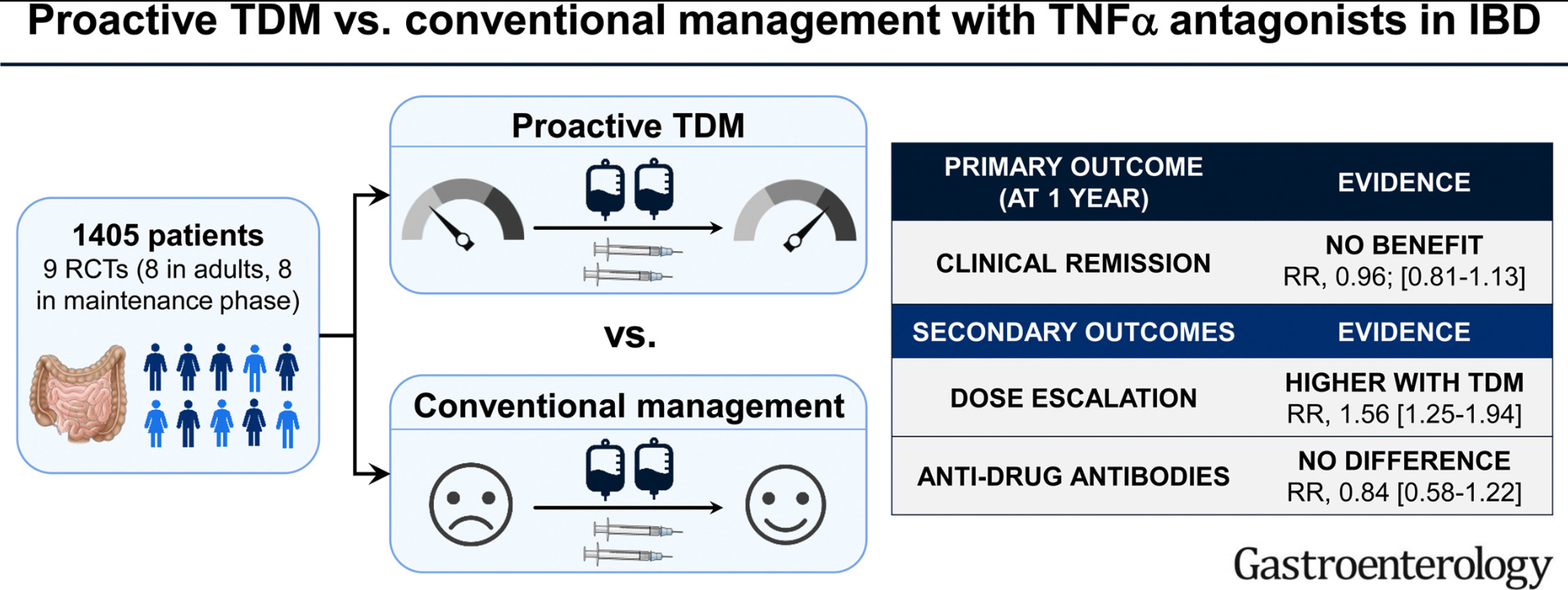
NH Nguyen et al. Gastroenterol 2022; 163: 937-949. Open Access! Proactive Therapeutic Drug Monitoring Versus Conventional Management for Inflammatory Bowel Diseases: A Systematic Review and Meta-Analysis

Key finding:

  • On meta-analysis of 9 RCTs (8 RCTs in adults, and focusing on maintenance phase), there was no significant difference in the risk of failing to maintain clinical remission in patients who underwent proactive TDM (267/709; 38%) vs conventional management (292/696; 42%) (relative risk [RR], 0.96)

The discussion in this paper makes some important points, as there are some populations in which proactive TDM is more likely to be beneficial.

Pediatrics:

“The impact of proactive TDM in pediatric patients also merits further consideration. This concept may be particularly important in pediatrics due to the variability in size of patients, which may not be adequately addressed by weight-based dosing.33 This is especially important in younger children, where it has been shown that standard TNFα antagonist regimens and trough levels may not be applicable in this age group, and may require more frequent escalation of therapy.34,35 In the PAILOT trial, proactive TDM in children with clinical response to adalimumab was associated with higher rates of maintaining sustained corticosteroid-free clinical remission at all visits from week 8–72, compared with reactive TDM in which physicians were informed of trough concentration only after loss of response.”

Induction Dosing (Adults and Children):

“It is possible that the early measurement of biologic drug concentrations, to identify patients who may have accelerated clearance, and optimization of a subset of these patients early in the course of therapy may offer benefit.1,30 …Ongoing trials such as OPTIMIZE (NCT04835506) and TITRATE (NCT03937609) in which infliximab is optimized during the induction phase through a pharmacokinetic dashboard in patients with Crohn’s disease and acute severe ulcerative colitis will shed further light on this.”

My take: So far, studies in adults have not shown that proactive therapeutic drug monitoring has been effective in improving clinical outcomes. This may change particularly if studies focus on patients on monotherapy who are at increased risk of subtherapeutic levels. No matter what happens in adults, there is sufficient data showing that proactive therapeutic drug monitoring is essential in children. This is especially important as ‘routine” dosing of infliximab in children may be subtherapeutic in nearly 80%.

Related blog posts:

Improving Outcomes with Proactive Therapeutic Drug Monitoring + Swiss COVID-19 Data

Another recent study showing the benefits of proactive therapeutic drug monitoring (pTDM):

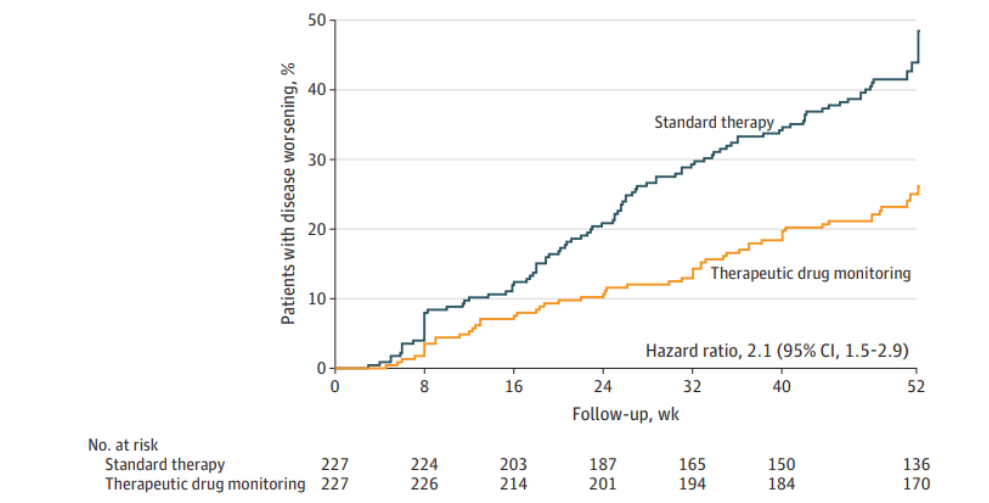
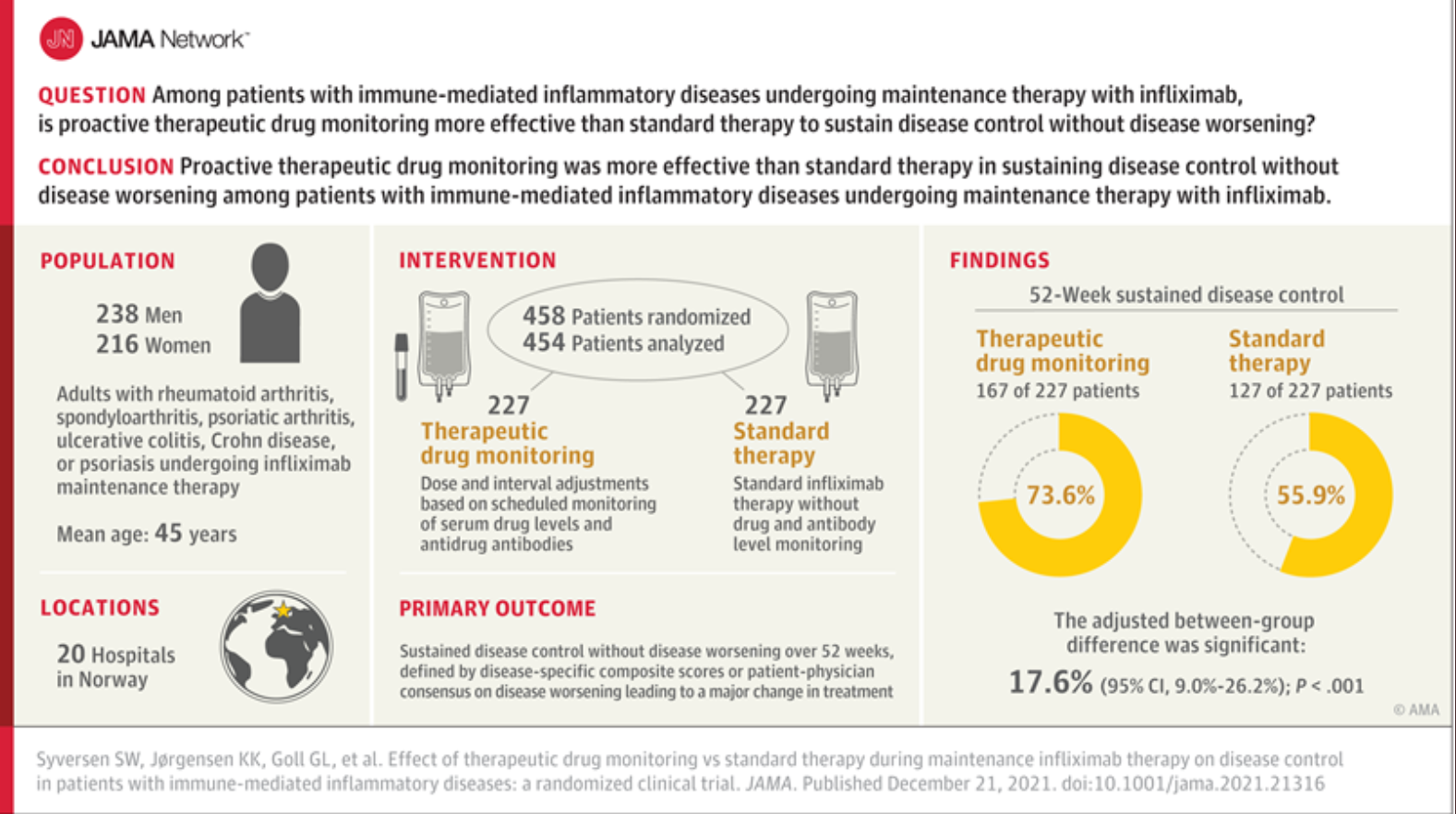
SW Syverson et al. JAMA. 2021;326(23):2375-2384. Effect of Therapeutic Drug Monitoring vs Standard Therapy During Maintenance Infliximab Therapy on Disease Control in Patients With Immune-Mediated Inflammatory Diseases (The article is only 10 pages; however, the supplementary material (which I did not read) is an additional 258 pages.) Thanks to Ben Gold for sharing article reference. Also, this study was reviewed in Healio Gastro: Link: Therapeutic drug monitoring sustains disease control during infliximab maintenance

Methods: Randomized, parallel-group, open-label clinical trial including 458 adults (mean age, 44.8 years; 49.8% women) with rheumatoid arthritis, spondyloarthritis, psoriatic arthritis, ulcerative colitis (n=81), Crohn disease (n=66), or psoriasis undergoing maintenance therapy with infliximab in 20 Norwegian hospital

Key finding:

  • Sustained disease control without worsening was evident in 73.9% of pTDM group compared with 55.9% in standard infliximab group

Some limitations of this study:

  1. The open-label study was not powered to detect the difference of pTDM in each of the six diseases
  2. The therapeutic goal for maintenance infliximab was 3 to 8 mg/L, which is a little lower than current goals (ACG expert panel suggests a level of at least 5-10)

My take: This study supports recent expert guidance (see blog post below) on the benefit of pTDM as part of evidence-based care. It is likely that pTDM is even more important in children/teens due to growth.

Time to Disease Worsening

Related blog posts:

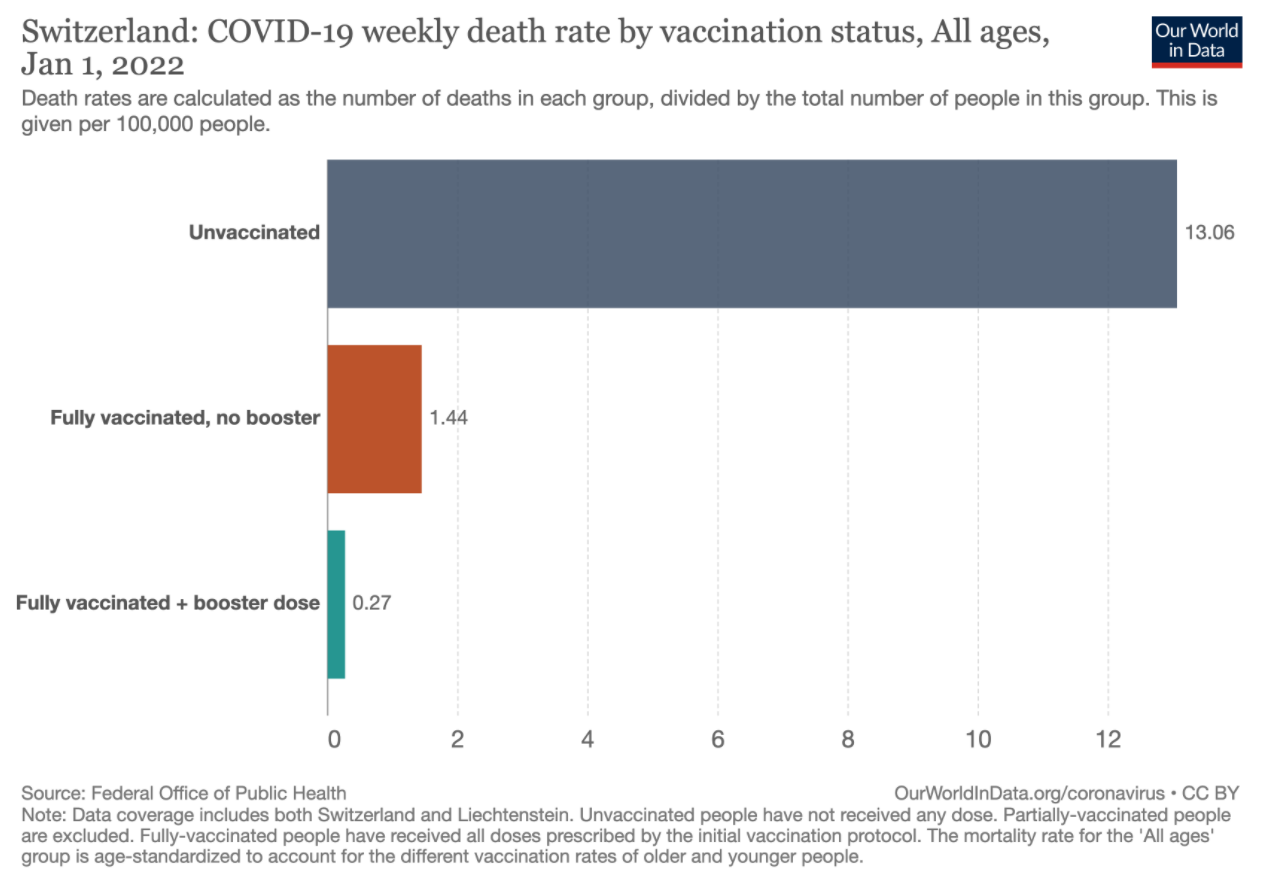
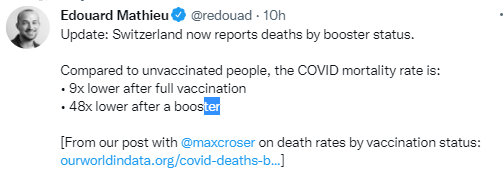
Also data from Switzerland:

Real-World Experience with Proactive Therapeutic Drug Monitoring in Inflammatory Bowel Disease

A recent large retrospective pediatric study provides further evidence that therapeutic drug monitoring (TDM) in inflammatory bowel disease (IBD) results in better clinical outcomes. One of my partners, Chelly Dykes, is a coauthor and leads our ImproveCareNow team.

JL Lyles et al. Inflamm Bowel Dis 2021; 27: 482-492. Effect of a Practice-wide Anti-TNF Proactive Therapeutic Drug Monitoring Program on Outcomes in Pediatric Patients with Inflammatory Bowel Disease

This single center implemented a practice wide TDM approach in 2014. This study compared a historical pre-TDM group (n=108) to the TDM group (n=206). The primary outcome was sustained clinical remission (SCR22-52), defined as physician global assessment (PGA) of inactive from 22 to 52 weeks and off corticosteroids at 52 weeks. Key findings:

  • The SCR22-52 was achieved in 42% of pre-TDM and 59% of TDM patients (risk difference, 17.6%; 95% CI, 5.4–29%; P = 0.004)
  • The TDM group had an increased adjusted odds of achieving SCR22-52 (odds ratio, 2.03; 95% CI, 1.27–3.26; P = 0.003)
  • The adjusted risk of developing high titer antidrug antibodies (ADAs) was lower in the post-TDM group (hazard ratio, 0.18; 95% CI, 0.09–0.35; P < 0.001)
  • The SCBR22-52 (which was defined by normal CRP along with SCR22-52) was 24.7% in pre-TDM and 42.7% in the TDM group
  • The authors did not identify a significantly higher rate of anti-TNF cessation in either group
  • Only 12% of patients in their practice were receiving combination therapy

In the discussion, the authors review three pivotal studies which also support proactive TDM: TAXIT, TAILORIX, and PAILOT.

My take: While this was an observational study with historical controls, the findings are convincing that proactive TDM is helpful, particularly in patients who are not receiving combination therapy.

Related blog posts:

March 31, 2021

Proactive Therapeutic Drug Monitoring in Pediatric Crohn’s disease -Better Outcomes

Y Gofin et al. Inflamm Bowel Dis 2020; 26: 1276-82.  Therapeutic Drug Monitoring Increases Drug Retention of Anti–Tumor Necrosis Factor Alpha Agents in Pediatric Patients With Crohn’s Disease

Retrospective study with 197 pediatric participants (2007-2018)

Key findings:

  • Compared with the TDM- group (n=98), the TDM+ group (n=99)
    • longer drug retention time (mean ± SE, 45.0 ± 2.7 vs 33.5 ± 2.4 months; P = 0.001)
    • lower hospitalization rate per patient per year (mean ± SE, 0.51 ± 0.7 vs 0.92 ± 0.81; P < 0.001)
    • higher treatment intensification rate (70% vs 18%; P < 0.001).
  • Analysis of the entire cohort showed a longer retention time for adalimumab vs infliximab (45.3 ± 2.8 vs 34.8 ± 2.5 months; P = 0.007)

My take: This is another study showing utility of proactive therapeutic drug monitoring

Related blog posts:

Expert Guidance on Inflammatory Bowel Disease (Part 2)

A recent issue of Clinical Gastroenterology and Hepatology focused solely on the clinical features and management of inflammatory bowel disease. Even for those with expertise in IBD, there is a lot of useful information and concise reviews of what is known.

Here are some of my notes from this issue (part 2)

S Danese et al. Clinical Gastroenterol Hepatol: 2020; 18: 1280-90. Positioning Therapies in Ulcerative Colitis

This is a good article but recent AGA publications are probably better –there are some links below. One statement that was interesting: “the safety profile of vedolizumab seems even better than placebo in terms of risk of serious” adverse events. The authors favored infliximab in combination with azathioprine in those needing biologic therapy with moderate-severe UC.

Related blog posts:

S Vermeire et al. Clinical Gastroenterol Hepatol: 2020; 18: 1291-9. How, When, and for Whom Should We Perform Therapeutic Drug Monitoring?

“Although reactive TDM, testing at time of loss of response, is widely accepted in practice, especially for anti–tumor necrosis factor antibodies, there are less data for the other monoclonal antibodies belonging to other classes. Besides reactive testing, there is a movement toward proactively adjusting biologic dosing to prevent loss of response, in keeping with the tight control philosophy of inflammatory bowel disease care.” The authors favor proactive monitoring: “we are now beginning to see with well-powered proactive TDM studies” that proactive monitoring can maximize the benefits of TDM with “the potential to maximize durability of biologics and improve the outcomes of IBD patients.”

Related blog posts:

PS Dulai et al. Clinical Gastroenterol Hepatol: 2020; 18: 1300-8. How Do We Treat Inflammatory Bowel Diseases to Aim For Endoscopic Remission?

The initial part of this article reviews treatment targets -resolution of symptoms and resolution of endoscopic damage. The algorithm provides the authors’ suggested approach:

  • At initiation of therapy, patients should have a full assessment.  In addition to ileocolonoscopy, for patients with CD, the authors recommend cross-sectional imaging.
  • After treatment initiation, the authors recommend biomarker assessment every 3 months.  Mucosal assessment can occur 6-9 months after treatment initiation.
  • For UC, the authors note that fecal calprotectin (FC) “appears to be more stratightforward, and a cutoff of 250 mcg/g can be used reliably across all scenarios to make treatment adjustments.”  Though, they recommend endoscopic confirmation prior to transition to a biologic or small molecule therapy.
  • For CD, the authors suggest making treatment adjustments in those with FC >250 mcg/g and in those with lower values, followup colonoscopy is recommended.
  • The authors note that in the post-operative setting with CD, mucosal inflammation precedes symptomatic activity and “waiting for symptoms to emerge may unnecessary allow for disease progression.”
  • The authors suggest that tighter disease control will reduce disease-related complications, while acknowledging a lack of prospective clinical trials.
  • One thorny issue: :”For CD: it remains unclear what degree of residual mucosal healing is acceptable to impact important outcomes such as CD-related complications, hospitalizations, and surgeries.”

Related blog posts:

M Allocca et al. Clinical Gastroenterol Hepatol: 2020; 18: 1309-23. Use of Cross-Sectional Imaging for Tight Monitoring of Inflammatory Bowel Diseases

“Computed tomography is limited by the use of radiation, while the use of magnetic resonance enterography (MRE) is limited by its cost and access. There is growing interest in bowel ultrasound that represents a cost-effective, noninvasive, and well-tolerated modality in clinical practice, but it is operator dependent… Diffusion-weighted imaging (DWI) is a MR imaging technique that increasingly is used in both IBD and non-IBD conditions and has been shown to be a valuable and accurate tool for assessing and monitoring IBD activity.

L Beaugerie et al. Clinical Gastroenterol Hepatol: 2020; 18: 1324-35. Predicting, Preventing, and Managing Treatment-Related Complications in Patients With Inflammatory Bowel Diseases

The first part of this article reviews potential adverse effects from the medications used for IBD treatment, noting in Table 1 that there are not complications to monitor for with both vedolizumab and ustekinumab.

The article reviews infections, vaccination strategies and issues related to malignancy Some of the recommendations:

  • vaccine against pneumococcus should be given before patients begin immunosuppressive therapy
  • physicians should consider giving patients live vaccines against herpes zoster (in adults) before they begin immunosuppressive therapy or a recombinant vaccine, when available, at any time point during treatment
  • sun protection and skin surveillance from the time of diagnosis are recommended
  • despite concerns about therapy, the authors note that “the extensive use of immunosuppressive therapy leads to a substantial decrease in the incidence of IBD complications, with a globally favorable benefit-risk ratio, which can be optimized further thanks to a good degree of awareness and knowledge of drug complications.”

It is interesting that this article (and the entire issue) does not address mental health concerns related to the diagnosis of IBD.  This likely creates more morbidity and complications than most of the other issues that are discussed.

Above: Why did the picture go to jail? Because it was framed.

Disclaimer: This blog, gutsandgrowth, assumes no responsibility for any use or operation of any method, product, instruction, concept or idea contained in the material herein or for any injury or damage to persons or property (whether products liability, negligence or otherwise) resulting from such use or operation. These blog posts are for educational purposes only. Specific dosing of medications (along with potential adverse effects) should be confirmed by prescribing physician.  Because of rapid advances in the medical sciences, the gutsandgrowth blog cautions that independent verification should be made of diagnosis and drug dosages. The reader is solely responsible for the conduct of any suggested test or procedure.  This content is not a substitute for medical advice, diagnosis or treatment provided by a qualified healthcare provider. Always seek the advice of your physician or other qualified health provider with any questions you may have regarding a condition.