Identifying Biliary Atresia in Infants: New Guidelines

S Harpavat et al. Pediatrics Pediatrics (2025) 155 (3): e2024070077. (Open Access!) Guidance for the Primary Care Provider in Identifying Infants With Biliary Atresia by 2–4 Weeks of Life: Clinical Report

Recommended Screening:

  • Office visit at 2-4 weeks of age (by 4 weeks of life)
  • Check fractionated bilirubin: If there is any pale, gray or white stools, If there is any jaundice in eyes or skin, or If there is a prior history of abnormal direct or conjugated bilirubin*
  • If direct or conjugated bilirubin is 1 mg/dL or higher, urgent consult to GI
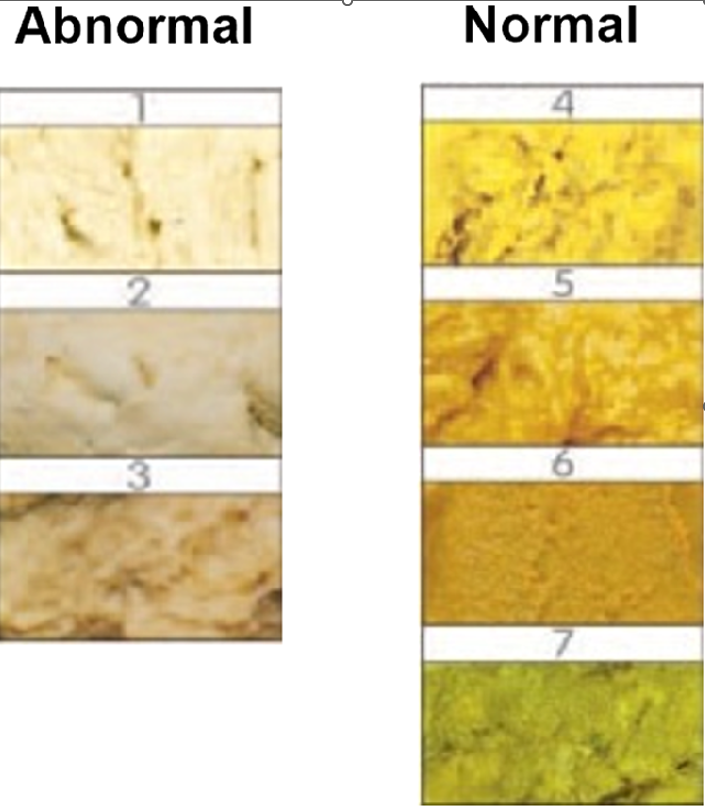
Stool color classification

“The most important result is the initial direct or conjugated bilirubin level, which will be “high” in BA starting at birth.11,17,18 “High” is defined as exceeding the laboratory’s derived reference range, even if only by 0.1 mg/dL In the period before 2 weeks of life, “high” is not defined by exceeding a fixed cut-off or exceeding a bilirubin ratio.”

Additional Recommendations:

  • The authors indicate that followup blood testing is NOT needed if the following: 1. Any prior direct or conjugated bilirubin level that was normal (in reference range) or 2. Prior direct or conjugated bilirubin levels that were all abnormal but equivalent or decreasing over time. In this instance, equivalent or decreasing is defined as both (i) less than or equal to the initial level; and (ii) <1 mg/dL
  • “Consider adding direct or conjugated bilirubin testing when serum total bilirubin testing is performed. As mentioned earlier, many centers measure at least 1 serum total bilirubin level via heel stick or venipuncture to assess risk for bilirubin encephalopathy. Direct or conjugated bilirubin levels can be measured from the same heel stick or venipuncture sample, without needing an additional blood draw.”

My take: Any child with an elevated direct or conjugated bilirubin (above reference range) in the first two weeks of life needs to be carefully followed. This guideline also recommends using abnormal stool color and prolonged jaundice/icterus as prompting bloodwork.

In the past, it was consider normal in newborns to have elevated direct bilirubin IF there was a low ratio of direct bilirubin to total bilirubin (less than 20% in those with bilirubin >5 mg/dL). However, this can result in missed cases of biliary atresia.

Related blog posts:

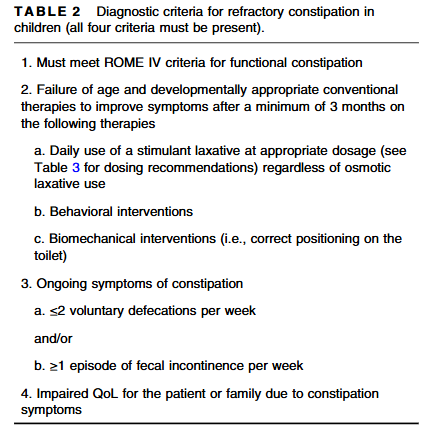
Position Paper: Pediatric Refractory Constipation Management

AL Kilgore et al. JPGN 2024; https://doi.org/10.1002/jpn3.12390. Open Access! Evaluation and management of pediatric refractory constipation: Recommendations from the NASPGHAN neurogastroenterology and motility committee

Selected Recommendations:

Evaluations:

  • Screen for thyroid disease and celiac disease (though acknowledges that the data regarding an association between celiac disease and constipation are inconsistent)
  • The use of an AXR in RC should be reserved for those patients unable to provide a reliable medical history and/or unable to allow for a physical exam (including a DRE), or to evaluate for mechanical obstruction or colonic distention when considering surgical interventions
  • A contrast enema (CE) can be used to screen for HD or to assess colorectal anatomy
  • There is no evidence to recommend the routine use of defecography in children
  • Abdominal ultrasound has a good agreement with digital rectal exam (DRE) to evaluate for fecal impaction but should not be performed in place of DRE
  • ARM should be used to screen for the presence of a RAIR. If anal spasms and prolonged sphincter relaxation are detected during ARM, an assessment for spinal abnormalities can be considered
  • An LS MRI should be performed in pediatric patients with RC associated with physical or neurological signs of spinal anomalies, signs of neurogenic bladder on urodynamics, or when the anorectal manometry (ARM) is abnormal suggesting spinal cord abnormalities
  • Colonic transit time (CTT) via radiopaque markers should be completed for patients with RC with equivocal medical history and to screen for the need to perform colonic manometry (CM)
  • Colonic manometry (CM) should be performed only after medical therapy has been exhausted and surgical therapy is being considered. CM should be used to guide the timing and type of surgery to address RC. CM should be used to guide when to perform an ostomy takedown
  • Rectal biopsies should not be used routinely in patients with RC and are indicated exclusively in patients with a suspected diagnosis of HD

Pharmaceuticals:

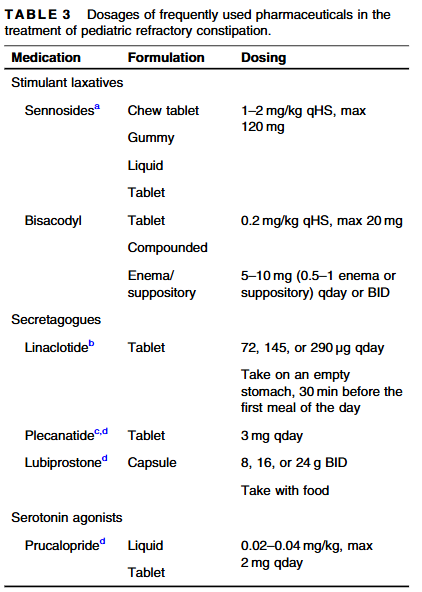
  • High-dose sennoside (or Bisacodyl) is a mainstay of management of RC and should be optimized for the individual patient before considering further management options
  • A secretagogue (or prucalopride) should be considered as an adjunct to a high-dose stimulant laxative when treating RC with poor response to optimized high-dose stimulant laxatives or when high-dose stimulant laxatives are not tolerated
  • There is no clear role of anal botox in the treatment of patients with RC without a diagnosis of IAS achalasia
  • Early intervention with daily stimulant laxatives in the treatment of FC is encouraged to try to prevent the disease progression from functional constipation (FC) to RC
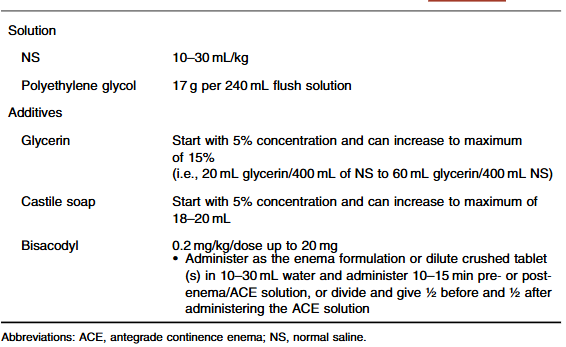
  • Antegrade and Retrograde Treatments:
Routine dosages of frequently used antegrade and retrograde solutions and additives
  • The last part of the recommendations include antegrade continence enemas, surgical approaches, and complicated algorithms (see Figure 1 and Figure 2)

My take: These recommendations address a widespread problem for pediatric gastroenterologists and are useful for those with and without an interest in motility disorders.

Related blog posts:

Disclaimer: This blog, gutsandgrowth, assumes no responsibility for any use or operation of any method, product, instruction, concept or idea contained in the material herein or for any injury or damage to persons or property (whether products liability, negligence or otherwise) resulting from such use or operation. These blog posts are for educational purposes only. Specific dosing of medications (along with potential adverse effects) should be confirmed by prescribing physician.  Because of rapid advances in the medical sciences, the gutsandgrowth blog cautions that independent verification should be made of diagnosis and drug dosages. The reader is solely responsible for the conduct of any suggested test or procedure.  This content is not a substitute for medical advice, diagnosis or treatment provided by a qualified healthcare provider. Always seek the advice of your physician or other qualified health provider with any questions you may have regarding a condition.

Don’t Put the Cart Before the Horse: Biliary Atresia Screening

R Lerer et al. JPGN Reports2023; 4(4):p e345. Open Access! Evaluation of Newborn Direct Bilirubin As Screening for Cholestatic Liver Disease

This retrospective study analyzed data from 11,965 infants who had fractionated bilirubin obtained in the nursery (2016-2019). Key findings:

  • DB of 0.6 mg/dL was chosen as the cut-off based on a high sensitivity (100%) and specificity (99%) for screening newborns for CLD
  • Out of 60 infants who met criteria for DB ≥0.6 mg/dL, only 15 (25%) had a repeat level drawn after nursery discharge; 3 (5%) were eventually diagnosed with CLD (2 with BA and 1 with Alagille syndrome)

It is fairly easy to get fractionated bilirubins on infants. Many need to get a bilirubin check and in many centers, a fractionated bilirubin is automatically generated at no additional costs. The hard part is making sure that those with abnormal values receive timely followup.

My take: It is a mistake to get fractionated bilirubins in newborns unless one has developed a plan/infrastructure to make sure those with abnormal values receive appropriate followup.

Related blog posts:

Off the coast of Southern France (near Juan-Les-Pines)

Why Didn’t Screening for Biliary Atresia Improve Outcome In This Study?

ZJ Kastenberg et al J Pediatr 2023; 257: 113339. Fractionated Bilirubin Among 252 892 Utah Newborns with and Without Biliary Atresia: A 15-year Historical Birth Cohort Study

This retrospective study (2005-2019) used an administrative data from a large integrated healthcare network in Utah to identify newborns with abnormal fractionated bilirubins. since 2005, all newborns at this healthcare system had a fractionated bilirubin measured.

Key findings:

  • There were 252 892 newborns with fractionated bilirubin assessed, including 26 of those subsequently confirmed to have biliary atresia (BA).
  • Conjugated or direct bilirubin was elevated in all 26 infants with BA and an additional 3246 newborns (1.3%) without BA. The lowest direct bilirubin in the BA group was 0.6, just above cutoff value of 0.5 mg/dL. The conjugated bilirubin cutoff value wa 0.2 mg/dL.
  • The 15-year crude birth prevalence of BA was 0.68 per 10,000 births in this cohort
  • Median time to Kasai HPE was 69.5 days

This study found that all infants with BA have elevated conjugated or direct bilirubin at birth. The authors estimate that a healthcare system with about 30,000 deliveries per year, would have between 450 and 630 newborns that would require a second screen. In this group, 96 per 100,000 screened newborns (~1 in 1000) will have a positive second screen at 2-week well check and need further evaluation.

What I don’t understand about this paper is how the authors omit a discussion of the age of Kasai HPE. How is it that all of these newborns received a fractionated bilirubin and the age of Kasai HPE is not improved compared to other U.S locations that have not implemented universal testing? (Previous data from 15 ChiLDReN sites indicate age of Kasai HPE 65-70 days and unchanged over past 30 years, see blog post: Online Aspen Webinar (Part 5) -Biliary Atresia Diagnosis and Screening).

The authors note that implementation of screening could be improved with newer tests (eg. MMP-7) but that more analysis is needed to determine if screening is cost-effective and avoids harm (eg. subjecting healthy newborns to invasive testing).

My take: If universal screening is implemented, it is imperative to show that it helps and to set up the needed infrastructure to arrange appropriate followup. The first surrogate marker of this effort would be improving the age of surgical intervention.

As an aside, I find the new page numbering by The Journal of Pediatrics to be quite annoying. When you are going through the hard copy of the Journal, it is more difficult to find the articles that are listed in the table of contents because the articles are not ordered by lowest to highest numbered page. Each article is given a single page number like 113339 in this article but inside the article it is numbered page 1–10 (or however long the pages). The article prior could be a lower or higher page number. Until hard copies are eliminated, it would be an improvement if the articles could at least be ordered such that the next article would not have a lower page reference than the preceding article.

Related blog posts:

Castle Hill Park, Nice France

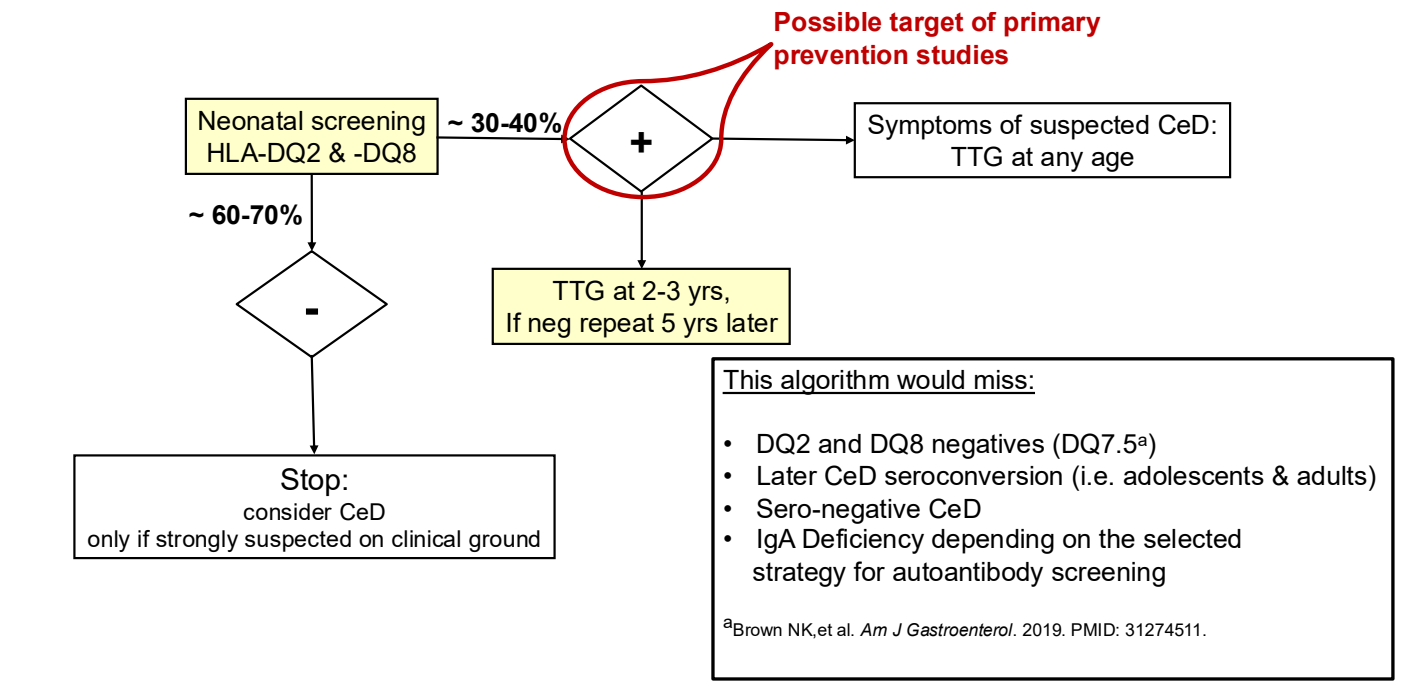
Celiac Disease Identified After Family Index Case

MJ Gould et al. JPGN 2023; 76: 49-52. Characteristics of Pediatric Patients With Celiac Disease Identified Due to an Affected First-Degree Family Member

In this retrospective study, 49 patients were screened due to an affected first-degree relative with celiac disease. They were compared to 178 patients who were screened for other clinical indications. Key findings:

  • Although 51% of patients screened due to an affected first-degree relative were asymptomatic, their disease histology and TTG levels were as severe as those screened for symptoms suggestive of celiac disease (in the comparison group 16% were asymptomatic). 

Comments:

  1. “Previous studies have shown that asymptomatic adolescents and those diagnosed with CD by serologic screening are less likely to adhere strictly to a GFD when compared to younger children and adults diagnosed because of classical symptoms” (Dig Dis Sci. 2008 Jun; 53(6): 1573–1581).”
  2. Some individuals who are thought to be asymptomatic, clinically improve with a gluten free diet (GFD). In one study, “the GFD group also had reduced indigestion (P=.006), reflux (P=.05), and anxiety (P=.025), and better health, based on the visual analog scale (P=.017), than the gluten-containing diet group” (Gastroenterology  2014 Sep;147(3):610-617).

My take: In this study, being asymptomatic (identified due to affected first-degree relative) was NOT associated with milder celiac disease based on serology or histology.

Relate blog posts:

Garden Lights, Holiday Lights at Atlanta Botanical Gardens

45 Years –The New Recommendation for Colorectal Cancer Screening

Related blog posts:

Hepatitis C in 2020: NASPGHAN Position Paper

DH Leung et al. JPGN 2020; 71: 407-17.  Full Text: Hepatitis C in 2020: A North American Society for Pediatric Gastroenterology, Hepatology, and Nutrition Position Paper

This is a very useful summary and some important recommendations –here are a few:

  • Direct-acting antivirals (DAAs) which …[are] highly effective antiviral agents are now approved for use in children as young as 3 years of age and have demonstrated sustained virologic responses exceeding 90% in most genotypes
  • We recommend treatment be considered and offered to all children with chronic HCV as early as 3 years of age with currently approved and anticipated DAA combination therapies.
  • Currently, the American Academy of Pediatrics recommends anti-HCV antibody screening of children with maternal HCV risk factors at 18 months of age, when detection of passively acquired transplacental immunoglobulin G should have waned … Waiting until 18 months of age or older is, however, frequently unpalatable for parents and physicians concerned about reliable follow-up. Therefore, after the infant is 2 months of age, the AASLD-IDSA HCV Guidance Panel suggests consideration of examining serum HCV RNA by polymerase chain reaction (PCR)
  • Interestingly, in the image below, the authors note that most children are asymptomatic; however, the figure suggests the possibility of thyroid disease.  In the text of the article: ” Extrahepatic manifestations of chronic hepatitis C, including membranoproliferative glomerulonephritis, thyroid dysfunction with or without thyroid autoimmune disease, and the development of nonorgan specific antibodies, are exceedingly rare

Recommended Resources for Pediatric Gastrointestinal and Liver Providers

Related blog posts:

Disclaimer: This blog, gutsandgrowth, assumes no responsibility for any use or operation of any method, product, instruction, concept or idea contained in the material herein or for any injury or damage to persons or property (whether products liability, negligence or otherwise) resulting from such use or operation. These blog posts are for educational purposes only. Specific dosing of medications (along with potential adverse effects) should be confirmed by prescribing physician.  Because of rapid advances in the medical sciences, the gutsandgrowth blog cautions that independent verification should be made of diagnosis and drug dosages. The reader is solely responsible for the conduct of any suggested test or procedure.  This content is not a substitute for medical advice, diagnosis or treatment provided by a qualified healthcare provider. Always seek the advice of your physician or other qualified health provider with any questions you may have regarding a condition

NOT Screening At-Risk Infants for Hepatitis C

A recent study (S Lopata et al. Pediatrics 2020; 145: e20192482. Link to Abstract/Video: Hepatitis C Testing Among Perinatally Exposed Infants) was well-summarized in a recent practical gastroenterology issue: Full link: Hepatitis C Screening of Infants

An excerpt:

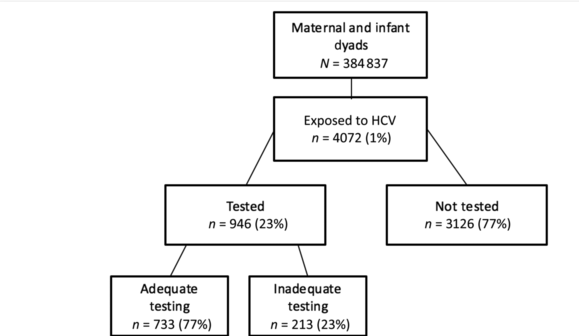
  • During the study period, 384,837 mother-infant dyads were enrolled in the Tennessee Medicaid program, and 4072 of these mothers had HCV during pregnancy…
  • The prevalence of infants with exposure to HCV increased significantly throughout the study with 5.1 infants exposed to HCV per 1000 live births in 2005 and 22.7 infants exposed to HCV per 1000 live births in 2015 with 92.9% of the mothers of these children being white.
  • Only 946 infants (23%) exposed to HCV had HCV testing in the first 2 years of life, and 354 of these infants (41%) had testing per recommended national guidelines…
  • Infants who were exposed to HCV and who were African American or who lived in rural areas next to metropolitan areas were significantly less likely to have HCV testing.

My take: As with adults, this study shows that selective HCV testing is a messy proposition.  This study shows that more than 75% of at risk infants are not being tested for HCV.  Now that curative treatment is available, more needs to be done to address this public health failure.

IBD Depression Screening

LM Mackner et al. JPGN 2020; 70: 42-47. Bonney Reed, our psychologist at GI Care for Kids is one of the authors as well.

Key points:

  • Recommendation #1: Screen adolescents with IBD ages 12 and older for depression annually.
  • Recommendation #2: Screening Measures
    Age 12 years: Moods and Feelings Questionnaire, Short Form (MFQ-SF) ; age 13: Patient Health Questionnaire-9 (PHQ-9)
  • Recommendation #3: Evaluate youth who endorse SI (eg, PHQ-9 item # 9) further
    per clinic protocol or via a suicide screener, such as the Columbia Suicide Severity Rating Scale (C-SSRS)
  • Recommendation #4: Educational Resources. Provide patients, families, and other clinicians with educational resources as needed. An additional aim of our tool kit is to give GI providers resources to assist patients, families, and other clinicians
  • Resources for modules 1-4, Supplemental Digital Content http://links.lww.com/MPG/B721

My take (borrowed from authors): “Implementing depression screening in a busy clinic may seem like a daunting task and is likely to require changes in workflow and procedures. Nonetheless, optimal IBD care treats all aspects of health, and identifying depression symptoms, that often go undetected and can affect IBD outcomes, benefits patients, families, and providers.”  In our office, we have implemented screening and there is now a smartform available in EPIC.  We are fortunate to work closely with psychologists who can help when there is an abnormal screen.

Related blog posts:

Disclaimer: These blog posts are for educational purposes only. Specific dosing of medications/diets (along with potential adverse effects) should be confirmed by prescribing physician/nutritionist.  This content is not a substitute for medical advice, diagnosis or treatment provided by a qualified healthcare provider. Always seek the advice of your physician or other qualified health provider with any questions you may have regarding a condition.

Weak Link in Celiac Screening Guidelines

A recent study (AS Faye et al. Clin Gastroenterol Hepatol 2019; 17: 463-8) finds a weak link in the screening guidelines for celiac disease. Generally, guidelines recommend screening all symptomatic first degree relatives and consider screening of asymptomatic first-degree relatives.  Yet, little is known about adherence to these guidelines.

The authors utilized emergency contact information from the electronic records of 2081 patients with biospy-diagnosed celiac disease to assess how commonly celiac disease testing occurs in patients who are first-degree relatives.

Key findings:

  • Of the 539 relatives identified, 212 (39.3%) were tested for celiac disease including 193 of 383 (50.4%) of first-degree relatives and 118 of 165 (71.5%) of symptomatic first-degree relatives.
  • Of the 383 first-degree relatives, only 116 (30.3%) had a documented family history of celiac disease.

Thus, this study shows that ~30% of symptomatic first degree relatives have not received celiac testing and that ~70% of all first-degree relatives do not have a documented family history.

My take: If a family history of celiac disease is not conveyed to health care providers, this greatly reduces the likelihood that symptomatic first degree relatives will undergo recommended screening. This weakness in screening could be overcome by either:

  1. changing to a policy which encourages screening all first degree relatives, whether symptomatic or asymptomatic
  2. leveraging technology (when feasible) to assure that family history is documented in all at risk patients

Related blog posts:

Shenandoah National Park