I am a pediatric gastroenterologist at GI Care for Kids (previously called CCDHC) in Atlanta, Georgia. The goal of my blog is to share some of my reading in my field more broadly. In addition, I wanted to provide my voice to a wide range of topics that often have inaccurate or incomplete information.
Before starting this blog in 2011, I would tear out articles from journals and/or keep notes in a palm pilot. This blog helps provide an updated source of information that is easy to access and search, along with links to useful multimedia sources.
I was born and raised in Chattanooga. After graduating from the University of Virginia, I attended Baylor College of Medicine. I completed residency and fellowship training at the University of Cincinnati at the Children’s Hospital Medical Center. I received funding from the National Institutes of Health for molecular biology research of the gastrointestinal tract.
During my fellowship, I had the opportunity to work with some of the most amazing pediatric gastroenterologists and mentors. Some of these individuals included Mitchell Cohen, William Balistreri, James Heubi, Jorge Bezerra, Colin Rudolph, John Bucuvalas, and Michael Farrell. I am grateful for their teaching and their friendship. During my training with their help, I received a nationwide award for the best research by a GI fellow.
I have authored numerous publications/presentations including original research, case reports, review articles, and textbook chapters on various pediatric gastrointestinal problems. In addition, I have been recognized by Atlanta Magazine as a "Top Doctor" in my field multiple times.
Currently, I am the vice chair of the section of nutrition for the Georgia Chapter of the American Academy of Pediatrics. In addition, I am an adjunct Associate Clinical Professor of Pediatrics at Emory University School of Medicine. Other society memberships have included the North American Society for Pediatric Gastroenterology Hepatology and Nutrition (NASPGHAN), American Academy of Pediatrics, the Food Allergy Network, the American Gastroenterology Association, the American Association for the Study of Liver Diseases, and the Crohn’s and Colitis Foundation.
As part of a national pediatric GI organization called NASPGHAN (and its affiliated website GIKids), I have helped develop educational materials on a wide-range of gastrointestinal and liver diseases which are used across the country. Also, I have been an invited speaker for national campaigns to improve the evaluation and treatment of gastroesophageal reflux disease, celiac disease, eosinophilic esophagitis, hepatitis C, and inflammatory bowel disease (IBD). Some information on these topics has been posted at my work website, www.gicareforkids.com, which has links to multiple other useful resources.
I am fortunate to work at GI Care For Kids. Our group has 17 terrific physicians with a wide range of subspecialization, including liver diseases, feeding disorders, eosinophilic diseases, inflammatory bowel disease, cystic fibrosis, DiGeorge/22q, celiac disease, and motility disorders. Many of our physicians are recognized nationally for their achievements. Our group of physicians have worked closely together for many years. None of the physicians in our group have ever left to join other groups. I have also worked with the same nurse (Bernadette) since I moved to Atlanta in 1997.
For many families, more practical matters about our office include the following:
– 14 office/satellite locations
– physicians who speak Spanish
– cutting edge research
– on-site nutritionists
– on-site psychology support for abdominal pain and feeding disorders
– participation in ImproveCareNow to better the outcomes for children with inflammatory bowel disease
– office endoscopy suite (lower costs and easier scheduling)
– office infusion center (lower costs and easier for families)
– easy access to nursing advice (each physician has at least one nurse)
I am married and have two sons (both adults). I like to read, walk/hike, bike, swim, and play tennis with my free time.
I do not have any financial relationships with pharmaceutical companies or other financial relationships to disclose. I have helped enroll patients in industry-sponsored research studies.
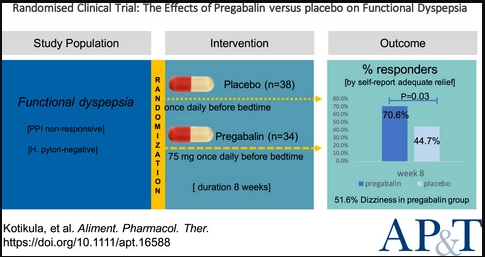
The self-reported adequate relief rates in the pregabalin and placebo groups were 70.6% and 42.1% at week 4 (P = 0.02), and 70.6% and 44.7% at week 8 (P = 0.03), respectively
Pregabalin improved the overall quality of life (P = 0.03)
The most common adverse event with pregabalin was dizziness, occurring in 51.6% of patients
My take: In this study, pregabalin led to significant alleviation of dyspeptic symptoms, especially in patients with predominant epigastric pain.
Disclaimer: This blog, gutsandgrowth, assumes no responsibility for any use or operation of any method, product, instruction, concept or idea contained in the material herein or for any injury or damage to persons or property (whether products liability, negligence or otherwise) resulting from such use or operation. These blog posts are for educational purposes only. Specific dosing of medications (along with potential adverse effects) should be confirmed by prescribing physician. Because of rapid advances in the medical sciences, the gutsandgrowth blog cautions that independent verification should be made of diagnosis and drug dosages. The reader is solely responsible for the conduct of any suggested test or procedure. This content is not a substitute for medical advice, diagnosis or treatment provided by a qualified healthcare provider. Always seek the advice of your physician or other qualified health provider with any questions you may have regarding a condition.
While pediatric gastroenterologists typically are not coordinating the management pediatric patients with Type 2 Diabetes Mellitus (T2DM), we certainly see many with T2DM and often are involved in some aspects of their care (eg. fatty liver disease).
This “TODAY2” study annually followed 500 participants from the TODAY trial (2011). The age of the participants was 26.4±2.8 years, and the mean time since the diagnosis of diabetes was 13.3±1.8 years.
Key definitions:
Hypertension: At 95% or greater for age (at least SBP 130 or DBP 80) on 3 consecutive visits and/or needing medical therapy
Dyslipidemia: Consecutive LDL values of at least 130, consecutive triglycerides of at least 150, or values requiring medical therapy
Albuminuria: ratio of urine albumin to creatinine of at least 30
Diabetic Nerve Disease: based on scores of Michigan Neuropathy Screening Instrument -consecutive values of at least 2 or more (scores range from 0 to 8)
Diabetic Eye Disease: based on a grade of at least 20 according to criteria of Early Treatment Diabetic Retinopathy Study criteria (grades range from 10 to 85)
Key findings:
The cumulative incidence of hypertension: 67.5%
The incidence of dyslipidemia: 51.6%
The incidence of diabetic kidney disease:54.8%
The incidence of nerve disease: 32.4%.
The prevalence of retinal disease: 13.7% (2010 to 2011) and 51.0% (2017 to 2018)
The authors note that the high incidence of complications is “most likely related to extreme metabolic phenotype (which includes severe insulin resistance and rapid worsening of beta-cell function) and to challenging socioeconomic circumstances.”
Study strengths: 15 years of prospective, extensive data and population representative of U.S.
My take: “Taken together, these data illustrate the serious personal and public health consequences of youth-onset” T2DM by age 26 years!! Unless medical therapies improve further, these consequences argue for careful consideration of bariatric surgery.
After expending a great deal of time and effort on prior authorizations lately, this recent satirical explanation on prior authorizations and the purpose of insurance companies hits the target. Though, insurance companies do make money off interest, I think the main goal of PA is to limit care costs. Some patients will not get the care their doctor recommends due to stalling by the insurance company. Many times it takes a physician hours in order to get approvals. If a patient’s physician is not willing to do this, many times the patient will not get the treatment.
In a recent commentary (K Grumbach et al. NEJM 2021; 385: 1156-8. Revitalizing the U.S. Primary Care Infrastructure), it’s clear a day of reckoning is coming due to a depletion of primary care physicians.
Scope of the problem:
“High-quality primary care is vital but undersupported in the United States. In communities with more primary care resources, people live longer, health care costs are lower, and there is greater health equity”
“Primary care physicians make up only 30% of the physician workforce…research on primary care garners just 1% of federal agency research awards”
“Primary care physicians earn 30% less than other physicians, on average, and they have among the highest rates of physician burnout”
“The situation is worsening…between 2005 and 2015, the number of primary care physicians in the United States decreased from 46.4 to 41.4 per 100,000 people, and the proportion of nurse practitioners and physician assistants who work in primary care is dropping”
Currently, the number of physician training to become family physicians is “well below the level needed to replace retiring family physicians. Less than one in five internal medicine residency graduates pursue careers in primary care, down from half of such graduates 25 years ago”
The authors propose a government council to develop and implement a plan to address the looming crisis.
My take: Virtually nothing has been done in 25 years to address this problem and I doubt anything substantive will emerge in the near future; though, it would be good policy to incentivize more physicians to go into primary care.
“Issue-attention cycle” problem. “This pattern occurs when initial public alarm over the discovery of a problem and optimism about its quick resolution are replaced by the realization that solving the problem will require some public sacrifice and will displace powerful societal interests.”from Weight of the Nation | gutsandgrowth
National Cathedral, Washington D.C. Scaffolding due to earthquake damage in 2011.
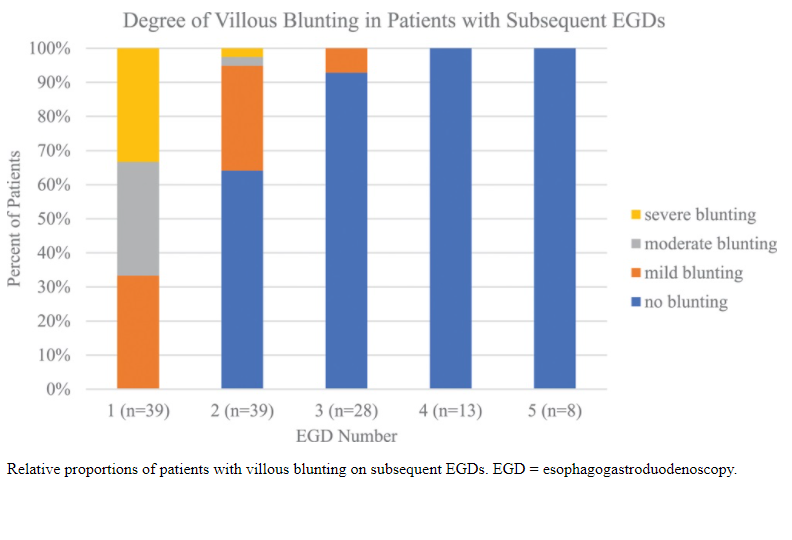
Background: “Current standard of care in the management of uncomplicated CD is not to undergo multiple esophagogastroduodenoscopies (EGDs)… In this study, patients with both CD and eosinophilic gastrointestinal disorders (EGID) …) were identified to explore [the mucosal response to a gluten-free diet], as it is standard for patients with EGID to undergo repeat EGDs for disease surveillance.”
Key findings in this retrospective study from CHOP:
At second biopsy, 44% (17/39) of patients showed no histologic evidence of active CD and 36% (14/39) of patients had negative tTG-IgA values
9/15 (60%) of patients with no evidence of CD on biopsy had abnormal tTG-IgA levels
8/14 (57%) of patients with normal tTG-IgA levels had evidence of active disease on biopsy
Among the 18 who had been on a GFD for at least 2 years, 94% (17/18) had normal duodenal biopsies after 2 years, and 83% (15/18) had normal tTG-IgA values after 2 years
Of the patients with elevated tTG-IgA and normal duodenal biopsies, 66% (6/9) had inflammation elsewhere in the upper gastrointestinal tract, including 4 patients with active EOE and 2 patients with gastritis
My take: This study confirms that tTG-IgA levels are not optimal for monitoring. Current guidelines recognize this and recommend repeat biopsy in patients with persistent or relapsing symptoms even with negative serology
In this retrospective review (1998-2018), the authors identified 39 patients with esophageal Crohn disease (ECD) who met inclusion criteria.
Key findings:
35 (92%) had a clinical response to treatment and 21 (55%) went into clinical remission
ECD seems to be associated with more disabling intestinal CD phenotypes. Of the 39 patients, 10 (26%) had stricturing phenotype and 21 (54%) had penetrating phenotype; 19 (49%) had perianal disease
“Initial treatment after diagnosis with anti-TNFalpha agents compared to other biologics was associated with greater improvement in clinical (97% vs 71%; P=0.02) and endoscopic response (95% vs. 40%; P<0.01) and in clinical remission (64.5% vs. 14.2%; P=0.01).”
Initial treatment with an anti-TNFalpha agent was initial treatment in 18 patients with ECD; 14 had an inflammatory, 3 had a stricturing, and 1 had a fistulizing phenotype.
While this study showed better response to anti-TNFalpha agents compared to other biologics (eg. anti-IL-12/IL-23 agents), this may be due to a selection bias as other biologics are often used as a second-line treatment and are selected more often in refractory disease.
My take: Esophageal Crohn’s disease is a rare diagnosis and appears associated with more severe disease.
Chesapeake and Ohio Canal National Historic Park (near Washington D.C.)
Mechanism of Action: Ozanimod is a selective sphingosine-1-phosphate receptor modulator which leads to internalization of S1P1 receptors in lymphocytes and the prevention of lymphocyte mobilization to inflammatory sites.
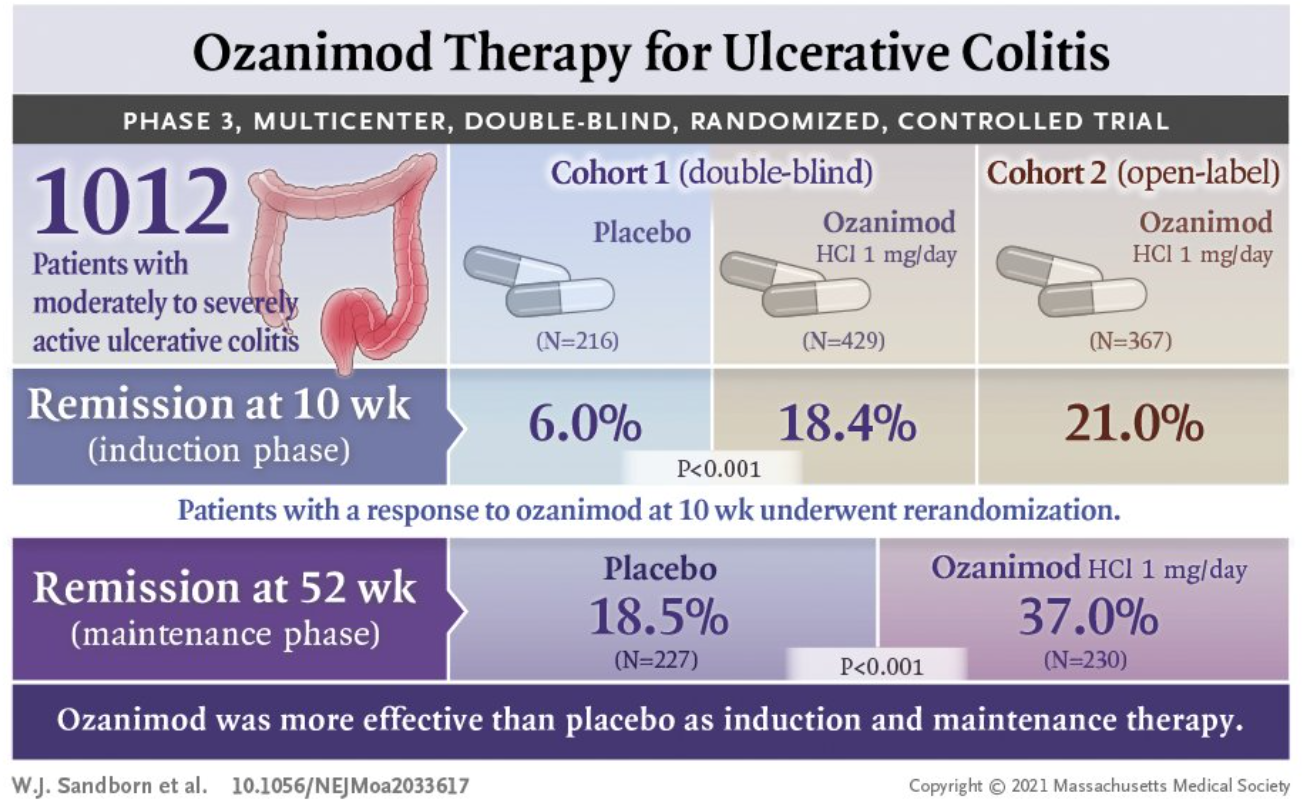
Design: There were two initial cohorts of adults with moderately to severely active ulcerative colitis. The first cohort (n=645) of this 52-week multicenter, randomized, double-blind, placebo-controlled trial (285 sites, 30 countries) of ozanimod as induction and maintenance therapy received either 1 mg of ozanimod hydrochloride once a day or placebo. A second cohort (n=457) received open-label ozanimod and was designed to assure that there would be adequate numbers of patients for the maintenance phase. The design allowed up to 30% of the first cohort to have received prior anti-TNF therapy and up to 50% of the second cohort to have received prior anti-TNF therapy. Ozanimod-treated patients with a clinical response during the 10-week induction were randomized again to a treatment group (n=230) or a placebo group for maintenance (n=227). Placebo-treated patients with a clinical response continued to receive placebo.
Approximately 97% of both cohorts had received prior aminosalicylate treatment and ~20% had received prior vedolizumab therapy.
As a safety measure (due to concerns of bradycardia), there was a 7-day period at the start of treatment with dose escalation, starting at 0.25 mg on days 1-4, 0.5 mg on days 5-7, then to 1 mg thereafter.
Key findings:
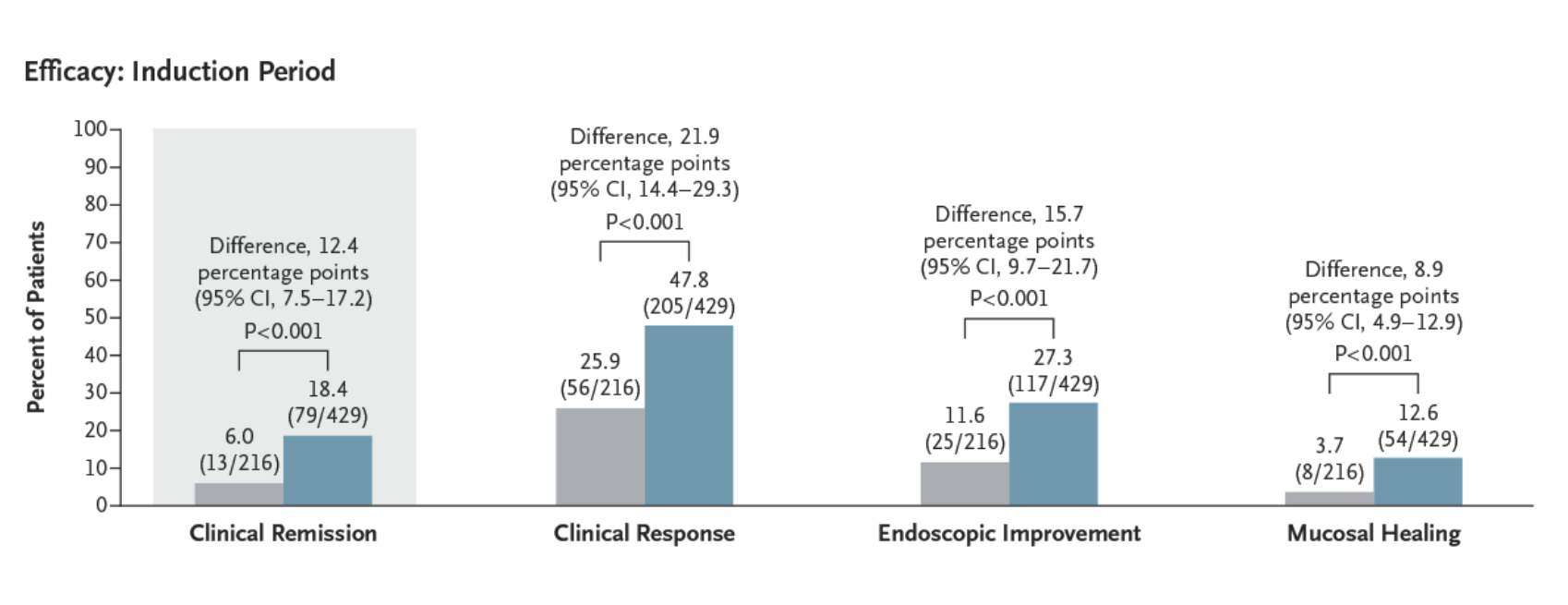
The incidence of clinical remission was significantly higher among patients who received ozanimod than among those who received placebo during both induction (18.4% vs. 6.0%, P<0.001) and maintenance (37.0% vs. 18.5% [among patients with a response at week 10], P<0.001).
The incidence of clinical response was also significantly higher with ozanimod than with placebo during induction (47.8% vs. 25.9%, P<0.001) and maintenance (60.0% vs. 41.0%, P<0.001).
Histologic remission during induction, ozanimod vs placebo: 15.% vs 5.8%.
A post hoc analysis showed decreases in the rectal-bleeding and stool-frequency subscores by week 2 (1 week after the completion of dose adjustment).
From NEJM Twitter Feed
Safety Concerns:
Serious adverse events attributed to ozanimod or placebo occurred in 4 (0.5%) and 2 (0.9%) during induction respectively and none and 1 (0.4%) respectively during maintenance.
Overall alladverse events during induction occurred in 40% of ozanimod-treated patients and 38% of placebo recipients; during maintenance, adverse events were 49% and 37% respectively.
Absolute lymphocyte count (ALC) decreased by a mean of ~54% from baseline to week 10 in ozanimod-treated patients; ALC was <200 in 1.1% (both cohorts) in induction and 17 patients during maintenance. None of the patients with ALC <200 experienced a serious or opportunistic infection.
Serious infections associated wtih ozanimod or placebo occurred in 10 (1.3%) and 1 (0.5%) during induction respectively and 2 (0.9%) and 4 (1.8%%) respectively during maintenance.
Common infections like nasopharyngitis and upper respiratory tract infections in 3-4% of ozanimod-treated patients compared to ~2% of placebo-treated patients
Cancer: during induction there was one ozanimod-treated patient who had a basal cell carcinoma and during maintenance there was one ozanimod-treated patient who had a basal cell carcinoma. In the placebo group, during maintenance there was one patient who developed adenocarcinoma of the colon and one who developed breast cancer.
Among ozanimod-treated patients, bradycardia was evident in 5 (~0.6%) during induction and none during maintenance. (Patients with significant cardiovascular history were excluded from trial)
Among ozanimod-treated patients, hypertension occurred in 13 (~1.6%) during induction and 4 (1.7%); in the placebo group, none in the induction period and three (1.3%) in the maintenance had hypertension.
Prior to entry, the trial required documented varicella zoster IgG antibody or completion of vaccination. Still, HSV occurred in 3 during induction (~0.5%) and 5 (2.2%) during maintenance (only 1 placebo patient (0.4%) had an HSV infection during maintenance.
Elevated liver tests associated wtih ozanimod or placebo occurred in 42 (5.3%) and 2 (0.9%) during induction respectively and 32 (13.9%) and 1 (5.3%%) respectively during maintenance.
Macular edema was noted in 2 ozanimod-treated patients during induction and 1 during maintenance.
My take: This study shows that ozanimod was more effective than placebo in adults with moderately to severely active ulcerative colitis. It will probably be years before we have adequate pediatric data.
MM Mello, WE Parmet. NEJM 2021; 385: 1153-5. Open Access: Public Health Law after Covid-19 This commentary describes changes in public health law as a result of the COVID-19 pandemic.
Key points:
“More than 1000 suits challenged orders shuttering businesses, banning indoor worship services, restricting travel, and mandating mask wearing.”
“In 1905 in Jacobson v Massachusetts, the Supreme Court upheld a vaccination mandate…Judicial review, the Court found is limited to …’arbitrary and oppressive in particular cases”
“Most courts..have …granted considerable deference to health officials…Courts have been more receptive, however, to challenges relating to religious liberty and the scope of executive authority.”
“The court in an unsigned opinion ruled that the CDC had overstepped its authority [with an eviction ban] under the Public Health Service Act (PHSA)…Congress…must pass legislation to impose one or to clarify that the CDC may impose one.”
“The decisions with regard to free exercise of religion suggest that health orders will face strict scrutiny if they regulate religious practices more strictly than any secular activity that courts deem similar.”
My take: This article makes clear that “while emergencies can lead to abuses of authority, …in their [Courts] zeal to protect religious liberty and constrain executive action, courts may be leaving officials with fewer tools to fight Covid-19 and the next pandemic.”
Mr. Ayer was a U.S. attorney and principal deputy solicitor general in the Reagan administration and deputy attorney general in the George H.W. Bush administration.
An excerpt:
[The Supreme Court’s] recent history suggests that it lacks a majority of justices with sufficient concern about the basic continuity and integrity of the law or the ability of government to function…it seems ready to cast aside certain constitutional rights, the court today regularly gives sweeping new interpretations to other rightsand invokes them to radically narrow certain government powers that were until quite recently uncontroversial, including, for example, powers related to public safety or our democratic process...
Perhaps most unexpected and disturbing were decisions elevating rights of religious assembly over local public-safety rules related to Covid-19 that limited the ability to gather. Yet throughout our history, in matters of public health, the powers of local government have usually been at their apex. That did not matter here — nor did the fact that Chief Justice Roberts was among the dissenters.
“Major changes to the Georgia WIC Program effective today, announced by the @GaDPH & @GAChapterAAP, most importantly, a new WIC Request for Medical Formulas & Supplemental Foods (RMF) form replacing the MDF.”