Unknown's avatar

About gutsandgrowth

I am a pediatric gastroenterologist at GI Care for Kids (previously called CCDHC) in Atlanta, Georgia. The goal of my blog is to share some of my reading in my field more broadly. In addition, I wanted to provide my voice to a wide range of topics that often have inaccurate or incomplete information. Before starting this blog in 2011, I would tear out articles from journals and/or keep notes in a palm pilot. This blog helps provide an updated source of information that is easy to access and search, along with links to useful multimedia sources. I was born and raised in Chattanooga. After graduating from the University of Virginia, I attended Baylor College of Medicine. I completed residency and fellowship training at the University of Cincinnati at the Children’s Hospital Medical Center. I received funding from the National Institutes of Health for molecular biology research of the gastrointestinal tract. During my fellowship, I had the opportunity to work with some of the most amazing pediatric gastroenterologists and mentors. Some of these individuals included Mitchell Cohen, William Balistreri, James Heubi, Jorge Bezerra, Colin Rudolph, John Bucuvalas, and Michael Farrell. I am grateful for their teaching and their friendship. During my training with their help, I received a nationwide award for the best research by a GI fellow. I have authored numerous publications/presentations including original research, case reports, review articles, and textbook chapters on various pediatric gastrointestinal problems. In addition, I have been recognized by Atlanta Magazine as a "Top Doctor" in my field multiple times. Currently, I am the vice chair of the section of nutrition for the Georgia Chapter of the American Academy of Pediatrics. In addition, I am an adjunct Associate Clinical Professor of Pediatrics at Emory University School of Medicine. Other society memberships have included the North American Society for Pediatric Gastroenterology Hepatology and Nutrition (NASPGHAN), American Academy of Pediatrics, the Food Allergy Network, the American Gastroenterology Association, the American Association for the Study of Liver Diseases, and the Crohn’s and Colitis Foundation. As part of a national pediatric GI organization called NASPGHAN (and its affiliated website GIKids), I have helped develop educational materials on a wide-range of gastrointestinal and liver diseases which are used across the country. Also, I have been an invited speaker for national campaigns to improve the evaluation and treatment of gastroesophageal reflux disease, celiac disease, eosinophilic esophagitis, hepatitis C, and inflammatory bowel disease (IBD). Some information on these topics has been posted at my work website, www.gicareforkids.com, which has links to multiple other useful resources. I am fortunate to work at GI Care For Kids. Our group has 17 terrific physicians with a wide range of subspecialization, including liver diseases, feeding disorders, eosinophilic diseases, inflammatory bowel disease, cystic fibrosis, DiGeorge/22q, celiac disease, and motility disorders. Many of our physicians are recognized nationally for their achievements. Our group of physicians have worked closely together for many years. None of the physicians in our group have ever left to join other groups. I have also worked with the same nurse (Bernadette) since I moved to Atlanta in 1997. For many families, more practical matters about our office include the following: – 14 office/satellite locations – physicians who speak Spanish – cutting edge research – on-site nutritionists – on-site psychology support for abdominal pain and feeding disorders – participation in ImproveCareNow to better the outcomes for children with inflammatory bowel disease – office endoscopy suite (lower costs and easier scheduling) – office infusion center (lower costs and easier for families) – easy access to nursing advice (each physician has at least one nurse) I am married and have two sons (both adults). I like to read, walk/hike, bike, swim, and play tennis with my free time. I do not have any financial relationships with pharmaceutical companies or other financial relationships to disclose. I have helped enroll patients in industry-sponsored research studies.

Another Day in the US: School Deaths Related to Firearms

Between 2001-2013, gun related deaths exceeded the total number of deaths from AIDS, terrorism, war, and illegal drug overdoses combined (according to Vox -see Firearm Mortality in U.S).  Here are some tweets in reaction to yesterday’s tragic events.

Link to The Onion commentary: ‘No Way To Prevent This’

Related blog posts:


Acute Pancreatitis: Clinical Report from NASPGHAN

There are no surprises in a recent clinical report on acute pancreatitis (M Abu-El-Haija et al. JPGN 2018: 66: 159-76) from NASPGHAN.

Here are a few of the points:

  • The authors recommend ultrasound for initial imaging and checking liver enzymes, GGT, calcium and triglycerides.
  • For fluids, they indicate that in adults there is evidence suggesting that lactated ringer’s (LR) is likely preferable to normal saline.  In children, on presentation, “if evidence of hemodynamic compromise, a bolus of 10 to 20 mL/kg” of crystalloid is recommended followed by “1.5 to 2 times maintenance IV fluids.”
  • For pain management not responding to acetaminophen or NSAIDs, “IV morphine or other opioids should be used.”
  • They recommend early oral/enteral nutrition (within 48 to 72 hours of presentation).
  • They recommend against prophylactic antibiotics in severe acute pancreatitis.
  • They recommend against probiotics, anti-proteases, and antioxidant therapy.
  • For fluid collections that need drainage or necrosectomy, nonsurgical approaches are favored.
  • Acute biliary pancreatitis, “Cholecystectomy safely can and should be performed before discharge in cases of mild uncomplicated acute biliary pancreatitis.”

Related blog posts:

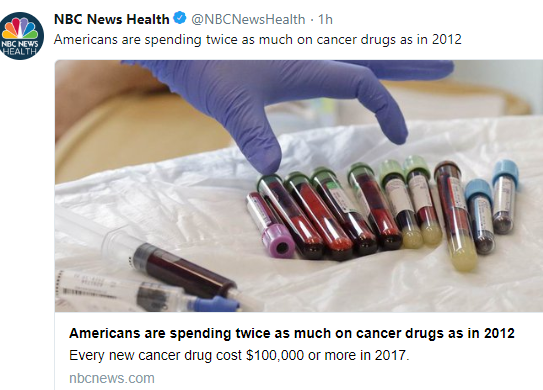
American Ingenuity!!

Cancer due to Overweight/Obesity

The increasing risk of cancer due to overweight and obesity has been reported by the Centers for Disease Control and Prevention in recent MMWR report (CB Steele et al. MMWR 2017; 66: 1052-8Vital Signs: Trends in Incidence of Cancers Associated with Overweight and Obesity — United States, 2005–2014

Key points:

  • Overweight and obesity are associated with increased risk of at least 13 different types of cancer.
  • Overweight- and obesity-related cancers accounted for 40% of all cancers diagnosed in 2014.
  • The incidence of overweight- and obesity-related cancers (excluding colorectal cancer) increased significantly among persons aged 20–74 years during 2005–2014, mirroring increases of obesity observed since 1960.
  • The findings emphasize the importance of intensifying nationwide efforts to prevent and treat overweight and obesity.

My take: While the medical risks related to overweight/obesity generally are attributed to worsened cardiovascular disease, this study adds information regarding the increased risks of some types of cancer as well.

Related blog posts:


Colorectal Cancer: Of Mice and Microbiota

A recent study (SH Wong et al. Gastroenterol 2017; 153: 1621-33) highlights the potential role of the microbiota and colorectal cancer (CRC).

In this study, the stool from either patients with CRC or control patients was gavaged into mice twice a week for 5 weeks.  One group of mice  had received azoxymethane (AOM) which induces neoplasia and the other group were germ-free mice.  Extensive studies involving immunohistochemistry, expresssion microarray, quantitative polymerase chain reaction, immunoblot, and flow cytometry.

Key findings:

  • Conventional, AOM-treated mice who received gavage from patients with CRC had significantly higher proportions of high-grade dysplasia (P<.05) and macroscopic polyps (P<.01)
  • Among the germ-free mice fed with stool from patients with CRC, there was a higher proportion of proliferating Ki-67-positve cells
  • These findings correlated with more dysbiosis in the mice who received stool from patients with CRC and with upregulation of genes involved in cell proliferation, stemness, apoptosis, angiogenesis, and invasiveness

“This study provides evidence that the fecal microbiota from patients with CRC can promote tumorigenesis in germ-free mice and mice given a carcinogen.”

My take: This study shows that microbiota clearly influence the risk of CRC.  I infer from this study that this could explain the potential healthy roles of diets with more fruits and vegetables, that promote healthier microbiota as well as the potential detrimental role of diets with more processed meats.

Related study: L Liu et al. Association between Inflammatory Diet Pattern and Risk of Colorectal Carcinoma Subtypes Classified by Immune Responses to Tumor Gastroenterol 2017; 153 1517-30.  Using two databases from 2 prospective cohorts with followup of 124,433 participants, inflammatory diets had a higher risk of a colorectal cancer subtype.

Related blog posts:

Bright Angel Trail

Screening for Bile Acid Synthesis Disorders

A recent study (AA Al-Hussaini et al. JPGN 2017; 65: 613-20) showed that serum (total) bile acids is effective in screening for bile acid synthesis disorders. In this prospective study from Saudi Arabia, with 626 patients and 450 with infantile cholestasis, the authors identified bile acid synthetic disorder (BASD) in 2.7% of infantile cholestasis patients.  Among the 15 cases, 11 were due to 3β-hydroxyl-Δ5-C27 steroid oxidoreductase dehydrogenase deficiency (HSD3B7).  In these conditions, serum bile acids are low or normal (< 10  μmol/L) in the setting of cholestasis; most cholestatic conditions have elevated bile acids. In addition, all of their patients with bile acid synthetic disorders had a normal or low GGT.

Cholic acid is the “only effective therapy” for bile acid synthetic disorders.  It has a high cost of “$31,000 yer year in Europe” (50 mg per day).

My take: While the authors provide a diagnostic algorithm (figure 3) for diagnosis of bile acid synthetic disorders, this will likely change with the emergence of genetic screening panel.  At this time, in infants/children with cholestasis along with a normal/low GGT and normal/low serum bile acids, one should check urine for fast atom bombardment mass spectrometry.

Related blog post:

Bright Angel Trail, Grand Canyon


Modern Malady: Text Neck

In every age, our bodies need to adapt to new challenges.  Apparently, in this age, we need to solve another problem induced by texting, “Text Neck.”

NY Times: Keep Your Head Up: How Smartphone Addiction Kills Manners and Moods

Here’s an excerpt:

The average human head weighs between 10 and 12 pounds, and when we bend our neck to text or check Facebook, the gravitational pull on our head and the stress on our neck increases to as much as 60 pounds of pressure. That common position, pervasive among everyone from paupers to presidents, leads to incremental loss of the curve of the cervical spine. “Text neck” is becoming a medical issue that countless people suffer from, and the way we hang our heads has other health risks, too, according to a report published last year in The Spine Journal.

Posture has been proven to affect mood, behavior and memory, and frequent slouching can make us depressed…

And the remedy can be ridiculously simple: Just sit up.

My take: Smartphone use increases the risk of many health problems besides “Text Neck” including car accidents.  Their use also contributes to missing social cues, including placing those in front of you behind those who interrupt conversations with texts and phone calls.

Iron Metabolism Improves after Anti-TNF Therapy for Crohn’s Disease

A previous study has shown that low vitamin D levels improved with anti-TNF therapy for Crohn’s disease in the absence of supplemental vitamin D.  Similarly, a recent study (MA Atkinson, MB Leonare, R Herskovitz, RN Baldassano, MR Denburg. JPGN 2018; 66: 90-4) showed improvement in iron metabolism with anti-TNF therapy.

In 40 children and adolescents with Crohn’s disease, the authors measured serum hepcidin-25 and hemoglobin at baseline and then 10 weeks after anti-TNF therapy.

Key findings:

  • Median hepcidin concentrations decreased (27.9–>23.2 ng/mL) and mean hemoglobin increased (10.6–>10.9).
  • Disease activity and markers of inflammation also decreased.

My take: This study shows that improvement in inflammation is associated with meaningful improvement in anemia.  However, most patients will need additional treatment for anemia, particularly as anemia may be related to blood loss in addition to anemia of chronic disease/inflammation.

Related blog posts:


Second-Line Treatments for Autoimmune Hepatitis

A recent retrospective study (C Efe et al. Clin Gastroenterol Hepatol 2017; 15: 1950-6) examined both mycophenolate mofetil (MMF, n=121) and tacrolimus (TAC, n=80) as second-line therapies for autoimmnue hepatitis with a median followup of 62 months. Patients were divided into two groups. The first group (n=108) had a complete response to steroids/azathioprine but had side effects.  The second group (n=93) were nonresponders to steroids/azathioprine. Overall, the cohort examined patients as young as 7 years and as old as 76 years.

Key findings:

  • No significant difference in complete response noted in 69.4% of MMF-treated compared with 72.4% in TAC-treated patients.
  • In group 1 patients (responders to azathioprine), MMF and TAC maintained biochemical remission in 91.9% and 94.1% respectively.
  • In group 2 (prior nonresponders), TAC-treated patients had a complete response rate of 56.5% compared with 34% for MMF-treated patients (P=.029).
  • Liver-related deaths and transplantation occurred with similar rates: MMF 13.2% compared with TAC 10.3%.  With each treatment, 10 patients withdrew from treatment due to side effects.

My take: In this study, both agents were effective in those who changed due to side effects.  However, tacrolimus-treated patients had a higher response among prior nonresponders.

Related blog posts:

Bright Angel Trail, Grand Canyon


Glecaprevir-Pibrentasvir for Hepatitis C Infections

Before discussing one of the newest therapies for Hepatitis C, I wanted to give a shout out to Barbara McElhanon who along with Joanna Lomas-Mevers provided a quick update to our group on their important research to improve the management of encopresis in children with autism spectrum disorders.

Last August, the FDA announced approval of glecaprevir-pibrentasvir as a pangenomic treatment for Hepatitis C (From blog: Eight Week Pangenomic HCV Treatment Approved).

However, it is only in this past two weeks that some of the data from two large randomized, open-label, multicenter trials have been published: Z Zeuzem et al. NEJM 2018; 378: 354-69.  In total, 1208 patients were treated in the “ENDURANCE-1” and “ENDRUANCE-3” trials.

Key findings:

  • For genotype 1-infected patients, glecaprevir-pibrentasvir resulted in a sustained virologic response rate (at week 12) of 99.1% in the 8-week group and 99.7% in the 12-week group.
  • For genotype 3, glecaprevir-pibrentasvir resulted in a sustained virologic response rate (at week 12) of 95% with both 8-week and 12-week treatment.  A comparison group of sofosbuvir-daclatasvir (12 week treatment) resulted in a sustained virologic response rate (at week 12) of 97%.
  • Serious adverse events were rare.  There were three patients who died during the post-treatment period: two from heroin overdoses and one from ethanol intoxication/methadone toxicity.  Headache and fatigue were the most common reported adverse events.
  • There were no relapses among HCV-1-infected patients who were treated for 8 weeks

In addition to these studies, “recent phase 3 trials have shown that an 8-week regimen of glecaprevir-pibrentasvir in patients without cirrhosis” yielded response of 98% for genotype 2 and 93% for genotypes 4, 5, and 6.

My take: These studies indicate that glecaprevir-pibrentasvir is an effective 8-week therapy for patients with HCV infection.  Despite this terrific advance, unless we find a way to address the opioid crisis which is triggering an HCV epidemic, I am not optimistic that there will be an improvement in the number of individuals with HCV infection.

Related blog posts: