Unknown's avatar

About gutsandgrowth

I am a pediatric gastroenterologist at GI Care for Kids (previously called CCDHC) in Atlanta, Georgia. The goal of my blog is to share some of my reading in my field more broadly. In addition, I wanted to provide my voice to a wide range of topics that often have inaccurate or incomplete information. Before starting this blog in 2011, I would tear out articles from journals and/or keep notes in a palm pilot. This blog helps provide an updated source of information that is easy to access and search, along with links to useful multimedia sources. I was born and raised in Chattanooga. After graduating from the University of Virginia, I attended Baylor College of Medicine. I completed residency and fellowship training at the University of Cincinnati at the Children’s Hospital Medical Center. I received funding from the National Institutes of Health for molecular biology research of the gastrointestinal tract. During my fellowship, I had the opportunity to work with some of the most amazing pediatric gastroenterologists and mentors. Some of these individuals included Mitchell Cohen, William Balistreri, James Heubi, Jorge Bezerra, Colin Rudolph, John Bucuvalas, and Michael Farrell. I am grateful for their teaching and their friendship. During my training with their help, I received a nationwide award for the best research by a GI fellow. I have authored numerous publications/presentations including original research, case reports, review articles, and textbook chapters on various pediatric gastrointestinal problems. In addition, I have been recognized by Atlanta Magazine as a "Top Doctor" in my field multiple times. Currently, I am the vice chair of the section of nutrition for the Georgia Chapter of the American Academy of Pediatrics. In addition, I am an adjunct Associate Clinical Professor of Pediatrics at Emory University School of Medicine. Other society memberships have included the North American Society for Pediatric Gastroenterology Hepatology and Nutrition (NASPGHAN), American Academy of Pediatrics, the Food Allergy Network, the American Gastroenterology Association, the American Association for the Study of Liver Diseases, and the Crohn’s and Colitis Foundation. As part of a national pediatric GI organization called NASPGHAN (and its affiliated website GIKids), I have helped develop educational materials on a wide-range of gastrointestinal and liver diseases which are used across the country. Also, I have been an invited speaker for national campaigns to improve the evaluation and treatment of gastroesophageal reflux disease, celiac disease, eosinophilic esophagitis, hepatitis C, and inflammatory bowel disease (IBD). Some information on these topics has been posted at my work website, www.gicareforkids.com, which has links to multiple other useful resources. I am fortunate to work at GI Care For Kids. Our group has 17 terrific physicians with a wide range of subspecialization, including liver diseases, feeding disorders, eosinophilic diseases, inflammatory bowel disease, cystic fibrosis, DiGeorge/22q, celiac disease, and motility disorders. Many of our physicians are recognized nationally for their achievements. Our group of physicians have worked closely together for many years. None of the physicians in our group have ever left to join other groups. I have also worked with the same nurse (Bernadette) since I moved to Atlanta in 1997. For many families, more practical matters about our office include the following: – 14 office/satellite locations – physicians who speak Spanish – cutting edge research – on-site nutritionists – on-site psychology support for abdominal pain and feeding disorders – participation in ImproveCareNow to better the outcomes for children with inflammatory bowel disease – office endoscopy suite (lower costs and easier scheduling) – office infusion center (lower costs and easier for families) – easy access to nursing advice (each physician has at least one nurse) I am married and have two sons (both adults). I like to read, walk/hike, bike, swim, and play tennis with my free time. I do not have any financial relationships with pharmaceutical companies or other financial relationships to disclose. I have helped enroll patients in industry-sponsored research studies.

IBD Shorts and Postop Crohn’s Management

C Ma et al. Inflamm Bowel Dis 2017; 23: 833-9.  This retrospective study examined the ongoing response to ustekinumab in 104 patients with Crohn’s disease.  All patients had achieved a steroid-free ustekinumab induction.  92.3% had failed anti-TNFα therapy.Key findings:

  • 71.8% maintained a response at 52 weeks
  • 64.4% maintained an endoscopic or radiographic response

Related blog post: Closer Look at Ustekinumab Data

O Truffinet et al JPGN 2017; 64: 721-25. This small study with 8 children with Crohn’s disease examined the use of tacrolimus.  Six of eight showed a response to tacrolimus (target 8-15) with a clinical response at 2 months and 4 of 8 in clinical remission.  Adverse effects were common, occurring in 6 of 8.  These included renal dysfunction, diabetes, paresthesia and tremor.

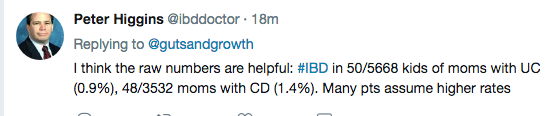
J Adler et al.  JPGN 2017; 64: e117-e124. Using ImproveCareNow registry, the authors identified perianal disease (PD) in 1399 of 6679 cases (21%).  PD was more common in blacks than whites: 26% vs. 20%.  Overall, this study showed a higher rate of PD than previously recognized.

J Amil-Dias et al JPGN 2017; 64: 818-35.  This is an ESPGHAN IBD Porto Group guideline for surgical Crohn’s disease management in children.  There are 25 graded statements.  Here are a few:

  • #7 & #8. If needing surgery for CD pancolitis, the authors recommend subtotal colectomy and ileostomy.  Possible reanastomosis at later date if no significant rectal and/or perianal disease.  Ileal pouch-anal anastomosis is NOT recommended.
  • #13. Monitor Vitamin B12 if >20 cm resection of terminal ileum
  • #16. Postoperative management “should be based on ileocolonoscopy.” Figure 1 details recommendations, including need for assessment postoperatively.
  • In patients with high-risk factors, anti-TNF therapy is recommended postoperatively.  In those without high-risk factors, the authors indicate that thiopurines are reasonable with and advancing to anti-TNF if Rutgeerts i2 or greater at followup assessment.  High-risk factors include growth failure, short duration from diagnosis to surgery, extensive resection (>40 cm), and penetrating disease.

Related blog post:

Musee d’Orsay


One Way Fecal Microbiota Transplant May Work: Changing Bile Acids

Breifly Noted:

From MedPage Today: Fecal transplant success may depend on bile acid metabolism

An excerpt:

the transplants change patterns of bile acid metabolism in the gut, making the environment inhospitable to C. diff colonization.

In three studies reported at Digestive Disease Week (DDW) 2017, it was demonstrated that individuals with C. diff who respond to fecal transplant showed a different pattern of microbiota species composition compared with baseline and/or with those who fail to respond. But that’s not all: the responders also showed distinct, altered profiles of those elements involved in bile acid metabolism.

Vincent Van Gogh; Hopital Saint-Paul (1889)


Professional Resources: Gastric Feeds, Celiac Disease

Many of our patients use Farrell bags to help with their enteral feedings; though, this decompression system is often used incorrectly.  The following is a link to the company’s instructions on how to use this product correctly. Halyard Health: Farrell System

Note: I do not have commercial ties.

From NASPGHAN -Celiac resource: NASPGHAN Clinical Guide For Celiac Disease

I reviewed this website.  Overall, this is a useful resource.  There are multiple links that address some of the nuances with celiac disease.  Interestingly, the website is not entirely consistent in its recommendations. For example, under the link “my parent/child has celiac” recommendations for screening family member are for TTG IgA and IgA (if asymptomatic) whereas under the health professional area, after diagnosis, the website recommends much more extensive testing of family members: HLA DQ2/DQ8 genetics, TTG IgA, IgA, and anti-DGP IgG testing


Costs of Rumination

Reading a recent study (A Alioto et al. J Pediatr 2017; 185: 155-9) reminded me of “My Cousin Vinny.”  In a crucial scene, Mona Lisa Vito (Marisa Tomei) proves that the accused killers were not the killers by identifying tire tread marks that were inconsistent with the defendants’ car simply by looking a photograph.

Similarly, the authors of this retrospective report highlight the extensive cost of that children undergo for evaluation of rumination when simple observation might suffice.

Key findings:

  • Consecutive patients (n=68, 2009-2015) admitted to their inpatient rumination treatment program had undergone an average of 8.8 tests at a cost of $19,795.
  • Few tests were beneficial. Most common tests were esophagogastroduodenoscopy, upper gastrointestinal series, and abdominal ultrasound scan.

Limitations:

  • The cohort is derived from a quaternary center
  • The number of tests may be underestimated as the tests were done by the referring center; thus, the authors were reliant on data provided to them

Other comments:

  • A good clinical history can suffice to establish the diagnosis. “Observing the patient eat and/or drink and then ruminate is perhaps even more useful.”
  • “We strongly suggest that if a patient meets the symptom-based criteria for rumination syndrome, no further diagnostic testing is warranted. That said, …various phenotypes of the syndrome may make the diagnosis less clear-cut” and some testing could be needed.
  • Rumination may be “symptomatic for over 2 years before the diagnosis is established” (Pediatrics 2003; 111: 158-62)

My take: Not every doctor is as good at doctoring as Vinny Gambini is at lawyering. That being said, the authors note “for patients who present with repeated effortless regurgitation and vomiting of food that begins soon after they eat or drink, is not preceded by retching, and does not occur during sleep, there are very few other diagnoses to be considered.”

Related blog posts:

Disclaimer: These blog posts are for educational purposes only. Specific dosing of medications (along with potential adverse effects) should be confirmed by prescribing physician.  This content is not a substitute for medical advice, diagnosis or treatment provided by a qualified healthcare provider. Always seek the advice of your physician or other qualified health provider with any questions you may have regarding a condition.

Omaha Beach 2017

Surgery for Reflux Works Best in Those Who Need it the Least

In a recent retrospective study (JT Krill et al. Clin Gastroenterol Hepatol 2017; 15: 675-81), the authors reinforce the notion that surgery works best for reflux patients whose symptoms respond best to medical therapy.

Background: In this study, 196 patients with normal anatomy were identified, though 81 had inadequate follow-up at 1 year.  This left 115 patients (median age ~52).  This study examined patients with typical reflux symptoms (regurgitation, heartburn) (n=79 of 115, 68.7%) and extraesophageal symptoms, like cough, hoarseness, and throat clearing (n=36 of 115, 31.3%).  It is noted that 2/3rds of those with extraesophageal symptoms had coexisting typical GERD symptoms.  Most patients had a Nissen fundoplication but some underwent a Toupet fundoplication.

Key findings:

  • 91.5% of those with typical reflux symptoms (who  had responded to medical therapy) were in remission at 1 year; in comparison, only 33.3% (P <.01) of those with extraesophageal symptoms along with poor response to acid suppression therapy exhibited remission following fundoplication.
  • “The severity of acid reflux on pH monitoring and larger hiatal hernia size were associated with a more favorable outcome at 12 months.”  All patients had either abnormal pH monitoring or endoscopic esophagitis prior to surgery.  Only those with severe reflux had increased likelihood of response to surgery.

Limitations: retrospective study, 81 of 196 patients were excluded due to lack of followup

My take: This study is consistent with other studies in suggesting that reflux surgery is less effective in those who do not respond to medical therapies and who have atypical symptoms.

Related blog post:

From Pitts Street Bridge, Mt Pleasant

Favorable Fish Oil Outcomes in High Risk Preterm Infants

Briefly noted: M Sorrell et al. JPGN 2017; 64: 783-88. In this small study with 13 infants (mean gestational age of 28 weeks) who had short bowel syndrome or severe dysmotility and direct bilirubin ≥4 mg/dL (mean 9.8 at enrollment), patients received a fish oil-based lipid emulsion (1 g/kg/d). They were compared with 119 GA-matched controls.

Overall, the authors found the fish oil supplement to be safe.  All patients had resolution of cholestasis. They note the difficulty of proving effectiveness and performing studies in this population.  “Neonatologists…find themselves faced with …a growing body of uncontrolled data that suggests benefits of an unapproved treatment…An attempt to perform a randomized controlled comparison of a plant-based lipid emulsion to FishLE in preventing PNALD in infants at risk was terminated early after an interim analysis revealed much lower than expected incidence of PNALD…[making] trials ethically problematic.”

My take: The data remain incomplete and make it difficult to use a therapy like Omegaven that is quite expensive (not covered) and not FDA approved.  The availability of SMOFlipid is likely to result in less usage of plant-based soy products.

Related blog posts:

Rodin Museum

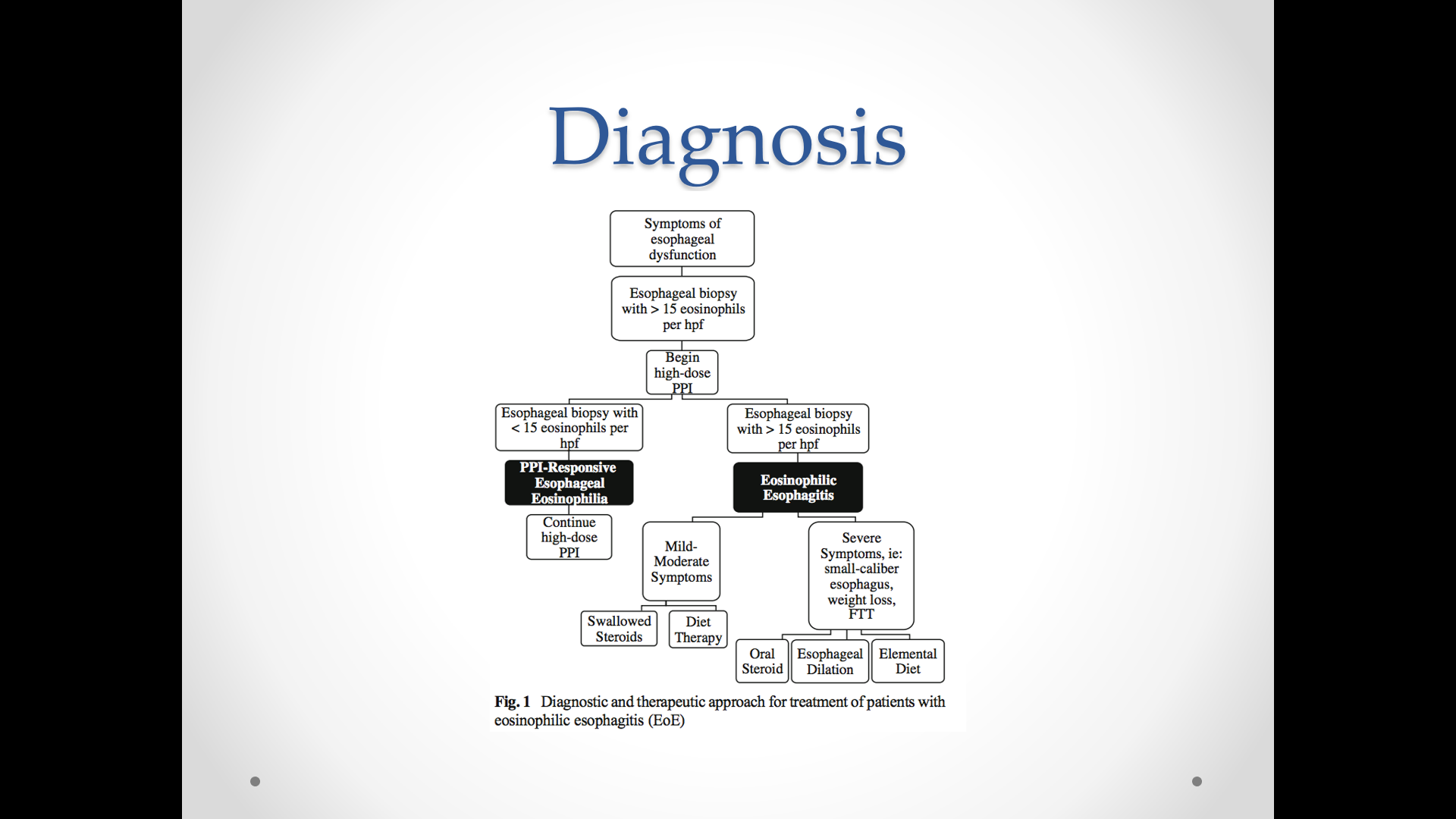
Dilatation for Eosinophilic Esophagitis -Pediatric Data

The most recent data in adults has indicated that dilatation for eosinophilic esophagitis (EoE) likely does not have increased risk compare to esophageal dilatation for other causes.  A recent pediatric retrospective study (C Menard-Katcher et al. JPGN 2017; 64: 701-6) reaches a similar conclusion.

In this study over a 5-year period, there were 68 dilatations among 40 patients with EoE.

Dilatation was considered complete if a diameter of 15 mm (45 French) was reached or if a deep rent in the mucosa was evident; small (<0.5 cm) shallow rents were “not considered criteria for cessation of dilations.”

Methods:

  • In their institution, areas of narrowing >5 cm in length were typically treated with Maloney dilators and shorter narrowings were managed with balloon dilators (through the scope).
  • For Maloney bougie dilators, often dilations started at 24 French; typically 30 French if scope could traverse narrowing.
  • For balloon, often dilations started at 10 mm.  Fluoroscopy was often used at initial dilation (12 of 19).
  • 17 of 40 required more than one dilation in the study period

Some of the key findings:

  • Approximately 5% of their EoE patients needed dilations.
  • Patients with EoE who needed dilations were older than EoE patients who did not need this: 13.8 vs 8.2 years
  • Postoperative chest pain was most common adverse event, affecting 15% of dilations. In this small series, there were no perforations.
  • At this institution, half of the patients had dilation at their diagnostic endoscopy before starting EoE-specific therapy. However, as noted in their commentary, medical management may obviate the need for dilations.
  • Medical management consisted of “swallowed steroids (62%), dietary therapy (12%) or both (24%).”

My take: Overall, this study indicates that dilations are fairly safe in the EoE population. That being said, in my view, all dilations carry a small but significant risk.

Related blog posts:

Musee d’Orsay, Naissance de Venus, Alexandre Cabanel, 1863


Acute Liver Failure -Pediatric ICU Management

Full Text Link: Intensive Care Management of Acute Liver Failure

This article provides a very good overview of this topic starting withe diagnosis, epidemiology and proceeding to specific management issues/outcomes.

Table 1 reviews etiologies –indeterminant is most common. Table 2 shown below reviews management principles and Table 3 reviews specific treatments based on etiology. Table 4 reviews grades of encephalopathy.

My take (from authors): “Despite recent advances in supportive care and the improvements in outcomes observed…the practical intensive care management of PALF remains poorly defined…Current treatment options are merely supportive and based on incomplete adult data and local institutional experience.”

Related blog posts:

NPR: Handshake-Free Zones to Decrease Spreading Germs

NPR recently detailed a study to reduce germs by implementing a handshake-free zone at a neonatal intensive care unit.

Here’s the link: Handshake-Free Zones Target Spread of Germs

An excerpt:

In a survey of staff and family members about the experience, Sklansky and his colleagues found that establishing handshake-free zones does reduce the frequency of handshakes. And most health care workers support the idea.

The findings were published in the American Journal of Infection Control. The survey didn’t determine whether avoiding handshakes actually reduced the rate of infections, but Sklansky hopes to answer that question in a future study.

The formal experiment is now over, but the signs in the NICUs remain. And doctors and nurses still discourage handshakes.

It’s is an effective way to decrease the spread of germs, says Maureen Shawn Kennedy, editor-in-chief of the American Journal of Nursing…

Although there is no data to prove that reducing handshakes limits hospital infections, one study showed that bumping fists was more hygienic than shaking hands.

However, some infectious disease specialists believe health care workers don’t need to stop shaking hands. They just need to scrub better.

“The problem isn’t the handshake: It’s the hand-shaker,” says Herbert L. Fred, a Houston physician and associate editor of the Texas Heart Institute Journal.

In a 2015 editorial he urged doctors to ensure their hands are clean before touching patients. After all, he wrote, “If we ban the handshake, we might as well ban the physical examination. Both practices can spread germs,” — if you don’t wash your hands properly.

My take: The bigger message of this article is that hand hygiene needs to be improved to decrease the spread of infections.  I doubt stopping handshakes will be particularly helpful.

Related blog posts:

Musee d’Orsay

Lipid Emulsions and Unbound Bilirubin in Preterm Infants

Happy birthday Stan!

In previous work, it had been shown that free bilirubin (Bf) and unbound free fatty acids (FFAu) were increased in extremely low birth weight infants who received intralipid (soybean) at 3 g/kg/d.  A recent study (T Hegyi et al. J Pediatr 2017; 184: 45-50) showed that Bf and FFAu are increased with increasing intralipid dosage (1 to 3 g/kg/d) in all gestational ages (23-34 weeks).

The concern with Bf and FFAu is that elevated concentrations could have adverse neurologic effects; intralipids may act to displace bilirubin from binding to albumin. For most infants in this study, the levels “would not be expected to pose a neurotoxic risk” (per editorial pg 6-7).  Factors that enhance the generation of FFAu include infection, steroids, carnitine deficiency, and low albumin conditions. Phototherapy, in this study, reduced total serum bilirubin but not Bf in those receiving 2-3 g/kg/d of intralipid.

My take: This study does not provide any information regarding neurotoxicity.  It shows that potentially toxic levels of Bf & FFAu can occur in infants born <28 weeks who receive 2 g/k/day or more of intralipid.  While this is a concern, we also know that poor growth is associated with worsened neurocognitive outcomes (Nutrition Week: Downside of Lipid Reduction)