Unknown's avatar

About gutsandgrowth

I am a pediatric gastroenterologist at GI Care for Kids (previously called CCDHC) in Atlanta, Georgia. The goal of my blog is to share some of my reading in my field more broadly. In addition, I wanted to provide my voice to a wide range of topics that often have inaccurate or incomplete information. Before starting this blog in 2011, I would tear out articles from journals and/or keep notes in a palm pilot. This blog helps provide an updated source of information that is easy to access and search, along with links to useful multimedia sources. I was born and raised in Chattanooga. After graduating from the University of Virginia, I attended Baylor College of Medicine. I completed residency and fellowship training at the University of Cincinnati at the Children’s Hospital Medical Center. I received funding from the National Institutes of Health for molecular biology research of the gastrointestinal tract. During my fellowship, I had the opportunity to work with some of the most amazing pediatric gastroenterologists and mentors. Some of these individuals included Mitchell Cohen, William Balistreri, James Heubi, Jorge Bezerra, Colin Rudolph, John Bucuvalas, and Michael Farrell. I am grateful for their teaching and their friendship. During my training with their help, I received a nationwide award for the best research by a GI fellow. I have authored numerous publications/presentations including original research, case reports, review articles, and textbook chapters on various pediatric gastrointestinal problems. In addition, I have been recognized by Atlanta Magazine as a "Top Doctor" in my field multiple times. Currently, I am the vice chair of the section of nutrition for the Georgia Chapter of the American Academy of Pediatrics. In addition, I am an adjunct Associate Clinical Professor of Pediatrics at Emory University School of Medicine. Other society memberships have included the North American Society for Pediatric Gastroenterology Hepatology and Nutrition (NASPGHAN), American Academy of Pediatrics, the Food Allergy Network, the American Gastroenterology Association, the American Association for the Study of Liver Diseases, and the Crohn’s and Colitis Foundation. As part of a national pediatric GI organization called NASPGHAN (and its affiliated website GIKids), I have helped develop educational materials on a wide-range of gastrointestinal and liver diseases which are used across the country. Also, I have been an invited speaker for national campaigns to improve the evaluation and treatment of gastroesophageal reflux disease, celiac disease, eosinophilic esophagitis, hepatitis C, and inflammatory bowel disease (IBD). Some information on these topics has been posted at my work website, www.gicareforkids.com, which has links to multiple other useful resources. I am fortunate to work at GI Care For Kids. Our group has 17 terrific physicians with a wide range of subspecialization, including liver diseases, feeding disorders, eosinophilic diseases, inflammatory bowel disease, cystic fibrosis, DiGeorge/22q, celiac disease, and motility disorders. Many of our physicians are recognized nationally for their achievements. Our group of physicians have worked closely together for many years. None of the physicians in our group have ever left to join other groups. I have also worked with the same nurse (Bernadette) since I moved to Atlanta in 1997. For many families, more practical matters about our office include the following: – 14 office/satellite locations – physicians who speak Spanish – cutting edge research – on-site nutritionists – on-site psychology support for abdominal pain and feeding disorders – participation in ImproveCareNow to better the outcomes for children with inflammatory bowel disease – office endoscopy suite (lower costs and easier scheduling) – office infusion center (lower costs and easier for families) – easy access to nursing advice (each physician has at least one nurse) I am married and have two sons (both adults). I like to read, walk/hike, bike, swim, and play tennis with my free time. I do not have any financial relationships with pharmaceutical companies or other financial relationships to disclose. I have helped enroll patients in industry-sponsored research studies.

N2U -Part 4: Obesity and Micronutrients

2015 N2U Syllabus & Presentations

Critically-ill Obese Patient (Syllabus 51-61) Ann Scheimann

Case: 14 year old with obesity –admitted to PICU with respiratory distress, BM1 51, recent hx/o 30 lb weight loss and declining school performance.

  • Nutritional assessment (syllabus pg 55) References: Port et al. Curr Opin Clin Nutr Metab Care. 2010;13:184-191.McClave et al. JPEN J Parenter Enteral Nutr . 2011: 35: 88s.
  • Components of nutritional support (syllabus pg 56) References: Hurt et al. JPEN J Parenter Enteral Nutr . 2011;35: 60S.
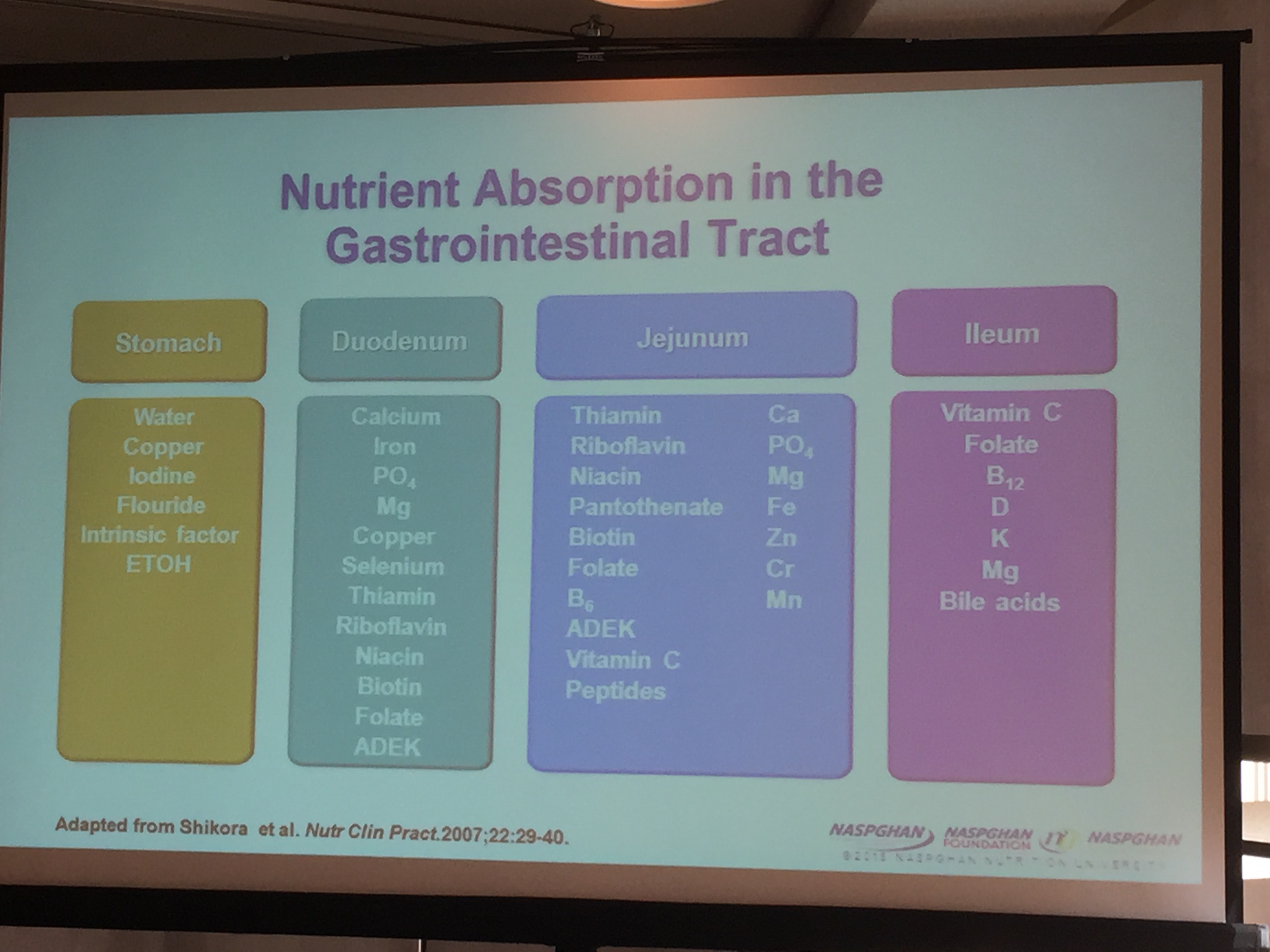
  • Presentation provides good summary of vitamin deficiencies and toxicities (syllabus 57-61), which are more common after bariatric procedures.


IMG_1681 Nutrient Location


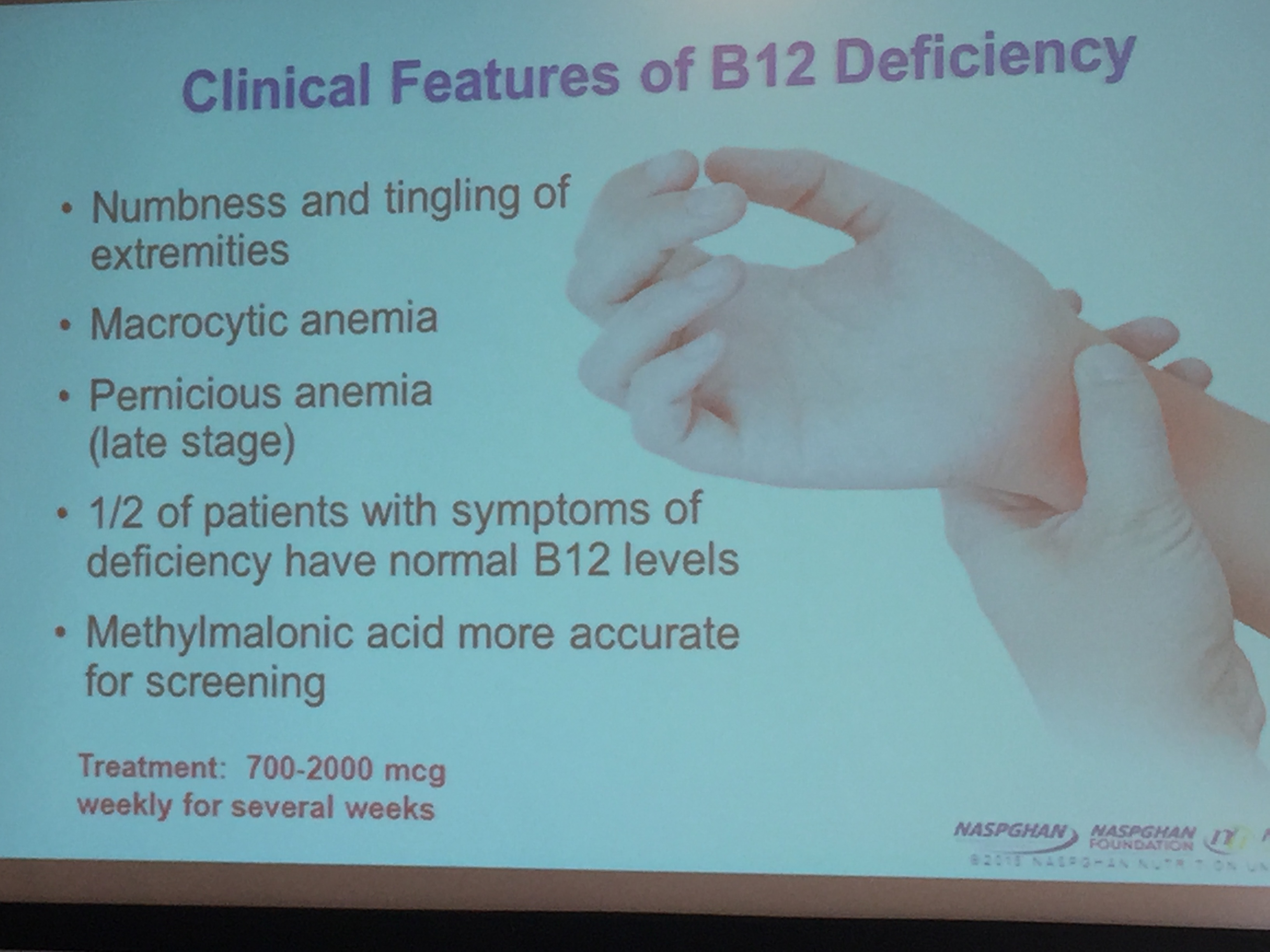
B12 Slide From Syllabus

B12 Slide From Syllabus

Key points:

  • For obese/overweight, for calorie calculation, can use adjusted weight to estimate energy expenditure (but don’t give more than 2000 calories per day). For teens/adults, usually need at least 1200 calories per day.
  • Harris-Benedict Equation (HBE) is often used but often overestimates needs (compared with indirect calorimetry) by about 600 cal/day. Common Equations (see below)
  • Protein –provide about 2 gm/kg for weight-for-length at 75-90% for age
  • Formulas with relatively higher protein content (eg. Jevity or Promote) can be helpful to provide adequate protein/nutrients/fluid without excessive calories
  • BUN can help with monitoring adequate nitrogen balance (in the abscess of diuretics). Goal: BUN 7-12 range
  • Goal initially (first 2 weeks) is weight stability or no more than 2-3 lbs of weight loss per week

Bottomline:  N2U served as a good review on a broad range of nutrition topics.  While this talk discussed obesity in critically-ill patients, given the prevalence of obesity and impact on long-term outcomes, I would suggest more attention to this topic at future meetings.


Energy Calculations

Energy Calculations


Disclaimer: This blog entry has abbreviated/summarized this presentation. Though not intentional, some important material is likely to have been omitted; in addition, transcription errors are possible as well.

These blog posts are for educational purposes only. Specific dosing of medications/diets (along with potential adverse effects) should be confirmed by prescribing physician/nutritionist.  This content is not a substitute for medical advice, diagnosis or treatment provided by a qualified healthcare provider. Always seek the advice of your physician or other qualified health provider with any questions you may have regarding a condition.

 

Downtown Chicago

Downtown Chicago


N2U -Part 3: EoE, IBD, and Cystic Fibrosis

2015 N2U Syllabus & Presentations

EoE Dietary Pointers (Syllabus pg 83-94): Sally Schwartz, Valeria Cohran

  • Even with SFED, elemental supplements helpful
  • Drink elemental beverages from covered glass with straw (improves palatability)
  • Cross-contamination –big issue
  • Label reading critical

Related posts:

IBD EEN Pointers (Syllabus pg 95-102): Rebecca Pipkorn, Justine Turner

  • Polymeric formulas –most palatable and least expensive. Oral EEN is used costly/not covered
  • EEN particularly helpful with microperforation/flare-up presentation and with infections (eg. TB)
  • EEN induces mucosal healing and improved symptoms

References:

  • Levin et al. Inflamm Bowel Dis. 2014;20:278-285.
  • Johnson et al. Gut 2006;55:356-361.
  • Sigall-Boneh et al. Inflamm Bowel Dis. 2014;20:1353-1360.
  • Wilschanski et al. Gut 1996;38543–548.
  • Critich et al. J Pediatr Gastroenterol Nutr. 2012;54: 298–305. NASPGHAN Guidelines

Conclusions:

  • Enteral therapy offers an alternative to steroids in patients with CD
  • Has potential to improve growth and IBD symptoms
  • Avoids the side effects of steroids
  • Need further research:
  1. – Unclear of the mechanism
  2. – Unclear of the best protocol
  3. – No standard protocol for reintroduction of food

Related posts:

Cystic Fibrosis (Syllabus pg 34-50) Justine Turner

Case in point: 10 yo with CF and poor growth, hx/o DIOS, poor intake, and distention.  Family had refused tube feedings previously.

Key point: Long-term survival is linked to nutritional status

  • Zemel et al. J Pediatr. 2000; 137(3):374-380.
  • Stallings et al. J Am Diet Assoc. 2008; 108(5):832-839.
  • McPhail et al. J Pediatr. 2008; 153(6):752-757.
  • Sharma et al. Thorax 2001; 56:746-750.

Other Caveats:

  • Intervene early
  • Breast milk (often with supplements) is optimal for infants
  • Poor oral intake àcould need periactin and/or supplemental feeds
  • Discussion re: pros/cons of Gtubes (pg 47 in syllabus)
  • Psychology support

Nutrition Goals

  • – Normal growth and optimal nutritional status
  • – Ages 0-2 year: Weight for length >50th percentile
  • – Ages 2-20 year: BMI percentile at or above 50th percentile
  • – BMI for males:23
  • – BMI for females: 22

Nutritional assessment at every visit & review:

  • – Weight, length/height, weight for length, BMI, head circumference in infants
  • – Nutritional education & dietary counseling
  • – Review PERT
  • – Review need for micronutrient supplementation: fat soluble vitamins (A, D, E, K), Ca, Fe, Zn, Na (salt), essential fatty acids

PERT (Pancreatic enzyme replacement therapy):

  • Infants 2000-4000 U lipase with 120 mL breast milk or formula– Mouth care for infants (and breast feeding mother)
  • Children 500-2500 U lipase/kg per meal (≤10000 U/kg/day or ≤ 4000 U/g fat/day); half meal dose with snacks
  • Ideally taken with meals and orally
  • Microspheres preferred formulation
  • Acid blockade (used to optimize enzyme activity)
  • Gold standard to assess adequacy is 72h fecal fat collection

Cystic Fibrosis Related Diabetes

  • Rare before 10 years of age
  • Increases mortality risk 6-fold
  • Weight loss and pulmonary decline begin 2-4 years prior to
  • diagnosis of CFRD

Related posts:


Robie House (at Univ Chicago)

Robie House (at Univ Chicago)


N2U -Part 2: Poor Growth and Short Bowel Syndrome

Chicago -from Lincoln Park

Chicago -from Lincoln Park

2015 N2U Syllabus & Presentations

Failure to Thrive –Praveen Goday

These sessions were case-based learning.

Case 1

2 mo birth weight 4.5 kg, taking 80 cal/kg/day –20 cal, formula-fed.  Taking 8 gm/day

What to do?

Point –If infant has a high birth weight (relative to height), there is a tendency to drop significant percentiles.  Often, careful observation is best approach. (Taal et al. Obesity. 2013;21:1261-8.)

Case 2: 14 mo birth weight 2.2 kg (at term), weight and length below the 3rd percentile but tracking. Weight-for-length is at the 25th percentile.

What to do?

For SGA babies, ensure adequate calories, avoid juice, ensure no GI symptoms, follow their growth

Case 3: Patient born at 36 weeks gestation, birth weight 3 lb. 14 oz. lbs., birth length 17 in.; Growth was a consistent problem throughout pregnancy; Dysmorphic; genetic workup – negative (Growth curves on pg 72-73 of syllabus).

More data: Taking 27 cal/oz, high-calorie baby foods, no GI symptoms, screening labs negative.  What are your options?  Make sure the length is accurate.  If the weight-for-length is really decreasing, then probably a trial of nasogastric feedings.  In Milwaukee, AMT bridle is often used to prevent dislodgement youtube video (7:37 min), uses magnets.  Still, tubes need to be changed month.  The AMT bridle can work for tubes as small as 5 Fr.

Practical definition of Failure to Thrive:

  • Weight-for-length <2nd percentile (WHO growth chart for kids <2 yrs) or BMI ❤rd percentile. BMI more problematic in infants because of accuracy of length. If any inaccurate measurement, BMI value squares the length value; thus exponentially inflating any discrepancy.
  • Poor or no weight gain over a period of time that varies according to the age of the child
  • Significant downward trend in weight percentiles; however, 30% of full-term infants cross one percentile and 23% cross two percentiles between birth and 2 years of age
  • Keep in mind parental heights and correction for prematurity (where applicable).

Key points:

  • Large for gestational infants often have “catch-down” growth. Avoid overly aggressive nutritional intervention
  • In small infants who are growing steady and with good wt-for-ht, avoid overly aggressive nutritional intervention.
  • Older kids with poor growth –screening labs: TTG IgA, IgA, CBC, ESR, CMP, TSH, Urinalysis, and possibly fecal elastase.
  • Older kids with poor growth—1st steps: avoid juices, avoid grazing (no feeding outside mealtimes except water)/scheduled meals & snacks, and probably cyprohepatadine. Management: Have child sit at table for 20 minutes, feedings every 3 hours, and avoid force feeding.
  • In children with history of prematurity under 32 weeks gestation who do not catch up by ~6 months of age — usually never catch up.
  • In infants/children with highly selective diets, may be presentation of autism. Often, an approach in those with food selectivity is to start by offering only foods the child used to eat (for a day) and see if this will work (should be safe for at least one day).

Short Bowel Syndrome –Valeria Cohran (pages 9-20 in syllabus)

Case:  3 ½-year-old AAF who presents for a second option. She is a former 26-week infant who had NEC. She has approximately 45 cm of residual bowel anastomosed to the transverse colon.

  • TPN-dependent
  • Minimal oral intake
  • Diarrhea up to 60 ml/kg with Enfacare


GI Fluid losses –see page 15 of syllabus (Wessel et al Semin Perinat 2007; 31: 104-11).  Sodium losses ~140 mEq/L from stomach, 80-140 mEq/L from ileostomy –in comparison, normal stool with sodium of ~5 mEq/L.

Key points:

  • Normal intestinal length varies greatly by gestational age; so residual 45 cm length in a 26 week infant suggests much greater potential for improvement than 45 cm length in a full term infants (page 14 in syllabus).
  • Avoid probiotics in patients with central lines.
  • Sodium depletion (urine sodium <10) associated with poor growth. Probably urine sodium >20 is adequate. Though, if high urine potassium (more than double urine sodium), this could indicate that urine sodium is retained at the expense of spilling potassium (ie. May need more sodium) Related post: Don’t Forget to Check Urine Sodium | gutsandgrowth
  • Pectin (liquid) can be helpful: 1% of volume intake. Benefiber can be helpful –expensive. Related blog post: Green beans for short gut syndrome | gutsandgrowth
  • Bacterial overgrowth –treatment can help diarrhea. Try to minimize PPIs –6 months after resection (period of gastric hypersecretion). Cholestyramine is not a popular option due to trouble with usage. Related post: Rehabilitation for Short Bowel Syndrome | gutsandgrowth
  • Micronutrient/vitamin monitoring. Page 16 in syllabus lists the micronutrient concentration of parenteral products and RDAs of micronutrients. “Don’t take copper out of TPN” –unless high level. ‘Worry some about micronutrient deficiency while on TPN but perhaps worry even more when transitioning off.’ Ubesie et al J Pediatr 2013 162: 1692-96. 93% anemic in this study of transitioning off TPN (iron,copper, other causes –pg 18 in syllabus). Related blog posts:Missing ingredients in TPN -Case Report | gutsandgrowth and TPN Drug Shortages -A Useful Reference | gutsandgrowth
  • B12 deficiency. If high MMA (likely due to B12 deficiency), then B12 shots recommended. B12 important for cognition. Related posts: Are we missing Vitamin B12? | gutsandgrowth and What I Didn’t Know About Vitamin B12 and Crohn’s Disease …
  • Iron deficiency. Consider anastomotic ulcers/ulceration of STEP procedure.
  • Lipid minimization/fish oil lipid formulations
  • Follow kids even after coming off TPN –at least annually. These kids can develop problems many years later.

More related posts:

Disclaimer: This blog entry has abbreviated/summarized this presentation. Though not intentional, some important material is likely to have been omitted; in addition, transcription errors are possible as well.

These blog posts are for educational purposes only. Specific dosing of medications/diets (along with potential adverse effects) should be confirmed by prescribing physician/nutritionist.  This content is not a substitute for medical advice, diagnosis or treatment provided by a qualified healthcare provider. Always seek the advice of your physician or other qualified health provider with any questions you may have regarding a condition.


Nutrition University -Part 1

While issues with nutrition are ubiquitous, among the three areas of expertise for pediatric gastroenterologists (gastroenterology, hepatology, and nutrition), it does seem that nutrition expertise receives the least interest overall.  One effort to work on this is Nutrition University (N2U) sponsored by NASPGHAN/NASPGHAN foundation.

This is the first year in which the program has been opened up to physicians who have been in practice for more than 10 years and I am looking forward to a great review. Prior to attending, the participants were asked to review previous N2U modules which are available at NASPGHAN website: 2012 N2U Course ( a good source for CME as well).

This year’s syllabus: 2015 N2U Syllabus & Presentations (posted with permission from course organizers).

Last night the meeting started off with some comments by Praveen Goday (Praveen’s training in Cincinnati overlapped with mine) who has spearheaded this effort; subsequently the faculty addressed previously submitted attendee questions.

Here’s a sampling:

Should we be recommending a low FODMAPs diet for IBS? Rob Shulman indicated that about ~70% of adults responded in one study and that a similar study in children at Baylor College of Medicine produced similar results.  However, the diet is difficult and help from a dietician/nutritionist is needed.  If there is not a response in 7-10 days, then it is likely to be ineffective.

What should be the first formula for Cow’s Milk allergy/intolerance in infancy? The recommendation for most infants (not the very sickest) was to start with a hydrolysate formula which should be effective in more than 90%.  It was suggested that amino acid based formulas be reserved for hospitalized infants and those who do not respond to hydrolysates.

What about fish oil enterally or parenterally? James Heubi(*) noted that a lot more data is needed but fish oil either enterally or parenterally may be beneficial.  Rob Shulman commented that recent work indicates that vitamin E may be an important reason why fish oil could be better than soy-based lipid emulsions.

How practical are blenderized diets for gastrostomy fed children? Catherine Karls noted that the general goal is to provide nutrients which mimic the commercial formulas but there are many important caveats for DIY (do-it-yourself formula).

  • An RD needs to supervise to assure all micronutrient needs are being met.  Using computer programs, this facilitates calculating dietary reference intakes (DRIs).
  • Many parents prefer as homebrews are perceived as more natural or holistic
  • Some children have better tolerance (eg. volume-sensitive, patients with retching)
  • Drawbacks: time commitment, additional costs (though may be cheaper for some), and concerns regarding food safety
  • Homebrews are not recommended for jejunostomy feeds (gastrostomy only) or for those with small-caliber feeding tubes (needs to be at least 14 Fr)
  • Don’t use without the assistance of an RD!

Which is better for NAFLD -low carb or low fat? Ann Scheimann stated that this question is misleading –it is a lot more complicated.  It depends on the carbs and it depends on the fat.  Fructose clearly worsens NAFLD but so does a diet high in animal fat.

What are the nutritional management recommendations for acute pancreatitis? Justine Turner indicated that too many centers continue to rely on parenteral nutrition.  Yet, guidelines recommend the use of enteral nutrition due to lower risk of poor outcomes (eg. infections when NPO and on parenteral nutrition). ‘Resting pancreas is not helpful.’ With acute pancreatitis, enzyme secretion is reduced.  Her approach is to start nasogastric (NG) feedings at about 24 hours after presentation, as long as hemodynamically stable.  She indicated that nasojejunal (NJ) feedings can be done if NG is not well-tolerated.  NJ feedings are effective at reducing enzyme secretion.  However, Praveen Goday stated that his practice was often starting with NJ feeds.  “Sometimes there is only one shot” before the ICU team starts HAL.  Both physicians indicated that polymeric formulas were probably acceptable; however, starting with semi-elemental or elemental feedings are often done, again as a practical matter to minimize the likelihood of reverting to parenteral nutrition.

What is the advice regarding children who need far less than typical calories for weight (eg. wheelchair-bound inactive child)? Generally all nutrients are being met if a child less than 10 years is receiving 4 cans of commercial formula. For children 10 and older, receiving 6 cans per day should ensure adequate nutrients.  For those who fall below this threshold, several options:

  • Reduced calorie formula (eg. Pediasure Sidekicks, Compleat Reduced) are approximately 0.6 cal/mL but have all the other nutrients
  • Supplementation: multivitamin, calcium, phosphorus, protein
  • Need to meet at least 80% of typical fluid needs, thus not much rationale for 2 cal/mL formulas. As a practical matter, if the child is urinating well, they are receiving enough fluids.

*I was fortunate to have Jim as an attending during my fellowship at Cincinnati. In fact, even before then, Jim interviewed me when I was considering Cincinnati for my pediatric residency.  He is a terrific person and amazing to work with.

Disclaimer: This blog entry has abbreviated/summarized this presentation. Though not intentional, some important material is likely to have been omitted; in addition, transcription errors are possible as well.

These blog posts are for educational purposes only. Specific dosing of medications/diets (along with potential adverse effects) should be confirmed by prescribing physician/nutritionist.  This content is not a substitute for medical advice, diagnosis or treatment provided by a qualified healthcare provider. Always seek the advice of your physician or other qualified health provider with any questions you may have regarding a condition.
 

Complex Medicine and Informed Consent

A recent review (Grady, C. NEJM 2015; 372: 855-62) stresses some of the emerging challenges of informed consent, particularly in the research setting.

Key points:

  • “Research participants have deficits in their understanding of study information, particularly of research methods such as randomization.”
  • “Reasonable people disagree about the adequacy of the information presented on the consent forms.”

Trends Which Challenge Current Informed Consent Process:

  1. Learning Health Systems. “Should informed consent for these activities be more similar to research informed consent or clinical informed consent?” “Is it ethically acceptable for a patient or research participant to provide consent for an unspecified or broad range of activities?”
  2. Adoption of Complex Technologies, like genetic sequencing. “How should information be presented [with]..complex information, substantial uncertainty…incidental findings, and implications for blood relatives?”
  3. Consent for Future Use of Clinical Data or Biologic Specimens. “How specific does the information provided in the consent process need to be regarding future uses of data or specimens?”
  4. Demographic Changes/Diminished Capacity in Elderly. “Older age, diminished mental capacity, and dementia per se do not indicate that a person is incapable of consenting…there is a need for respectful and efficient tools and processes for assessing capacity.”

Bottomline: In order to treat patients in a respectful manner, continued efforts at addressing these questions are needed to promote informed choices of patients while advancing medical science and clinical care.

Related blog postAccording to the study which you would never qualify for …

Headlines and Shorts for IBD and IBS

“Higher Levels of Knowledge Reduce Health Care Costs in Patients with Inflammatory Bowel Disease.” Inflamm Bowel Dis 2015; 21: 615-22.  This retrospective observational cohort study asked 91 patients to complete a questionnaire about their knowledge on the disease after 1 year of follow-up. The authors noted an association between higher levels of knowledge and lower health care costs. While their are many limitations to this study, it is hard to argue with the conclusion that better education is worthwhile; it may also improve outcome and costs.

“Surgery and Postoperative Recurrence in Children with Crohn Disease.” Hansen LF et al. JPGN 2015; 60: 347-51. In a retrospective study dating back to 1978, the authors noted a high recurrence of surgery in children (n=115) with Crohn disease (CD).  More than 1 bowel resection was needed in 39%. The use of biologics occurred late in the study and its potential effect on lowering recurrent resection is unclear in this study. Related post:  More Lessons in TNF Therapy (Part 1) | gutsandgrowth

“Risk of Drug-Induced Liver Injury from Tumor Necrosis Factor Antagonists.” Bjornsson ES, et al. Clin Gastroenterol Hepatol 2015; 13: 602-08.  9 cases of DILI associated with infliximab (1 in 120 patients), 1 case (of 270) with adalimumab, and 1 case (of 430) associated with etanercept. 8 of 11 patients who were tested for ANA were positive. DILI was treated with steroids in 5 patients. 8 patients went on to receive a different anti-TNF without recurrent liver dysfunction. Related blog posts:

“The Prevalence of Intestinal Parasites is Not Greater Among Individuals with Irritable Bowel Syndrome: A Population-based Case-control Study” Clin Gastroenterol Hepatol 2015; 13: 507-13. Related post: Does it make sense to look for parasites in RAP …

Gastritis –Not Due to Helicobacter pylori

A gastroenterologist identifying gastritis or an ulcer due to Helicobacter pylori is akin to an emergency room doctor treating a nursemaid’s elbow.  In both cases, identifying the cause allows for effective treatment and families are typically quite grateful. But what about the cases of Helicobacter-negative gastritis.  This is less straightforward.

A recent study (Genta RM, Sonnenberg A. Aliment Pharmacol Ther 2015; 41: 218-26 thanks to Ben Gold for this reference) provides some helpful data.  From a pathology national database, the authors reviewed 895,323 patient records from individuals with gastric biopsies (2008-2014).

Key findings:

  • 10.6% had Hp-gastritis. The prevalence of Hp-gastritis declined mildly from 11.2% in 2008 to 9.9% in 2014.
  • 1.5% had Hp-negative gastritis.  The prevalence of Hp-negative gastritis declined from 2.1% in 2008 to 1.1% in 2014.
  • In patients with Hp-negative gastritis who underwent a repeat endoscopy, on average 18 months after index biopsy, 7.4% had detectable Helicobacter pylori.  Thus, a small number of Hp-negative gastritis may represent a missed infection.
  • The authors note that only 3.5% of Hp-negative gastritis was associated with inflammatory bowel disease (IBD).

It is well-recognized that there are many limitations with analyzing databases.

Take-home message: Given the limited amount of information about Hp-negative gastritis, this study is helpful by indicating that only a small fraction represent a missed case of H pylori and a smaller fraction have coexistent IBD.  With improvements in microbiology, perhaps more clarity will emerge to determine what Hp-negative gastritis is rather than what it isn’t.

Related blog posts:

No Effect of Proton Pump Inhibitors and Irritability on Crying in Infants

While the title of this blog will come as no surprise to most pediatric gastroenterologists, many parents would be surprised that a systemic review of randomized controlled trials (RCTs) showed` that proton pump inhibitors (PPI) are ineffective for crying infants (J Pediatr 2015; 166: 767-70).

In this review, only five trials (with 430 infants) met the prespecified inclusion criteria.  While some trials showed a decrease in crying/irritability form baseline to the end of the intervention, a similar effect was evident in the control group.  The authors found that one trial reported a higher risk of lower respiratory tract infections in the PPI group and note that “administration of PPIs is not without risk.”

Take-home message: “the limited data available suggest that PPIs are not effective for the management of crying/irritability in infants.”

Another PPI citation: Rosen R et al. J Pediatr 2015; 166: 917-23.  In this study, the authors prospectively showed that PPI use was associated with differences in gastric, lung, and oropharyngeal microflora (n=116 children with 59 receiving PPIs)

Related blog posts:

Behavioral Economics and Insurance Exchanges

A recent commentary (NEJM 2015; 372: 695-98) explains how information provided on healthcare exchanges influences choices on coverage and what types of modifications could help improve these decisions.

Current plans are categorized as Bronze, Silver and Gold based on monthly premiums and out-of-pocket expenses (Related link: Understanding Plans on Healthcare.gov).  Gold plans are characterized by higher monthly premiums and lower out-of-pocket expenses.  However, the authors sampled a group of people.  They found that plans that are labeled as “gold” were preferred by the majority whether the plans had higher monthly premiums and lower out-of-pocket expenses or the reverse (low monthly premiums and higher out-of-pocket expenses).  Rather than using “gold,'” “silver,” or “bronze,” their recommendation would be to provide more practical information by providing estimates of annual costs with best-case and worst-case scenarios.

On many exchanges, the plans are listed by order of lowest monthly premiums to highest monthly premiums.  “When people make choices, they often settle for options at the top of a menu…for example, all else being equal, politicians listed at the top of ballots receive more votes than those whose names appear lower on the list.” Also, using monthly premium differences rather than weekly premium differences also influences choices. Thus, even the innocuous design of a website, could adversely influence the selection of the best plan for a given participant.

Bottomline: If the affordable care act and health exchanges are not eliminated, improving the presentation of information could help many participants get the health coverage that actually meets their needs.

Related blog posts:

An Apple a Day …

According to research, published in JAMA Internal Medicine (April 1st edition –done for fun and “is very tongue in cheek”) an apple a day does not “keep the doctor away.”

Here’s an excerpt from USA Today summary:

At first glance, data on 8,728 U.S. adults looked like it might uphold the saying: The 9% who ate at least one small apple daily were less likely to visit doctors several times a year….They adjusted their statistics to account for ways other than apple-eating that “apple eaters might be very different from everyone else,” Davis says. For example, they found apple lovers were less likely to smoke, were more educated and were less likely to be white than the 91% of the population eating less than an apple a day.

After adjusting for those factors, they found daily apple-eaters were just as likely as otherwise similar individuals to go to doctors…Other studies have found numerous possible health benefits associated with apple consumption, including weight loss, reduced cancer risk and improved cardiovascular health.